
Review · KATHMANDU
Annapurna base Camp trek 10 Days
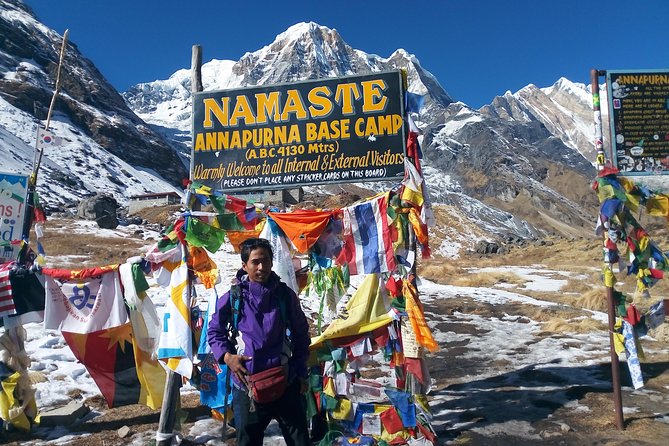
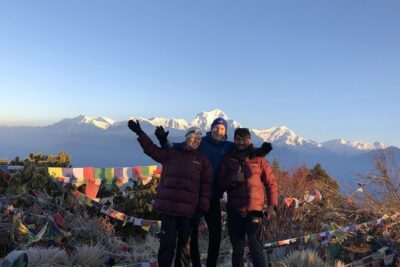
The big draw is the route’s mix of mountain drama and village life. You walk from Gurung communities and forest paths to the stone-and-snow amphitheater of Annapurna Base Camp, then return by way of Jhinu Hot Spring. Poon Hill adds a fine sunrise viewpoint, with Annapurna South, Hiunchuli, Nilgiri, and Machhapuchhre in view.
I like the 10-day pace, which gives you time to build toward 4,130 meters instead of racing straight uphill. I also like the human side of the trip: Prakash is named as a guide, and Raj, Kum, and Papa Nepal are also connected with the guiding team in the feedback. The main caution is that the online summary says 2 days, while the actual route is clearly a 10-day itinerary, so confirm the dates and inclusions before paying.
Key points to know before booking
- Annapurna Base Camp at 4,130 meters: The route ends inside a natural mountain bowl surrounded by major peaks.
- Poon Hill views: The itinerary includes the famous viewpoint, with Annapurna South, Hiunchuli, Nilgiri, and Machhapuchhre among the peaks you may see.
- Gurung village walking: Ghandruk gives the trek a cultural side, not just a string of mountain paths.
- Named guide support: Prakash is praised for being attentive, professional, funny, and relaxed, while Raj is also mentioned as part of the team.
- A private trip: Only your group participates, which can make walking speed and daily decisions easier to manage.
- A real mountain commitment: Daily walks run about five to six hours, with a high point above 4,000 meters.
What this Annapurna route is really like
This is not a short sightseeing outing from Kathmandu. It is a proper Himalayan trek, with long walking days, changing altitude, simple route progression, and a high mountain finish.
The route begins in Kathmandu but quickly shifts toward Pokhara and the Annapurna region. You pass through Ghandruk, Sinuwa, and Deurali before reaching Annapurna Base Camp. The return route follows a different section through Bamboo and Jhinu Hot Spring, which keeps the trip from feeling like a simple walk back over the same ground.
I like that the itinerary gives you both a cultural introduction and a dramatic mountain goal. You are not dropped into the high country on the first morning. Instead, the route builds through lower villages and forested sections before the air gets thinner and the peaks grow larger.
The schedule lists five to six hours of walking on most trek days. That sounds manageable on paper, but the terrain and altitude matter more than the clock. You should expect a steady physical effort, not a casual nature stroll.
The company describes the trip as suitable even for people without mountaineering or trekking experience. That is useful, but it should not be read as a promise that the walk is easy. You still need to be comfortable walking for several hours on consecutive days and reaching 4,130 meters.
More Annapurna Treks in Kathmandu
- Annapurna Circuit Trek with Tilicho Lake
★ 5.0 · 368 reviews - Annapurna base camp trek 5 Days
★ 5.0 · 252 reviews - 14-Day Private Annapurna Base Camp Trek
★ 5.0 · 180 reviews
Day 1: Annapurna views and the promise of Poon Hill
The first experience description focuses on the Annapurna Mountain Range and the route’s main attractions. It highlights local Gurung villages, plant and animal life, and the final approach to Annapurna Base Camp.
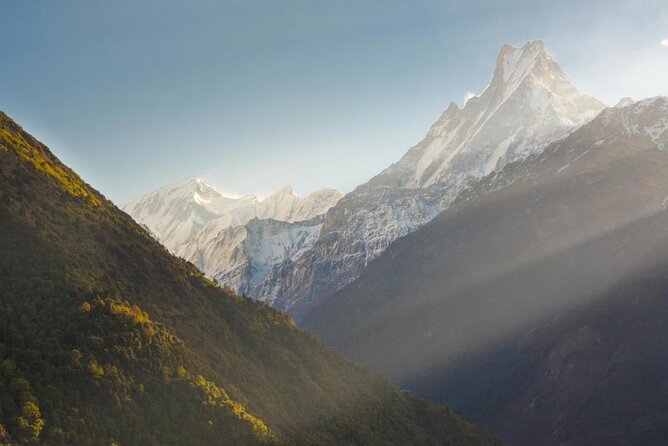
Poon Hill is one of the route’s visual highlights. From the viewpoint, you may see Annapurna South at 7,219 meters, Hiunchuli at 6,441 meters, Nilgiri at 7,060 meters, and Machhapuchhre, also called Fishtail Mountain, at 6,993 meters.
That list matters because the trek offers more than one grand viewpoint. Poon Hill gives you a broad mountain outlook early in the route, while Annapurna Base Camp places you inside a tighter ring of peaks. The two views feel different, and keeping both makes the trip more rewarding.
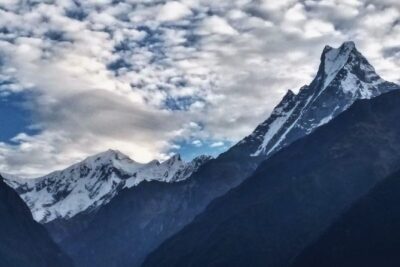
Machhapuchhre has special importance in the region. It is regarded as sacred to Shiva and is closed to climbing. You will see it as a sharp, distinctive presence in the mountain views rather than as a summit people are trying to reach.
The first description also mentions six hours and an admission ticket included. The separate itinerary gives the full 10-day program, so I would ask the operator exactly which day the six-hour figure applies to and what the admission wording covers.
Days 1 and 2: Kathmandu arrival and preparation
The full schedule begins with arrival in Kathmandu, followed by a free day for arrangements. The meeting point is in Thamel, and the listed start time is 5:00 am.
A free preparation day is practical. It gives you time to handle last-minute arrangements, organize your pack, and settle into the trip before the long drive toward Pokhara. The early start also matters, since the road journey is listed at six to seven hours.
Because the tour information gives a very early meeting time but does not explain the exact pickup process, confirm where you should wait in Thamel and how far in advance you should arrive. This is a small detail, but early-morning departures are easier when you know the plan.
The company says confirmation arrives at booking, and the activity is private for your group. That private format is useful if your group has mixed walking speeds or wants to keep the day moving without waiting for a large public group.
Day 3: The long road from Kathmandu to Pokhara
The drive from Kathmandu to Pokhara takes about six to seven hours, with Pokhara at 820 meters, or 2,690 feet.
This is a transfer day, not a hiking day, but it shapes the trip. You trade Kathmandu’s urban setting for Pokhara and the Annapurna region. The schedule is sensible in that it does not add a long trek after this drive.
You should treat the road journey as a full day. The itinerary does not promise a quick shuttle, and six to seven hours is a substantial amount of time in transit. If you prefer a trip with little road travel, this is one of the less appealing parts.
Still, the transfer is part of the route’s value. The trek begins at a lower elevation and gradually works upward, rather than placing you immediately at a high mountain trailhead.
Same trailhead, a different route:
- Everest Base Camp Trek – 14 Days
★ 5.0 · 1,499 reviews - Everest Base Camp Trek
★ 5.0 · 842 reviews - Everest Base Camp Helicopter Tour landing at Everest View Hotel
★ 5.0 · 668 reviews - Everest Base Camp Trekking
★ 5.0 · 485 reviews
Day 4: Nayapul to Ghandruk
The next stage takes you from Pokhara to Nayapul, followed by a five to six-hour trek to Ghandruk. Ghandruk sits at 1,940 meters, or 6,364 feet.
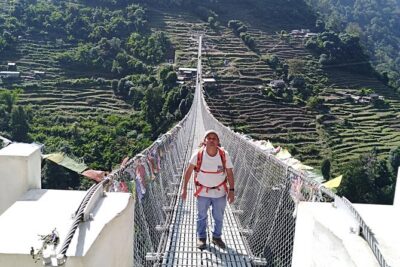
Ghandruk is important because it brings the cultural side of the Annapurna region into focus. The itinerary specifically points to Gurung villages, so you should expect the early walking days to be as much about local life and mountain communities as about views.
This is also your first substantial trek day. The elevation is far below base camp, but five to six hours of walking sets the rhythm for the days ahead. I would avoid treating Day 4 as a warm-up you can ignore. A sensible pace here can help preserve energy for the higher stages.
The route’s mix of villages, plants, animals, and mountain views is one of its strongest features. You get a gradual change in scenery instead of one long, repetitive climb.
Day 5: Ghandruk to Sinuwa
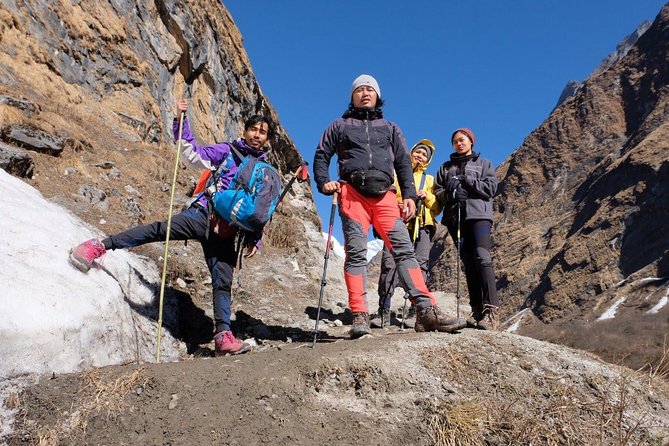
The walk from Ghandruk to Sinuwa takes about five to six hours. Sinuwa is listed at 2,360 meters, or 7,742 feet.
This day continues the steady gain in altitude. You are high enough for the elevation to matter, but not yet near the trek’s highest point. The benefit of this gradual rise is that you have time to adjust before reaching Deurali and then base camp.
The route is also where a private guide can be helpful. A guide who watches your pace and checks how you are handling the day can make the walk feel more controlled. Prakash is specifically described as attentive and reassuring, while the feedback also highlights his professional, relaxed manner.
That personal support may matter more than a fancy vehicle or a packed schedule. A mountain trek is made up of small decisions: when to pause, how quickly to walk, and how to respond when the climb feels harder than expected.
Day 6: Sinuwa to Deurali
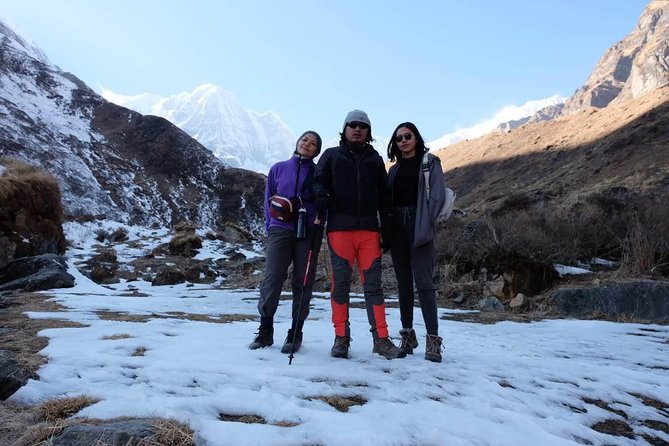
The Sinuwa to Deurali stage is listed at six hours, ending at 3,230 meters, or 10,597 feet.
At this point, the elevation becomes a central part of the experience. You are no longer simply walking through foothills. The climb toward Annapurna Base Camp is becoming a serious high-altitude trek, even though the itinerary is designed for people without technical mountaineering experience.
The six-hour estimate is useful for planning, but it is still only an estimate. Your pace, trail conditions, and rest stops can affect the actual day. You should leave room for a slower walk rather than planning another major activity at the end.
Deurali is a logical stopping point because it places you within reach of base camp without forcing the entire ascent into one exhausting push. The route design gives you a better chance to arrive at the high point with some energy left to enjoy it.
Day 7: Deurali to Annapurna Base Camp
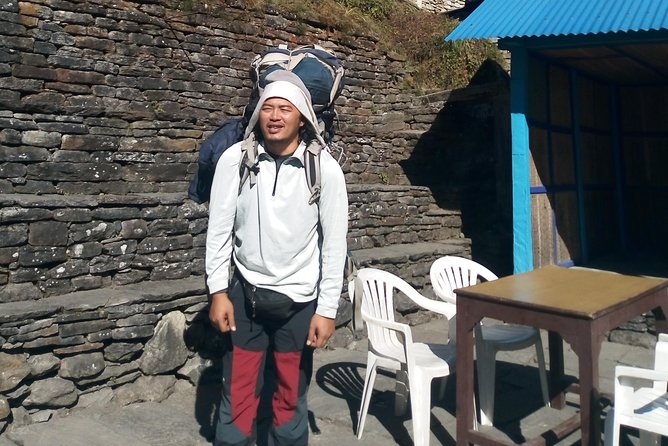
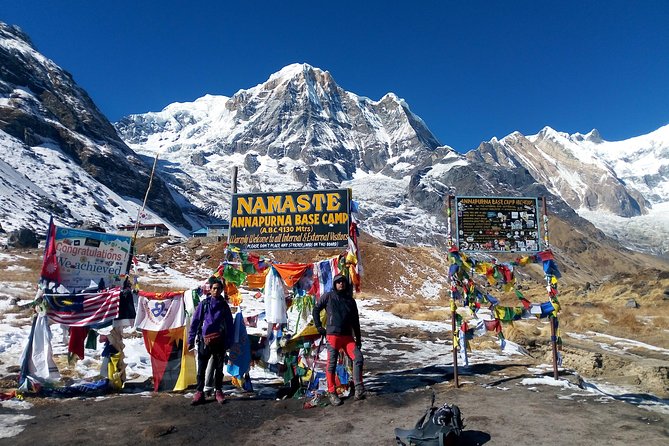
The walk from Deurali to Annapurna Base Camp takes about five hours and reaches 4,130 meters, or 13,549 feet.
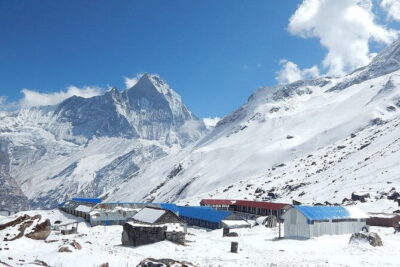
This is the trip’s central goal. Base camp is described as a natural amphitheater, and that is the image to keep in mind: rather than one isolated viewpoint, you are surrounded by high peaks on several sides.
The altitude is no small detail. At 4,130 meters, the climb asks more of you than the earlier village walks. Even people who are fit can find high altitude tiring. The supplied information does not give a detailed acclimatization or emergency plan, so ask the company how the guide handles altitude concerns before setting out.
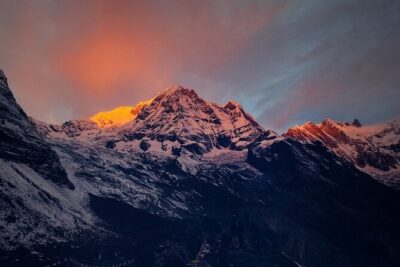
The reward is the setting. You have moved from Gurung villages and lower forest sections into the heart of the Annapurna range. Annapurna South, Hiunchuli, Nilgiri, and Machhapuchhre are among the named peaks that shape the view.
This is also the point where the itinerary’s 10-day structure makes sense. A shorter schedule could sound attractive, but the gradual approach lets the base camp day feel like a destination rather than a rushed photo stop.
Day 8: Returning from base camp to Bamboo
The return from Annapurna Base Camp to Bamboo takes about six hours and descends to 2,340 meters, or 7,677 feet.
Downhill walking is not automatically easy. After the long climb to base camp, your legs may be tired, and descending steep sections can put pressure on your knees. The drop in altitude should feel welcome, but the day still deserves a careful pace.
Bamboo also changes the feel of the route. You leave the high mountain bowl and return toward lower sections of the Annapurna region. The schedule avoids sending you all the way back to the road in one huge day, which is a sensible choice.
Day 9: Bamboo to Jhinu Hot Spring
The walk from Bamboo to Jhinu Hot Spring takes about five hours, ending at 1,780 meters, or 5,839 feet.
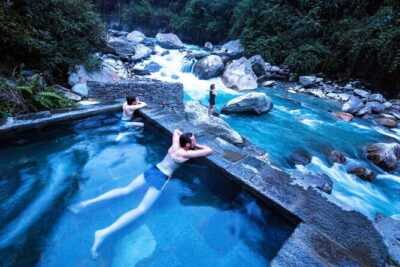
Jhinu gives the return journey a pleasant final goal. A hot spring stop is a welcome contrast after several days of mountain walking, especially after the descent from base camp.
The itinerary does not describe how long you spend at the spring or what is included there, so confirm those details if the hot spring is a major reason you are booking. Still, its position near the end of the route makes sense. You can enjoy the lower elevation and mark the end of the hardest mountain section before the final transfer.
Day 10: Nayapul, then back to Pokhara
The final day takes you from Jhinu Hot Spring to Nayapul and then by road to Pokhara. The full day is listed at seven hours, with Pokhara again at 820 meters.
This is a long closing day because it combines walking and driving. You should not plan an important fixed appointment immediately afterward unless you have plenty of spare time.
Ending in Pokhara gives the trip a clear finish, but it also means the listed itinerary does not return you to Kathmandu on Day 10. The meeting point is in Thamel, Kathmandu, while the final itinerary point is Pokhara, so confirm whether a Kathmandu transfer is arranged separately or whether the activity ends in Pokhara.
That is the clearest practical question to settle before booking. The route itself is easy to understand, but the start and end transport details need to match your wider Nepal plans.
Is $853.34 a fair price?
At $853.34 per person, this is not a budget day trip. It covers a 10-day route in the tour description, so the price should be judged against the time and planning involved rather than against a short Kathmandu excursion.
The value looks strongest if the quoted amount includes the main transport, guiding, and arrangements for the trek. However, the supplied details do not spell out meals, accommodation, porter service, permits, or transfers between Pokhara and Kathmandu. Do not assume those items are included.
The private format can also affect value. You are paying for a trip limited to your own group, not a large shared departure. That may suit you if you want direct contact with the guide and a more flexible walking pace.
I would ask for a written list of inclusions before comparing this price with another operator. The biggest price difference between trekking companies often comes from what is included, not from the route name.
Guide support and the human side of the trek
The strongest personal detail in the information provided is the repeated mention of the guiding team. Prakash is described as informative, attentive, professional, funny, and relaxed. Those qualities matter on a 10-day walk, when steady encouragement and clear decisions can shape the whole experience.
Raj, Kum, and Papa Nepal are also named in connection with the team. Since the booking information does not guarantee a particular guide, ask whether Prakash will lead your departure and who will be with you if he is unavailable.
The private setup gives you a direct relationship with the guide. That can be especially useful for a first trek, since you can ask questions as the route gets higher and the walking becomes more demanding.
The company says most people can participate, including those without prior mountaineering or trekking experience. I would still choose this trip only if you are ready for repeated five to six-hour walking days and a high point of 4,130 meters.
Practical details worth settling first
The activity starts at 5:00 am in Thamel, Kathmandu, and ends back at the meeting point according to the general tour details. The day-by-day schedule, however, finishes in Pokhara, so clarify that apparent mismatch.
The activity is listed as mobile-ticket friendly, and confirmation is provided at booking. It is near public transportation, though the stated meeting point is specific enough that you should still confirm the exact pickup place.
The cancellation rule is firm. You can receive a full refund if you cancel at least three full days before the start time. Cancellations or changes made within three days are not accepted for a refund.
The ticket fields also use both admission ticket included and admission ticket free in different parts of the information. Ask what those labels mean in practical terms. They may refer to different stages of the experience, but the details do not explain it.
Who should book this trek?
I would recommend it to you if you want a classic Annapurna route with a clear goal, village contact, mountain viewpoints, and a private guide team. The 10-day plan suits someone who prefers a measured schedule over a rushed high-altitude push.
It is also a good match if you are new to trekking but understand that beginner-friendly does not mean effortless. The route has long walking days and reaches 4,130 meters.
I would hesitate if you have only two free days, because the listing summary gives a confusing two-day duration even though the detailed plan requires 10 days. I would also hesitate if you need a fully itemized package price and the operator cannot clearly explain what the $853.34 covers.
Should you book the Annapurna Base Camp trek?
Book it if the company confirms the 10-day duration, the Kathmandu to Pokhara and Pokhara to Kathmandu arrangements, and the full list of inclusions. The route itself offers a strong mix of Poon Hill views, Gurung villages, a dramatic base camp finish, and Jhinu Hot Spring.
The most useful reason to choose it is the guide-led private format, especially if Prakash is available and you value attentive support. Just treat the high altitude and five to six-hour days seriously, and do not let the low experience requirement fool you into expecting an easy walk.
FAQ
How long is the Annapurna Base Camp trek?
The detailed itinerary lasts 10 days, from arrival in Kathmandu through the return to Pokhara. The general tour summary says 2 days, so confirm the correct duration before booking.
Where does the trek start?
The listed meeting point is in Thamel, Kathmandu, Nepal. The stated start time is 5:00 am.
Where does the itinerary finish?
The day-by-day program finishes in Pokhara after the walk from Jhinu Hot Spring to Nayapul and the drive onward. The general activity details say the experience ends back at the meeting point, so confirm whether a return transfer to Kathmandu is included.
How high is Annapurna Base Camp?
Annapurna Base Camp is listed at 4,130 meters, or 13,549 feet.
Is Poon Hill included?
Yes. The route description includes Poon Hill as a viewpoint for Annapurna South, Hiunchuli, Nilgiri, and Machhapuchhre.
How long do the daily walks take?
The walking days are generally listed at about five to six hours. The final day, which combines walking and driving, is listed at seven hours.
Is this a private tour?
Yes. Only your group participates in the activity.
Do I need previous trekking experience?
The tour information says most people can participate and describes the plan as suitable for people without mountaineering or trekking experience. You should still be prepared for repeated five to six-hour walking days and high altitude.
What is the cancellation policy?
You can receive a full refund if you cancel at least three full days before the experience start time. Cancellations and changes made within three full days are not accepted for a refund.
Just added around Kathmandu
- Everest Base Camp Trek★ 5.0 · 3 reviews
- Everest Base Camp Trek★ 5.0 · 7 reviews
- 15 Days Private Everest Base Camp Trek★ 5.0 · 30 reviews
- Everest Base Camp Trek★ 5.0 · 57 reviews
- 14 Days of Adventure Trekking to Everest Base Camp★ 5.0 · 2 reviews
- 14-Day Everest Base Camp Trek★ 5.0 · 20 reviews
- From Kathmandu: Private 14-Day Everest Base Camp Trek★ 5.0 · 20 reviews
- 14 Days Everest Base Camp Trek★ 5.0 · 4 reviews
Annapurna Base Camp Treks, compared.
Trekking in Annapurna/Langtang/Everest/Upper Mustang regions
Read our review →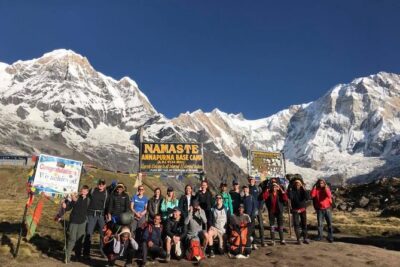
Kathmandu to Annapurna Base Camp (ABC) 5-Day Trek
Read our review →Browse the lists this trek appears in