
Review · KATHMANDU
Annapurna circuit Trek
The best part of this 12-day Annapurna Circuit trek is the change in scenery. You begin with a long road journey from Kathmandu, walk through pine country and high mountain villages, cross Thorong La at 5,416 meters, then descend toward the dry Kali Gandaki valley and hot-spring country. It is a serious trek, but the route gives you a lot of Nepal in a short time.
I like that the package includes the practical pieces that can make a Himalayan trip tiring to arrange: permits, porters, meals, local transport, a guide, and drinking water. I also like the family-run feel associated with Nature Explore, with guides including Dinesh and Deepak receiving repeated praise for careful organization, personal support, and calm handling of medical problems.
The main caution is the pace. The itinerary compresses a classic circuit into 12 days, includes long vehicle rides, and puts the Thorong La crossing after only one acclimatization day. You need solid fitness, good insurance, and a willingness to accept changes caused by weather, roads, or altitude.
Key points before you book
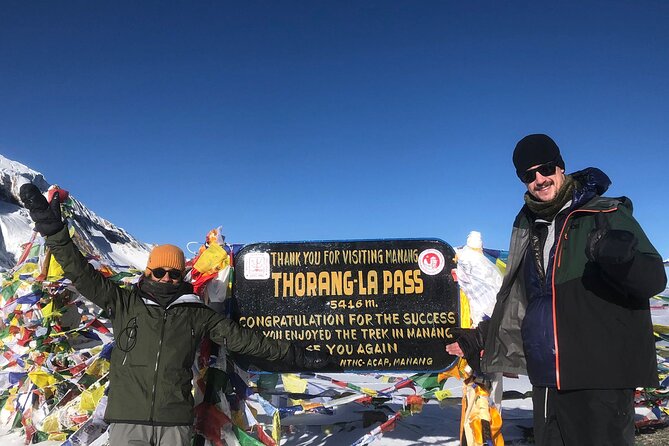
- Thorong La is the main test: The pass reaches 5,416 meters and comes after a night near 4,500 meters.
- The route mixes hiking and driving: You travel by local bus or jeep on the longer road sections, including Kathmandu to Dharapani and Marpha to Tatopani.
- Meals and basic support are included: Breakfast, lunch, dinner, tea or coffee, fruit after dinner, treated water, a guide, and a porter are part of the package.
- The scenery changes dramatically: Manang, the high pass, Muktinath, Marpha, and Tatopani each offer a different side of the Annapurna region.
- This is a private trip: Only your own group takes part, allowing some room for personal attention.
- The price covers a lot, but not everything: At $998 per person, you still need to budget for insurance, equipment, tips, snacks, Wi-Fi, laundry, and international flights.
What this Annapurna Circuit route is really like
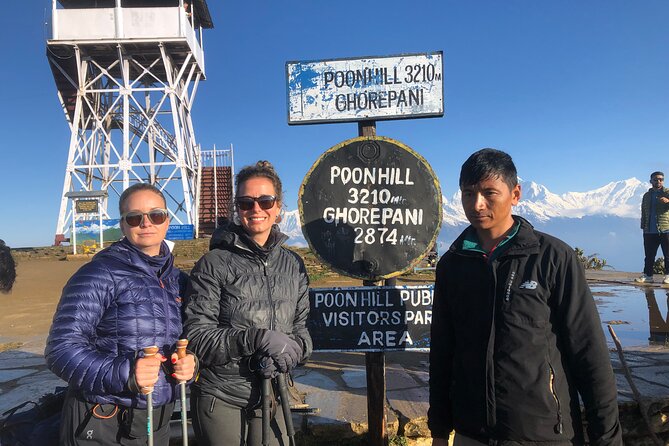
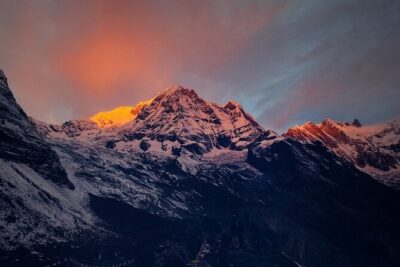
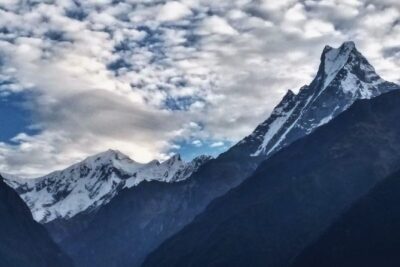
This is not a gentle village walk with a few mountain views. It is a high-altitude crossing with long days, rough road travel, and a fast rise from Kathmandu to the upper Marsyangdi valley. The reward is variety: Hindu and Buddhist communities, changing architecture, steep river valleys, broad mountain views, and a walk from the lush middle hills into the dry country behind the Annapurna range.
The itinerary begins at Tribhuvan Airport in Kathmandu at 6:15 am. Airport pickup is included, along with a three-star Kathmandu hotel. The early start matters because the first major transfer is long, and road conditions in Nepal can make estimated travel times flexible.
Nature Explore supplies a duffle bag, T-shirt, and a down jacket that you return after the trek. The package also includes a guide, porter support, the Annapurna Conservation Area permit, and a TMIS card. Those inclusions reduce the number of small arrangements you need to make before setting off.
More Annapurna Treks in Kathmandu
- Annapurna Circuit Trek with Tilicho Lake
★ 5.0 · 368 reviews - Annapurna base camp trek 5 Days
★ 5.0 · 252 reviews - 14-Day Private Annapurna Base Camp Trek
★ 5.0 · 180 reviews
Day 1: Kathmandu arrival and a quick start
Your first day is mainly about getting from the airport to the hotel and preparing for the road journey. This is useful if you want an organized arrival, especially after a long international flight, but the schedule does not offer much spare time if your flight arrives late or luggage is delayed.
The package includes airport pickup and drop-off, but extra hotel nights before or after the trek are not included. Check your international arrival time carefully. If you reach Kathmandu outside the planned schedule, you may need to pay for an additional night.
Day 2: The long road to Dharapani
The drive to Dharapani goes through Besisahar and takes about seven to eight hours, reaching roughly 2,000 meters. This is one of the least romantic parts of the circuit, yet it is also practical. Roads now carry you farther into the valley than older versions of the trek, saving walking days.
Expect a full day in a local sharing bus or jeep. You will see river valleys, steep hillsides, roadside settlements, and the gradual change from urban Nepal to mountain Nepal. The drawback is comfort. Shared vehicles can be crowded, slow, and affected by traffic or road work.
Dharapani is where the walking section begins in earnest. Keep your first evening simple. Eat, organize your pack, and get rest instead of treating the arrival as a sightseeing stop.
Day 3: Dharapani to Chame
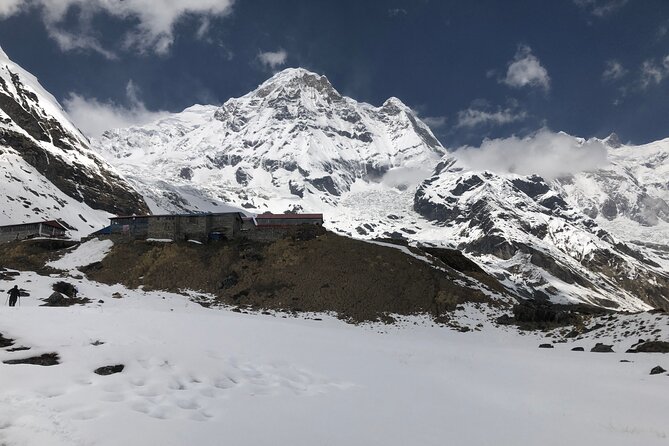
The walk to Chame takes four to five hours and rises to about 2,600 meters. The shorter day is helpful after the previous road transfer and begins the gradual adjustment to altitude.
Chame is the administrative center of Manang District and an important overnight stop on the circuit. You can expect mountain scenery, forested sections, and a stronger sense that you are entering the high Himalaya. The route is not simply a postcard walk. Some sections may run close to road traffic, an unavoidable result of the circuit’s expanding road network.
Your guide matters here. The operator’s team, including Dinesh and Deepak, has been praised for handling logistics and adapting to different fitness levels. On a private trip, you can ask for a measured pace rather than feeling pressured to match a large group.
Same trailhead, a different route:
- Everest Base Camp Trek – 14 Days
★ 5.0 · 1,499 reviews - Everest Base Camp Trek
★ 5.0 · 842 reviews - Everest Base Camp Helicopter Tour landing at Everest View Hotel
★ 5.0 · 668 reviews - Everest Base Camp Trekking
★ 5.0 · 485 reviews
Day 4: Chame to Upper Pisang
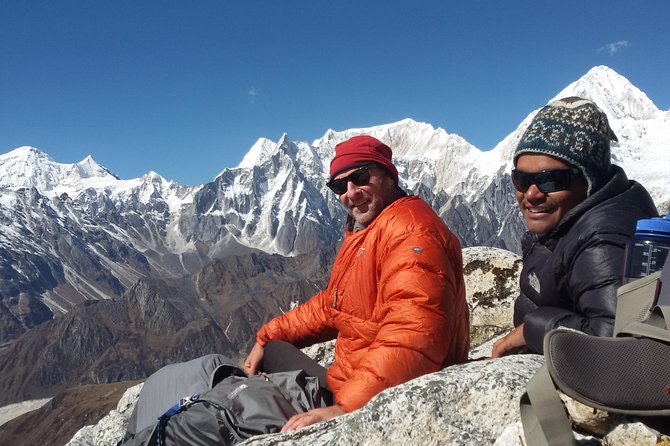
The four to five-hour walk to Upper Pisang reaches about 3,300 meters. Upper Pisang is one of the more atmospheric villages on this section, with a high mountain setting and a quieter feel than lower settlements.
The altitude gain is now noticeable. Walk slowly, drink regularly, and tell your guide about headaches, nausea, unusual tiredness, or poor sleep. A good guide should treat these signs seriously rather than seeing them as a test of toughness.
The package includes treated drinking water, which is a useful inclusion at this stage. You should still bring a personal bottle or hydration system and avoid relying on buying drinks at every stop. Tea and coffee are included during the trek, while cold drinks and extra snacks cost extra.
Day 5: Upper Pisang to Manang by the upper trail
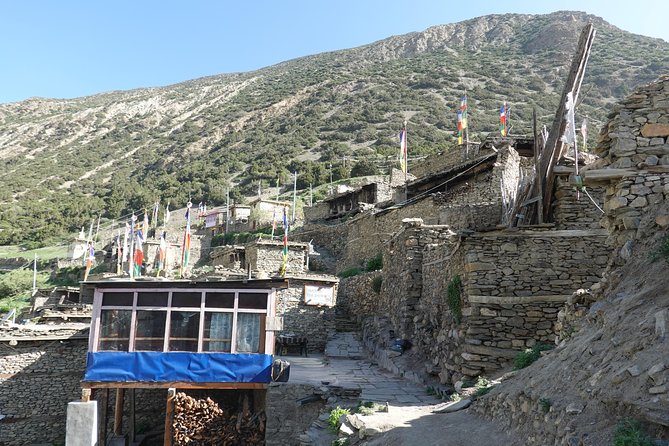
This is one of the longest walking days, at seven to eight hours, with Manang at about 3,500 meters. The upper trail is the scenic choice, but it also means more exposure to altitude and a demanding day on foot.
Manang is a major acclimatization and supply center. Its position makes it a natural place to slow down, look around, and prepare for the crossing ahead. The route’s cultural character also becomes clearer here, with Buddhist influences and mountain communities shaped by trade, farming, and the harsh climate.
Do not judge this day only by distance. Seven or eight hours at altitude can feel much longer than a similar walk at home. The best approach is a steady pace, short breaks, and no race to arrive first.
Day 6: Acclimatization in Manang
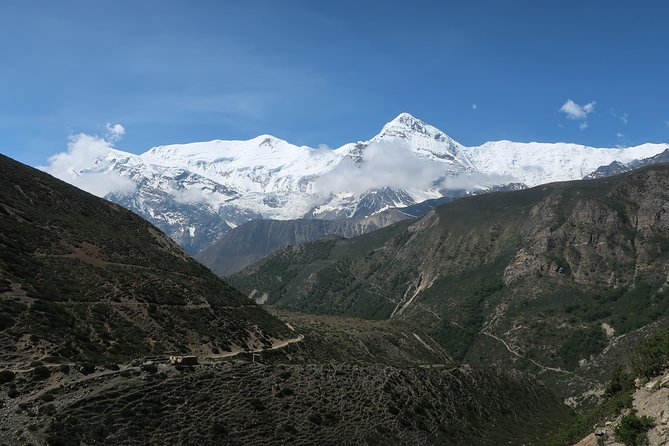
The itinerary allows one acclimatization day in Manang. This is essential, not wasted time. Your body needs time to adjust before the route climbs above 4,000 meters.
The schedule does not specify a particular acclimatization hike or activity, so do not assume a fixed excursion is included. Use the day for easy movement, rest, hydration, and preparation for the next three demanding stages.
This is also a good time to check your clothing and sleeping gear. Conditions can change sharply above Manang. Your included Nature Explore down jacket is refundable after the trek, but you remain responsible for the rest of your trekking equipment.
Day 7: Manang to Yak Kharka
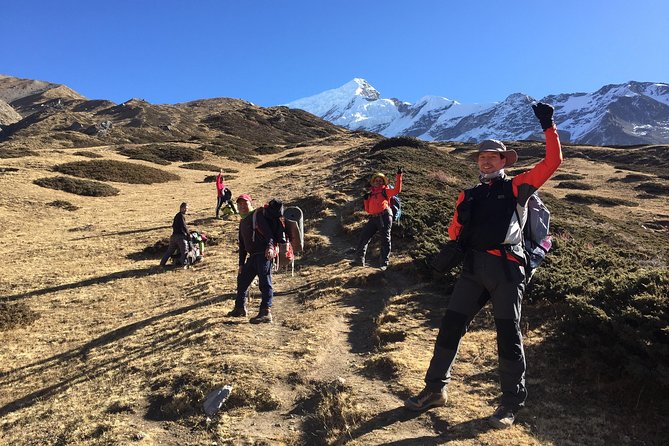
The walk to Yak Kharka takes three to four hours and reaches about 4,060 meters. The distance is short, but altitude changes the effort. This is where you should resist the temptation to walk quickly simply because the day looks easy on paper.
Yak Kharka is a high overnight stop before the pass. The landscape becomes more open and spare as trees thin out. You are now in the part of the journey where warmth, hydration, and careful pacing matter more than comfort or sightseeing plans.
Your guide should monitor the group closely here. The operator has received strong praise for responding to altitude-related medical problems on other Nepal treks, including arranging help during an unexpected medical evacuation. That does not remove the risks of high altitude, but it is a reassuring sign of the kind of support you want on a route like this.
Day 8: Yak Kharka to Thorong Phedi
The three to four-hour walk to Thorong Phedi reaches approximately 4,500 meters. The itinerary calls this Thorong base camp or Thorong Phedi. Either way, it is the staging point for the pass crossing.
This is a short day by distance but a major day for altitude. You may have time to rest after arrival, and you should use it. Keep your evening quiet, organize your clothing for an early start, and speak up immediately if you feel unwell.
The accommodation on the trek is included, but it is best understood as practical mountain lodging rather than hotel comfort. Wi-Fi, laundry, snacks, and cold drinks are not included. Carry some spending money for these extras if you want them.
Day 9: Thorong La to Muktinath
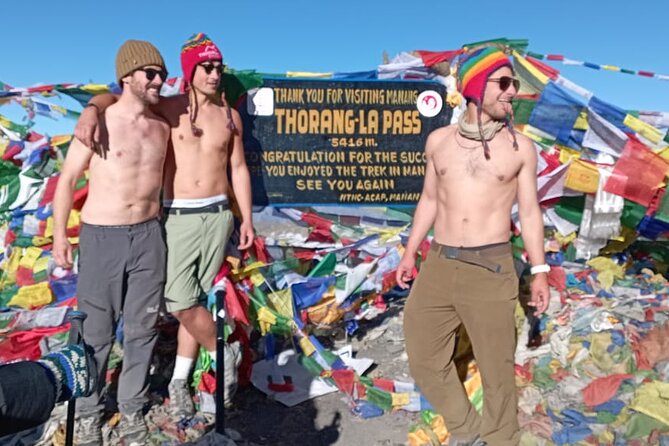
The pass crossing is the physical centerpiece of the trip. Thorong La reaches 5,416 meters, and the full day to Muktinath takes about seven to eight hours. You climb to the pass, spend a short time taking in the huge views, then descend toward Muktinath at about 3,800 meters.
This is the day that demands the most respect. The combination of altitude, cold, wind, uneven ground, and a long schedule can turn a hard walk into a dangerous one. Conditions may force changes, and no operator can guarantee a crossing on a particular day.
Muktinath is important to both Hindu and Buddhist traditions. That mix of religion and mountain culture gives the stop more meaning than a simple overnight halt. After the stark high pass, the descent also feels like a major shift in climate and scenery.
Day 10: Muktinath to Marpha through Jomsom
The route continues toward Marpha through Jomsom, with six to seven hours of walking and an overnight elevation of about 2,650 meters. You lose a great deal of altitude, which usually feels welcome after the pass.
This section enters the dry Kali Gandaki valley, where the scenery differs sharply from the greener lower valleys. Jomsom is a transport and administrative center, while Marpha is known for its stone buildings and mountain village character.
Marpha is a pleasing place to finish the main walking section. It also marks the end of the trek’s high-altitude challenge, though you still have a long road journey ahead.
Day 11: Marpha to Tatopani by bus or jeep
The drive to Tatopani takes about five hours and descends to around 1,190 meters. It is a striking climate change, from cool high valleys to warmer, greener country.
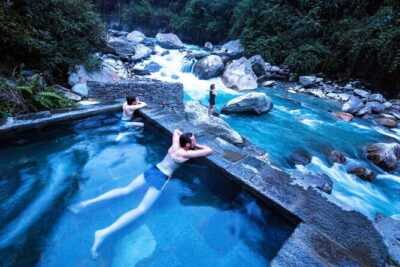
Tatopani means hot water, and the stop is associated with natural hot springs. The itinerary does not clearly state that an entrance or bathing session is included, so treat that as an optional activity rather than a guaranteed part of the package.
The road can be rough and slow. Still, taking a vehicle here saves a long walking section and lets you finish the circuit within the advertised 12 days.
Day 12: Tatopani to Pokhara
The final drive to Pokhara takes about six hours and ends the trip at approximately 740 meters. Pokhara is a sensible finish, with a more relaxed setting after the high mountains and road travel.
One night in a Pokhara hotel after the trip is included, although the day-by-day schedule says the trip ends when you reach Pokhara. Confirm how that hotel night is handled before booking, especially if you plan to fly onward or add extra nights.
What $998 includes, and what it does not
At $998 per person, the package offers solid value if you want one company to handle the main logistics. Airport transfers, a Kathmandu hotel, a Pokhara hotel night, local transport, trekking accommodation, three daily meals, tea or coffee, fruit after dinner, treated water, permits, a guide, porter support, a duffle bag, and a temporary down jacket add up quickly when arranged separately.
The price does not include international airfare, travel insurance, trekking equipment, extra nights, Wi-Fi, laundry, cold drinks, extra snacks, or tips. These are not minor details on a high-altitude trek. Good insurance with trekking and emergency evacuation coverage is especially important.
You should also clarify the porter arrangement and luggage limits before departure. The package lists porter support, but it does not state a specific weight allowance.
Who will get the most from this trek?
This trip suits you if you want the classic Annapurna Circuit in a compact format and prefer local guides and organized transport to planning every detail alone. It is also a good choice if you value personal attention, since the tour is private and only your own group takes part.
It is less suitable if you want a slow itinerary with several acclimatization days, private vehicles throughout, or a low-effort holiday. The route includes a 5,416-meter pass and several long days. Moderate physical fitness is required, but you should prepare beyond the minimum by training for sustained uphill walking and long days on uneven ground.
The operator’s strongest qualities appear to be careful coordination, warm staff, and support during difficult moments. Dinesh, Deepak, Ram, Tej, Nara, and other team members are associated with trips where airport transfers, meals, changing fitness levels, and medical concerns were handled with care. Keep in mind that much of that praise comes from the company’s broader Annapurna work, including Annapurna Base Camp trips, rather than this exact 12-day route.
Should you book the Annapurna Circuit with Nature Explore?
Book it if you want a well-supported, private Annapurna Circuit and understand that the $998 price buys convenience, not luxury. The included guide, porter, food, permits, local transport, and hotels make the package appealing for a first Himalayan trek.
Before paying, ask Nature Explore to confirm the exact acclimatization plan, the transport schedule, porter baggage allowance, Pokhara hotel night, and what happens if weather or altitude prevents a Thorong La crossing. If you are comfortable with those uncertainties and can handle the pace, this itinerary gives you a powerful slice of Nepal: high mountain villages, a major pass, sacred Muktinath, Marpha’s dry valley, and the warm lowlands near Tatopani.
FAQ
Where does the Annapurna Circuit trek start?
The experience starts with pickup at Tribhuvan Airport in Kathmandu, Nepal. The stated meeting time is 6:15 am.
How long does the trek last?
The planned duration is approximately 12 days. The schedule ends in Pokhara after the drive from Tatopani.
What is the highest point on the itinerary?
The highest point is Thorong La pass at 5,416 meters.
Is airport pickup included?
Yes. Airport pickup and drop-off are included in the package.
Are meals included during the trek?
Yes. Breakfast, lunch, dinner, tea or coffee, fresh fruit after dinner, and treated drinking water are included.
Is accommodation included?
Yes. The package includes a three-star hotel in Kathmandu, accommodation during the trek, and one night in a Pokhara hotel after the trip. Extra nights are not included.
Is transport included?
Yes. Ground transport during the trek is provided by local sharing bus or jeep. The package specifically includes transport from Kathmandu to Dharapani and from Marpha to Tatopani.
Can I cancel for a full refund?
You can receive a full refund if you cancel at least 24 hours before the experience start time. Cancellations or changes made less than 24 hours before the start are not accepted for a refund.
Just added around Kathmandu
- Everest Base Camp Trek★ 5.0 · 3 reviews
- Everest Base Camp Trek★ 5.0 · 7 reviews
- 15 Days Private Everest Base Camp Trek★ 5.0 · 30 reviews
- 14-Day Everest Base Camp Trek★ 5.0 · 20 reviews
- Everest Base Camp Trek★ 5.0 · 57 reviews
- 14 Days of Adventure Trekking to Everest Base Camp★ 5.0 · 2 reviews
- From Kathmandu: Private 14-Day Everest Base Camp Trek★ 5.0 · 20 reviews
- 14 Days Everest Base Camp Trek★ 5.0 · 4 reviews
Annapurna Base Camp Treks, compared.
Trekking in Annapurna/Langtang/Everest/Upper Mustang regions
Read our review →
Kathmandu to Annapurna Base Camp (ABC) 5-Day Trek
Read our review →Browse the lists this trek appears in