
Review · KATHMANDU
Annapurna Sanctuary Trek – 14 Days
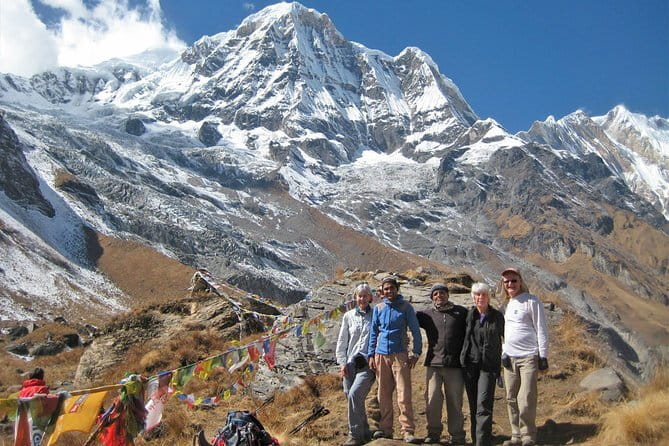
The best part of the Annapurna Sanctuary Trek is its variety. In 14 days, you move from Kathmandu temples to terraced hills, rhododendron forests, suspension bridges, and the enclosed mountain amphitheater around Annapurna Base Camp. Poon Hill adds a fine sunrise without requiring a separate trip.
I like the careful support system, with an English-speaking lead guide, assistant guide for larger groups, and one porter for every two trekkers. I also like the value: the $860 price includes domestic flights, hotels, teahouses, trekking meals, permits, equipment, staff, and transport. The main consideration is physical effort. Expect six to seven hours of walking most days, with many stone steps and a high point of 4,130 meters.
Key points to know
- Poon Hill sunrise: An early climb to 3,210 meters brings wide views of Dhaulagiri, Annapurna, and more than 20 high peaks.
- Annapurna Base Camp: You spend the night inside the mountain sanctuary at 4,130 meters, surrounded by Annapurna I, Annapurna South, Hiunchuli, Gangapurna, and other peaks.
- Strong staff setup: One lead guide, an assistant guide for each four trekkers, and one porter for every two trekkers help keep the group moving safely.
- Kathmandu culture before the trail: The plan includes Kathmandu Durbar Square, Pashupatinath, Swayambhunath, and Boudhanath.
- Useful inclusions: Domestic flights, permits, meals on the trek, private ground transport, sleeping bag, down jacket, duffel bag, and trekking map are included.
- Best seasons: March to May and September to November offer the best balance of warm weather and clear mountain views.
Why this route works so well
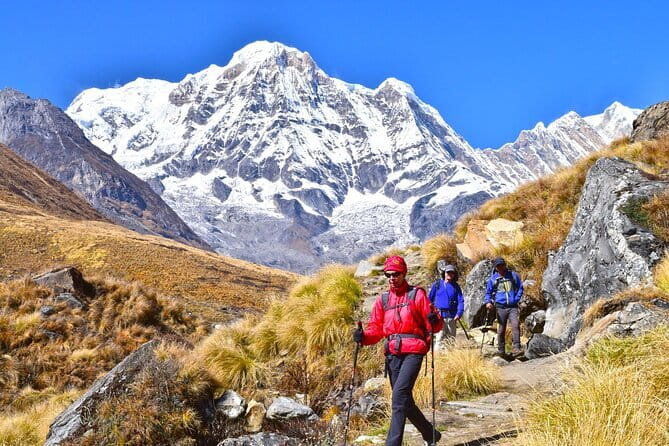
This is a good choice if you want a full Nepal experience rather than a trek with the city treated as an afterthought. The opening days give you time in Kathmandu, then the route shifts to Pokhara and the trail. You see temples, local villages, farms, forests, waterfalls, and high Himalayan peaks in one organized trip.
The route is also sensibly paced for a base camp trek. You do not rush from Pokhara straight to high altitude. Instead, you gain height over several days, sleep in Ulleri and Ghorepani, then continue through Tadapani, Chhomrong, Bamboo, Deurali, and Machhapuchhre Base Camp before reaching Annapurna Base Camp.
That said, relaxed does not mean easy. The trail is moderate but demanding. Six to seven hours of walking, steep ground, rough paths, and repeated ascents and descents require regular fitness. The thousands of steps above Tikhedhunga are an early warning that this is a proper mountain walk, not a sightseeing stroll.
More Annapurna Treks in Kathmandu
- Annapurna Circuit Trek with Tilicho Lake
★ 5.0 · 368 reviews - Annapurna base camp trek 5 Days
★ 5.0 · 252 reviews - 14-Day Private Annapurna Base Camp Trek
★ 5.0 · 180 reviews
Kathmandu’s four major sights on day two
Your second day is set aside for Kathmandu’s main heritage sites, visited by private vehicle. Each stop takes about an hour, so you get a useful first look without spending the entire day on foot.
Kathmandu Durbar Square brings you into the old royal center, with palace courtyards, pagoda temples, wood carvings, and shrines. Hanuman Dhoka Palace and Kumari Ghar are the main draws. The 2015 earthquake damaged parts of the complex, and restoration continues, but the square remains an important place to understand Nepal’s architecture and royal past.
At Pashupatinath Temple, you see Nepal’s Hindu traditions at their most direct. The temple sits beside the Bagmati River and includes shrines, ghats, and places for prayer and meditation. Non-Hindus cannot enter the main temple, but you can view the complex and its rituals from surrounding areas. Dress and behave respectfully here, since this is an active religious site rather than a museum.
Swayambhunath, often called the Monkey Temple, sits on a hill above the city. Its white stupa, prayer flags, prayer wheels, and Buddha eyes make it one of Kathmandu’s most recognizable places. The hilltop also gives you broad city views, though the climb and steps may feel tiring if you have just arrived from a long international flight.
Finally, Boudhanath Stupa offers a quieter, more contemplative stop. Walk around the large stupa with pilgrims, prayer wheels, monasteries, and Tibetan Buddhist culture around you. It was damaged in the earthquake and restored afterward. The itinerary allows about an hour at each site, enough for a strong introduction but not a slow architectural study.
Flying to Pokhara and climbing to Ulleri
You take an early flight from Kathmandu to Pokhara. Sit on the right side of the plane for the outbound mountain views, if seating allows. On arrival, you may see Dhaulagiri, Manaslu, Machhapuchhre, and the Annapurna peaks before the walking begins.
A drive takes you to Hile, the trailhead. From there, the route passes through subtropical forest and along sections cut into steep hillsides. After lunch, you cross the Bhurungdi Khola and reach Tikhedhunga before tackling the long climb to Ulleri.
The Ulleri section is famous for its stone steps. Thousands of them rise through the hills, and they make day three a serious test of your legs. The reward is a mountain village setting and the sense that the trek has properly begun. Keep your pace steady here. Trying to hurry the steps can make the next days harder.
Ghorepani and the Poon Hill sunrise
The following morning brings more climbing to Ghorepani. The name means horse-water, a reminder that this was once an important stopping place for traders. Today it is a popular trekking village with small shops, local goods, and mountain views.
Ghorepani sits high enough for cold evenings, so warm layers matter even before you reach the highest camps. The village has two sections, and the upper part provides views toward Annapurna South and Nilgiri.
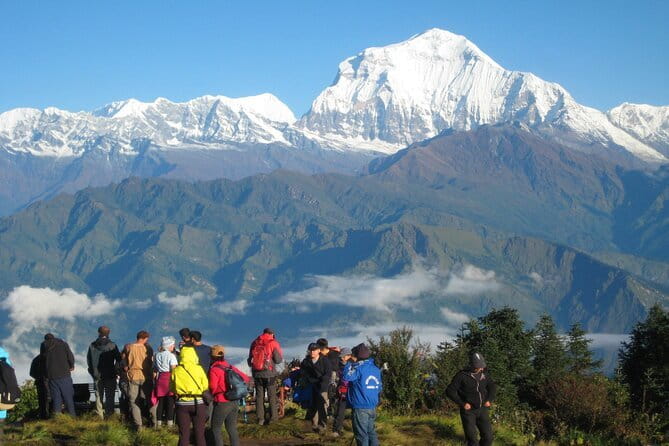
Day five begins early with the climb to Poon Hill at 3,210 meters. You go before breakfast to catch sunrise over the Dhaulagiri and Annapurna ranges. This is one of the route’s smartest additions. You get a major Himalayan viewpoint without adding a separate overnight climb.
The lookout also gives views toward Mustang, Pokhara, and more than 20 high peaks. After coffee, tea, or hot chocolate, you return to Ghorepani for breakfast, then continue through rhododendron forest toward Tadapani. The day is not finished after sunrise. Expect a descent, a ridge climb, waterfalls, and several more hours on the trail.
Poon Hill can be busy in the main seasons, but the viewpoint remains worthwhile. If you dislike early starts, this is the morning that tests your resolve. Sunrise comes with a price: a pre-dawn climb and a full trekking day afterward.
Same trailhead, a different route:
- Everest Base Camp Trek – 14 Days
★ 5.0 · 1,499 reviews - Everest Base Camp Trek
★ 5.0 · 842 reviews - Everest Base Camp Helicopter Tour landing at Everest View Hotel
★ 5.0 · 668 reviews - Everest Base Camp Trekking
★ 5.0 · 485 reviews
Tadapani, Chhomrong, and the changing scenery
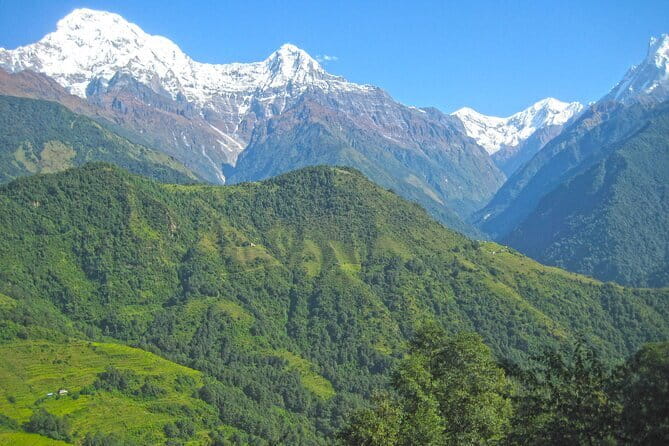
From Tadapani, the trail descends through a large rhododendron forest before opening onto terraced fields. Waterfalls and a suspension bridge break up the walking. You then climb and descend again before reaching Chhomrong, a large village below the Annapurna massif.
Chhomrong is an important point on the route because the views begin to feel more immediate. It is also where the trail’s repeated stair work becomes very clear. The next morning starts with stone steps down to the Chhomrong Khola, followed by a bridge and a climb to Sinuwa.
From Sinuwa, the trail passes through forest to Kuldihar, then drops to Bamboo. This is a day of mixed effort rather than one long climb. A descent can sound easy, but steep steps put pressure on knees, especially after several days on foot.
The forest changes as you continue. Around Bamboo, the air is damp and cool. After Himalaya Hotel, the trees open and the glacial river comes into view. The route then climbs through drier forest to Hinku Cave, descends to a river, and rises again to Deurali.
At Deurali, vegetation becomes more sparse, and the valley begins to feel much more alpine. You can look toward Dhaulagiri and see cliffs, waterfalls, and the river below. This gradual change from farms to forest to bare mountain country is one of the trek’s great strengths.
Reaching Annapurna Base Camp at 4,130 meters
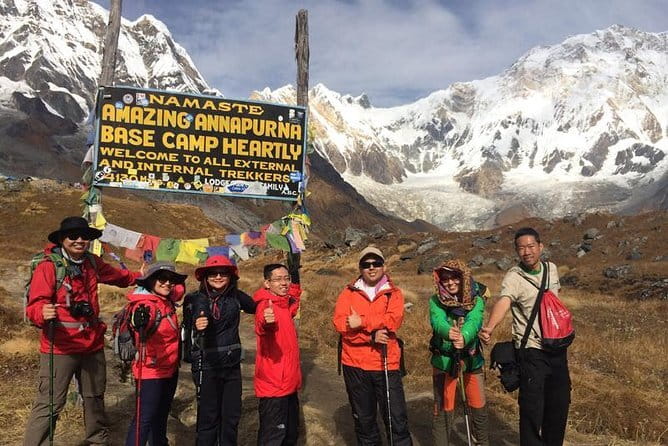
The approach to base camp follows the valley on a steady climb. Parts of the trail cling to rocky cliffs, and some sections are steep. After a flatter stretch, you climb to Machhapuchhre Base Camp.
From there, the setting opens into one of the finest mountain scenes in Nepal. You can see Hiunchuli, Annapurna South, Annapurna I, Annapurna III, Gandharvachuli, and Gangapurna. The route then turns toward Annapurna Base Camp, with the peaks closing around the sanctuary.
Annapurna Base Camp sits at 4,130 meters. The physical achievement matters, but the setting is the real prize. You are inside a natural mountain bowl, reached through the gorge you have followed from the lower valleys. Spend time looking around rather than treating arrival as a quick photo stop.
Altitude is a serious consideration here. The itinerary gains height in stages, but thin air can still affect you. Your guide can alter the plan if weather or health makes that necessary. A positive attitude helps, but it does not replace patience, hydration, and attention to how you feel.
You sleep at base camp, which gives you a chance to experience the sanctuary in the evening and early morning. Conditions in remote teahouses are basic, and attached bathrooms are not available at every stop. The reward is direct access to the high mountain setting, not hotel-style comfort.
The long return through Bamboo and Jhinu Danda
The return begins with a rapid descent from base camp through Machhapuchhre Base Camp, Deurali, Himalayan Hotel, and Doban to Bamboo. Downhill walking is often easier on the lungs but harder on the knees, so trekking poles can be useful if you normally use them.
The next day retraces the route to Chhomrong, where you stop for lunch. From there, stone steps lead steeply down toward the Modi Khola valley and Jhinu Danda. Farms and rainforest make this section feel warmer and more settled than the high sanctuary.
Jhinu Danda is a good place to pause. The afternoon is set aside for rest, though the supplied plan does not promise a particular extra activity. You might find the lower elevation and slower pace welcome after the demanding base camp days.
On day twelve, you walk the final section to Matque, then drive by private vehicle to Pokhara. The drive takes about two hours, with lunch along the way. After checking into the Pokhara hotel, you have a half-day city tour and time to rest.
Pokhara, Kathmandu, and the flight home
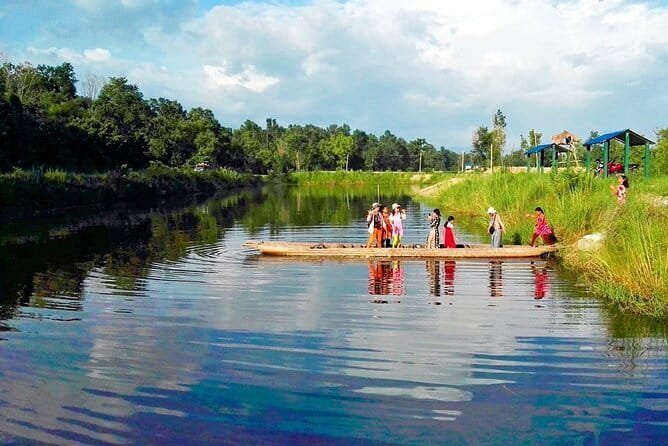
Pokhara provides a softer finish to the trek. It is known as the city of lakes and gives you a change from teahouse life before the final flight. The program includes hotel accommodation and breakfast, but lunch and dinner in Pokhara are your responsibility unless separately arranged.
On day thirteen, you fly back to Kathmandu in the afternoon. Sit on the left side of the plane for the return mountain views, if possible. The final evening includes a farewell dinner, with time for shopping or for seeing any Kathmandu sight missed earlier.
The airport transfer on departure is planned for about three hours before your flight. That leaves little room for a late change of plan, so keep your final morning simple.
What the $860 price really covers
At $860, this is a strong package if you use the included services. The price covers:
- Three-star hotels in Kathmandu and Pokhara with breakfast
- Teahouse accommodation during the trek
- Breakfast, lunch, and dinner while trekking
- Domestic flights between Kathmandu and Pokhara
- Private ground transport listed in the schedule
- Kathmandu sightseeing by private vehicle
- Lead and assistant trekking staff
- Porters, with one porter for every two trekkers
- Annapurna Conservation Area and TIMS permits
- Down jacket, sleeping bag, duffel bag, trekking shirt, and map
- Medical kit, staff costs, government taxes, and local taxes
- Welcome and farewell dinners
This is more than a basic guiding fee. You are paying for the operational work behind a high-altitude trip, including permits, porters, transport, flights, and equipment. The package is especially useful if you do not want to organize each part yourself.
There are still extra costs. You pay for a Nepalese visa, international flights, insurance, rescue cover, bottled or boiled water, showers, battery charging, laundry, phone use, drinks, tips, and personal purchases. In Kathmandu and Pokhara, only breakfast is included apart from the two special dinners.
A single supplement costs an additional $425. Rooms are normally twin-shared, and single rooms may not be available in the higher villages even if you pay the supplement.
Guides, group size, and safety
The staff structure is one of the strongest parts of this trip. You get one experienced, English-speaking, government-licensed lead guide. For every four trekkers, an assistant guide is added, and one porter serves every two trekkers.
Groups usually top out at 12 people. That is small enough for a guide to keep track of the group, while large enough to share the running costs. The extra guide also means the trek can continue if one person becomes unwell, though the leader can change or cancel part of the plan when safety requires it.
Jaya is one guide associated with this program, and his work has been praised for handling a difficult weather start, managing the schedule, and responding closely to individual needs. You should still confirm your assigned guide before departure, since the specific staff member can vary.
The company provides a medical kit, but you must bring travel and rescue insurance. Mountain weather, illness, natural disasters, and transport problems can force changes. Flexibility is part of the deal, not a sign that the trip has gone wrong.
Fitness, weather, and what to pack
You should be comfortable walking six to seven hours over steep, rough trails. Previous hiking or camping experience is preferred, and a moderate fitness level is required. The route involves daily ascents of roughly 400 to 700 meters in places, as well as long descents.
Spring, from March to May, and autumn, from September to November, are the best seasons for clearer views and warmer conditions. Winter can offer fewer people on the trail, but it also brings colder conditions. The experience requires good weather, and the schedule may change if conditions become unsafe.
The operator supplies a down jacket and sleeping bag, but you should still bring proper hiking clothes, warm layers, rain protection, sturdy footwear, sun protection, and personal medicines. The supplied duffel bag is useful for the porter load, while you carry a smaller day pack.
At higher elevations, attached bathrooms are not always available. Hot showers, bottled or boiled water, charging, and other comforts cost extra. Plan for basic teahouse living and you will be better prepared.
Should you book the Annapurna Sanctuary Trek?
Book it if you want Annapurna Base Camp plus Poon Hill, not just one destination. The mix of Kathmandu heritage, Pokhara, village walking, forests, sunrise views, and a night at base camp gives you a fuller Nepal trip than a narrowly focused trek.
The $860 price is attractive because it includes the expensive moving parts: domestic flights, staff, porters, permits, meals on the trail, hotels, teahouses, and transport. The best fit is a reasonably fit trekker who values support and does not mind shared rooms or changing plans when mountain conditions demand it.
Skip it if you want private rooms throughout, short walking days, guaranteed schedules, or a soft adventure. The stone steps, long hours, basic teahouses, and high altitude are real demands. For the right person, though, this is a well-supported route to one of Nepal’s great mountain settings.
Free cancellation is available up to 24 hours before the experience starts. Cancellations inside that window are not refunded, and weather-related cancellations offer a different date or a full refund.
FAQ
How long is the Annapurna Sanctuary Trek?
The program lasts approximately 14 days, including time in Kathmandu and Pokhara, domestic flights, the trek to Annapurna Base Camp, and the return journey.
What is the highest point of the trek?
Annapurna Base Camp is the highest overnight point listed, at 4,130 meters. Poon Hill reaches 3,210 meters.
Is Poon Hill included?
Yes. You climb to Poon Hill before breakfast on day five for sunrise views of the Annapurna and Dhaulagiri ranges, then return to Ghorepani for breakfast.
Are meals included?
Breakfast, lunch, and dinner are included during the trekking portion. In Kathmandu and Pokhara, breakfast is included, along with welcome and farewell dinners. Lunch and dinner in those cities are not included.
What accommodation is provided?
You stay in three-star hotels in Kathmandu and Pokhara and in teahouses during the trek. Accommodation is twin-shared. Attached bathrooms are available in many trekking locations but not all remote stops.
Are flights included?
Yes. The package includes domestic flights from Kathmandu to Pokhara and from Pokhara back to Kathmandu.
Are trekking permits included?
Yes. The package includes the Annapurna Conservation Area Permit and TIMS permit, along with the necessary paperwork and government and local taxes.
How large is the group?
The trip normally has a maximum of 12 people. Larger groups can be arranged, but the usual group size is kept smaller for easier management.
Do I need travel insurance?
Yes. Travel and rescue insurance are not included, so you need to arrange them separately before the trek.
Just added around Kathmandu
- Everest Base Camp Trek★ 5.0 · 3 reviews
- Everest Base Camp Trek★ 5.0 · 7 reviews
- 15 Days Private Everest Base Camp Trek★ 5.0 · 30 reviews
- 14-Day Everest Base Camp Trek★ 5.0 · 20 reviews
- Everest Base Camp Trek★ 5.0 · 57 reviews
- 14 Days of Adventure Trekking to Everest Base Camp★ 5.0 · 2 reviews
- From Kathmandu: Private 14-Day Everest Base Camp Trek★ 5.0 · 20 reviews
- 14 Days Everest Base Camp Trek★ 5.0 · 4 reviews
Annapurna Base Camp Treks, compared.




Trekking in Annapurna/Langtang/Everest/Upper Mustang regions
Read our review →


Kathmandu to Annapurna Base Camp (ABC) 5-Day Trek
Read our review →Browse the lists this trek appears in