
Review · KATHMANDU
Annapurna Circuit Trek
The big draw here is the full Annapurna Circuit, not a short mountain sampler. You travel by bus from Kathmandu to Besisahar, walk through high villages and dry mountain country, cross 5,416-meter Thorong La, then descend through Muktinath, Marpha, Ghorepani and Poon Hill before reaching Pokhara.
I like the mix of scenery and culture. Muktinath gives the route a strong spiritual purpose, while Manang, Marpha and the Kali Gandaki gorge show how sharply Nepal changes from one valley to the next. I also like the small group size, capped at 10, and the support of guides and porters. Past trips have included guides such as Sudam, Binod, Pasang and Raju.
The main caution is altitude. Thorong La is not a casual walk, and 18 days can feel demanding if you arrive unprepared. Lunch and dinner in Kathmandu and Pokhara are not included, nor are drinks, so you will need extra cash beyond the listed $1,074.88 price.
Key points to know before booking
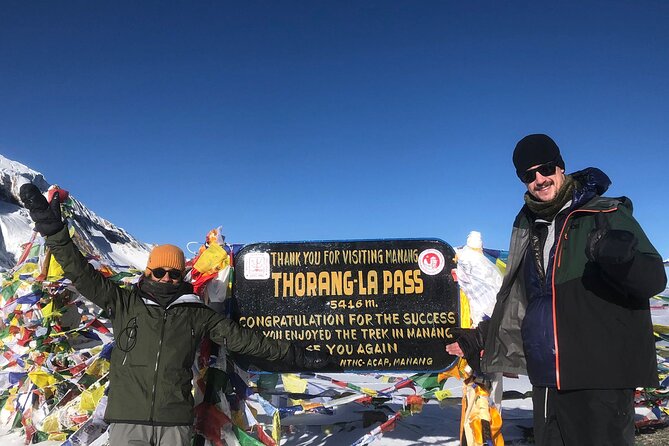
- Thorong La reaches 5,416 meters, making acclimatization and steady pacing central to the trip.
- Muktinath sits at 3,410 meters and is one of Nepal’s most important holy sites.
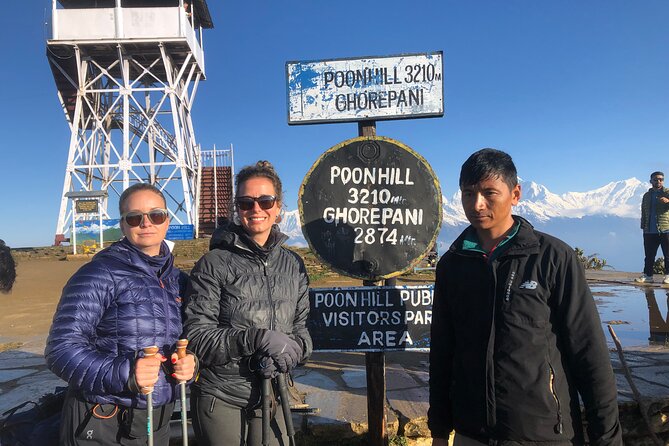
- Poon Hill offers a mountain sunrise, with views toward the Annapurna range and Dhaulagiri.
- The route passes through Manang, Marpha, Ghorepani and Pokhara, giving you both high mountain scenery and settled village life.
- Groups are limited to 10 people, with airport pickup, Kathmandu hotel accommodation and sightseeing included.
- The price includes ACAP and TIMS permits, but not Kathmandu and Pokhara lunches, dinners or drinks.
Why this 18-day route earns its place on your Nepal plan
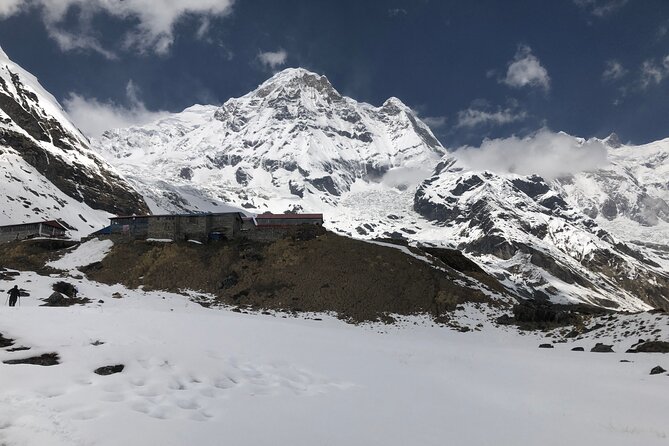
The Annapurna Circuit works because it keeps changing. You start with a road journey and lower valleys, climb toward Manang, cross a serious mountain pass, then descend through the Mustang side of the range and continue toward Ghorepani and Pokhara.
That variety matters. A shorter trek may give you dramatic peaks, but this route gives you a sense of crossing an entire mountain region. You see different village styles, meet people from several ethnic communities and share the trail with trekkers from many countries.
The scenery is not one-note. Around Manang and Yak Kharka, the setting becomes stark and high. Near Thorong La, the air is thin and the views feel large and exposed. After Muktinath, the route moves toward Marpha and the Kali Gandaki gorge, then reaches the forested and terraced country around Ghorepani.
The route also includes a cultural centerpoint. Muktinath is a sacred temple at 3,410 meters, close to the base of Thorong La. It is regarded as a Shakti Peeth, a place linked with primordial energy. You do not need to share the same beliefs to understand why the site matters. Its location, religious importance and position on the trek give the crossing a deeper purpose than simply reaching a high point.
More Annapurna Treks in Kathmandu
- Annapurna Circuit Trek with Tilicho Lake
★ 5.0 · 368 reviews - Annapurna base camp trek 5 Days
★ 5.0 · 252 reviews - 14-Day Private Annapurna Base Camp Trek
★ 5.0 · 180 reviews
Kathmandu begins the trip with useful support
The package starts with airport pickup and transfer to a three-star-level hotel in Kathmandu. That is practical after a long flight, especially if you have not visited Nepal before and want help getting settled.
Kathmandu sightseeing by car is included. The exact sightseeing stops are not specified, so you should confirm the plan before arrival. Still, the inclusion has value because it gives you a guided introduction to the city without asking you to arrange transport immediately after landing.
The operator also provides airport drop-off at the end. Those simple transfers can remove a fair amount of stress. Several arrangements connected with the company have included direct help from managing director Mr. Mani, including assistance with exchange and NCell matters. That sort of practical support is useful when you are tired, short on local currency or trying to get a phone working.
The itinerary then points toward Besisahar by bus. This is not the glamorous part of the trip, but it puts you on the classic approach to the circuit. Road travel in the mountains can be tiring, and the long ride is worth viewing as part of the journey rather than a quick transfer.
Besisahar to Manang: the route begins to climb
From Besisahar, the trek moves through villages and higher valleys toward Manang. The most important change is altitude. You are not simply walking farther each day. You are asking your body to adjust as the air becomes thinner.
Manang is one of the route’s key stops because it gives you a chance to experience a high Himalayan settlement before the hardest section. The village is also part of the broader cultural shift on the circuit, where architecture, vegetation and daily life differ from the lower valleys.
The supplied plan does not give fixed daily walking distances or named overnight stops for every night. That is worth clarifying before you pay. Ask for the day-by-day schedule, the expected walking hours and the planned acclimatization arrangements.
You will also pass through Yak Kharka, a place associated with striking views toward Annapurna and Dhaulagiri. The name suggests a pastoral setting, but the practical point is that this is already serious high country. You will want warm layers, good walking shoes and a guide who pays attention to your pace.
The company’s past guide team has included Sudam, Binod, Pasang, Jayaram, Raju and others. The individual guide matters greatly here. Feedback about this operator repeatedly highlights guides who were patient, flexible and attentive, along with porters who worked hard and remained supportive. Since guides can vary, ask who will lead your departure and what language support is available.
Thorong La is the physical test of the circuit
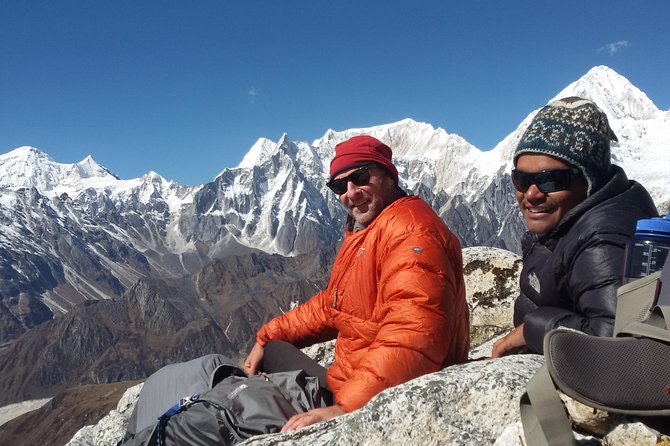
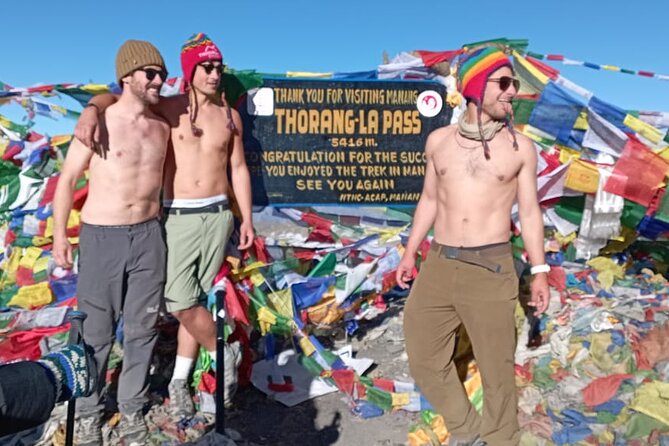
At 5,416 meters, Thorong La is the highest point on this trek. Reaching the pass is the defining physical challenge, and it deserves more respect than a casual checklist item.
The crossing combines altitude with a long day on foot. The route may be manageable for someone with moderate fitness, but moderate fitness is not the same as being ready for high altitude. You should prepare for sustained uphill and downhill walking, carry suitable clothing and tell your guide early if you feel unwell.
The reward is a wide mountain outlook. The pass and nearby sections offer views toward the Annapurna range and Dhaulagiri. The sense of achievement comes from crossing from one side of the mountain region to another, not just from standing beside a sign or taking a photo.
This is also the point where the small group limit has real value. With no more than 10 people, the group may be easier to pace than a large departure. It also gives the guide a better chance to notice when someone is struggling. That does not remove the risks of altitude, but it can improve communication and decision-making.
Same trailhead, a different route:
- Everest Base Camp Trek – 14 Days
★ 5.0 · 1,499 reviews - Everest Base Camp Trek
★ 5.0 · 842 reviews - Everest Base Camp Helicopter Tour landing at Everest View Hotel
★ 5.0 · 668 reviews - Everest Base Camp Trekking
★ 5.0 · 485 reviews
Muktinath adds meaning after the pass
Muktinath lies at 3,410 meters and is one of Nepal’s holiest temples. Its religious role gives the trek a strong contrast with the raw exertion of Thorong La.
You can approach Muktinath as a cultural visit, a spiritual stop or simply an important point on the route. Any of those approaches is reasonable. The key is to be respectful, since this is an active sacred site rather than a mountain attraction designed only for sightseers.
The location is part of its appeal. Muktinath sits near the base of Thorong La, so the temple feels tied to the crossing itself. You have just passed through an extreme alpine environment, then arrive at a place where pilgrimage and mountain travel meet.
The route then continues toward Marpha. This section offers a different feel from the high pass. Marpha is one of the named villages on the itinerary, and it forms part of the transition toward the Kali Gandaki gorge and lower valleys.
Kali Gandaki and Marpha show the route changing again
The trek includes a visit to the Kali Gandaki gorge, described here as the world’s deepest gorge. The gorge is one of the route’s most memorable geographical features because it gives scale to the surrounding mountains and helps explain why the trail feels so varied.
You will also encounter people from a wide range of ethnic backgrounds along the way. That human variety is one of the best reasons to choose a circuit rather than a simple out-and-back walk. Village life, religious practice and the movement of people through the valley become part of the experience.
At this point, the trip is no longer only about high altitude. You are moving through a corridor where mountain scenery, settlement and transport routes overlap. That can make the walk feel less remote than some restricted trekking areas, but it also gives you more contact with everyday Nepal.
Ghorepani and Poon Hill provide a second mountain highlight
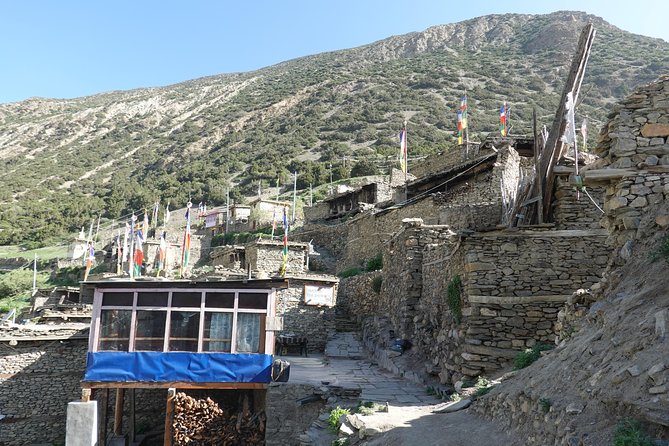
The return section includes Tatopani, Ghorepani, Tikhedhunga, Ulleri and Nayapul before Pokhara. These names are also linked with the Annapurna Base Camp approach, so this part of the journey gives the circuit a useful connection with another major trekking route.
Poon Hill is the headline stop. You rise for a mountain sunrise and look toward the Annapurna range and Dhaulagiri. The view is a different kind of reward from Thorong La. The pass tests endurance in thin air, while Poon Hill offers a more accessible scenic finish.
The villages here also change the rhythm. Tatopani suggests a lower, warmer section after the high mountains. Ghorepani and Tikhedhunga bring you into a more settled trekking corridor, while Ulleri and Nayapul mark the approach to the road and the end of the walking portion.
The descent can be hard on knees, even when breathing becomes easier. Do not assume the last section is effortless. Downhill walking often feels manageable at first and tiring later, so trekking poles and careful pacing can help, though the supplied information does not confirm whether equipment is provided.
Pokhara closes the route at a gentler pace
The trek ends in the beautiful valley of Pokhara. After many days of walking, Pokhara gives you space to recover and process what you have seen.
Lunch and dinner in Pokhara are not included. The same applies in Kathmandu, and drinks are excluded throughout the package. This is not unusual, but you should budget for meals, soft drinks, alcoholic drinks and other personal purchases.
The package includes the main program as set by the operator, along with airport transfers and permits. It does not list every trekking meal, lodge night or transport detail separately. Before booking, ask exactly what is covered during the mountain section. Clear answers about accommodation, meals, porter support and road transfers will help you compare the $1,074.88 cost fairly with other options.
What the $1,074.88 price really covers
The price looks reasonable for an 18-day Nepal program that includes airport pickup and drop-off, a three-star-level Kathmandu hotel, Kathmandu sightseeing by car, ACAP and TIMS permits, and the planned itinerary.
Its value depends on what the phrase all program as per itinerary includes in practice. The supplied details do not spell out trekking accommodation, mountain meals, guide fees or porter fees line by line. Those may be included in the operating plan, but you should confirm them rather than assume.
The strongest value is the organization. Airport support, sightseeing, permit handling and a small group can simplify the trip. If you were arranging the same route yourself, you would need to coordinate permits, transport, guides, porters, accommodation and changes caused by weather.
The price is less attractive if you expect every meal and drink to be covered. It is also not a luxury trek. The information points to practical arrangements, not high-end mountain lodging or private comfort at every stop.
The guide and porter service matters most
The most consistently praised part of the operation is the staff. Specific names connected with past trips include Sudam, Binod, Pasang, Jayaram, Raju and porter Dinesh. One guide, Pasang, was noted for speaking English and Chinese, which could be useful for some departures.
The descriptions of the staff point to patience, care, flexibility and strong support during difficult sections. Porters are also praised for their effort and good attitude. That matters on the Annapurna Circuit because a strong guide does more than point out the trail. The guide helps with pace, local customs, changing plans and the practical problems that appear during an 18-day journey.
Still, ask who is assigned to your group. An operator can have an excellent team while individual guide quality varies. You should also confirm how luggage is handled, how many porters are assigned and what happens if someone needs to stop or change the route.
Who should choose this trek?
I would recommend it to you if you want a major Himalayan trek with cultural variety, a famous high pass and a clear finish in Pokhara. It suits people who enjoy long days outdoors and do not mind basic, practical travel arrangements.
It is a good fit if you want support but not a large tour group. The maximum of 10 people keeps the departure relatively small and may make it easier to speak with your guide.
I would be cautious if you have little walking experience, dislike steep descents or want a relaxed sightseeing holiday. The operator lists moderate physical fitness as the minimum, but Thorong La makes the trip more demanding than an ordinary walking tour.
You should also be comfortable with changing conditions. The experience requires good weather, and poor weather can lead to a different date or a full refund. You can cancel for a full refund if you do so at least 24 hours before the start time. Later cancellations and changes are not accepted.
Should you book the Annapurna Circuit Trek?
Book it if you want the whole story of the Annapurna region: lower villages, Manang, high mountain country, Thorong La, sacred Muktinath, Marpha, Kali Gandaki, Ghorepani, Poon Hill and Pokhara.
The package offers good practical support and a small group, and the staff receive especially strong praise for care and flexibility. Before committing, get the exact daily itinerary and a written list of what is included during the trekking days.
My final advice is simple: choose this trip for the route and the people, not for luxury. Prepare seriously for altitude, budget for excluded meals and drinks, and confirm your guide and mountain logistics. If those points suit you, this is a strong way to experience one of Nepal’s most varied long-distance treks.
FAQ
How long is the Annapurna Circuit Trek?
The experience lasts approximately 18 days.
Where does the trek start?
The program begins in Kathmandu, followed by a scenic bus ride to Besisahar, where the trekking section starts.
What is the highest point on the trek?
Thorong La is the highest point, at an altitude of 5,416 meters.
Does the trek visit Muktinath?
Yes. The route visits Muktinath Temple, which lies at 3,410 meters and is one of Nepal’s holiest temples.
Is airport pickup included?
Yes. Airport pickup and transfer to the Kathmandu hotel are included. Airport drop-off at the end of the program is also included.
What is not included in the price?
Lunch and dinner in Kathmandu and Pokhara are not included. Drinks, including soft drinks and alcoholic drinks, are also excluded.
Can I cancel for a full refund?
Yes, if you cancel at least 24 hours before the experience start time. Cancellations made less than 24 hours in advance are not refunded. If poor weather causes the experience to be canceled, you will be offered another date or a full refund.
Just added around Kathmandu
- Everest Base Camp Trek★ 5.0 · 3 reviews
- Everest Base Camp Trek★ 5.0 · 7 reviews
- 15 Days Private Everest Base Camp Trek★ 5.0 · 30 reviews
- 14-Day Everest Base Camp Trek★ 5.0 · 20 reviews
- Everest Base Camp Trek★ 5.0 · 57 reviews
- 14 Days of Adventure Trekking to Everest Base Camp★ 5.0 · 2 reviews
- From Kathmandu: Private 14-Day Everest Base Camp Trek★ 5.0 · 20 reviews
- 14 Days Everest Base Camp Trek★ 5.0 · 4 reviews
Annapurna Base Camp Treks, compared.




Trekking in Annapurna/Langtang/Everest/Upper Mustang regions
Read our review →


Kathmandu to Annapurna Base Camp (ABC) 5-Day Trek
Read our review →Browse the lists this trek appears in