
Review · KATHMANDU
Annapurna Circuit Trekking -17 Days
The best part of this 17-day Annapurna Circuit is the dramatic change under your boots. You begin among terraced farms and warm valley villages, then climb through Manang toward the cold, high world of Thorung La, before descending to temples, hot-spring country, and Pokhara. I like the steady cultural shift and the way the route follows the Marsyangdi Valley before opening to huge mountain views.
I also like the practical package: lodging, three daily trek meals, permits, a guide, porter support, and major transfers are included. The main caution is the pace. The pass day runs 9 to 10 hours at very high altitude, and some daily distances reach 27 kilometers, so you need strong fitness and a serious attitude toward acclimatization.
Key points to know before booking
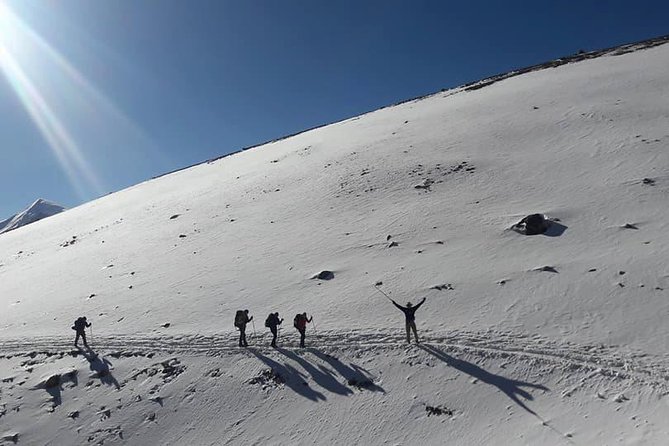
- Thorung La reaches about 5,416 meters, making Day 11 the hardest and most important day of the trek.
- Manang provides one acclimatization day, a useful pause before the route climbs above 4,000 meters.
- The itinerary mixes hiking and road travel, with public bus transport toward Besisahar and a long drive to Tatopani.
- Your private group travels with an English-speaking, government-trained licensed guide, plus a porter arranged at one porter for two clients.
- The $1,400 price includes most core trek costs, including 13 lodge nights, meals during the trek, permits, staff costs, and selected city hotels.
- The route finishes through Ghorepani and Nayapul, adding a second mountain section after the Thorung La crossing.
Why the Annapurna Circuit still earns its reputation
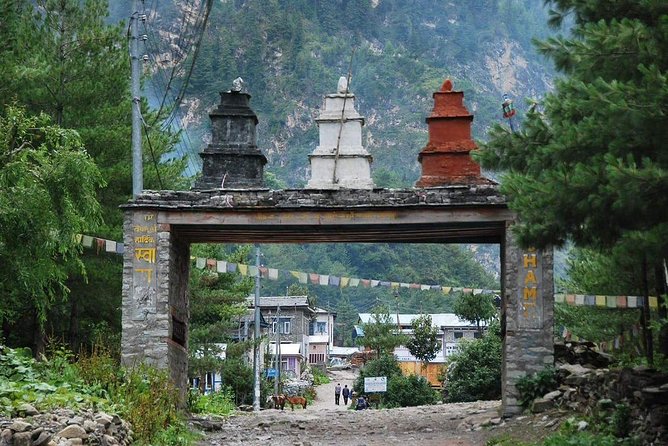
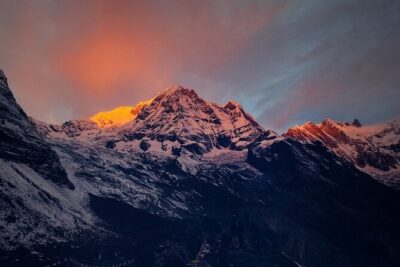
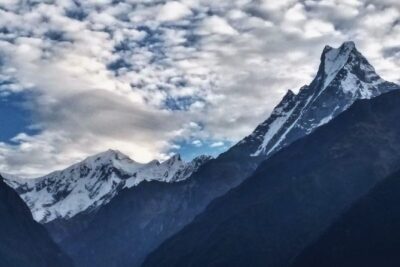
This route works because it gives you more than a single mountain view. You walk through several distinct parts of Nepal in one trip: lower river valleys, farming villages, pine country, high mountain settlements, dry areas near Manang and Muktinath, and the greener hills around Tatopani and Ghorepani.
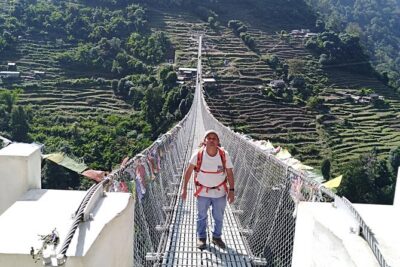
The Marsyangdi Valley supplies the route’s natural rhythm. Each day follows the river or climbs above it, with villages appearing along the trail. You are not simply walking from one viewpoint to another. You are passing through working communities where farms, homes, teahouses, and religious traditions change as the altitude rises.
The cultural shift is one of the strongest reasons to choose this circuit. Near Kathmandu and Besisahar, you begin in a lower, warmer setting. By Manang, the buildings, climate, and mountain culture feel different. Beyond Manang, the route heads toward the edge of the Tibetan plateau, and Muktinath adds another important religious stop after the pass.
More Annapurna Treks in Kathmandu
- Annapurna Circuit Trek with Tilicho Lake
★ 5.0 · 368 reviews - Annapurna base camp trek 5 Days
★ 5.0 · 252 reviews - 14-Day Private Annapurna Base Camp Trek
★ 5.0 · 180 reviews
Days 1 to 4: Kathmandu, Besisahar, and the lower Marsyangdi Valley
Day 1 is your arrival in Kathmandu at about 1,300 meters. The package includes a Kathmandu hotel night with breakfast, tax, and bed included. The meeting point is in Thamel, a convenient base for getting organized before the trail begins.
Day 2 starts with a long drive to Besisahar, about 184 kilometers, followed by a short seven-kilometer hike to Bhulbule. The listed walking time is around two hours. This is a gentle first trail day, but the road journey makes the day longer than the walking distance suggests.
Bhulbule sits at roughly 820 meters, so you are still low in the valley and far below the high pass. That is useful. You are easing into the trek rather than asking your legs and lungs to work hard at once.
On Day 3, you walk about 15 kilometers to Ghermu Phant, with five to six hours on foot. Expect the Marsyangdi Valley to become the main character here. Terraced farms and village life make this part feel connected to daily Nepal rather than built only for trekkers.
Day 4 takes you around 18 kilometers to Tal. The schedule lists roughly five hours of walking, though the day description also says six to seven hours, so you should allow flexibility. Tal sits at about 1,700 meters and marks a clear step upward into a narrower, more mountain-shaped section of the route.
Days 5 to 7: Timang, Pisang, and Manang
Day 5 brings a longer walk to Timang, at approximately 2,780 meters. The distance is listed as 21 kilometers, taking five to six hours. This is a substantial day, especially because you are gaining altitude while covering ground.
By Day 6, you walk as far as Pisang, about 27 kilometers and seven to eight hours. This is the longest listed hiking day of the itinerary. I would pay close attention to this detail when booking. The route is beautiful, but a 27-kilometer day is not a casual stroll, and the distance can feel harder as the air gets thinner.
Pisang, at around 3,200 meters, places you firmly in the high-altitude part of the circuit. The next day continues to Manang, covering about 22 kilometers in six to seven hours. Manang sits at approximately 3,540 meters and is one of the key settlements on the route.
Manang matters for both scenery and planning. It is your last major rest point before the steepest high-altitude section. The itinerary gives you a full acclimatization day on Day 8, which is essential rather than decorative.
Day 8 in Manang: the pause that protects the rest of the trek
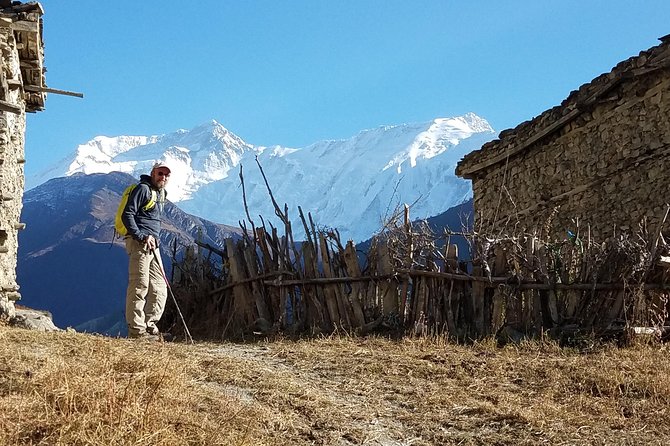
You spend Day 8 in Manang at about 3,540 meters. The schedule calls this an acclimatization day, giving your body time to adjust before the route climbs toward Yak Kharka, Phedi, and Thorung La.
A rest day does not mean you need to sit indoors all day. The supplied plan does not prescribe a specific activity, so your guide will be the right person to ask about suitable movement in and around Manang. The important point is that the itinerary does not rush straight from the lower valley to the pass.
This is also a good point to assess yourself honestly. You should have strong physical fitness before booking. If the earlier 21 to 27-kilometer days have already left you struggling, the next section will demand even more.
Same trailhead, a different route:
- Everest Base Camp Trek – 14 Days
★ 5.0 · 1,499 reviews - Everest Base Camp Trek
★ 5.0 · 842 reviews - Everest Base Camp Helicopter Tour landing at Everest View Hotel
★ 5.0 · 668 reviews - Everest Base Camp Trekking
★ 5.0 · 485 reviews
Days 9 and 10: Yak Kharka and Phedi above 4,000 meters
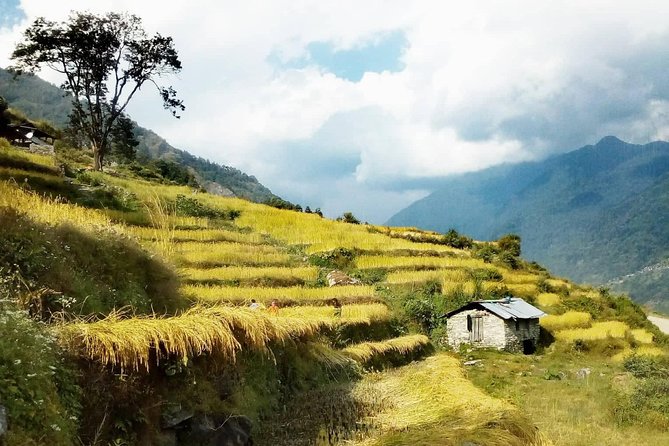
Day 9 is shorter, at about 10 kilometers and four to five hours, but the altitude makes it serious. You climb to Yak Kharka at roughly 4,000 meters. The shorter distance gives you more time to move slowly and pay attention to how your body feels.
Day 10 continues to Phedi, also called Thorung Phedi in common route planning, at about 4,545 meters. The listed distance is 8.5 kilometers, with three to four hours of walking. This is not a long day on paper, yet high altitude changes the calculation. Every uphill step costs more.
The inclusion of a licensed, English-speaking guide is especially important here. The guide can help manage the pace, keep the group together, and respond if someone is struggling. The company also includes first-aid medicine supplies, though that should not replace your own insurance or personal preparation.
Day 11: Thorung La, the hardest day of the circuit
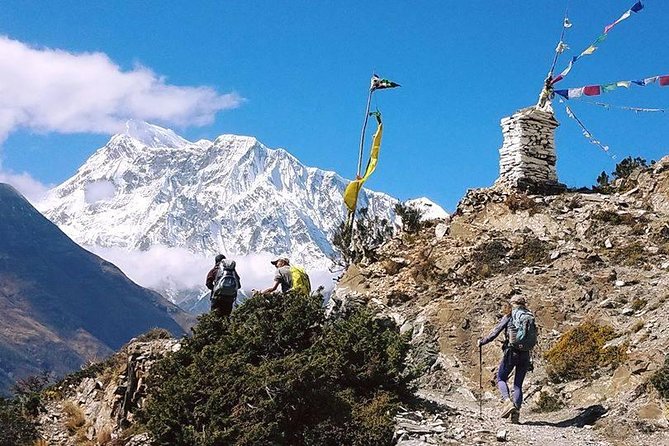
Day 11 is the defining test. You climb from Phedi over Thorung La, listed at about 5,416 meters, then descend to Muktinath at approximately 3,694 meters. The full distance is about 16 kilometers, with nine to ten hours on foot.
This day combines altitude, cold, steep climbing, and a long descent. It is the reason the Manang acclimatization day and the careful buildup through Yak Kharka matter. You should expect an early start and a demanding schedule, even though the exact departure time is not provided.
At the pass, the setting reaches the edge of the Tibetan plateau. The route changes sharply after the crossing, and the descent to Muktinath brings a different feel from the Marsyangdi side. Muktinath is also an important pilgrimage site, giving the day more meaning than a simple high-point crossing.
One detail deserves clarification: the supplied altitude is written as 51416 meters alongside 17,769 feet. The feet figure corresponds to about 5,416 meters, which is the sensible reading. You should still confirm current route conditions and exact altitude figures with the operator before departure.
Days 12 to 15: Muktinath, Tatopani, Ghorepani, and Nayapul
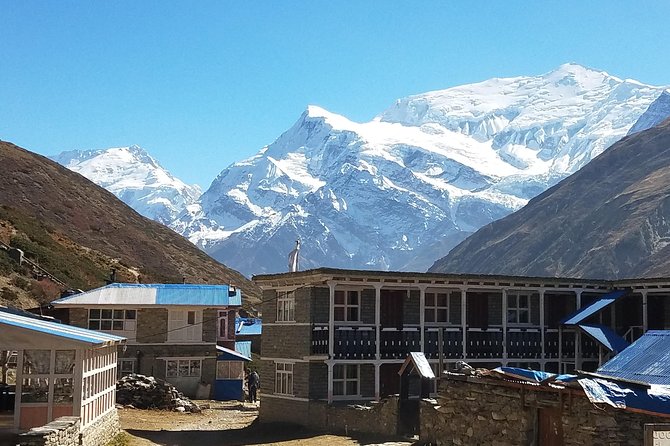
After the pass, Day 12 uses road transport to Tatopani, about 60 kilometers away and five to six hours by vehicle. This is a major transition from high mountain trekking to lower valley travel.
Tatopani sits at roughly 1,160 meters. The drop from Muktinath is substantial, so the drive gives your body a break from high-altitude walking. It also means this tour is not a pure foot journey from start to finish. If you prefer a continuous hike with no long vehicle sections, this is worth considering.
Day 13 takes you from Tatopani to Ghorepani, around 17.5 kilometers and six to seven hours. The climb back toward 2,850 meters can feel demanding after the road day, but it adds another well-known section of the Annapurna route.
Day 14 continues to Hile, at about 1,400 meters, over 12 kilometers and five to six hours. You are descending again, with the mountain environment gradually giving way to lower hills and settlements.
On Day 15, you walk three hours and seven kilometers to Nayapul, then take a private vehicle to Pokhara. The tour includes one Pokhara hotel night with breakfast, tax, and bed included. That night provides a sensible endpoint after the long circuit, rather than forcing you to return to Kathmandu immediately.
Days 16 and 17: returning to Kathmandu
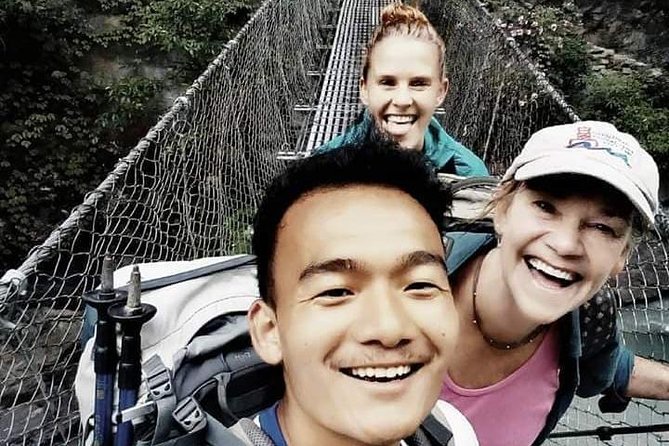
Day 16 is the drive back to Kathmandu, which sits at about 1,345 meters. The schedule does not state the journey time, so allow for a full road day rather than assuming a quick transfer.
Day 17 is departure. The activity ends back at the meeting point in Thamel. The package includes two Kathmandu nights and one Pokhara night, but it does not include city lunches or dinners, so budget separately for those meals.
What the $1,400 price really covers
At $1,400 per person, the price is useful because many of the major trek expenses are grouped together. You receive 13 nights in local lodges during the trek, with breakfast, lunch, and dinner included. You also receive the guide, porter support, staff wages, staff insurance, equipment, food, and accommodation.
The porter arrangement is one porter between two clients, arranged on request. That reduces the load in your daypack, but you should clarify the exact luggage limit and porter plan before setting out. A porter does not mean you should bring everything you own.
The package also includes Annapurna Conservation fees, TIMS permits, required permits, and official documentation. Those items can be a nuisance to arrange independently, so including them makes the price easier to understand.
Transport is mixed. The Kathmandu to Besisahar transfer uses a public bus, while Nayapul to Pokhara uses a private vehicle. The drive to Tatopani is included in the route plan, though the provided details do not specify the vehicle type. You also receive Kathmandu and Pokhara accommodation with breakfast.
You still need to pay for Nepal’s entry visa, personal travel insurance, city meals, beverages, mineral water, boiled water, beer, and customary tips for the guide, porters, and driver. The tour supplies energy snacks such as Snickers, Mars, and Bounty, along with fresh fruit during the trek, a small but welcome addition on long days.
What kind of hiker should book this trek?
You should book this if you want the classic Annapurna experience with a private group, organized support, and a route that includes both the Thorung La crossing and the Ghorepani section.
It suits someone who likes a clear schedule but still wants contact with local villages. The accommodation is in local lodges, not luxury hotels, and the food plan is designed for the trail. You should be comfortable with basic mountain lodging and long walking days.
You should think twice if you are not used to sustained hiking. The biggest warning signs are the 27-kilometer Pisang day, the high-altitude nights, and the nine to ten-hour pass crossing. The itinerary includes one acclimatization day, but that does not remove the physical demands.
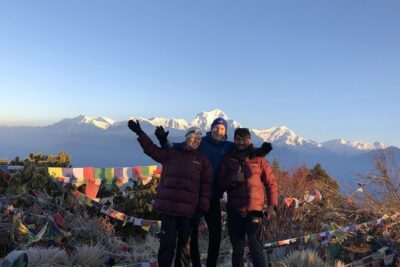
The experience is a private activity, so only your group participates. That can make pacing and communication easier than joining a large mixed group. The guide is described as English-speaking, experienced, government-trained, and licensed. Previous company trips have also been associated with guides named Dendi and Ngima, though you should confirm who is assigned to your departure.
The overall rating is listed as 5 from four reviews, with especially strong praise for organization, helpful guides, kindness, and clear explanations of Buddhist spirituality on related routes. That supports the idea that guide quality is a major part of the company’s appeal, but you should still ask for your assigned guide’s name and experience before paying.
Final verdict: is this Annapurna Circuit package worth it?
I would choose this trek if I wanted a well-supported Annapurna Circuit at a clear mid-range price, and if I was prepared for demanding walking rather than searching for a gentle holiday. The combination of permits, meals, lodges, staff, porter support, city hotels, and transport gives the $1,400 price solid value.
I would not book it casually. You need strong fitness, personal travel insurance, and a realistic plan for high altitude. The non-refundable policy also matters: cancellations or amendments do not receive a refund, while weather or minimum-group cancellations may lead to a new date or a full refund.
Before booking, confirm the assigned guide, porter luggage arrangement, exact transport details, and the daily distances. If those points suit you, this is a practical way to experience the Annapurna Circuit, from terraced valley farms to Thorung La and the pilgrimage town of Muktinath.
FAQ
Where does the Annapurna Circuit trek begin?
The activity begins in Thamel, Kathmandu. The route uses ground transport to Besisahar, followed by the first hike to Bhulbule.
How high is Thorung La Pass?
Thorung La is listed at about 5,416 meters, or 17,769 feet. It is crossed on Day 11 before the descent to Muktinath.
Is an acclimatization day included?
Yes. Day 8 is an acclimatization day in Manang, at approximately 3,540 meters.
Are meals included during the trek?
Breakfast, lunch, and dinner are included during the 13 lodge nights on the trek. City lunches and dinners are not included.
Is a porter included?
Porter support is included on request, with one porter arranged between two clients. The porter’s salary, insurance, equipment, food, and accommodation are covered as part of the trek staff costs.
What is not included in the $1,400 price?
Personal travel insurance, Nepal’s entry visa, city lunches and dinners, beverages, mineral water, boiled water, beer, and customary tips for the guide, porters, and driver are not included.
Just added around Kathmandu
- Everest Base Camp Trek★ 5.0 · 3 reviews
- Everest Base Camp Trek★ 5.0 · 7 reviews
- 15 Days Private Everest Base Camp Trek★ 5.0 · 30 reviews
- Everest Base Camp Trek★ 5.0 · 57 reviews
- 14 Days of Adventure Trekking to Everest Base Camp★ 5.0 · 2 reviews
- 14-Day Everest Base Camp Trek★ 5.0 · 20 reviews
- 14 Days Everest Base Camp Trek★ 5.0 · 4 reviews
- From Kathmandu: Private 14-Day Everest Base Camp Trek★ 5.0 · 20 reviews
Annapurna Base Camp Treks, compared.
Trekking in Annapurna/Langtang/Everest/Upper Mustang regions
Read our review →
Kathmandu to Annapurna Base Camp (ABC) 5-Day Trek
Read our review →Browse the lists this trek appears in