
Review · KATHMANDU
Annapurna Circuit Trek
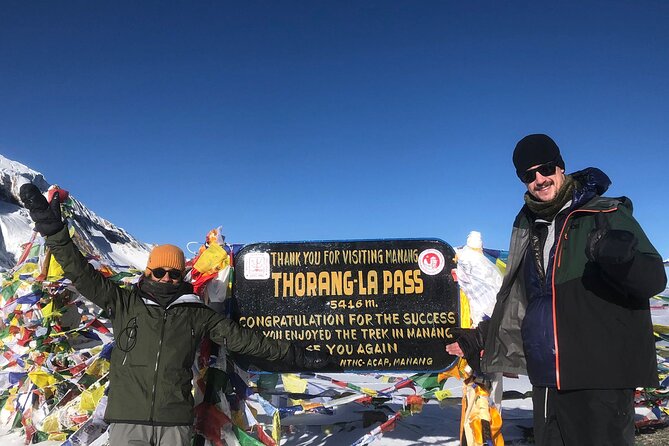
The Annapurna Circuit packs an astonishing amount into 15 days: high mountain passes, glacial lakes, Buddhist villages, Hindu pilgrimage sites, and changing scenery from green river valleys to dry Himalayan country. The high point is the crossing of Thorong La at 5,416 meters, paired with a side trip to striking Tilicho Lake.
I like the built-in acclimatization day in Manang and the support of local guides and porters. I also like that permits, meals, lodging, and the Jomsom to Pokhara flight are included, which makes a demanding trip easier to manage. The main catch is the rough road access and a few unclear transport details, so confirm the final schedule before paying.
Key points to know before booking
- Tilicho Lake adds a real high-altitude highlight: You spend extra nights near the lake rather than simply passing through the main circuit.
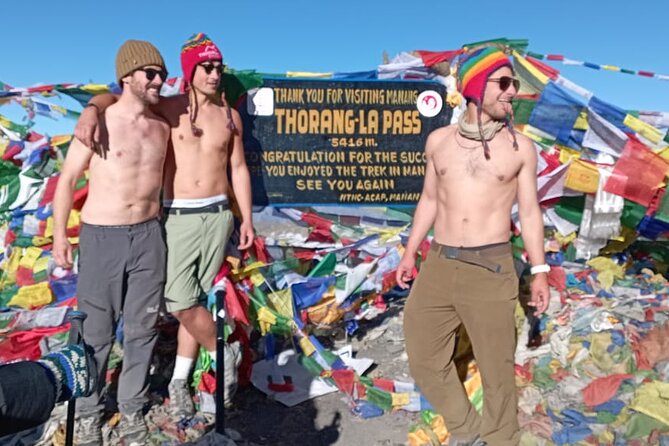
- Thorong La is the hardest day: The pass reaches 5,416 meters and requires an early start, steady pacing, and careful attention to altitude.
- Manang gives you time to adjust: The additional night supports acclimatization and allows side trips, including Ice Lake and local monasteries.
- The route mixes road and hiking: The first two trekking-area days involve long, rough drives before you reach the walking portion near Pisang.
- Private touring keeps the group small: Only your own party participates, with a professional guide and porters assigned to support the trek.
- The package covers many major costs: Permits, accommodation, 13 lunches, 13 dinners, 14 breakfasts, and flights listed in the itinerary are included.
A demanding Himalayan route with plenty of variety
At $1,560 per person, this is not a bare-bones walking holiday. The price includes a private trip, accommodation throughout, required trekking permits, UNESCO site permits in Kathmandu, guides, porters, meals, and transport. That is useful value in Nepal, where separate costs for permits, road transfers, flights, food, and support staff can quickly pile up.
You still need to budget for personal expenses and tips. The trip also asks a lot of you physically. The program lists a moderate fitness level, but the combination of long walking days, rough roads, loose rock, cold temperatures, and elevations above 5,000 meters makes this more than a casual hike.
The route is best suited to someone who wants a classic Annapurna crossing but also wants the extra effort of Tilicho Lake. If you prefer polished roads, predictable schedules, or easy access to medical care, this will feel rough around the edges. If you value mountain scenery, local villages, and a strong sense of progress each day, the roughness is part of the appeal.
More Annapurna Treks in Kathmandu
- Annapurna Circuit Trek with Tilicho Lake
★ 5.0 · 368 reviews - Annapurna base camp trek 5 Days
★ 5.0 · 252 reviews - 14-Day Private Annapurna Base Camp Trek
★ 5.0 · 180 reviews
Kathmandu begins with temples, traffic, and a useful cultural warm-up
Your arrival starts at Tribhuvan International Airport, where a representative meets you and takes you to your hotel. The drive through Kathmandu is a quick introduction to the city: narrow roads, heavy traffic, green hills, and plenty of movement.
You have time to settle in and explore Thamel, the city’s main tourist district. It is a practical place to find local food, Western meals, trekking supplies, and last-minute items. I would use this first evening to check your boots, pack, water bottles, and warm layers rather than staying out late.
The next day covers three major Kathmandu sights. Pashupatinath Temple gives you a look at one of Nepal’s most important Hindu religious sites. Buddha Stupa offers a very different setting, with Buddhist worship and a large stupa complex. Kathmandu Durbar Square brings together temples, carved buildings, sculpture, and reminders of the city’s older royal center.
These stops matter because the Annapurna route is not only about mountains. The trek passes through Hindu and Buddhist communities, and Kathmandu gives you context before you reach those villages. Admission fees for the listed UNESCO heritage sites are included.
Long road days lead toward Pisang
Day three is mostly transport. You leave Kathmandu early and drive toward Besisahar, with views of green hills, the Trishuli River, and the Manaslu and Annapurna ranges. The road is winding, narrow, and bumpy, especially after the turn toward the trekking region.
The schedule describes the drive continuing from Besisahar toward Jagat. Day four then takes you through Dharapani and Chame toward Pisang. In practice, road conditions can affect timing, so do not treat the stated hours as exact. The route is scenic, but the transport is not the relaxing part of the trip.
By the time you reach Pisang, you have gained considerable altitude, reaching roughly 3,000 meters. You sleep in a hotel and prepare to walk the next day. Upper Pisang is especially rewarding for mountain views, but your body may already notice the thinner air.
This is one of the trip’s main trade-offs. You reach the higher section quickly by vehicle, which saves walking days, but the road journey can be tiring and the rapid rise in altitude makes the acclimatization plan important.
Pisang to Manang brings the first real hiking choice
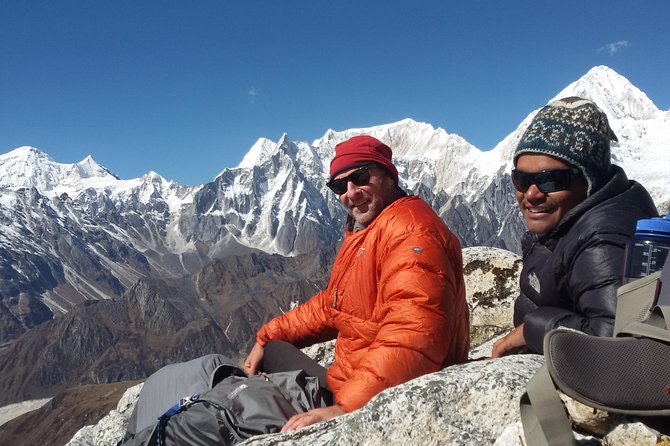
The walk from Pisang to Manang takes about six to seven hours. You can choose between a lower, shorter route and a higher route through Ghyaru. The higher path is tougher, but it offers broad views of the Annapurna range and passes through a striking Buddhist settlement.
The lower path is the sensible choice if you feel headache, unusual fatigue, nausea, or other signs of altitude trouble. Do not treat a scenic route as a test of willpower. Your goal is to arrive safely and preserve energy for Thorong La later.
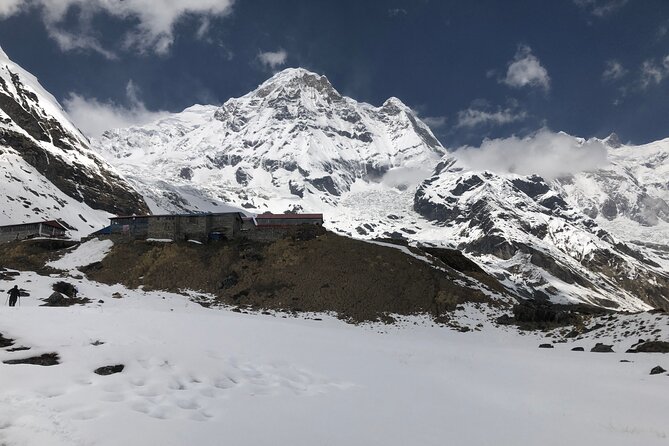
Manang is one of the most important stops on the circuit. From here, you can look toward Annapurna, Pisang Peak, Tilicho Peak, and Gangapurna. It is also the place where the itinerary slows down for acclimatization.
Same trailhead, a different route:
- Everest Base Camp Trek – 14 Days
★ 5.0 · 1,499 reviews - Everest Base Camp Trek
★ 5.0 · 842 reviews - Everest Base Camp Helicopter Tour landing at Everest View Hotel
★ 5.0 · 668 reviews - Everest Base Camp Trekking
★ 5.0 · 485 reviews
Manang gives your body time to catch up
The extra night in Manang is one of the strongest choices in this program. You can rest, visit nearby monasteries, see the Gangapurna glacier, or take a harder side trip toward Ice Lake at about 3,900 meters. Chongkor viewpoint is another option for mountain and glacial views.
The Himalayan Rescue Association clinic is also listed as a place to visit for information about altitude sickness. That is practical, not just sightseeing. Listen to the guidance, drink regularly, and tell your guide early if you feel unwell.
I like that the rest day is not treated as wasted time. At high altitude, an easier day can determine how well you manage the next section. You can still walk and see more, but you are not forced to pack up and gain height every morning.
Tilicho Lake adds effort and a memorable payoff
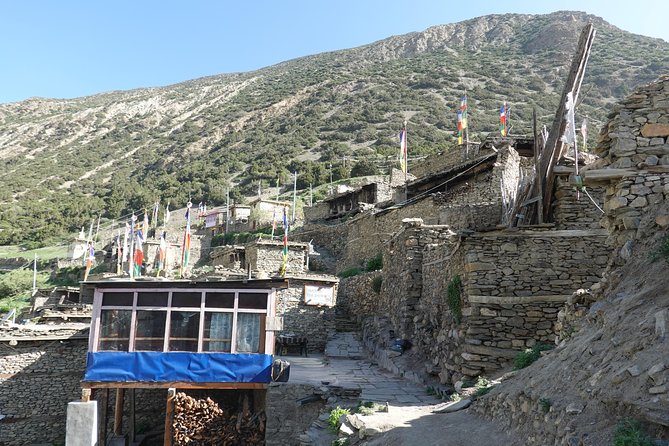
After Manang, the route heads through Khangsar toward Sri Kharka. The trail becomes dusty and rough, with views of Chulu and Gungang peaks and a monastery along the way. The walk takes about four to five hours, which sounds modest, but the uneven surface still demands care.
The next stage leads toward Tilicho Base Camp. The path is not especially steep, yet loose stones and possible landslide areas make it tiring. Small trails require attention, particularly if you are carrying a daypack and the ground is unstable.
There are no hotels or teahouses farther along the route to the lake, so the overnight arrangement at Tilicho Base Camp matters. You reach a reserved teahouse, rest, and prepare for an early start.
The morning walk to Tilicho Lake takes about five to six hours round trip. The first ascent can be demanding, and starting early helps avoid stronger winds. The reward is a high emerald-colored lake below Tilicho Peak, with glacial views around it.
After spending time at the lake, you return to Sri Kharka. This is a strenuous detour, but it is also what makes this version of the Annapurna route more than a basic pass-crossing trek. The program lists Tilicho Lake at about 4,990 meters in the supplied material, so take the altitude seriously even if the walking distance looks manageable.
Yak Kharka and Thorong Phedi prepare you for the pass
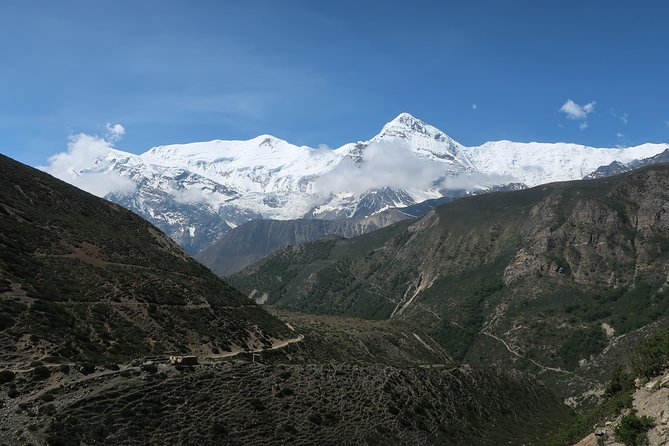
The next section descends toward Khangsar, crosses a river, and then rises through drier country toward Yak Kharka. You might spot blue sheep, and Tare Gumba offers a cultural stop on the way.
There is a wording problem in the day-by-day schedule: the listed stop says Manang, while the description says you continue to Yak Kharka. The later section clearly places you at Thorong Phedi before the pass, but I would ask the operator to confirm the exact overnight locations and walking times.
From Yak Kharka, the route continues toward Thorong Phedi, a cold and isolated stop in a glacier valley. The trail reaches above 4,500 meters, and this is where patience matters. Walk slowly, keep warm, drink often, and save energy for the next morning.
Thorong Phedi is not presented as a luxury stop. You stay in a teahouse and should expect a basic mountain night. Go to bed early because the pass crossing begins before sunrise.
Thorong La is the trip’s hardest and highest day
The climb to Thorong La starts early, partly because morning winds are often calmer. The first section rises toward High Camp, then the final few hundred meters become the toughest part of the ascent.
At 5,416 meters, Thorong La is a serious high-altitude crossing. The stated walking day lasts about eight hours, though exact timing depends on weather, pace, and how you respond to the height. The top brings views toward Dhaulagiri and the distant Upper Mustang region.
The pass is a major achievement, but do not frame it as a race. A slow, steady approach is safer and more enjoyable. Your guide and porters are especially valuable here. Feedback connected with this operator repeatedly highlights the care provided by porters when members of a group developed altitude sickness, including porters returning uphill to help carry people. That is the kind of support worth confirming before departure.
Muktinath and Jomsom change the mood of the route
After the pass, you descend toward Muktinath. The shift is dramatic. The route becomes drier, and the high mountain setting gives way to a pilgrimage area important to both Hindus and Buddhists.
An early visit to Muktinath Temple is included. You can see the shrine and surrounding religious sites before continuing toward Jomsom, either by vehicle or on foot through Lubra. The Lubra route offers a better high viewpoint than the road, but it adds walking time.
Kagbeni marks the junction toward Upper Mustang, a more isolated Himalayan region. You do not enter Upper Mustang on this itinerary, but seeing the route from Kagbeni helps explain the geography of the area.
The road toward Jomsom is described as paved in places, with construction in others. Conditions can change. Expect another day where the schedule may be affected by road work or local conditions.
Pokhara gives you a softer landing
The Jomsom to Pokhara flight takes about 25 minutes and passes through the Kali Gandaki Gorge. Strong winds or poor visibility can delay the flight, so keep your plans flexible.
Pokhara Lakeside is a welcome change after the cold, dusty, and physically demanding mountain route. You have time to relax, eat, and enjoy the lakeside setting. Accommodation is included.
The schedule says you can also travel by bus or Jeep, with a Jeep journey taking up to eight or nine hours because of road conditions. The flight is far easier when it operates, but weather delays are a real possibility.
Day 15 returns you to Kathmandu. The schedule contains another inconsistency here: the inclusions list a flight from Pokhara to Kathmandu, while the itinerary describes a tourist bus. Confirm which option is included and how the transfer is handled before booking.
The final evening includes a farewell meal at a traditional restaurant, with the chance to attend a Nepali cultural event and shop for souvenirs.
What the $1,560 price really covers
The strongest value comes from the number of essentials bundled into the price:
- Accommodation for the full trip
- Professional guides and porters
- Trekking permits
- Kathmandu UNESCO site permits
- Air-conditioned vehicle for road transfers
- Flight from Jomsom to Pokhara
- Flight from Pokhara to Kathmandu as listed in the inclusions
- 13 lunches and 13 dinners
- 14 breakfasts
The key issue is not simply the price. It is clarity. Because the daily program and inclusions differ on the Pokhara to Kathmandu transfer, ask for a written confirmation. Also ask what type of accommodation is provided in each mountain stop, since the itinerary uses both hotel and teahouse language.
The trip is private, which means only your group participates. That can make pacing and decisions easier, especially on the high sections. It also means you should discuss your group’s fitness and preferred walking speed before setting out.
Who should book this Annapurna Circuit trek
I would choose this trip if you want a guided crossing with strong logistical support, a small private group, and the extra challenge of Tilicho Lake. It suits hikers who can handle long days and basic accommodation and who are willing to accept rough roads and possible flight delays.
I would hesitate if your main goal is comfort or if you have little experience with sustained walking at altitude. The tour requires moderate fitness at a minimum, and Thorong La is not a casual sightseeing stop.
The named guide Bhupal receives especially warm praise in feedback connected with Annapurna and Nar Phu trips, with local porters also singled out for kindness and practical help. You should ask if Bhupal will lead your departure, since a specific guide is not guaranteed by the supplied details.
Should you book it?
Book this Annapurna Circuit trek if you want a full mountain experience that combines Tilicho Lake, Thorong La, Muktinath, and Kathmandu’s major cultural sites in one organized trip. The price is reasonable for the included support, meals, permits, lodging, and transport.
Before you commit, get clear answers about the Day 10 overnight stop and the Pokhara to Kathmandu transfer. If those details are confirmed and you are ready for high altitude, rough roads, and simple mountain lodging, this offers a powerful and varied introduction to Nepal’s Annapurna region.
FAQ
How long is the Annapurna Circuit Trek?
The trip lasts approximately 15 days, beginning in Kathmandu and ending with a return to Kathmandu after time in the Annapurna region and Pokhara.
What is the highest point on the trek?
The highest point is Thorong La Pass at 5,416 meters, or 17,769 feet.
Is Tilicho Lake included?
Yes. The itinerary includes an overnight at Tilicho Base Camp, an early walk to Tilicho Lake, and a return to Sri Kharka.
Is accommodation included?
Yes. Accommodation is included throughout the trip. The itinerary refers to hotels and teahouses, especially in the higher mountain areas.
Are meals included?
Yes. The package includes 14 breakfasts, 13 lunches, and 13 dinners. Personal expenses are not included.
Are trekking permits included?
Yes. The required trekking permits are included, along with permits for the UNESCO heritage site visits in Kathmandu.
Is transportation included?
Transportation is included, including road transfers and the Jomsom to Pokhara flight. The supplied details also list a Pokhara to Kathmandu flight, but the final day describes a tourist bus, so confirm that transfer before booking.
How fit do I need to be?
You should have at least a moderate level of physical fitness. The trek includes long walking days, rough trails, loose stones, high altitude, and the difficult crossing of Thorong La.
Just added around Kathmandu
- Everest Base Camp Trek★ 5.0 · 3 reviews
- Everest Base Camp Trek★ 5.0 · 7 reviews
- 15 Days Private Everest Base Camp Trek★ 5.0 · 30 reviews
- Everest Base Camp Trek★ 5.0 · 57 reviews
- 14 Days of Adventure Trekking to Everest Base Camp★ 5.0 · 2 reviews
- 14-Day Everest Base Camp Trek★ 5.0 · 20 reviews
- From Kathmandu: Private 14-Day Everest Base Camp Trek★ 5.0 · 20 reviews
- 14 Days Everest Base Camp Trek★ 5.0 · 4 reviews
Annapurna Base Camp Treks, compared.




Trekking in Annapurna/Langtang/Everest/Upper Mustang regions
Read our review →


Kathmandu to Annapurna Base Camp (ABC) 5-Day Trek
Read our review →Browse the lists this trek appears in