
Review · KATHMANDU
Annapurna Circuit Trek
The big draw here is the full Annapurna Circuit, a long mountain journey that moves from green river valleys to dry high-altitude country, then drops through Mustang and the Kali Gandaki gorge. You also get Kathmandu, Pokhara, Poon Hill, and a soak in Tatopani’s hot springs without having to arrange the pieces yourself.
I like the built-in acclimatization day in Manang, which gives your body a better chance before the high pass. I also like the practical support: a licensed guide, one porter for every two clients, permits, sleeping bag, down jacket, airport transfers, and most meals are covered.
The main consideration is the physical demand. You will walk for many hours on several days, reach 5,416 meters at Thorong La, and sleep in basic guesthouses. Road transfers, shared vehicles, and long bus rides are part of the deal, so this is a mountain expedition with comforts, not a polished sightseeing holiday.
Key points to know before booking
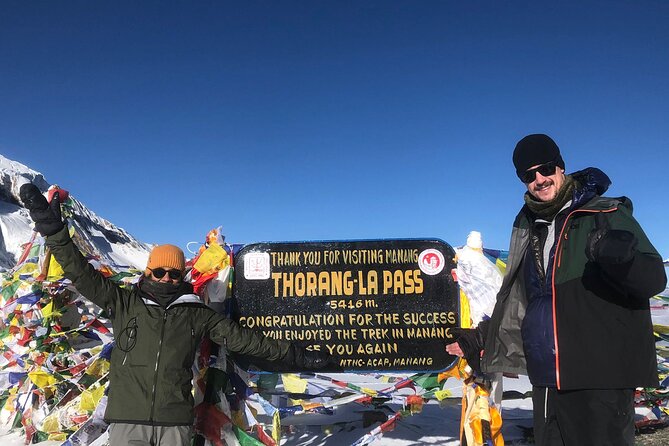
- Thorong La is the central challenge: The pass reaches 5,416 meters, with a pre-dawn start and possible snow, wind, and altitude problems.
- Manang gives you a needed rest day: You visit a monastery and Gangapurna Glacier Lake while preparing for the higher trail.
- Tatopani adds real recovery time: A full day is set aside for natural hot springs after the pass and the long descent.
- The scenery changes dramatically: Expect forests and waterfalls near Tal, dry Mustang country near Jomsom, and rhododendron woods around Ghorepani.
- Support is practical rather than luxurious: You get a guide, shared porter service, permits, a sleeping bag, and a down jacket, but mountain guesthouses remain simple.
- The group is capped at 15: That is small enough for personal attention without making the trip private.
What the 22-day route really gives you
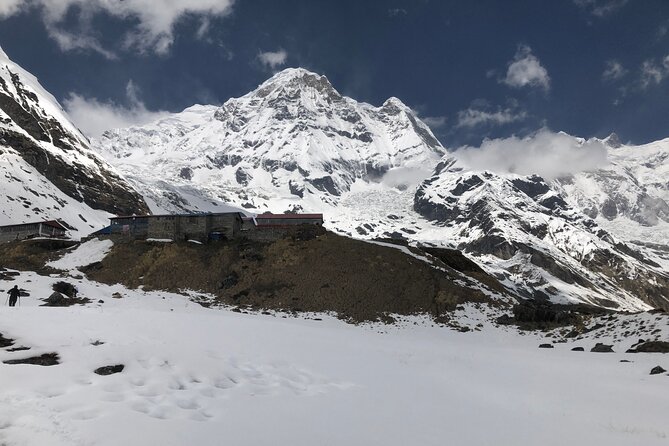
This is a route for someone who wants the classic Annapurna Circuit but prefers a ready-made plan. The schedule combines cultural stops in the Kathmandu Valley, a long trek through the Annapurna region, and two nights around Pokhara.
The price is $2,240 per person. That includes airport transfers, hotels in Kathmandu and Pokhara, 16 nights in trekking guesthouses, a guide, porter support, permits, sightseeing fees, transport between trail sections, breakfast every day, and most lunches and dinners. You still pay for international flights, your Nepal visa, insurance, drinks, personal equipment, and tips.
That list matters because the route has many moving parts. You would otherwise need to arrange a public bus, a shared 4WD vehicle, local guesthouses, ACAP and TIMS permits, and transport from the trail back to Pokhara. The price is not cheap, but it covers the expensive and awkward parts of a three-week Nepal trip.
More Annapurna Treks in Kathmandu
- Annapurna Circuit Trek with Tilicho Lake
★ 5.0 · 368 reviews - Annapurna base camp trek 5 Days
★ 5.0 · 252 reviews - 14-Day Private Annapurna Base Camp Trek
★ 5.0 · 180 reviews
Kathmandu begins with temples and practical preparation
On arrival at Tribhuvan International Airport, an Ace the Himalaya representative meets you outside the terminal and takes you to your hotel by private vehicle. A pre-trek meeting takes place on the first or second day, where you meet the guide and receive instructions.
Bring your passport, three passport photos, and a readable copy of your travel insurance policy. You also need insurance that covers emergency high-altitude rescue and evacuation. This is not a minor formality, since the route reaches well above 5,000 meters.
Your first full sightseeing day covers three of Kathmandu’s key places. At Pashupatinath Temple, you view the important Hindu site from the eastern bank of the Bagmati River because the main temple is reserved for Hindus. The riverbank also gives you a look at the religious activity around the complex.
Boudhanath Stupa offers a very different setting. Buddhist pilgrims circle the great stupa, turning prayer wheels beneath the watchful eyes painted toward the four directions. It is a good introduction to the religious variety you will encounter across Nepal.
Bhaktapur Durbar Square rounds out the day with pagoda temples, the Palace of 55 Windows, Bhairavnath Temple, Dattatraya Temple, and Nyatapola. The visit is short, so you will see the main sights rather than explore every lane. Still, it makes good use of your first day before the trek begins.
The road to Besisahar and Syange is part of the adventure
Day 3 starts with a public bus from Kathmandu to Besisahar, taking about six hours. From there, a local shared 4WD vehicle continues to Syange for roughly two more hours.
This is not the most comfortable transport in Nepal, but it is part of the route’s character. You pass rivers, waterfalls, and changing countryside while moving toward the trailhead. If you expect private road transport all the way, adjust your expectations. The shared vehicle is practical and helps keep the package price in check.
From Syange, you walk toward Tal along the Marsyangdi River. The trail rises gradually, with waterfalls along the way. Tal marks the start of the walking section in earnest, and the river provides a constant reference point during the early days.
The itinerary lists some trekking days as 17 or 18 hours, but the stated walking times are generally around four to seven hours. Treat those longer figures as itinerary-system errors rather than literal walking times. Ask Ace to confirm the daily walking hours before departure.
Tal to Manang brings the best early mountain scenery
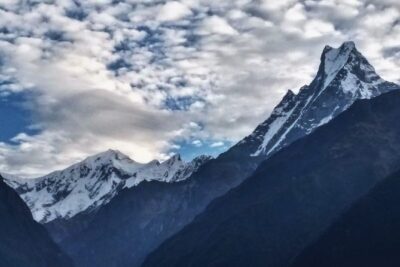
The stretch from Tal to Danakyu and Chame changes the feel of the trip. You leave the lower river country and begin seeing Annapurna II, Pisang Peak, waterfalls, old villages, and farms. Chame, the administrative center of Manang, comes after about four hours of walking and offers more facilities than the smaller settlements.
From Chame, the trail reaches Upper Pisang through forest and along the Marsyangdi River. The first sight of Paungda Dada is memorable: a huge, curved rock face shaped almost like a bowl. Upper Pisang also gives you strong views toward Annapurna II.
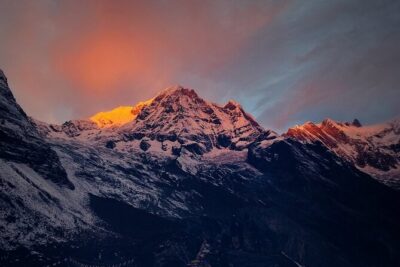
The next day uses the higher route to Ngawal. It climbs about 400 meters more than the lower trail, but the extra effort brings better views of Annapurna II and III, Pisang Peak, gorges, and high-altitude plants and animals. The sunrise over Annapurna II is one of the reasons to get out of bed early.
From Ngawal, you continue to Manang through hills, woodland, wetlands, stupas, and a lama school. Manang is one of the more active settlements on the route, with more services and a chance to pause before the serious altitude begins.
Same trailhead, a different route:
- Everest Base Camp Trek – 14 Days
★ 5.0 · 1,499 reviews - Everest Base Camp Trek
★ 5.0 · 842 reviews - Everest Base Camp Helicopter Tour landing at Everest View Hotel
★ 5.0 · 668 reviews - Everest Base Camp Trekking
★ 5.0 · 485 reviews
Manang is where the schedule gets smarter
The rest day in Manang is one of the strongest parts of this itinerary. You do not simply sit indoors. The plan includes short walks, a monastery visit, and a trip to Gangapurna Glacier Lake.
That day helps in two ways. First, you gain altitude more slowly. Second, you get time to notice Manang instead of treating it as just another overnight stop. A gradual pace is especially useful before Yak Kharka, Thorong Phedi, and Thorong La.
From Manang, the route climbs toward Yak Kharka at about 4,000 meters. Vegetation becomes thinner, and you may see yak herds as the Marsyangdi Valley gives way to the Jarsang Khola Valley.
The following day reaches Thorong Phedi at about 4,450 meters. The path crosses a river at roughly 4,310 meters before climbing again. Guesthouses here are basic but provide a necessary stopping point before the pass.
Thorong La demands an early start and steady pacing
The pass day begins around 4 a.m. The goal is to reach Thorong La between 9 and 10 a.m., before strong winds usually make the crossing harder.
The climb takes about four hours. The route is generally easy to follow, but altitude and snow can change the experience quickly. Heavy snow may make the pass difficult or impossible to cross, and cold wind can be severe. Your guide’s job is especially important here. Guides such as Ganesh Khanal, Nimesh, Madan, Ram, Aamod, and Janardan, also called Janu, have received particularly strong praise for pacing, encouragement, safety, and care on this route. Your assigned guide may be different, so confirm the name and experience of your trek leader before departure.
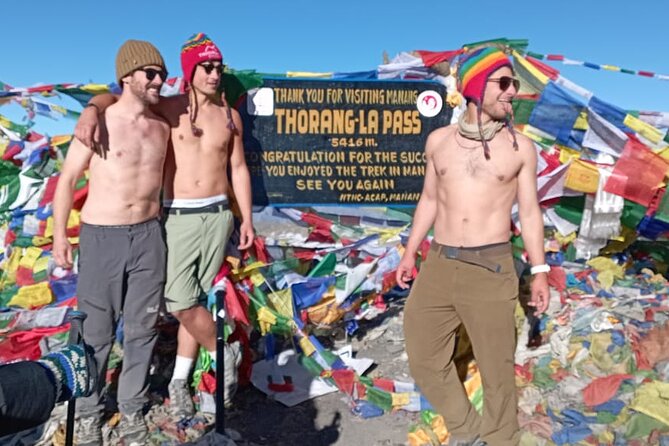
At 5,416 meters, Thorong La is the highest point of the trek. Prayer flags and chortens mark the pass, and clear weather can bring wide mountain views. The achievement is real, but do not treat the crossing as a photo stop with a short walk attached. It is a demanding day followed by about four more hours down to Muktinath.
Muktinath is a sacred place for both Hindus and Buddhists. Its name means place of nirvana, and the setting feels noticeably different from the green valleys lower down.
Muktinath, Jomsom, and Mustang change the color of the trip
From Muktinath, you descend toward Jomsom along the Kali Gandaki River. The scenery turns dry and almost desert-like, with traditional houses, stupas, and settlements shaped by the Mustang region.
Jomsom is a substantial town and the administrative center of Mustang. It has more facilities than the small villages, which makes it a useful overnight stop after the pass.
The route then continues toward Tatopani. Along the Kali Gandaki Valley, you pass through Kopchepani, described as part of the world’s deepest gorge between towering mountains. The scale is hard to appreciate in a quick photograph. Look up and around as you walk, since the narrow river corridor creates a strong sense of height.
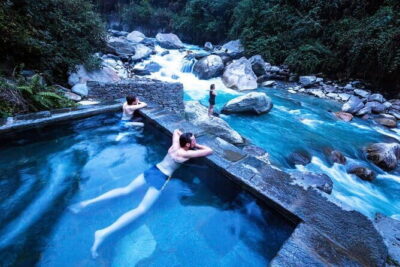
Tatopani means hot water, and the schedule gives you a full rest day here. That is a thoughtful touch after the pass, long descents, and several nights at altitude. You can bathe in the natural hot springs, rest your legs, eat local food, and enjoy a drink.
The hot springs are not a luxury resort. Facilities are simple, and the experience depends on weather and local conditions. Still, a quiet recovery day can make the final section much more enjoyable.
Ghorepani and Poon Hill finish the trek on a high note
The climb from Tatopani to Ghorepani is one of the steepest days. You gain about 1,620 meters over roughly seven hours, passing Magar and Gurung villages on the way.
This is a serious climb after an already long trek. Set a steady pace and avoid treating the day as a race. From Ghorepani, views can include Annapurna South, Hiunchuli, and Tukuche Himal.
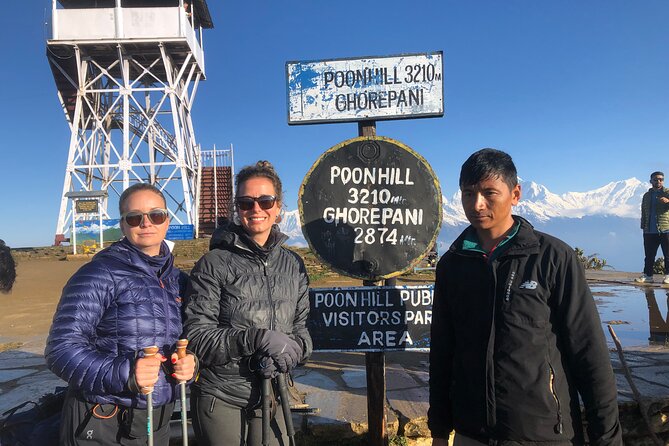
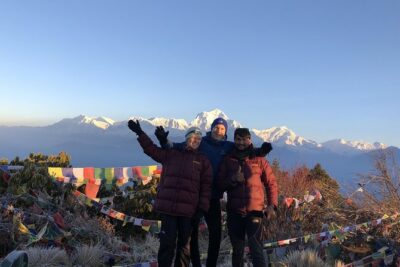
The next morning starts early with an hour-long hike to Poon Hill at 3,210 meters. You spend about an hour at the viewpoint, watching the sunrise over the high Himalaya if the weather cooperates.
Poon Hill is a popular finish because it delivers a clear reward without another extreme altitude crossing. After returning to Ghorepani for a hot breakfast, you descend through rhododendron forests and along ridges to Tikhedhunga.
A short final walk reaches Nayapul, where a vehicle takes you to Pokhara. This ending is gentler than finishing immediately after Thorong La, though your knees may still notice the descent.
Pokhara adds a softer second act
Pokhara gives you two nights in a three-star hotel and a guided sightseeing day. The stops are short but varied.
At Bindhyabasini Temple, you visit a shrine dedicated to Goddess Bhagwati in the old bazaar area. Devi’s Fall is a fast stop where water from Phewa Lake drops into a deep gorge. Across from the falls, Gupteshwor Mahadev Cave has narrow passages, larger chambers, and religious importance for Hindu visitors.
The Seti River Gorge shows the power of the river in a deep cut through the city. At the Tibetan Refugee Camp, you can see wool carpets and handicrafts made and sold by Tibetan settlers who came to Nepal in the 1950s.
This sightseeing day is not a substitute for spending time by the lake or exploring Pokhara at your own pace. It does, however, cover several major points in one organized outing. Lunch and dinner in Pokhara are not included, so you have freedom to choose your own restaurants.
Transport, rooms, meals, and group size
The trip uses a mix of transport: private airport transfers, a public bus to Besisahar, a shared 4WD vehicle to Syange, another shared vehicle from Jomsom to Tatopani, a tourist vehicle to Pokhara, and a tourist bus back to Kathmandu.
That variety keeps the trip grounded in local travel, but it also means comfort changes from day to day. Trekking accommodation is in twin-share and dormitory-style guesthouses. The Kathmandu and Pokhara hotels are three-star properties, but mountain lodging is much simpler.
Breakfast is included for all 21 mornings. Sixteen lunches and 17 dinners are included during the trek, while meals in Kathmandu and Pokhara are your responsibility. Alcoholic drinks, hot and cold drinks, and tips are extra.
You receive a duffel bag and sun hat, plus a down jacket and sleeping bag to return at the end. You still need personal trekking equipment, suitable clothing, and insurance that covers high-altitude evacuation.
The maximum group size is 15. That is large enough to bring different walking speeds and preferences into play, but the guide and porter system should provide useful support. One porter is assigned for every two clients, so pack with a sensible weight in mind rather than assuming unlimited luggage help.
Who should book this Annapurna Circuit trek?
I would choose this trip if you want the classic circuit with planning handled for you, and if you value a proper acclimatization day and a full recovery day at Tatopani.
It suits fit hikers who can manage repeated days of walking, steep climbs, basic guesthouses, early starts, and high-altitude conditions. It is not a good match if you need private transport, hotel-quality rooms every night, or a flexible schedule with short walking days.
The strong guide feedback is worth noting, especially around Thorong La. When you book, ask who will lead your departure, how porter loads are handled, and what happens if weather blocks the pass. Also confirm the daily walking times, since the published hour figures are inconsistent.
The cancellation terms are relatively simple: cancel at least three full days before the start for a full refund. If poor weather forces cancellation, you are offered another date or a full refund. The trip begins and ends at Tribhuvan International Airport, with an 8 a.m. stated start time.
Should you book it?
Book this trek if you want a broad Nepal experience in one package: temple visits, high mountain passes, Mustang scenery, hot springs, Poon Hill, Pokhara, and airport-to-airport support.
Skip it if your fitness is uncertain or if you are looking for a gentle walk. The $2,240 price offers solid value because it covers permits, guides, porter support, lodging, transport, sightseeing, and most meals, but the real cost is paid in effort, early mornings, and tolerance for simple mountain life.
For the right hiker, this is a well-rounded way to cross the Annapurna region with enough cultural time at both ends and two useful pauses in the middle.
FAQ
How long is the Annapurna Circuit trek?
The full experience lasts approximately 22 days, including arrival and departure transfers, Kathmandu and Pokhara sightseeing, the trek, and road travel.
What is the highest point on the route?
Thorong La Pass is the highest point, at approximately 5,416 meters. The pass crossing starts around 4 a.m. and can be affected by snow, altitude, and strong winds.
Is a guide included?
Yes. The package includes a licensed English-speaking trekking guide and one porter for every two clients.
Are accommodation and meals included?
Yes. You receive three nights in a three-star hotel in Kathmandu, two nights in a three-star hotel in Pokhara, and 16 nights in trekking guesthouses. Breakfast is included for 21 days, along with 17 dinners and 16 lunches. Meals in Kathmandu and Pokhara are not included.
What equipment is provided?
A down jacket, sleeping bag, duffel or kit bag, and sun hat are included. Personal trekking equipment and suitable travel insurance are not included.
What happens if bad weather cancels the trip?
Because the experience requires suitable weather, you are offered a different date or a full refund if poor weather causes cancellation. You must cancel at least three full days before the start time to receive a full refund for a personal cancellation.
Just added around Kathmandu
- Everest Base Camp Trek★ 5.0 · 3 reviews
- Everest Base Camp Trek★ 5.0 · 7 reviews
- 15 Days Private Everest Base Camp Trek★ 5.0 · 30 reviews
- Everest Base Camp Trek★ 5.0 · 57 reviews
- 14 Days of Adventure Trekking to Everest Base Camp★ 5.0 · 2 reviews
- 14-Day Everest Base Camp Trek★ 5.0 · 20 reviews
- From Kathmandu: Private 14-Day Everest Base Camp Trek★ 5.0 · 20 reviews
- 14 Days Everest Base Camp Trek★ 5.0 · 4 reviews
Annapurna Base Camp Treks, compared.
Trekking in Annapurna/Langtang/Everest/Upper Mustang regions
Read our review →
Kathmandu to Annapurna Base Camp (ABC) 5-Day Trek
Read our review →Browse the lists this trek appears in