
Review · KATHMANDU
Annapurna Circuit Trek with Tilicho Lake
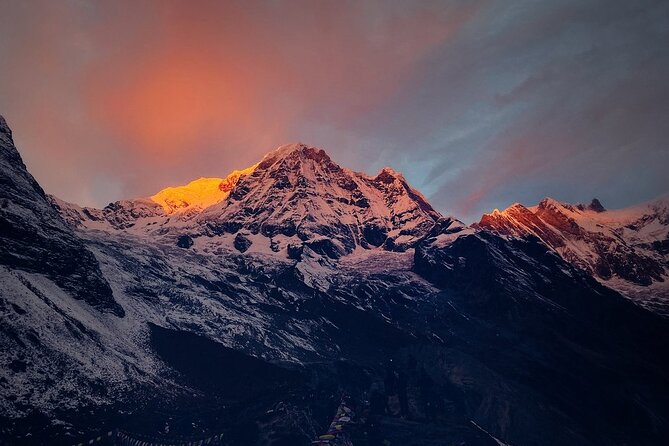
The big draw here is the high-altitude detour to Tilicho Lake, added to the classic Annapurna Circuit. You get deep river gorges, pine forests, Tibetan-style villages, natural hot springs, and the hard-earned crossing of Thorong La, all in one 16-day trip.
I like that permits, meals, lodges, local transport, and guide support are bundled together. I also like the acclimatization day in Manang, plus the chance to finish with both Muktinath and sunrise at Poon Hill. The catch is simple: this is a demanding trek, not a scenic stroll, and the long road rides can be rough.
Key things to know before you book
- Tilicho Lake adds a serious high-altitude side trip: The climb from base camp takes about two to three hours each way and begins early to avoid strong afternoon wind.
- Thorong La is the hardest day: You leave around 3 a.m. and cross one of the world’s highest trekking passes.
- Your meals and permits are covered: Breakfast, lunch, and dinner are included during the trek, along with ACAP and TIMS fees.
- You sleep in tea houses and lodges: This keeps the trip local and practical, though comfort and facilities can vary.
- The group can reach 15 people: That is still manageable, but a larger group can move more slowly on steep days.
- The price covers much of the hard planning: At $1,093, the package includes guides, porters, transport, lodging, meals, permits, and one hotel night in Pokhara.
Why Tilicho Lake changes the Annapurna Circuit
The standard Annapurna Circuit already gives you a major Himalayan crossing. This version adds Tilicho Lake, one of the highest lakes in the world, according to the route description, and that detour changes the rhythm of the trek.
Instead of walking directly onward from Manang toward Thorong Phedi, you spend several days heading toward Khangsar, Tilicho Base Camp, and the lake. The route passes through a landslide area and rough mountain terrain before the final climb. The reward is a broad, high mountain lake surrounded by snow-covered peaks.
I like this addition because it gives you a more varied trip. You are not simply following one long road toward a pass. You get a side valley, a monastery, a high camp, and a destination that feels separate from the main circuit.
The tradeoff is physical strain. Tilicho Lake sits at serious altitude, and the trail includes steep sections and exposed terrain. You need good fitness and a steady pace. Your guide can help with route finding and timing, but no guide can make thin air disappear.
More Annapurna Treks in Kathmandu
- Annapurna base camp trek 5 Days
★ 5.0 · 252 reviews - 14-Day Private Annapurna Base Camp Trek
★ 5.0 · 180 reviews - Annapurna Base Camp Trekking
★ 5.0 · 116 reviews
Days 1 and 2: Kathmandu to Besishar, then Tal
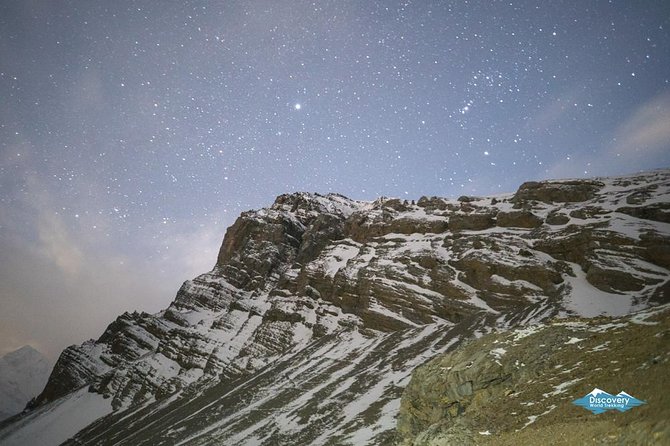
The trip begins with a long drive from Kathmandu toward Besishar and Syange. The vehicle is air-conditioned, but the road journey still takes roughly six to seven hours and covers about 190 kilometers. You will pass farms, villages, rivers, and early views of the mountain country.
This is not a glamorous opening day. It is a practical transfer that gets you to the trail. I would treat it as part of the adventure, not dead time. Local road travel gives you a quick look at how the settled foothills shift toward more remote mountain communities.
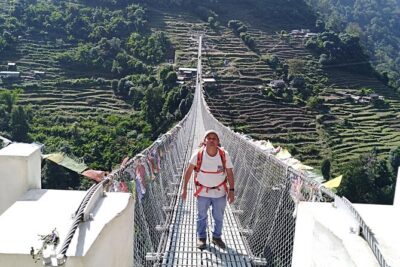
The next day brings the first proper walking. You cross a suspension bridge, climb steeply, and reach Tal in the Manang region. Waterfalls, sandy riverbanks, and the sound of rushing water make this a memorable introduction to the trail.
The early stages can feel harder than expected because your body is adjusting from road travel to walking. Do not burn all your energy trying to match the fastest person in the group. A measured pace will serve you much better later.
Days 3 and 4: Forests, Chame, and Paungda Danda
The trail to Chame follows a river through pine, fir, oak, and maple forest. You gain altitude gradually while the vegetation begins to change. Chame is the district headquarters of Manang, and the surrounding views open toward peaks including Lamjung and the Annapurna range.
The route then enters a narrower valley and reaches the huge Paungda Danda rock face. This curved wall rises about 1,500 meters from the river and is one of the route’s most striking natural features. You also get views of Annapurna II and Pisang Peak.
These days help show why the Annapurna Circuit remains so popular. The scenery changes often, and you are not looking at the same mountain backdrop for hours on end. Forest, river, rock wall, and high peaks arrive in a natural sequence.
You should still expect uneven paths and uphill work. The phrase moderate fitness does not mean easy. It means you need to be comfortable walking for several hours on consecutive days.
Days 5 and 6: Upper Pisang and an essential rest day in Manang
From Pisang, the upper route through Geru is chosen for its mountain views. You can look toward Annapurna II, Annapurna III, Annapurna IV, Gangapurna, Tilicho, and Pisang Peak. The air becomes colder, drier, and thinner as you climb.
This upper trail is a good example of why route choice matters. A lower path may be less demanding, but the upper route gives you broader views and a more dramatic sense of entering the high country. Your guide decides the day’s pace and helps the group stay together.
Day 6 is set aside for acclimatization in Manang. You hike toward Gangapurna Lake and Base Camp, then spend time around Manang village and its monastery. The day is not wasted rest. It gives your body a chance to adjust before the higher sections ahead.
I especially like this part of the plan. Some trekking schedules push onward too quickly. Here, you get a useful pause before Tilicho Lake and Thorong La. You will still walk, but the effort is meant to support acclimatization rather than rack up distance.
Same trailhead, a different route:
- Everest Base Camp Trek – 14 Days
★ 5.0 · 1,499 reviews - Everest Base Camp Trek
★ 5.0 · 842 reviews - Everest Base Camp Helicopter Tour landing at Everest View Hotel
★ 5.0 · 668 reviews - Everest Base Camp Trekking
★ 5.0 · 485 reviews
Days 7 to 9: Khangsar, Tilicho Base Camp, and the lake
The route from Manang follows an upper trail down toward a river and through conifer forest. After about three hours, you reach the Tibetan settlement of Khangsar. The village adds a cultural change to the trip, with architecture and surroundings that feel different from the lower valleys.
From Khangsar, the trail continues toward Tilicho Base Camp. The path passes through a landslide area with impressive rock formations. This is a section where you should pay attention to your footing and follow your guide rather than wandering for photographs.
The base camp offers views of Tilicho Peak and other snow-covered mountains. Facilities are simple, and you should not expect the comfort of a city hotel. The point of staying here is to place you close to the lake for an early start.
Day 9 begins early, partly to avoid afternoon wind. The climb to Tilicho Lake takes about two to three hours and is described as steep and consistent. Reaching the lake is one of the trip’s clearest goals, but the descent matters just as much. Save enough energy for the return.
The lake can be a cold, stark, high-altitude setting rather than a place for a long picnic. Weather may change quickly, and visibility can vary. You may get an unforgettable mountain panorama, or a more subdued view under cloud. Either way, the walk itself is a major achievement.
Days 10 and 11: Leaving Tilicho for Thorong Phedi
After the lake, you descend toward Khangsar and pass Tare Gumba, described as a thousand-year-old monastery. The trail then follows a rock wall, crosses a bridge, and enters the Thorong Khola valley. You continue across a river and climb to a plateau before reaching Yak Kharka.
The route is now preparing you for the pass. The scenery becomes more open and severe, with less forest and more exposed mountain terrain. The walk can feel tiring after the Tilicho detour, so steady pacing is important.
The following day takes you uphill to Thorong Phedi, a small and busy settlement below Thorong La. From the trail, you get views of Mt. Gundang, Mt. Syagang, Thorung Peak, and Mt. Khatungkan.
Thorong Phedi is a functional overnight stop rather than a place for luxury. You are there to rest before the biggest day. Keep your evening quiet, organize your layers, and listen carefully to the guide’s instructions about the early departure.
Day 12: Crossing Thorong La
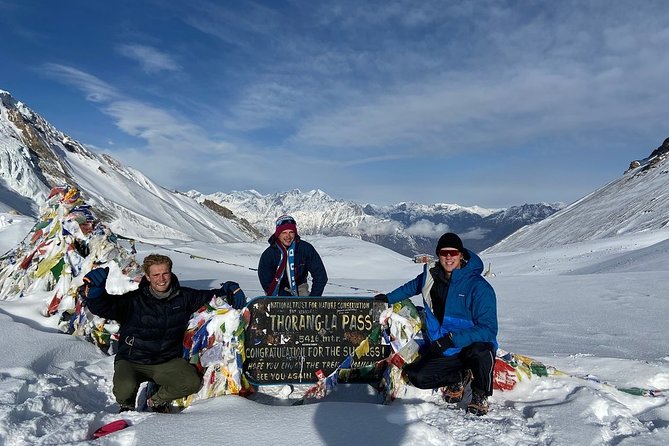
This is the trip’s toughest day. You wake around 3 a.m. and begin the climb to Thorong La, the highest point of the trek and one of the highest passes in the world. The early start helps you complete the crossing before conditions become more difficult later in the day.
The climb requires patience. You may be walking slowly, taking frequent rests, and concentrating on breathing. The altitude makes every step feel more serious than it would at home.
Once across, you descend toward Muktinath. The sense of relief can be enormous, but the descent also puts pressure on tired legs. Trekking poles, careful foot placement, and a sensible pace will help.
This day is one reason the tour suits fit, active people rather than casual walkers. The guide and porter team can carry much of the logistical burden, but you still need to carry your personal day gear and manage the physical challenge yourself.
Day 13: Muktinath and the road to Tatopani
You visit Muktinath Temple before continuing by car toward Tatopani. Muktinath is an important religious site, and its position in the high Mustang region adds a strong cultural layer to the trek.
The road ride is a major change from the previous days on foot. Public transportation is included from Muktinath to Tatopani, so you avoid walking every connecting mile. Road conditions may make the journey feel long, but the transfer saves your legs after Thorong La.
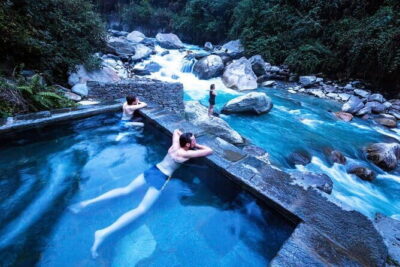
Tatopani is known for its natural hot springs. This is a welcome recovery stop after the pass. Soaking in warm water can feel especially good after the cold, early start and long descent.
The package also includes one night in a selected hotel in Pokhara with breakfast, although the day-by-day schedule places the hotel stay within the broader return route. Confirm the exact hotel and transfer timing before departure so you know where the included night fits.
Days 14 and 15: Ghorepani and Poon Hill sunrise
From Tatopani, you climb toward Ghorepani through Sikha and Chitre. These are villages associated with the Thakali people, and the trail passes terraced farmland with mountain views around you.
The vegetation becomes lush again, with rhododendron, birch, and magnolia forests. After the dry, high country near Thorong La, this return to greener scenery gives the final section a different mood.
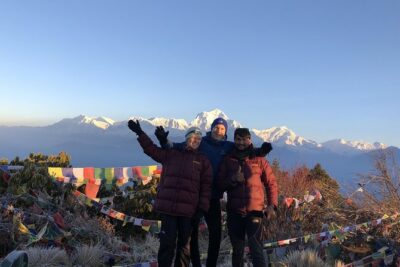
Day 15 begins early with the climb to Poon Hill at 3,210 meters. The viewpoint is known for sunrise over the Annapurna and Dhaulagiri massifs, with Mt. Machhapuchhre, or Fishtail, and Mt. Manaslu also part of the wider panorama.
Poon Hill is a popular photographic stop, so the viewpoint may feel busy. Still, the early alarm is worthwhile if skies are clear. It gives you a final mountain viewpoint without another high-pass crossing.
Day 16: Returning to Kathmandu
After breakfast, you travel back to Kathmandu by tourist bus. A 225-minute flight is also offered, but it is not included in the package.
The bus is the lower-cost choice, while the flight is faster and must be paid for separately. Your choice depends on how much time you have and how much you value avoiding another long road journey.
The tour ends in Kathmandu. By this point, you have crossed from subtropical foothills through forests and high valleys, over Thorong La, and back through hot springs, villages, and lower mountain country.
What the $1,093 price really covers
At $1,093, this is not simply a guided walk. The price includes tea house or lodge accommodation, three meals a day during the trek, local transport, an air-conditioned vehicle for the listed road sections, permits, guide and porter services, taxes, a farewell dinner, and one hotel night in Pokhara with breakfast.
The package also covers the guide and porter team’s meals, insurance, salary, lodging, and transport. That matters because paying for staff support separately can make a supposedly cheap trek more complicated than expected.
The Annapurna Conservation Area Permit and TIMS card are included too. You do not need to arrange those basic route documents yourself.
Not every cost is included. Anything outside the stated inclusions is extra, and the flight from Pokhara to Kathmandu is specifically excluded. I would also keep money available for personal drinks, snacks, charging, tips, and any unplanned transport or medical needs, since the package does not list those items as included.
Guides, porters, and group size
Discovery World Trekking supplies a government-licensed guide and porter team. Named guides connected with recent departures include Hari Gurung, Suresh, and Dev, while porters mentioned include Damar, Sangkar, Bikesh, Asis, Monis, and Rupesh. Your assigned team may be different, so treat those names as examples rather than a promise.
The strongest pattern in the available feedback is personal care from guides and porters. Specific praise includes guides explaining mountain and village details, keeping groups supported, and helping with the day-to-day rhythm. One porter was remembered for preparing fruit platters in the evening, a small touch that can mean a lot after a hard day.
The maximum group size is 15. That keeps the trip more organized than a large coach-style excursion, but it is not a private trek. If several people have different walking speeds, the group may need to wait or split temporarily under the guide’s direction.
Who should book this trek
You should consider it if you want the major Annapurna Circuit highlights but prefer help with permits, route decisions, meals, accommodation, and transport. It is a strong fit for active people who want a structured trip and do not want to manage high-altitude logistics alone.
It also suits families or small groups who value a dedicated support team. Past departures have included a parent and teenager, a young family, and groups of siblings, but the physical demands remain real.
I would not choose it if you want soft beds, short walking days, or complete control over the schedule. You also need to accept simple tea house accommodation, early starts, steep climbs, high altitude, and long vehicle transfers.
The experience is rated 5 out of 5 with a 99 percent recommendation rate, and the repeated praise centers on supportive guides and porters. That is important here because good logistics and calm judgment matter far more than polished hotel service.
Final call: is the Annapurna Circuit with Tilicho Lake worth it?
I would book this trek if you want a full Himalayan route with a little extra ambition. Tilicho Lake adds a memorable high-country goal, while Thorong La supplies the major physical test. Muktinath, Tatopani, and Poon Hill keep the final days varied instead of ending the trip immediately after the pass.
The best value comes from the bundled support: meals, permits, accommodation, porters, guides, and transport are all arranged for $1,093. The main cost is your energy. If you are fit, patient, and ready for basic mountain conditions, this is a well-rounded way to tackle the Annapurna Circuit. If you are unsure about altitude or long walking days, choose a shorter trek instead.
The experience is non-refundable and cannot be changed after booking. Poor weather or failure to reach the minimum group size can lead to a new date, another experience, or a full refund, but personal cancellation does not qualify.
FAQ
How long is the Annapurna Circuit with Tilicho Lake?
The trek lasts approximately 16 days, beginning and ending in Kathmandu.
Is Tilicho Lake included in the trek?
Yes. The route includes Khangsar, Tilicho Base Camp, and Tilicho Lake before continuing toward Thorong Phedi and Thorong La.
Is accommodation included?
Yes. Tea house or lodge accommodation with meals is included during the trek, along with one night in a selected hotel in Pokhara with breakfast.
Are meals included?
Yes. Breakfast, lunch, and dinner are included during the trek. The package lists 16 breakfasts, 16 lunches, and 16 dinners.
Is transport included?
Yes. The package includes the drive from Kathmandu to Syange, public transport from Muktinath to Tatopani, and a tourist bus from Pokhara to Kathmandu. A 225-minute flight option is available but not included.
How difficult is this experience?
It requires a moderate level of physical fitness and is described as a challenging mountain trek. The steep climb to Tilicho Lake and the early-morning crossing of Thorong La are the hardest sections.
Just added around Kathmandu
- Everest Base Camp Trek★ 5.0 · 3 reviews
- Everest Base Camp Trek★ 5.0 · 7 reviews
- 15 Days Private Everest Base Camp Trek★ 5.0 · 30 reviews
- 14-Day Everest Base Camp Trek★ 5.0 · 20 reviews
- Everest Base Camp Trek★ 5.0 · 57 reviews
- 14 Days of Adventure Trekking to Everest Base Camp★ 5.0 · 2 reviews
- From Kathmandu: Private 14-Day Everest Base Camp Trek★ 5.0 · 20 reviews
- 14 Days Everest Base Camp Trek★ 5.0 · 4 reviews
Annapurna Base Camp Treks, compared.
Trekking in Annapurna/Langtang/Everest/Upper Mustang regions
Read our review →
Kathmandu to Annapurna Base Camp (ABC) 5-Day Trek
Read our review →
Browse the lists this trek appears in