
Review · KATHMANDU
Annapurna Base Camp Trek -13 Days
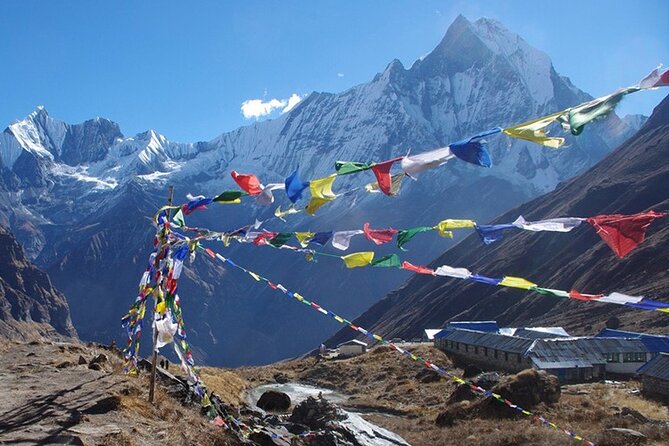
Annapurna Base Camp is the prize here, but the route earns its keep long before you reach it. You walk from warm foothills through rhododendron forest and stone stairways to a high mountain bowl ringed by Annapurna peaks. The Poon Hill sunrise adds a second major viewpoint without adding another trip.
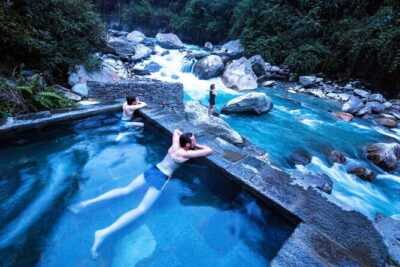
I like two things in particular: the price includes the awkward parts, from airport pickup and permits to tea-house rooms and a porter, and the private format lets your group set the walking pace. The hot springs at Jhinu Danda are another welcome touch after days of stairs.
The main caution is simple: this is a serious walking trip, not a sightseeing tour with a little hiking added. You reach 4,170 meters, face long uphill and downhill sections, and have no separate acclimatization day. Good fitness and travel insurance matter.
Key points to know before booking
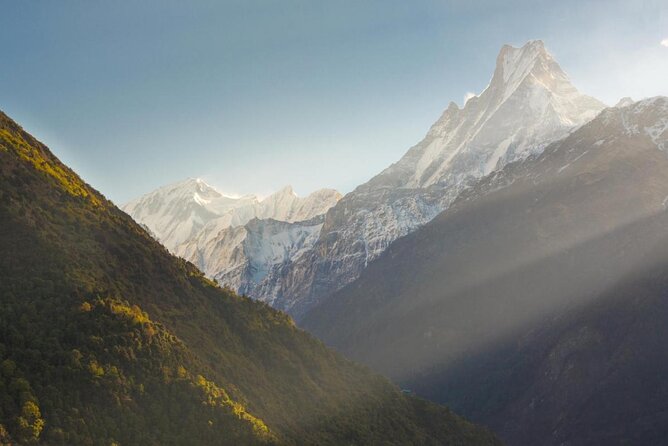
- Annapurna Base Camp at 4,170 meters: Reach the high mountain sanctuary after walking through forests, villages, and the Modi Khola valley.
- Poon Hill sunrise included: Start early for views of Dhaulagiri, Annapurna I, Machhapuchhare, and other snow peaks.
- Private support from Kathmandu: Your own group travels with a guide and one porter for every two clients.
- Most major costs are covered: Hotels, tea houses, trekking meals, permits, transfers, and government fees are included.
- A demanding but well-supported route: Expect stone steps, steep descents, basic mountain lodging, and changing weather.
- Guiding is a strong part of the package: Guides named in past trips include Prakash Adhikari, Bharat Simkhada, Badri Kakri, and Prakash, though your assigned staff may differ.
What the $1,200 price really covers
At $1,200 per person, this trek is priced as a full package rather than a bare walking service. You get two nights in a three-star hotel in Kathmandu, two nights in Pokhara, road transport, tea-house accommodation during the trek, a guide, porters, permits, meals while walking, and airport transfers.
That matters in Nepal. A trek can look cheap until you add hotel nights, a ride to the trailhead, park permits, staff, meals, and transport back to Kathmandu. Here, the main planning work is handled before you arrive.
The porter arrangement is one porter for two clients. That is a normal and sensible setup, but it does not mean your porter carries every possible item without limit. Pack light, keep your daily essentials in a small daypack, and confirm the duffle bag arrangement before setting out. A duffle is provided and returned after the trek.
The price does not cover your Nepal visa, international flights, insurance, personal drinks, laundry, phone use, showers, battery charging, bottled or boiled water, extra porters, or tips. Those extras can add up, especially at altitude, so I would keep a separate cash allowance for the trail.
Travel and rescue insurance is not optional in spirit, even though it is not included in the price. The package says rescue arrangements are available, but you need your own policy for medical care, evacuation, trip interruption, and delays.
More Annapurna Treks in Kathmandu
- Annapurna Circuit Trek with Tilicho Lake
★ 5.0 · 368 reviews - Annapurna base camp trek 5 Days
★ 5.0 · 252 reviews - 14-Day Private Annapurna Base Camp Trek
★ 5.0 · 180 reviews
Kathmandu arrival and the road to Pokhara
Day one is deliberately easy. A company representative meets you at Tribhuvan International Airport and takes you to the hotel. There is time to meet the trek staff and receive an introduction before the walking begins.
This airport pickup has real value after a long flight. Kathmandu traffic can be confusing, and having someone meet you removes one early hassle. The exact hotel is not named, so ask for its location and what is included before arrival.
Day two takes you by road toward Pokhara, using much of the morning. The trip is not a quick transfer, and road conditions can affect timing. That is worth remembering if you are hoping for a full afternoon of sightseeing.
Pokhara gives you a softer start to the trip. The city is known for Fewa Lake, caves, Hindu and Buddhist sites, and views toward Annapurna and Dhaulagiri. An evening walk around Fewa Lake is included in the plan, and it is a good chance to stretch your legs before the trail begins.
The two hotel nights in Pokhara also give you a practical buffer. You are not stepping straight from the airport into a mountain trek. Still, this is not an acclimatization program in the formal sense. The real gain is rest and organization, not a carefully spaced altitude schedule.
Nayapul to Ulleri, your first taste of the stairs
On day three, a roughly 90-minute drive takes you to Nayapul at about 1,050 meters. From there, you walk through Birethanti and onward to Tikhedhunga, or possibly Ulleri depending on your energy and timing.
The walk to Tikhedhunga takes around three to four hours. If you still have strength, you can continue up the Ulleri hill for another hour and a half. This is your first useful lesson in Himalayan trekking: distances may look modest, but stone steps and repeated climbs change the effort.
Day four begins with about two hours of steep ascent. The route then passes through Magar villages, including Ulleri and Banthanti, with views toward Machhapuchhare, also called Fish Tail, Annapurna South, and Hiunchuli.
This section mixes village life with forest walking. You will not spend the whole day staring at peaks. The appeal is the change in vegetation, the old stone stairways, and the way the mountains appear and disappear as the trail bends.
I would treat the early days as a test of footwear and pacing. Walk slowly from the start, drink regularly, and do not try to match the fastest person in the group. A private trek is useful here because your guide can adjust the rhythm around your group.
Poon Hill sunrise and the walk to Chhomrong
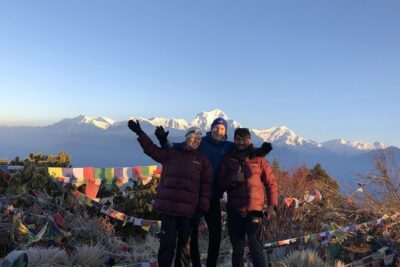
Day five begins early with a climb to Poon Hill at 3,210 meters. The aim is sunrise over a long line of peaks, including Dhaulagiri, Tukuche Peak, Nilgiri, Varaha Shikhar, Annapurna I, Annapurna South, Annapurna III, Machhapuchhare, Annapurna IV, Annapurna II, and Lamjung Himal.
Poon Hill is one of the best viewpoints on the route because you see a broad sweep of the Annapurna and Dhaulagiri ranges rather than one narrow mountain view. The tradeoff is the early start and the cold. Carry a warm layer where you can reach it quickly.
The next stage takes you from Tadapani toward Chhomrong, usually five to six hours over roughly seven to eight kilometers. The trail moves through forest and village country before reaching Chhomrong, a major stopping point below the Annapurna peaks.
Chhomrong is a useful rest town, not just a place to sleep. The package information specifically points to pizza here, a small but welcome change after repeated dal bhat and noodle meals. You can also enjoy broad views of the Annapurna range from the village.
The route is not always gentle. You gain and lose height repeatedly, and the stone steps can be hard on knees. Trekking poles are worth considering, though they are not listed as included equipment.
Same trailhead, a different route:
- Everest Base Camp Trek – 14 Days
★ 5.0 · 1,499 reviews - Everest Base Camp Trek
★ 5.0 · 842 reviews - Everest Base Camp Helicopter Tour landing at Everest View Hotel
★ 5.0 · 668 reviews - Everest Base Camp Trekking
★ 5.0 · 485 reviews
Bamboo, Himalaya, and the climb toward base camp
Leaving Chhomrong, the trail drops down a stone staircase before climbing again. You pass Sinuwa and enter thick bamboo and rhododendron forest, eventually reaching Himalaya at about 2,920 meters.
This is a beautiful but tiring stretch. The trail can be muddy, and stinging nettles are specifically noted along the way. Wear trousers or long socks, and do not grab plants at the edge of the path.
The repeated descent and ascent can surprise people who think the route simply goes uphill toward base camp. In the Annapurna foothills, you often lose height before regaining it. I would judge each day by total effort rather than the final altitude number.
From the higher section, you can see Hiunchuli, Annapurna South, Annapurna I, Annapurna III, Gangapurna, and Machhapuchhare. The forest gradually gives way to more open mountain surroundings as you approach the sanctuary.
Annapurna Base Camp at 4,170 meters
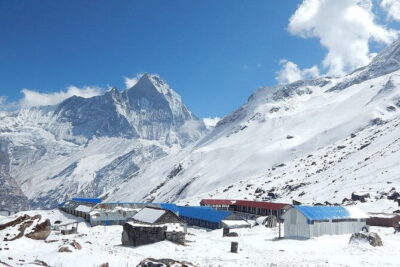
Day eight brings you toward Annapurna Base Camp at approximately 4,170 meters. The final approach passes through alpine forest and then opens to wide views of the surrounding peaks.
The setting is the payoff for the steady work of the previous days. You are in a high mountain bowl with Annapurna I and other major summits rising around you. The plan allows you to take in the panoramic view rather than rush immediately onward.
The practical issue is altitude. The schedule does not show a separate acclimatization day, and the ascent from the lower trail is fairly concentrated. You should tell your guide at once if you develop a headache, nausea, unusual fatigue, or breathing trouble. Do not treat a worsening altitude problem as something to push through for a photograph.
Tea-house accommodation is part of the package, but this is mountain lodging, not a hotel. Conditions can be basic, and personal expenses such as hot showers, charging, and drinks are extra. Carry a sleeping bag suitable for the season, even if you plan to use lodge blankets.
The sunrise on day nine is another strong moment. You can look back across the Annapurna peaks, glacier, and green valleys before beginning the long walk down to Bamboo. The descent takes about five to six hours, so enjoy the morning, but keep an eye on the time.
Bamboo, Jhinu Danda, and the hot springs
Day ten continues through rhododendron, oak, and bamboo forest. The route gradually descends to Bamboo, then rises steeply toward Kuldi Ghar before leveling out toward Sinuwa.
From there, you descend to the Chhomrong Khola and climb a long stone staircase back to Chhomrong. The trail then drops steeply to Jhinu Danda. This is one of those days that looks like a downhill walk on paper but still demands plenty of work because of the stair climbing.
The reward is the hot spring beside the Modi Khola. You walk about 20 minutes down from town to reach it. After several demanding days, this is not a minor extra. It gives your legs a chance to relax before the final walk out.
Bring a swimsuit and a small towel if you want to use the spring. The provided details do not state that these items, or any entry charge, are included, so confirm with your guide.
The final walk to Nayapul and return to Kathmandu
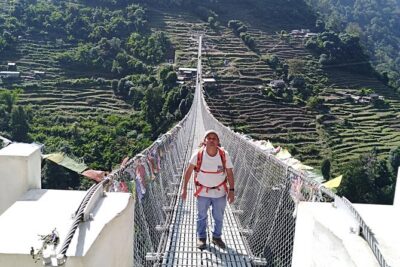
Day eleven takes you through waterfalls, streams, terraces, and forest toward Birethanti at roughly 1,025 meters. From there, the trail gently climbs to Nayapul along the Modi River.
This final walking day is shorter in altitude terms but can still feel long after the base camp section. The route gives you a gradual return to lower elevations and more settled village surroundings.
From Nayapul, the trip continues by road. Day twelve follows the route through Damauli, Dumre, Muglin, and Kurintar. You pass near the Manakamana Temple cable car, described as Nepal’s first cable car, before climbing toward Thankot and Kathmandu.
Road travel in Nepal can be slow, so I would not plan an important flight immediately after this transfer. The schedule places a farewell dinner in Kathmandu at an authentic Nepalese restaurant with cultural performance. It is a pleasant final evening, but remember that drinks and personal spending are not included.
On day thirteen, a representative takes you to the airport around three hours before your flight. The activity ends back at the original meeting point, Tribhuvan International Airport.
Guides, porters, and the human side of the trip
The strongest personal element is the staff support. The company has been associated with guides including Prakash Adhikari, Bharat Simkhada, Badri Kakri, and Prakash on different trips. You should not assume one of those people will lead your departure, but you can ask who your guide will be before arrival.
The guide’s role is more than pointing out peaks. You need help with trail timing, lodge arrangements, weather changes, food choices, and decisions about pace. The package also includes medical supplies and says travel rescue arrangements can be made.
The porter system helps keep your load manageable. With one porter for two clients, you still carry a daypack with water, warm clothing, documents, and anything you may need during the day. Pack with respect for the porter’s workload.
Past customers have also praised the company’s communication, airport arrangements, and ability to reorganize plans when weather disrupted other Himalayan routes. That suggests useful flexibility, though no operator can control flights, road conditions, or mountain weather.
Who should book this Annapurna trek?
I would recommend this trip to someone who wants a guided Himalayan trek without arranging every hotel, permit, meal, and transfer alone. It also suits a private group that values personal pacing and would rather use a porter than carry all equipment.
It is a good fit for people who want several kinds of scenery in one trip: Pokhara and Fewa Lake, Magar villages, rhododendron forest, Poon Hill, high mountain views, and the hot springs at Jhinu Danda.
I would be cautious if you dislike basic lodges, long stairways, shared mountain facilities, or changes in road timing. The word private does not mean easy. It means the walking group is your own, while the trail and weather remain entirely real.
Vegetarian meals are available if requested in advance, and you should provide any dietary needs when booking. Service animals are allowed according to the supplied details. The activity requires moderate physical fitness, but I would prepare beyond the minimum with regular hill walking and stair work.
Free cancellation is available if you cancel at least 24 hours before the local start time. Changes or cancellations inside that window are not accepted for a refund.
Should you book it?
Book this trek if you want the classic Annapurna Base Camp route with Poon Hill added, strong logistical support, and a clear package price. The combination of airport pickup, Pokhara hotels, permits, tea houses, trekking meals, guide, porter, and return transport gives the $1,200 cost solid value.
Before paying, confirm the exact hotel names, your guide, the expected porter baggage limit, the day-by-day walking hours, and how altitude concerns are handled. If you are fit, patient with basic conditions, and ready for steep steps, this is a practical way to reach Annapurna Base Camp without carrying the whole trip on your own.
FAQ
Is Annapurna Base Camp included in the 13-day itinerary?
Yes. The route reaches Annapurna Base Camp at approximately 4,170 meters on day eight, followed by a sunrise and descent toward Bamboo on day nine.
Are accommodation and meals included?
Yes. The package includes two nights in a three-star hotel in Kathmandu, two nights in a three-star hotel in Pokhara, tea-house accommodation during the trek, and breakfast, lunch, and dinner during the trekking portion.
Is this a private trek?
Yes. Only your group participates, and the package includes an experienced guide and one porter for every two clients.
Are permits included?
Yes. The Trekkers’ Information Management System, Annapurna Conservation Area Permit, necessary paperwork, government taxes, and government fees are included.
What is not included in the $1,200 price?
The price does not include your Nepal visa, international airfare, travel and rescue insurance, extra hotel nights, personal expenses, bottled or boiled water, phone calls, laundry, bar bills, battery charging, showers, extra porters, or tips.
Can I cancel for a full refund?
Yes, if you cancel at least 24 hours before the experience start time based on local time. Cancellations or changes made less than 24 hours before the start are not accepted for a refund.
Just added around Kathmandu
- Everest Base Camp Trek★ 5.0 · 3 reviews
- Everest Base Camp Trek★ 5.0 · 7 reviews
- 15 Days Private Everest Base Camp Trek★ 5.0 · 30 reviews
- Everest Base Camp Trek★ 5.0 · 57 reviews
- 14 Days of Adventure Trekking to Everest Base Camp★ 5.0 · 2 reviews
- 14-Day Everest Base Camp Trek★ 5.0 · 20 reviews
- From Kathmandu: Private 14-Day Everest Base Camp Trek★ 5.0 · 20 reviews
- 14 Days Everest Base Camp Trek★ 5.0 · 4 reviews
Annapurna Base Camp Treks, compared.
Trekking in Annapurna/Langtang/Everest/Upper Mustang regions
Read our review →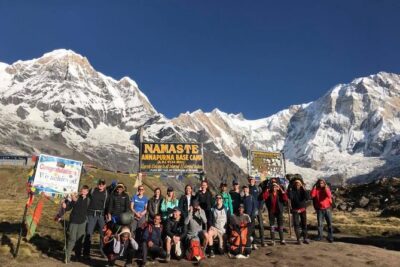
Kathmandu to Annapurna Base Camp (ABC) 5-Day Trek
Read our review →Browse the lists this trek appears in