
Review · KATHMANDU
14-Day Private Annapurna Base Camp Trek
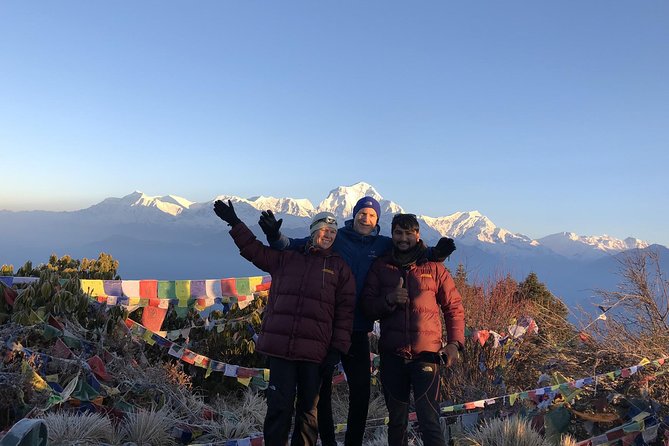
The big draw here is the Annapurna Base Camp trek, a demanding but well-supported walk into a high mountain sanctuary. You climb through villages, rhododendron country, and stone stairways before reaching Machhapuchhre Base Camp and Annapurna Base Camp at 4,230 meters.
I like the practical setup: airport transfers, permits, meals, lodge stays, a guide, and one porter for every two trekkers are handled for you. I also like the private format, which gives your group more say over walking breaks and daily pace. The main caution is simple: this is a serious trek, not a sightseeing holiday. Seven-hour walking days, steep steps, basic teahouses, and altitude all require preparation.
Key points to know before booking
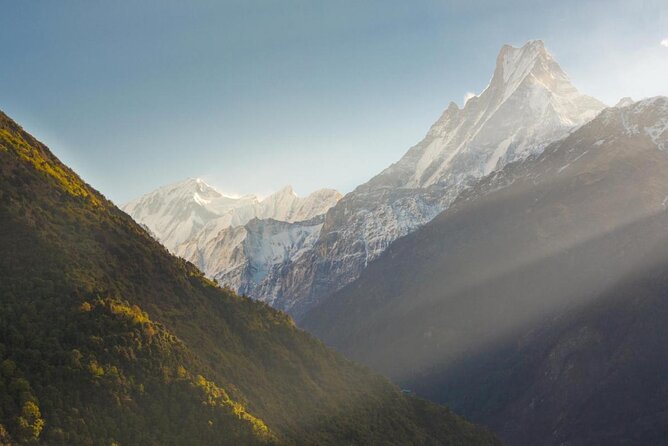
- 4,230-meter high point: The route reaches Annapurna Base Camp through Machhapuchhre Base Camp, with altitude making the final days demanding.
- Poon Hill sunrise option: Day five begins with a hike to Poon Hill before continuing to Tadapani.
- Private group format: Only your party takes part, with an experienced guide assigned to the group.
- Jhinu Danda hot spring: The route ends its mountain section with time at a relaxing natural hot spring.
- Mostly inclusive trekking package: Meals, lodge accommodation, permits, staff costs, equipment use, and transport between Kathmandu and Pokhara are included.
- Basic mountain lodging: During the trek, four or five people share a room, so privacy is limited.
What this 14-day Annapurna Base Camp trek is really like
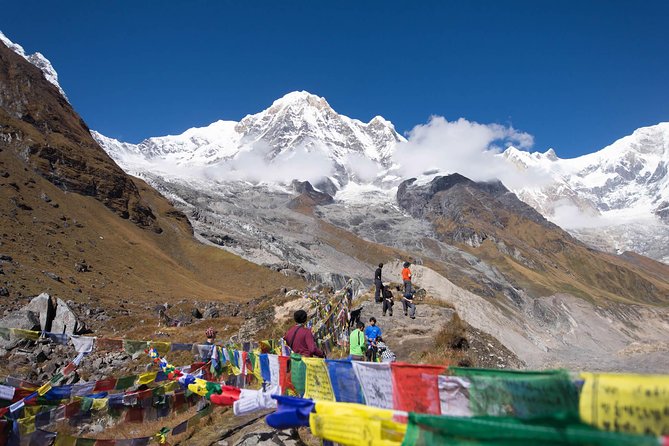
This is a point-to-point mountain trek with a clear goal, Annapurna Base Camp, rather than a series of short village walks. You begin in Kathmandu, move to Pokhara, climb gradually through the lower Annapurna foothills, enter the Annapurna Sanctuary, and return by a different sequence of villages and trails.
The advertised price is $1,090 per person. For a 14-day private trek, that is a useful value if you want the major arrangements bundled together. Airport pickup and drop-off, Kathmandu and Pokhara hotel nights, tourist bus transport, permits, meals during the trek, porters, staff insurance, and equipment use are included.
The price does not cover everything. You pay for Kathmandu and Pokhara lunches and dinners, drinks, Nepal visa fees, travel insurance, personal trekking gear, tips, and any airfare or private vehicle costs connected with Pokhara. The included transport between Kathmandu and Pokhara is by tourist bus, not a private car or flight.
The company provides one guide for the group and one porter for every two trekkers. That arrangement keeps costs down, but it also means you should pack carefully and keep your own daypack manageable. Your main duffle bag is carried by the porters, while you carry the items you need during the day.
More Annapurna Treks in Kathmandu
- Annapurna Circuit Trek with Tilicho Lake
★ 5.0 · 368 reviews - Annapurna base camp trek 5 Days
★ 5.0 · 252 reviews - Annapurna Base Camp Trekking
★ 5.0 · 116 reviews
Kathmandu arrival and the road to Pokhara
Day one is for arrival at Tribhuwan International Airport. A private car pickup is included, which is useful after a long international flight and removes the need to sort out airport transport on arrival.
You stay in a three-star hotel in Kathmandu, sharing a twin room. The itinerary does not give a full sightseeing program for the city, so think of this night mainly as an arrival and preparation stop rather than a guided Kathmandu tour.
On day two, you travel from Kathmandu to Pokhara by tourist bus. The journey takes about six to seven hours and reaches Pokhara at 910 meters. This is a long road day, so do not treat it as a quick transfer.
Pokhara is the staging point for the trek and gives you a lower-altitude night before walking begins. Accommodation and breakfast are included here, while lunch and dinner are your responsibility. The return from Pokhara to Kathmandu on day 13 uses the same included tourist bus arrangement.
Tikhe Dhunga and the first mountain steps
The walking begins on day three with the route from Pokhara to Tikhe Dhunga. The listed walking distance is nine kilometers, taking about four hours, with Tikhe Dhunga at 1,495 meters.
This is your introduction to the rhythm of the trek: walk, pause, eat, and settle into a simple lodge. The first day is shorter than several later stages, giving you a chance to test your boots, adjust your pack, and see how your legs handle repeated uphill sections.
Teahouse trekking is comfortable in its own practical way, but it is not hotel travel. The package provides lodge accommodation, with four or five people sharing a room during the trek. If your group is smaller, you should still expect shared mountain lodging rather than private rooms throughout.
Ghorepani and the Poon Hill morning
Day four is one of the harder early stages. From Tikhe Dhunga, you walk 13 kilometers to Ghorepani, gaining height to 2,850 meters over roughly seven hours.
The route is known for long stair sections, and the distance matters. This is a day when a slow, steady pace is better than trying to keep up with a faster companion. Your guide can help manage breaks, and the private format should make it easier to avoid a rushed schedule.
Day five begins with a hike to Poon Hill, then continues to Tadapani at 2,500 meters. The full walking distance is nine kilometers, taking about six to seven hours.
Poon Hill is one of the most appealing parts of this route because it adds a high viewpoint before you reach Base Camp. The early start can be tiring, but it gives the day a clear reward. After the viewpoint, you continue through the hills toward Tadapani instead of returning to Ghorepani for a second night.
Same trailhead, a different route:
- Everest Base Camp Trek – 14 Days
★ 5.0 · 1,499 reviews - Everest Base Camp Trek
★ 5.0 · 842 reviews - Everest Base Camp Helicopter Tour landing at Everest View Hotel
★ 5.0 · 668 reviews - Everest Base Camp Trekking
★ 5.0 · 485 reviews
Tadapani and Chhomrong village
The sixth day takes you from Tadapani to Chhomrong, a distance of about 8.5 kilometers and around five hours of walking. Chhomrong sits at 2,020 meters and is an important settlement on the approach to the Annapurna Sanctuary.
This section helps break up the climb. After reaching the higher point at Ghorepani, the route drops to Chhomrong before rising again toward Base Camp. That up-and-down pattern can be frustrating if you expect the trail to climb continuously, but it also gives your body some time at different elevations.
Chhomrong is one of the places where the human side of the trek becomes especially clear. The route passes through local villages and areas associated with the region’s ethnic communities. You are not simply walking through empty mountain scenery. You are moving through places where lodges, farms, guides, porters, and local services support life along the trail.
Entering the Annapurna Sanctuary
Day seven runs from Chhomrong to Dovan, at 2,600 meters. The distance is nine kilometers, taking about five hours. Day eight continues from Dovan to Deurali, at 3,200 meters, covering 7.8 kilometers in roughly four hours.
These days are important for gradual altitude gain. The walking hours are not extreme, but the rising elevation can make ordinary hills feel much harder. Your guide carries a first-aid kit and an oximeter for checking oxygen levels and heartbeat, which adds a sensible safety measure. It does not replace travel insurance or medical care, but it gives the guide a way to monitor how you are coping.
The route is also becoming more remote and more basic. Food, accommodation, and staff costs are included, and you choose meals from a menu during the trek. Drinks are not included, so budget separately for water and other beverages.
At Deurali, you are already at 3,200 meters. The itinerary does not list a separate acclimatization day, so you should arrive with a reasonable fitness base and take altitude symptoms seriously. A moderate fitness level is required, but that phrase should not be read as meaning easy. The trek includes sustained uphill walking and long stair sections.
Annapurna Base Camp at 4,230 meters
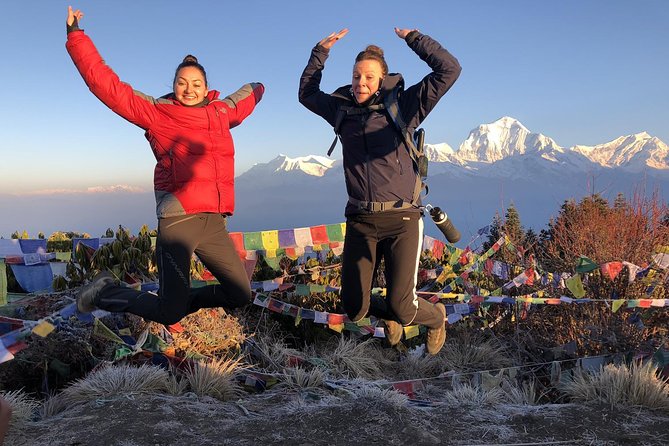
Day nine is the high point of the trip. You walk from Deurali to Annapurna Base Camp through Machhapuchhre Base Camp, reaching about 4,230 meters. The distance is eight kilometers, taking five to six hours.
The high altitude changes the feel of this day. Even if eight kilometers sounds manageable, the climb and thinner air can slow you down. Your guide’s role becomes especially valuable here, not only for navigation but also for setting a sensible pace and watching for signs that someone is struggling.
Machhapuchhre Base Camp is a major landmark on the approach. From there, the route continues into the Annapurna Sanctuary toward the final destination. Reaching Annapurna Base Camp is the central achievement of the trek, but you should also allow yourself time to notice the scale of the surrounding peaks and the enclosed mountain setting.
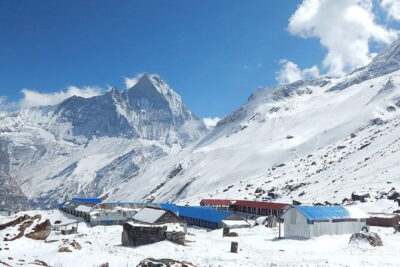
The overnight arrangements remain lodge-based and simple. Do not expect resort comfort at 4,230 meters. The supplied down jacket and sleeping bag are useful additions, especially because nighttime temperatures can feel severe at altitude. You can use the company’s duffle bag and trek map as part of the equipment package, though your personal clothing and footwear remain your responsibility.
The long return to Bamboo
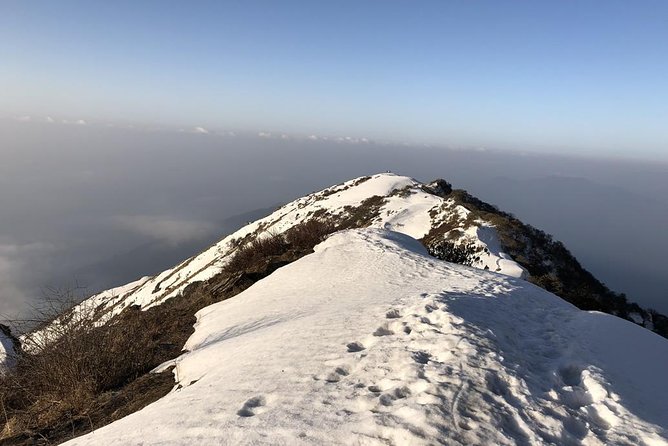
Day 10 is one of the toughest days on paper. You return from Annapurna Base Camp to Bamboo, descending to 2,310 meters over 18 kilometers and about seven hours.
The downhill direction does not make this an easy stroll. Long descents can be hard on knees and ankles, especially after the effort of reaching Base Camp. Trekking poles, supportive footwear, and controlled steps are useful personal choices, though personal trekking equipment is not included in the price.
Bamboo provides a lower overnight stop after the high section. The return route also gives you a different view of sections you may have passed more quickly on the way up. If your legs are tired, tell your guide early rather than waiting until pain becomes a real problem.
Jhinu Danda hot spring and the final return
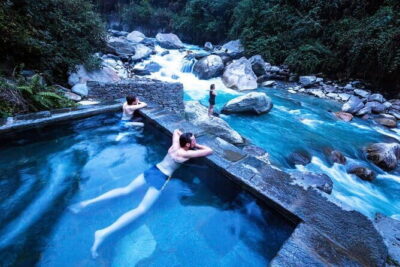
On day 11, you walk from Bamboo to Jhinu Danda, at 1,780 meters. The distance is 12 kilometers and takes about six hours. The highlight is the Jhinu Danda Hot Spring, a welcome change after several days of cold mountain nights and steep trails.
This stop gives the trek a satisfying physical finish. You have already reached Base Camp, and now the route offers a place to relax before returning to Pokhara. The hot spring is a strong reason to keep the final days in the schedule rather than rushing straight back.
Day 12 takes you from Jhinu Danda to Pokhara. The itinerary does not specify the exact transport method or timing for this section, so confirm those details before departure. Accommodation in Pokhara is included, but lunch and dinner are not.
Day 13 returns you from Pokhara to Kathmandu by tourist bus. Day 14 is the farewell and end of the tour. Airport drop-off by private car is included, which is helpful if your flight schedule matches the planned departure arrangements.
Guides, porters, and how private travel works
The strongest part of this package is the level of human support. The company assigns one guide to your group and one porter per two trekkers. Past trips connected with the company have included guides such as Yubraj, Arjun, Bhisma, Rupesh, Pabin, Deepak, Bibek, Suraj, Netra, and Krishnan, along with porters including Ram, Sabin, Sandeep, Bashu, and Pradip.
You should not assume a particular guide will lead your departure, but these names show the depth of the operating team. Specific praise has focused on careful pacing, attention to comfort, clear organization, and help when plans needed to change. One useful pattern is that solo clients have sometimes ended up with a private trek when no other group members were assigned.
Private travel is best for people who value control over the day. You are not tied to a large group’s pace, and you can discuss breaks with your guide. The tradeoff is that a private trek may feel quieter, especially if you are traveling alone. The guide and porter become your main company for much of the route.
What you receive and what you still need to arrange
The package includes:
- Airport pickup and drop-off by private car
- Three-star twin-room accommodation in Kathmandu and Pokhara
- Breakfast, lunch, and dinner during the trek
- Tourist bus transport between Kathmandu and Pokhara
- Teahouse accommodation during the walking section
- One guide and one porter for every two trekkers
- Duffle bag, map, down jacket, and sleeping bag use
- Trekking permits and government charges
- First-aid kit and oximeter
- Staff food, lodging, salaries, equipment, and accidental insurance
- A trip achievement certificate on request
You still need travel insurance, which is compulsory for outdoor activities in Nepal. You also need personal clothing and trekking equipment, drinks, visa fees, tips, and meals in Kathmandu and Pokhara.
Bring three passport-size photographs for the permits. This is a small detail, but missing paperwork can create needless delays.
Who should book this trek?
I would recommend it to someone who wants a supported Himalayan trek without arranging every hotel, permit, transfer, and porter independently. It suits a private couple, a family with suitable fitness, or a small group that wants a shared goal and a guide-led route.
It is less suitable if you want private hotel rooms every night, short walking days, or a flexible luxury trip. It also may not suit anyone who dislikes long bus journeys, shared teahouse rooms, or basic mountain facilities.
The 100 percent recommendation rate and 5 out of 5 rating shown for the experience suggest a strong record, with repeated praise for organization and staff care. Still, ratings cannot remove the physical demands. You need travel insurance and a realistic view of the seven-hour days.
Should you book the 14-Day Private Annapurna Base Camp Trek?
Book it if you want the main Annapurna Base Camp route packaged with a guide, porter, meals, permits, equipment use, and transport. The combination of Poon Hill, the Annapurna Sanctuary, a 4,230-meter finish, and Jhinu Danda Hot Spring gives the trip a varied shape.
Before paying, confirm the exact Pokhara to Jhinu Danda transport, the group room arrangement, and what personal equipment you must bring. If you are comfortable with long walks and simple lodging, the $1,090 price offers solid practical value. If you need comfort over adventure, choose a shorter or more hotel-based Nepal trip instead.
FAQ
How long is the Annapurna Base Camp trek?
The experience lasts approximately 14 days, including arrival in Kathmandu, transport to Pokhara, the trek, the return to Kathmandu, and the farewell day.
What is the highest point on the route?
The route reaches Annapurna Base Camp at about 4,230 meters, or 13,810 feet, after passing Machhapuchhre Base Camp.
Is this a private tour?
Yes. Only your group participates in the activity.
What level of fitness is needed?
A moderate physical fitness level is required. The route includes walking days of up to seven hours, long distances, steep sections, and high altitude.
Are meals included?
Breakfast, lunch, and dinner are included during the trek. Lunches and dinners in Kathmandu and Pokhara are not included. Drinks are also not included.
Where do I sleep during the trek?
You stay in lodges or teahouses. Four or five people share a room during the trekking section. In Kathmandu and Pokhara, accommodation is in three-star hotels with twin rooms.
Is transport between Kathmandu and Pokhara included?
Yes. Tourist bus transport from Kathmandu to Pokhara and back to Kathmandu is included.
Are permits included?
Yes. Trekking permits are included. You should bring three passport-size photographs.
Is travel insurance included?
No. Travel insurance is not included and is compulsory for outdoor activities in Nepal.
What happens if bad weather cancels the trip?
If poor weather causes cancellation, you are offered a different date or a full refund. You can also cancel up to 24 hours before the experience starts for a full refund.
Just added around Kathmandu
- Everest Base Camp Trek★ 5.0 · 3 reviews
- Everest Base Camp Trek★ 5.0 · 7 reviews
- 15 Days Private Everest Base Camp Trek★ 5.0 · 30 reviews
- Everest Base Camp Trek★ 5.0 · 57 reviews
- 14 Days of Adventure Trekking to Everest Base Camp★ 5.0 · 2 reviews
- 14-Day Everest Base Camp Trek★ 5.0 · 20 reviews
- From Kathmandu: Private 14-Day Everest Base Camp Trek★ 5.0 · 20 reviews
- 14 Days Everest Base Camp Trek★ 5.0 · 4 reviews
Annapurna Base Camp Treks, compared.
Trekking in Annapurna/Langtang/Everest/Upper Mustang regions
Read our review →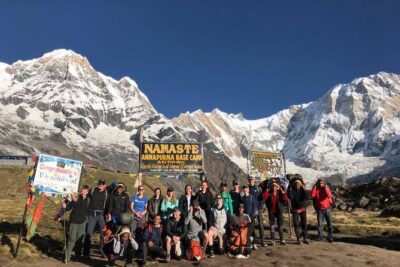
Kathmandu to Annapurna Base Camp (ABC) 5-Day Trek
Read our review →
Browse the lists this trek appears in