
Review · KATHMANDU
Annapurna Base Camp Trek
Annapurna Base Camp is a superb choice if you want a Himalayan trek with a strong mix of mountain views, village life, forest paths, and hot springs. The route reaches 4,130 meters, yet it also brings you through warm lower valleys, bamboo groves, and rhododendron forest.
I like the early climb to Poon Hill for sunrise, and I like that the trip includes Pokhara, airport transfers, permits, lodges, and a trekking guide. The main concern is the physical demand: long days, steep stone steps, basic lodge rooms, and the risk of altitude trouble make this a real trek, not a sightseeing tour.
Key points at a glance
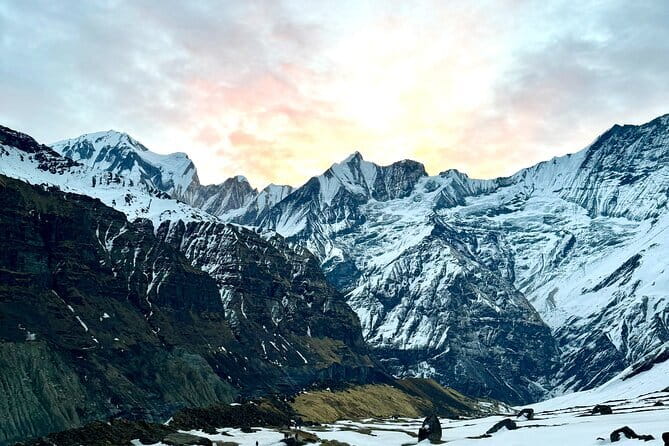
- Sunrise at 3,210 meters: Poon Hill offers broad views of Dhaulagiri, Annapurna, Machhapuchhre, and Manaslu.
- A private 13-day journey: Only your group takes part, with room for changes if conditions or health require a different plan.
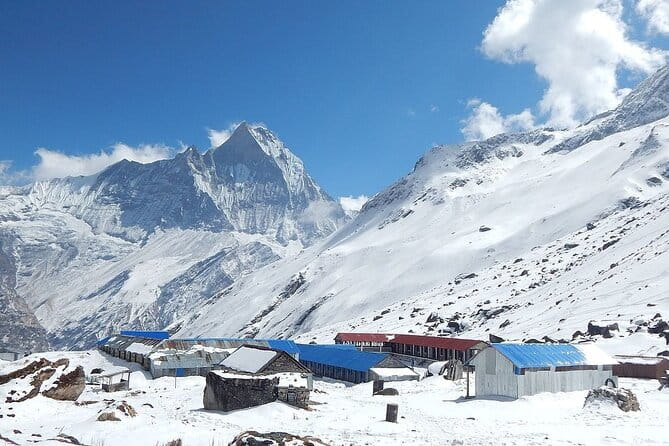
- The Annapurna Sanctuary: The trail closes in around icy peaks before reaching base camp at 4,130 meters.
- Local guides are a major strength: Guides including Prakash, Jiban, Buddhi, Keshab, and Ganesh have been praised for care, clear communication, and flexibility.
- Good value at $650: Transport, hotels, permits, lodges, guide service, and airport transfers are included, while trek meals and porter service cost extra.
- A useful recovery stop: Jhinu Danda gives you access to natural hot springs after the hardest mountain days.
Why this Annapurna route is so appealing
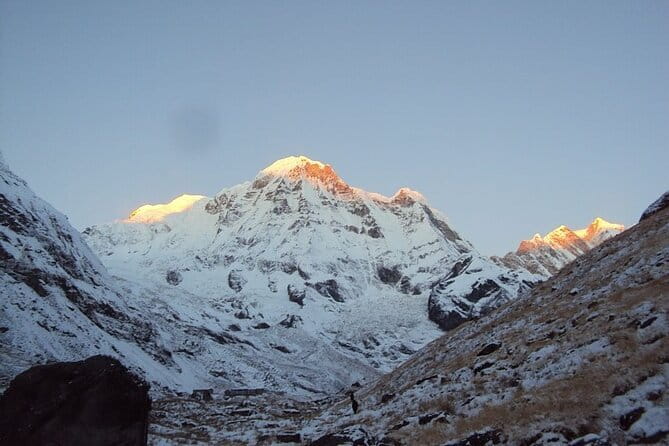
The Annapurna Base Camp Trek packs a lot into 13 days. You begin with city time in Kathmandu, spend two nights in Pokhara, walk through villages and forests, climb to Poon Hill, enter the Annapurna Sanctuary, and return through Jhinu Danda.
The scenery changes often. Lower sections bring rivers, cultivated hillsides, and villages. Higher sections bring bamboo, oak, pine, rhododendron, waterfalls, and snow-covered peaks. That range is one reason this route feels more varied than a trek that simply climbs toward one high pass.
The route also has cultural weight. The Annapurna Sanctuary is regarded as sacred by both Hindus and Buddhists, and the area was not opened to foreign visitors until 1956. You do not need to be a mountaineer to appreciate that setting. The walk is about entering a mountain basin surrounded by great peaks, not climbing one of them.
This is a private tour, so your group is not tied to a large departure party. That matters on a mountain trail. A guide can adjust the pace, stop more often, or alter the route if weather or illness causes trouble. Several guide names connected with this company include Prakash, Jiban, Buddhi, and Keshab. Ganesh, the owner, is also described as responsive and straightforward in trip planning.
More Annapurna Treks in Kathmandu
- Annapurna Circuit Trek with Tilicho Lake
★ 5.0 · 368 reviews - Annapurna base camp trek 5 Days
★ 5.0 · 252 reviews - 14-Day Private Annapurna Base Camp Trek
★ 5.0 · 180 reviews
Days 1 and 2: Kathmandu to Pokhara
Your first day begins with airport pickup in Kathmandu. A representative takes you to your hotel, where the trekking guide gives a briefing and helps prepare your gear. This is the time to ask practical questions about walking pace, meals, drinking water, weather, and what should go in your daypack.
The following day is mostly a transport day. The tourist bus takes about seven hours to Pokhara, following the Trishuli River and passing river valleys and hillside settlements. It is scenic, but do not expect a quick transfer. Road travel in Nepal can be slow, and a full day on the bus is part of the experience.
Pokhara is a good pause before the walking begins. You can rest beside Phewa Lake, take a boat ride, or walk along Lakeside. Two hotel nights in Pokhara are included, with breakfast. That extra time makes the schedule less rushed and gives you a chance to settle into Nepal before the trail gets serious.
One detail deserves confirmation before booking: the tour information gives a 6:30 am start time at Tribhuvan Airport, while the first day is written around your arrival. Ask the operator to confirm your exact pickup and transport timing.
Days 3 and 4: Tikhedhunga, Ulleri, and Ghorepani
From Pokhara, a private vehicle takes you toward Nayapul, the traditional starting point for the trek. You walk first to Birethanti, a riverside village at the meeting point of the Modi and Bhurungdi rivers. From there, the path rises toward Tikhedhunga.
This first walking day takes about six hours. It introduces the basic rhythm of the trek: a drive, a climb, a local lodge, and a simple evening meal that you pay for separately. The route includes off-road sections and steady uphill walking, so your legs get an early warning of what lies ahead.
Day 4 brings the famous climb to Ulleri. The stone staircase is steep and sustained, rising to the Magar village at about 2,070 meters. It is not a technical climb, but the steps can feel demanding, especially if you are carrying a heavy pack. This is one reason porter service may be worth the additional cost.
After Ulleri, the trail passes through oak and rhododendron forest toward Banthanti and Nagethanti. The walk to Ghorepani continues through woodland, with the vegetation changing as you gain height. Ghorepani is an important overnight stop because it positions you well for the early morning climb to Poon Hill.
Lodges are local and generally basic. The package includes eight nights in twin-sharing lodge accommodation, but it does not include meals during the trek. Budget separately for breakfast, lunch, dinner, snacks, and drinks.
Day 5: Poon Hill sunrise and Tadapani
The climb to Poon Hill begins early. From Ghorepani, you walk for about 45 minutes to reach the 3,210-meter summit. The point of starting before dawn is the sunrise over the high Himalayas.
On a clear morning, the view can include Dhaulagiri, the Annapurna range, Machhapuchhre, and Manaslu. The panorama reaches far toward the western region of Dolpo. This is one of the strongest scenic moments on the whole route, and it comes before you have reached the main objective.
After Poon Hill, you return briefly and continue along a ridge through pine and rhododendron forest. The trail reaches Deurali, descends to Banthanti, then turns toward Tadapani. The day takes about six hours, with a mixture of ascent and descent.
Poon Hill is also a good test. If the early start and 3,210-meter elevation feel manageable, you have a useful sense of how your body is handling the trek. If you feel unwell, tell your guide early. Do not treat headache, dizziness, or unusual fatigue as something to hide.
Same trailhead, a different route:
- Everest Base Camp Trek – 14 Days
★ 5.0 · 1,499 reviews - Everest Base Camp Trek
★ 5.0 · 842 reviews - Everest Base Camp Helicopter Tour landing at Everest View Hotel
★ 5.0 · 668 reviews - Everest Base Camp Trekking
★ 5.0 · 485 reviews
Days 6 and 7: Into the bamboo and rhododendron forest
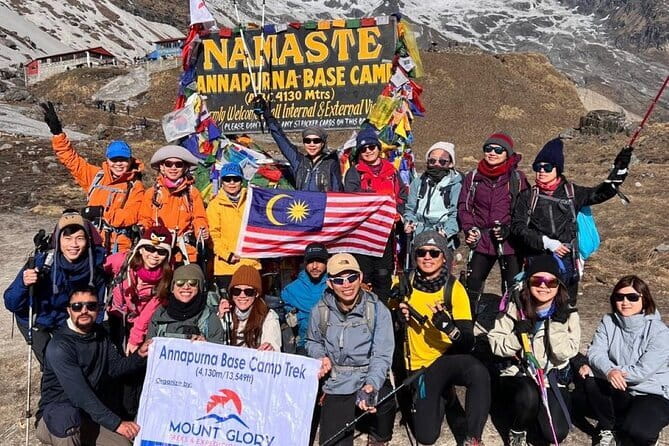
From Tadapani, the path drops steeply through rhododendron forest toward a Gurung village. The Gurung people are one of the main communities in this part of Nepal, and the villages provide a more personal sense of the region than the mountain viewpoints alone.
The trail then becomes easier for a while as you continue toward Sinuwa at about 2,300 meters. This day takes roughly five hours, but downhill walking can be hard on knees and thighs. Trekking poles are useful here, particularly on wet or uneven sections.
Day 7 moves deeper into the valley. You descend to Sinuwa Khola, climb to Khuldighar at about 2,380 meters, then follow a rocky section before the route levels out through bamboo and rhododendron thickets. The overnight stop is Deurali, reached after about six hours.
These days are less about grand views and more about the character of the trail. You hear streams, pass through thick forest, and walk on paths that can feel enclosed compared with the open mountain viewpoints near Poon Hill. The changing vegetation shows why this route is famous for its variety of ecosystems.
Day 8: Machhapuchhre Base Camp and Annapurna Base Camp
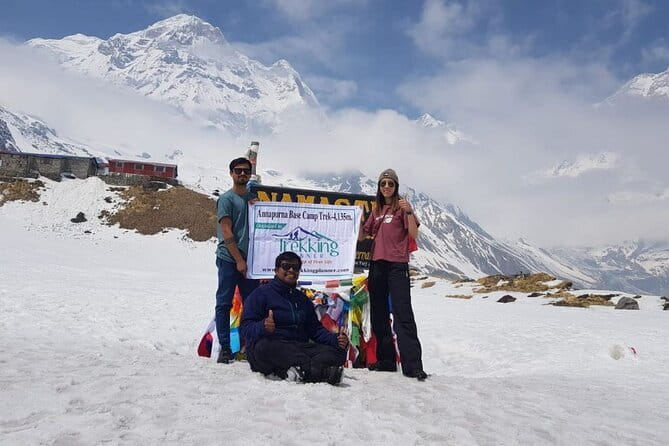
This is the central day of the trek. From Deurali, the route continues through the forest and past Hinku Cave before reaching Machhapuchhre Base Camp. Despite its name, this is not a climbing base camp for the summit. Climbing Machhapuchhre, also called Fishtail, is not permitted.
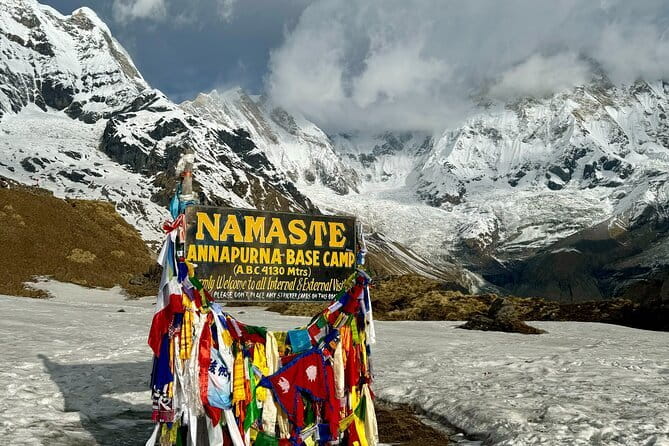
From Machhapuchhre Base Camp, the trail opens into the Annapurna Sanctuary. The surrounding peaks become the main event, with icy walls rising around the route. You continue for about two hours to Annapurna Base Camp at 4,130 meters.
The full walking day is listed at about six hours, but your pace and conditions matter. The air is thinner here, and the cold can be sharp. Your guide should watch how you are doing, but you also need to speak up. A strong walker can still become ill at altitude.
The package includes the trekking permits and entrance fees needed for the route, as well as first-aid medicines carried by the guide. That is useful, but it does not replace travel insurance or emergency planning. Ask the company what procedures apply if you must leave the trail early.
At base camp, the reward is not a summit climb. It is the enclosed mountain setting, the sense of arriving at the head of the valley, and the chance to look back at the route you have walked. Keep your expectations practical: weather controls the views, and clouds can move in quickly.
Days 9 and 10: The return through Bamboo and Jhinu Danda
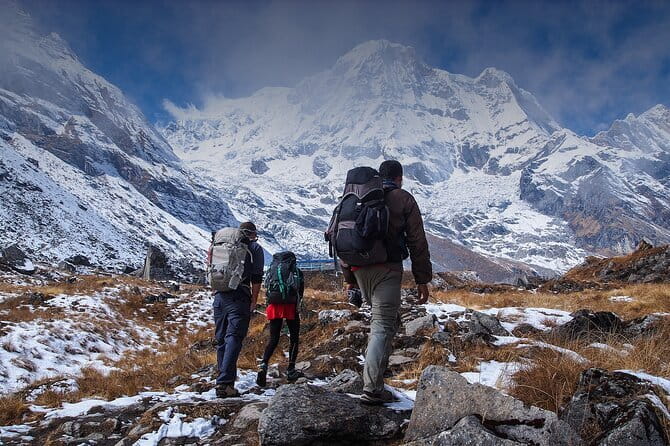
Day 9 retraces the route from base camp toward Bamboo. The walk is mostly downhill and takes around six hours. That sounds easier than the ascent, but descending on stone and uneven ground can be tiring. Your knees may feel the work more than your lungs.
The scenery remains a strong companion as you lose elevation. You move from the high sanctuary back toward thicker vegetation and more comfortable air. Overnight accommodation is again in a local lodge.
Day 10 takes about four hours and leads to Jhinu Danda. From Bamboo, you climb toward Kuldighar, descend to Chhomrong Khola, climb stone steps to Chhomrong, then descend again to Jhinu Danda.
The hot springs are reached by a 15 to 20 minute downhill walk from Jhinu Danda. This is a welcome place to rest sore legs, though remember that you must walk uphill again to return to the lodge. It is a small but valuable feature of the route, especially after the long climb to base camp and the return walk.
The day at Jhinu Danda also gives the schedule a better rhythm. You are not simply rushing from base camp to the road. You get time to recover before the final walk to Nayapul.
Days 11 to 13: Back to Pokhara and Kathmandu
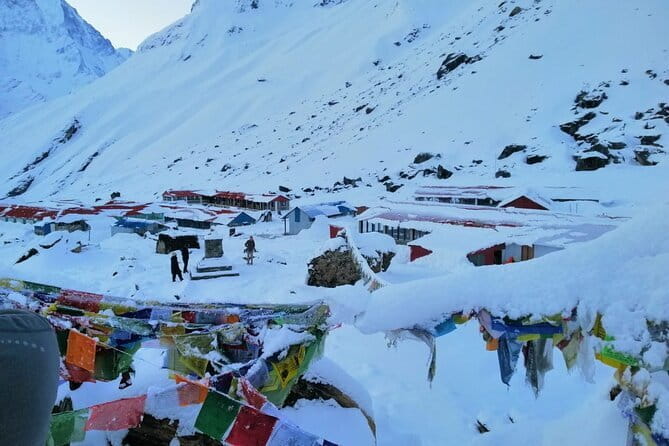
Day 11 begins with a walk to Nayapul, taking about four to five hours. From there, a private vehicle takes you roughly one hour to Pokhara. Lunch is provided on the way, and the night is spent at a Pokhara hotel with bed and breakfast included.
The second bus journey comes on Day 12. You return to Kathmandu by tourist bus in about seven hours. The route follows the Marshyangdi and Trishuli river corridors, giving you a look at settlements and daily life along the roads. A flight may be available instead, with mountain views, but the supplied package specifically includes both-way tourist-bus transport, so confirm any flight upgrade separately.
After reaching Kathmandu, you can rest or walk around Thamel. The farewell dinner includes a typical Nepalese restaurant and cultural dance performance. The final morning is airport transfer day, with a private vehicle taking you to Tribhuvan International Airport.
What the $650 price really covers
At $650 per person, this package offers a useful amount of coverage for a 13-day private trek. Included items are:
- Airport pickup and drop-off by private vehicle
- Two hotel nights in Kathmandu with breakfast
- Two hotel nights in Pokhara with breakfast
- Eight nights in twin-sharing local lodges
- An experienced trekking guide
- Tourist-bus transport between Kathmandu and Pokhara
- Private road transport to and from the trekking trail
- Trekking permits and entrance fees
- First-aid medicines carried by the guide
- Welcome dinner with cultural performance
- Farewell dinner with cultural performance
- Taxes and an adventure certificate
The price does not include international flights, a Nepal visa, meals during the trek, tips, or porters. The meal exclusion is the main point to budget for. You will need cash for lodge food, drinks, snacks, and any extra services along the trail.
A porter is available at an additional price. I would seriously consider one if you are not used to carrying a pack for six hours, or if you want to conserve energy for the higher sections. The tour can still work without one, but carrying too much makes the stone steps and long descents harder.
The package is strongest for people who value an organized local service but still want a private feel. The company handles the major permits, lodging, transport, and guide arrangements. At the same time, the trip keeps you in local lodges and village settings rather than placing you in a fully polished resort-style program.
Who should book this trek
I would recommend it to a reasonably fit first-time Himalayan trekker, an active couple, a small group of friends, or a family with older children who are used to long walks. Children must be accompanied by an adult, and everyone should have a moderate level of physical fitness.
You should be comfortable with steep steps, uneven paths, six-hour walking days, basic lodge accommodation, and changing weather. This is not a good match if you want private bathrooms, short walking days, or a fixed luxury schedule.
The strongest reason to choose this operator is the reported care from guides such as Prakash, Jiban, Buddhi, and Keshab. Their roles include more than leading the path. They help with pacing, route changes, health concerns, and practical decisions. The private format makes that support more useful.
The biggest thing to confirm before payment is what is meant by flexibility. Previous arrangements have included route changes when illness or bad weather affected plans, including a change toward Mardi Himal on one trip. That is encouraging, but mountain conditions are never guaranteed. Ask about backup routes, porter rates, meal costs, and emergency transport in writing.
Should you book the Annapurna Base Camp Trek?
Book this trek if you want a strong all-round Nepal experience at a moderate price. You get Poon Hill sunrise, the Annapurna Sanctuary, Pokhara, mountain villages, local lodges, hot springs, and organized transport in one trip.
I would not book it without preparing for the walking and setting aside extra money for meals, tips, and possibly a porter. If you accept the basic conditions and take altitude seriously, the 13-day plan gives you a rewarding route with good scenic variety and useful support from a local trekking team.
The free cancellation policy allows cancellation up to 24 hours before the start time for a full refund. After that point, refunds and late changes are not accepted, so confirm your health, flights, and pickup details before the final day.
FAQ
How long is the Annapurna Base Camp Trek?
The complete program lasts approximately 13 days, including arrival and departure in Kathmandu, two nights in Pokhara, the trek to Annapurna Base Camp, and the return journeys.
What is the highest point of the trek?
Annapurna Base Camp is at approximately 4,130 meters. Poon Hill, reached earlier in the trip, is about 3,210 meters.
Are meals included during the trek?
Meals during the trek are not included. The package includes breakfast at the Kathmandu and Pokhara hotels, as well as specified welcome and farewell dinners.
Is a porter included?
No. Porters are available for an additional price. A trekking guide is included.
Is transport between Kathmandu and Pokhara included?
Yes. The package includes long-range tourist-bus transport in both directions between Kathmandu and Pokhara. Private road transport to and from the trekking point is also included.
Can I cancel for a full refund?
You can cancel for a full refund if you cancel at least 24 hours before the experience start time. Cancellations or changes made less than 24 hours before the start time are not accepted.
Just added around Kathmandu
- Everest Base Camp Trek★ 5.0 · 3 reviews
- Everest Base Camp Trek★ 5.0 · 7 reviews
- 15 Days Private Everest Base Camp Trek★ 5.0 · 30 reviews
- 14-Day Everest Base Camp Trek★ 5.0 · 20 reviews
- Everest Base Camp Trek★ 5.0 · 57 reviews
- 14 Days of Adventure Trekking to Everest Base Camp★ 5.0 · 2 reviews
- From Kathmandu: Private 14-Day Everest Base Camp Trek★ 5.0 · 20 reviews
- 14 Days Everest Base Camp Trek★ 5.0 · 4 reviews
Annapurna Base Camp Treks, compared.




Trekking in Annapurna/Langtang/Everest/Upper Mustang regions
Read our review →


Kathmandu to Annapurna Base Camp (ABC) 5-Day Trek
Read our review →Browse the lists this trek appears in