
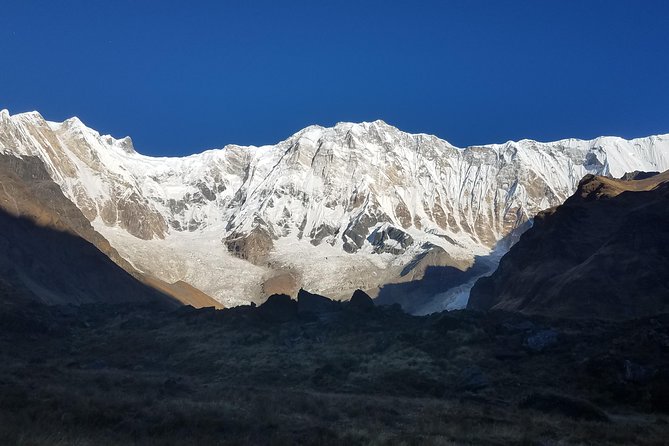
Review · KATHMANDU
Annapurna Base Camp Trekking – 14 Days
Annapurna Base Camp is one of Nepal’s most rewarding short treks because it carries you from rice fields and bamboo forests into a cold mountain bowl ringed by major Himalayan peaks. The final approach follows the Modi Khola gorge to Annapurna Base Camp at 4,130 meters, beneath the massive peaks used by serious climbing expeditions.
I like the careful pace, with time to adjust before the highest nights, and the practical setup: tea-house lodging, full-board meals, permits, a licensed English-speaking guide, and one porter for every two people. The main caution is simple: this is a real mountain trek, not a gentle sightseeing walk. Long stair climbs, thin air, basic rooms, and changing weather all require preparation.
Key points to know before booking
- Annapurna Base Camp reaches 4,130 meters, with Machhapuchre Base Camp included on the way.
- Nine nights in local lodges provide a social, practical tea-house experience rather than hotel comfort.
- The route changes dramatically, moving from subtropical forests and terraced fields to glacial mountain terrain.
- A licensed English-speaking Sherpa guide and porter support are included, with one porter shared by two people.
- The schedule allows acclimatization, but you still need moderate fitness and proper altitude awareness.
- The $1,250 price covers many essentials, though city meals, drinks, insurance, tips, and the Nepal visa cost extra.
Why this 14-day route works
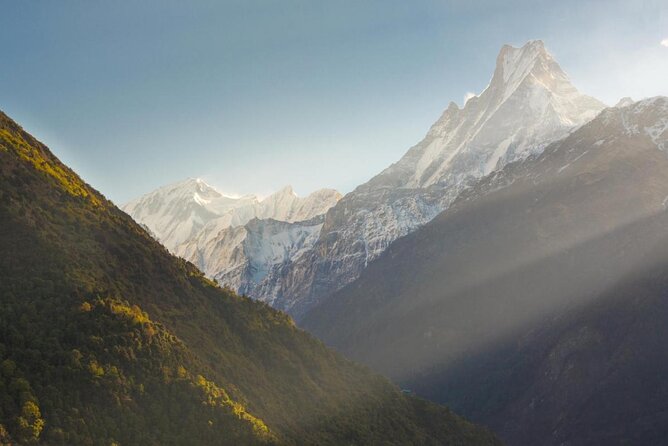
The strength of this Annapurna Base Camp trek is its changing scenery. You begin in Kathmandu, move to the lakeside city of Pokhara, then walk through villages, forests, and high mountain valleys before reaching the base camp. Few treks of this length offer such a clear change in climate and scenery.
The schedule also gives your body time to adjust. Annapurna Base Camp is only a little above 4,000 meters, but altitude problems can affect fit people as well as beginners. The route does not rush straight to the highest point. You spend nights at Ghorepani, Tadapani, Chhomrung, Dovan, Machhapuchre Base Camp, and Annapurna Base Camp before descending.
The operator’s guiding team includes names such as Ngima, Dawa, Tashi, Nima, Mingma, and Pasang, though your own guide will depend on the departure. The important practical point is that the guide is described as a government-trained, licensed English speaker, while the staff handle food, accommodation, permits, and safety decisions along the route.
More Annapurna Treks in Kathmandu
- Annapurna Circuit Trek with Tilicho Lake
★ 5.0 · 368 reviews - Annapurna base camp trek 5 Days
★ 5.0 · 252 reviews - 14-Day Private Annapurna Base Camp Trek
★ 5.0 · 180 reviews
Days 1 and 2: Kathmandu to Pokhara
Day 1 is your arrival in Kathmandu, with pickup offered from the airport or another agreed point. The listed meeting area is Thamel, the city’s main base for trekking services, restaurants, shops, and last-minute supplies.
Your Kathmandu accommodation is included on a twin-share bed-and-breakfast basis. Two nights in Kathmandu are included in total, one before and one after the trek. Lunch and dinner in the city are not included, so allow about $10 to $14 per meal at tourist restaurants.
Day 2 brings the drive to Pokhara at about 900 meters. The transfer is included and uses an air-conditioned vehicle. Pokhara is a useful pause before the walking begins, with a lower altitude and a more relaxed setting than Kathmandu.
The package includes two nights in Pokhara on a bed-and-breakfast basis. You will need to pay for city lunches, dinners, drinks, and other personal purchases. I would use this time to check your boots, refill personal supplies, and make sure your day pack is arranged before the trail begins.
Days 3 and 4: Nayapul, Hile, and Ghorepani
On Day 3, you drive from Pokhara to Nayapul, at roughly 1,010 meters. From there, the trek begins with a three-hour walk to Hile, at about 1,400 meters.
This first walking day is a useful introduction to the rhythm of the route. You will encounter stone paths, village areas, and the first steady changes in altitude. It is not the hardest day, but you should avoid treating it as a casual stroll. Starting slowly helps you save energy for the longer climbs ahead.
Day 4 takes you to Ghorepani, at 2,855 meters, over six to seven hours. This is one of the more demanding days because the route climbs significantly and includes many stone steps. The reward is the transition into the high foothills, where forest, mountain air, and distant Himalayan views begin to replace the lower valleys.
Ghorepani is a key stopping point because it gives you a night at a higher elevation before the route continues toward the Annapurna Sanctuary. The lodge is basic, and rooms usually have two narrow beds. You should expect warmth and hospitality, but not hotel-style soundproofing or private facilities.
Days 5 and 6: Tadapani and Chhomrung
Day 5 leads to Tadapani, at 2,610 meters, in about five hours. The route passes through forested sections and continues across the stone stairway system that defines much of this trek.
Tadapani is a good example of why you should not judge the route only by distance. Five hours can feel long when the trail rises and falls repeatedly. Take the guide’s advice about breaks, drink regularly, and keep your pace slow enough that you can speak without gasping.
On Day 6, you descend and climb again on the way to Chhomrung, at 2,040 meters. The walk takes around four hours. The lower sleeping elevation gives your body some relief, but the day is not automatically easy. Annapurna routes often trade one climb for another, so a descent does not mean the work is finished.
Chhomrung is an important gateway to the upper valley. From here, the route feels more remote, and the settlements become part of a narrow mountain corridor rather than a broad foothill area. The mix of village life and mountain views is one of the most appealing parts of the trek.
Same trailhead, a different route:
- Everest Base Camp Trek – 14 Days
★ 5.0 · 1,499 reviews - Everest Base Camp Trek
★ 5.0 · 842 reviews - Everest Base Camp Helicopter Tour landing at Everest View Hotel
★ 5.0 · 668 reviews - Everest Base Camp Trekking
★ 5.0 · 485 reviews
Days 7 and 8: Dovan to Machhapuchre Base Camp
Day 7 takes four to five hours to Dovan, at 2,550 meters. The trail follows the Modi Khola system upward, with forests and steep valley walls surrounding the route. Bamboo and rhododendron are especially characteristic of the lower and middle sections.
The gorge becomes narrower as you continue. This is where the trek begins to feel less like a village-to-village walk and more like a route into high mountain country. The weather can shift quickly, so keep a warm layer and rain protection in your day pack instead of burying them in porter luggage.
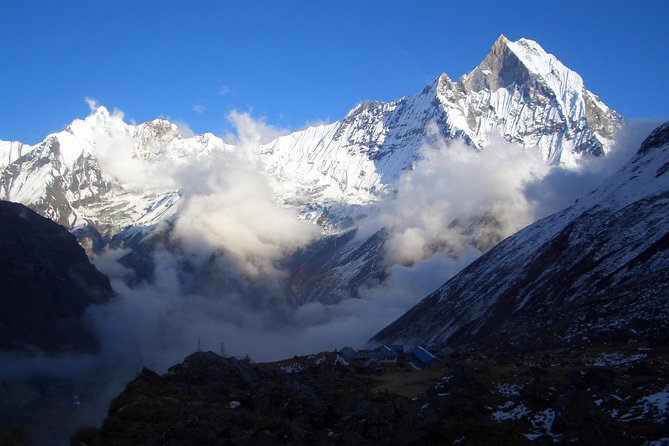
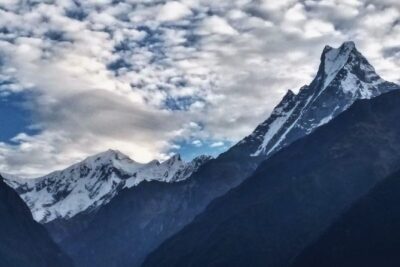
Day 8 leads to Machhapuchre Base Camp, at about 3,700 meters, in four to five hours. Machhapuchre, also known as Fishtail, is one of Nepal’s most recognizable peaks. The base camp stop places you close to the upper mountain walls and prepares you for the final rise to Annapurna Base Camp.
This is a night when altitude may become more noticeable. You may feel slower, sleep less comfortably, or develop a headache. Tell your guide promptly if you feel unwell. The operator specifically allows guides to alter or cancel part of the route if weather, health, or natural conditions make it unsafe.
Day 9: Annapurna Base Camp at 4,130 meters
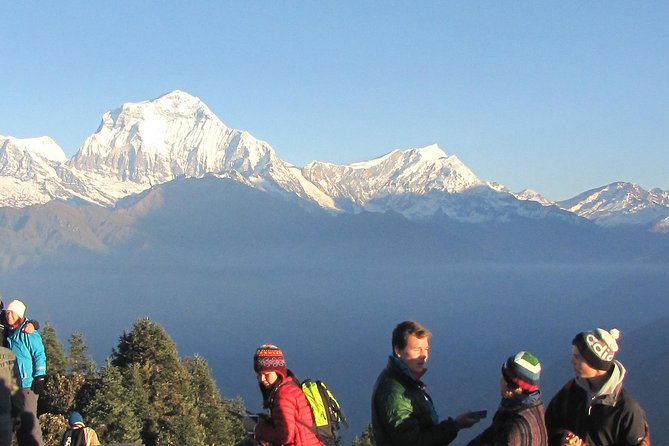
The walk from Machhapuchre Base Camp to Annapurna Base Camp takes about two to three hours. The distance is relatively short, but the elevation makes this a measured day. You should not race to arrive early.
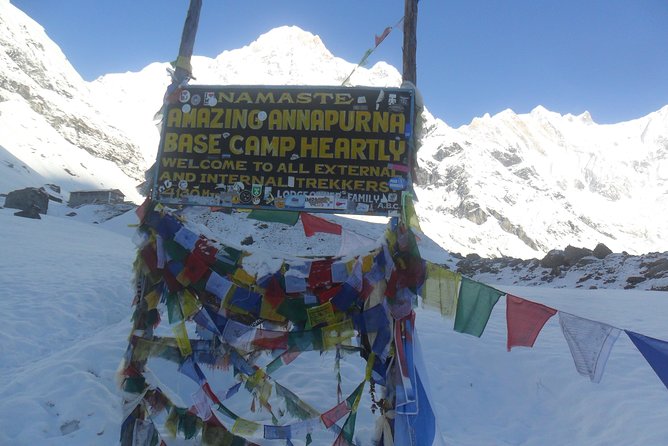
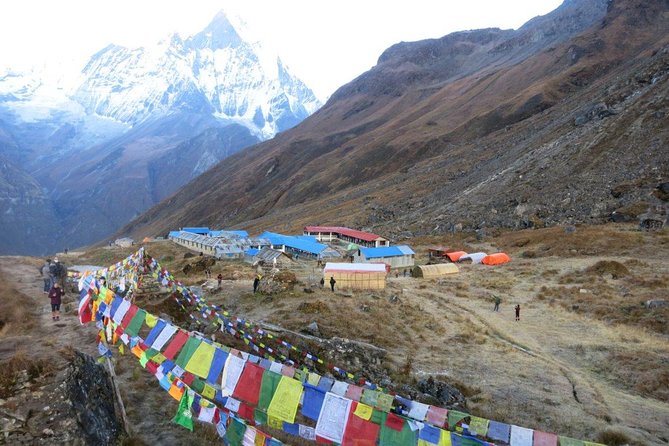
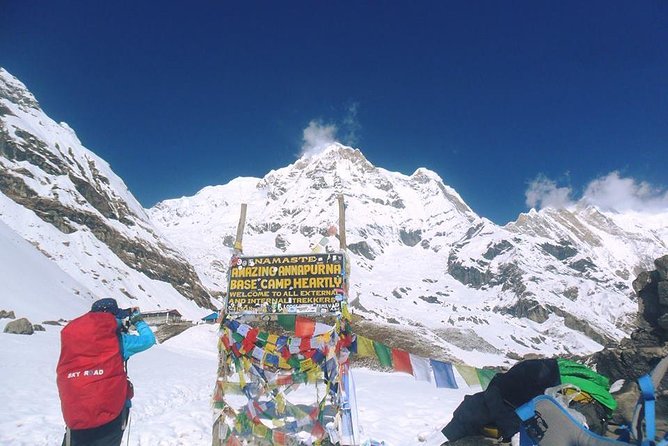
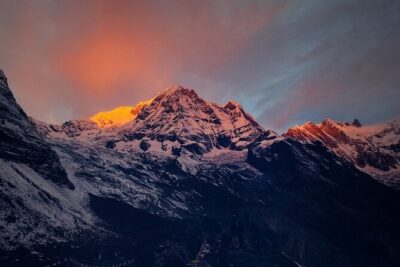
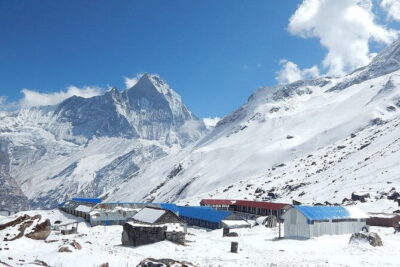
Annapurna Base Camp sits in a high glacial basin surrounded by eleven major peaks. Here, the narrow gorge opens into a broad mountain setting, with the walls of the Annapurna range rising around you. The camp is also used by expeditions attempting Annapurna I’s famous south face, giving the place a serious mountaineering connection rather than being only a viewpoint.
This is the emotional high point of the trek, but it is also the coldest and most exposed overnight stop. Keep expectations realistic. The setting is spectacular, but accommodation remains a simple local lodge, and facilities become more basic as you move higher.
At this altitude, drink at least three liters of water each day. Filtered water is available in the Annapurna region through Euro-guard systems, but you need to bring your own refillable bottle. Boiled water, bottled water, soft drinks, and beer cost extra.
Days 10 and 11: The long descent to Bamboo and Jhinu Danda
Day 10 returns to Bamboo, at 2,340 meters, in four to five hours. Descending is usually easier on the lungs, but it can be hard on knees and ankles. Stone steps become tiring in both directions, so trekking poles can be useful even though they are not listed as included equipment.
The return route allows you to see the same gorge from a different angle. You may notice details you missed while climbing, but the descent still requires concentration, especially after the fatigue of the base camp night.
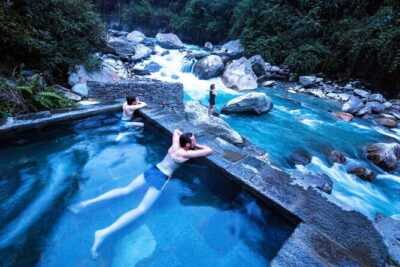
Day 11 continues to Jhinu Danda, at 1,780 meters, in about five hours. This is a warmer, lower stop and a welcome change after the cold upper valley. Jhinu Danda is known as a stopping place on the lower route, but the supplied details do not promise a particular optional activity, so you should ask your guide what is available on your departure.
The lower altitude usually feels easier, though the day still includes uneven paths and repeated steps. Keep your footwear secure and take care on wet stone.
Days 12 to 14: Returning to Pokhara and Kathmandu
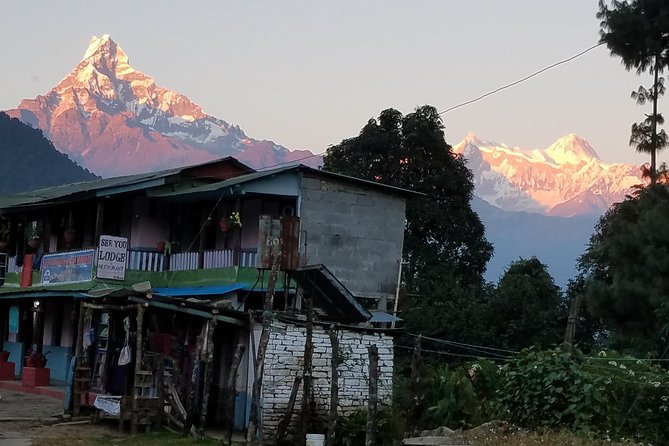
Day 12 combines a five to six-hour walk to Nayapul with transport back to Pokhara. This makes it a full day, not simply a transfer. Your legs may be tired by now, so organize your pack the night before and keep only what you need accessible during the walk.
Day 13 is the drive from Pokhara back to Kathmandu. The air-conditioned ground transfers between Kathmandu, Pokhara, Nayapul, and Pokhara are included in the package. Traffic and road conditions can affect timing, so keep your plans in Kathmandu flexible.
Day 14 is departure day. The activity ends back at the meeting point, and the second Kathmandu hotel night is included before departure. If you have an international flight, confirm the exact timing of your transfer with the operator rather than assuming the listed schedule covers every airport arrangement.
Tea houses, meals, and porter support
This is a tea-house trek, not a camping expedition. During the walking portion, nine nights in local lodges are included with full-board meals and twin-share rooms. Tea houses are family-run lodges with simple rooms, narrow beds, and plenty of shared social space.
I like this arrangement because it keeps the trek connected to local communities. You sleep in villages and eat food prepared along the route rather than moving through the mountains with a complete camp crew. The tradeoff is less privacy and fewer comforts than you would expect from a city hotel.
One porter is provided for every two people. That matters on a route with repeated climbs and altitude changes, but you should still pack lightly and keep essential items with you. Your day pack should hold water, rain gear, warm layers, personal medication, documents, snacks, and anything you may need during the day.
Snickers, Mars, Bounty bars, and fresh fruit are included as energy supplies. That is a useful touch on long walking days, though you should not rely on it for every personal snack preference.
What the $1,250 price really covers
At $1,250 per person, the trek offers solid value if you want an organized private experience. The price includes Kathmandu and Pokhara accommodation, nine lodge nights with full-board meals, ground transport, a licensed guide, shared porter service, staff costs, staff insurance, energy supplies, permits, the Annapurna Conservation Fee, TIMS registration, and required documentation.
That is a substantial list of costs handled in advance. You are mainly paying for the guide and support system, not just a bed and a route map. A guide who manages pace, weather decisions, accommodation, and health concerns can make a meaningful difference in a remote mountain area.
Budget extra money for Nepal’s entry visa, personal travel insurance, city lunches and dinners, drinks, bottled or boiled water, beer, and tips for the guide, porters, and driver. On the trail, about $10 to $15 per day should usually cover extras, but prices rise farther from the road.
The price does not include your insurance, and this is not a place to cut corners. You need coverage for medical treatment, injury, emergency evacuation, lost baggage, and liability at the elevations and activities involved.
Fitness, weather, and the best season
You need a moderate level of fitness. The route is manageable for a reasonably active person, but six to seven-hour walking days, high steps, and altitude make preparation worthwhile. Build endurance with long walks and stair practice before arriving.
Spring, from February through late April, and autumn, from late September through late November, are described as the best seasons. Winter trips are also possible for Ghorepani, Poon Hill, Ghandruk, Annapurna Base Camp, and Kali Gandaki. Christmas and New Year can work for a family or friend group, but colder conditions require suitable clothing.
Weather can force changes. The operator places safety ahead of following the planned schedule, so you need to accept that a guide may alter or cancel part of the route because of poor weather, health concerns, or natural hazards.
The booking is non-refundable and cannot be changed for personal reasons. If poor weather cancels the experience, or if the minimum number of participants is not reached, you are offered another date or experience, or a full refund.
Who should book this trek?
I would recommend this trek to you if you want a direct route into the Annapurna mountains, prefer lodge accommodation to camping, and value having transport, permits, meals, guides, and porters arranged together.
It also suits first-time Himalayan trekkers who are willing to train and follow altitude advice. The included support is useful for families and groups with teenagers, though every person still needs enough fitness for long walking days.
I would hesitate if you want private hotel rooms, flexible sightseeing days, or a low-effort mountain holiday. The trek includes basic accommodation, shared rooms, long stair sections, and cold nights. It is organized, but it is not easy.
Should you book Annapurna Base Camp Trekking?
Book it if reaching a high Himalayan base camp is your main goal and you want a carefully paced 14-day program with strong logistical support. The route gives you a rare sequence of foothills, forests, villages, gorges, and glacial peaks without requiring a long expedition.
Before paying, confirm the assigned guide, porter arrangements, exact hotel names, transport times, insurance requirements, and current permit procedures. Pack for rain, cold, sun, and basic lodge conditions. If you prepare your legs, respect the altitude, and accept that mountain plans can change, this offers a well-supported and memorable way to reach Annapurna Base Camp.
FAQ
How long is the Annapurna Base Camp trek?
The experience lasts approximately 14 days, including arrival and departure in Kathmandu, transfers to and from Pokhara, and the walking route to Annapurna Base Camp.
What is the highest point of the trek?
The highest listed point is Annapurna Base Camp, at approximately 4,130 meters or 13,547 feet.
Is Machhapuchre Base Camp included?
Yes. Day 8 reaches Machhapuchre Base Camp at about 3,700 meters before the walk continues to Annapurna Base Camp.
What accommodation is included?
Two nights each in Kathmandu and Pokhara are included on a twin-share bed-and-breakfast basis. During the trek, nine nights in local lodges are included with twin-share rooms and full-board meals.
Are meals included?
Full-board meals are included during the trek. Lunch and dinner in Kathmandu and Pokhara are not included. Drinks, bottled water, boiled water, and beer are also extra.
Is a guide included?
Yes. The package includes an English-speaking, experienced Sherpa guide who is government trained and licensed.
Is porter support included?
Yes. One porter is included for every two people. Trek staff costs, including their salary, insurance, equipment, food, and accommodation, are covered.
Do I need travel insurance?
Yes. Personal travel insurance is not included, and specialized coverage for emergency evacuation, injury, lost baggage, liability, and medical treatment is strongly recommended.
When is the best time to go?
The preferred seasons are spring, from February through late April, and autumn, from late September through late November. Winter trekking is also possible on several Annapurna routes, including Annapurna Base Camp.
Just added around Kathmandu
- Everest Base Camp Trek★ 5.0 · 3 reviews
- Everest Base Camp Trek★ 5.0 · 7 reviews
- 15 Days Private Everest Base Camp Trek★ 5.0 · 30 reviews
- Everest Base Camp Trek★ 5.0 · 57 reviews
- 14 Days of Adventure Trekking to Everest Base Camp★ 5.0 · 2 reviews
- 14-Day Everest Base Camp Trek★ 5.0 · 20 reviews
- From Kathmandu: Private 14-Day Everest Base Camp Trek★ 5.0 · 20 reviews
- 14 Days Everest Base Camp Trek★ 5.0 · 4 reviews
Annapurna Base Camp Treks, compared.
Trekking in Annapurna/Langtang/Everest/Upper Mustang regions
Read our review →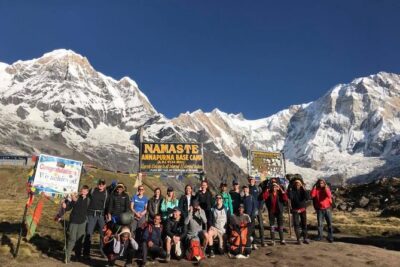
Kathmandu to Annapurna Base Camp (ABC) 5-Day Trek
Read our review →Browse the lists this trek appears in