
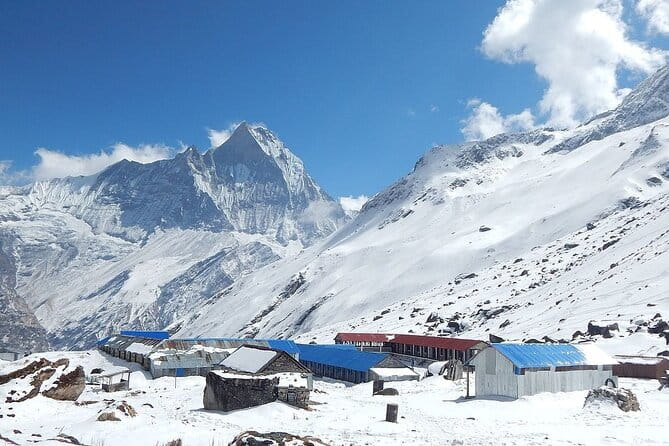
Review · KATHMANDU
Annapurna Base Camp Trek
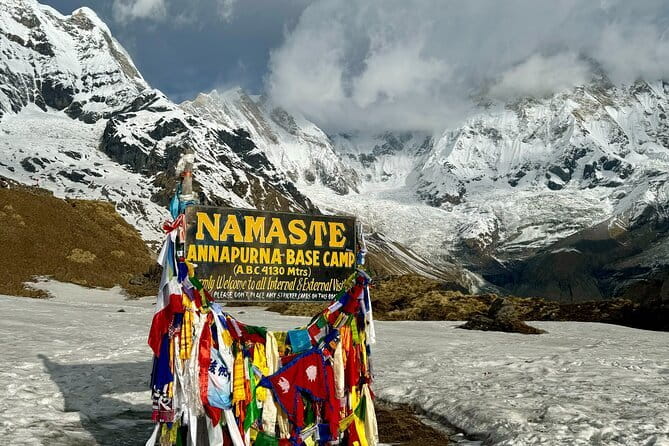
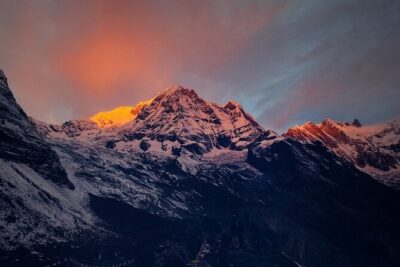
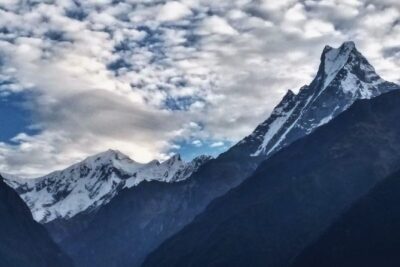
Annapurna Base Camp is a fine choice if you want a Himalayan trek that reaches a serious high point without committing to a long, weeks-long expedition. The route passes through terraced farms, rhododendron and bamboo forest, hillside villages, and the tight mountain bowl of the Annapurna Sanctuary. At 4,130 meters, the base camp delivers the big reward: Annapurna, Machhapuchhre, Hiunchuli, and neighboring peaks rising around you.
I like the practical setup here. Private vehicles link Kathmandu and Pokhara, a jeep handles the road to the trailhead, and a guide and porter stay with your group. I also like the human scale of the route, with tea houses and local lodges rather than a resort-style trek. The main caution is the pace: you gain height steadily, and the itinerary includes no separate acclimatization day, so a moderate fitness level is not just a formality.
Key points before you book
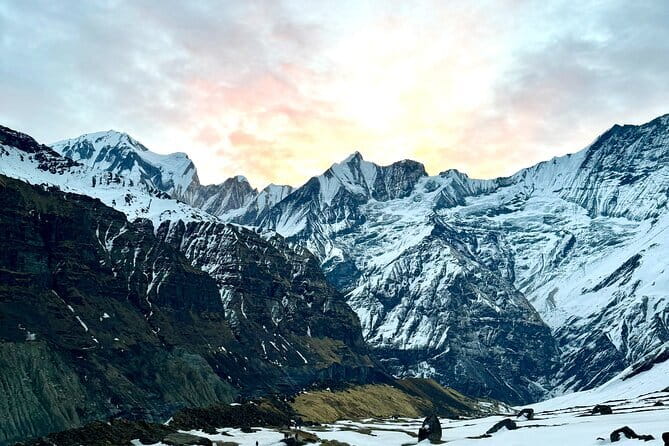
- Annapurna Base Camp at 4,130 meters: Reach the mountain sanctuary surrounded by Annapurna I, Annapurna South, Machhapuchhre, Gangapurna, and Hiunchuli.
- A private nine-day trip: Only your group participates, with an English-speaking trekking guide and porter throughout the trek.
- Karma and Dami on the trail: Past departures were handled by guide Karma and porter Dami, while Rojesh helped with planning and timing.
- Transport is built in: Private road transport connects Kathmandu and Pokhara, with jeep transport between Pokhara and Jhinu Danda.
- Tea-house trekking: Overnight stays use local lodges and tea houses, giving you a simple, close-to-the-trail experience.
- A high-altitude schedule: The route reaches 4,130 meters, and the itinerary asks you to manage several walking days in succession.
Why the Annapurna Sanctuary route works
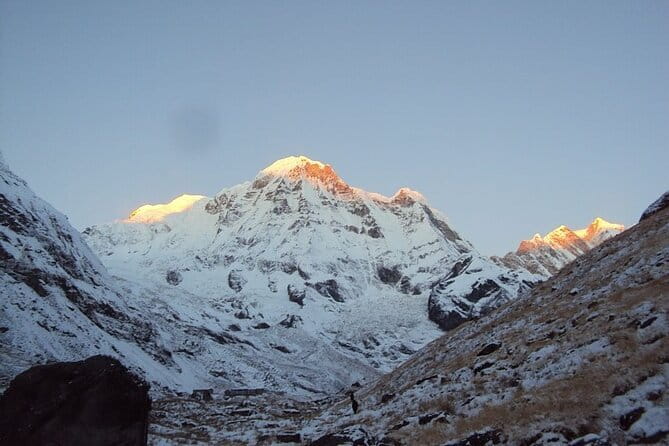
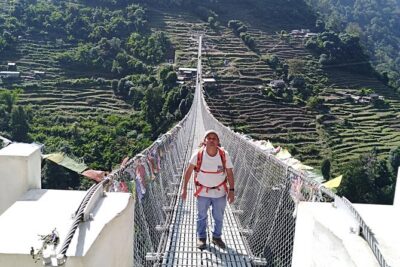
The attraction here is not one isolated viewpoint. The route keeps changing around you. You begin with Nepal’s middle hills, where terraced fields and villages shape the view. Then the path moves into forest, follows deep valleys, and finally opens into a high mountain basin surrounded by enormous peaks.
The Annapurna Sanctuary has a special sense of arrival because the mountains close around the route. Annapurna I reaches 8,091 meters, Annapurna II reaches 7,937 meters, Annapurna South reaches 7,219 meters, Gangapurna reaches 7,455 meters, and Hiunchuli reaches 6,441 meters. Machhapuchhre, also called Fishtail, is another major presence along the way.
I like that the route combines scenery with everyday mountain life. You are not simply driven to a viewpoint and returned to a city. You spend nights in villages and local lodges, walk through farm country, and use a trail shaped by both residents and trekkers.
The trade-off is that the trip covers a lot in nine days. The road connections save time, but the walking schedule remains active. You should be comfortable with a moderate level of physical effort and understand that the highest point is well above ordinary hill walking.
More Annapurna Treks in Kathmandu
- Annapurna Circuit Trek with Tilicho Lake
★ 5.0 · 368 reviews - Annapurna base camp trek 5 Days
★ 5.0 · 252 reviews - 14-Day Private Annapurna Base Camp Trek
★ 5.0 · 180 reviews
Day 1: Six to seven hours from Kathmandu to Pokhara
The first day is mostly a road journey from Kathmandu to Pokhara, taking about six to seven hours by private vehicle. The route leaves the capital and follows Nepal’s changing middle-hill scenery, with river valleys, small settlements, cultivated slopes, and roadside views along the way.
Private transport is valuable on this opening day. You are not tied to a large group schedule, and your own vehicle makes the long transfer more direct. Still, six to seven hours on the road is a substantial part of the day, so do not think of this as a sightseeing day in Pokhara.
You spend the night in Pokhara, with accommodation included. Lunch and dinner in Pokhara are not included, so set aside money for those meals. No sightseeing program in Kathmandu or Pokhara is part of the package, which is useful to know if you want time for city visits before or after the trek.
Day 2: From Pokhara toward Chhomrong and Jhinu Danda
The route continues by vehicle from Pokhara toward Jhinu Danda, with the drive taking about four hours. The road passes through terraced farmland, green valleys, and small villages before reaching the trail area.
The day is designed to get you close to the walking route without using several extra trekking days. Chhomrong is the key village associated with this section and serves as an important gateway into the Annapurna Sanctuary route. Jhinu Danda is another important point, used for the road connection and later for the return.
This is one of the more practical features of the itinerary, but it also means the day can feel transitional. You spend time in a vehicle before the main walking begins. If you prefer a trek that starts immediately from the city, this will feel less satisfying. If you want to save time and reach the mountains quickly, it makes good sense.
Day 3: Chhomrong to Bamboo through forest
The walk from Chhomrong toward Bamboo takes about six to seven hours, with the trail passing through forest and mountain villages. The route begins with a steep descent from Chhomrong before continuing through bamboo and rhododendron country.
That early descent matters. It can feel counterintuitive to lose height when you are heading toward base camp, but mountain trails do not always rise in a straight line. Expect the day to use your legs, particularly on repeated steps and changes in grade.
Bamboo is a simple stopping point, not a grand destination. Its value is its position on the route and its forest setting. This is where the trip begins to feel like a true walking journey rather than a combination of road transfers and village visits.
The forests also offer a welcome change from the open farmland below. Depending on conditions, you might see waterfalls, dense vegetation, and glimpses of wildlife. The supplied trip information specifically highlights wild animals as part of the area’s appeal, but it does not promise sightings, so treat them as a possibility rather than a feature you can count on.
Same trailhead, a different route:
- Everest Base Camp Trek – 14 Days
★ 5.0 · 1,499 reviews - Everest Base Camp Trek
★ 5.0 · 842 reviews - Everest Base Camp Helicopter Tour landing at Everest View Hotel
★ 5.0 · 668 reviews - Everest Base Camp Trekking
★ 5.0 · 485 reviews
Day 4: Doban to Deurali, a shorter but higher walk
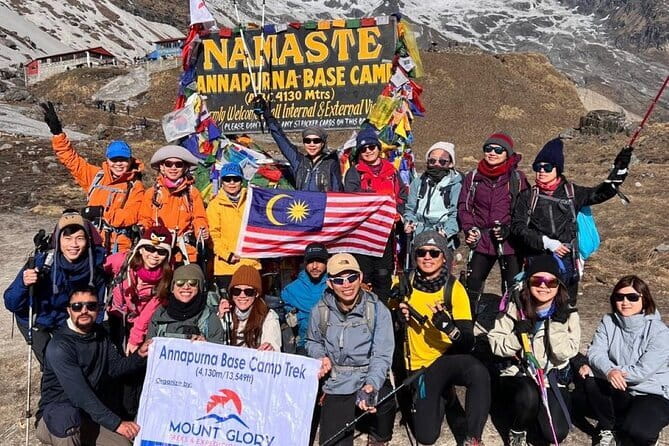
The next walking section from Doban to Deurali takes about three to four hours. The trail continues through bamboo and forest while gradually gaining height inside the Annapurna Sanctuary.
This is a shorter day on paper, which gives you a little more time to settle into the higher part of the route. It is not a free day, however. The steady climb matters more than the clock, and the change in altitude can make a shorter walk feel demanding.
Deurali is important because it places you close to the final ascent. The setting becomes more enclosed and mountainous as the route moves away from the lower villages. I like this rhythm: a longer walking day, followed by a shorter approach day, then the main push to base camp.
There is no separate acclimatization day listed. At this point, you should pay attention to how you feel and use the guide’s support. The trip information calls for moderate fitness, while the height of the base camp makes it sensible to prepare for a demanding mountain environment.
Day 5: Deurali to Machhapuchhre Base Camp and Annapurna Base Camp
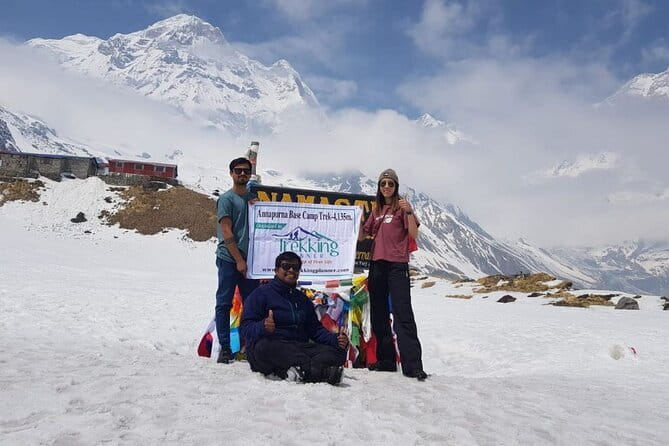
This is the central day of the trek. The walk from Deurali to Annapurna Base Camp, passing through Machhapuchhre Base Camp, takes about five to six hours.
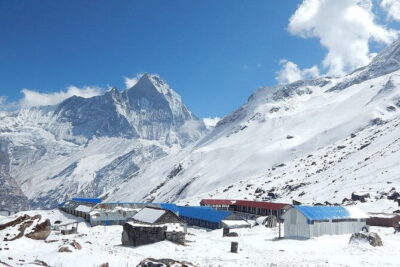
The route climbs gradually into the sanctuary, with the mountains becoming the main feature rather than a distant backdrop. Machhapuchhre Base Camp is a major point along the way, and from there the trail continues toward Annapurna Base Camp at 4,130 meters.
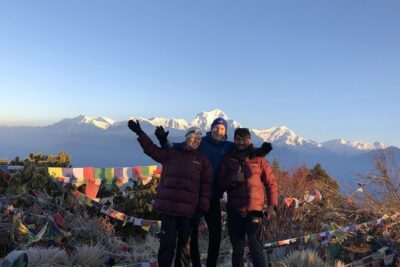
The final destination is not a town or a single lookout. It is a high basin surrounded by major Himalayan peaks. Annapurna I, Annapurna South, Hiunchuli, Gangapurna, and Machhapuchhre shape the view from different angles. The setting gives the route its name and its lasting appeal.
You should keep expectations realistic. The high point is spectacular, but conditions at altitude can affect visibility and comfort. The itinerary does not state how long you stay at base camp or whether weather changes the schedule, so flexibility is important.
Accommodation during the trekking section is in tea houses or local lodges. This means practical rooms and a simple trail-based routine, not hotel comforts. Meals are included during the trek, with six dinners, seven lunches, and eight breakfasts listed as part of the package.
Day 6: Sunrise at base camp, then back to Bamboo
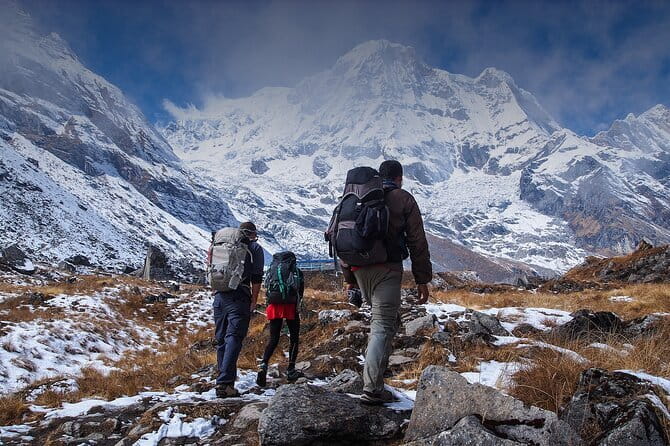
The morning at Annapurna Base Camp is one of the strongest parts of the program. Sunrise brings light across Annapurna I, Annapurna South, Machhapuchhre, and Hiunchuli, giving you a different view from the one you had during the previous day’s arrival.
The return walk to Bamboo takes about six hours. This is a demanding combination: a high-altitude morning followed by a long descent. The downhill direction may feel easier for your breathing, but it can be hard on knees and thighs.
I like the decision to include the early base camp experience rather than rushing away after arrival. Mountain light changes quickly, and the morning gives you a chance to see the sanctuary at its clearest and most dramatic. The drawback is that you need to be ready for a full walking day after a night at the highest point.
The porter is especially useful here. The package includes porter service, so you do not need to carry the full weight of your belongings on every section. You should still keep a small day bag for personal items, though the supplied information does not specify bag limits or porter-to-person ratios.
Day 7: Bamboo to Jhinu Danda
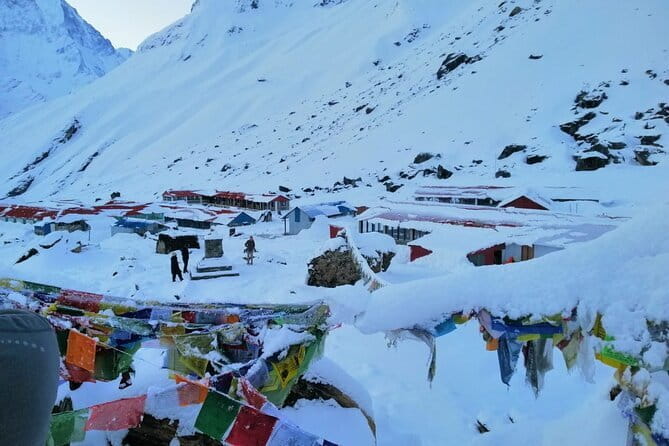
The walk from Bamboo to Jhinu Danda takes about five to six hours. The trail descends through bamboo and rhododendron forest before returning toward the lower villages and road access.
This section lets you see the route from a different direction. The high basin gives way to forest, then to more open hillside scenery and village life. After several days surrounded by rock, snow, and narrow valleys, the lower hills feel warmer and more settled.
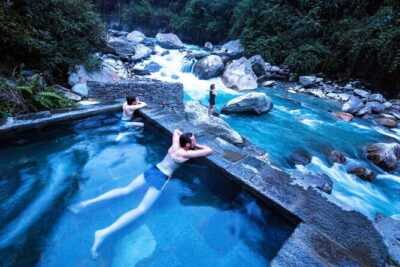
Jhinu Danda is the final trekking stop in this schedule. The information provided does not confirm any extra activity there, so you should not assume that a particular attraction or wellness stop is included. Its main role here is as the road connection for the return to Pokhara.
The day also marks a useful shift in effort. You are still walking for five or six hours, but you are descending toward the road rather than climbing toward base camp. Your guide can help keep the pace sensible, especially if the earlier descent has tired your legs.
Day 8: Three to four hours by jeep to Pokhara
The drive from Jhinu Danda back to Pokhara takes about three to four hours by jeep. The route returns through terraced farmland, hillside settlements, and rural Nepalese scenery.
This transfer is included, which keeps you from needing to arrange a separate vehicle after the trek. It also gives you time to rest in Pokhara before the long return to Kathmandu.
Two nights in Pokhara are included in the overall package, though lunch and dinner there are not. That arrangement gives you a bed and a base without forcing you into a fixed city sightseeing plan. You can use the time to rest, eat independently, and prepare for the final road journey.
Day 9: Six to seven hours back to Kathmandu
The final day repeats the long road connection from Pokhara to Kathmandu, taking approximately six to seven hours by private vehicle. It is a useful end to a compact trekking program, but it is not a short transfer.
The trip ends back at the Odyssey Treks office in Khusibun, Kathmandu. Pickup is offered, and the listed meeting point is also the departure and return point. Confirm the exact pickup arrangement when booking, since the published meeting point and pickup option are separate pieces of practical information.
What the $995 price covers
At $995 per person, the price needs to be judged as a bundled trekking service rather than as nine days of sightseeing. It includes private transport between Kathmandu and Pokhara, jeep transport between Pokhara and Jhinu Danda, a guide, a porter, trekking accommodation, two nights in Pokhara, meals during the trek, and the required Annapurna conservation and TIMS fees.
It also includes guide and porter allowances, insurance for the guide and porter, equipment, and transportation connected with the trip. Those inclusions reduce the number of separate arrangements you need to make.
You still pay for several everyday items. Accommodation and meals in Kathmandu are not included. Lunch and dinner in Pokhara are extra, as are bottled drinks, alcohol, laundry, phone calls, tips, personal travel insurance, and optional services.
I see reasonable value if you want a private, organized trek and do not want to piece together permits, vehicles, lodges, and staff yourself. The price is less attractive if you already have local transport, guide contacts, or trekking equipment and want only a basic route package.
Guide support, private groups, and local stays
This is a private activity, so only your group participates. That gives you more control than a large shared departure, though the exact flexibility of the daily timing should be confirmed with Odyssey Treks.
The English-speaking guide stays with you throughout the trip. Past departures were supported by Karma as guide and Dami as porter, and Rojesh handled pre-trip planning and helped adjust the trek to fit timing. If you want to request the same team, ask before booking rather than assuming they are assigned to every departure.
Local lodge accommodation keeps the trek connected to the villages along the route. You should expect a functional mountain stay, shared local infrastructure, and meals designed for the trail. The package includes the main meals during the walking section, but drinks and personal extras remain your responsibility.
Who should book this trek
I would recommend this experience to you if you want:
- A private Himalayan trek with a fixed nine-day framework
- A route combining villages, farms, forest, and high peaks
- An organized guide and porter service
- Transport from Kathmandu rather than separate domestic travel arrangements
- Tea-house accommodation instead of camping
- A major mountain destination at 4,130 meters
I would be more cautious if you dislike long road transfers, have limited walking fitness, or want a slow schedule with extra acclimatization days. The itinerary is compact, and the base camp section comes after several consecutive walking days.
The trip also suits people who value planning help. Rojesh’s role in adjusting timing is a useful sign for anyone whose dates do not fit a standard trek. Ask specific questions about pace, guide availability, luggage, and altitude concerns before you commit.
Cancellation terms are strict close to departure. You receive a full refund if you cancel at least six full days before the start time, 50 percent if you cancel two to six full days before, and no refund within two days. Cut-off times use local time in Nepal.
Should you book the Annapurna Base Camp Trek?
Book it if you want a compact, well-supported route into one of Nepal’s most impressive mountain settings, and you are comfortable with long road transfers and steady walking at altitude. The combination of private transport, local lodges, guide service, porter support, and included permits makes the $995 price easier to justify.
Before paying, confirm the exact starting plan, the guide and porter assigned to your dates, and how the schedule handles altitude and weather. If you want a private trek with strong scenery and a clear route to Annapurna Base Camp, this is a practical choice. If you need a gentler pace or more time in Pokhara, ask for a tailored version first.
FAQ
How long is the Annapurna Base Camp Trek?
The experience lasts approximately nine days, including road transfers between Kathmandu, Pokhara, and Jhinu Danda, plus the trek to and from Annapurna Base Camp.
What is the highest point of the trek?
Annapurna Base Camp is at 4,130 meters. The route also passes through Machhapuchhre Base Camp before reaching Annapurna Base Camp.
Is transportation from Kathmandu included?
Yes. Private vehicle transportation from Kathmandu to Pokhara and back is included. Jeep transportation from Pokhara to Jhinu Danda and back is also included.
Are a guide and porter included?
Yes. The package includes an English-speaking trekking guide and a porter for the trekking section. Guide and porter allowances and insurance for both are also included.
Are meals and accommodation included?
Accommodation includes two nights in Pokhara and stays in tea houses or local lodges during the trek. Six dinners, seven lunches, and eight breakfasts are included. Kathmandu accommodation and meals, plus lunch and dinner in Pokhara, are not included.
What level of fitness is needed?
The experience requires a moderate physical fitness level. It includes walking days of about three to seven hours and reaches 4,130 meters, with no separate acclimatization day listed.
Just added around Kathmandu
- Everest Base Camp Trek★ 5.0 · 3 reviews
- Everest Base Camp Trek★ 5.0 · 7 reviews
- 15 Days Private Everest Base Camp Trek★ 5.0 · 30 reviews
- Everest Base Camp Trek★ 5.0 · 57 reviews
- 14 Days of Adventure Trekking to Everest Base Camp★ 5.0 · 2 reviews
- 14-Day Everest Base Camp Trek★ 5.0 · 20 reviews
- From Kathmandu: Private 14-Day Everest Base Camp Trek★ 5.0 · 20 reviews
- 14 Days Everest Base Camp Trek★ 5.0 · 4 reviews
Annapurna Base Camp Treks, compared.
Trekking in Annapurna/Langtang/Everest/Upper Mustang regions
Read our review →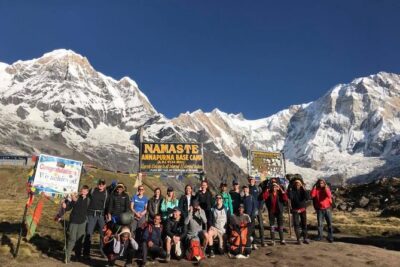
Kathmandu to Annapurna Base Camp (ABC) 5-Day Trek
Read our review →Browse the lists this trek appears in