
Review · KATHMANDU
11-Day Annapurna Base Camp Trek
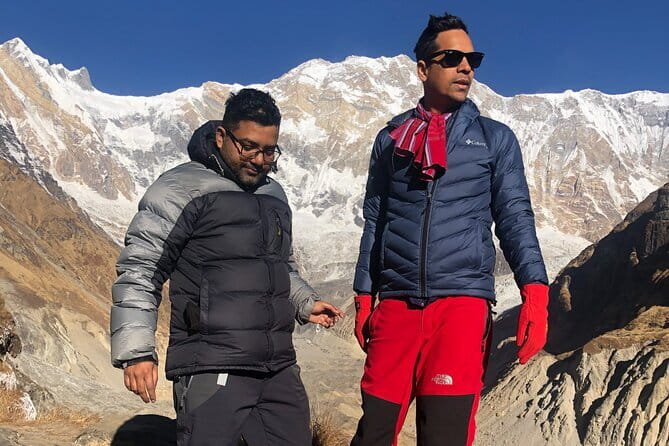
The great draw here is the changing scenery: terraced hills, forest trails, high alpine valleys, and Annapurna Base Camp at 4,130 meters all fit into 11 days. You also get a close look at Gurung and Magar village life, plus a soak in Jhinu Danda’s hot springs after the hard work.
I like the practical support, including a licensed English-speaking guide, one porter for every two trekkers, permits, a duffel bag, meals on the trail, and a medical kit. I also like the private format, since your own group can set a sensible pace and ask questions along the way. The main drawback is the long seven-hour bus ride between Kathmandu and Pokhara, followed by several demanding walking days.
Key points to know before you book
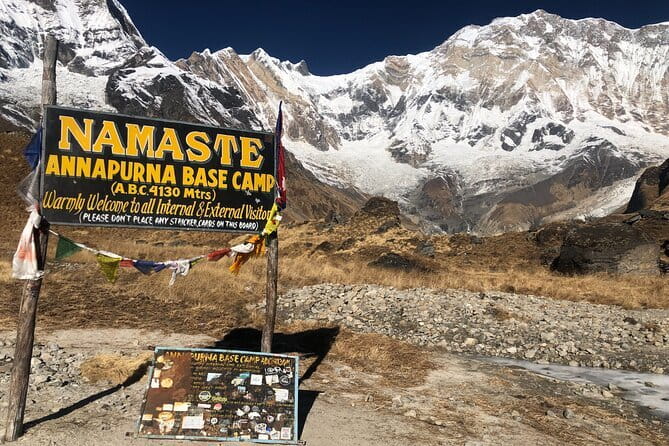
- Annapurna Base Camp reaches 4,130 meters, with mountain views including Annapurna I and Machapuchare, also called Fishtail.
- The route begins and ends with long road transfers, including about seven hours from Kathmandu to Pokhara and a return drive of similar character.
- Jhinu Danda’s hot springs are a real highlight, giving your legs a welcome rest after the high-altitude section.
- A licensed guide and porters are included, with one porter assigned for every two trekkers.
- The trek suits people with moderate fitness, but the climb to base camp and the following descent require steady walking.
- The $910 price includes major trek costs, but not lunches and dinners in Kathmandu and Pokhara, visa fees, rescue costs, or airport departure tax.
Why this 11-day Annapurna Base Camp trek works
Annapurna Base Camp is a fine choice if you want a serious Himalayan trek without committing to a multiweek expedition. The route gives you a strong mix of mountain scenery and village life. You start among Nepal’s busy streets and finish in a high mountain bowl surrounded by peaks.
The route is not only about reaching the base camp. You pass through Ghandruk, Chhomrong, Sinuwa, Bamboo, Dovan, Deurali, and Machapuchare Base Camp. Each stop changes the mood of the walk. Lower sections bring farms and village paths. Mid-route trails run through thick forest. Higher up, the trees thin out and the mountains take over.
You’ll also have the chance to meet local people in Gurung and Magar communities. The schedule does not present the trek as a cultural tour with long formal visits, but the overnight stops and village walks give you natural contact with local life.
More Annapurna Treks in Kathmandu
- Annapurna Circuit Trek with Tilicho Lake
★ 5.0 · 368 reviews - Annapurna base camp trek 5 Days
★ 5.0 · 252 reviews - 14-Day Private Annapurna Base Camp Trek
★ 5.0 · 180 reviews
Day 1: arriving in Kathmandu and settling into Thamel
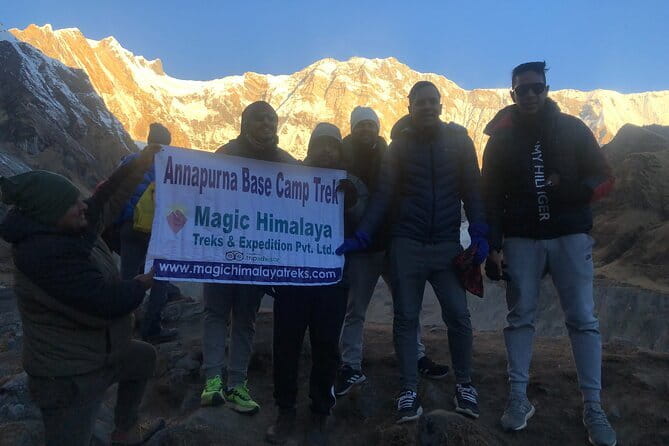
Your Magic Himalaya Treks representative meets you at Tribhuvan International Airport and takes you to your hotel in Thamel. This is a useful first day because you do not need to arrange your own airport transfer after a long flight.
The representative provides basic advice about the trek, including practical dos and don’ts. If you have energy left, walk around Thamel and get your first look at Kathmandu’s street life, shops, restaurants, and temples.
There is no scheduled sightseeing admission included on this day. That keeps the arrival simple, but it also means you should not expect a guided city tour. Use the free time to rest, check your gear, and prepare for the early road journey ahead.
Day 2: the seven-hour road journey to Pokhara
After breakfast, you meet your guide and travel to the tourist bus station for the drive to Pokhara. The journey takes about seven hours, with breaks for snacks and lunch.
This is scenic travel rather than dead time. The road follows Nepal’s hill country, and you’ll see rural settlements and changing views along the way. Still, a seven-hour bus ride can be tiring, especially if you have just arrived in Nepal.
Your accommodation in Pokhara gives you a chance to recover before the walking begins. On a clear morning, you may catch your first view of the Annapurna massif from the city. The Pokhara stop also helps split the journey into manageable pieces instead of trying to reach the trailhead directly from Kathmandu.
Day 3: the road from Nayapul to Ghandruk
A short taxi ride takes you from your Pokhara hotel to Nayapul. The opening part of the walk follows a roadway for roughly two hours before the route climbs toward Ghandruk from Syauli Bazaar.
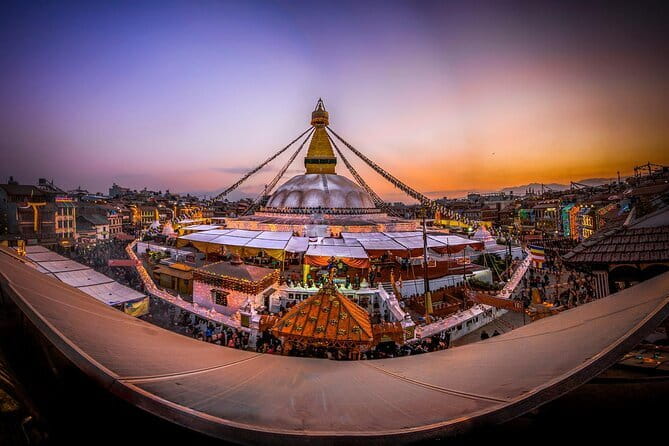
Ghandruk is one of the most appealing overnight stops on the route. It is a mountain village with strong Gurung connections and a fine setting for your first serious night on the trail. The climb also signals a shift from road travel to foot travel.
This day is not the toughest section of the trek, but it introduces the basic rhythm: walk, stop, eat, and sleep at a simple lodge. You should expect a mix of roadway and uphill trail rather than a quiet mountain path from the first step.
Same trailhead, a different route:
- Everest Base Camp Trek – 14 Days
★ 5.0 · 1,499 reviews - Everest Base Camp Trek
★ 5.0 · 842 reviews - Everest Base Camp Helicopter Tour landing at Everest View Hotel
★ 5.0 · 668 reviews - Everest Base Camp Trekking
★ 5.0 · 485 reviews
Day 4: Chhomrong’s steps and the overnight stay at Sinuwa
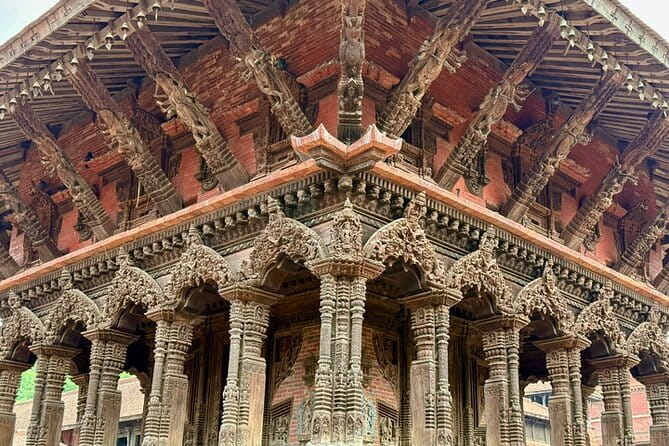
Start with breakfast and, if the weather cooperates, a sunrise view from your room. The path then rises and falls toward Chhomrong, where you stop for lunch.
After lunch, you descend to a river crossing and continue for about 45 minutes to Sinuwa. The up-and-down pattern can feel harder than a steady climb, so keep your pace even. Do not burn your energy early just because the distance looks modest.
Sinuwa marks the beginning of a more forested part of the journey. It is also a good place to settle into the trek’s daily routine. Your guide can help manage the pace, while the porter service lets you carry only a daypack rather than your full load.
Day 5: forest walking through Bamboo and Dovan
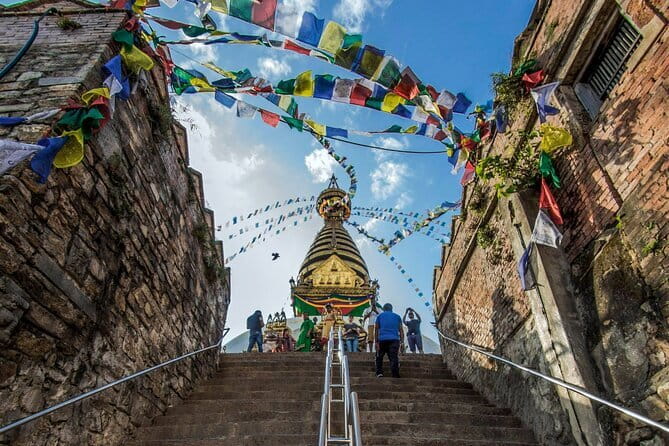
From Sinuwa, you’ll catch views of Fishtail before entering a day dominated by forest. You walk toward Bamboo, take a rest, and continue to Dovan for lunch.
After lunch, the trail continues for around two hours to the Himalayan Hotel, where you spend the night. This section is less about wide mountain views and more about shade, trees, river surroundings, and gradual height gain.
That may sound quieter than the big summit views, but it serves an important purpose. You are gaining altitude without rushing straight into the high country. The walking remains physically demanding, especially when the trail repeatedly rises and falls.
Day 6: reaching Annapurna Base Camp at 4,130 meters
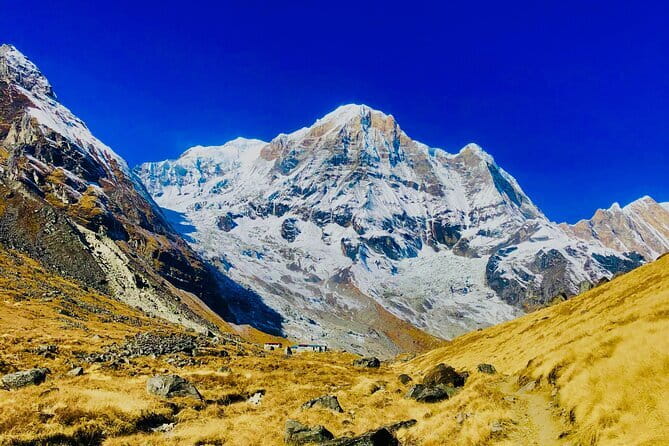
This is the central day of the trek. Breakfast is planned for about 6:30 a.m., with walking beginning around 7:30. The route passes Hinku Cave before Deurali, where you take a break.
From Deurali, allow about three hours to reach Machapuchare Base Camp, with lunch there. The final two-hour walk leads to Annapurna Base Camp, which sits at 4,130 meters above sea level.
The high valley is the reward for the previous days of forest walking. You can see Annapurna I, Machapuchare, and other Himalayan peaks from the base camp area. The setting has a very different feel from the villages below: open, cold, and surrounded by steep mountain walls.
Around five tea houses provide food and accommodation at base camp. That does not mean luxury. You should expect basic mountain lodging and a limited range of facilities, but the location matters more than comfort here.
This is the day when fitness and pacing count most. You need to stay aware of how your body feels at altitude. The tour provides a medical kit and required medicine for the trek, but it does not include rescue operations if one becomes necessary. Rescue costs are your responsibility.
Day 7: sunrise at base camp, then a long descent
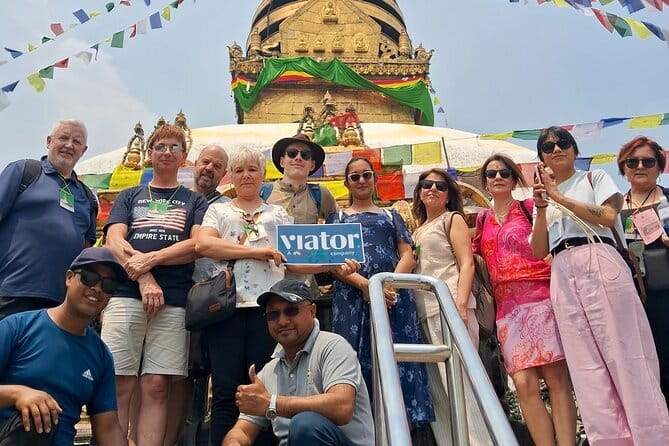
Wake early for sunrise and mountain views around Annapurna Base Camp. This is likely the quietest and most memorable time to see the peaks, before the day’s descent begins.
After breakfast, you walk down toward Bamboo or Sinuwa for the night. The return route is not simply an easy version of the climb. Descending for many hours can be hard on knees and ankles, and loose or uneven trail sections demand care.
The early start is worthwhile because it gives you time to enjoy the morning view before committing to the long walk down. Keep your daypack light and use walking poles if you normally rely on them, though the tour information does not specify that equipment is supplied.
Day 8: the hot springs at Jhinu Danda
After breakfast, you make a shorter walk toward Jhinu Danda. You may reach the area around lunchtime, then continue down toward the river and the hot pools.
This is one of the best-designed moments in the schedule. After cold nights and long days at altitude, the hot springs offer simple physical relief. You spend the night at Jhinu Danda, so you do not need to rush straight from the pools into another long transfer.
The hot springs are not a substitute for the base camp achievement. They are a different kind of reward, tied to the local setting and the end of the hardest part of the trek. Bring a swimsuit and a small towel if you plan to use the pools, although those items are not listed as supplied.
Day 9: walking back to Nayapul and returning to Pokhara
After breakfast, you walk for about five hours to Nayapul. Lunch is planned there before a drive of roughly one and a half hours back to Pokhara.
This is a useful transition day. The walking is nearly finished, but the road journey gives you time to recover before the return to Kathmandu. Once in Pokhara, you have an evening to visit the lakeside area and enjoy city life again.
Meals in Pokhara are not fully covered by the tour. Lunch and dinner in Pokhara are listed as excluded, so budget for your own food during this stop, along with your meals in Kathmandu.
Day 10: returning to Kathmandu and saying goodbye
After breakfast, you go to the bus park for the drive back to the Kathmandu Valley. Like the outward journey, this is a long road day with views, snack stops, and lunch along the way.
You should reach Kathmandu in the afternoon. The remaining time can be used to explore monuments near your hotel, though no specific sightseeing visits are included. The day ends with a Nepali farewell dinner with the trekking team.
That dinner adds a personal close to the trek. It gives you a final chance to spend time with the people who handled the route, food arrangements, luggage, and daily decisions. The next morning is reserved for departure, so this is your last evening with the group.
Day 11: airport transfer and departure
Magic Himalaya Treks picks you up from your hotel before your flight and transfers you to the airport. The airport transfer is a small but useful service, especially if your departure is early or you are still getting used to Kathmandu’s traffic.
Your international or domestic flight is not included in the tour price. Airport departure tax is also listed as excluded, so check your final travel budget before booking.
What the $910 price really covers
At $910 per person, the price has good value for a guided, supported private trek. Major expenses are bundled together:
- Annapurna conservation permits and the TIMS Card
- A trekking map
- A licensed guide who speaks English
- Porters, with one porter for every two trekkers
- A company duffel bag for porter use
- Accommodation during the trek
- Breakfast, seven lunches, and seven dinners
- Staff food, transport, salary, equipment, and insurance
- A medical kit and required medicine for the trek
- Farewell dinner
- Local taxes and VAT
- Airport pickup and departure transfer
You still need to pay for lunch and dinner in Kathmandu and Pokhara, bar bills, a Nepal entry visa, rescue operations if needed, and airport or departure tax. Those exclusions are normal enough for a package of this type, but you should allow extra money for them.
The private format adds value if you prefer control over pace and daily timing. It may be less appealing if you want a large social group or a lower-cost shared departure. The supplied information does not state the maximum group size, only that the activity is private and limited to your group.
The guide and porter setup
The guiding is a major part of the experience. You receive an English-speaking local guide with a license, plus porters to carry the main luggage. One porter serves two trekkers, and the company provides a duffel bag for that purpose.
Guide Shanta receives specific praise for being a friendly host as well as a guide. That matters on a route where small daily choices, such as when to stop, how fast to walk, and where to rest, can shape your comfort.
The guide also helps turn a route through villages into a more meaningful experience. You can ask about Gurung and Magar communities, local customs, and the places you pass. The exact level of cultural interpretation depends on your guide, but the service is built around a local English-speaking leader rather than a remote booking office.
Who should book this trek?
I would recommend it to someone with moderate physical fitness who wants a demanding but organized Himalayan walk. You need to be ready for repeated uphill and downhill sections, long days, cold conditions near base camp, and a high point of 4,130 meters.
It is a good match if you want:
- A private group rather than a shared departure
- Mountain scenery plus village life
- A guide and porter system already arranged
- A fixed 11-day plan
- Hot springs at the end of the high-altitude section
- A package that includes permits, meals on the trail, lodging, and transport
Think carefully if you dislike long bus journeys, basic tea-house lodging, or changing altitude. The route is described as suitable for beginners and experienced trekkers, but beginner-friendly does not mean easy. You still need stamina and a sensible attitude toward altitude.
The itinerary also moves at a set pace. If you need extra acclimatization days or want a slower schedule, ask Magic Himalaya Treks about changes before paying.
Booking details and cancellation
Pickup is offered from Tribhuvan International Airport in Kathmandu, and confirmation is provided at booking. The experience operates daily during the stated operating period, from August 10, 2024, through June 18, 2026.
You can cancel up to 24 hours before the local start time for a full refund. Cancellations or changes made less than 24 hours before the start are not accepted for a refund.
Should you book the Magic Himalaya Annapurna Base Camp trek?
Book it if you want a well-supported route with a private group, clear transport arrangements, porters, and a strong mix of mountain and village scenery. The combination of Annapurna Base Camp, Machapuchare views, Ghandruk, and Jhinu Danda’s hot springs gives the 11 days a satisfying shape.
I would be especially comfortable recommending it to first-time Himalayan trekkers who want help with permits, luggage, lodging, meals, and airport transfers. I would hesitate only if you want a short trip, dislike long road rides, or need a very flexible altitude schedule.
For the price, the package covers the costly practical pieces. Add money for excluded meals, visa costs, and possible rescue expenses, then decide if your fitness matches the route. If it does, this trek offers a direct and memorable way to reach one of Nepal’s most famous mountain base camps.
FAQ
How long is the Annapurna Base Camp trek?
The experience lasts approximately 11 days, including arrival in Kathmandu, the journey to Pokhara, the trek to base camp, the return to Pokhara and Kathmandu, and the airport transfer.
What altitude does Annapurna Base Camp reach?
Annapurna Base Camp is located at 4,130 meters above sea level.
Is the trek private?
Yes. This is a private activity, and only your group participates.
What meals are included?
The package includes 10 breakfasts, seven lunches, and seven dinners. Lunch and dinner in Kathmandu and Pokhara are not included.
Is a guide and porter included?
Yes. The package includes a licensed English-speaking guide and required porters, with one porter for every two trekkers.
Can I cancel for a full refund?
Yes. You can cancel at least 24 hours before the experience start time for a full refund. Cancellations or changes made less than 24 hours before the start are not refunded or accepted.
Just added around Kathmandu
- Everest Base Camp Trek★ 5.0 · 3 reviews
- Everest Base Camp Trek★ 5.0 · 7 reviews
- 15 Days Private Everest Base Camp Trek★ 5.0 · 30 reviews
- Everest Base Camp Trek★ 5.0 · 57 reviews
- 14 Days of Adventure Trekking to Everest Base Camp★ 5.0 · 2 reviews
- 14-Day Everest Base Camp Trek★ 5.0 · 20 reviews
- From Kathmandu: Private 14-Day Everest Base Camp Trek★ 5.0 · 20 reviews
- 14 Days Everest Base Camp Trek★ 5.0 · 4 reviews
Annapurna Base Camp Treks, compared.




Trekking in Annapurna/Langtang/Everest/Upper Mustang regions
Read our review →


Kathmandu to Annapurna Base Camp (ABC) 5-Day Trek
Read our review →Browse the lists this trek appears in