
Review · KATHMANDU
Private 12-Day All Inclusive Guided Annapurna Base Camp Trek Tour
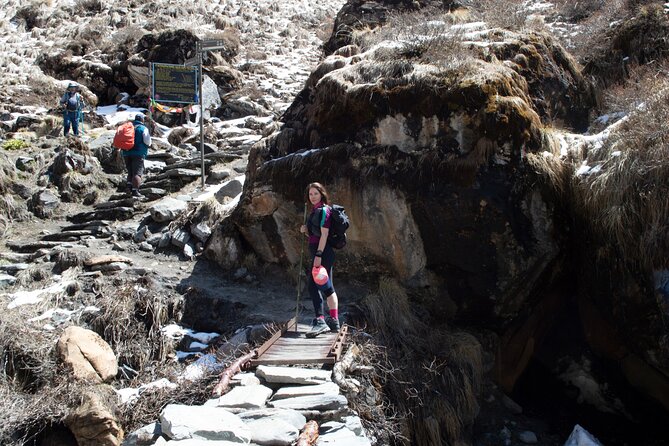
The real prize here is reaching Annapurna Base Camp, a high basin surrounded by peaks from the Annapurna range. You walk through Gurung villages, thick forest, waterfalls, and the narrow mountain gateway between Hiunchuli and Machhapuchhre before waking to sunrise above 4,000 meters. I like that the price covers permits, meals, transport, a guide, and useful loan gear. I also like the private format, since your group sets the pace instead of joining a large crowd.
The main drawback is the demanding schedule. Some days run seven or eight hours on foot, and the itinerary includes a steep altitude gain followed by a long descent. The plan also contains a small routing gap on Day 6, so you should confirm the exact overnight stops and transport details before departure.
Key points at a glance
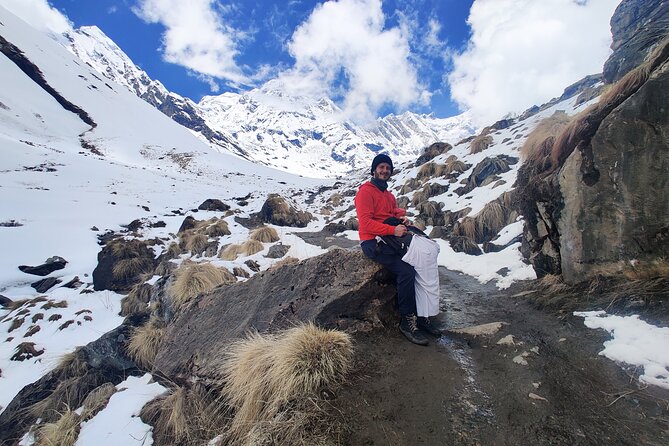
- Annapurna Sanctuary finish: Reach Annapurna Base Camp after passing Machhapuchhre Base Camp and the narrow entrance to the high basin.
- Private guiding: Only your own group takes part, with guides assigned by the local operator.
- Gurung culture: Spend nights in Ghandruk and Chhomrong, where village life, farming, food, and hospitality are part of the experience.
- Broad package value: The $1,175 price includes accommodation, listed meals, permits, transfers, tourist-coach transport, and returnable equipment.
- Guide care: Pratip Tamang, Raj, Prakash, Ganesh, and other Cordial Trek guides have received strong praise for attentiveness and organization.
- A full 12 days: Kathmandu and Pokhara time are built in, so this is more than a short mountain walk.
Why the Annapurna Sanctuary makes this trek special
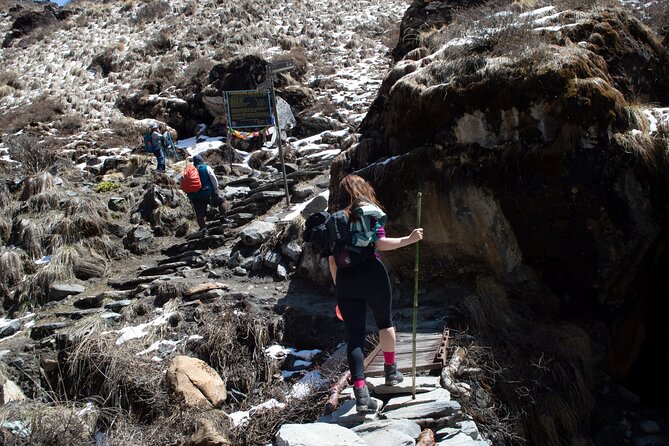
Annapurna I rises to 8,091 meters and is the tenth-highest mountain above sea level. You do not climb the mountain on this trip. Instead, you walk into the Annapurna Sanctuary, a high glacial basin ringed by dramatic peaks, most of them above 7,000 meters.
The basin has a memorable shape and setting. A narrow valley between Hiunchuli and Machhapuchhre provides the main entrance, then the views open as you move toward Machhapuchhre Base Camp and Annapurna Base Camp. The area was not reached by outsiders until 1956, which gives the route a strong sense of remoteness even though tea houses now serve the trail.
I like this route because the scenery changes often. You begin with city streets and a long road journey, then move into terraced hillsides, Gurung villages, forest, waterfalls, high mountain views, and finally a stark basin of snow and rock. You are not simply walking toward one viewpoint. The trip keeps changing its character.
More Annapurna Treks in Kathmandu
- Annapurna Circuit Trek with Tilicho Lake
★ 5.0 · 368 reviews - Annapurna base camp trek 5 Days
★ 5.0 · 252 reviews - 14-Day Private Annapurna Base Camp Trek
★ 5.0 · 180 reviews
Day 1: A soft landing in Kathmandu
Your first day begins at Tribhuvan International Airport, where a Cordial Trek representative meets you and takes you to your hotel. You receive a briefing and meet your guide before the trek begins.
This is a useful first day rather than wasted time. Kathmandu can be tiring after an international flight, and the airport transfer removes one early hassle. Use the briefing to ask practical questions about the walking pace, overnight stops, meals, equipment, and weather plans.
The tour supplies a down jacket, sleeping bag, and duffle bag as returnable equipment. That can save you from buying bulky cold-weather gear for a single trek. You still need suitable personal clothing, footwear, and travel insurance, which is compulsory.
Day 2: The long road from Kathmandu to Pokhara
The next morning, you travel by luxury tourist bus from Kathmandu to Pokhara. The drive takes about six to seven hours, then you have the evening around Pokhara Lakeside.
The bus journey is not a quick transfer, but it gives you a gradual change from the capital to Nepal’s best-known mountain gateway. Pokhara Lakeside is also a pleasant place to settle in before the walking begins. You spend the night in the city, giving you a final chance to organize your pack and enjoy a calmer evening.
The trade-off is time. A flight is not listed for this outward journey, so anyone who dislikes long road trips should prepare for a full travel day. The return to Kathmandu is also by tourist coach in the standard plan, though an optional 30-minute flight is listed for Day 11.
Day 3: Birethanti to Ghandruk and Gurung country
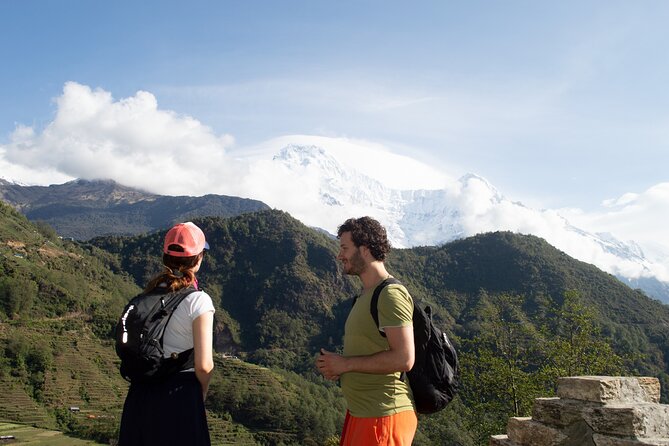
A private vehicle takes you from Pokhara to Birethanti in about an hour. This is the start of the trek itself.
From Birethanti, you walk for roughly five to six hours to Ghandruk. The route includes waterfalls, mountain views, and forested sections, but the village is the main reason to look forward to this night. Ghandruk offers a direct introduction to Gurung culture, traditional farming, local food, and village hospitality.
You stay at a mountain guest house. Expect a simple mountain base rather than city-hotel comfort. That is part of the appeal, but it also means you should pack with shared or basic facilities in mind. The first walking day is long enough to test your footwear and pace, so do not race out of the gate.
Same trailhead, a different route:
- Everest Base Camp Trek – 14 Days
★ 5.0 · 1,499 reviews - Everest Base Camp Trek
★ 5.0 · 842 reviews - Everest Base Camp Helicopter Tour landing at Everest View Hotel
★ 5.0 · 668 reviews - Everest Base Camp Trekking
★ 5.0 · 485 reviews
Day 4: Terraces and forest on the way to Chhomrong
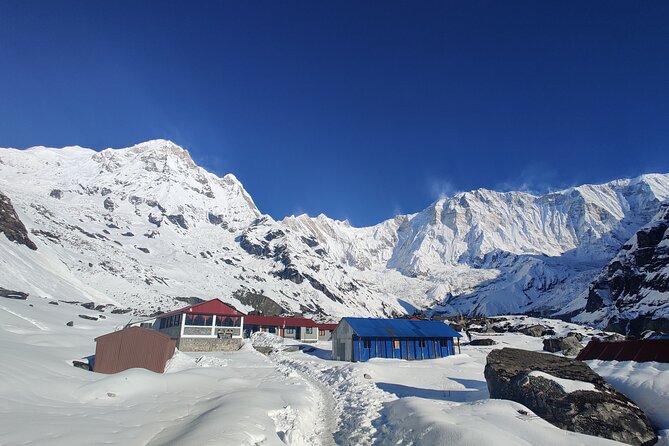
The route to Chhomrong takes about four to five hours. You pass traditional farmland and dense forest before reaching this modern Gurung village.
Chhomrong is an important stop because it marks a change in the route. The settlements become more spread out, the trail feels more focused on the high sanctuary, and the mountain setting becomes more immediate. You will still see signs of everyday village life rather than walking through an empty wilderness.
The name appears as Chhomrong and Chomrong in the supplied schedule. That is the same village, but the spelling difference is worth noting when you check maps or ask your guide for directions.
Day 5: Sinuwa, Dobhan, and a longer forest day
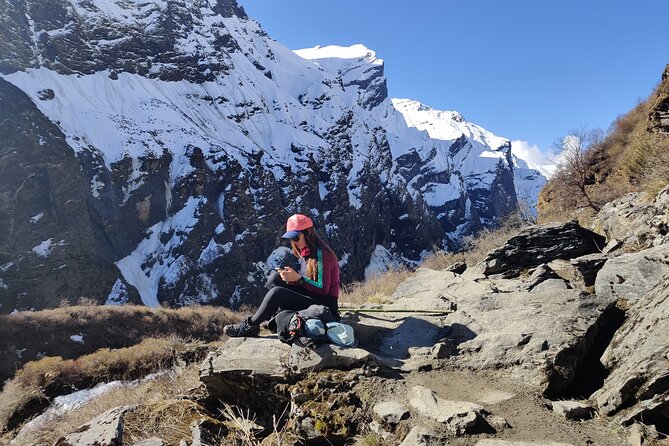
The schedule describes a two-hour hike from Chhomrong to Sinuwa, followed by about four hours through dense forest to Dobhan. Waterfalls and wild plants add interest along the way.
This is a good day for slow, steady walking. Forest shade can make the route more comfortable, but the total time on foot is still substantial. You should keep water, a snack, and rain protection close at hand rather than buried in your main bag.
The overnight stay is at a guest house in Dobhan. The itinerary refers to Bamboo when describing the following day, although Bamboo is not separately listed as a stop on Day 5. Ask the operator to confirm the exact sequence before you set out. This is a small planning issue, not a reason to dismiss the trip, but clear information matters on a trek where each overnight stop affects your altitude gain.
Day 6: Waterfalls and the climb toward Deurali
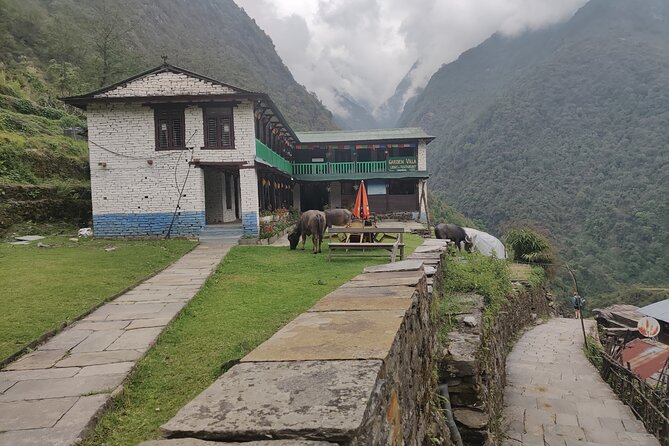
The next section takes five to six hours from Bamboo to Deurali, according to the schedule. You continue through forest and pass more waterfalls before reaching Deurali, a small settlement with tea houses.
This is one of the route’s more important physical days. You are gaining altitude, and the forest begins to feel like a corridor leading into the high mountains. The tea house stop gives you a place to rest before the final approach to Machhapuchhre Base Camp and Annapurna Base Camp.
At this point, listen to your guide and do not treat fitness as a substitute for caution. The tour asks for moderate physical fitness, but that phrase should not make the route sound easy. You will be walking several hours per day on uneven mountain trails.
Day 7: Machhapuchhre Base Camp and Annapurna Base Camp
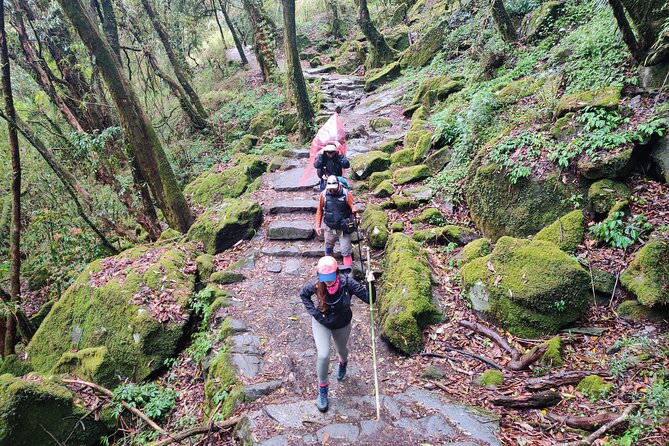
From Deurali, the hike to Machhapuchhre Base Camp takes about three to four hours. The route follows the MBC valley and brings you into the high basin surrounded by mountain walls.
You then continue for another two to three hours to Annapurna Base Camp. This is the emotional center of the trek. The scenery becomes wider and more exposed, and the close views of the Annapurna range are the reason many people accept the long approach.
You spend the night at a tea house at base camp. Sunrise and sunset are listed highlights, and the early morning light is especially important here. The mountains can look very different as the day changes, so keep your camera and warm layers ready rather than packed away.
The altitude is above 4,000 meters, and this is the point where the physical demands are most obvious. A private guide can adjust the pace and pay closer attention to how you are managing the climb, but no guide can remove the effects of altitude. Travel insurance and sensible preparation are essential.
Day 8: Sunrise at base camp, then a hard descent
You begin with sunrise and breakfast at Annapurna Base Camp. After that, the schedule calls for a seven to eight-hour descent to Sinuwa.
This is a demanding day in a different way from the climb. Going downhill can strain knees and feet, especially after the high-altitude overnight. Trekking poles, comfortable socks, and careful footing can make a real difference, though those items are not listed as supplied equipment.
The long descent is efficient because it gets you back to a lower sleeping altitude, but it leaves little room for a lazy morning. Enjoy the sunrise, eat well, and be ready to start walking soon afterward.
Day 9: Jhinu Danda and its natural hot spring
From Sinuwa, you walk four to five hours downhill to Jhinu Danda. The village is known for its natural hot spring, which gives you a welcome chance to relax after the high section of the trek.
This is one of the more appealing recovery stops in the itinerary. The hot spring is not just a sightseeing stop. It breaks up the long return journey and gives tired legs a change of pace.
You stay in a guest house at Jhinu Danda. As with the other mountain nights, accommodation is practical and simple. The package includes lodging, but you should not expect the same facilities you would have in Kathmandu or Pokhara.
Day 10: Back to Birethanti and a night in Pokhara
You hike four to five hours to Birethanti, then take a private vehicle for about an hour back to Pokhara. The evening is set aside to celebrate the end of the trek and say goodbye to the trekking crew.
This overnight in Pokhara is a smart part of the schedule. It gives you time to wash, rest, eat in a city setting, and let your legs recover before the return to Kathmandu. It also avoids forcing a long road transfer immediately after the final walking day.
The package includes a hotel in Pokhara for this night. The return transfer from Birethanti is listed as a private transfer, which should make the final road section easier than the shared tourist-coach journeys between the two cities.
Day 11 and Day 12: Returning to Kathmandu
Day 11 uses the tourist coach for the six to seven-hour journey back to Kathmandu. An optional 30-minute flight can be booked instead, but the standard package includes the coach.
The final day includes a trip certificate, a farewell, and airport transfer three hours before your departure. The airport drop-off is useful, especially if you have an international flight and want a clear buffer.
The 12-day length includes arrival, city transfers, the trek, recovery time in Pokhara, and departure preparation. You are not getting 12 full days of walking, but that is a sensible structure for a trek that includes long road journeys and a high-altitude overnight.
What the $1,175 price really covers
At $1,175 per person, the trip offers solid value for a private guided package. Included items cover:
- Airport transfers
- Accommodation
- Trekking permits
- Kathmandu to Pokhara and return tourist-coach transport
- Private Pokhara to Birethanti transfers
- Breakfast on 11 days
- Eight lunches
- Eight dinners
- First-aid support
- A down jacket, sleeping bag, and duffle bag on a returnable basis
- A company T-shirt, trekking map, and trip certificate
The package reduces the number of separate arrangements you need to make. That matters in Nepal, where coordinating permits, road transfers, mountain accommodation, and guides can take time.
It is not entirely all inclusive in the broadest sense. Guide and porter gratuities are excluded, as is compulsory travel insurance and any meal not specifically listed. Ask exactly which meals are covered on city days and clarify the tipping expectation before you leave.
Group discounts may be available, and the activity is private, so only your own group participates. That combination is useful for families, couples, or friends who want a shared pace without paying for a fully custom luxury trip.
Guide support and the human side of the trek
The strongest praise centers on guide care and organization. Pratip Tamang is singled out for attentiveness and clear English, while Raj is praised for patience, good humor, and practical help. Prakash is described as professional, responsible, friendly, and able to explain the Annapurna area well.
Other named staff include Ganesh, Raju, and Smile. The exact guide depends on the departure, so do not assume you will receive one particular person unless the company confirms it. Still, the repeated emphasis on guides checking that people have what they need is encouraging.
Good guiding matters most on the harder days. Your guide can help you manage the pace, explain the villages and plants along the trail, and help with problems when plans change. Some comments also refer to staff finding solutions quickly and responding through WhatsApp before arrival, which can be useful when you are sorting out transfers or equipment.
What to pack and what to clarify
The supplied down jacket, sleeping bag, and duffle bag cut down on expensive specialist purchases. You should still bring personal layers, reliable trekking footwear, rain protection, sun protection, personal medication, and insurance documents.
Before booking, ask these practical questions:
- Which exact villages are used for the Day 5 and Day 6 overnights?
- Is the optional Kathmandu flight priced separately?
- Which city-day meals are included?
- How are guide and porter tips handled?
- What happens if weather prevents the planned schedule?
- What size and condition are the loan sleeping bag and down jacket?
The experience requires good weather and a minimum number of participants. If poor weather cancels the trip, you are offered a different date or a full refund. The same applies if the minimum number is not met.
Cancellation is free up to 24 hours before the start time. A cancellation made less than 24 hours before departure is not refunded, and late changes are not accepted.
Who should book this Annapurna Base Camp trek?
I would choose this trip if you want the major Annapurna Base Camp route with the main logistics arranged in advance. It suits you best if you have moderate fitness, can handle long walking days, and prefer a private guide over a large group.
It is also a good fit if you value cultural stops as much as mountain scenery. Ghandruk and Chhomrong add village life and Gurung culture, while Jhinu Danda provides a welcome rest point on the way down.
I would hesitate if you want short walking days, high-end hotels, or complete flexibility. The tea houses are simple, the road journeys are long, and the schedule is active. You should also clarify the Day 5 and Day 6 routing before paying.
Should you book it?
For $1,175, this is a well-priced way to reach Annapurna Base Camp with transport, permits, meals, lodging, basic equipment, and a private guide included. The strongest reason to book is the balance between support and real mountain travel: you get help with the complicated parts but still sleep in tea houses and walk through villages, forest, and high mountain country.
Book it if you are ready for long days and basic accommodation. Before confirming, get the exact overnight plan in writing, check what remains outside the price, and make sure your insurance covers trekking at high altitude.
FAQ
How long is the Annapurna Base Camp tour?
The experience lasts approximately 12 days, including arrival in Kathmandu, transport to Pokhara, the trek, the return to Kathmandu, and airport drop-off.
Is this a private tour?
Yes. Only your own group participates in the activity.
What physical fitness level is required?
The tour states that you should have a moderate physical fitness level. Several walking days last four to six hours, while the descent from Annapurna Base Camp to Sinuwa is listed at seven to eight hours.
What equipment is provided?
A returnable down jacket, sleeping bag, and duffle bag are included. The package also provides a trekking map, company T-shirt, first-aid support, and trip certificate.
Are meals included?
Breakfast is included on 11 days, along with eight lunches and eight dinners. Any unspecified meals are not included.
Is travel insurance included?
No. Travel insurance is compulsory but must be arranged separately.
Can I cancel for a full refund?
Yes, if you cancel at least 24 hours before the experience start time. Cancellations made less than 24 hours before the start time are not refunded.
Just added around Kathmandu
- Everest Base Camp Trek★ 5.0 · 3 reviews
- Everest Base Camp Trek★ 5.0 · 7 reviews
- 15 Days Private Everest Base Camp Trek★ 5.0 · 30 reviews
- Everest Base Camp Trek★ 5.0 · 57 reviews
- 14 Days of Adventure Trekking to Everest Base Camp★ 5.0 · 2 reviews
- 14-Day Everest Base Camp Trek★ 5.0 · 20 reviews
- From Kathmandu: Private 14-Day Everest Base Camp Trek★ 5.0 · 20 reviews
- 14 Days Everest Base Camp Trek★ 5.0 · 4 reviews
Annapurna Base Camp Treks, compared.




Trekking in Annapurna/Langtang/Everest/Upper Mustang regions
Read our review →


Kathmandu to Annapurna Base Camp (ABC) 5-Day Trek
Read our review →Browse the lists this trek appears in