
Review · KATHMANDU
Annapurna Base Camp Trek
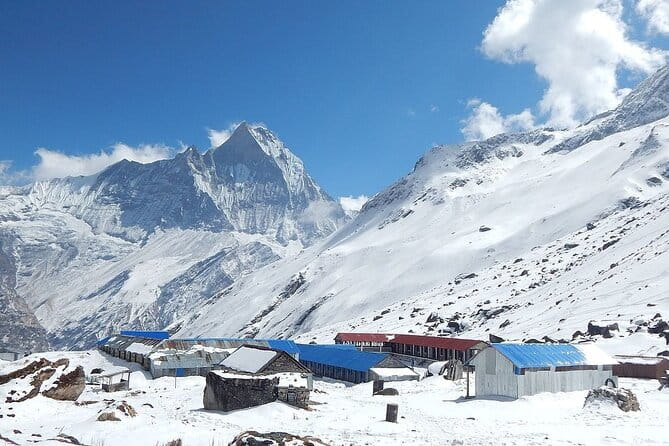
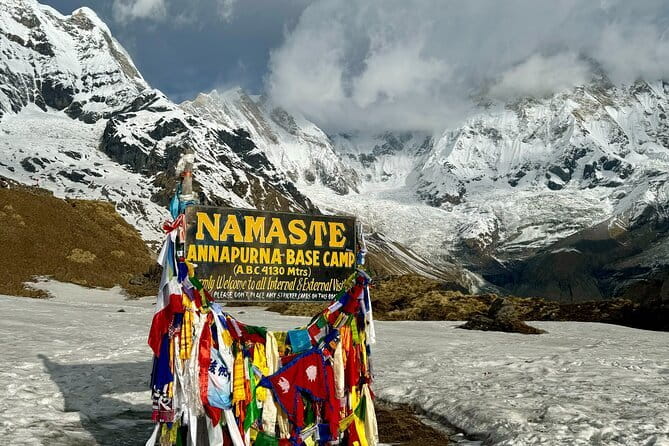
Reaching Annapurna Base Camp at 4,130 meters is the heart of this 11-day trip. You travel from Kathmandu to Pokhara, walk through Ghandruk and Chomrong, spend nights in simple tea houses, and return through Bamboo and Jhinu Danda. The reward is a close view of the Annapurna massif without committing to a long, high-pass expedition.
I like the practical setup: a guide, porter support, permits, transport, meals, and tea-house rooms are bundled into the $1,099 price. I also like the route’s rhythm, with mountain villages, forest paths, a base-camp night, and a hot spring at Jhinu Danda. The main caution is the altitude gain. Reaching 4,130 meters in a few trekking days requires steady fitness, patience, and attention to how your body feels.
Key points to know before booking
- Annapurna Base Camp at 4,130 meters: The route’s main prize is a high mountain destination rather than simply a scenic village walk.
- Ghandruk and Chomrong on the way up: These settlements help break the climb into manageable stages and add a strong local feel.
- Tea-house accommodation: You sleep in basic mountain lodges, a useful tradeoff for keeping the route practical and affordable.
- Porter support for two people: One porter is assigned between two participants, with a company duffel bag provided.
- Jhinu Danda hot spring: The return journey includes time at a natural hot-spring stop after the hardest high-altitude section.
- Private group format: Only your own group participates, with an English-speaking guide leading the trek.
What this Annapurna trek is really like
This is a compact Himalayan trek with a clear goal. You do not spend weeks crossing remote mountain passes. Instead, you climb steadily from the Pokhara region to Annapurna Base Camp, stay one night at the high point, and return by a different stretch of trail.
That makes the route appealing if you want a serious mountain walk but have about 11 days in Nepal. The trip still asks a lot of you. The highest point is 4,130 meters, and the schedule includes several full trekking days. You should be comfortable walking for hours on uneven ground and climbing and descending repeatedly.
The $1,099 price includes far more than guiding. It covers airport transfers, permits, transport between Kathmandu and Pokhara, two nights in Kathmandu, two nights in Pokhara, tea-house accommodation on the trek, food on most trekking days, a guide, porter support, staff insurance and medicine, a medical kit, a duffel bag, and a T-shirt.
That is good value for a packaged Nepal trek, but you still need to budget for meals in Kathmandu and Pokhara, travel insurance, emergency evacuation, visa fees, personal gear, drinks, hot water, battery charging, donations, and tips. Tipping is expected, so do not treat the advertised price as your complete Nepal budget.
One detail deserves clarification before you pay. The information names Serene Himalaya Treks and Expedition in the tour description and meeting point, while the experience provider is listed as Overland Trek Nepal. A booking message should confirm which company will handle your guide, permits, transport, and support.
More Annapurna Treks in Kathmandu
- Annapurna Circuit Trek with Tilicho Lake
★ 5.0 · 368 reviews - Annapurna base camp trek 5 Days
★ 5.0 · 252 reviews - 14-Day Private Annapurna Base Camp Trek
★ 5.0 · 180 reviews
Day 1: Kathmandu arrival and trek preparation
Your first day is for arrival, transfer, and getting organized. Pickup from the airport is included by car, van, or bus, and you spend the night in Kathmandu with breakfast.
This is not a sightseeing day, and that is sensible. After an international flight, you need time to rest, sort your bags, and check your trekking equipment. The company provides a duffel bag, so you can separate the items carried by the porter from the small day bag you keep with you.
The meeting point is at Serene Himalaya Treks and Expedition on Chaksibari Marg in Kathmandu. The stated start time is 6:45 a.m., so confirm the exact pickup details and time with the operator before the trek begins.
Two nights in Kathmandu are included in the package, although the itinerary gives only the arrival night in detail. If your international schedule allows extra time, the company says you can use it for shopping, sightseeing, or rest before departure.
Day 2: Tourist bus from Kathmandu to Pokhara
The second day moves by tourist bus from Kathmandu to Pokhara, where you spend the night at about 820 meters. This is a long transfer rather than a walking day, but it serves an important purpose: you reach the Annapurna region without the cost of a separate flight.
The bus option keeps the tour price under control. It also means you should expect a full travel day and not a relaxed morning before your first hike. Pokhara is a useful base because the actual trailhead is reached from there the next day.
Breakfast is included in Pokhara, but lunch and dinner are not included during your stay in the city. Plan to pay for those meals yourself.
Day 3: Nayapul to Ghandruk
A private vehicle takes you from Pokhara to Nayapul in about 1 hour and 30 minutes. From Nayapul, you begin walking toward Ghandruk, at approximately 1,940 meters.
Ghandruk is an excellent first trekking stop because it gives you a genuine mountain-village setting early in the route. The elevation is high enough to begin the transition from city travel to Himalayan walking, but it is far below Base Camp.
This first walking day is also a useful test of your boots, pack, and fitness. Tell your guide at once if anything feels wrong. Small problems with footwear or a heavy day bag are much easier to fix here than higher up.
The package includes tea-house lodging and meals during the trek. Tea houses are simple, practical places to sleep and eat. Do not expect hotel service or extensive private facilities. Their value is that they let you walk from village to village without carrying camping equipment.
Same trailhead, a different route:
- Everest Base Camp Trek – 14 Days
★ 5.0 · 1,499 reviews - Everest Base Camp Trek
★ 5.0 · 842 reviews - Everest Base Camp Helicopter Tour landing at Everest View Hotel
★ 5.0 · 668 reviews - Everest Base Camp Trekking
★ 5.0 · 485 reviews
Day 4: Ghandruk to Chomrong or Sinuwa
The route continues from Ghandruk toward Chomrong at about 2,230 meters, or possibly Sinuwa. The exact overnight stop can vary, so ask your guide which village is planned for your group and why.
Chomrong is one of the route’s important settlements. It marks a clear move toward the higher part of the valley and often serves as a psychological checkpoint. From here, the trek feels more focused on reaching Base Camp.
The day may include a good amount of climbing and descending, even when the net altitude gain looks modest. Himalayan trails do not rise in a straight line. You may lose height before climbing again, so pace yourself rather than racing the group.
The itinerary’s use of either Chomrong or Sinuwa gives the guide some flexibility. That can be useful if weather, trail conditions, or group pace affect the day. It also means the published schedule is not a minute-by-minute promise.
Day 5: Sinuwa to Deurali
The fifth day takes you from Sinuwa to Deurali at around 3,230 meters. This is where the altitude becomes a serious part of the trip rather than a number on the itinerary.
You are now walking higher and should keep your pace slow and even. Drink water regularly, eat even if your appetite drops, and tell the guide about headaches, nausea, unusual tiredness, or trouble sleeping. The tour includes a medical kit, but good communication and sensible pacing matter just as much.
Deurali is a staging point before the final push to Base Camp. The practical benefit of this overnight stop is that you do not try to reach 4,130 meters in one reckless jump from a low village.
Food is included on the trekking schedule, with eight lunches and seven dinners listed for the trip. Snacks also come with the package, including biscuits or Oreo cookies, peanuts, fruit such as apples or pomegranates, and one Snickers chocolate per person. These are small additions, but they are useful on long walking days.
Day 6: Deurali to Annapurna Base Camp
This is the main event. You trek from Deurali to Annapurna Base Camp, listed at approximately 4,130 meters.
The route becomes more demanding because of the altitude, not simply because of distance. You should expect a slower pace and more frequent pauses. The guide’s role matters here: a good guide watches the group, adjusts the rhythm, and takes symptoms seriously.
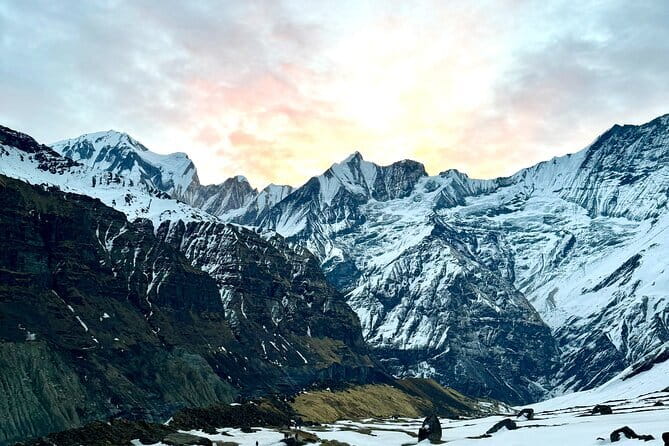
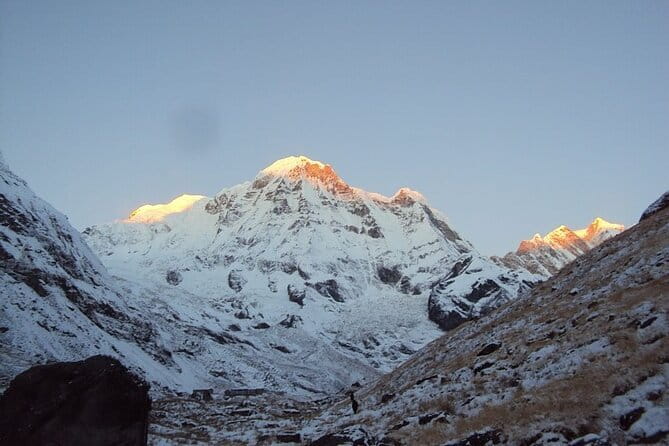
Base Camp gives you the setting this trip is built around, with the Annapurna massif close by. Weather controls how much you see. Clear conditions can reveal dramatic high peaks, while cloud can limit the view even after you have made the climb. The itinerary does not promise a particular weather outcome, so a flexible attitude helps.
You spend the night at the high point. That is a memorable part of the route, but it is also the night most affected by cold, basic facilities, and altitude. Bring warm personal clothing and do not assume the provided tea-house stay will feel like a standard hotel night.
The company lists a medical kit and staff medicine, but travel insurance with trekking and emergency evacuation coverage is your responsibility. That is especially important on any itinerary reaching more than 4,000 meters.
Day 7: Base Camp to Bamboo
After the high night, you descend from Annapurna Base Camp to Bamboo at about 2,310 meters. This is a major relief for many people because you lose a large amount of altitude.
Descending is easier for breathing, but it can be tough on knees and ankles. Use trekking poles if you have them, keep your laces secure, and do not rush simply because the air feels easier.
Bamboo offers a change in mood. You are back at a lower elevation, and the return route gives you a different view of places passed on the way up. The trek is not finished, but the highest objective is behind you.
Day 8: Bamboo to Jhinu Danda and the hot spring
The route continues from Bamboo to Jhinu Danda at about 1,780 meters. The major attraction here is the hot spring, a welcome stop after the high-altitude portion of the trip.
This is one of the smartest features of the itinerary. The hot spring gives the return journey a clear reward instead of making it feel like a simple retreat from Base Camp. It also places you at a much lower altitude before the final walk and transport day.
Do not expect the hot spring to erase every sore muscle. It is a pleasant pause, not a substitute for rest. Still, the combination of a warm soak and a lower village overnight makes Jhinu Danda one of the trip’s most appealing stops.
Day 9: Jhinu Danda to Nayapul and Pokhara
You walk from Jhinu Danda back to Nayapul, then use transport to return to Pokhara. You spend another night at roughly 820 meters.
This day completes the walking circuit and lets you finish at a comfortable altitude. The private transport from Nayapul is included, which saves you from arranging your own ride at the end of several demanding days.
A night in Pokhara is useful before the return to Kathmandu. The tour includes breakfast there, but lunch and dinner remain your responsibility. If your schedule allows, this is also the point where you can rest rather than squeeze in more activity.
Day 10: Return to Kathmandu
You travel from Pokhara to Kathmandu by tourist bus. Like the outward journey, this is a transport day rather than a trekking day.
The bus keeps the overall cost reasonable, though it may feel long after the physical effort of the trek. If comfort and speed are your highest priorities, ask whether other transport choices exist, but do not assume they are part of the $1,099 package.
You spend the night in Kathmandu if your departure schedule requires it. The package includes two Kathmandu nights with breakfast, though the exact use of those nights should be confirmed against your flight dates.
Day 11: Departure or extra time in Nepal
The final day is for airport departure, with transfer included. If you have more time, you can stay in Kathmandu for shopping, sightseeing, or a quiet recovery day.
The itinerary is therefore suitable for someone who wants a fixed trekking package but may also have a little spare time around the main route. Keep the extra days separate from the advertised 11-day duration when arranging international flights.
Guides, porters, and group size
The trek is described as a private activity, meaning only your own group participates. That is valuable if you want your walking pace and rest stops handled within your party rather than around a large mixed group.
An English-speaking guide is included, along with staff salary, insurance, and medicine. The supplied feedback highlights Nick and a guide and porter team for organized service, helpfulness, and energy. The information does not provide a complete list of guide names, so confirm who will lead your group before departure.
One porter is included for every two people. This is generous enough to make the trek more comfortable, but it is not permission to pack without limits. Keep your own day bag light and respect the porter arrangement.
Tips for the guide and porter are not included, and tipping is expected. Ask the company for current guidance so you can bring enough Nepalese rupees or another accepted form of payment.
What the $1,099 price covers
The price is strongest for people who want one organized bill. Included services cover:
- Airport pickup and drop-off
- Kathmandu and Pokhara transport
- Two Kathmandu nights with breakfast
- Two Pokhara nights with breakfast
- Tea-house accommodation during the trek
- Annapurna Conservation Area permits
- An English-speaking guide
- Porter service at one porter per two people
- Trekking meals listed as 10 breakfasts, 8 lunches, and 7 dinners
- Snacks and fruit during the trek
- Medical kit and staff support
- A duffel bag, T-shirt, and trip certificate
- Government and local taxes
The omissions are standard but important. You pay for Kathmandu and Pokhara lunches and dinners, international airfare, Nepal entry visa, travel insurance, emergency evacuation, personal equipment, water bottles, cold drinks, hot water, battery charging, donations, and tips.
I would call the package good value if you need guides, porters, permits, accommodation, and ground transport arranged together. It is less attractive if you already have Nepal contacts, your own equipment, and plenty of time to organize each part independently.
Who should book this trek
I would recommend it to a reasonably fit first-time Himalayan trekker who wants a defined route, a high mountain goal, and support with logistics. The private format also suits couples, families with appropriate fitness, or small groups of friends who want to walk together.
It is not a casual sightseeing outing. The itinerary climbs to 4,130 meters and includes several consecutive walking days. You need proper clothing, sturdy footwear, personal medication, insurance, and a willingness to slow down when the altitude demands it.
The route should also suit people who prefer tea houses to camping. You carry less because of porter support, but you still need to accept basic rooms, simple facilities, and extra charges for conveniences such as hot water and battery charging.
Should you book the Annapurna Base Camp Trek?
Book this trip if your priority is a well-supported route to Annapurna Base Camp with transport and mountain logistics handled for you. The strongest features are the high destination, the village-to-village route, porter assistance, the private group setup, and the hot spring at Jhinu Danda.
Before paying, confirm the operator name, guide assignment, exact overnight village on Day 4, transport arrangements, and what happens if weather disrupts the schedule. Also add insurance, tips, visa costs, personal gear, and meals outside the trek to your budget.
If you want a focused Himalayan experience in roughly 11 days, this is a practical choice. If you dislike long bus rides, basic tea houses, or high-altitude exertion, choose a shorter and lower route instead.
FAQ
How long does the Annapurna Base Camp Trek last?
The full experience lasts approximately 11 days, including arrival in Kathmandu, travel to Pokhara, the trek, the return to Kathmandu, and departure.
What is the highest elevation on the trek?
Annapurna Base Camp is listed at approximately 4,130 meters.
Is airport pickup included?
Yes. Airport pickup and drop-off by car, van, or bus are included.
Is this a private tour?
Yes. The activity is described as private, so only your own group participates.
Is a guide included?
Yes. An English-speaking guide is included, along with guide and staff salary, insurance, and medicine.
Is porter service included?
Yes. One porter is provided between two people. A company duffel bag is also included.
Are meals included?
Breakfast, lunch, and dinner are included during the specified parts of the trek. The package lists 10 breakfasts, 8 lunches, and 7 dinners. Lunch and dinner in Kathmandu and Pokhara are not included.
Is accommodation included?
Yes. The package includes two nights in Kathmandu with breakfast, two nights in Pokhara with breakfast, and tea-house accommodation during the trek.
Can I cancel for a full refund?
You can cancel at least 24 hours before the experience start time for a full refund. Cancellations or changes made within 24 hours are not refunded or accepted. If poor weather causes the company to cancel, you are offered another date or a full refund.
Just added around Kathmandu
- Everest Base Camp Trek★ 5.0 · 3 reviews
- Everest Base Camp Trek★ 5.0 · 7 reviews
- 15 Days Private Everest Base Camp Trek★ 5.0 · 30 reviews
- 14 Days of Adventure Trekking to Everest Base Camp★ 5.0 · 2 reviews
- 14-Day Everest Base Camp Trek★ 5.0 · 20 reviews
- Everest Base Camp Trek★ 5.0 · 57 reviews
- From Kathmandu: Private 14-Day Everest Base Camp Trek★ 5.0 · 20 reviews
- 14 Days Everest Base Camp Trek★ 5.0 · 4 reviews
Annapurna Base Camp Treks, compared.




Trekking in Annapurna/Langtang/Everest/Upper Mustang regions
Read our review →


Kathmandu to Annapurna Base Camp (ABC) 5-Day Trek
Read our review →Browse the lists this trek appears in