
Review · KATHMANDU
Annapurna Base Camp Trek – 11 Days
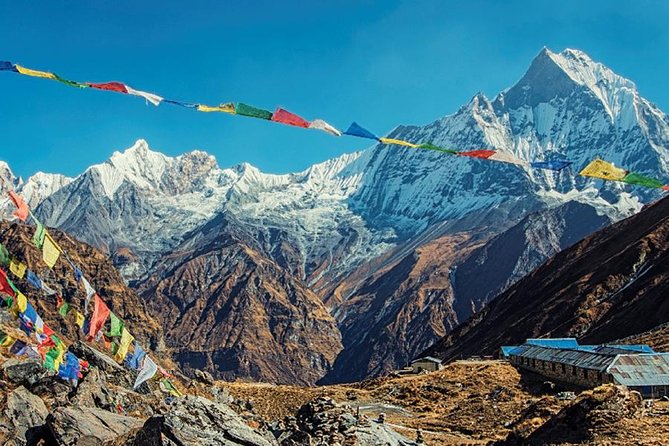
The big draw here is the changing scenery: Poon Hill sunrise, rhododendron forests, stone stairways, suspension bridges, and the high mountain setting around Annapurna Base Camp. You get a real Himalayan trek without committing to a much longer route.
I like that the $986 price includes Kathmandu to Pokhara transport, permits, guide, guesthouse stays, most meals, a sleeping bag, down jacket, duffel bag, first-aid supplies, and an oxygen monitor. I also like the human scale of the trip, since it is a private activity for your own group rather than a large walking party.
The main consideration is effort. You need moderate physical fitness, and the route has repeated uphill and downhill sections, long stone stairways, and high-altitude walking. Also, the published daily plan includes some repeated areas around Jhinu and Chhomrong, so confirm the exact overnight stops with Base Camp Adventure before paying.
Key points to know before booking
- Poon Hill sunrise: Start early from Ghorepani for views of Annapurna, Dhaulagiri, Nilgiri, and Lamjung Himal.
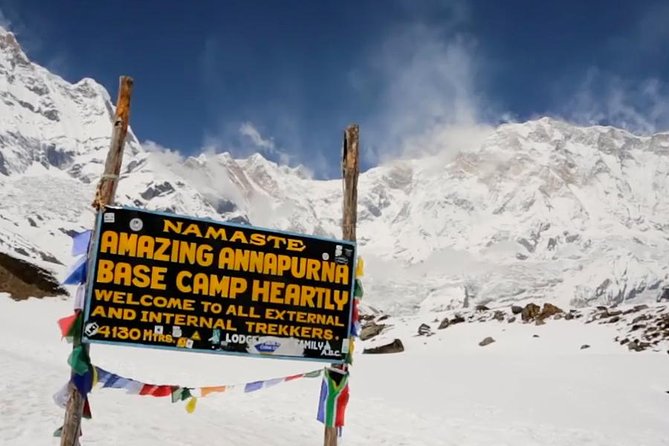
- Annapurna Base Camp access: Reach Machhapuchhre Base Camp at 3,700 meters before continuing through the moraine country toward Annapurna Base Camp.
- Private group format: Only your group takes part, with a local government licensed English-speaking guide.
- Useful equipment included: A down jacket, sleeping bag, duffel bag, route map, first-aid kit, and pulse oximeter are supplied.
- Mountain village experience: The route passes through Birethanti, Ghorepani, Chhomrong, Sinuwa, Deurali, and Jhinu Danda.
- A practical price: At $986 per person, the package covers many costs that can add up quickly on an independent trek.
Why this 11-day route works well
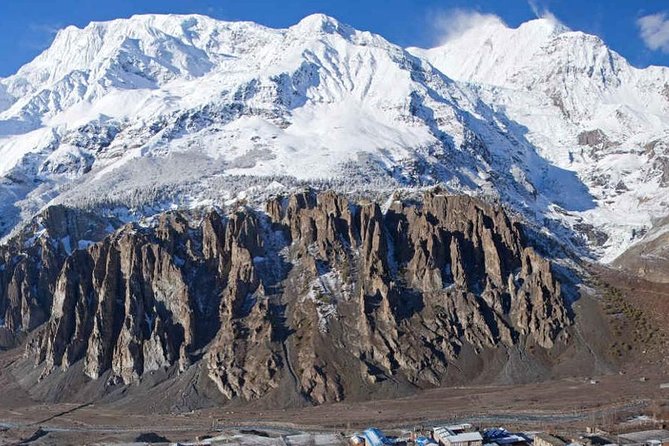
The Annapurna Base Camp Trek is a good choice if you want a classic Nepal walk with both scenery and village life. You are not simply marching toward one viewpoint. The route moves from river valleys and terraced farms to forests, high ridges, snowy peaks, and a glacial mountain setting.
The first and last days are travel days between Kathmandu and Pokhara. That matters because you spend much of the middle portion walking instead of arranging transport. The route also gives you two memorable side experiences: sunrise from Poon Hill and a warm soak at Jhinu Danda.
This is not a soft adventure. You should be comfortable walking for several hours on uneven ground and climbing stairs. The plan includes gradual gains through forest and village country, but the stone steps can be tiring, especially after several days on the trail.
More Annapurna Treks in Kathmandu
- Annapurna Circuit Trek with Tilicho Lake
★ 5.0 · 368 reviews - Annapurna base camp trek 5 Days
★ 5.0 · 252 reviews - 14-Day Private Annapurna Base Camp Trek
★ 5.0 · 180 reviews
Day 1: Kathmandu to Pokhara beside the Prithvi Highway
The trip begins at 6:15 in the morning with a tourist bus from Kathmandu to Pokhara. The drive follows the Prithvi Highway, with views of rivers, terraced farms, villages, and roadside towns.
I like having this transport included because arranging the Kathmandu to Pokhara connection separately adds another task at the start of a demanding holiday. The drawback is the length of the road journey. You are not trekking yet, and much of the day is spent sitting on a bus, but it places you in Pokhara for the walking days ahead.
Pokhara is the practical base for the Annapurna region. The plan gives you a chance to rest there before heading to the trailhead.
Day 2: Nayapul, Birethanti, and the first suspension bridge
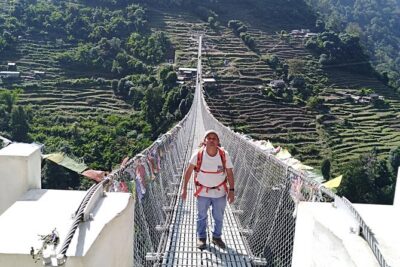
From Pokhara, the group drives about two hours to Nayapul. The walk begins by crossing a suspension bridge over the Modi River and continuing toward Birethanti.
This opening section introduces you to the feel of the route. You pass through local settlements and begin walking beside the river system that leads toward the high mountains. The early trail is useful for getting your legs ready, though the combination of driving and walking makes this a full day.
Your guide is there throughout the trek, and staff costs, insurance, equipment, medicine, and transport for the trekking team are included. That is an important part of the price, since porter and support arrangements can otherwise be unclear.
Day 3: Rhododendron forest and the climb to Ghorepani
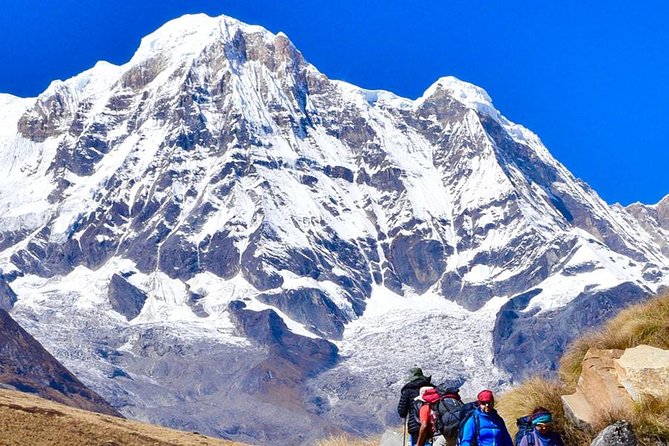
The trail passes through thick rhododendron forest and the villages of Banthanti and Nangethanti before reaching Ghorepani. The walk begins gently in places, but the route eventually climbs on stone stairs.
Ghorepani is valuable because it sets up the early start for Poon Hill. The forest also changes the mood of the trek. Instead of seeing snow peaks all day, you walk through trees, orchids, and ferns, with occasional mountain views opening ahead.
Do not treat this as an easy warm-up. Stone stairs can be hard on knees and calves, especially if you are not used to mountain walking. Trekking poles would be useful, but personal trekking equipment is not included, so bring or rent the items you prefer.
Same trailhead, a different route:
- Everest Base Camp Trek – 14 Days
★ 5.0 · 1,499 reviews - Everest Base Camp Trek
★ 5.0 · 842 reviews - Everest Base Camp Helicopter Tour landing at Everest View Hotel
★ 5.0 · 668 reviews - Everest Base Camp Trekking
★ 5.0 · 485 reviews
Day 4: Poon Hill sunrise and the trail toward Tadapani
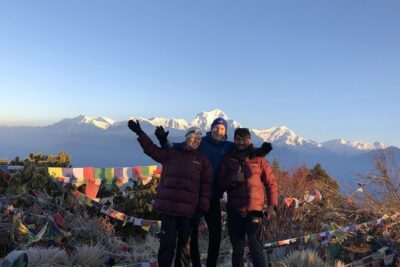
The day starts before sunrise with an ascent to Poon Hill. From the viewpoint, you can watch sunlight reach the Annapurna and Dhaulagiri ranges, along with Nilgiri at 7,061 meters and Lamjung Himal at 6,983 meters.
This is one of the strongest parts of the trip. Poon Hill gives you a big mountain view early in the trek, before you have reached the higher country around base camp. The snowy trail and early start are part of the appeal, but you should carry warm layers because waiting for sunrise can be cold.
After Poon Hill, the route continues through forested country toward Tadapani. The day combines a short, sharp morning climb with more walking afterward. If you want good photographs, keep your phone or camera protected from cold and moisture, and do not rush through the first clear views.
Day 5: Forest trails, Kimrong Khola, and Jhinu hot springs
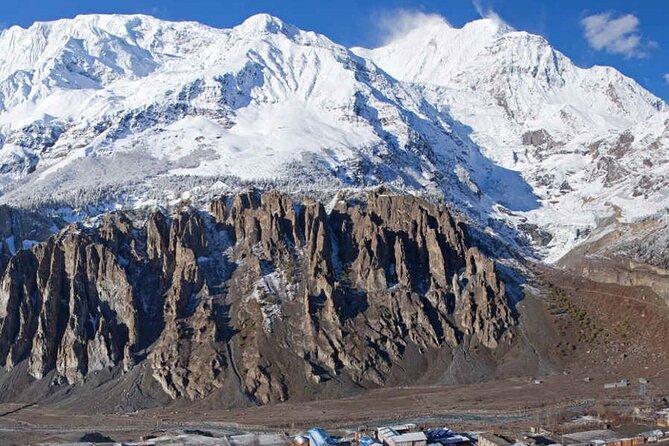
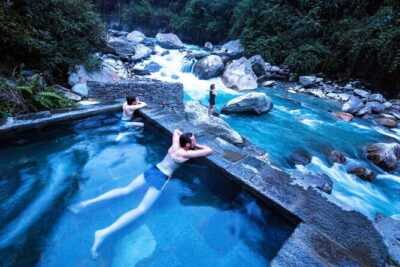
The route climbs and descends through forest before crossing the suspension bridge over Kimrong Khola. From there, you continue to Jhinu Danda and its hot spring.
The hot spring is more than a pleasant extra. It gives your legs a break after several days of stairs and uneven trail. I like the way this day mixes active walking with a simple local comfort. It also gives the trip a better rhythm than a trek made entirely of viewpoints and uphill pushes.
The route then continues into the Annapurna sanctuary area. Take care on descents, since going downhill after a long climb can be harder on your knees than the climb itself.
Day 6: Chhomrong Khola, Sinuwa, and forested trail
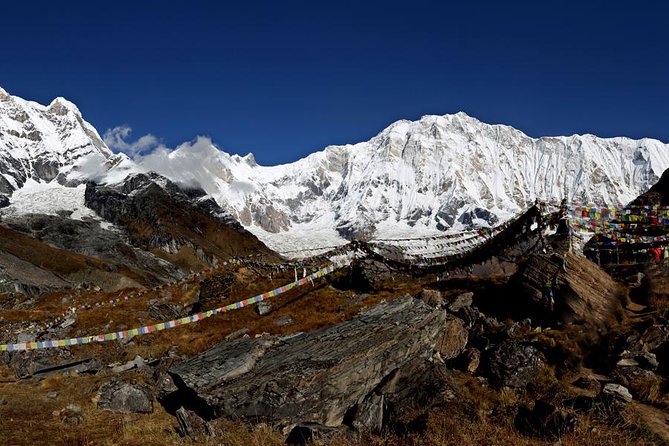
This is described as an easier walking day, with rhododendron forest, orchids, and ferns. You descend stone stairs, cross Chhomrong Khola, and climb again to Sinuwa before continuing through the forest.
The repeated up and down is typical of the Annapurna route. A day described as easy does not mean flat. You still need to manage your pace and drink regularly, especially as the trail begins to move toward higher ground.
Sinuwa is an important point in the route because the surroundings become more enclosed and mountain-focused. The forest offers shade, while breaks in the trees can reveal snowy peaks. Guesthouse accommodation is mainly twin share, so expect simple mountain lodging rather than hotel-style rooms.
Day 7: Deurali, Machhapuchhre Base Camp, and the high route
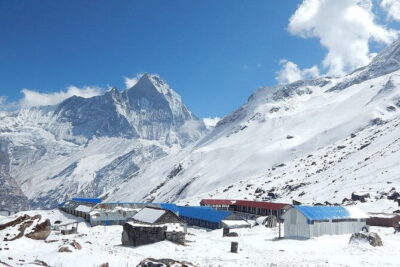
The trail climbs toward Deurali, following stone stairs and reaching increasingly open views of the snow-capped mountains. You then continue to Machhapuchhre Base Camp at 3,700 meters.
From Machhapuchhre Base Camp, the trail follows moraine country toward Annapurna Base Camp. This is the most serious day of the trek. The altitude, exposed mountain setting, and sustained walking make pacing especially important.
The supplied pulse oximeter can help the guide monitor oxygen saturation and heart rate, but it is not a replacement for paying attention to how you feel. If you develop concerning symptoms, tell the guide promptly. The presence of a first-aid kit and a licensed guide adds useful support, but no trekking package can remove the risks of altitude or bad weather.
Day 8: Annapurna Base Camp and the Modi Khola valley
The route descends toward Machhapuchhre Base Camp through the moraine area, then follows the Modi Khola through rhododendron and fir forest. The mountain views remain central as you leave the highest part of the route.
This day shows why the trek is more than a single base camp photo. You move from stark, high mountain terrain back into forest and river country. The change is quick and striking.
The direction of travel also means you must be ready for a long descent. Many walkers find downhill sections tiring after a high-altitude day. Good footwear matters, and your day pack should be light enough that your knees are not carrying unnecessary weight.
Day 9: Sinuwa, Chhomrong, and another Jhinu stop
The route climbs through forest to Sinuwa, descends to Chhomrong Khola, and then climbs stone stairs to upper Chhomrong. From there, it descends to Jhinu Danda, where another warm dip in the natural hot spring is planned.
This is where I would ask the operator to confirm the precise schedule. Jhinu appears earlier in the route as well, and this later day retraces part of the Chhomrong and Sinuwa area. That may be intentional, especially if the plan is built around a second hot-spring stop, but the exact overnight arrangement is worth checking before booking.
The route remains scenic, but this is not a light recovery day. The stairs around Chhomrong are memorable and demanding. Keep your pace steady rather than trying to match the guide’s walking speed.
Day 10: Return to Nayapul and back to Pokhara
After the trek, you descend along the Modi Khola route to Nayapul. The drive then returns you to Pokhara, where the evening is free for rest or a short walk around town.
This is a useful buffer day after the high-country section. You are still moving, but the main physical challenge is behind you. The return drive also lets you see the lower valleys from a different angle.
The plan does not promise a particular evening activity, so do not pack the day with fixed reservations. You may be tired, and road times in the mountains can be less predictable than city transfers.
Day 11: Pokhara to Kathmandu
The final day begins early with a tourist bus back to Kathmandu. The route again follows the highway, with greenery, villages, and river views along the way.
The tour ends back at the original meeting point in Kathmandu. Since this is a long transfer day, I would avoid booking an international flight immediately after arrival. The package does not include international airfare or airport departure tax, and you are responsible for allowing enough personal time between the bus arrival and any flight.
What the $986 price includes
The price is strong for a private 11-day trek because many practical costs are covered:
- Surface transport from Kathmandu to Pokhara and back
- Trekking permits and entry fees
- Guesthouse accommodation, mainly in twin-share rooms
- An English-speaking local government licensed guide
- Food for the trekking team and support staff
- Ten breakfasts, nine lunches, and eight dinners
- Down jacket, sleeping bag, and duffel bag
- Trekking route map
- First-aid medical kits and a pulse oximeter
- Staff salary, insurance, equipment, medicine, and transport
You still pay for alcoholic drinks, hot and cold drinks, laundry, personal trekking equipment, travel insurance, international airfare, airport departure tax, and tips. Those exclusions are normal for a trek, but they affect your real budget.
The best value comes from the support. You are not only paying for a room and a guide. The price also covers permits, staff logistics, safety equipment, and transport between Kathmandu, Pokhara, and the trail. For a first Himalayan trek, that can make the trip much easier to manage.
Guides, support, and the mixed service picture
The experience is run by Base Camp Adventure Pvt. Ltd. The strongest service feedback names guides such as Prakash, Shiva, Naba, Mansing, and Saroj Dhakal, with particular praise for patience, friendliness, organization, and help on the trail.
You should not assume one specific guide is guaranteed, since guide assignment can change. If you have a preference, ask at booking. One poor account describes an unprofessional guide, while the company replied that the complaint appeared to concern a different operator and not a recent Annapurna trip organized by them. That response does not erase the concern, but it does mean you should confirm the company name, guide details, and current arrangements in writing.
Overall, the available rating is 4.9 from 30 reviews, with 97 percent recommending the experience. That is a strong service signal, but your experience will still depend on the assigned guide, weather, group needs, and your own readiness for the walking.
Who should book this trek
I would recommend this trek to you if you want:
- A classic Annapurna route in a compact 11-day schedule
- A private group rather than a shared large tour
- A guide and permits arranged in advance
- Mountain villages, forests, rivers, and high peaks in one trip
- A first major trek with equipment and staff logistics partly covered
- A mix of hard walking and restorative stops such as Jhinu hot springs
You should think twice if you dislike early starts, basic guesthouses, long bus rides, or repeated stairs. You also need moderate physical fitness. The operator requires good weather for the experience, and poor conditions can lead to a different date or a full refund.
Free cancellation is available up to 24 hours before the 6:15 a.m. start time. Changes or cancellations inside that window are not accepted for a refund.
Should you book the Annapurna Base Camp Trek?
I would book this if you want a well-supported introduction to Himalayan trekking and value the combination of Poon Hill, Annapurna Base Camp, village trails, and hot springs. The included transport, gear, staff support, meals, and permits make $986 a reasonable package price.
Before booking, ask for the exact day-by-day overnight plan, the name of your guide, and clarification about the two Jhinu sections. If the answer is clear and your fitness is ready for stone steps and high-altitude walking, this is a practical and memorable way to reach Annapurna Base Camp.
FAQ
Where does the trek start and finish?
It starts at the meeting point in Kathmandu, Nepal, and ends back at the same meeting point after returning from Pokhara.
What time does the experience start?
The stated start time is 6:15 a.m.
Is transport from Kathmandu to Pokhara included?
Yes. Surface transport from and to Kathmandu is included, using tourist buses between Kathmandu and Pokhara.
Is accommodation included?
Yes. The package includes the best available guesthouse accommodation during the trek, mainly in twin-share rooms.
Are meals included?
Yes. The package includes 10 breakfasts, nine lunches, and eight dinners.
Is a guide provided?
Yes. A local government licensed English-speaking trekking guide accompanies the trek.
Can I cancel for a full refund?
Yes, if you cancel at least 24 hours before the experience start time. Cancellations made less than 24 hours in advance are not refunded. If poor weather causes the operator to cancel, you are offered another date or a full refund.
Just added around Kathmandu
- Everest Base Camp Trek★ 5.0 · 3 reviews
- Everest Base Camp Trek★ 5.0 · 7 reviews
- 15 Days Private Everest Base Camp Trek★ 5.0 · 30 reviews
- Everest Base Camp Trek★ 5.0 · 57 reviews
- 14 Days of Adventure Trekking to Everest Base Camp★ 5.0 · 2 reviews
- 14-Day Everest Base Camp Trek★ 5.0 · 20 reviews
- From Kathmandu: Private 14-Day Everest Base Camp Trek★ 5.0 · 20 reviews
- 14 Days Everest Base Camp Trek★ 5.0 · 4 reviews
Annapurna Base Camp Treks, compared.
Trekking in Annapurna/Langtang/Everest/Upper Mustang regions
Read our review →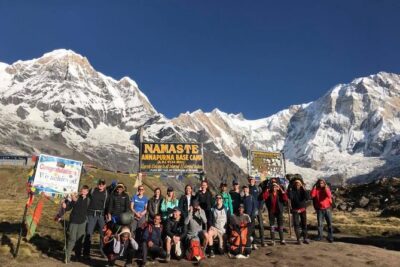
Kathmandu to Annapurna Base Camp (ABC) 5-Day Trek
Read our review →Browse the lists this trek appears in