
Review · KATHMANDU
Annapurna Base Camp Trek 12 Days
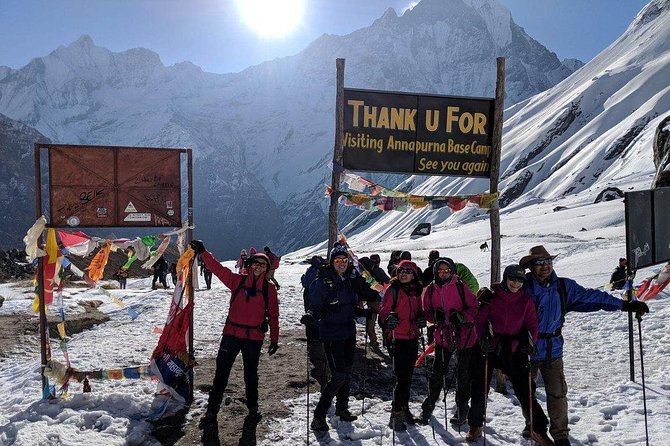
Annapurna Base Camp gives you a lot of Nepal in 12 days: a sunrise above Poon Hill, stone steps through mountain villages, forest trails beside rushing water, and a final push into the high Annapurna Sanctuary. The route mixes big Himalayan views with daily contact with Gurung and Magar communities, so you get more than a point on a map.
I like the way Poon Hill is built into the route, since the early sunrise gives you a strong mountain view before the higher trek begins. I also like the practical package: lodging, three daily meals, transport, permits, airport transfers, and a guide are included. The main drawback is that the trek demands moderate fitness, and the price does not include Kathmandu lodging, personal insurance, drinks, tips, or a porter.
Key points to know before booking
- Poon Hill sunrise adds a superb viewpoint before you enter the Annapurna Sanctuary.
- About 3,000 stone steps to Ulleri make Day 4 one of the toughest early sections.
- The route includes Gurung and Magar villages, with Chhomrong as a key cultural stop.
- A private group travels with a professional guide, rather than joining a large shared departure.
- The $799 price covers most trek essentials, but not a porter, personal insurance, or Kathmandu accommodation.
- The final route can change near Fishtail Base Camp because the area is prone to avalanches.
Why this 12-day route works so well
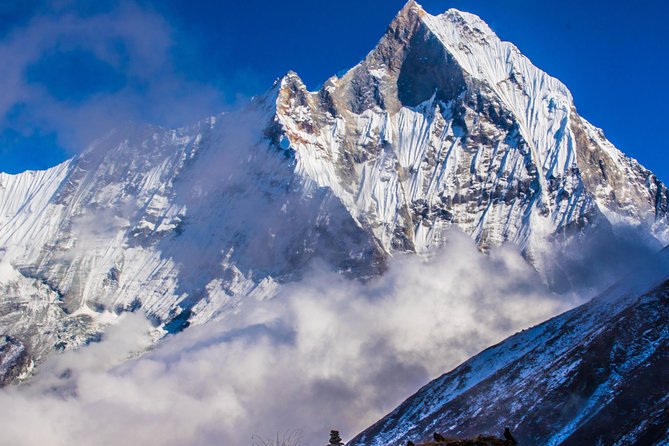
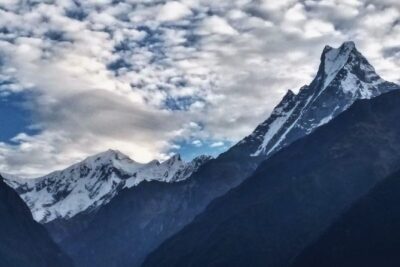
The Annapurna Base Camp route is a good choice if you want a serious Himalayan walk without committing to a long circuit. You begin with city logistics in Kathmandu, move to Pokhara, then walk through foothill villages and forest before reaching the high mountain basin below Annapurna South and Machapuchare, also called Fishtail.
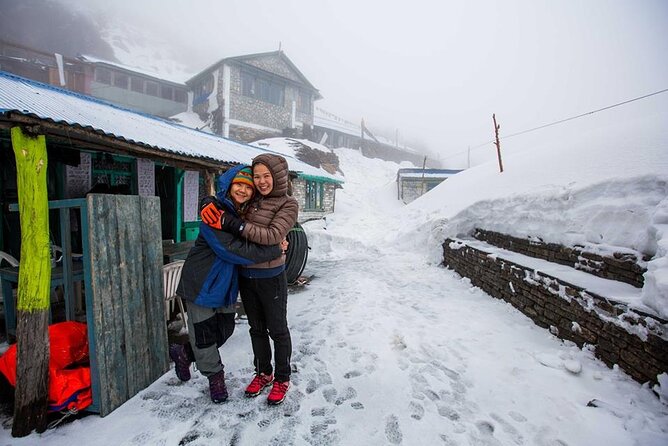
The itinerary is carefully shaped around the route’s changing scenery. Early days bring villages and cultivated hillsides. Higher up, the trail narrows into a steep valley with waterfalls, forest, and colder air. Near base camp, the views become larger and the walking more demanding.
I also appreciate the built-in return days. You do not simply reach base camp and rush straight back to Kathmandu. You spend time coming down through the same mountain corridor, with a hot spring stop at Jhinu before returning to Pokhara.
This is a private activity, so only your own group participates. That matters if you want a more flexible pace or need to discuss changes with your guide. The company has used guides named Arjun, Sudip, Ram, and Krishna on other Annapurna trips, though your assigned guide is not specified in advance.
More Annapurna Treks in Kathmandu
- Annapurna Circuit Trek with Tilicho Lake
★ 5.0 · 368 reviews - Annapurna base camp trek 5 Days
★ 5.0 · 252 reviews - 14-Day Private Annapurna Base Camp Trek
★ 5.0 · 180 reviews
Days 1 and 2: Kathmandu arrival and the road to Pokhara
Your trip begins at Tribhuvan International Airport, where an Adventure Glacier representative meets you at the arrival gate. You are transferred to a hotel in Thamel, Kathmandu, and given a trek briefing.
Thamel is a useful base for the first night because it is Kathmandu’s main visitor district, though this package does not include your Kathmandu accommodation. Check exactly what hotel arrangement is being made before you arrive, since the tour includes airport pickup but excludes the cost of your stay in the capital.
The following morning, you take a tourist bus from Kathmandu to Pokhara. Departure is usually around 7:00 a.m., and the ride takes roughly six to seven hours depending on road conditions. This is not a quick transfer, but it gives you a gradual change from the Kathmandu Valley to the foothills.
You stay in Pokhara Lakeside, a convenient place to rest before the trek. The package includes ground transportation and the daily trek meals, but food and accommodation in Pokhara are not included outside the stated trek arrangements. Ask your operator exactly which meals are covered on this transition day.
Days 3 and 4: Nayapul, Tikhedhunga, and Ulleri’s stone steps
After breakfast in Pokhara, a private vehicle takes you toward Nayapul. The drive takes about two hours and follows scenic countryside to the trailhead near the confluence of the Modi River and the Bhurungdi Khola.
The first walking section leads to Tikhedhunga. It is an approachable introduction to the route, with mountain villages and river scenery rather than immediate high-altitude strain. You stay in a lodge, and lodge accommodation is included.
Day 4 is a different matter. The trail climbs from Tikhedhunga toward Ulleri, with about 3,000 stone steps and roughly two hours of uphill work. This is the day to settle into a steady pace. You do not need to race. Short pauses will help you save energy for the days ahead.
From Ulleri, the path continues toward Ghorepani through forest and mountain terrain. The route’s appeal is clear here: the effort is real, but you are walking through lived-in villages and natural surroundings rather than along a purely scenic road.
If you have knee trouble or rarely walk uphill, this section deserves serious thought. The package calls for moderate physical fitness, and these steps are the clearest early test.
Day 5: Poon Hill sunrise and the road to Tadapani
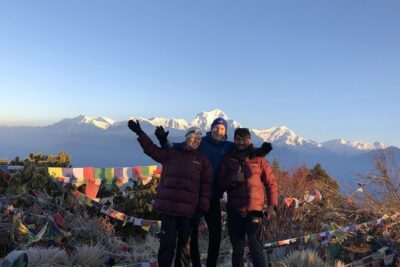
Poon Hill is one of the best-known viewing points in the Annapurna region. You walk for about 50 minutes to reach the viewpoint at around 3,200 meters, usually in time for sunrise.
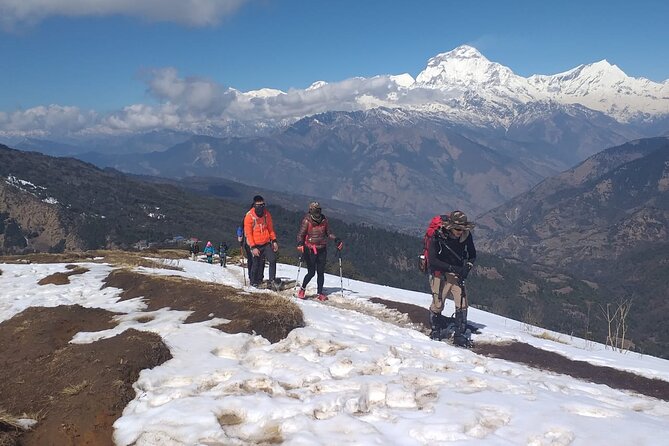
The reward is a broad view of roughly 15 Himalayan peaks, including the Annapurna range. Sunrise requires an early start, and you should expect cold conditions at the viewpoint. Still, this is one of the smartest parts of the itinerary because you get a major mountain panorama without waiting until the final base camp day.
After Poon Hill, the route continues through the hills toward Tadapani. This section changes the rhythm from steep steps to a longer mountain walk. Forest, ridges, and mountain views fill the day, and Tadapani provides a useful overnight stop before the trail turns toward Chhomrong.
I like this design because the first big viewpoint arrives before the highest part of the trek. If cloud covers the mountains at base camp, you have still had a strong chance to see the Annapurna range from Poon Hill.
Same trailhead, a different route:
- Everest Base Camp Trek – 14 Days
★ 5.0 · 1,499 reviews - Everest Base Camp Trek
★ 5.0 · 842 reviews - Everest Base Camp Helicopter Tour landing at Everest View Hotel
★ 5.0 · 668 reviews - Everest Base Camp Trekking
★ 5.0 · 485 reviews
Day 6: Tadapani to Chhomrong, with a major descent
From Tadapani, the trail descends about 900 meters toward the Gurjung River valley. You then climb again along a ridge to Chhomrong, a large Gurung village positioned high above the valley.
This is a classic Himalayan walking day: lose altitude, cross a river valley, then gain it back. The down-and-up pattern can be harder than a steady climb, especially on tired legs. Keep your pace controlled and do not treat the first descent as easy mileage.
Chhomrong is an important stop for two reasons. It is a substantial village on the route to Annapurna Sanctuary, and it offers a clear connection with Gurung culture. The trip is designed to include cultural contact with Gurung and Magar communities, so this is a place to pay attention to village life rather than simply pass through for a meal.
The accommodation is lodge-based. Three meals a day are included during the trekking portion, along with tea or coffee, but drinks beyond the stated tea and coffee allowance are not included.
Days 7 and 8: Into the Annapurna Sanctuary
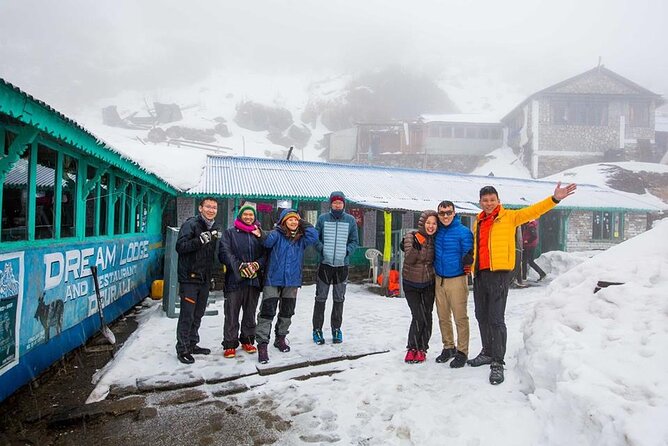
Day 7 takes you down toward the Chhomrong Khola, then back up through Sinuwa. The climb to Sinuwa takes about three hours. From there, the trail enters a steep valley leading toward the Annapurna Sanctuary, below Annapurna South and Machapuchare.
This is where the route begins to feel more enclosed and remote. The path follows river corridors and forest, with the valley walls becoming more dramatic as you move higher. You should expect a slower pace, particularly as the altitude begins to affect your breathing.
Dovan is the overnight stop. It sits at a river junction where two streams meet, making it a natural place to break the journey. The scenery here is less about one grand viewpoint and more about moving water, steep forest, and the shape of the valley.
On Day 8, you continue above Dovan toward Deurali. The description of this section notes that altitude effects become more noticeable. The trail climbs gradually for about two hours through a quiet, green forest to another Himalayan settlement.
This is an important point in the itinerary. The route is not a race to base camp, and the guide should keep the group moving at a sensible pace. Your guide’s experience matters most here, since everyone responds differently to altitude. The package includes a professional guide and the guide’s insurance and equipment, but your own travel insurance is not included.
Day 9: Fishtail Base Camp and Annapurna Base Camp
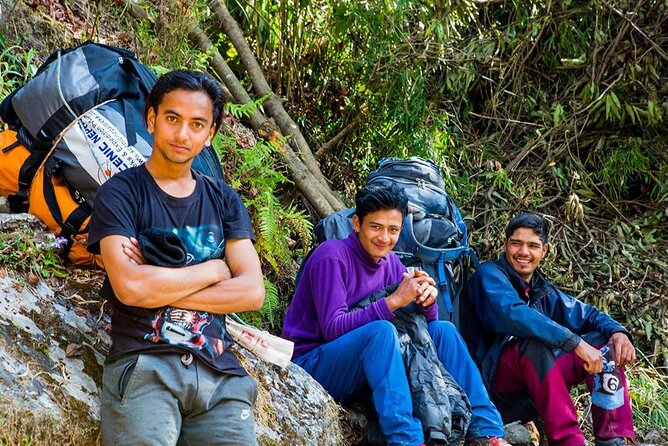
The walk from Deurali leads toward Fishtail Base Camp and then Annapurna Base Camp. The route near Fishtail Base Camp is described as avalanche-prone, so the exact path may change with the season and conditions.
That flexibility is a good safety feature. You may cross the Modi River or use another route depending on the situation. The route description places Fishtail Base Camp roughly two hours from Deurali, followed by the approach to Annapurna Base Camp.
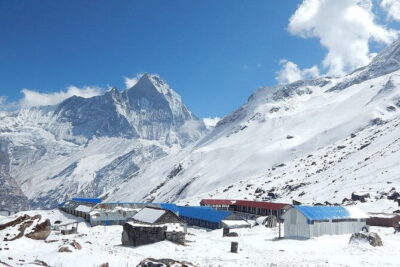
At the base camp area, the setting changes sharply. You are surrounded by major Himalayan peaks rather than looking at them from a distant ridge. The sense of arrival comes from the enclosed mountain basin and the long route you have walked through forests, villages, and river valleys.
The itinerary labels this day as Annapurna Base Camp Trek, but the exact walking times and overnight arrangements are not fully detailed. Ask before booking where you sleep on Day 9 and how the guide handles poor weather or route changes near the avalanche-prone section.
Days 10 and 11: Sunrise, Dovan, and the return through Sinuwa
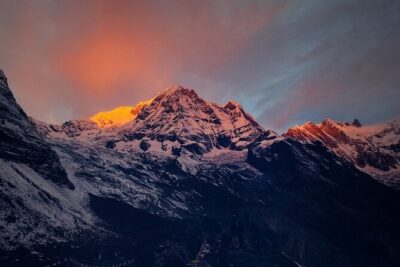
After a sunrise over the Annapurna peaks, you begin the return to Dovan. The first part of the descent can be steep, then the trail becomes more gradual.
This morning is one of the trip’s strongest moments. You have already done the hard work, and the mountain light gives you another chance to see the high peaks before leaving the sanctuary. Keep your camera ready, but also give yourself time to simply watch the valley change as you descend.
Day 11 follows the river through peaceful forest. Waterfalls, birds, and the sound of flowing water provide a softer finish to the high section. You then climb gradually toward Sinuwa Hill, where you spend the night at a trekking lodge.
The return is not just a reverse march. The lower route offers different details because you now understand the valley’s scale. It is also useful to have another overnight stop rather than compressing the descent into one punishing day.
Day 12: Jhinu hot spring and back to Pokhara
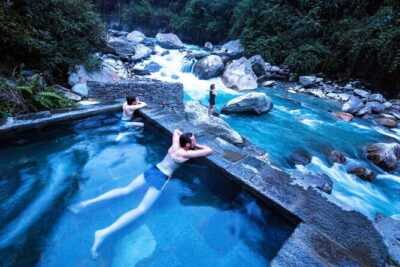
The final walking section takes about two hours to Jhinu. The natural hot spring is the day’s main attraction, giving you a chance to bathe and relax before lunch.
Afterward, you drive back to Pokhara. The plan also allows for more trekking before the drive, depending on the exact arrangement. Confirm the final walking distance and vehicle departure time, particularly if you have a flight or another connection from Pokhara.
Ending at a hot spring makes good sense. After stone steps, steep descents, and high-altitude trails, a warm soak is a pleasant way to finish. It also gives you a final view of rural mountain life before returning to the city.
What the $799 price really covers
At $799 per person, the package offers solid value if you want most major trek costs handled in one booking. It includes lodge accommodation along the route, breakfast, lunch, and dinner during the trekking program, with tea or coffee, plus ground transportation.
It also includes a professional guide, guide insurance and equipment, airport pickup and drop-off, the Annapurna Conservation Area Permit, local permits, and stated lunches, breakfasts, and dinners. The private format adds value if you prefer not to join a large group.
You still need to budget for several important items:
- Accommodation in Kathmandu
- Food in Kathmandu and Pokhara, apart from any stated daily breakfast
- Drinks beyond included tea or coffee
- Tips for your guide
- Personal expenses
- Your own travel insurance
- A trekking porter, if you want one
The porter point matters. You carry your own luggage unless you pay for a porter separately. A guide and porter-guide are not automatically the same service, so ask who will carry your main bag and what weight limits apply.
The price is especially attractive for someone who wants permits, transfers, meals, and a guide arranged together. It is less all-inclusive than the headline figure may first suggest, so add the excluded costs before comparing it with other operators.
Who should book this Annapurna trek?
I would consider this trip a good match for you if you want:
- A 12-day route with both Poon Hill and Annapurna Base Camp
- A private group rather than a large shared departure
- Lodge accommodation instead of camping
- Cultural contact with Gurung and Magar communities
- A guide-led trek with permits and transport arranged
- A route that finishes with a hot spring visit
You should think twice if you want a gentle holiday. The Ulleri steps, the 900-meter descent and climb around Chhomrong, and the higher trail above Dovan require steady effort. The itinerary also includes long road transport between Kathmandu and Pokhara.
The company’s strongest practical qualities are its flexible planning and guide support. Past trips have involved guides such as Arjun, Sudip, Ram, and Krishna, with particular praise for polite, helpful, and professional service. One useful example from the company’s handling of travel problems is assistance when a flight to Pokhara was canceled because of weather, though your own transport plan may differ.
Should you book it?
Book this Annapurna Base Camp trek if you want a well-priced, private, guide-led route that combines Poon Hill sunrise, Himalayan villages, and the Annapurna Sanctuary in one compact trip. The included permits, meals, transfers, and guide services remove much of the planning work.
Before paying, confirm your Kathmandu hotel, the exact Day 9 overnight plan, porter arrangements, and how the company handles weather or avalanche-related route changes. If you are comfortable with long uphill walks and can budget for insurance and personal costs, this is a strong value choice for a first major Himalayan trek.
Free cancellation is available when you cancel at least 24 hours before the local start time. Cancellations within 24 hours are not refunded.
FAQ
Where does the Annapurna Base Camp trek begin?
The experience begins with pickup at Tribhuvan International Airport in Kathmandu, Nepal.
How long does the trek last?
The full experience lasts approximately 12 days.
Is airport pickup included?
Yes. Airport pickup and drop-off are included.
Is transportation from Kathmandu to Pokhara included?
Yes. The itinerary includes ground transportation, including a tourist bus from Kathmandu to Pokhara and vehicle transfers connected with the trek.
Is this a private tour?
Yes. Only your own group participates in this private activity.
What level of fitness do I need?
You should have a moderate level of physical fitness. The route includes steep climbs, descents, and about 3,000 stone steps on the way to Ulleri.
Are meals included?
Yes. Breakfast, lunch, and dinner are included during the stated trekking program, along with a cup of tea or coffee along the route. Food in Kathmandu and Pokhara is not included except for any stated daily breakfast.
Is accommodation included?
Lodge accommodation along the trekking route is included. Accommodation in Kathmandu is not included.
Are permits included?
Yes. The package includes applicable permits and fees, including the Annapurna Conservation Area Permit and local permits.
Is a porter included?
No. A trekking porter is not included, but you can request one for an additional cost.
Just added around Kathmandu
- Everest Base Camp Trek★ 5.0 · 3 reviews
- Everest Base Camp Trek★ 5.0 · 7 reviews
- 15 Days Private Everest Base Camp Trek★ 5.0 · 30 reviews
- Everest Base Camp Trek★ 5.0 · 57 reviews
- 14 Days of Adventure Trekking to Everest Base Camp★ 5.0 · 2 reviews
- 14-Day Everest Base Camp Trek★ 5.0 · 20 reviews
- From Kathmandu: Private 14-Day Everest Base Camp Trek★ 5.0 · 20 reviews
- 14 Days Everest Base Camp Trek★ 5.0 · 4 reviews
Annapurna Base Camp Treks, compared.
Trekking in Annapurna/Langtang/Everest/Upper Mustang regions
Read our review →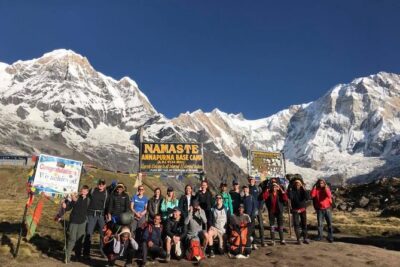
Kathmandu to Annapurna Base Camp (ABC) 5-Day Trek
Read our review →Browse the lists this trek appears in