
Review · KATHMANDU
Annapurna Base Camp Trek 10 Days
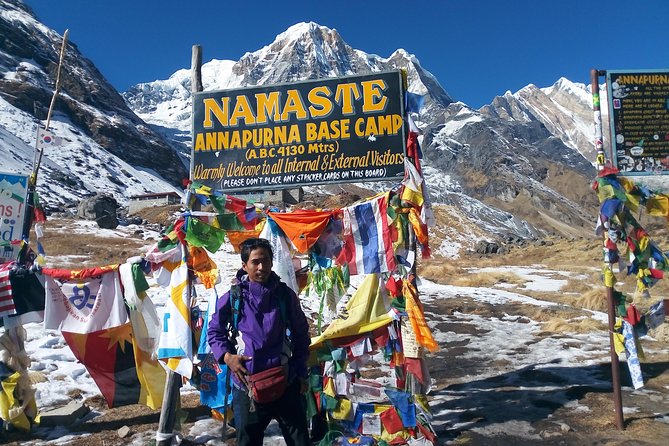
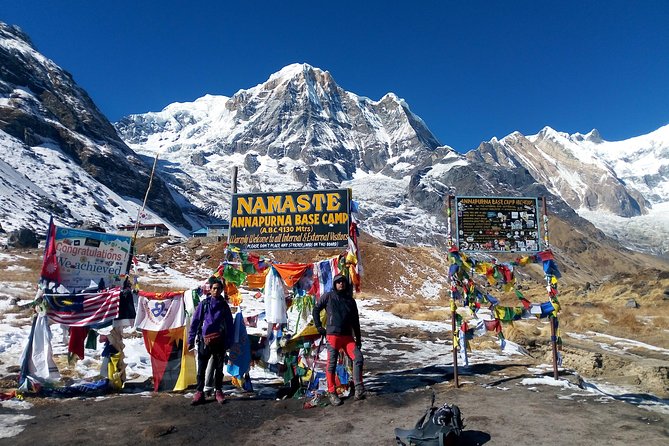
Annapurna Base Camp gives you the rare thrill of walking into a huge mountain amphitheater, not simply looking at the peaks from a distant viewpoint. The trail climbs from villages and forest to Machhapuchhre Base Camp, then into open high country beneath Annapurna I, Hiunchuli, Gangapurna, and the distinctive Fishtail Mountain. The final setting at 4,130 meters is the great reward.
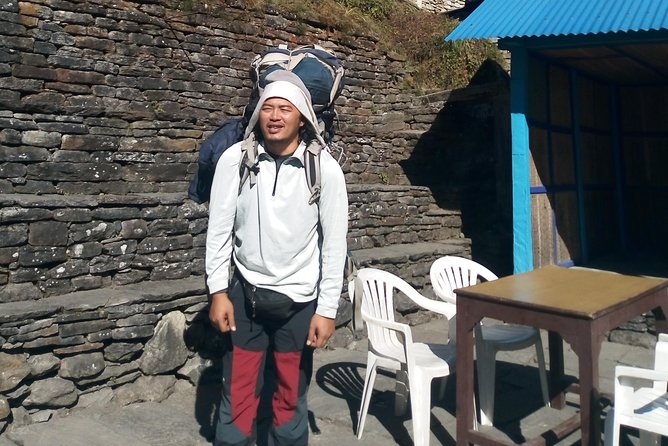
I like the practical design of this trip: transport from Kathmandu, permits, a licensed guide, porter support, meals, and trekking equipment are included. I also like the human side, with experienced guides such as Sudam and Ganesh connected with recent group departures and praised for attentive, flexible support. The main caution is physical: long walking days, thousands of stone steps, steep climbs, and altitude make this a serious trek, even though it is one of Nepal’s more approachable classic routes.
Key points to know before booking
- Annapurna Base Camp at 4,130 meters: The trail ends inside a dramatic ring of Himalayan peaks, with sunrise views from the base camp.
- A full 10-day route: You travel through Kathmandu, Pokhara, Ghandruk, Chhomrong, the Himalayan Hotel area, base camp, Bamboo, Jhinu Danda, and Naya Pul.
- Licensed guide and porter included: One porter is assigned for every two people, with a combined luggage limit of 25 kilograms.
- Meals and permits are covered: The price includes eight breakfasts, eight lunches, eight dinners, the ACAP permit, and TIMS card.
- Maximum group size of 16: This is small enough for personal attention while keeping the cost below a private trek.
- Transport is part of the package: You receive airport pickup, Kathmandu transfers, tourist bus service, and road transport between Pokhara and the trailhead.
Why Annapurna Base Camp is such a satisfying trek
The Annapurna route packs a lot of scenery into a relatively short trip. You begin in the busy Kathmandu Valley, pass through Pokhara’s lakeside setting, and then walk through villages, forests, river valleys, and high mountain terrain.
That variety keeps the trek interesting. One day you may be looking across terraces and village roofs. A few days later, the trees thin out and the trail enters a stark bowl of rock and snow beneath the Annapurna range.
The cultural side matters, too. Ghandruk and the surrounding villages are strongly associated with Gurung and Magar communities. The route does not feel like a mountain exercise detached from daily life. You pass through settlements where stone steps, hillside farms, suspension bridges, and mountain lodges are part of the setting.
The route is also easier to understand than some longer Himalayan treks. You do not need to spend weeks reaching the high point. Still, do not mistake shorter for easy. The trail includes repeated climbs and descents, and the return journey uses much of the same path.
More Annapurna Treks in Kathmandu
- Annapurna Circuit Trek with Tilicho Lake
★ 5.0 · 368 reviews - Annapurna base camp trek 5 Days
★ 5.0 · 252 reviews - 14-Day Private Annapurna Base Camp Trek
★ 5.0 · 180 reviews
Day 1: Kathmandu to Pokhara by tourist bus
The first day begins at about 8:15 a.m. from The Great Adventure Treks and Expedition office in Chhusya Galli, Kathmandu. After breakfast, you take a tourist bus toward Pokhara, a road journey of roughly six to seven hours.
This is not a quick transfer. It takes most of the day, but it gives you a first look at Nepal beyond the capital. You arrive in Pokhara, one of the country’s best-known bases for mountain trips, after approximately eight hours of activity.
Pokhara is a useful pause between city and trail. It has lakes, mountain views, and a more relaxed feel than Kathmandu. The package includes the tourist bus, but it is worth knowing that road travel in Nepal can be tiring. If you prefer to reach the trail quickly, this day may feel long.
Airport pickup, hotel transfer, and Kathmandu sightseeing by private vehicle are included in the overall program. The exact order of those services should be confirmed with the operator before arrival, since the listed trek begins with the journey to Pokhara.
Day 2: Ghandruk and the first village views
After breakfast, a private vehicle takes you from Pokhara to Ghandruk. The drive takes about three to three and a half hours, and Ghandruk sits at approximately 1,940 meters.
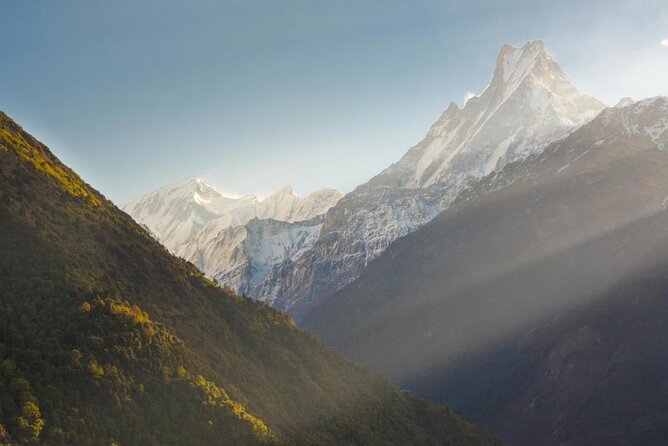
Ghandruk is one of the memorable stops on this route because it is a mountain village rather than just a staging point. The setting brings you close to local life and gives you early views of Annapurna South, Hiunchuli, and Machhapuchhre.
This is a gentler day than the high sections ahead, but the drive and elevation change still matter. You are moving from Pokhara into the mountains, and the next walking day begins with a climb. Use this time to organize your pack, check your sleeping bag, and ask the guide about the pace for the following morning.
Day 3: Ghandruk to Chhomrong
From Ghandruk, the trail climbs for about an hour toward Kimrungdanda. This early ascent is a good sample of the route’s character: stone steps, steady uphill walking, and mountain views that improve as you gain height.
Along the way, you may see Annapurna South, Hiunchuli, Machhapuchhre, and Gangapurna. The combination of village paths and broad mountain views makes this one of the more rewarding walking days.
Chhomrong is at a higher elevation and serves as an important point on the approach to base camp. The walking day lasts about six hours. You should expect your legs to feel the route by now, especially if you are not used to regular uphill and downhill walking.
A guide is particularly useful here. The trail involves many steps and changes direction through the hills, while the porter allows you to walk with a lighter day pack. The luggage allowance is shared between two people, up to 25 kilograms, so keep your personal items compact.
Same trailhead, a different route:
- Everest Base Camp Trek – 14 Days
★ 5.0 · 1,499 reviews - Everest Base Camp Trek
★ 5.0 · 842 reviews - Everest Base Camp Helicopter Tour landing at Everest View Hotel
★ 5.0 · 668 reviews - Everest Base Camp Trekking
★ 5.0 · 485 reviews
Day 4: Chhomrong to the Himalayan Hotel area
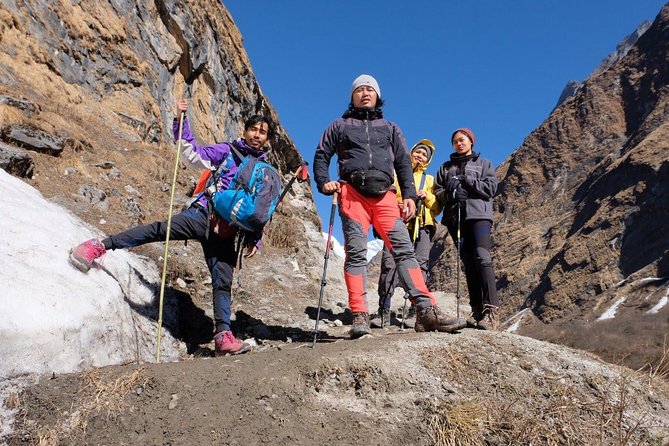
This is one of the route’s more demanding days. From Chhomrong, the trail drops down thousands of steps to the Chhomrong Khola. After crossing a suspension bridge, you climb again toward Khuldighar at about 2,380 meters.
The repeated descent and ascent can surprise you. On a map, the distance may not look extreme, but the stone steps make the day feel longer. The scheduled walking time is about seven hours.
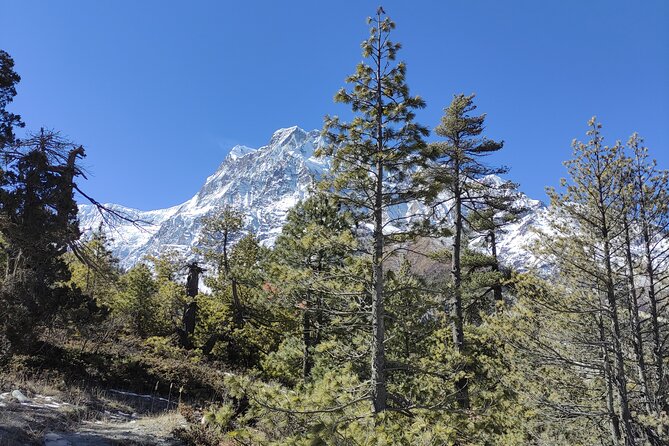
The trail passes through forest and along the Modi Khola corridor. The scenery changes as you gain altitude, with fewer signs of settled village life and more mountain terrain. The Himalayan Hotel area is a practical overnight stop before the final push toward base camp.
This is a good point to be honest about fitness. The trip is described as suitable for people with a moderate physical fitness level, but that does not mean casual sightseeing fitness. You should be comfortable walking several hours, climbing stairs, and managing repeated uphill sections.
Day 5: Deurali, Machhapuchhre Base Camp, and Annapurna Base Camp
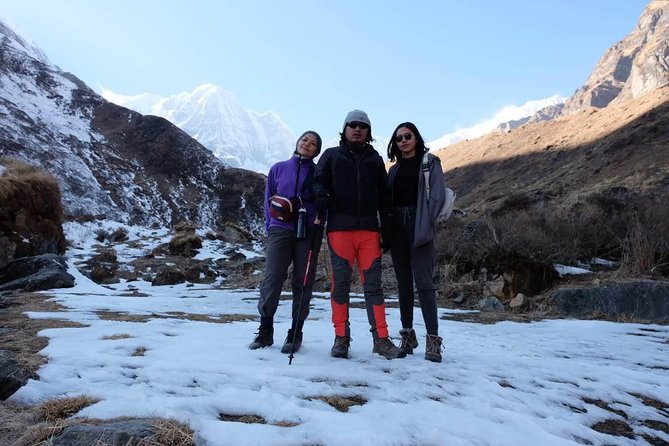
The route from the Himalayan Hotel area begins with about an hour to Deurali. You then follow a river bed before climbing a steep trail toward Bagar. The walking can be rougher here, and the high altitude makes each climb feel more serious.
From Machhapuchhre Base Camp, you continue to Annapurna Base Camp. The forest gradually disappears, replaced by open mountain terrain. This change is one of the defining moments of the trek. You are no longer walking through a green valley. You are entering the high bowl beneath the peaks.
Annapurna Base Camp sits at 4,130 meters. The surrounding mountains include Annapurna I, Annapurna South, Hiunchuli, Gangapurna, and Machhapuchhre. The base camp is not a climbing summit, but reaching it still feels like a major achievement.
The listed walking time for this day is about six hours, though the actual pace depends on conditions, group speed, and rest stops. Your guide’s job matters most here. Watch for signs of altitude trouble, keep your pace steady, drink regularly, and do not treat the final climb as a race.
Sunrise at 4,130 meters
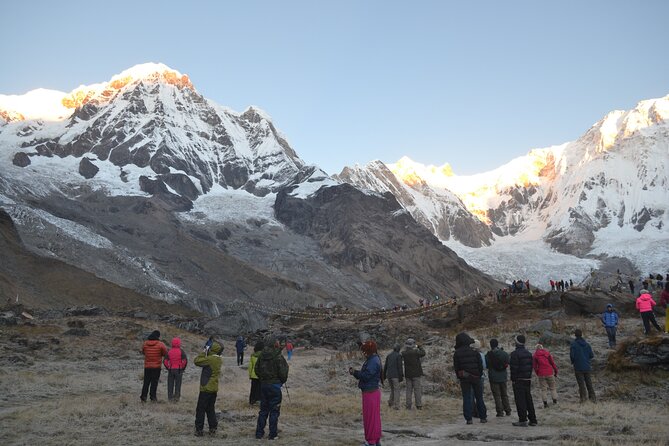
The morning at Annapurna Base Camp is the emotional high point of the trip. You can watch sunlight reach the surrounding peaks and see the mountain walls change color as the day begins.
The view is the reason many people choose this route, but the setting feels powerful because you have walked there through villages, forest, bridges, and steep trails. The base camp is not just a viewpoint reached by vehicle. Your legs have brought you into the middle of the mountains.
The cold can be serious at this height, so the included down jacket and sleeping bag are useful rather than decorative extras. The package also includes a first aid kit, while emergency rescue is covered by your own travel insurance. You should carry insurance that specifically covers trekking and high-altitude evacuation.
Day 6: The long descent to Bamboo
After sunrise, you retrace the trail toward Bamboo. The descent takes about eight hours, making this one of the longest days.
Walking downhill is not automatically easy. The stone steps can be hard on knees, and tired legs may make slips more likely. Trekking poles, if you use them, can be helpful, though the supplied equipment list only specifically names a sleeping bag and down jacket.
The reward is a gradual return to thicker vegetation and warmer conditions. You can feel the change from high alpine terrain back toward the forested Modi Khola valley. Bamboo is a practical overnight stop that breaks up the return instead of forcing you to walk all the way back to the lower villages in one day.
Day 7: Bamboo to Jhinu Danda
The trail first climbs toward Kuldighar, then descends to the Chhomrong Khola. After that, you climb again through stone steps toward Chhomrong before continuing to Jhinu Danda.
The day lasts about six hours and repeats the route’s familiar rhythm: down to the river, up through steps, then onward through the hills. You may find this easier than the base camp approach because you are losing altitude, but accumulated fatigue remains a factor.
Jhinu Danda is a welcome overnight stop on the return route. The program places it before the final walk to Naya Pul, giving you a shorter day rather than rushing straight out of the mountains.
Day 8: Jhinu Danda to Naya Pul and Pokhara
From Jhinu Danda, you follow the Modi Khola for about four to five hours toward Birethanti and Naya Pul. The route offers more views of the hills of the Annapurna Conservation Area and gradually returns you to road access.
A private vehicle takes you from Naya Pul to Pokhara in about an hour. This is a satisfying transition. You have finished the main walking section, but the trip still gives you time to recover in Pokhara.
The package includes the Naya Pul to Pokhara transfer. It also includes the Pokhara to Kathmandu tourist bus listed for the return, although the final day also describes a scenic flight or bus. Confirm which option is included for your departure, as the flight and road journey are very different experiences.
Day 9: A free day in Pokhara
The ninth day is set aside for leisure in Pokhara. You can rest, take a slow walk, or arrange your own sightseeing around Phewa Lake, Begnas Lake, or other local sights.
This extra day is one of the smarter features of the schedule. After several long walking days, you may prefer a quiet morning rather than another fixed activity. It also gives you room to enjoy Pokhara instead of treating it only as a transport stop.
The day is not described as a guided sightseeing tour, so plan on arranging your own activities. Kathmandu sightseeing by private vehicle is included elsewhere in the overall program, but the Pokhara leisure day is your own time.
Day 10: Returning to Kathmandu
The final day takes you from Pokhara to Kathmandu by scenic flight or bus, with the listed activity lasting about eight hours.
A flight gives you one last chance to see the Annapurna region from above. The bus takes longer but continues the overland journey and is included in the stated program. Since the transport details are presented both ways, ask the operator before booking which service and fare are covered.
The activity ends back at the Kathmandu meeting point. Airport pickup, hotel transfer, government taxes, service charges, and the main transport arrangements are included, but you should still confirm your exact arrival and departure plan.
What the $996 price really covers
At $996 per person, the value comes from the number of services bundled into a 10-day mountain trip. You are not paying only for a guide and a bed. The package includes airport pickup, Kathmandu transport, the Kathmandu to Pokhara tourist bus, trailhead transfers, permits, guide and porter costs, meals, equipment, and return transport.
You receive eight breakfasts, eight lunches, and eight dinners. The package also covers the Annapurna Conservation Area Project permit and TIMS card, which saves you from arranging the main trekking paperwork yourself.
Guide and porter expenses include their food, salary, clothing, transportation, and insurance. One porter carries luggage for two people, with a 25-kilogram maximum. You should still pack carefully, since that allowance is shared.
The price does not remove every expense. Your own travel insurance, personal drinks, optional Pokhara activities, and any personal purchases are not listed as included. Emergency rescue is described as covered by your travel insurance, not by the tour price, so insurance is essential.
The guide support and group size
The maximum group size is 16 people. That is a useful middle ground. You are not paying the full cost of a private trek, but the group is still small enough for a guide to monitor walking pace and basic needs.
Sudam and Ganesh are names associated with recent departures. They have guided groups with a wide age range, including people from 15 to 59, and have been praised for being attentive, professional, funny, and flexible. One named guide, Sudam, also speaks Chinese, which may help some groups.
Do not assume those exact guides will lead every departure. Ask who is assigned to your dates, especially if language support or a particular guiding style matters to you.
The included porter is another practical advantage. Carrying only a day pack can make the steep steps much more manageable. Be clear about the shared luggage limit before you arrive.
Who should book this trek
This trek suits you if you want a classic Himalayan route with strong scenery, village contact, and a clear high point, but you do not want a trip lasting several weeks.
You should be comfortable with:
- Walking for five to eight hours on several days
- Steep uphill and downhill sections
- Long flights of stone steps
- Sleeping at high altitude
- Basic trekking lodge conditions
- Changing weather and a flexible mountain schedule
It can suit a mixed-age group if everyone has a moderate fitness level and the guide keeps a sensible pace. It is less suitable if you want luxury accommodation, short walking days, or a fully private schedule.
The trip is also a good fit for first-time Himalayan trekkers who want support with permits, transport, meals, gear, and porters. The route remains physically demanding, so first timers should train before arrival rather than rely on the package to make the trail easy.
Small practical details that matter
Confirmation is provided at booking, and the activity begins at the stated Kathmandu meeting point at 8:15 a.m. Pickup is offered, but confirm whether your hotel is included in the pickup area and how the first morning will work.
The trip is near public transportation, although the main route uses arranged tourist buses and private vehicles. The listing states that admission tickets are free at the listed stops, since the major costs are the trek services and permits rather than separate attractions.
The cancellation terms are strict close to departure. You can receive a full refund if you cancel at least six full days before the start time. Cancelling two to six days ahead allows a 50 percent refund, while cancelling less than two full days ahead brings no refund. Plan carefully, especially if your international flight schedule is uncertain.
Should you book the Annapurna Base Camp Trek?
I would book this trip if you want a well-supported route with a strong balance of mountain scenery, local villages, and manageable logistics. The price is reasonable for the included guide, porter, permits, meals, transport, equipment, and 10-day structure.
I would not book it without preparing for the physical demands. The thousands of steps, the long descent from base camp, and the 4,130-meter altitude are real challenges. Ask about the assigned guide, confirm whether the final Pokhara to Kathmandu leg is by bus or flight, and arrange suitable travel insurance before paying.
For a first or second Himalayan trek, this is a sensible choice if you value support and scenery over luxury. The best reason to choose it is simple: you get to walk all the way into the Annapurna mountains, then wake up beneath the peaks before retracing your path to Pokhara.
FAQ
Where does the Annapurna Base Camp Trek start?
The trek starts at The Great Adventure Treks and Expedition office in Chhusya Galli, Kathmandu, Nepal. The stated start time is 8:15 a.m.
How long does the experience last?
The program lasts approximately 10 days, including travel between Kathmandu and Pokhara, the trek to Annapurna Base Camp, the return walk, and a leisure day in Pokhara.
How high is Annapurna Base Camp?
Annapurna Base Camp is at approximately 4,130 meters.
Is hotel and airport pickup included?
Airport pickup and transfer to the hotel are included. The listed meeting point is in Kathmandu, and you should confirm the exact pickup arrangements for your hotel.
Is a guide included?
Yes. The package includes a professional trekking guide with a government license.
Is a porter included?
Yes. One porter is included for every two people, with a maximum combined luggage allowance of 25 kilograms.
Are meals included?
Yes. The package includes eight breakfasts, eight lunches, and eight dinners.
Are trekking permits included?
Yes. The Annapurna Conservation Area Project permit and TIMS card are included.
Is trekking equipment provided?
A sleeping bag and down jacket are included. The package also includes a first aid kit.
What is the cancellation policy?
You receive a full refund if you cancel at least six full days before the start time. Cancelling two to six full days ahead allows a 50 percent refund. Cancelling less than two full days ahead is nonrefundable.
Just added around Kathmandu
- Everest Base Camp Trek★ 5.0 · 3 reviews
- Everest Base Camp Trek★ 5.0 · 7 reviews
- 15 Days Private Everest Base Camp Trek★ 5.0 · 30 reviews
- Everest Base Camp Trek★ 5.0 · 57 reviews
- 14 Days of Adventure Trekking to Everest Base Camp★ 5.0 · 2 reviews
- 14-Day Everest Base Camp Trek★ 5.0 · 20 reviews
- From Kathmandu: Private 14-Day Everest Base Camp Trek★ 5.0 · 20 reviews
- 14 Days Everest Base Camp Trek★ 5.0 · 4 reviews
Annapurna Base Camp Treks, compared.




Trekking in Annapurna/Langtang/Everest/Upper Mustang regions
Read our review →


Kathmandu to Annapurna Base Camp (ABC) 5-Day Trek
Read our review →Browse the lists this trek appears in