
Review · KATHMANDU
10 days Annapurna Base Camp Trek
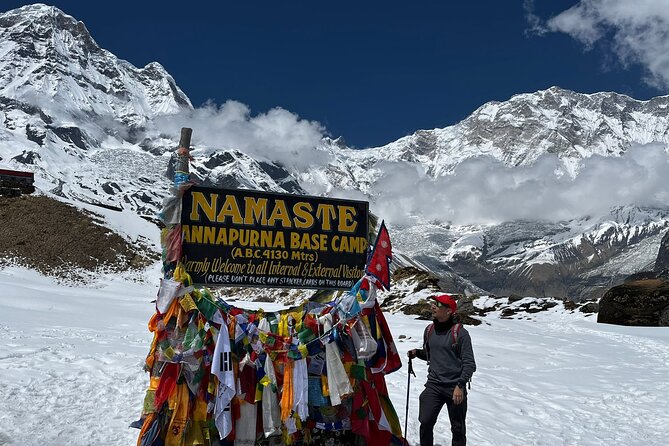
Annapurna Base Camp is the prize here, but the walk to it is just as memorable. Over six trekking days, you move from stone paths and Gurung villages into rhododendron and bamboo forests, then into the high mountain bowl below Annapurna and Machhapuchare. The route packs a lot into 10 days, so you get a serious Himalayan trek without committing to a much longer expedition.
I like the small group limit of eight, since that gives your guide a better chance to keep track of everyone on steep sections. I also like the practical setup: domestic flights, private ground transport, permits, park fees, guide costs, and nine nights of lodging are included. The main caution is the pace. Six-hour walking days, steep stone steps, and altitude make this a real trek, not a scenic stroll. Bring walking poles, especially for the hard descents.
Key points to know before you book
- Reach Annapurna Base Camp on Day 6, after passing Machhapuchhare Base Camp and several mountain lodges.
- Walk through Ghandruk, Chhomrong, Dovan, Deurali, and Jhinu Danda, each marking a different stage of the route.
- Expect steep climbs and knee-testing descents, with several days lasting about five to six hours.
- A maximum of eight people keeps the trip more personal and easier to manage on the trail.
- Pasang is one guide named in past bookings, while Maina of Eve Holidays has handled arrangements and airport support.
- The $1,598 price includes major trek costs, but food and drinks are covered only where the package specifically lists breakfast, lunch, and dinner.
Why this 10-day route works
This itinerary gives you a clean progression from city to mountain. You begin with a comfortable arrival in Kathmandu, fly to Pokhara, drive toward the trail, and then walk steadily upward through villages and forest. The route does not waste much time, but it also gives you a night in Pokhara after the trek before the long return to Kathmandu.
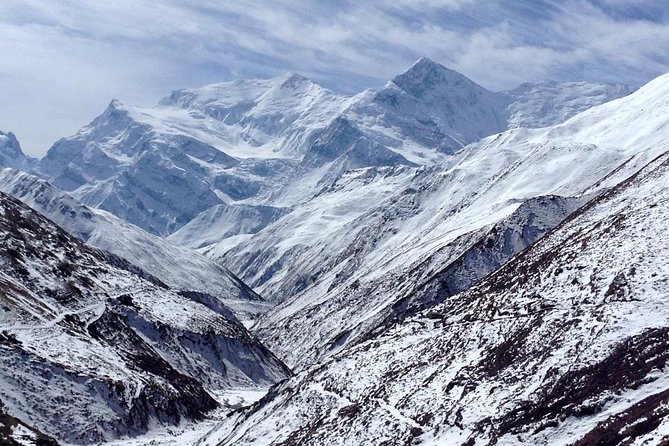
The Annapurna Sanctuary route is appealing because the scenery changes often. Ghandruk brings village life and mountain views. Chhomrong marks the last major settlement before the Sanctuary. Bamboo, Dovan, and Deurali bring wetter forest and waterfalls. Above them, the trees thin out and the mountain amphitheater takes over.
I also like that the group is capped at eight. A small party matters on a trail where people naturally move at different speeds. You can ask questions, receive help with pacing, and avoid the impersonal feel of a large hiking convoy. The service has received particularly strong praise for organization, airport pickup, guides, meals, and care with details. Pasang is specifically named as a guide who provided strong support, and Maina is noted for keeping arrangements in order.
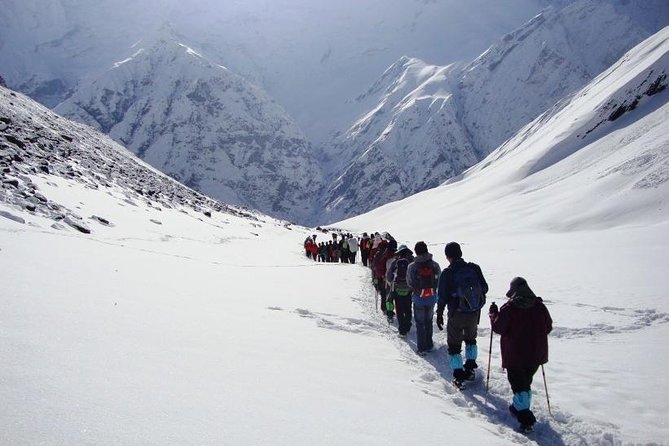
Still, this is a demanding schedule. The tour description calls for moderate physical fitness, but that phrase should not make you underestimate it. Several days involve six hours of walking, and the trail includes long stairways, suspension bridges, steep climbs, and steep descents. You need to be comfortable walking for most of a day with a daypack.
More Annapurna Treks in Kathmandu
- Annapurna Circuit Trek with Tilicho Lake
★ 5.0 · 368 reviews - Annapurna base camp trek 5 Days
★ 5.0 · 252 reviews - 14-Day Private Annapurna Base Camp Trek
★ 5.0 · 180 reviews
Days 1 and 2: Kathmandu to Ghandruk
Your first day is deliberately light. An airport representative meets you at Tribhuvan International Airport and takes you to your hotel in Thamel. You have the rest of the day to rest, freshen up, and adjust to Kathmandu.
That quiet start is useful. The trek begins early in the overall trip, and a long international flight followed by immediate sightseeing would leave you tired. Thamel also gives you a central base, though the first day is meant more for settling in than for a packed city tour.
On Day 2, you fly from Kathmandu to Pokhara, then drive toward Kimche before starting on foot. The trail climbs along stone pathways toward Ghandruk, with about six hours of walking planned. The route first passes through Kimche Village before continuing to Ghandruk.
Ghandruk is an important first stop because it introduces you to the mountain villages that shape this trek. You are no longer simply approaching the Himalayas by road. You are walking through settled hill country, with the route rising and falling beneath the peaks.
The practical warning is your knees. The first day on foot involves plenty of climbing and stone steps. Walking poles are specifically recommended, and I would take that advice seriously. Poles help with balance on uneven ground and reduce some strain during the descent portions.
Day 3: Chhomrong and the final major settlement
Day 3 begins with an ascent, followed by a descent to the Kimrong Khola and a crossing by bridge. After a short climb to Taulung, the route turns into a long, steep ascent toward the main trail to Chhomrong.
This is one of the more physical days, but it rewards you with open mountain views. The high point above the valley is known for soaring vultures, griffons, and lammergeiers. You then descend to Chhomrong at about 2,060 meters.
Chhomrong is more than an overnight stop. It is described as the last major settlement before the Sanctuary, so it marks a clear change in the trip. From here, the trail becomes more focused on forest, river crossings, lodges, and the high route toward base camp.
The village has alpine lodges and scenic views, giving you a pleasant place to end a hard day. I would treat this night as a chance to eat well, refill water, and prepare for the next section. The route becomes increasingly remote in feel, even though you continue to use established teahouse accommodation.
Day 4: Forest, suspension bridges, and Dovan
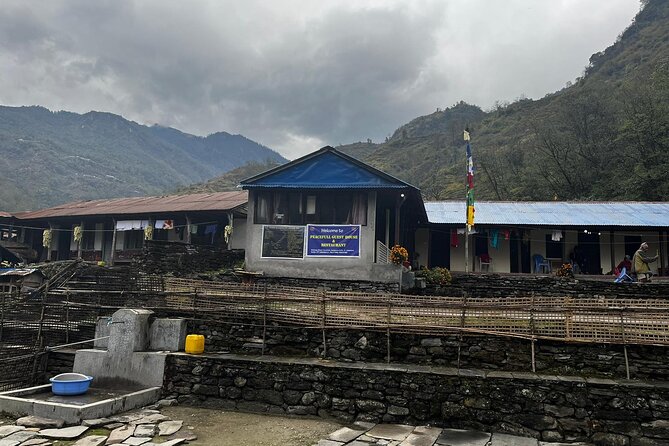
You descend from Chhomrong to cross the Chhomrong Khola on a suspension bridge. The trail then climbs through oak and rhododendron forest, with Machhapuchare and Annapurna South appearing along the way.
Sinuwa, at about 2,350 meters, provides a welcome tea-house stop on a ridge. After Sinuwa, the climb becomes more gradual toward Kuldigarth at about 2,470 meters. You continue through forest to Bamboo Hotel, around 2,340 meters, where lunch is planned.
The afternoon walk takes you toward Dovan through wet bamboo forest. This section is a good reminder that the Annapurna route is not simply a dry, rocky climb. Forest, water, shade, and changing vegetation are a major part of the experience.
The day again lasts about six hours. The mileage may not sound extreme, but repeated climbing on stone steps can make the route feel longer. Take short rests before you are exhausted, and keep your rain protection handy because the forest section is described as wet.
Same trailhead, a different route:
- Everest Base Camp Trek – 14 Days
★ 5.0 · 1,499 reviews - Everest Base Camp Trek
★ 5.0 · 842 reviews - Everest Base Camp Helicopter Tour landing at Everest View Hotel
★ 5.0 · 668 reviews - Everest Base Camp Trekking
★ 5.0 · 485 reviews
Day 5: Waterfalls, caves, and Deurali
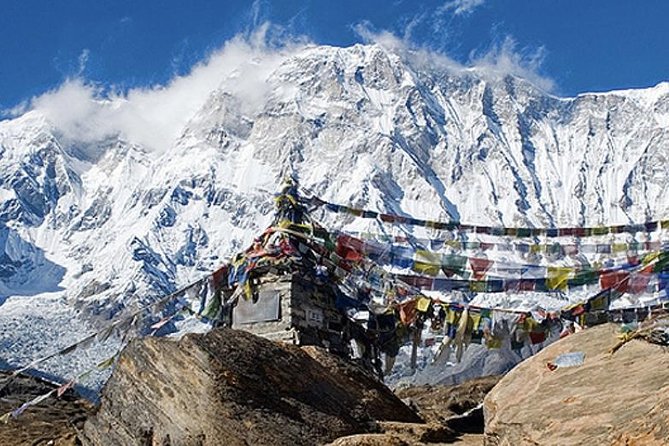
After breakfast at the lodge, you continue toward Deurali. The walk takes about five hours and passes waterfalls, caves, forests, and small settlements.
This is one of the more varied days on paper. The route is shorter than the previous two days, giving you a little more time to appreciate the surroundings rather than simply counting uphill steps. Waterfalls and caves add texture to the walk, while the continued presence of villages helps connect the high route with the communities below.
Deurali is an important staging point before base camp. You are close enough to feel that the main goal is within reach, but the next day still demands a full walking day. This is a good evening to organize your warm layers, keep essentials close, and protect your energy for the early mountain section.
Accommodation is in lodges or teahouses rather than city hotels during the trek. That is part of the tradeoff. The package includes lodging, but you should expect basic mountain accommodation, not the same comfort level as your Kathmandu or Pokhara hotel.
Day 6: Machhapuchhare Base Camp and Annapurna Base Camp
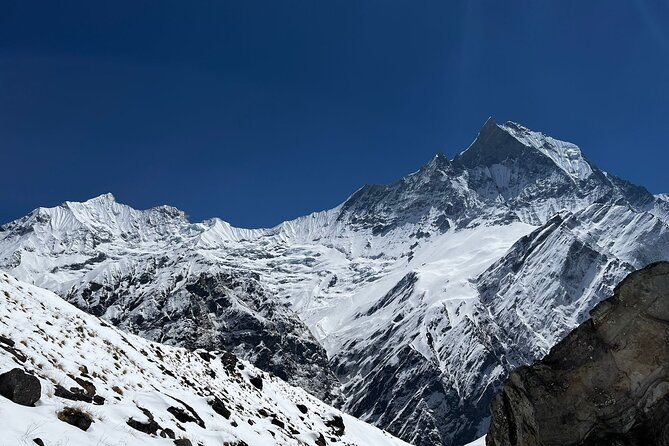
Day 6 is the central day of the trek. You walk toward Annapurna Base Camp via Machhapuchhare Base Camp, with around six hours of walking planned.
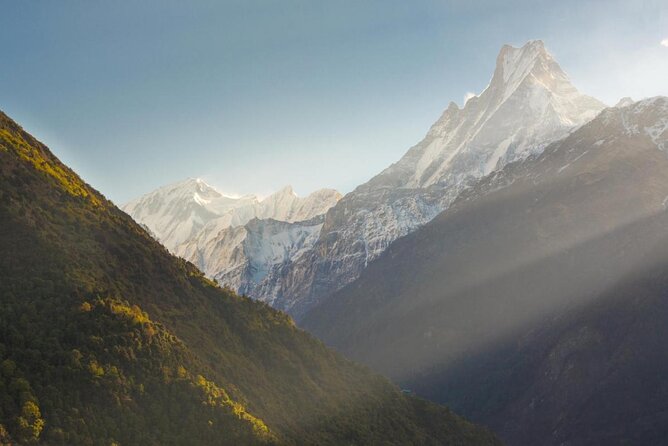
The route brings you into the high mountain setting that defines the trip. Machhapuchare, also called Fishtail, is one of the most recognizable peaks in the region. Annapurna Base Camp then gives you the main goal: a high viewpoint surrounded by the Annapurna range and the dramatic mountain bowl of the Sanctuary.
The schedule has an unusual wording. It says you walk to Annapurna Base Camp and then descend to Machhapuchhare Base Camp at a lower altitude for the night. That means you should confirm the exact overnight arrangement before departure, since the stated walking order and sleeping location may be adjusted by the guide according to conditions.
This day is also where altitude matters most. The tour does not present itself as a technical mountaineering trip, but the high setting and long walk can still be tiring. Keep your pace steady, drink regularly, and tell the guide early if you feel unwell. The value of a small group and an attentive guide becomes especially clear here.
Day 7: Down through the rhododendrons to Jhinu Danda
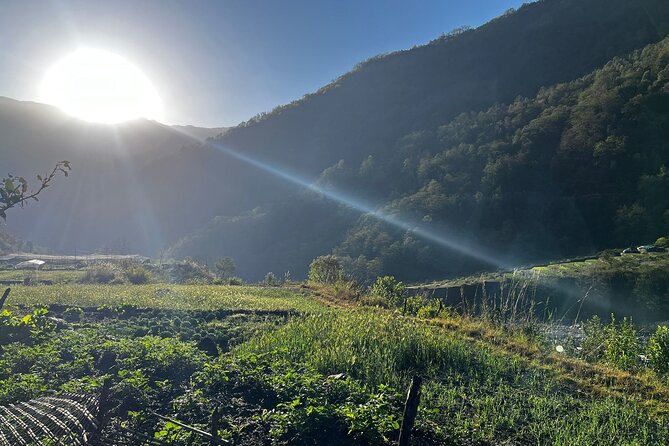
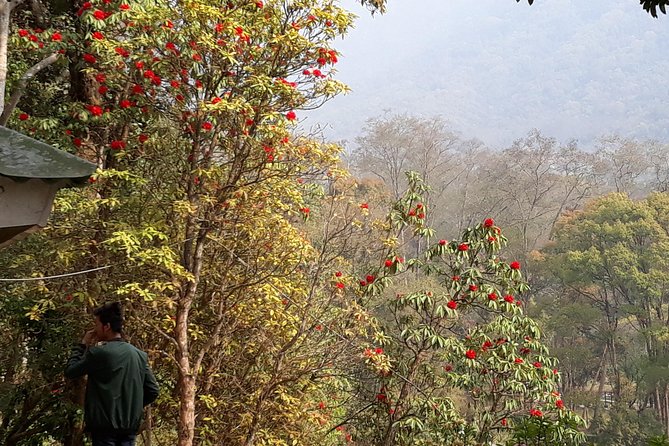
After the base camp section, the route turns downhill through rhododendron forest toward the Chhomrong River and Chhomrong Village. You continue to Jhinu Danda for the night, with about six hours of walking.
A downhill day may sound easy, but it can be harder on your knees than climbing. This is where trekking poles earn their place. Short steps, a controlled pace, and good footwear will help you manage the stone trail.
Jhinu Danda is a useful overnight stop because it breaks up the return route. The itinerary does not promise a specific activity there, so do not book the trip solely for one. Its importance is practical: it gives you a place to sleep before the final walk to Nayapul.
Day 8: Nayapul and a hot shower in Pokhara
The final trekking day starts with a descent to the Kimrong Khola, a short ascent, and then more downhill walking along the Modi River. You finish at Nayapul after about five hours on foot, meet the bus, and drive back to Pokhara.
This is a satisfying finish because you leave the trail under your own power rather than ending at a roadhead after a rushed morning. The route remains active, with a river valley and one last climb before the final descent.
Pokhara changes the rhythm immediately. You can take a hot shower at the hotel, rest, or stroll around the lakeside area. That overnight recovery is one of the itinerary’s smart choices. A same-day transfer directly back to Kathmandu would make the trip feel like a logistical exercise instead of a proper finish.
Days 9 and 10: Return to Kathmandu
Day 9 is a long travel day. After breakfast, you take a tourist bus from Pokhara to Kathmandu, with about eight hours planned. Road travel in Nepal can be tiring, so keep water and personal essentials within reach.
The evening includes a farewell dinner with a representative from Eve Holidays at a traditional Nepalese restaurant. Dinner is listed among the included meals, along with eight dinners, six lunches, and nine breakfasts in total. The package also covers guide and porter salaries, food, and accommodation, although the general food note says meals and drinks are not included unless specified.
Your final day is free time in Kathmandu before airport transfer at your flight time. The plan allows you to explore on your own, but it does not specify a guided city tour or particular entrance sites. That flexibility suits people who want a quiet final morning, though you should not expect a full sightseeing program to be arranged for you.
What the $1,598 price covers
At $1,598 per person, the cost is not just for guided walking. It includes nine nights of accommodation in twin-share rooms, the Kathmandu to Pokhara flight with airport departure taxes, national park fees, TIMS, permits, and ground transport in a private vehicle.
You also get a professional trekking guide, guide support costs, trekking equipment, airport pickup, and the listed meals. These inclusions matter because permits, domestic transport, and guide expenses can add up quickly on a Himalayan trip.
The strongest value comes from the organization. Airport reception, hotel transfers, the Pokhara flight, road transfers, lodging, and the return to Kathmandu are arranged as one trip. You are not left to solve each connection after a long day on the trail.
There are limits. Food and drinks are not broadly included beyond the specified meal allocation, and the accommodation is twin-share. If you want a private room or upgraded hotels, ask before booking. The price also does not remove the need for suitable clothing, personal snacks, water, and other individual trekking items.
Who should choose this trek
I would recommend this route to you if you want a compact Himalayan trek with a clear goal and dependable support. It suits someone with moderate fitness who can handle repeated six-hour walking days and steep stone trails.
It is also a good fit if you value logistics. You get airport pickup, domestic flights, private transport, permits, a guide, and a small group rather than arranging each part independently. Maina is named as a booking contact who has handled detailed planning, and Pasang is one guide identified in connection with strong on-trail support.
I would be more cautious if you dislike basic lodges, steep descents, or long bus journeys. The route is physically demanding, and Day 9 involves about eight hours by bus. You should also ask for clarification about the Day 6 overnight location, since the description places the base camp visit and the night at Machhapuchhare Base Camp in a slightly confusing order.
Cancellation is free up to 24 hours before the experience starts. If poor weather cancels the trip, you are offered another date or a full refund. That is useful for a mountain itinerary, though you still need to plan for weather-related changes.
Should you book it?
Book this trek if you want Annapurna Base Camp in 10 days, prefer a small organized group, and appreciate having the major permits, transfers, guides, and lodging handled for you. The combination of Ghandruk villages, forest trails, mountain views, base camp, and a recovery night in Pokhara gives the trip a strong shape.
Skip it if you want a relaxed holiday or private luxury lodging. The route asks for real effort, and the cost does not include every meal or drink. Before paying, confirm the exact Day 6 sleeping arrangement and what trekking equipment is supplied.
For the right walker, this is a good-value route to one of Nepal’s great mountain viewpoints, with enough structure to let you focus on the trail instead of the paperwork.
FAQ
How long is the Annapurna Base Camp trek?
The full experience lasts approximately 10 days, starting and ending in Kathmandu. The walking portion runs from Day 2 through Day 8, with travel days before and after.
Is airport pickup included?
Yes. A representative meets you at Tribhuvan International Airport and escorts you to your pre-booked Kathmandu hotel. Airport transfer arrangements are also included at the end of the trip.
How many people can join the trek?
The maximum group size is eight people.
What level of fitness is required?
The tour requires a moderate physical fitness level. You should be prepared for walking days of about five to six hours, steep climbs, stone paths, suspension bridges, and demanding descents.
Is the Kathmandu to Pokhara flight included?
Yes. The package includes the Kathmandu to Pokhara flight and airport departure taxes. The return from Pokhara to Kathmandu is by tourist bus.
Are meals included?
The package lists nine breakfasts, six lunches, and eight dinners. Food and drinks outside the specified inclusions are not covered.
What happens if bad weather cancels the trip?
If poor weather causes cancellation, you are offered a different date or a full refund. For a full refund under the standard policy, you must cancel at least 24 hours before the experience start time.
Just added around Kathmandu
- Everest Base Camp Trek★ 5.0 · 3 reviews
- Everest Base Camp Trek★ 5.0 · 7 reviews
- 15 Days Private Everest Base Camp Trek★ 5.0 · 30 reviews
- Everest Base Camp Trek★ 5.0 · 57 reviews
- 14 Days of Adventure Trekking to Everest Base Camp★ 5.0 · 2 reviews
- 14-Day Everest Base Camp Trek★ 5.0 · 20 reviews
- From Kathmandu: Private 14-Day Everest Base Camp Trek★ 5.0 · 20 reviews
- 14 Days Everest Base Camp Trek★ 5.0 · 4 reviews
Annapurna Base Camp Treks, compared.




Trekking in Annapurna/Langtang/Everest/Upper Mustang regions
Read our review →


Kathmandu to Annapurna Base Camp (ABC) 5-Day Trek
Read our review →Browse the lists this trek appears in