
Review · KATHMANDU
Annapurna Base Camp Short trek
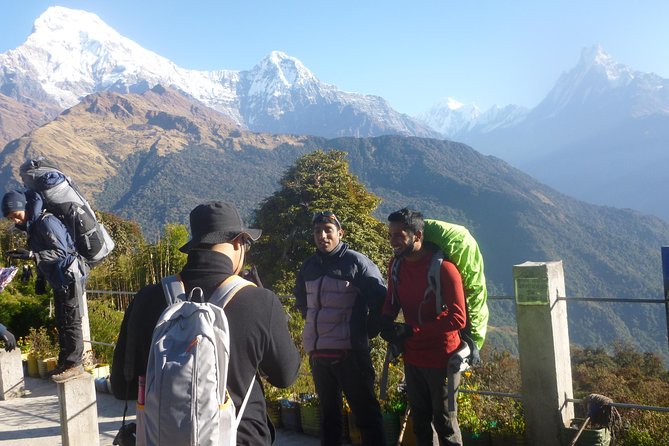
Annapurna Base Camp gives you a rare mountain payoff without committing to a two-week expedition. In eight days, you travel from Kathmandu to Pokhara, walk through Gurung villages and rhododendron, oak, and bamboo forests, then reach a high basin ringed by the Annapurna range and Machhapuchhre. The early-morning sunrise at 4,130 meters is the trip’s big reward.
I like the variety here. One day brings terraced farmland and village paths, another brings suspension bridges and stone stairs, and the next opens onto high grassland below shining snow peaks. I also like that the package includes a professional guide, trekking permits, meals, lodges, and two hotel nights in Pokhara, so you are not arranging every piece yourself.
The main catch is the pace. This is called a short trek because the route is compressed, not because it is easy. You face walking days of six to eight hours, steep staircases, basic mountain lodging, and a rapid rise in altitude. Travel insurance and emergency evacuation are not included, so you must arrange those before arriving.
Key points at a glance
- Annapurna Base Camp at 4,130m: The route ends beneath the Annapurna Massif, with sunrise over the surrounding peaks.
- A changing route each day: You pass Gurung villages, farmland, river valleys, bamboo forest, open meadows, and rocky high trails.
- A private arrangement: Only your group participates, with a professional trekking guide and porters available through the local team.
- Pokhara is part of the trip: Two hotel nights with breakfast give you time around the city and its lake before and after the trek.
- Long but well-supported walking days: Three meals daily, overnight lodge accommodation, permits, and guide services are included on the trail.
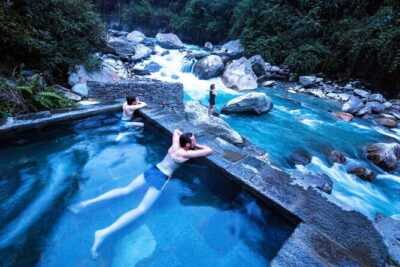
- A useful comfort stop at Jhinu Danda: The route includes time at the famous natural hot spring after the hardest stair sections.
The route from Kathmandu to Pokhara
Your trip begins with pickup at Tribhuvan Airport in Kathmandu. The first major transfer is a long drive west along the Prithvi Highway to Pokhara. This is not a quick shuttle. It takes much of the day, but the roadside view helps: terraced farmland, hill settlements, the Trishuli River, and changing countryside accompany the journey.
There is no meal included on this first day, so plan accordingly. The road trip also means your arrival in Pokhara may feel more like a travel day than a sightseeing day. Still, Pokhara is an important part of the experience. You set down your luggage, stay at a hotel with breakfast, and have time for boating, cycling, or a walk around the city of lakes.
I like this arrangement because Pokhara provides a softer start than beginning the trek immediately after landing in Nepal. You have a chance to rest, sort your gear, and enjoy a more relaxed city before the walking begins. The tradeoff is simple: you spend a full day on the road instead of flying or starting the trail sooner.
More Annapurna Treks in Kathmandu
- Annapurna Circuit Trek with Tilicho Lake
★ 5.0 · 368 reviews - Annapurna base camp trek 5 Days
★ 5.0 · 252 reviews - 14-Day Private Annapurna Base Camp Trek
★ 5.0 · 180 reviews
Ghandruk and the first mountain paths
From Pokhara, the route continues by road toward Ghandruk, a Gurung village with views toward the Annapurna range and Machhapuchhre, also called Fishtail. The drive takes about three hours, followed by roughly four hours of walking. Lunch, dinner, and breakfast are included on the trekking portion.
Ghandruk is a fine place to begin because the scenery changes quickly. You leave the road and enter a world of stone paths, forest, farmland, and mountain views. The area is also known for cherry blossoms, which can make the village surroundings especially attractive at the right time of year.
The trail descends through forest to the Kimrong River, then climbs toward Kimrong village. That up-and-down pattern is worth noting. The first walk is not simply a gentle introduction. You lose elevation before gaining it again, and the uneven path begins to show you what the rest of the trek demands.
Your guide matters here. Names connected with past departures include Jog Bahadur Gurung, Ganesh, and Jog Gurung. The company’s strongest praise has focused on guides and porters who help with pacing, questions, equipment, and difficult sections. Since the exact guide is not promised in the tour details, confirm who will lead your departure before you book.
Chhomrong, Sinuwa, and the staircase problem
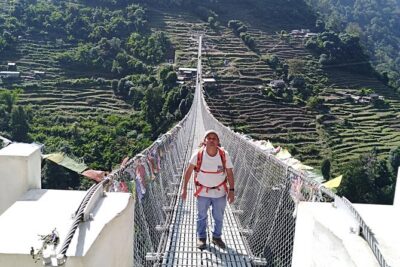
The next day takes you through forest and open ground toward Chhomrong at about 2,310 meters. From there, you descend a long run of stone steps, cross a suspension bridge, and climb again toward Sinuwa. This is classic Annapurna terrain: spectacular, but hard on knees and lungs.
From Sinuwa, the route enters bamboo forest and follows the hillside toward Bamboo and Deurali. The listed walking time is about six hours. You should treat that as a full day, especially if rain makes the stone steps slippery or if you need frequent rests.
The suspension bridges are part of the character of the route, not just transport links. Rivers rushing below connect the high peaks with the valleys, and the sound of water often accompanies the forest walk. The trees provide shade, but the continuous stairs can make this day feel tougher than the distance suggests.
At night, you stay in a hotel or lodge along the trail. Do not expect city-hotel comfort. The package covers overnight accommodation, but the tour information does not promise private bathrooms, heating, Wi-Fi, or a particular lodge standard. Pack with basic mountain lodging in mind and keep essential warm clothing, toiletries, and electronics easy to reach.
Deurali to Machhapuchhre Base Camp
The walk from Deurali toward Machhapuchhre Base Camp is one of the most memorable sections. You start early and follow rocky trails beside the river. The forest begins to thin, and the route opens onto wide grassy ground where the mountains appear brighter and more exposed.
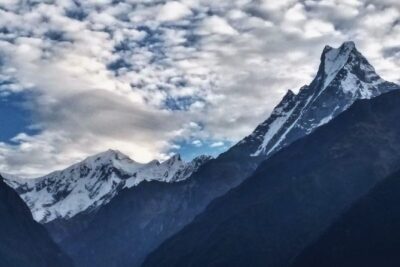
This section takes about eight hours, making it the longest walking day in the schedule. The trail rises steadily, with some ups and downs, then reaches a long staircase toward Machhapuchhre Base Camp. At this point, the famous Fishtail peak feels much closer and larger than it did from the lower villages.
The setting changes sharply from the lower route. Rhododendron, oak, and bamboo give way to open alpine ground and rougher paths. You lose some of the forest’s shade, but gain wider views. The river remains a useful companion as you move toward the high valley.
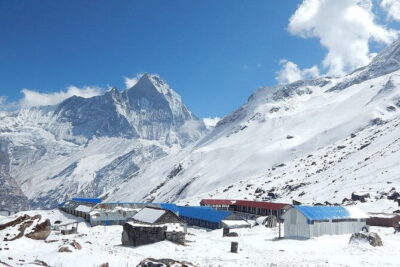
Altitude becomes a real concern here. Machhapuchhre Base Camp is already high, and Annapurna Base Camp rises to 4,130 meters. The itinerary does not list a separate acclimatization day, so you need to take the guide’s pace seriously, drink regularly, and report symptoms early. Headache, unusual tiredness, nausea, or poor coordination should not be treated as a test of toughness.
Same trailhead, a different route:
- Everest Base Camp Trek – 14 Days
★ 5.0 · 1,499 reviews - Everest Base Camp Trek
★ 5.0 · 842 reviews - Everest Base Camp Helicopter Tour landing at Everest View Hotel
★ 5.0 · 668 reviews - Everest Base Camp Trekking
★ 5.0 · 485 reviews
Sunrise at Annapurna Base Camp
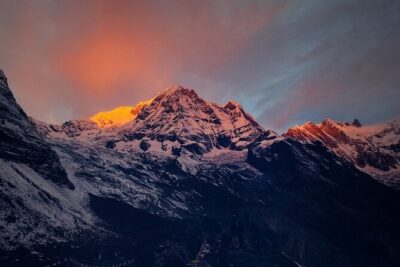
The schedule calls for an early morning at Annapurna Base Camp, followed by breakfast and the return walk. This is when the trip earns its name. As sunlight reaches the Annapurna range, the snow peaks change color and the high basin becomes brighter by the minute.
You can expect a dramatic mountain setting, but weather controls the view. Clouds, snowfall, rain, or wind can hide the peaks. One group associated with the company encountered rain, hail, and snow conditions, so pack for changeable weather rather than assuming clear skies.
The descent is easier in one sense because you are losing altitude, but it is still a long seven-hour day. You retrace the route through grassland, rocky sections, and forest before reaching Sinuwa by evening. Downhill walking can be demanding on knees, particularly after the long climb of the previous day.
The sunrise is worth protecting with sensible preparation. Keep warm layers and a headlamp accessible, and follow the guide’s advice on departure time. The details of the sunrise schedule can shift with weather and trail conditions, so think of the early start as a practical mountain decision, not a fixed city tour timetable.
Jhinu Danda and the natural hot spring
From Sinuwa, you descend long stairs to a suspension bridge, then climb another long series of steps to Chhomrong. The route is not finished with the high point behind you. This day still includes about six hours of walking and plenty of elevation change.
From Chhomrong, the path takes a different route toward Jhinu Danda. You descend a steep hill and reach the area’s famous natural hot spring. A soak here is a welcome reward after several days of stairs, though the experience remains simple and local rather than polished or resort-like.
After the hot spring, you descend farther and stay overnight at an inn. The stop is well placed in the itinerary. It breaks up the return journey and gives your legs a chance to recover before the final walk to Nayapul.
This is also a good example of why the route is more than a mountain viewpoint. You see village life, farmland, forest, bridges, rivers, and bathing traditions along the way. The cultural side is not presented as a separate performance. It comes through in the settlements and daily routes you pass.
Nayapul and the return to Pokhara
The final walking morning is gentler. After breakfast, you follow farmland and terraced country toward Nayapul. The itinerary allows about two hours of walking, followed by a three-hour drive back to Pokhara along winding roads beside the Modi Khola.
There are no major climbs listed for this stretch, which makes it a useful cooldown after the high-altitude days. Once back in Pokhara, you return to the hotel and have time to enjoy the city. Boating, cycling, and simply walking around are all suggested ways to use the free time.
I appreciate having a second Pokhara night. It reduces the pressure to leave the mountains and immediately start another long road trip. It also gives you a buffer if the trail schedule changes, although the tour details do not promise extra contingency days.
The long drive back to Kathmandu
The final day follows the same broad highway route back to Kathmandu. You pass terraced farmland, large hills, and white rivers from the vehicle window, with a stop along the highway for lunch and a toilet break.
This is another long road day, so do not expect a full sightseeing program in Kathmandu. Once you arrive, you can freshen up, walk around Thamel, and shop for souvenirs. Nightlife is also suggested, though your energy after the drive may vary.
The transport is practical rather than luxurious. The value is in having the route organized from Kathmandu through Pokhara and back again, not in moving quickly. Road conditions and traffic can affect timing, so keep important onward plans flexible.
What the $897.44 price covers
At $897.44 per person, this is not a bare-bones independent trek. The price includes airport pickup, two hotel nights in Pokhara with breakfast, TIMS permits, a professional guide, the guide’s meals and insurance, three meals per day during the trek, and overnight lodge accommodation along the route.
That bundle matters because food, permits, accommodation, and road transfers can become a string of separate decisions. You are paying for coordination as well as services. A private departure also means your group is not combined with strangers, which can make pacing and rest stops easier to manage.
The price does not include travel or medical insurance, emergency evacuation, personal calls, alcoholic drinks, donations, or tips for guides and porters. Tips are expected, so include them in your real budget rather than treating the advertised cost as the final figure.
The value is strongest if you want a guided, arranged trek with city hotels and transport included. It is less compelling if you already have local contacts, carry out your own planning, and prefer to book each lodge and transfer directly. For most first-time visitors, the support and coordination can justify the cost.
Guides, porters, and the human side
The most consistently praised part of this experience is the local team. Past departures have included guides such as Jog Bahadur Gurung and Ganesh, along with porters including Phoindra Gurung, Osman, and Hori. The descriptions of these teams focus on kindness, attentiveness, practical help, and clear answers.
That is important on a short high-altitude trek. A good guide does more than point toward the next village. You need someone who can judge walking speed, explain the route, help with steep sections, and react sensibly when weather or altitude becomes a problem.
The exact staff for your date may differ. Ask for the guide’s name, the guide-to-group arrangement, porter support, and what weight you may hand over before departure. The tour information confirms one professional guide but does not give a fixed porter allocation or luggage limit.
The private format can suit families, friends, couples, and small groups who want their own rhythm. The activity says most people can participate, but that should not be confused with easy access. The stairs, elevation, and long walking days still require reasonable fitness.
What to pack and how to prepare
The itinerary gives you a clear packing message: prepare for both warm lower valleys and cold high elevations. You will walk through forests, open grassland, rocky trails, river corridors, and snow-prone high country.
Bring sturdy walking shoes, warm layers, rain protection, gloves, a hat, a headlamp, personal medication, and a day bag for water and essentials. Keep your documents, money, phone, and extra layer protected from rain. The information does not specify laundry, charging facilities, or internet access, so do not rely on those services.
Build fitness around long walking days and stairs. You do not need to be a mountaineer, but you should be comfortable walking for six to eight hours and handling repeated climbs and descents. If you have medical concerns related to altitude, consult a medical professional before booking.
The package includes three meals daily on the trail, but personal snacks and drinks are not listed. Carrying a few familiar snacks can be useful on long days, especially when your appetite changes at altitude.
Who should book this trek?
I would recommend this route to you if you want Nepal’s mountain scenery, village paths, and high-altitude atmosphere in a compact schedule. It suits people who value local guides, organized transport, and a private group more than luxury or complete independence.
It is also a good fit if Pokhara appeals to you. The city nights break up the road travel and give you time to enjoy a calmer setting before and after the trek.
I would hesitate if you dislike long drives, basic lodges, steep steps, or changing weather. The word short may mislead you. The itinerary moves quickly to Annapurna Base Camp and includes no listed rest day at high elevation.
Cancellation is flexible up to 24 hours before the local start time for a full refund. Inside that window, cancellations and changes are not accepted for a refund. That policy is useful, but it does not replace travel insurance, especially since medical treatment and emergency evacuation are excluded.
Should you book the Annapurna Base Camp Short Trek?
Book it if you want a carefully arranged private trek with strong local support, varied scenery, two Pokhara hotel nights, and the chance to see sunrise at Annapurna Base Camp without planning every detail yourself.
Before paying, confirm the exact departure dates, guide, porter arrangements, lodge standards, road transport, and what happens if weather affects the schedule. If you are fit for long days and understand that the short format means a brisk pace, the $897.44 package offers a practical route into the Annapurna region. If you want slow acclimatization or more comfort, choose a longer itinerary instead.
FAQ
How long is the Annapurna Base Camp Short Trek?
The experience lasts approximately eight days, including the drives between Kathmandu and Pokhara, the trek to Annapurna Base Camp, the return to Pokhara, and the drive back to Kathmandu.
Where does the experience start?
The listed meeting point is Tribhuvan Airport in Kathmandu, Nepal, and pickup is offered.
What is the highest point on the trek?
The highest point is Annapurna Base Camp, at 4,130 meters.
Is this a private tour?
Yes. Only your group participates in the activity.
What meals are included?
Three meals per day and overnight accommodation are included along the trekking trail. The two Pokhara hotel nights include breakfast. No meals are included on the first drive from Kathmandu to Pokhara.
Is accommodation included?
Yes. Two hotel nights in Pokhara with breakfast and overnight hotel or lodge accommodation along the trekking trail are included.
Is a guide included?
Yes. The package includes one professional trekking guide, along with the guide’s necessary insurance, meals, and allowances.
Are permits included?
TIMS permits, meaning Trekker’s Information Management System permits, are included.
Is travel insurance included?
No. Travel insurance, medical insurance, and emergency evacuation costs are not included. Personal expenses and tips for guides and porters are also excluded.
Just added around Kathmandu
- Everest Base Camp Trek★ 5.0 · 3 reviews
- Everest Base Camp Trek★ 5.0 · 7 reviews
- 15 Days Private Everest Base Camp Trek★ 5.0 · 30 reviews
- 14-Day Everest Base Camp Trek★ 5.0 · 20 reviews
- Everest Base Camp Trek★ 5.0 · 57 reviews
- 14 Days of Adventure Trekking to Everest Base Camp★ 5.0 · 2 reviews
- From Kathmandu: Private 14-Day Everest Base Camp Trek★ 5.0 · 20 reviews
- 14 Days Everest Base Camp Trek★ 5.0 · 4 reviews
Annapurna Base Camp Treks, compared.
Trekking in Annapurna/Langtang/Everest/Upper Mustang regions
Read our review →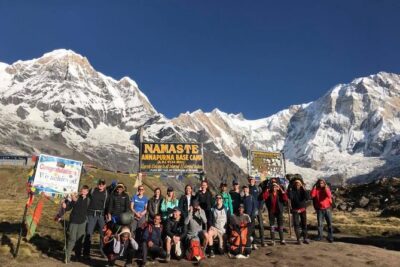
Kathmandu to Annapurna Base Camp (ABC) 5-Day Trek
Read our review →Browse the lists this trek appears in