
Review · KATHMANDU
Annapurna Base Camp, Nepal 10 days
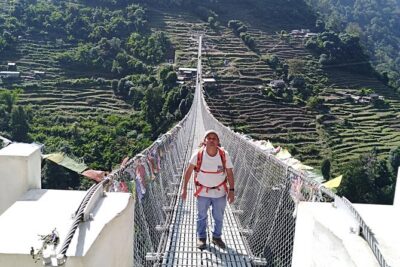
The real prize here is the changing scenery: Gurung villages, suspension bridges, bamboo forest, high mountain paths, and the immense bowl of Annapurna Sanctuary. This is a private 10-day trek, so you can move at your own pace instead of being tied to a large group.
I like the mix of village life and serious mountain walking, plus the practical inclusion of hotels, teahouses, transport, and most meals. I also like that the route can be adjusted to suit your group. The main caution is simple: walking three to eight hours daily, with steep steps and high-altitude sections, takes solid fitness.
Key points before you book
- Private guiding: Your own group takes the trail with a guide, with named guides including Resham GC, Sandip, Nitesh, and Raju appearing in the company’s recent feedback.
- A true mountain route: The trek reaches Annapurna Base Camp after passing through Ghandruk, Chhomrong, Bamboo, Deurali, and Machhapuchhre Base Camp.
- Long transport days: The route begins and ends with roughly seven-hour drives between Kathmandu and Pokhara.
- Teahouse travel: Accommodation is provided in hotels and teahouses, with simple mountain comforts rather than resort service.
- Meals are mostly covered: Breakfast is listed for all 10 days, along with seven dinners and eight lunches.
- Plan for extra charges: Hot water, hot showers, WiFi, battery charging, and crew tips are not included.
What the Annapurna Base Camp route gives you
This trek is a good choice if you want a classic Himalayan walk without committing to a much longer expedition. The route leads from Pokhara into the Annapurna region, moving through settled hills first and then into colder, higher country.
The walking day can last anywhere from three to eight hours. That range matters. Some days are pleasant and steady, while others include long stair sections, steep climbs, or a tiring descent after reaching the base camp.
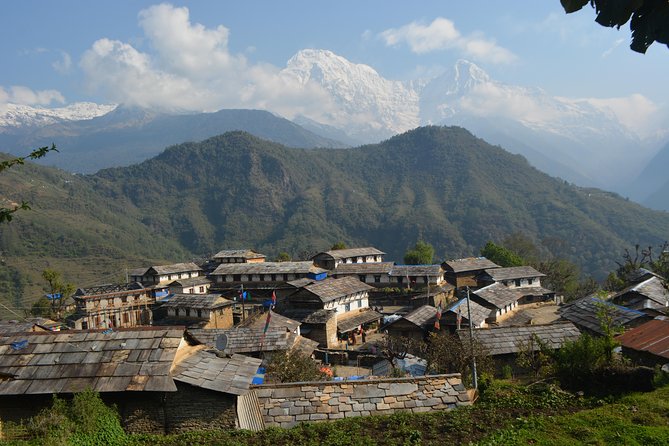
You will not simply walk toward one viewpoint and turn around. The route changes character as you go. Ghandruk brings Gurung culture and village paths. Chhomrong delivers big mountain views and punishing stone steps. Bamboo and Deurali bring damp forest and colder air. The final approach opens into a much more severe mountain setting.
Because this is a private trip, your guide can help manage the pace for your group. That does not remove the physical work, but it can make breaks and walking speed more sensible than on a fixed group departure.
More Annapurna Treks in Kathmandu
- Annapurna Circuit Trek with Tilicho Lake
★ 5.0 · 368 reviews - Annapurna base camp trek 5 Days
★ 5.0 · 252 reviews - 14-Day Private Annapurna Base Camp Trek
★ 5.0 · 180 reviews
Day 1: Seven hours from Kathmandu to Pokhara
The first day is mostly about getting into position. You leave Kathmandu at about 6:15 in the morning and travel by tourist bus to Pokhara, around 200 kilometers away.
The drive takes roughly seven hours. An air-conditioned vehicle is included, which is useful on a long road day, though the time on the road can still feel tiring after an international flight or a busy stay in Kathmandu.
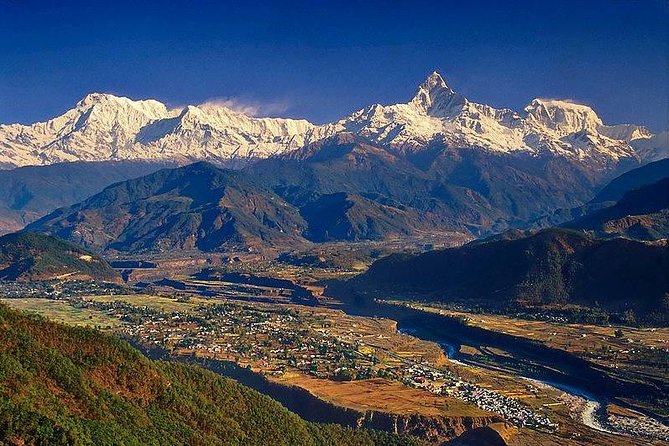
Pokhara is the gateway for the trek. The route description gives the city at about 820 meters, far lower than the high sections ahead. That gradual change is one reason the trip begins here rather than rushing directly into the mountains.
There is no major walking stop listed for this day. Think of it as a transfer day, not a sightseeing day. If you value comfort and time, the company says a flight back to Kathmandu can be arranged on Day 10 for an extra $100, but the listed plan uses the bus in both directions.
Day 2: Ghandruk and the first village paths
After breakfast, you drive for about two and a half hours to Siwai. From there, the trek begins with roughly four hours of walking to Ghandruk.
Ghandruk is mainly inhabited by the Gurung community and gives you an early look at the human side of the Annapurna region. This is more than a place to sleep. It is a mountain village where the route passes through local life before the trail turns deeper into forest and high country.
The plan may include a visit to the Gurung Museum if time allows. Since that visit depends on the day’s schedule, I would not treat it as guaranteed. Still, it adds useful context to the village stop.
This first walking day is shorter than some later stages, but you should not assume it is effortless. You are beginning with a drive, then walking on mountain trails. Use the day to settle into your boots and pay attention to your pace.
Day 3: Mountain views and Chhomrong
The route from Ghandruk toward Chhomrong takes about six hours. Early in the day, you climb for around an hour to Kimrungdanda.
This section brings views of Annapurna South, Hiunchuli, Machhapuchhre, also called Fishtail Mountain, and Gangapurna. The exact visibility will depend on weather, but this is one of the route’s strongest scenic stretches.
The trail then continues toward Chhomrong. You should expect regular climbs and descents rather than a smooth uphill walk. Chhomrong is an important stop because it is one of the last sizeable settlements before the trail moves into more remote forest and mountain country.
This is also a good place to appreciate the value of a private guide. The walking time is substantial, and the guide can help you decide how often to stop without forcing your group to match strangers.
Same trailhead, a different route:
- Everest Base Camp Trek – 14 Days
★ 5.0 · 1,499 reviews - Everest Base Camp Trek
★ 5.0 · 842 reviews - Everest Base Camp Helicopter Tour landing at Everest View Hotel
★ 5.0 · 668 reviews - Everest Base Camp Trekking
★ 5.0 · 485 reviews
Day 4: The 2,500 steps below Chhomrong
Day 4 is one of the route’s more memorable physical tests. Leaving Chhomrong, you descend by around 2,500 stone steps, cross the Chhomrong Khola on a suspension bridge, and then climb toward Sinuwa.
The trail continues through forest to Kuldighar and then on toward Bamboo. The listed walking time is about five hours, but the number of steps can make this day feel harder than the hours suggest.
This is a good example of why you need more than a rough idea of daily mileage. A five-hour mountain day with repeated stairs can be tougher than a longer walk on a gentle path.
The forest also changes the mood. After the open views around Ghandruk and Chhomrong, you spend more time among trees and shaded trails. Wet or cold conditions are possible in the forest, so a light waterproof layer is worth keeping close at hand.
The plan lists Chhomrong as the stop heading, while the route description continues toward Sinuwa and Bamboo. Confirm the exact overnight village with your operator before departure, since the sleep point affects the next day’s walking time.
Day 5: Bamboo forest to Deurali
From Bamboo, you walk for about four to five hours to Deurali, at approximately 3,230 meters, or 10,595 feet.
The route passes through bamboo forest that can be damp and cold. From there, the trail climbs steadily, with fewer very steep sections. After Himalaya Hotel, the surroundings begin to feel more exposed and more distinctly high mountain.
Deurali is an important point in the trip because the air is colder and the elevation is much greater than at the start. You should take the pace seriously here. Even if the trail is not steep every minute, altitude can make ordinary exertion feel harder.
Accommodation is in a teahouse. Teahouse trekking means you get a bed and basic meals along the route, but you should not expect the same facilities as a city hotel. Hot water, hot showers, WiFi, and battery charging are specifically excluded, so bring a power bank and be ready for simple conditions.
Day 6: Machhapuchhre Base Camp and Annapurna Base Camp
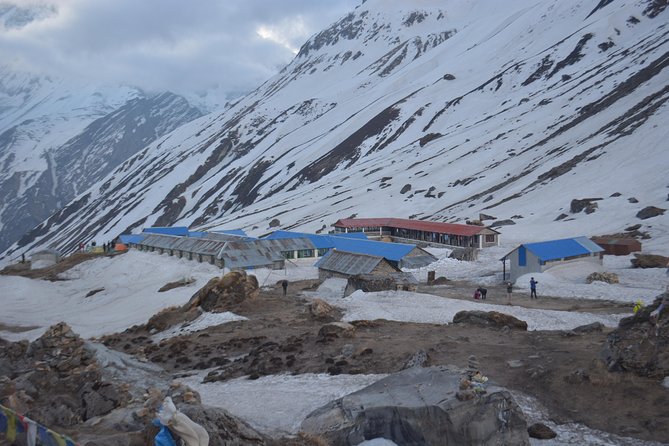
This is the high point of the experience. The route climbs gently through a river bed before following a steep trail along the mountainside. The section from Bagar to Machhapuchhre Base Camp is described as somewhat strenuous.
From Machhapuchhre Base Camp, you continue toward Annapurna Base Camp. The walking time is about six hours, but this can be one of the toughest days because of the elevation and the terrain.
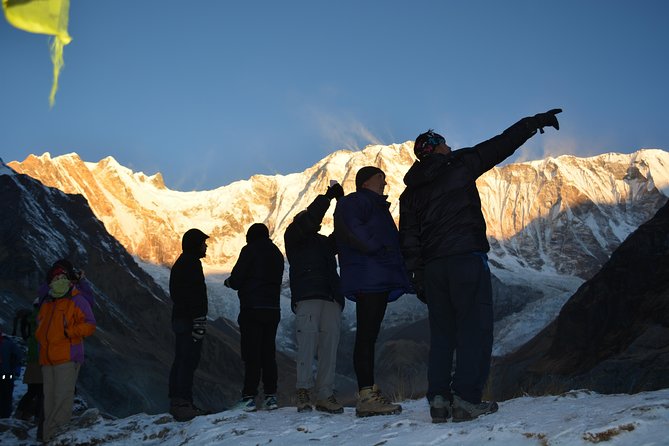
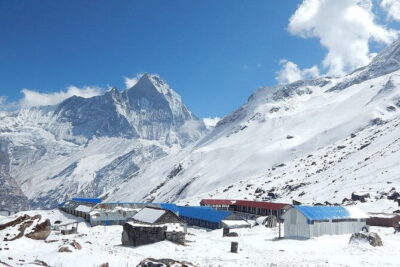
The Annapurna Sanctuary is the reward. You are surrounded by some of the region’s most dramatic peaks, with the trail leading to the foot of Annapurna. The exact mountain views depend on cloud and weather, but the setting is the central reason to choose this route.
Take your time on this day. A private trek is useful here because your guide can adjust the pace to your condition. If you feel unwell at altitude, tell the guide early. Pride is a poor hiking strategy.
The teahouse stay at this height will be basic. Pack warm layers, a headlamp, water treatment if you use it, and enough personal snacks for a long walking day. These items are not all listed as inclusions, so you should prepare independently rather than assume the teahouse will provide every comfort.
Day 7: The long descent to Bamboo
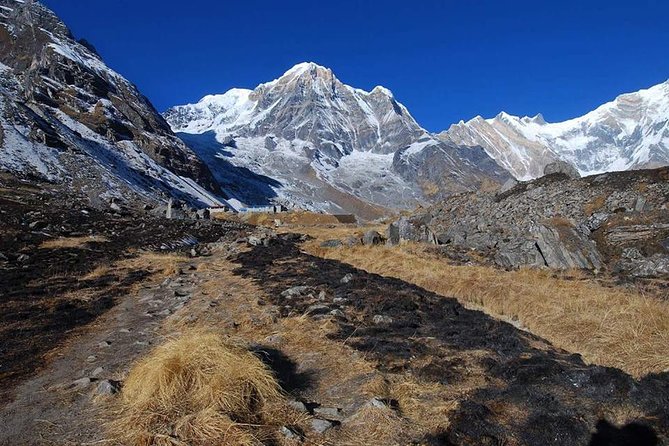
After reaching Annapurna Base Camp, you retrace your steps toward Bamboo. The day is listed at about eight hours and is mainly downhill.
Downhill sounds easy, but eight hours of descending can be hard on knees, ankles, and tired feet. Trekking poles can help, though the supplied information does not say that poles are provided, so plan to bring your own if you use them.
The scenery remains a strong companion. You return through the same mountain country, but the view feels different when you know you have reached the main goal and are heading back toward lower ground.
This is likely the longest day in the schedule. Keep your daypack light and your water accessible. Since most meals are included, you can focus on walking rather than arranging food along the route, but the exact menu and teahouse facilities are not specified.
Day 8: Chhomrong and Jhinu Danda
From Bamboo, the trail climbs to Kuldighar, descends to Chhomrong Khola, and then climbs the stone steps back to Chhomrong. From there, you descend to Jhinu Danda.
The walking time is about six hours. This day mixes uphill and downhill work, so it can feel more demanding than a simple descent. You have already completed the high point, but the route is not finished.
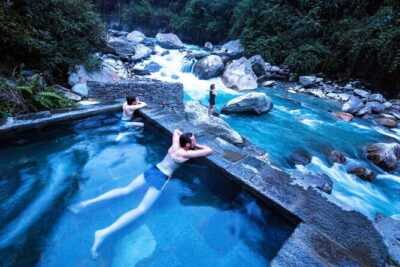
Jhinu Danda is the overnight stop. The supplied plan does not confirm a hot-spring visit, so do not book this trip expecting that activity as part of the package. The stop is still useful as a lower mountain rest point after the colder high sections.
Day 9: Returning to Siwai and Pokhara
You walk from Jhinu Danda to Siwai in about six hours. Along the way, you can see the western Nepal hills and wild bee hives under the cliffs.
The trek ends at Siwai, where you board the vehicle to Pokhara. This combination of walking and transport makes the day more than a simple drive. You get one final stretch on foot before leaving the trail.
The route returns you to Pokhara rather than Kathmandu, giving you a night between the trek and the long return journey. Accommodation is included in hotels and teahouses, though the exact hotel names are not provided.
Day 10: Bus or optional flight back to Kathmandu
After breakfast, you travel back to Kathmandu, with the drive taking about seven hours. The day also leaves time to look around shops, buy souvenirs, and rest.
If you prefer to save road time, a flight can be arranged for an additional $100. That option is useful after several days of walking, but it is not included in the $848 price.
The return drive also means the base price covers a full overland loop between Kathmandu and the Annapurna trailhead area. If you want more time in Pokhara or Kathmandu, ask about customizing the schedule before you book.
What the $848 price includes
At $848 per person, the package offers a fair amount for a private Himalayan trek. It includes transport in an air-conditioned vehicle, accommodation in hotels and teahouses, and most meals.
The stated meal package includes:
- 10 breakfasts
- 8 lunches
- 7 dinners
That is useful because food planning becomes difficult once you are on the trail. You should still ask exactly which meals are covered on transfer days and confirm whether drinks or snacks cost extra.
The value is strongest if you want a handled trip rather than arranging each lodge, transfer, and meal yourself. A private guide also adds practical help on a route where weather, tiredness, and changing trail conditions can affect the day.
The price does not include hot water, hot showers, WiFi, battery charging, or tips for the crew. Those exclusions are normal considerations for a teahouse trek, but they can surprise anyone expecting hotel-style service.
Guides, group size, and the human side
The company runs this as a private activity, so only your group participates. That is a strong fit for couples, friends, or families who want control over the walking pace.
Several guides are connected with positive experiences on this route and related Nepal treks. Resham GC is praised for being caring and welcoming. Sandip is repeatedly singled out for his cheerful help on the trail. Nitesh is associated with route information and porters who supported a September trek, while Raju helped with a solo ABC trip.
You should confirm your actual guide before departure. Names in past trips do not guarantee who will lead your group, but they give you useful people to ask for when discussing arrangements.
The guide is not just there to point out the trail. On a private high-altitude walk, the guide helps with timing, route decisions, teahouse coordination, and communication with the crew. That support matters most on the long or colder days.
Who should book this trek
I would recommend this experience to someone with moderate to good fitness who wants a genuine mountain trek and accepts basic accommodation. You need to be comfortable walking for several hours a day, including steep stone steps and a possible eight-hour descent.
It suits people who want:
- A private schedule
- Local village and forest walking
- A classic Annapurna Base Camp goal
- Most meals arranged in advance
- A guide and transport package
- The option to customize parts of the trip
I would be cautious about booking it if you dislike long road transfers, basic teahouses, or limited access to showers and internet. The route is not a sightseeing circuit with occasional walks. It is a demanding high-altitude trek.
The tour requires a moderate fitness level, but you should take that phrase seriously. Training with hills, stairs, and long walks will make the experience far more enjoyable.
Practical booking details
Pickup is offered, the ticket is mobile, and confirmation is provided when you book. The listed start time is 6:15 am, so plan for an early morning.
The cancellation policy allows a full refund if you cancel at least 24 hours before the experience starts. Changes made inside that window are not accepted, and late cancellations are not refunded.
Weather can affect the trip. If poor weather causes cancellation, you are offered another date or a full refund. If the minimum number of participants is not met, the operator offers another date or experience, or a full refund.
Should you book the Annapurna Base Camp trek?
Book this trek if you want a private, fully arranged route to Annapurna Base Camp and you are ready for real walking days. The strongest reasons are the varied trail, the mountain setting, the private pace, and the amount included for $848.
Before paying, confirm the exact overnight stops, your guide’s name, what happens to luggage, and which meals are covered on each day. Also budget for tips, charging, hot water, showers, WiFi, and the optional flight.
I would choose it for a fit hiker who values support but does not need luxury. If you want a quiet mountain challenge with local villages, forest trails, teahouse nights, and a dramatic base-camp finish, this package makes a sensible starting point.
FAQ
How long is the Annapurna Base Camp experience?
The trip lasts approximately 10 days, including transport from Kathmandu to Pokhara, the trek to Annapurna Base Camp, the return to Pokhara, and the journey back to Kathmandu.
Where does the tour start?
The experience is based in Kathmandu, with a listed start time of 6:15 am. Pickup is offered.
Is this a private trek?
Yes. Only your group participates in the private tour or activity.
Where do I sleep during the trek?
Accommodation is provided in hotels and teahouses. The exact property names are not specified.
How many meals are included?
The package lists 10 breakfasts, 8 lunches, and 7 dinners.
Are hot showers and WiFi included?
No. Hot water, hot showers, WiFi, and battery charging during the trek are not included.
Can I fly back to Kathmandu from Pokhara?
Yes. A flight can be arranged on Day 10 for an additional $100. The listed plan uses a drive, which takes about seven hours.
Can I cancel for a full refund?
Yes, if you cancel at least 24 hours before the experience start time. Cancellations made less than 24 hours before the start are not refunded.
Just added around Kathmandu
- Everest Base Camp Trek★ 5.0 · 3 reviews
- Everest Base Camp Trek★ 5.0 · 7 reviews
- 15 Days Private Everest Base Camp Trek★ 5.0 · 30 reviews
- Everest Base Camp Trek★ 5.0 · 57 reviews
- 14 Days of Adventure Trekking to Everest Base Camp★ 5.0 · 2 reviews
- 14-Day Everest Base Camp Trek★ 5.0 · 20 reviews
- From Kathmandu: Private 14-Day Everest Base Camp Trek★ 5.0 · 20 reviews
- 14 Days Everest Base Camp Trek★ 5.0 · 4 reviews
Annapurna Base Camp Treks, compared.
Trekking in Annapurna/Langtang/Everest/Upper Mustang regions
Read our review →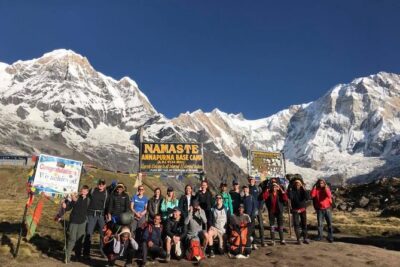
Kathmandu to Annapurna Base Camp (ABC) 5-Day Trek
Read our review →Browse the lists this trek appears in