
Review · KATHMANDU
Everest Base Camp Trek | Deluxe Lodges | Both Way Helicopter Ride
Everest Base Camp is the main event here, but the clever part is how you reach it. You walk through Sherpa villages, pine forests, suspension bridges, and high valleys, then trade the long return trek for a helicopter flight from Gorakshep. That saves several days and makes this 10-day version possible for people with tight schedules.
I like the two acclimatization days, one in Namche Bazaar and another in Dingboche. I also like that the price covers guides, porters, meals, permits, warm sleeping gear, lodges, and helicopter transport. The catch is simple: this remains a demanding high-altitude trek, and the short schedule leaves less room for delays or a slow adjustment to altitude.
Key points at a glance
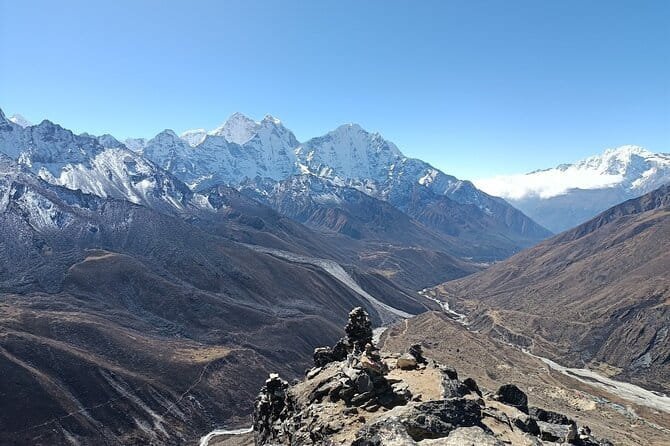
- Helicopter access to Lukla: The 45-minute flight from Kathmandu offers views toward Everest and Kanchenjunga before the trek begins.
- Two acclimatization days: You spend time above Namche and Dingboche using the climb-high, sleep-low approach.
- Everest Base Camp and Kala Patthar: The route includes both the famous base camp and an early morning sunrise hike.
- Twin-share lodge stays: Accommodation is in the best available lodges, with two nights in a three-star Kathmandu hotel.
- Strong support package: A licensed guide, one porter for every two people, meals, permits, duffel bag, sleeping bag, down jacket, and staff insurance are included.
- Helicopter return: From Gorakshep, you fly back toward Lukla, avoiding the long walk down the Khumbu Valley.
What the $3,332 price really covers
At $3,332 per person, this is not a budget Everest Base Camp trek. The price makes more sense once you count the transport and support included. You receive shared helicopter flights from Kathmandu to Lukla and from the Everest Base Camp area toward Lukla, private airport transfers, Kathmandu hotel nights, lodge accommodation, a licensed guide, porters, meals on the trail, national park fees, local permits, and staff insurance.
You also receive a warm down jacket and a sleeping bag rated to minus 20 degrees Celsius. Both are loaned for the trip and returned afterward. A trekking duffel, map, T-shirt, first-aid equipment, and an oximeter are also supplied.
The food allowance is clear: 10 breakfasts, eight lunches, and eight dinners. Dinner and lunch in Kathmandu are not included, and drinks and snacks are extra. International flights, a Nepal visa, and rescue and evacuation insurance up to 5,500 meters are also your responsibility.
I see this package as a convenience purchase. You pay more than you would for a basic lodge trek, but you avoid arranging separate flights, permits, porter support, cold-weather equipment, and mountain transport. The helicopter element is especially important because it cuts the return walk and gives you a scenic way out of the high valley.
Still, ask for a written explanation of the flight routing before paying. The package describes both-way helicopter service, along with a flight from Gorakshep to Lukla. It is worth confirming exactly how the Lukla to Kathmandu leg works on your dates.
More Everest Base Camp Treks in Kathmandu:
- Everest Base Camp Trek – 14 Days
★ 5.0 · 1,499 reviews - Everest Base Camp Trek
★ 5.0 · 842 reviews - Everest Base Camp Helicopter Tour landing at Everest View Hotel
★ 5.0 · 668 reviews
Day 1: A soft landing in Thamel
Your trip begins with airport pickup in Kathmandu. A team member from Life Himalaya Trekking meets you at Tribhuvan International Airport and takes you by private car or van to the hotel in Thamel.
This first night is useful rather than decorative. You can sleep off the international flight, meet the trekking team, and check equipment before heading into the mountains. The package includes a three-star hotel with breakfast for the night before and the night after the trek.
Thamel is a practical base, with restaurants, shops, and trekking services close by. Your lunch and dinner here are not included, so budget separately for those meals.
Day 2: Kathmandu to Lukla, then the first walk
The morning begins with a helicopter transfer from Kathmandu to Tenzing-Hillary Airport in Lukla. The flight takes about 45 minutes and includes views toward Everest and Kanchenjunga when conditions allow.
Lukla is the gateway to the Khumbu region. After landing, you have time to take in the setting before starting on foot toward Phakding. The first walk follows the Dudh Koshi River and is described as gentle, giving you a useful introduction to trekking at altitude without forcing a long first day.
Phakding is not the dramatic high point of the trek, but it lets your body begin adjusting. The main challenge here is that even an easy walking day follows a flight and a major change in altitude. Keep your pace slow, drink regularly, and resist the urge to race ahead on the first afternoon.
Day 3: Suspension bridges and the climb to Namche
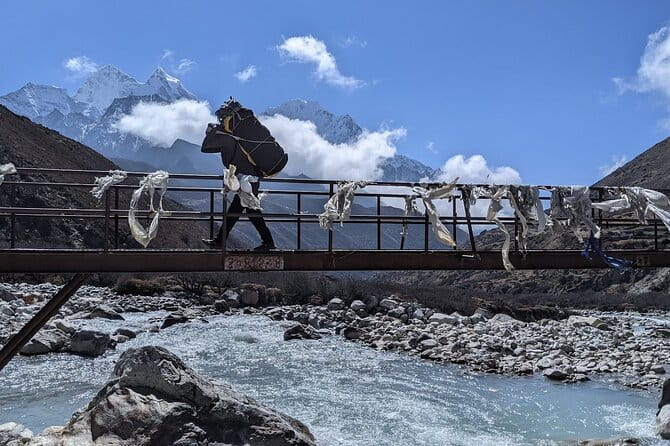
The route from Phakding follows the Dudh Koshi through pine forest and villages such as Benkar. You cross the Hillary Bridge and continue toward Monjo, the approach to Sagarmatha National Park.
The day ends with the climb to Namche Bazaar, at about 3,440 meters. This is the first serious uphill section and the point where many people begin to feel the altitude. Namche sits where the Dudh Koshi and Bhote Koshi valleys meet, and the first glimpse of Everest appears above the Lhotse and Nuptse range.
Namche is a good place to slow down. You have shops, restaurants, massage centers, and spa services available, though extra services are not included in the package. I would treat this stop as a recovery point, not a chance to spend the evening celebrating the first big climb.
More Helicopter Flights in Kathmandu:
- Everest Base Camp Helicopter Tour landing at Hotel Everest View
★ 5.0 · 218 reviews - Everest Base Camp Trek with Helicopter Return from Gorakshep to Lukla
★ 5.0 · 161 reviews - Everest Base Camp helicopter tour with landing
★ 5.0 · 61 reviews - Everest Base Camp Helicopter Tour landing at Everest View Hotel.
★ 5.0 · 34 reviews
Day 4: The Namche acclimatization walk
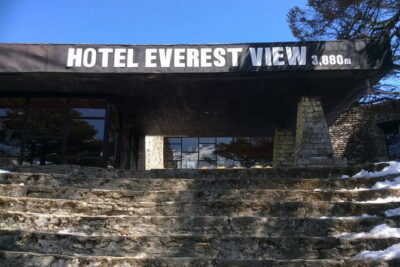
The first acclimatization day follows the classic mountain rule: climb higher during the day, then sleep lower in Namche. You hike toward Syangboche, near Khumbila Peak, and continue to the Hotel Everest View at roughly 3,880 meters.
The hotel offers broad views toward Everest, Ama Dablam, Lhotse, and nearby peaks. The itinerary allows about 30 minutes at the hotel, and admission is not included. You can enjoy the view from the area, but plan for a possible entrance or purchase charge if you want to use the hotel facilities.
Afterward, you return to Namche for several hours. This is one of the most useful days in the schedule because it gives your body time to adjust before you move higher. I like that the plan does not rush straight from Namche to the upper valley.
Day 5: Tengboche and its mountain setting
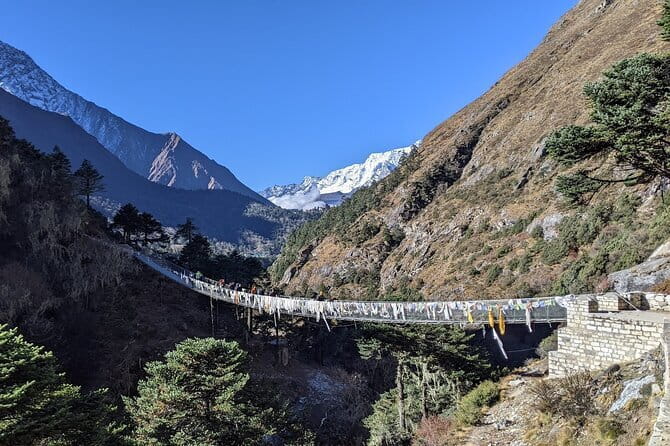
From Namche, the trail follows the Dudh Koshi before crossing a long suspension bridge into the Imja Khola Valley. The path leads to Tengboche, one of the most memorable stops on the route.
Tengboche Gompa is the cultural center of this section of the trek. The monastery sits among huge peaks, with Ama Dablam forming one of the most striking views. The walk takes about five hours according to the schedule, though mountain conditions and group pace can affect the timing.
This is where the trek begins to feel less like a village walk and more like a serious high-mountain journey. You gain altitude, but the day remains manageable for a fit walker.
Day 6: Pangboche and the upper valley
The trail continues through Pangboche, home to a Buddhist monastery and a fine position for views toward Ama Dablam and Lhotse. The day is planned at around five hours of walking.
Pangboche is important because the valley begins to feel more open and more remote as you move toward Dingboche. The itinerary notes that this section should bring fewer altitude problems than some other days, but you should not take that as a guarantee. At these heights, a steady pace matters more than speed.
Your lodge accommodation is on a twin-share basis in the best available local lodge. Conditions are practical rather than luxurious. The word deluxe here refers to the package level and selected lodges, not to hotel-style rooms in the high Himalaya.
Day 7: Dingboche and the second acclimatization day
Dingboche is the second major acclimatization stop. The plan follows the climb-high, sleep-low method, with an uphill walk to a nearby viewpoint before returning to Dingboche.
The scheduled outing lasts around five hours. This day is vital because the next stages take you to Lobuche, Gorakshep, Base Camp, and Kala Patthar, all at much higher elevations than Kathmandu or Namche.
I would not view the Dingboche stop as spare time. It is one of the reasons this itinerary has a reasonable chance of working for a fit person. You still need to tell your guide if you feel unwell. The included first-aid kit and oximeter support the staff, but they do not replace proper evacuation insurance or medical judgment.
Day 8: Lobuche and the memorials at Thukla Pass
The walk to Lobuche is described as relatively light in distance, but it brings a major gain in altitude. You pass through the broad valley of Dughla and then reach the memorial area near Thukla.
The memorials honor climbers and Sherpa staff who died on Everest and other Himalayan peaks. This is a quiet, serious section of the trek. It puts the ambition of reaching Base Camp into perspective and reminds you that the mountain is not just a scenic backdrop.
Lobuche is the final overnight stop before the main goal. The schedule lists a long timing window for this day, so keep in mind that mountain walks can stretch when the group moves carefully.
Day 9: Gorakshep and Everest Base Camp
From Lobuche, you walk across rough glacier terrain for around four hours to reach Gorakshep. This is the last settlement before the Base Camp area and the point where the air feels thin for many people.
After reaching Gorakshep, you continue toward Everest Base Camp. The route is not a smooth park trail. It includes uneven ground, rocky sections, and glacier terrain. The reward is reaching the famous base camp area, with views of the Khumbu Glacier and surrounding peaks.
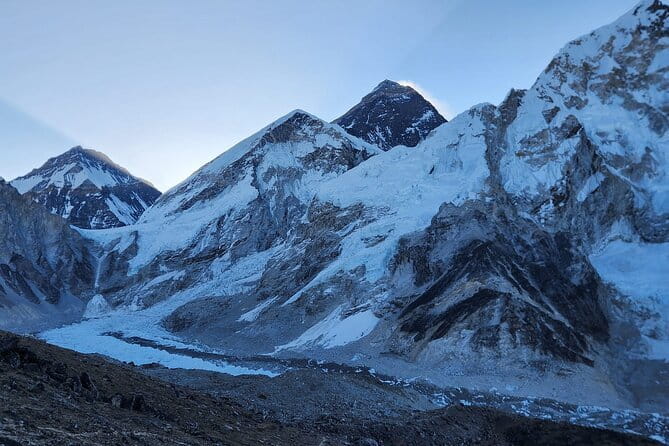
One practical note matters here: Everest Base Camp itself is not the highest viewpoint on the trek. Kala Patthar the next morning gives the classic broad view toward Everest. The Base Camp day is about standing at the expedition starting point, while Kala Patthar is about the panorama.
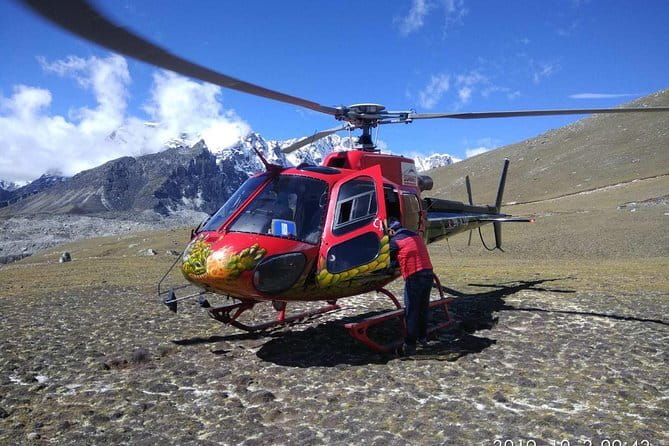
The package includes a helicopter flight from the Gorakshep or Base Camp area toward Lukla. The exact timing can depend on weather, aircraft availability, and flight conditions. Confirm whether your group flies out after the Base Camp visit or after the Kala Patthar hike the next morning.
Day 10: Kala Patthar at sunrise and the flight home
The final morning begins before sunrise with the climb to Kala Patthar. The goal is a wide view of Everest and nearby peaks as the light reaches the summit faces.
This is an early and demanding finish. You have already walked to Base Camp, and the thin air makes even a short uphill climb feel serious. The view is the payoff, but you should keep your expectations flexible because cloud and wind can change quickly.
The package describes a helicopter return from Gorakshep to Lukla, along with helicopter service between Lukla and Kathmandu. Because the published schedule compresses these movements into the final day, ask the operator for the exact sequence before departure. You should know where you will sleep if a flight is delayed and whether the helicopter takes you all the way to Kathmandu or connects through Lukla.
The trip ends back at the Life Himalaya Trekking meeting point in Kathmandu. A private airport transfer is included.
Guides, porters, and the human side of the trek
The package provides a government-licensed guide and one porter for every two people. Porters receive accommodation, food, salary, equipment, transport, and accidental insurance through the operator.
Several guides have been praised by name in the supplied feedback, including Tika, Rabin, and Pramod, also written as Promod. Shiba is noted for communication and trip coordination. These names show the company has an established local team, but they do not guarantee who will lead your departure.
That distinction matters. A good guide can adjust the walking pace, notice early signs of altitude trouble, and make the daily routine less stressful. The strongest comments about this company focus on attentive support, flexible pacing, clear communication, and help from airport pickup through the final airport transfer.
You should still ask who your assigned guide is, how many people are in your private group, and how the porter load is handled. The activity is private to your group, but the helicopter flights are shared.
Who should book this Everest trek?
I would recommend it to a fit person who wants the full walk to Everest Base Camp but cannot spare the two to four extra weeks often associated with a longer trek. It also suits someone who values logistical support and prefers a helicopter exit to retracing the same trail.
It is less suitable if you want a relaxed holiday, private rooms throughout, or a guaranteed flight schedule. The word short can be misleading here. Ten days is short for this route, but the walking days, altitude, cold, and early start at Kala Patthar are still demanding.
You need strong physical fitness, travel insurance that covers trekking and rescue up to at least 5,500 meters, and a willingness to follow your guide’s advice. The free cancellation policy allows a full refund when you cancel at least 24 hours before the start time. Changes or cancellations inside that window are not accepted.
Should you book it?
Book this trek if you want maximum Everest access in a compact schedule and value having transport, porters, permits, meals, equipment, and airport transfers arranged together. The two acclimatization days are a real strength, and the helicopter return saves your knees and several days.
Before booking, get three points in writing: the exact helicopter routing, the group size, and the name of your guide. If you accept basic high-altitude lodge conditions and prepare seriously for the walking, this package offers a practical way to reach Base Camp without giving up the villages, monasteries, suspension bridges, and long mountain days that make the route worthwhile.
FAQ
How long is the Everest Base Camp trek?
The advertised duration is 10 days, including arrival and departure arrangements in Kathmandu, the trek to Everest Base Camp, the Kala Patthar hike, and helicopter transport.
Where does the experience begin?
The meeting point is Life Himalaya Trekking at Narsingh Chowk Marg in Kathmandu. Airport pickup is included.
Is the helicopter flight shared?
Yes. The helicopter flights are described as shared flights. The walking portion is private to your group.
What accommodation is included?
You receive two nights in a three-star hotel in Kathmandu, with breakfast. During the trek, accommodation is in twin-share rooms at the best available lodges.
Are meals included?
The package includes 10 breakfasts, eight lunches, and eight dinners. Lunch and dinner in Kathmandu, drinks, and snacks are not included.
Is a guide provided?
Yes. The package includes an experienced, government-licensed trekking guide. A porter is provided for every two people.
Is travel insurance included?
No. You must arrange your own travel insurance, including rescue and evacuation coverage up to 5,500 meters.
Can I cancel for a full refund?
You can receive a full refund if you cancel at least 24 hours before the experience start time. Cancellations or changes made less than 24 hours before the start time are not accepted.
Just added around Kathmandu
- Everest Base Camp Trek★ 5.0 · 3 reviews
- Everest Base Camp Trek★ 5.0 · 7 reviews
- 15 Days Private Everest Base Camp Trek★ 5.0 · 30 reviews
- Everest Base Camp Trek★ 5.0 · 57 reviews
- 14 Days of Adventure Trekking to Everest Base Camp★ 5.0 · 2 reviews
- 14-Day Everest Base Camp Trek★ 5.0 · 20 reviews
- From Kathmandu: Private 14-Day Everest Base Camp Trek★ 5.0 · 20 reviews
- 14 Days Everest Base Camp Trek★ 5.0 · 4 reviews
Everest Base Camp Treks, compared.
Everest Base Camp Helicopter Tour landing at Everest View Hotel
Read our review →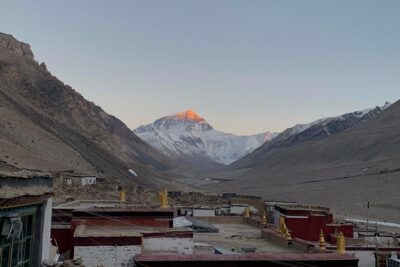
Tibet Tour 8 Days Lhasa to Everest Base Camp Small Group Tour
Read our review →
Dubai: Private Luxury Everest Yacht Cruise from Dubai Marina
Read our review →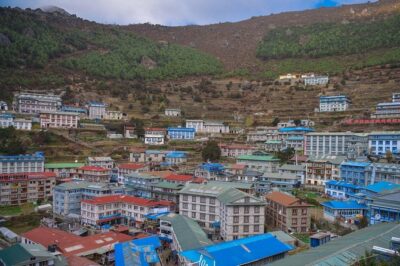
Browse the lists this trek appears in