
Review · KATHMANDU
Everest Base Camp Trek with Helicopter Return from Gorakshep to Lukla
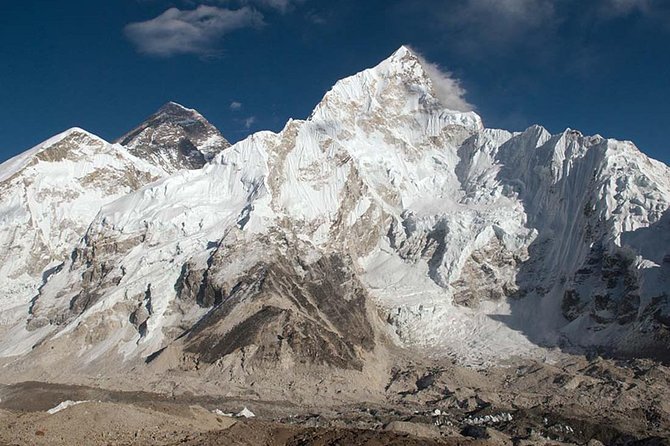
The smartest feature of this Everest Base Camp trip comes at the end: after reaching Everest Base Camp and Kala Patthar, you skip the long walk back and fly by helicopter from Gorakshep to Lukla. That saves several days of retracing your steps while giving you one last close look at the Khumbu.
I like the careful acclimatization plan, with rest hikes in Namche Bazaar and Dingboche rather than a mad race uphill. I also like the support package: local guides, porters, permits, meals, filtered trail water, and a first-aid kit with an oxygen saturation monitor are all built in. The main drawback is the altitude. This is a serious trek, not a sightseeing stroll, and the helicopter flight depends on weather.
Key points to know before booking
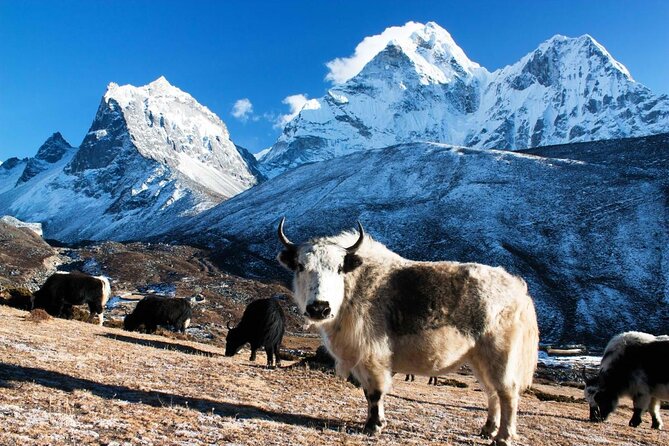
- Helicopter return from Gorakshep to Lukla: The scenic flight takes about 20 minutes and replaces the return trek.
- Two acclimatization stops: You spend extra time around Namche Bazaar and Dingboche, including hikes to Everest View Point and Nangkartshang Peak.
- Kala Patthar at 5,555 meters: This demanding climb offers the trip’s finest high mountain viewpoint.
- Small maximum group: The group is limited to 14 people, with one porter assigned for every two trekkers.
- Strong logistics package: Permits, Kathmandu hotel nights, meals, Lukla flights, staff costs, filtered water, and a duffel bag are included.
- A demanding but supported trek: You need moderate physical fitness, travel insurance with rescue cover, and a willingness to walk at high altitude.
Why the Gorakshep helicopter return changes the trip
The classic Everest Base Camp route is an out-and-back walk from Lukla. That means you spend days hiking down the same valley after reaching the main goal. This version keeps the full approach to Base Camp but removes most of the return walking.
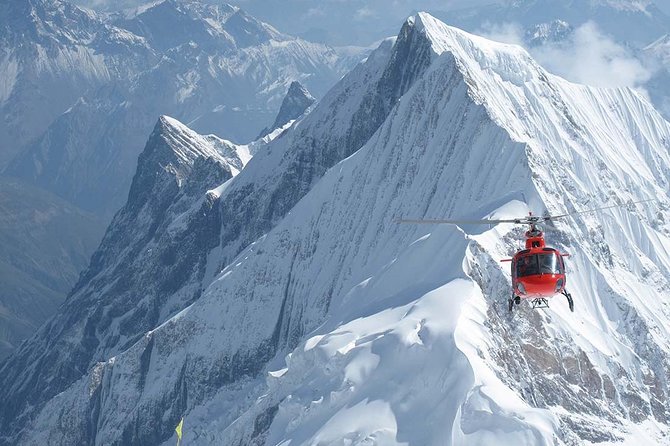
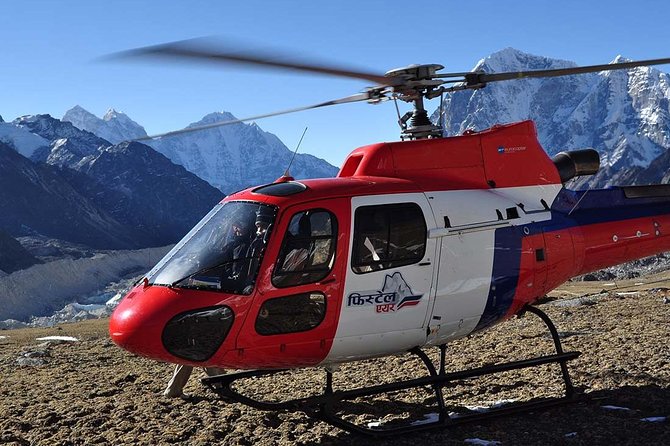
From Gorakshep, the helicopter flight to Lukla is listed as a scenic ride of about 20 minutes. That is a major time saver, but it is not just a shortcut. You get a different view of the Khumbu from above, and you avoid the physical grind of descending through Lobuche, Dingboche, Namche, and Phakding.
The tradeoff is cost. At $3,000 per person, this is not a budget trek. Still, the price covers a large amount: domestic airfare, the helicopter segment, accommodation, food, guides, porters, permits, Kathmandu transfers, staff insurance, medical supplies, and taxes. If you booked these pieces separately, the helicopter and staff support would be the biggest expenses.
The flight is shared, so you should not expect a private helicopter waiting only for your party. The schedule also depends on clear conditions. If poor weather cancels the flight, the operator offers another date or a full refund for the affected experience, but you should still build flexibility into your Nepal plans.
More Everest Base Camp Treks in Kathmandu:
- Everest Base Camp Trek – 14 Days
★ 5.0 · 1,499 reviews - Everest Base Camp Trek
★ 5.0 · 842 reviews - Everest Base Camp Helicopter Tour landing at Everest View Hotel
★ 5.0 · 668 reviews
Day 1: A soft landing in Kathmandu
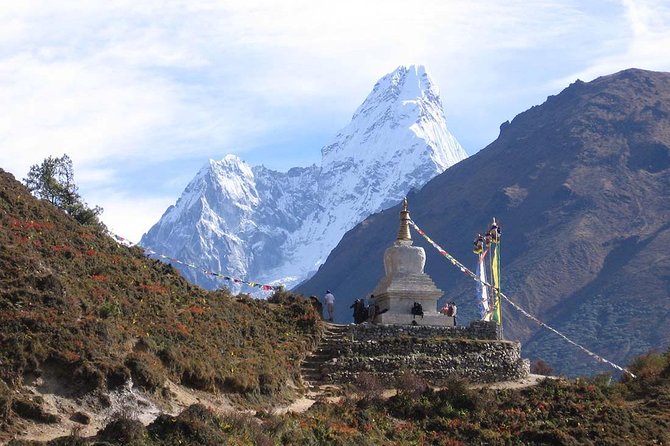
Your arrival begins with a pickup at Tribhuvan International Airport and a private transfer to your hotel. You stay in a three-star Kathmandu hotel, with breakfast included for two nights.
The pre-trip meeting is useful here. You meet your guide, check the plan, and can sort out last-minute questions before heading into the mountains. The package also provides a duffel bag, trekking map, and sun hat, which helps reduce the amount of gear you need to organize before arrival.
Lunch and dinner in Kathmandu are not included. That is a small but important detail when calculating the real cost. Nepal entry fees, international airfare, departure tax, drinks, personal equipment, and tips are also extra.
Day 2: Lukla to Phakding and the first mountain miles
The day starts early with a flight from Kathmandu to Lukla. The flight is scheduled to take about 35 minutes and lands at Tenzing and Hillary Airport, at roughly 2,804 meters.
Lukla is more than a transport point. It is where the walking begins, and the quick change from Kathmandu to mountain altitude makes the first day feel real. The route continues to Phakding, following the Dudh Koshi and passing through forested sections and small settlements.
The itinerary allocates plenty of time to this first trek day. Do not treat it as a warm-up that can be rushed. Your body is beginning to adjust, and your guide will set the pace. Accommodation in Phakding is in a guesthouse, with meals included.
Day 3: Suspension bridges and the climb to Namche Bazaar
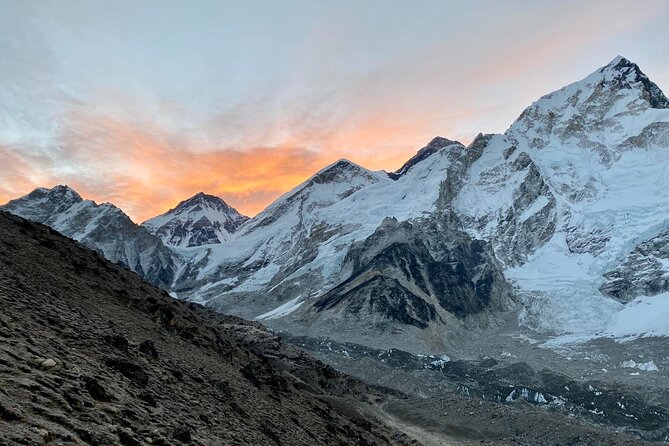
The walk from Phakding to Namche takes about six hours. You follow the Dudh Koshi and cross the river several times on suspension bridges decorated with prayer flags.
The route becomes more demanding as you approach Namche Bazaar. This is the first major settlement on the route and an important place to slow down. The uphill finish tests your legs, but Namche also gives you a proper pause before the trail rises higher.
Accommodation in Lukla, Phakding, and Namche includes attached toilets, a useful comfort on a route where facilities become simpler at greater altitude. Food is included throughout the trek, with breakfast, lunch, and dinner provided.
More Helicopter Flights in Kathmandu:
- Everest Base Camp Helicopter Tour landing at Hotel Everest View
★ 5.0 · 218 reviews - Everest Base Camp helicopter tour with landing
★ 5.0 · 61 reviews - Everest Base Camp Helicopter Tour landing at Everest View Hotel.
★ 5.0 · 34 reviews - Kathmandu: Everest Base Camp Helicopter Tour
★ 4.9 · 30 reviews
Day 4: Acclimatizing around Namche
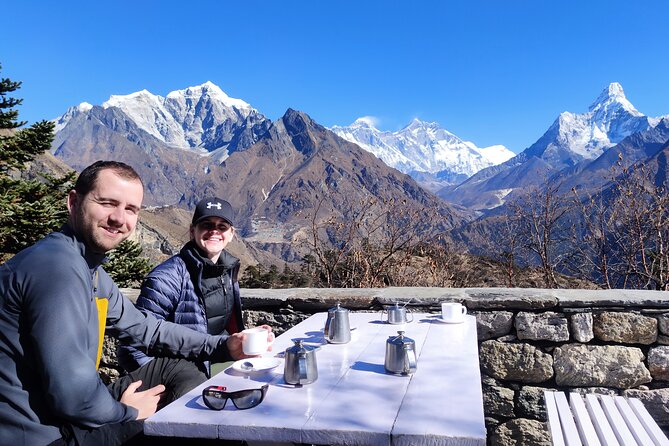
This is a rest day from the main route, but it is not a day of doing nothing. A short hike takes you around Namche to the Everest View Point, where you can see some of the Himalayan peaks and catch a sunrise view if conditions cooperate.
The purpose is to gain height during the day and sleep again at Namche. That gradual pattern helps your body adjust to thinner air. It also gives you a chance to walk without a full pack and see how you are handling the altitude.
I consider this one of the best-planned parts of the schedule. Skipping acclimatization may look efficient on paper, but it makes the higher sections harder and less safe. The trip’s first aid kit includes an oximeter for checking oxygen saturation, though that tool does not replace proper medical judgment or travel insurance.
Day 5: Tengboche and a mountain monastery
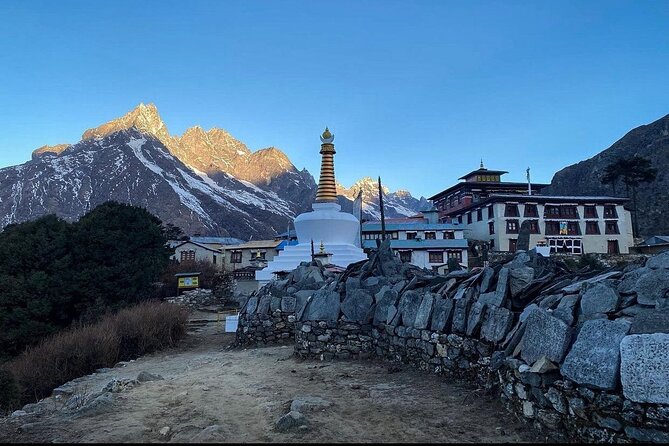
From Namche, the route follows the Dudh Kosi through striking mountain scenery. The trail drops toward Debuche before climbing again to Tengboche, at about 3,860 meters.
Tengboche is known for its monastery, and the stop adds a cultural dimension to what could otherwise be a purely physical journey. You can spend time in the monastery and see its interior details before settling into another high-altitude night.
The day is long, and the pattern of dropping and climbing can be tiring. Keep your pace steady. At this height, a slow walk is not a sign of weakness. It is the sensible way to preserve energy.
Day 6: Through Pangboche to Dingboche
The trail descends from Tengboche to Debuche, crosses the Imja Khola on another suspension bridge, and climbs through Pangboche. Mani stones line parts of the route, bringing reminders of local Buddhist culture into the day’s walk.
Dingboche is the next major stop and sits higher than Namche. You will notice the change in the air and the more exposed feel of the route. This is one of the points where the itinerary’s slower pace earns its keep.
The walk is listed as a long day. You should expect basic mountain accommodation and a full schedule of walking, eating, and resting. The meals are included, but hot and cold drinks, alcohol, and personal snacks are not.
Day 7: Nangkartshang Peak for altitude and views
Dingboche gets another acclimatization day, with a hike toward Nangkartshang Peak. You do not advance toward Base Camp, and that is exactly the point.
The climb gives you a chance to gain more height during daylight, then return to sleep lower in Dingboche. It also provides wide views of the surrounding peaks. The hike is demanding enough to show how your body is reacting, but it avoids the strain of packing up and moving camp.
This is a useful day for speaking honestly with your guide. Guides such as Raj, Ram, Madan, and Rajendra have been singled out for steady support and motivation on past departures, but the specific guide assigned to you is not guaranteed. The local, English-speaking guide is first-aid trained and licensed by Ace the Himalaya.
Day 8: The memorials near Lobuche
The route from Dingboche continues toward Lobuche along the lateral moraine of the Khumbu Glacier. You pass stone memorials for climbers who died on nearby peaks.
This section has a quiet, serious mood. The memorials put the scale and risk of Himalayan mountaineering into plain view. You are trekking on a famous route, but Everest is not a theme-park backdrop. Weather, altitude, and physical limits remain important at every step.
Lobuche is a high overnight stop, and the day is listed as another long one. Your porter carries your main luggage, with one porter assigned to every two people. You still need to carry a daypack with personal essentials, water, layers, and any medication you require.
Day 9: The long walk to Everest Base Camp
This is the major goal of the trek. From Lobuche, you walk along the Khumbu Glacier toward Gorakshep and then continue to Everest Base Camp, at about 5,365 meters.
The route is difficult because of the altitude and uneven ground. The Base Camp area changes with the climbing season, and during spring there may be expedition activity. The most important point is that you reach the site used by Everest climbers without needing mountaineering equipment yourself.
Base Camp is not the highest point on this itinerary, and the views are not always the same as the famous photographs suggest. The real reward is the approach, the glacier, the surrounding peaks, and the knowledge that you have walked to one of the world’s best-known high-altitude destinations.
You return to Gorakshep after the Base Camp excursion. This is a very full day, so do not judge success by speed. A slow, steady pace and careful attention to your guide matter more than arriving first.
Day 10: Kala Patthar at 5,555 meters
The climb to Kala Patthar is one of the hardest and most rewarding parts of the trip. At about 5,555 meters, it is higher than Everest Base Camp and demands a strong effort from the group.
The viewpoint is valued for its broad mountain views, including the Everest area. Early morning conditions can provide especially clear light, though the itinerary does not promise a particular sunrise or visibility.
After Kala Patthar, you return toward Gorakshep. This is when the helicopter return becomes especially valuable. Your legs and lungs have already handled the highest walking days, and you do not need to repeat the long descent through the valley.
Day 11: Helicopter to Lukla, then onward to Kathmandu
The short helicopter flight from Gorakshep to Lukla is the trip’s signature feature. From the air, the route you walked becomes a long ribbon through the Khumbu, and the flight offers a final mountain view without another multi-day trek.
The schedule then includes a scenic flight from Lukla to Kathmandu, listed at about 35 minutes. On arrival, you are transferred back to your hotel. A farewell dinner is included on the last night.
This day depends on weather twice: first for the helicopter from Gorakshep, and then for the Lukla flight. That is normal for mountain aviation. It is wise not to schedule an important international connection immediately after the planned return.
Day 12: Departure from Kathmandu
The final day includes a transfer to Tribhuvan International Airport. The airport and hotel transfers are handled in a private tourist vehicle, according to the package.
Your two Kathmandu hotel nights include breakfast, while lunch and dinner in the city remain your responsibility. Tipping is expected for the trekking staff and driver, so set aside cash for that part of the trip.
What the $3,000 price really covers
The price makes the most sense if you want one company to handle the difficult pieces. You receive:
- Kathmandu airport and hotel transfers
- Two nights in a three-star Kathmandu hotel
- Guesthouse accommodation during the trek
- All standard trekking meals
- Kathmandu to Lukla and Lukla to Kathmandu airfare
- Shared helicopter flight from Gorakshep to Lukla
- Everest National Park and TIMS permits
- A guide and porters
- Staff salary, insurance, equipment, and medicine
- Filtered trail water using a Katadyn Pocket Water Filter
- Seasonal fruit
- A first-aid kit with an oximeter
- Taxes and administrative costs
- A duffel bag, map, and sun hat
That is a strong inclusion list for a guided high-altitude trek. You still need personal trekking clothing and equipment, rescue and evacuation insurance, drinks, Nepal entry visa, international flights, tips, and city meals.
The value depends on your priorities. If you want the cheapest route to Base Camp, the helicopter return will make this poor value. If you want to walk the classic approach but avoid the long return, the added cost buys real time and reduces repeated effort.
Fitness, group size, and practical concerns
You need moderate physical fitness, but that phrase should not be read casually. The trip includes repeated long days, steep climbs, uneven trails, suspension bridges, and very high altitude. The schedule includes acclimatization, yet no operator can guarantee how your body will respond.
The maximum group size is 14 people. That is large enough for a social trip but small enough for the guide to keep the group together more easily than on a big coach-style tour. One porter carries luggage for two trekkers, which keeps your personal load more manageable.
A minimum of two people is required to book. Confirmation is provided at booking, and the meeting time is listed as 8:00 am, though the mountain flight day begins early.
Cancellation terms are strict close to departure. Cancel at least six full days ahead for a full refund, two to six days ahead for a 50 percent refund, and less than two full days ahead for no refund. Weather cancellations offer a different date or full refund, but weather can still disrupt your wider travel plans.
Who should book this Everest trek?
You should consider this trip if you want the full walking approach to Everest Base Camp, prefer organized support, and value a quick return over a lower price. It suits people who want guides and porters arranged in advance, rather than managing permits, meals, transport, and accommodation on their own.
It is also a good fit if you want extra attention to acclimatization. The stops at Namche and Dingboche, plus the hikes to Everest View Point and Nangkartshang Peak, give the itinerary a sensible rhythm.
You should think twice if you dislike long walking days, basic guesthouse accommodation, uncertain mountain flights, or high-altitude exertion. The helicopter makes the return easier, but it does not make the climb to Base Camp easy.
Should you book it?
I would book this trek if the $3,000 price fits your budget and the main goal is to experience Everest Base Camp without spending several extra days walking back to Lukla. The combination of acclimatization days, local guides, porters, included meals, permits, and helicopter return gives you a practical package with strong support.
Before paying, confirm the current flight plan, the exact helicopter arrangements, your insurance coverage, and the personal gear you must bring. Also leave room in your schedule for weather delays. If you are prepared for the altitude and accept that comfort will be basic, this is a well-organized way to reach Base Camp and return with less repetition.
FAQ
How long is the Everest Base Camp trek with helicopter return?
The planned duration is approximately 12 days, including arrival and departure in Kathmandu.
Where does the trek begin?
The walking portion begins in Lukla after a flight from Kathmandu to Tenzing and Hillary Airport, located at about 2,804 meters.
How long is the helicopter flight?
The helicopter ride from Gorakshep to Lukla is listed as approximately 20 minutes.
Is the helicopter flight private?
No. The package specifies a shared helicopter ride from Gorakshep to Lukla.
What accommodation is included?
You receive two nights in a twin-sharing three-star hotel in Kathmandu and twin-sharing guesthouse accommodation during the trek. Attached toilets are specified in Lukla, Phakding, and Namche.
Are meals included?
Breakfast, lunch, and dinner are included during the trek, along with a farewell dinner. Lunch and dinner in Kathmandu, alcoholic drinks, and other beverages are not included.
Is travel insurance included?
No. You must arrange travel insurance that covers emergency rescue and evacuation.
How many people can join the group?
The activity has a maximum of 14 people, and a minimum booking of two people is required.
Just added around Kathmandu
- Everest Base Camp Trek With Local Expert Sherpa Guide★ 5.0 · 15 reviews
- Everest Base Camp Trek with Helicopter Return – 10 Days★ 5.0 · 9 reviews
- Everest Base Camp Trek Via Salleri★ 5.0 · 9 reviews
- Everest Base Camp Trek★ 5.0 · 33 reviews
- Everest Base Camp Trek Via Gokyo Lake and Cho La Pass★ 5.0 · 8 reviews
- Everest Base Camp Trek – 16 Days★ 5.0 · 16 reviews
- Everest Base Camp Trek -17 Days★ 5.0 · 9 reviews
- 14 days Everest Base Camp Trek★ 5.0 · 18 reviews
Everest Base Camp Treks, compared.
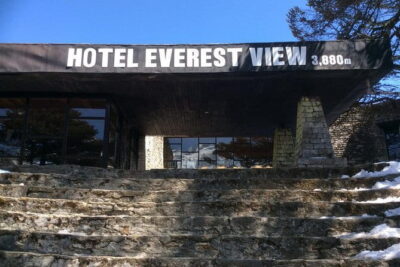
Everest Base Camp Helicopter Tour landing at Everest View Hotel
Read our review →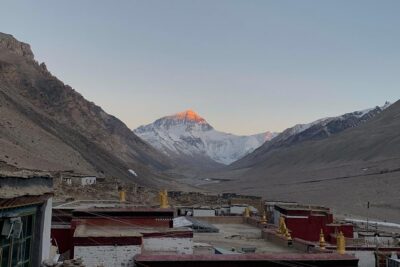
Tibet Tour 8 Days Lhasa to Everest Base Camp Small Group Tour
Read our review →
Dubai: Private Luxury Everest Yacht Cruise from Dubai Marina
Read our review →
Browse the lists this trek appears in