
Review · KATHMANDU
13 Days Annapurna Base Camp Trek
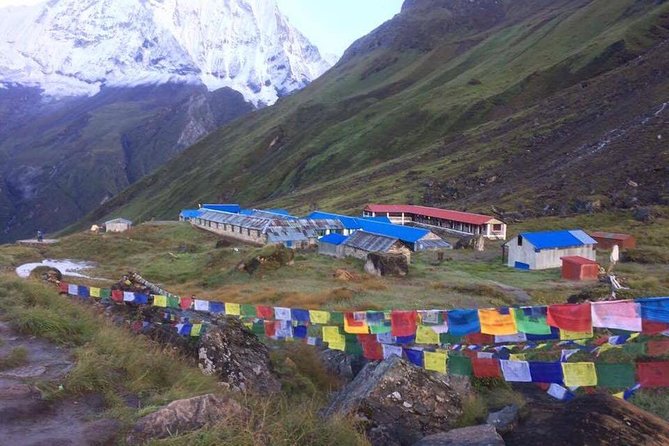
Annapurna Base Camp gives you a close-up Himalayan experience without the extreme length or technical demands of a major expedition. You walk through villages and forest before reaching a high mountain bowl surrounded by Annapurna I, Annapurna South, Hiunchuli, Fang, Gangapurna, Annapurna II, Annapurna III, and Machhapuchhre. I love the family-run tea houses and the chance to see ordinary village life, not just mountain scenery. I also like that the price includes a guide, porter, meals, permits, transport, and city hotels.
The main caution is that this is still a serious trek. You need strong physical fitness, cold-weather gear, insurance covering helicopter rescue, and patience when weather, landslides, road closures, or illness disrupt plans. The details also contain a small but important mismatch: the tour is sold as 13 days, while one overview refers to a 15-day trek, so confirm the exact schedule before paying.
Key points to know before booking
- Annapurna Base Camp is the goal: The route brings you into the mountain amphitheater below several major Himalayan peaks.
- Eight nights are in tea houses: These are normal lodges run by Nepali families, with simpler comfort and fewer hot-shower options at altitude.
- A guide and porter are included: One English-speaking guide and one porter are provided for every two people.
- Pokhara is the trekking gateway: Transport takes you from Kathmandu to Pokhara, then to Nayapul to begin walking, with the return from Phedi.
- Meals are covered during the trek: Breakfast, lunch, and dinner are included during the walking section, but not in Kathmandu or Pokhara.
- The price is broad but not all-inclusive: At $999 per person, you still pay for equipment, visa, insurance, drinks, tips, rescue, and personal expenses.
Why Annapurna Base Camp is such a rewarding trek
Annapurna Base Camp works well for people who want a proper Himalayan trek but do not want to commit to a long circuit or a technical climb. The route is described as moderate, though that word should not lull you into packing like you are taking a gentle country walk. You will be walking for multiple days at altitude, over uneven trails, and through changing weather.
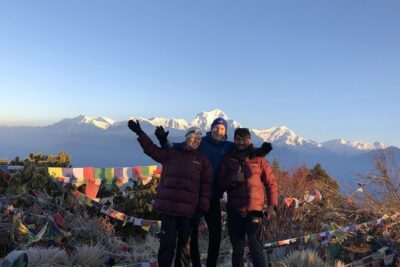
The reward is visual variety. You begin among greener hills and village life, then move toward snow-covered peaks and colder, more exposed surroundings. The mountain views are not saved for one final lookout. They develop as the route rises, with different peaks appearing around you.
The high point is the base camp area itself. You are surrounded by the Annapurna group, including Annapurna I, one of the world’s famous high peaks, along with Annapurna South, Hiunchuli, Fang, Gangapurna, Annapurna II, Annapurna III, and Machhapuchhre. The appeal is not simply ticking off a destination. It is the change from settled farmland and villages to a stark mountain setting.
I also like the human side of the route. Staying in lodges run by Nepali families gives you a direct connection with the communities that support trekking in the region. The rooms are described as basic but acceptable, and conditions become more modest as you go higher. That is part of the deal: you trade hotel comfort for access to the mountains.
More Annapurna Treks in Kathmandu
- Annapurna Circuit Trek with Tilicho Lake
★ 5.0 · 368 reviews - Annapurna base camp trek 5 Days
★ 5.0 · 252 reviews - 14-Day Private Annapurna Base Camp Trek
★ 5.0 · 180 reviews
The 13-day structure, and the detail you should confirm
The supplied information does not provide a complete day-by-day schedule with every village and walking time. That matters because two treks with the same title can vary in pace, acclimatization stops, and overnight locations. You should ask for the final itinerary in writing before departure.
The overall structure is clear:
- Two nights in Kathmandu at Hotel Thamel, with breakfast
- Two nights in Pokhara at Splendid View, with breakfast
- Eight days of accommodation during the trek
- Transport from Kathmandu to Pokhara by tourist bus
- Private transport from Pokhara to Nayapul
- Walking to the base camp area
- Private transport from Phedi back to Pokhara
- Return ground transport from Pokhara to Kathmandu
One description calls the experience a 15-day trek even though the tour title and duration say 13 days. This could be a simple editing error, but it is not a detail I would ignore. Ask whether the package is exactly 13 days, whether extra days are optional, and how many walking days are included.
The advertised start time is 7:15 a.m. That early departure makes sense for long road transfers and mountain walking, but confirm the meeting location and whether airport pickup is tied to the same day. Airport, hotel, and airport transfers are included, which is helpful when you first arrive in Kathmandu and are still figuring out Nepal’s traffic and street layout.
Kathmandu gives you time to get organized
Your two nights in Kathmandu include a three-star bed-and-breakfast hotel in Thamel. Kathmandu is not just a place to sleep before the mountains. It is where you can sort permits, check equipment, exchange money, and meet the guide team.
The package includes the Annapurna Conservation Permit and TIMS, or Trekkers’ Information Management System, registration. It also asks you to bring three passport-size photographs and a hard copy of your itinerary. Bring those documents. Small bits of paperwork are much easier to handle before you leave the city than after the road has narrowed to a mountain track.
Lunch and dinner in Kathmandu are not included. That gives you freedom to choose, but it also means the $999 price does not cover every meal from arrival to departure. Personal drinks, sweets, chocolate, desserts, and other purchases are also separate.
At the end of the trip, a farewell dinner with cultural dance is included. It is a pleasant way to close the journey, though I would treat it as a bonus rather than a reason to choose this trek.
Pokhara is the calm transition to walking
The package includes two nights in Pokhara at Splendid View, with breakfast. Pokhara is the practical staging point for the trek and gives you a softer transition from city travel to mountain travel.
The transport plan is useful. You go from Kathmandu to Pokhara by tourist bus, then use private transport to reach Nayapul, the stated trekking start point. At the other end, the walk finishes at Phedi, followed by private transport back to Pokhara.
That arrangement keeps the group from having to organize separate taxis or local transfers. It also means road conditions matter. The operator warns that landslides, floods, road blockages, political unrest, and government restrictions can force changes. Any extra cost caused by such problems is assigned to you, so keep a financial cushion.
You pay for lunch and dinner in Pokhara yourself. That is easy enough to manage, but remember it when comparing the package with cheaper-looking treks that may advertise only the walking portion.
Same trailhead, a different route:
- Everest Base Camp Trek – 14 Days
★ 5.0 · 1,499 reviews - Everest Base Camp Trek
★ 5.0 · 842 reviews - Everest Base Camp Helicopter Tour landing at Everest View Hotel
★ 5.0 · 668 reviews - Everest Base Camp Trekking
★ 5.0 · 485 reviews
The walking section: villages, forests, and high mountain views
The walking portion lasts eight days in normal lodge or tea-house accommodation. Since the exact overnight villages are not supplied, I would not rely on a fixed list of stops until the operator confirms it.
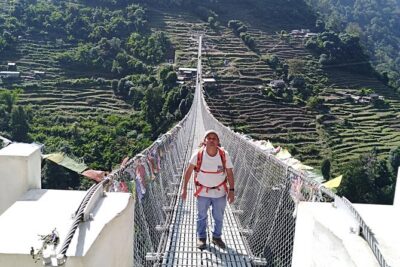
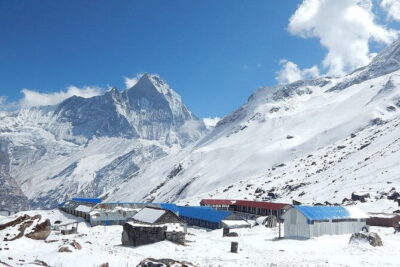
What you can expect is a gradual change in surroundings. Lower sections bring green vegetation and village life. Higher sections become colder and more rugged, with snow and large mountain walls taking over your view. The value of a guided trek is especially clear here. Your guide handles route decisions, helps with lodge arrangements, and can explain the mountains and local culture as you walk.
Past guide teams have included people named Shambu, Ram, Krishna, Jit, Deepak, Chris, Kabiraj, and others. The individual assigned to your group may be different. Ask for the guide’s name and experience before setting out, especially if you are concerned about altitude, weather, or language.
A porter is included for each two people. That can make a major difference. You still need to carry a daypack with water, rain protection, warm layers, medication, and documents, but you should not need to haul your full trekking bag. Pack respectfully and keep your load reasonable. A porter is there to help, not to carry every unnecessary luxury you can fit into a suitcase.
The tea houses are a major part of the experience. They are run by Nepali families and offer a chance to eat and sleep close to local communities. The food is included as breakfast, lunch, and dinner during the trek, with main-course meals covered. Do not expect a city restaurant menu or hotel-style service. The mountain setting and family-run lodges are the point, while comfort is secondary.
Hot showers during the trek are not included. You also pay separately for alcoholic and non-alcoholic drinks, sweets, chocolate, and desserts. Those extras can add up in the mountains, so carry a little spending money and do not assume every small purchase is covered.
What the mountain views are really like
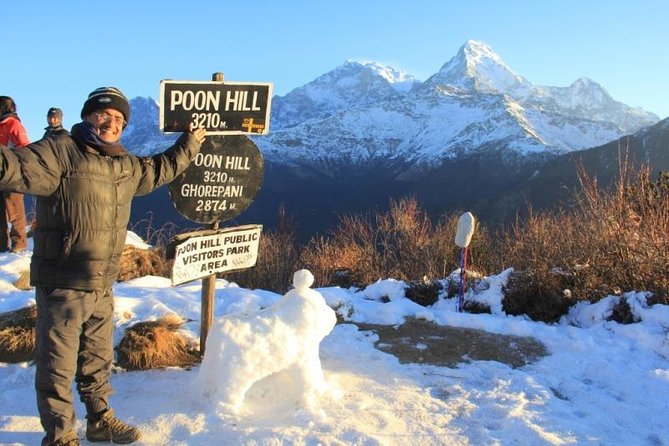
The strongest reason to choose this trek is the concentration of high peaks around the base camp. Annapurna I, Annapurna South, Hiunchuli, Fang, Gangapurna, Annapurna II, Annapurna III, and Machhapuchhre give the final section a powerful sense of enclosure.
Weather controls how much you see. Clear mornings can offer the best views, while cloud, snow, rain, or fog may hide the peaks. One family completed the trek in poor weather and still found the walking rewarding, but that is a useful warning: you cannot buy perfect Himalayan visibility with a tour fee.
November is often favored for clearer conditions, according to the experience described by one couple, though early mornings at high passes can be very cold. Do not treat that as a guarantee. The information also includes an account of snowstorms and heavy rain, so pack for unpleasant weather even if your chosen season is usually considered good.
The trek is not presented as a mountaineering expedition. You are walking to base camp, not climbing the surrounding peaks. Still, altitude can affect strong walkers, and physical fitness is explicitly required. Your guide should be the person you listen to if your body is struggling.
What the $999 price covers
At $999 per person, the package offers solid practical value if you need a guided, organized trek rather than a bare route-and-bed arrangement.
Included are:
- Two nights in Kathmandu with breakfast
- Two nights in Pokhara with breakfast
- An English-speaking trekking guide
- One porter for every two people
- Tourist-bus transport between Kathmandu and Pokhara
- Private transfers between Pokhara, Nayapul, Phedi, and Pokhara
- Breakfast, lunch, and dinner during the trek
- Annapurna Conservation Permit
- TIMS registration
- Guide and porter insurance
- Eight nights of trekking accommodation
- Airport, hotel, and airport transfers
- Service charges
- Farewell dinner with cultural dance
That list removes several large costs that can surprise independent trekkers. You are not separately arranging permits, a guide, a porter, the main road transfers, or the basic food and sleeping plan.
The exclusions are just as important. You pay for trekking equipment, the Nepal entry visa, personal travel insurance, emergency rescue, tips, drinks, hot showers, personal purchases, and meals in Kathmandu and Pokhara. Helicopter rescue is not included as a free benefit. Your insurance must cover medical care, accidents, natural disasters, emergency evacuation, trip cancellation, and lost, stolen, or damaged baggage and gear.
The price is best viewed as a managed trekking package, not an all-inclusive holiday. For someone who values support and does not want to arrange every permit and transfer, it is sensible. For an experienced trekker who already owns gear and can organize local logistics, it may not be the cheapest path.
Equipment and fitness are not optional details
The required packing list is sensible for a high-altitude trek. Bring a sleeping bag rated to minus 15 Celsius, a down jacket, gloves, warm clothes, trekking shoes, socks, sunglasses, sunscreen, a torch, trekking poles, a personal towel, and basic medicines.
The operator also suggests medicine for headache, fever, stomach pain, diarrhea, and general first aid such as plasters, bandages, and painkillers. You should not rely on a tour company to supply your personal medication. Pack anything prescribed by your doctor and keep it accessible.
Good footwear matters more than fashionable clothing. You need shoes suitable for uneven trails and changing conditions. Break them in before arriving. A sleeping bag and down jacket are especially important because hot showers are not part of the trekking package and high lodges can be cold.
The company states that you should have strong physical fitness. Take that seriously. You should be comfortable walking for several hours on repeated days, carrying a daypack, and continuing when the weather turns unpleasant. If you have a medical condition, discuss the trip with a doctor and make sure your insurance is valid for trekking at altitude.
Guide and porter support
The strongest human element of the package is the guide and porter system. One English-speaking guide is provided for the trek, along with one porter for each pair of trekkers. That ratio gives you local support without making the trip feel like a large organized procession.
The guides used by the company have received praise for patience, organization, humor, mountain information, and help with unexpected problems. Names connected with past trips include Shambu, Ram, Krishna, Jit, Deepak, Chris, Kabiraj, and others. Since your actual team is not guaranteed, contact the operator about who will lead your departure.
Tips are not included. Budget for them separately and ask the company what is customary for your group size and trek length. Fair tipping matters because guides and porters carry much of the practical responsibility for a successful trip.
This is a private activity, so only your group participates. That is a useful advantage if you want to set a manageable pace, ask questions freely, or avoid being folded into a large mixed group. It also means your party must be honest about fitness and communicate early if the pace is too fast.
Who should book this trek?
You should consider it if you want a classic Nepal trek with support already arranged, enjoy village lodging, and are comfortable with basic conditions. It suits people who want mountain views and cultural contact without organizing permits, transport, guides, porters, and meals separately.
It is less suitable if you expect hotel comfort throughout, need guaranteed hot showers, dislike changing plans, or want a fully flexible cancellation policy. The booking is non-refundable and cannot be changed for any reason, so do not purchase until your dates, insurance, fitness, and equipment are settled.
I would also ask for clarification if you specifically want the Annapurna Base Camp route rather than the Annapurna Circuit. Some descriptions connected with the company refer to both, and one account mentions high passes and a circuit trek. The title here is Base Camp, but a written route plan protects you from confusion.
Should you book the Annapurna Base Camp trek?
I would book this trek if you want a well-supported introduction to the Annapurna region and value having the main logistics bundled into one price. The included guide, porter, meals, permits, transport, and tea-house lodging make the $999 fee reasonable for a private 13-day arrangement.
Before paying, confirm the 13-day versus 15-day wording, the exact walking itinerary, your assigned guide, the trekking season, and every expected extra cost. If you accept simple lodges, cold mornings, basic food, and weather-related changes, this offers a strong route into Nepal’s high mountains. If you need certainty and comfort, choose a shorter or more hotel-based trip instead.
FAQ
How long is the Annapurna Base Camp trek?
The tour is advertised as approximately 13 days. The supplied description also refers to a 15-day trek, so you should confirm the exact duration and itinerary with the provider before booking.
What accommodation is included?
You receive two nights at Hotel Thamel in Kathmandu, two nights at Splendid View in Pokhara, and eight nights in normal tea houses or lodges during the trek. The tea houses are run by Nepali families.
Are meals included?
Breakfast is included during the Kathmandu and Pokhara hotel stays. Breakfast, lunch, and dinner are included during the trek. Lunch and dinner in Kathmandu and Pokhara are not included.
Is a guide and porter included?
Yes. The package includes one English-speaking trekking guide and one porter for every two tourists.
What transport is provided?
Tourist-bus transport is included between Kathmandu and Pokhara. Private transport is provided from Pokhara to Nayapul at the start of the trek and from Phedi back to Pokhara at the end. Airport, hotel, and airport transfers are also included.
What insurance do I need?
Your personal insurance must cover medical treatment, accidents, natural disasters, emergency evacuation, trip cancellation, and lost, stolen, or damaged baggage and trekking gear. Emergency rescue costs are not included in the tour price.
Just added around Kathmandu
- Everest Base Camp Trek★ 5.0 · 3 reviews
- Everest Base Camp Trek★ 5.0 · 7 reviews
- 15 Days Private Everest Base Camp Trek★ 5.0 · 30 reviews
- Everest Base Camp Trek★ 5.0 · 57 reviews
- 14 Days of Adventure Trekking to Everest Base Camp★ 5.0 · 2 reviews
- 14-Day Everest Base Camp Trek★ 5.0 · 20 reviews
- From Kathmandu: Private 14-Day Everest Base Camp Trek★ 5.0 · 20 reviews
- 14 Days Everest Base Camp Trek★ 5.0 · 4 reviews
Annapurna Base Camp Treks, compared.
Trekking in Annapurna/Langtang/Everest/Upper Mustang regions
Read our review →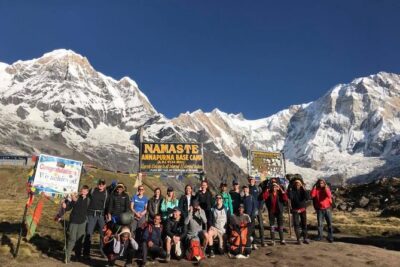
Kathmandu to Annapurna Base Camp (ABC) 5-Day Trek
Read our review →Browse the lists this trek appears in