Review · KATHMANDU
Upper Mustang Trek – 13 Days
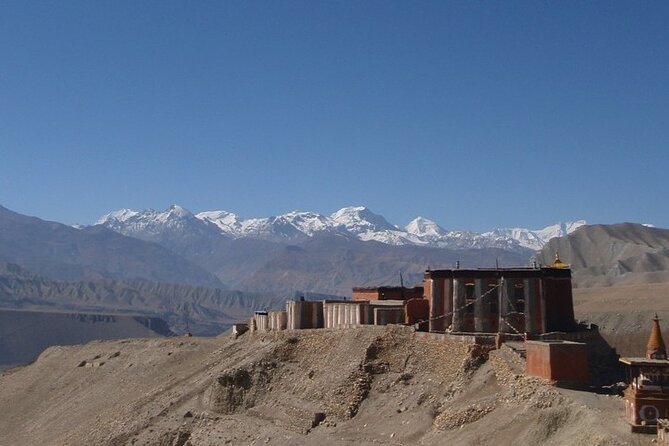
Upper Mustang is Nepal at its most unexpected: a high, dry world of red cliffs, old monasteries, caves, and walled villages, reached by mountain flight and long days on foot. The prize is Lo Manthang, the former royal capital, where four-storey buildings, gompas, and Tibetan-influenced traditions give the trek a strong sense of place.
I like the mix of scenery and culture. You get views of more than 15 mountains, the Kaligandaki River, the world’s deepest gorge area, and the unusual Himalayan desert. I also like that permits, porters, meals, transport, and domestic flights are included. The main drawback is the demanding schedule: most walking days are listed at about six hours, and weather can disrupt the flights.
Key things to know before booking
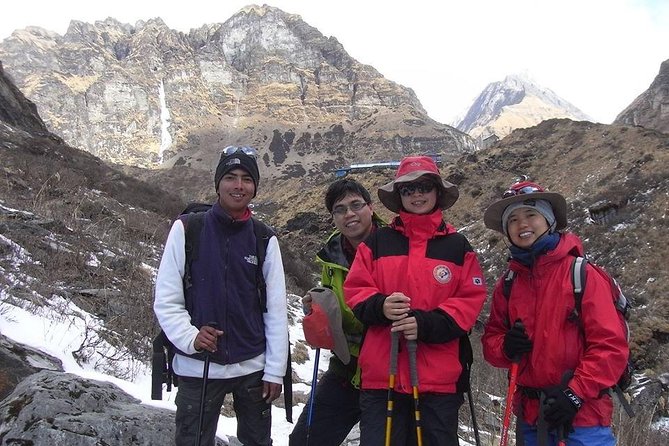
- Lo Manthang is the main prize: Spend a full day exploring the walled city, including Chyodi Gompa, Namgyal Gompa, Tingkhar, and Tall Champa Lakhang Gompa.
- The route is culturally focused: You visit monasteries, old caves, rock paintings, chortens, and villages shaped by Tibetan traditions.
- The scenery is dry and dramatic: Expect a Himalayan desert rather than green foothills, with barley fields, cliffs, high passes, and broad mountain views.
- The trek includes flights and road transfers: You travel by tourist bus between Kathmandu and Pokhara, then fly between Pokhara and Jomsom as scheduled.
- The price covers major trekking costs: At $2,300 per person, the package includes permits, guide, porters, meals, hotels in Pokhara, and domestic flights.
- Tiji Festival dates matter: If the trip lines up with the festival, you may see one of Mustang’s best-known cultural events, but it is not guaranteed.
Why Upper Mustang feels unlike the rest of Nepal
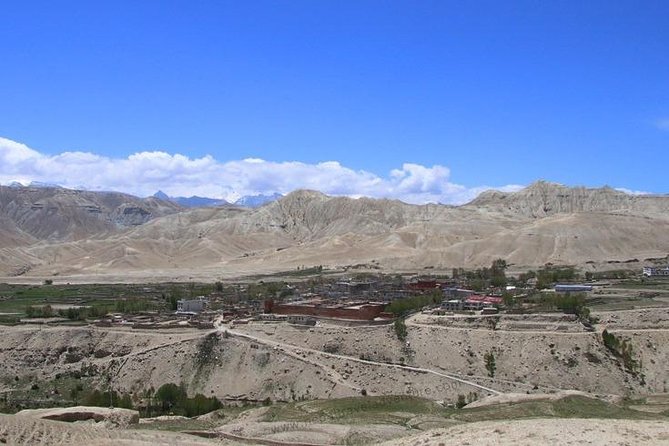
Many classic Nepal treks are built around green valleys and snowy ridges. Upper Mustang gives you something different. The route moves through dry, open country with cliffs, stone houses, barley fields, and settlements that feel tied to the Tibetan Plateau.
The Kali Gandaki corridor adds another layer. You walk beside or near the river in sections, then climb toward villages and passes where the views open wide. The mountains appear in unusual directions, and the dry air makes the colors of the cliffs, buildings, and prayer structures especially clear.
I would choose this trip if you want more than mountain scenery. The monasteries, old caves, rock paintings, and local architecture are central to the experience. You are not simply walking from one view to the next. You are moving through an old cultural region where the built environment matters as much as the peaks.
The route also has a strong sense of remoteness, though the itinerary is not an expedition. You stay in hotels or local accommodation along the way, and a porter carries your luggage. Still, this is a serious walking holiday. A moderate level of fitness is required, and six-hour walking days are common.
A few more treks around Kathmandu worth a look
- Everest Base Camp Trek – 14 Days
★ 5.0 · 1,499 reviews - Everest Base Camp Trek
★ 5.0 · 842 reviews - Everest Base Camp Helicopter Tour landing at Everest View Hotel
★ 5.0 · 668 reviews
Kathmandu to Pokhara: an easy start with a long transfer
Day one begins with a morning hotel pickup in Kathmandu and a drive to Pokhara. The transfer is listed at about six hours, so this is mainly a travel day rather than a sightseeing day.
Pokhara is your staging point for the flight into Mustang. You have the evening free, which gives you time to rest and prepare for the trek. Major meals in Kathmandu and Pokhara are not included, so set aside extra money for food in both cities.
The group size can reach 15 people. That is large enough for a social trip, but still small enough for a guide to keep the group together on the trail. If you prefer a private departure or a smaller group, ask before paying.
Jomsom and Kagbeni: the first taste of Mustang
After breakfast on day two, you go to the airport for the flight to Jomsom. The package includes the Pokhara to Jomsom and Jomsom to Pokhara flights, along with airport departure taxes. Flight timing is important here because poor weather can cause changes or cancellation.
From Jomsom, the route heads toward Kagbeni, passing Ekle Bhatti. The walk is listed at four to six hours. Kagbeni is an important transition point, as the surroundings begin to feel much drier and more distinctly Mustang-like.
This is a good place to settle into the rhythm of the trek. You will be walking for several hours, carrying a daypack, and relying on the guide and porter team for route support and luggage handling. Water, tea, coffee, snacks, showers, and personal purchases are not included, so keep some cash available.
Chele through Tangbe and Chhusang
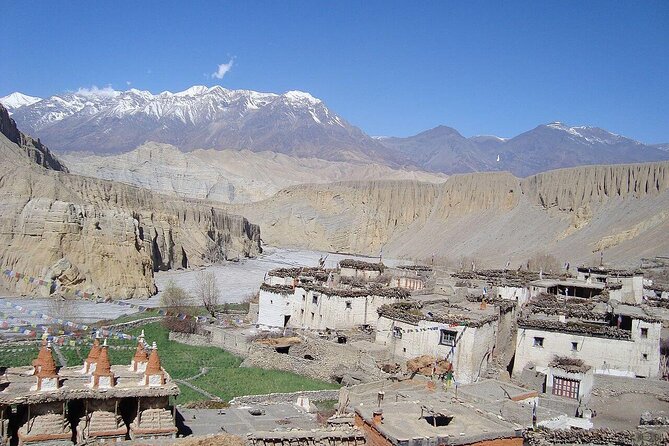
Day three takes you toward Chele, passing Tangbe and Chhusang. The walking time is listed at about six hours, with scenery that makes the effort worthwhile.
Tangbe and Chhusang give you a first close look at Mustang’s villages and dry mountain setting. The route is not just a climb through empty country. It connects settlements, fields, cliffs, and river corridors, with plenty of opportunities to stop for views.
Chele is your overnight base. By this point, you will have moved well beyond the feel of the lower valleys around Pokhara. The trip becomes quieter and more focused on walking, village life, and the surrounding terrain.
Same trailhead, a different route:
- Everest Base Camp Trekking
★ 5.0 · 485 reviews - Annapurna Circuit Trek with Tilicho Lake
★ 5.0 · 368 reviews - Everest Base Camp Trekking – 13 Day
★ 5.0 · 365 reviews - Everest Base Camp Trek
★ 5.0 · 350 reviews
Taklam La Pass and the caves near Samar
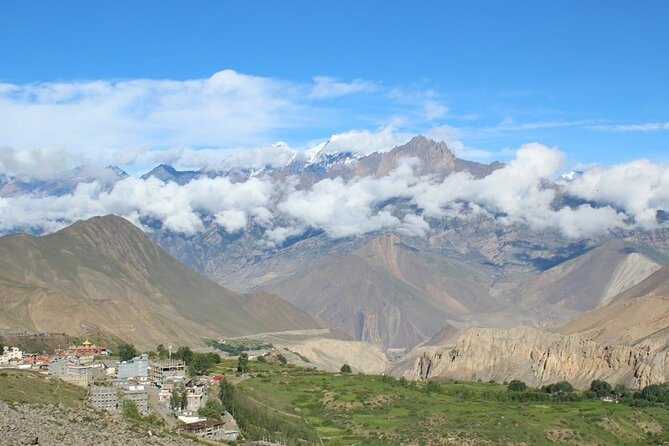
The fourth day is one of the more varied sections. You climb toward Taklam La Pass, then pass through Samar and continue toward Syangbochen. The route also includes Ramchung Cave and views of Tilicho Peak, Yakwa Kang, and Damodar Danda.
A high pass changes the feel of a walking day. You work for the climb, then gain a wider view of the mountains and valleys. The caves add a cultural and historical note, though the exact amount of time spent at each stop depends on the guide and group pace.
Syangbochen is the overnight stop. The itinerary describes this as another six-hour walking day. You should not treat the stated timing as a guarantee. Stops, trail conditions, weather, and the pace of the slowest person in the group can all affect the day.
Ghami and Tsarang: fields, walls, and monasteries
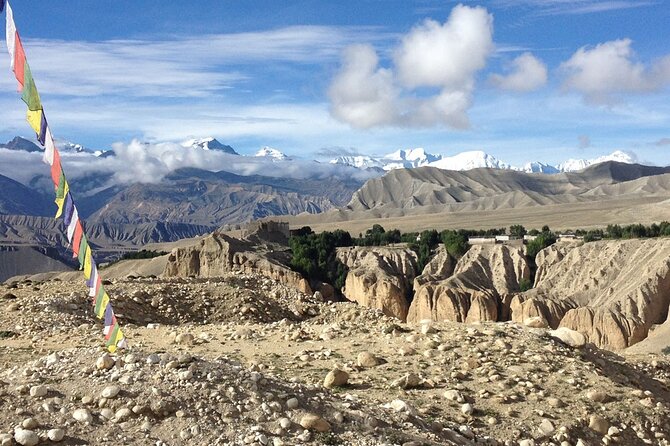
On day five, you walk toward Ghami through an area with barley fields and mountain views. Barley is closely tied to life in this dry region, and seeing cultivated fields here helps explain how communities have adapted to a harsh environment.
The next day leads to Tsarang. This section is noted for willow trees, maze-like fields, stone-walled houses, and a gompa. I like this part of the route because it brings together several things that define Upper Mustang: careful farming, old construction, and religious buildings set against dry mountains.
Tsarang is not simply a place to sleep. It is one of the stops where you can look closely at how villages are arranged and how much local life depends on small areas of cultivated land. Bring patience for these stops. A quick photograph from the trail will not tell you much about the place.
Reaching the walled city of Lo Manthang
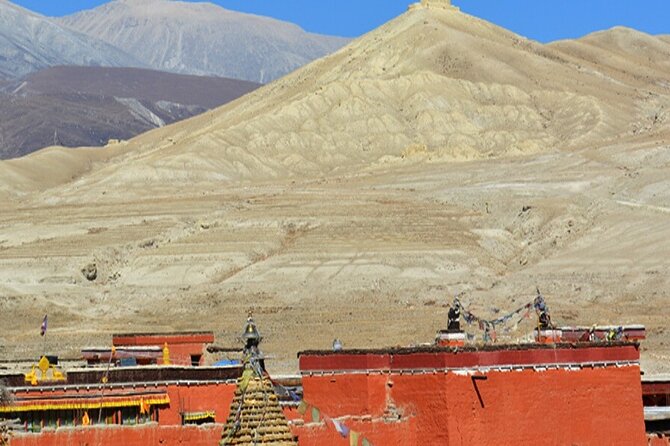
Day seven takes you to Lo Manthang, described in the program as the capital city of Mustang. The route offers views toward Nilgiri, Tilicho, and Annapurna before reaching the long walled settlement.
Lo Manthang is the emotional high point of the trek. Its walls, compact streets, old buildings, and religious sites give the town a clear identity. After several days of walking through smaller villages and open country, arriving at the walled city feels like a real destination rather than another overnight stop.
The route description uses both Lo Manthang and Lomanthang. They refer to the same place, so do not be concerned if your paperwork uses one spelling and your guide uses the other.
A full day to explore Lo Manthang
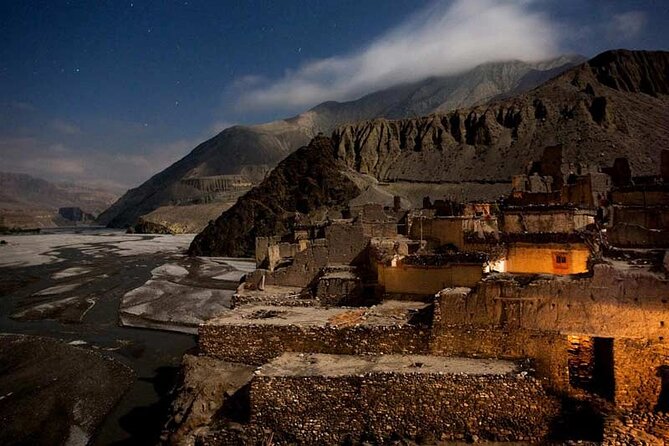
Day eight gives you time to explore Lo Manthang rather than rushing onward. Listed stops include the four-storey Durbar, Chyodi Gompa, Namgyal Gompa, Tingkhar, and Tall Champa Lakhang Gompa.
This rest day is one of the strongest parts of the program. You can learn about local life, traditions, buildings, and religious practice without also facing a long transfer. The old monasteries and palace areas are the sort of places that reward careful looking, especially if your guide explains what you are seeing.
The trip also mentions the Tiji Festival, a major cultural event that may fall during your dates. It is conditional, not part of every departure. If seeing it matters to you, confirm the dates before booking rather than assuming the trek includes it.
Ghar Gompa and the old rock paintings
Day nine takes you toward Dri and includes a visit to Ghar Gompa, described as about 1,200 years old and known for its rock paintings. This is one of the most distinctive cultural stops on the route.
The walk is again listed at about six hours. After several days of trekking, the distance may feel more demanding, even if the terrain looks open and manageable. The dry surroundings can make the sun feel strong, so practical items such as water, sun protection, and snacks are important personal purchases.
Ghar Gompa gives the trip a sense of age that is difficult to get from scenery alone. The paintings and religious setting connect the route to traditions that reach far beyond the modern road and trekking industry.
Damodar Kunda, chortens, and the route to Tange
On day ten, you head toward Tange. The route includes shallow stream crossings, Damodar Kunda, and a series of chortens before the overnight stop.
This is another day when the character of the route matters more than a single landmark. Shallow crossings, open dry ground, and repeated chortens create a steady rhythm. Damodar Kunda adds a sacred element to the walk, while Tange provides a more remote-feeling overnight setting.
The itinerary does not provide detailed information about accommodation standards in each village. You should ask the operator what type of room and bathroom facilities to expect on the walking days. Hotels in Pokhara are included, but the lodging arrangements in Mustang should be confirmed directly.
Returning through Muktinath and Jomsom
Day eleven is described as the route toward Muktinath, but the final line says you reach Jomsom and stay there overnight. That is an important detail to clarify before booking. Ask whether Muktinath is an actual stop, a route reference, or a wording error in the schedule.
The return section is listed as another long walking day. After the cultural focus of Lo Manthang and the remote stops beyond it, this part brings you back toward the main transport point at Jomsom.
The schedule also lists a Jomsom to Pokhara flight within the included services, while day twelve says you spend the day in Pokhara. Confirm the exact transfer plan, especially if you have onward flights or hotel bookings.
Pokhara rest time and the ride to Kathmandu
Day twelve is set aside for Pokhara. The listed activity time is about one hour, but the description says you have free time to walk around the city. This is useful after a long trek and gives you a buffer in case the return flight arrives later than planned.
Day thirteen includes breakfast at the hotel and a tourist bus back to Kathmandu. The description says six minutes, but the stated ground transfer from Pokhara to Kathmandu is listed elsewhere as about six hours. Treat the six-minute figure as a clear scheduling error and confirm the departure time with the operator.
The bus transfer is included, as is the Kathmandu to Pokhara trip at the start. Major city meals are not included, and personal costs remain your responsibility.
What the $2,300 price covers
At $2,300 per person, this is not a budget walk, but Upper Mustang permits alone make this a more expensive Nepal trek than many standard routes. The package includes the special Upper Mustang permits and Annapurna Conservation Area Project permits, which is a major part of the value.
You also receive:
- Tourist bus transport between Kathmandu and Pokhara
- Domestic flights between Pokhara and Jomsom
- Airport departure taxes
- Pokhara hotel stays listed in the schedule
- A government-licensed English-speaking guide
- Porters to carry luggage
- A duffle bag if needed
- Government taxes, VAT, official expenses, and service charges
- Twelve breakfasts
- Ten lunches
- Ten dinners
The package does not cover food in Kathmandu and Pokhara, personal drinks, snacks, showers, bar bills, emergency rescue, or costs caused by flight cancellation, landslides, or weather. These exclusions are normal for a trek, but they can affect your final budget.
I see the price as reasonable if you want a single organized package with permits, porters, meals, transport, and flights handled together. It offers less value if you already have local support, can arrange permits yourself, or prefer to organize each segment separately.
The guide and support team
Mr Hari is identified as the person who helps arrange trips and answers preparation questions. The trek itself includes a government-licensed English-speaking guide and porters, but no individual guide name is supplied.
That distinction matters. Ask for the name and experience of your assigned guide, how luggage weight is handled, and what happens if someone needs to slow down or leave the route. The group limit is 15, so you should also ask how many people are booked for your departure.
The included duffle bag is useful, especially if you plan to leave non-trekking items in Kathmandu or Pokhara. Confirm whether the bag is yours to keep or borrowed for the trip.
Who should book this trek?
I would recommend it to you if you want a culturally focused trek, can manage repeated six-hour walking days, and like dry mountain scenery more than green valley trails. It is a strong match for anyone drawn to monasteries, old caves, Tibetan-style villages, walled settlements, and the history of Mustang.
I would be cautious if you need a highly predictable schedule. Mountain flights can be canceled by weather, and the itinerary contains a few unclear details around Muktinath, Jomsom, and the return flight. Ask for a corrected day-by-day schedule before you pay.
Free cancellation is available up to 24 hours before the start time for a full refund. If poor weather cancels the experience, you are offered another date or a full refund. The same applies if the minimum group size is not met.
Should you book the Upper Mustang Trek?
Book this trek if Lo Manthang, Ghar Gompa, mountain desert scenery, and local culture are the reasons you want to visit Nepal. The best parts are specific and memorable: the walled city, the old rock paintings, the monasteries, the pass views, and the stark route beside the Kali Gandaki region.
Before booking, get written confirmation of the Muktinath section, the Jomsom to Pokhara flight, accommodation outside Pokhara, group size, and the name of your guide. If those details are clear, the $2,300 package gives you a practical way to reach one of Nepal’s most unusual trekking regions without arranging every permit and transfer yourself.
FAQ
How long is the Upper Mustang Trek?
The experience lasts approximately 13 days, beginning in Kathmandu and ending with the return to Kathmandu from Pokhara.
What is the price per person?
The listed price is $2,300 per person.
What transport is included?
Tourist bus transport between Kathmandu and Pokhara is included. Domestic flights between Pokhara and Jomsom are also included, along with airport departure taxes.
Are permits included?
Yes. The package includes Upper Mustang special permits and Annapurna Conservation Area Project permits.
Are meals included?
Breakfast is included for 12 days, lunch for 10 days, and dinner for 10 days. Major meals in Kathmandu and Pokhara are not included.
Is a guide provided?
Yes. A government-licensed English-speaking guide is included, along with porters to carry your luggage.
What is the group size?
The maximum group size is 15 people.
Is the trek physically difficult?
A moderate level of physical fitness is required. Most walking days are listed at about six hours, so you should be prepared for repeated long days on foot.
Can the trip be canceled because of weather?
Yes. The experience requires good weather. If it is canceled because of poor weather, you are offered a different date or a full refund.
Just added around Kathmandu
- Everest Base Camp Trek★ 5.0 · 3 reviews
- Everest Base Camp Trek★ 5.0 · 7 reviews
- 15 Days Private Everest Base Camp Trek★ 5.0 · 30 reviews
- Everest Base Camp Trek★ 5.0 · 57 reviews
- 14 Days of Adventure Trekking to Everest Base Camp★ 5.0 · 2 reviews
- 14-Day Everest Base Camp Trek★ 5.0 · 20 reviews
- From Kathmandu: Private 14-Day Everest Base Camp Trek★ 5.0 · 20 reviews
- 14 Days Everest Base Camp Trek★ 5.0 · 4 reviews
Kathmandu Trekking Tours, compared.
Everest Base Camp Helicopter Tour landing at Everest View Hotel
Read our review →