
Review · KATHMANDU
13 Days Adventurous Mardi Himal Trek From Kathmandu
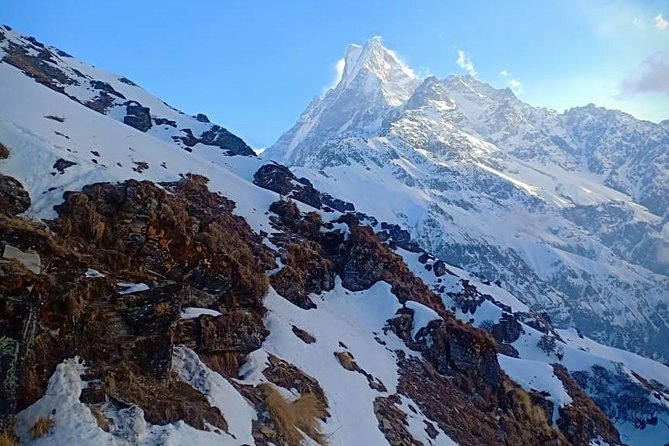
Mardi Himal gives you a fine mix of high mountain walking and village life without making the trek only about reaching a summit. You follow forest trails, ridge paths, and mountain roads toward views of Machchhapuchchhre, Annapurna, Manaslu, and other peaks above 7,000 meters. The route also includes Pokhara’s lakeside sights and four major Kathmandu landmarks.
I like two things right away: the private format, which keeps the group to your own party, and the way the trip includes both a home stay in Lwang Ghalel and tea-house nights along the trail. The main drawback is the long travel rhythm. You spend about seven hours on a bus from Kathmandu to Pokhara, then about eight hours returning, and the trek requires strong fitness.
Key points at a glance
- Mardi Himal Base Camp is the main prize: The route reaches a dramatic ridge with views of Machchhapuchchhre and other Himalayan peaks.
- The trek includes a real village stay: Lwang Ghalel offers a home stay and a chance to learn about Gurung culture.
- You travel in a private group: Only your party takes part, with an English-speaking guide.
- Transport is partly by tourist bus: Kathmandu to Pokhara and back takes most of a day each way.
- The price includes useful trekking basics: Permits, TIMS card, tea-house lodging, city hotels, and transfers are covered.
- Meals and several entrance fees cost extra: Budget separately for food, drinks, and listed sightseeing tickets.
Why this 13-day route works
This trip is built as a full Nepal introduction rather than a trek alone. You begin with airport pickup in Kathmandu, travel to Pokhara, walk for several days in the Annapurna region, then return to the cities for waterfalls, caves, temples, and old palace squares.
That structure suits you if you want mountain scenery but also care about culture and city sights. You get time in Kathmandu at both ends, which makes the journey feel more rounded. You are not simply dropped at a trailhead and sent home after the last walking day.
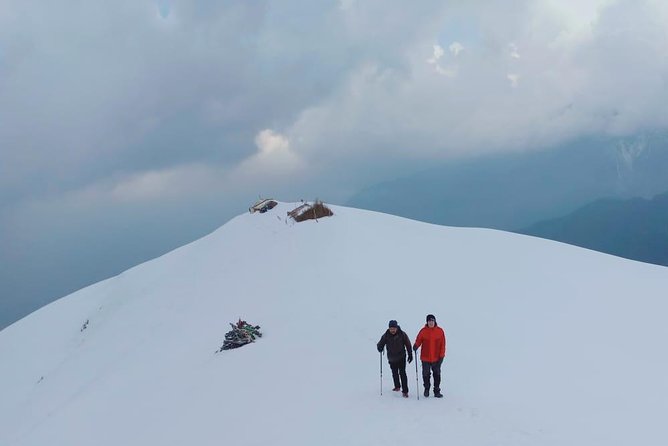
The trekking section is the heart of the experience. The route moves from Pothana through Forest Camp and Low Camp to High Camp, then reaches Mardi Himal Base Camp on the most demanding day. After that, the path turns down through Siding and Lwang Ghalel before returning to Pokhara.
The schedule is active. Walking days range from about four to eight hours, and the Base Camp day is listed at eight hours. You should be comfortable with sustained uphill and downhill walking before booking. The tour specifically calls for strong physical fitness, so this is not a gentle sightseeing holiday with a few optional walks.
More Mardi Himal Treks in Kathmandu:
- Mardi Himal Trek
★ 5.0 · 41 reviews - 4 Days Mardi Himal Base Camp Trek – 4500 Meters
★ 5.0 · 9 reviews - Pokhara: 4-Day Mardi Himal Trek
★ 4.9 · 59 reviews
Day 1: A simple arrival in Kathmandu
Your trip begins at Tribhuvan International Airport, where a private car transfers you to your hotel. The airport ride is listed at about 40 minutes, though actual time depends on traffic in Kathmandu.
This first day is useful for getting settled rather than sightseeing. You have a chance to organize your gear, meet the guide, and prepare for the early departure to Pokhara. Since the package includes a two-star hotel in Kathmandu, expect practical accommodation rather than an upscale stay.
The listed meeting time is 7:15 am at the airport. Because arrival details can vary, check the confirmed pickup arrangements before you fly. Airport transfer is included, and that removes one common worry after a long international journey.
Day 2: The seven-hour road to Pokhara
The tourist bus leaves Kathmandu at 7 am and takes about seven hours to reach Pokhara. The drive is part of the experience, with river and mountain views along the route, but you should treat it as a full travel day.
I would keep this day free of fixed plans. Road conditions and traffic can affect the timing, and the schedule already allows most of the day for the journey. On arrival, you are transferred to your Pokhara hotel.
The package includes the Kathmandu to Pokhara and Pokhara to Kathmandu tourist bus. That is good value, though a bus is less private and less flexible than a private vehicle. If you prefer to stop often or avoid a long shared ride, this arrangement may test your patience.
Days 3 and 4: From Pothana into the forest
On Day 3, a roughly 40-minute drive takes you to the starting point near Pothana. You then walk for about five hours. This is where the trip changes from transport and city hotels to forest trails, mountain villages, and tea-house nights.
Pothana is a useful early stage because you do not begin with the longest walking day. The route lets you settle into the rhythm of trekking while the guide manages the pace and route.
Day 4 continues toward Forest Camp. The path passes through woodland and small mountain settlements, with mountain views appearing between the trees. Again, the walking time is about five hours. Accommodation is in a tea house, a simple and practical style of lodging that keeps you close to the trail.
Do not expect hotel comforts in the hills. Meals and drinks are not included, though they are available to buy. Carry enough personal spending money for food and drinks during the trekking days.
A few more treks around Kathmandu worth a look
- Everest Base Camp Trek – 14 Days
★ 5.0 · 1,499 reviews - Everest Base Camp Trek
★ 5.0 · 842 reviews - Everest Base Camp Helicopter Tour landing at Everest View Hotel
★ 5.0 · 668 reviews - Everest Base Camp Trekking
★ 5.0 · 485 reviews
Days 5 and 6: Low Camp and High Camp
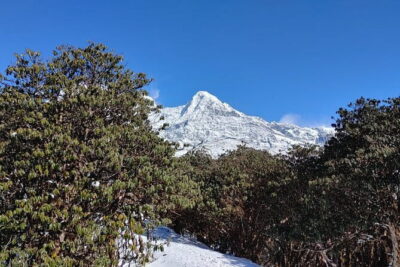
Day 5 takes you to Low Camp in about five hours. The route brings wider views and a stronger sense that you are moving higher into the mountains. The changing scenery is one reason this trek appeals to people who want more than a forest walk.
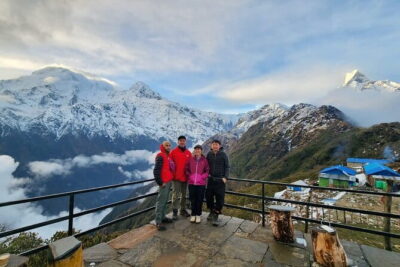
Day 6 continues to High Camp, also in about five hours. From here, the views open toward the surrounding peaks and ridges. The schedule names Hotel Trekkers Paradise, pizzeria, and cafe as the stop, but the key point is your overnight stay at the high point before the Base Camp walk.
The increase in altitude matters even though the exact elevations are not provided. Walk steadily, follow the guide’s advice, and do not treat the five-hour estimate as a race. Weather can also affect mountain views, and clear conditions are never guaranteed. One useful detail from the available account of the trip is that the route remained clear even during monsoon season, but you should still expect conditions to change.
Day 7: The ridge walk to Mardi Himal Base Camp
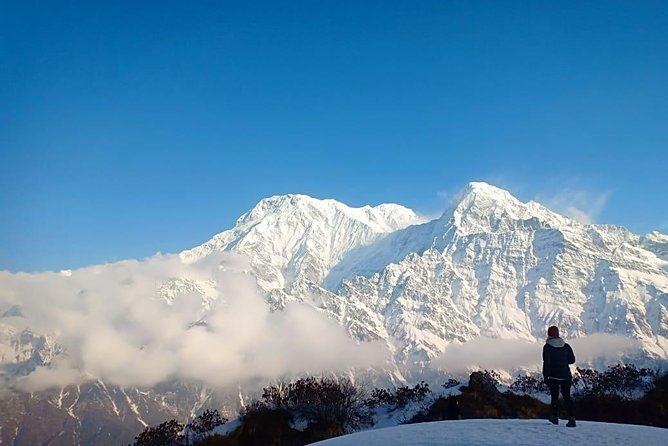
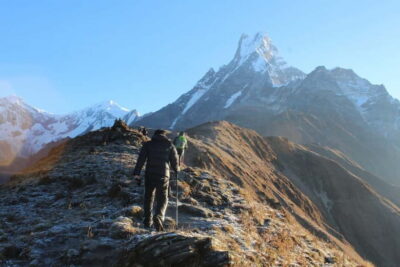
This is the trip’s major day. You walk along a mountain ridge and cliffside route to Mardi Himal Base Camp, with about eight hours of trekking in total. The guide is expected to keep you alert to the route and walking technique, which matters on a narrow or exposed ridge.
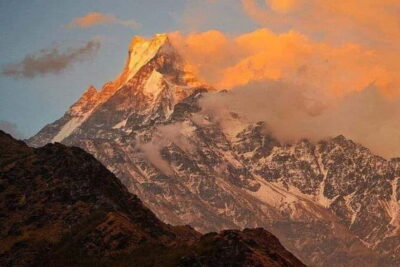
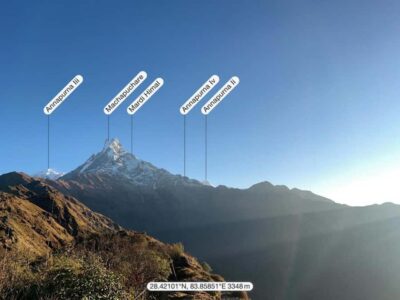
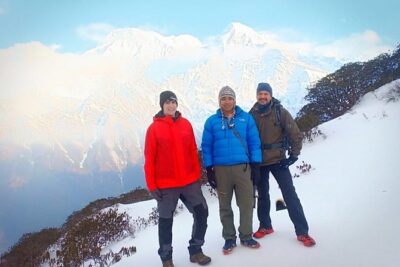
The payoff is the view toward Machchhapuchchhre, also known as Fish Tail, along with Annapurna and other Himalayan peaks. The scenery here is the reason to choose Mardi Himal. You get a high mountain setting without the itinerary turning into a technical climbing trip.
After spending time at Base Camp, you walk back to High Camp for the night. That return makes the day long, but it also avoids adding another full day to the schedule. You should be ready for tired legs and changing weather. Strong fitness is not a casual suggestion here.
Days 8 and 9: Down through Siding and Lwang Ghalel
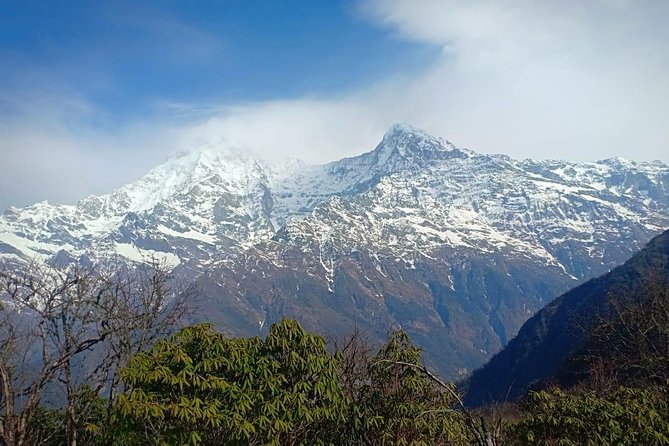
After the high point, Day 8 heads down to Siding. The six-hour route passes through villages, forest, and green hills. Descending can feel easier than climbing, but steep downhill walking can be hard on knees, especially after the long Base Camp day.
Day 9 continues to Lwang Ghalel, another six-hour walking day. This is one of the most appealing parts of the plan because you stay in a Nepali home rather than only using tea houses. You can meet local residents and learn more about Gurung culture in a setting that feels closer to ordinary village life.
The home stay is also a reminder to keep expectations practical. A village home stay is about local contact, not polished hotel service. The itinerary does not specify room or bathroom arrangements, so ask the operator if those details matter to you.
Day 10: Return to Pokhara, then four major sights
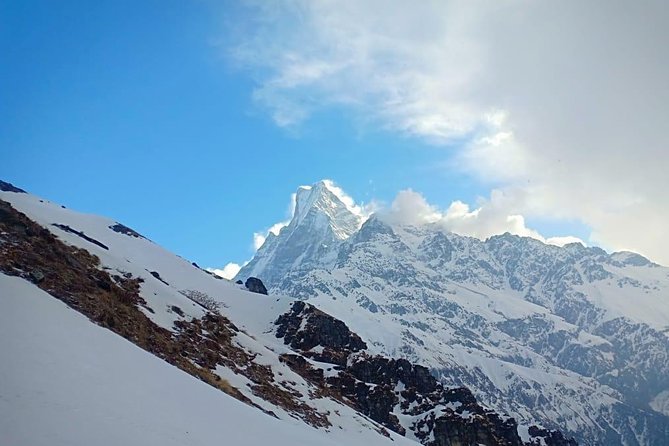
The final walking stage takes you toward Banskot via Hyangjakot and lasts about four hours. You pass village and mountain views before transferring back to Pokhara. This shorter walk is well placed after the harder days above.
After refreshing at the hotel, the tour visits Devi’s Fall. The waterfall is listed as a 20-minute visit, followed by Gupteshwor Mahadev Cave for about an hour. The cave is next to the waterfall, so these stops fit together neatly.
You then drive up to the World Peace Stupa. From the hilltop, you can look across Fewa Lake, Pokhara, the Annapurna range, and the surrounding hills. The stop lasts about an hour and gives you a strong final view of the area before returning to city accommodation.
Entrance tickets for Devi’s Fall and Gupteshwor Mahadev Cave are not included. The World Peace Stupa visit is listed without an admission charge. Keep a little cash available for the paid sites.
Day 11: The long return to Kathmandu
The bus leaves Pokhara at 7 am and takes about eight hours to reach Kathmandu. This is another full road day, and it may feel especially long after nine days of walking.
The package includes a private car transfer from the hotel to the bus station and another transfer to your Kathmandu hotel after arrival. That small service is useful when you have trekking bags and are tired from the road.
The schedule does not add sightseeing on this day, which is sensible. You need the time to rest before the final city tour.
Day 12: Four Kathmandu landmarks
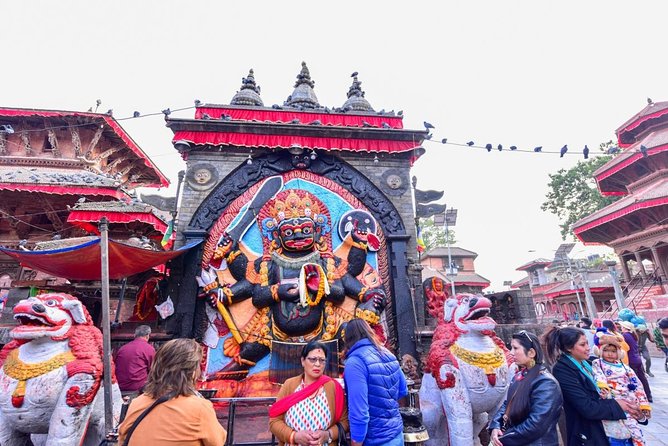
The final full day covers four important sites. Pashupatinath Temple is a famous Hindu temple and takes about an hour. The visit gives you a look at one of Kathmandu’s major religious places, though the entrance ticket is not included.
Swayambhunath, often called the Monkey Temple, sits on a hill and offers views across Kathmandu Valley. The stop lasts about an hour and is listed with free admission. Boudhha follows for about 30 minutes, giving you another important Buddhist site.
The day ends at Kathmandu Durbar Square, an ancient palace area. Allow about an hour, with admission not included. This schedule is efficient, but it is not leisurely. If you like to linger at temples, take photographs, or explore side streets, you may wish you had more time.
Still, the selection is strong. You see Hindu and Buddhist landmarks, a hilltop viewpoint, and an old royal center in one day. It gives you useful context after the mountain portion of the trip.
What the $906.67 price really covers
At $906.67 per person, the value depends on what you need included. The package covers airport pickup, private transfers to and from the trekking point, tourist bus transport between Kathmandu and Pokhara, two-star city hotels, tea-house accommodation, trekking permits, the TIMS card, and an English-speaking guide.
Those inclusions remove several costs that can add up on a Nepal trek. The private format is also important. You are not joining a large group, so the guide can focus on your party and the pace that suits your group.
The price does not include meals, drinks, emergency rescue costs, optional gratuities, or several sightseeing entrance fees. You should budget for all of those separately. Rescue costs deserve special attention because insurance and emergency arrangements are not included in the stated price.
The trip is a better value for you if you want one booking to handle transport, permits, lodging, and guiding. It is less attractive if you already have local contacts or prefer to arrange each part independently.
Who should book this trek?
I would recommend this experience to you if you want a moderate-length Himalayan trek with city sightseeing built in. It suits an active private group that values a guide, does not mind simple tea-house accommodation, and wants both mountain views and local village contact.
The route may also suit you if Mardi Himal is your first major Nepal trek, provided you are fit enough for the walking schedule. The day to Base Camp is long, and the trip calls for strong physical fitness.
I would think twice if you dislike long bus rides, need high-comfort accommodation, or want every meal and entrance fee prepaid. The itinerary is practical, but it is not a luxury package. Weather, road conditions, and mountain visibility can also affect the experience.
The available feedback points to smooth arrangements, helpful guiding, and dependable vehicles and accommodation. One account came from a monsoon-season trek with clear weather, while another describes the guide explaining the route before the group set out from Pokhara. Those details match the parts of the tour that matter most: clear direction, organized transfers, and steady support on the trail.
Booking details to keep in mind
This is a private activity for your own group, with confirmation provided when you book. Pickup is offered, and group discounts may be available.
You can cancel for a full refund if you do so at least three full days before the local start time. Changes or cancellations made inside that period are not accepted for a refund.
The operator is Couch Adventure Nepal, also identified as CAN. No individual guide name is provided, so if you want to know who will lead your trek, ask before confirming.
Should you book Mardi Himal from Kathmandu?
Book it if you want a well-rounded Nepal trip that joins a serious trek to Pokhara sightseeing and Kathmandu’s major temples. The high ridge to Mardi Himal Base Camp, the Gurung home stay in Lwang Ghalel, and the private guiding are the strongest reasons to choose it.
Skip it if you want short walks, private road transport throughout, or a package with meals and emergency costs included. For fit hikers who accept simple lodging and long bus days, the $906.67 price offers a useful combination of mountain access, cultural stops, permits, transfers, and guiding.
FAQ
How long is the Mardi Himal experience?
The experience lasts approximately 13 days, including time in Kathmandu, Pokhara, the Mardi Himal trekking route, and the return to Kathmandu.
Where does the tour begin?
It begins at Tribhuvan International Airport in Kathmandu, with airport pickup provided. The listed start time is 7:15 am.
Is this a private tour?
Yes. Only your group participates in the activity.
Is an English-speaking guide included?
Yes. An English-speaking trekking guide is included.
Is transport from Kathmandu to Pokhara included?
Yes. Tourist bus transport from Kathmandu to Pokhara and back to Kathmandu is included.
What accommodation is included?
The package includes two-star hotel accommodation in Kathmandu and Pokhara, plus tea-house accommodation during the trek.
Are trekking permits included?
Yes. The trekking permit and TIMS card are included.
Are meals and drinks included?
No. Meals and drinks are available for purchase but are not included in the price.
Are sightseeing entrance fees included?
Some are not included. Entrance tickets for Devi’s Fall, Gupteshwor Mahadev Cave, Pashupatinath Temple, and Kathmandu Durbar Square are listed as extra. Swayambhunath, Boudhha, and World Peace Stupa are listed without an admission charge.
Can I cancel for a full refund?
Yes, if you cancel at least three full days before the experience start time. Cancellations or changes made less than three full days in advance are not accepted for a refund.
Just added around Kathmandu
- Everest Base Camp Trek★ 5.0 · 3 reviews
- Everest Base Camp Trek★ 5.0 · 7 reviews
- 15 Days Private Everest Base Camp Trek★ 5.0 · 30 reviews
- Everest Base Camp Trek★ 5.0 · 57 reviews
- 14 Days of Adventure Trekking to Everest Base Camp★ 5.0 · 2 reviews
- 14-Day Everest Base Camp Trek★ 5.0 · 20 reviews
- From Kathmandu: Private 14-Day Everest Base Camp Trek★ 5.0 · 20 reviews
- 14 Days Everest Base Camp Trek★ 5.0 · 4 reviews
Mardi Himal Treks, compared.
Browse the lists this trek appears in