
Review · KATHMANDU
Annapurna Base Camp Trek – 10 Days
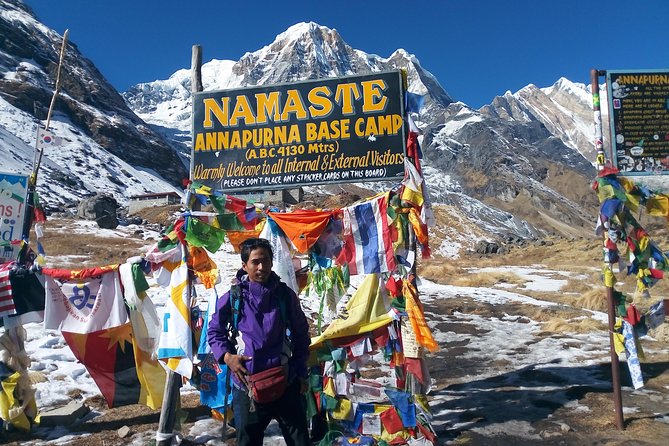
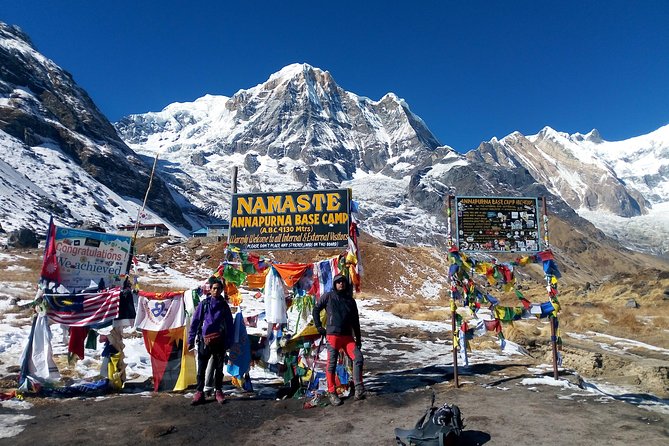
Annapurna Base Camp is the prize here: after walking through rhododendron forests, stone stairways, and small mountain villages, you reach a high amphitheater of peaks at 4,130 meters. This 10-day trip also gives you time in Kathmandu and Pokhara, so you are not treating the trek as a rushed in-and-out mission.
I like the practical package, especially the licensed guide with food, lodging, insurance, equipment, transport, and salary included, plus airport transfers and tourist-bus rides between Kathmandu and Pokhara. I also like the human side: guides named Santosh, Raju Simkhada, Dibo, Varat, and Asok have been praised for kindness, humor, and steady support. The main caution is the altitude and the demanding stone-step walking. The schedule also contains a few unclear day labels, so confirm the final plan before paying.
Key points to know before you book
- Base Camp reaches 4,130 meters: Altitude can affect anyone, regardless of age or fitness, so speak with your doctor and carry suitable insurance.
- Six nights are in tea houses: This is a simple mountain trek, not a hotel-based holiday. Comfort varies by village.
- The package is strongest on logistics: Airport transfers, Kathmandu and Pokhara hotels, buses, private road transfers, breakfast, and guide costs are covered.
- The walking is demanding: The route includes uneven trails, steep climbs, descents, and about 2,500 stone steps near Sinuwa.
- You travel in a small private group: A booking can include up to 12 people, and only your group takes part in the activity.
- Budget beyond the headline price: The $699 price does not include lunch and dinner in Kathmandu and Pokhara, listed at $150 per person, or suggested gratuities of $50.
Reaching Annapurna Base Camp in ten days
The route begins with city time and road travel, then moves into the foothills before entering the Annapurna Conservation Area. The walking is not one long mountain slog. You pass through villages shaped by local farming and ethnic traditions, cross river valleys, sleep in tea houses, and gradually gain height.
The route description places the main walking stages around Ghandruk, Chhomrong, Sinuwa, Bamboo, Machhapuchhre Base Camp, and Annapurna Base Camp. You retrace much of the same route on the return, but the views and sense of progress change as you head downhill.
At its best, this itinerary gives you a good balance: enough time to reach the high sanctuary, but also enough city time to handle airport transfers, transport, and a little recovery. At its weakest, the schedule needs clarification. Day 2 includes Pokhara but also lists Kathmandu sights, and Day 9 refers to an eleventh day even though the trip is advertised as ten days. Ask for the final operating itinerary in writing.
More Annapurna Treks in Kathmandu
- Annapurna Circuit Trek with Tilicho Lake
★ 5.0 · 368 reviews - Annapurna base camp trek 5 Days
★ 5.0 · 252 reviews - 14-Day Private Annapurna Base Camp Trek
★ 5.0 · 180 reviews
Kathmandu arrival, Thamel, and the first night
On arrival at Tribhuvan International Airport, a staff member meets you and takes you to your Kathmandu hotel. This is useful after a long flight, particularly if you arrive tired or late. You meet the guide and spend the night in the city.
Thamel is listed as part of the first day. It is a practical place to sort out trekking details, check equipment, and get your bearings before leaving the valley. Kathmandu Durbar Square and Pashupatinath Temple are also named in the wider plan, along with Swayambhunath, Chandragiri Hills, Patan Durbar Square, the Garden of Dreams, and Narayanhiti Palace Museum.
Do not assume every one of these sights receives a full guided visit. The day-by-day notes read more like a collection of possible stops than a precise sightseeing timetable. If these places matter to you, ask which are included and when they will be visited.
Kathmandu to Pokhara by tourist bus
The journey to Pokhara is by luxury tourist bus. The ride follows river valleys and offers broad views from the road, but this is still a full day of ground transport rather than a quick flight. The advantage is cost and continuity: you stay with the overland route and avoid adding a separate airfare.
Pokhara is the gateway to the trek and a pleasant place to pause beside Phewa Tal. The package includes two nights in Pokhara at a three-star hotel with breakfast. That gives you a proper bed before the trail and another after you return.
The transport details deserve attention. The itinerary says your guide takes you to the bus park, while the included services also specify Pokhara to Nayapul and back by private car. Confirm which road legs use the tourist bus and which use the private vehicle. Small differences here affect comfort and departure times.
Ghandruk and the climb toward Chhomrong
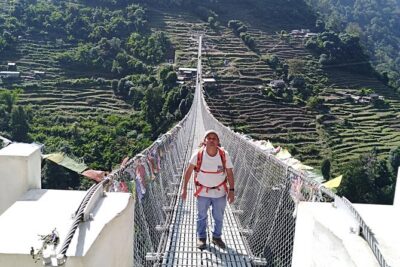
The walking section begins in the hill villages near Nayapul and Ghandruk. Ghandruk is important not only as a starting point, but as one of the places where the trip’s cultural side comes into focus. You pass through small settlements, see traditional ways of life, and walk among farms and woodland rather than simply staring at distant peaks.
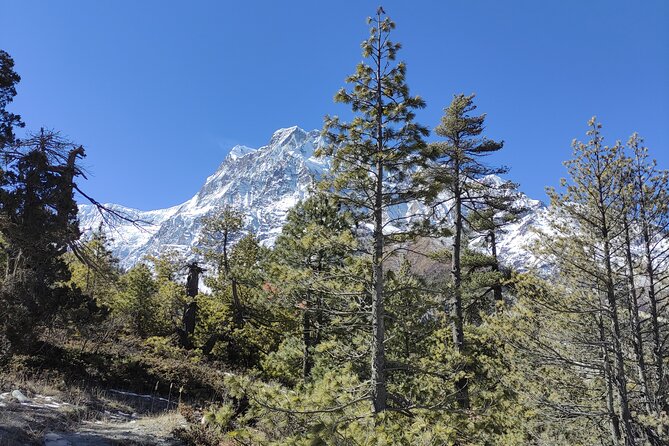
From Ghandruk, the path rises and falls through forest with rhododendron trees. The route to Chhomrong is described as a tough day on uneven trails. That warning matters. The distance alone does not tell you how hard this trek will feel, because repeated climbs and descents can tire your legs before the high-altitude portion begins.
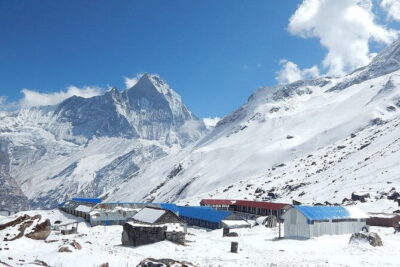
Chhomrong is one of the key villages on the approach to the sanctuary. You should expect basic tea-house accommodation and a simple evening rather than resort comfort. The reward is the changing mountain view and the feeling that you are now properly on the trail.
Same trailhead, a different route:
- Everest Base Camp Trek – 14 Days
★ 5.0 · 1,499 reviews - Everest Base Camp Trek
★ 5.0 · 842 reviews - Everest Base Camp Helicopter Tour landing at Everest View Hotel
★ 5.0 · 668 reviews - Everest Base Camp Trekking
★ 5.0 · 485 reviews
Sinuwa and the 2,500 stone steps
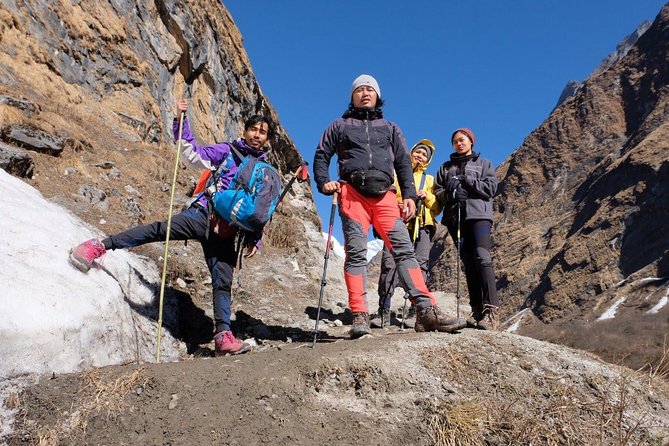
From Chhomrong, you cross the Chhomrong Khola and climb toward Sinuwa. The route includes around 2,500 stone steps cut into the hillside. This is one of the most useful details in the whole plan because it tells you what the effort actually looks like.
You do not need to be an elite mountaineer, but moderate physical fitness is required. Train for stairs, uphill walking, and several hours on uneven ground. Trekking poles may help, though the supplied information does not say they are included. The company can help arrange trekking gear in Kathmandu, either for purchase or rental.
The trail continues through forest toward Bamboo and the higher reaches of the Annapurna Sanctuary. You may notice the air becoming cooler and the walking more deliberate as altitude increases. Your guide is expected to carry a first-aid kit and know the nearest medical facilities, but that is support, not a substitute for personal preparation.
Machhapuchhre Base Camp and the Annapurna Sanctuary
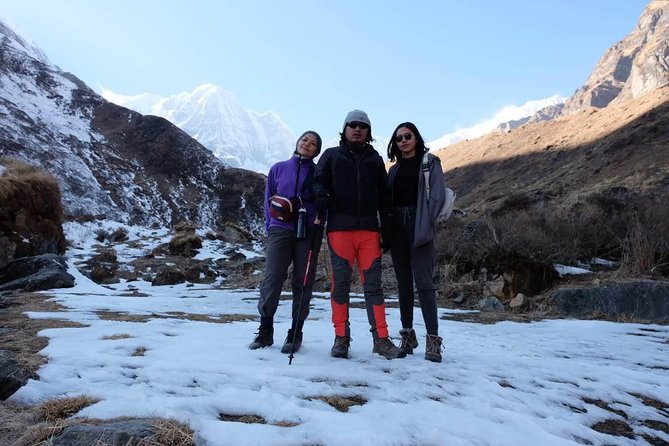
The approach to Base Camp follows the river and climbs toward Bagar, then continues toward Machhapuchhre Base Camp. The route is described as strenuous in places. The terrain changes as you move higher, and the great mountain walls become much more immediate.
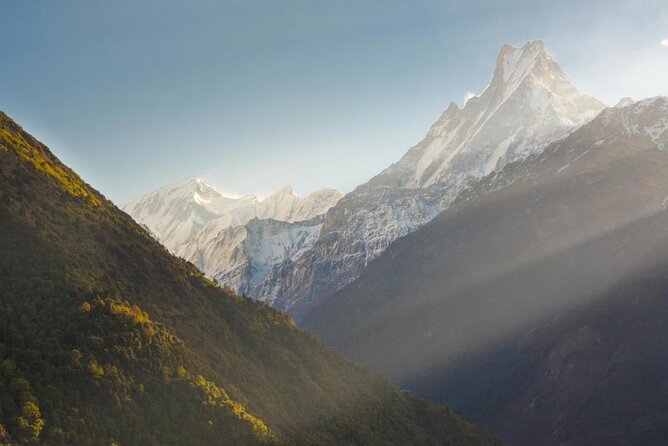
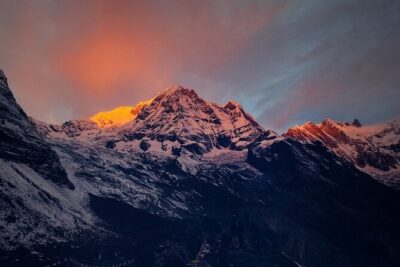
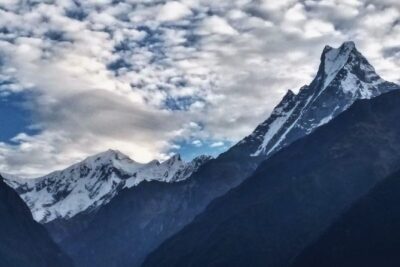
Machhapuchhre, also called Fishtail, is a major visual landmark on this part of the trek. From here, the trail leads into the sanctuary and onward to Annapurna Base Camp. The high point sits at 4,130 meters, or about 13,550 feet.
This is the moment when altitude deserves your full attention. The trip information warns that adverse health effects are possible regardless of age, gender, or fitness. A slow pace, careful attention to how you feel, and a guide who takes symptoms seriously are important. You are required to have travel insurance covering medical expenses and emergency repatriation, and you must show proof to the tour leader on the first day.
The summit of this itinerary is not a technical climb. It is a demanding high-altitude trek on established paths. Still, the combination of elevation, weather changes, steep sections, and basic lodging makes it a serious outdoor trip.
The night at Base Camp and the return to Sinuwa
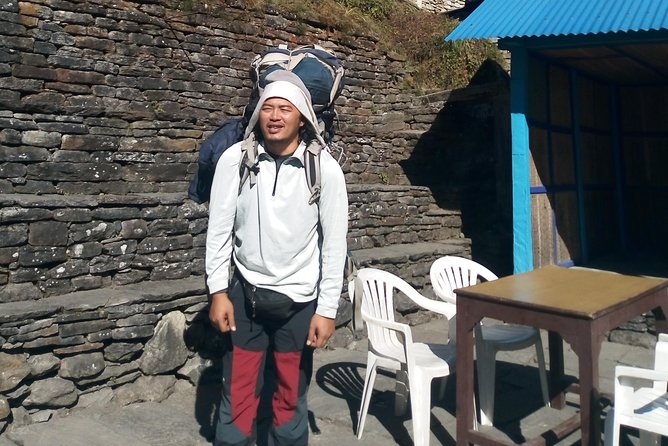
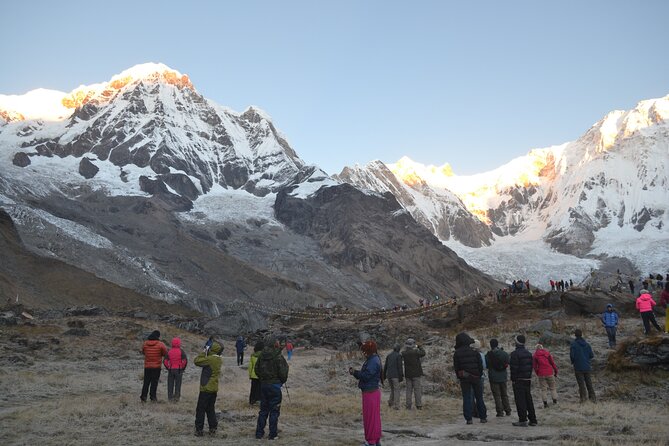
The Base Camp stay gives you time to take in the Annapurna range and the enclosed mountain setting. The itinerary includes time at Annapurna Base Camp, the Annapurna Region, and the Annapurna Mountain Range, but does not specify the exact amount of time at each point.
Weather can change sharply at this altitude. Pack layers, waterproof clothing, warm socks, gloves, sun protection, and a reliable headlamp. The supplied information confirms that gear can be bought or rented in Kathmandu, with help from the guide. It does not provide a fixed gear list, so request one before departure.
The return begins by retracing the trail toward Bamboo and Sinuwa. You pass through the sanctuary again, this time descending through the damp forest zone. Going down is often easier for breathing but harder on knees, especially after the climb to Base Camp. Keep your pace controlled instead of treating the descent as a race.
Chhomrong, Jhinu Danda, and the hot-spring stop
From Bamboo, you climb toward Kuldighar, descend to the Chhomrong Khola, and climb the stone steps toward Chhomrong again. It is a reminder that this route is not a simple downhill walk after Base Camp. You still face serious ups and downs.
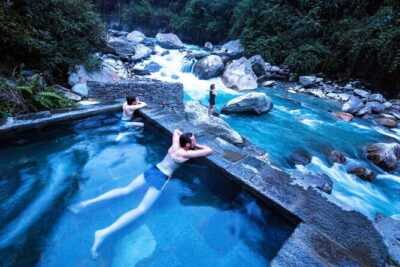
The next stage leads to Jhinu Danda. Jhinu is commonly associated with a hot-spring stop on Annapurna routes, but that specific activity is not clearly included in the supplied plan. Ask before assuming it is part of your day. The itinerary does confirm Jhinu as an overnight or route stop before continuing toward Nayapul.
This section is likely to suit you if you enjoy the rhythm of a village trek: walk, eat, sleep, and repeat, with the mountain scenery changing around you. It may not suit you if you want private bathrooms, predictable heating, or a tightly timed schedule.
Returning to Pokhara and Kathmandu
From Jhinu, you walk through countryside toward Nayapul. Rice farms and distant Annapurna views provide a gentler finish than the high sanctuary. A private car is listed for the Pokhara to Nayapul and return road section, which should make the final transfer easier than arranging transport independently.
Back in Pokhara, you have time around Phewa Tal. Sarangkot is also listed, though the details do not say whether it is a dedicated sunrise visit or simply a possible stop. Confirm the timing if you want to include it.
The return to Kathmandu is by luxury tourist bus. Patan Durbar Square appears on the Kathmandu Valley day, but, again, the exact sightseeing schedule is not clear. The final day includes airport drop-off by the team. The stated itinerary has a small contradiction, calling the return day the eleventh day, so confirm whether the Kathmandu return occurs on Day 9 or Day 10.
What the $699 price really covers
At $699 per person, the package offers solid value if you want your main logistics handled. It includes airport transfers, two nights in Kathmandu, two nights in Pokhara with breakfast, six tea-house nights during the trek, Kathmandu to Pokhara and return by tourist bus, and the road transfer between Pokhara and Nayapul.
The guide package is particularly useful. The government-licensed trekking guide’s food, drinks, accommodation, insurance, salary, equipment, transportation, and local tax are included. You also receive a first-aid kit and a company T-shirt, along with government taxes, VAT, service charges, and a farewell dinner with cultural show.
The headline price is not your final personal budget. Lunch and dinner in Kathmandu and Pokhara are excluded, with an estimated $150 per person provided. Suggested gratuities add $50 per person. That makes the stated working total about $899 before personal purchases, gear, drinks outside the included meals, or any other optional spending.
The phrase group discounts appears among the features, but no discount amount is given. Ask how it applies to your party. The tour is private to your group, with a maximum of 12 people per booking, so you are not automatically joining a large mixed party.
Guide support and the human side of the trek
The strongest practical reason to book through an organized company is the guide support. Names associated with the trek include Santosh, Raju Simkhada, Dibo, Varat, Asok, and Santosh Timal. Feedback particularly praises friendly care, professionalism, humor, and support for solo hikers and first-time trekkers.
You should not assume a particular guide is guaranteed. Ask who is assigned to your departure and whether a named guide is available. An extra $200 per group applies if you request a guide who speaks a language other than English.
The guides are also expected to help with gear in Kathmandu, carry first-aid equipment, and know nearby medical facilities. Those are meaningful safeguards on a high-altitude route. Still, you remain responsible for fitness, insurance, documents, and honest communication about symptoms.
Who should book this Annapurna trek?
I would recommend it to you if you want a guided introduction to Himalayan trekking, value airport and hotel arrangements, and are comfortable with basic tea-house accommodation. It is also a good fit for couples, solo hikers who want support, and small private groups that prefer not to organize every transfer alone.
I would hesitate if your main goal is luxury, if you dislike long road journeys, or if steep steps and high altitude are a concern. Ten days is efficient, but it leaves less room for weather delays or a slower pace than a longer itinerary would.
Bring a passport copy with at least six months of validity, two passport photos, your occupation, and home address details for permits. You can leave extra luggage at the company office or hotel and collect it after the trek. Children from age seven are permitted, but the altitude and physical demands still need careful consideration.
Should you book it?
Book this trek if you want a well-supported route to Annapurna Base Camp at a competitive price, and if you are ready for the real work behind the mountain views. The included guide costs, transport, hotels, tea houses, breakfast, airport transfers, and taxes give the package a useful backbone.
Before committing, get three things confirmed: the exact ten-day schedule, the names and duties of your guide, and the full list of included meals and permits. If you accept basic lodging, demanding steps, and altitude risk, this is a practical way to reach one of Nepal’s great mountain destinations without handling every detail yourself.
Cancellation is free up to 24 hours before the start time for a full refund. Changes or cancellations made within 24 hours are not refunded.
FAQ
How high is Annapurna Base Camp?
Annapurna Base Camp is at approximately 4,130 meters, or 13,550 feet, above sea level.
How long is the Annapurna Base Camp trek?
The experience is advertised as an approximately 10-day trip.
Is airport pickup included?
Yes. Transfers from and to Tribhuvan International Airport are included. You need to send your Nepal arrival details in advance.
How many people can join one booking?
The maximum is 12 people per booking, and the activity is private to your group.
What accommodation is included?
The package includes two nights in Kathmandu, two nights in Pokhara at a three-star hotel with breakfast, and six nights in tea houses during the trek.
Is transport between Kathmandu and Pokhara included?
Yes. Kathmandu to Pokhara and the return journey are included by luxury tourist bus.
Is transport from Pokhara to Nayapul included?
Yes. The package specifies Pokhara to Nayapul and return by private car.
Are meals included?
Breakfast is included, with nine breakfasts listed. Dinner is included as part of the package, but lunch and dinner in Kathmandu and Pokhara are excluded and estimated at $150 per person.
Do I need travel insurance?
Yes. Insurance covering medical expenses and emergency repatriation is required, and you must show proof to the tour leader on the first day.
Can I cancel for a refund?
You can cancel at least 24 hours before the experience start time for a full refund. Cancellations or changes within 24 hours are not refunded.
Just added around Kathmandu
- Everest Base Camp Trek★ 5.0 · 3 reviews
- Everest Base Camp Trek★ 5.0 · 7 reviews
- 15 Days Private Everest Base Camp Trek★ 5.0 · 30 reviews
- Everest Base Camp Trek★ 5.0 · 57 reviews
- 14 Days of Adventure Trekking to Everest Base Camp★ 5.0 · 2 reviews
- 14-Day Everest Base Camp Trek★ 5.0 · 20 reviews
- From Kathmandu: Private 14-Day Everest Base Camp Trek★ 5.0 · 20 reviews
- 14 Days Everest Base Camp Trek★ 5.0 · 4 reviews
Annapurna Base Camp Treks, compared.
Trekking in Annapurna/Langtang/Everest/Upper Mustang regions
Read our review →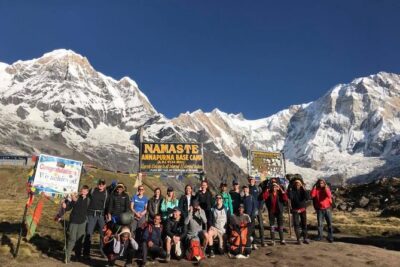
Kathmandu to Annapurna Base Camp (ABC) 5-Day Trek
Read our review →Browse the lists this trek appears in