
Review · ARUSHA
7 Days Machame Route Kilimanjaro Trekking
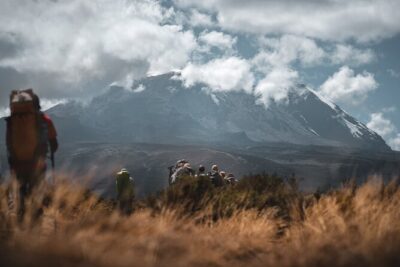
The Machame Route gives you Kilimanjaro in bold chapters: wet rainforest, open moorland, black volcanic rock, and an ice-capped summit. The seven-day schedule also gives your body more time to adjust than shorter climbs, which matters when you reach the high camps.
I like the route’s changing scenery and its useful climb-high, sleep-lower pattern on the Lava Tower day. I also like that camping equipment, porters, meals, rescue fees, and park-related costs are built into the price. The catch is simple: this is still a hard mountain climb, and summit day can mean up to 15 or 16 hours on your feet.
Key points to know before booking
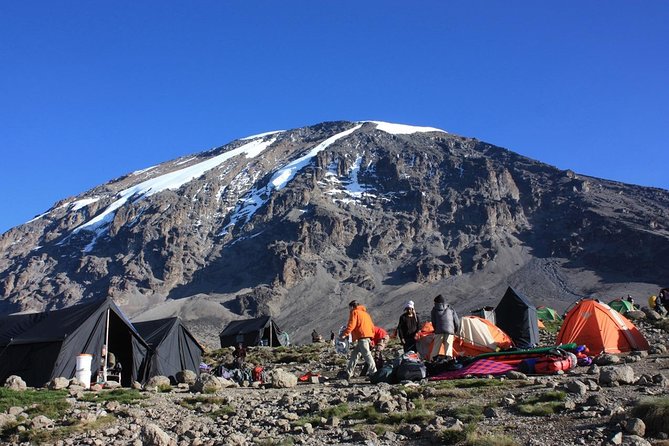
- Five distinct habitats: You move from montane forest to moorland, semi-desert, alpine desert, and the stone-and-ice summit zone.
- Lava Tower acclimatization: Day three takes you to about 4,630 meters before dropping to Barranco Camp at about 3,950 meters.
- A serious summit night: Wake-up is around 11:30 p.m., with Stella Point and Uhuru Peak still several hours away.
- Private group format: Only your own group takes part, with a professional guide and supporting porters.
- Camping rather than lodge comfort: Tents, a mess tent, mattresses, cooking equipment, and prepared meals are included.
- Strong guide and crew focus: Past departures have included Ombeni, Safaeli, Oliver, Mathew, and Godlove, with Erastus handling some arrangements and airport or hotel communication.
Why the seven-day Machame Route works
Machame is popular for good reason. It reaches the same summit as other Kilimanjaro routes but offers a lively progression of habitats and mountain views. The route is also known for being less expensive than some longer options because access is straightforward and the schedule is relatively short.
That lower price does not make the climb easy. You begin at about 1,400 meters in Arusha, then rise to nearly 5,900 meters at Uhuru Peak. The mountain tests your lungs, legs, sleep, appetite, and patience. The seven-day format gives you more time than a compressed five-day or six-day plan, but altitude remains the main risk and challenge.
This is a camping trip with a major physical goal attached. You will not have a private room each night, a hot shower, or an easy way to leave the trail once you are high on the mountain. In return, you get long hours in quiet mountain country, a clear sense of progress, and a summit attempt that feels earned.
The activity is private, which is useful if your group wants its own pace and direct access to the guide. It also means the experience depends heavily on the quality of your particular crew. Names connected with past departures include Ombeni, Safaeli, Oliver, Mathew, and Godlove. Ask who will lead your climb before you set out, and confirm what equipment can be rented.
More Kilimanjaro Climbs in Arusha
- 8-Day Small-group Lemosho Kilimanjaro Summit Trekking
★ 5.0 · 186 reviews - 7-Day Machame Kilimanjaro Summit Tour from Arusha
★ 5.0 · 125 reviews - Mountain Kilimanjaro Day Hike
★ 5.0 · 102 reviews
Day 1: Machame Gate and the wet forest
Your morning begins with a 4:00 a.m. start and pickup from Arusha. You drive to Machame Village, where you can buy mineral water and receive a packed lunch. Depending on road conditions, the vehicle continues for about three kilometers, or you walk that stretch to Machame Gate.
At the gate, you and your guide register with Tanzania National Parks while the porters sort and pack the group’s supplies. This registration period can feel slow, but it is part of the proper start of the climb. Keep your daypack with essentials, since the porters organize the larger loads separately.
The first walking day covers about 18 kilometers and takes roughly seven hours. You enter montane forest, where rain, mud, and fog are normal rather than unusual. Wear footwear with dependable grip, and keep rain protection easy to reach. A wet first day is not a sign that the whole climb will be miserable, but it does set the tone: this is a real mountain trail, not a paved park walk.
The forest is a fine introduction because the temperature is generally less severe than at the upper camps, while the steady climb begins the work of acclimatization. You finish at camp after a long day, so do not spend all your energy racing ahead early on.
Day 2: Shira Plateau and the first cold camp
Day two takes about six hours over roughly nine kilometers. You leave the rainforest behind and enter heathland and moorland, with a more open feel and wider views. Streams cross the route, and the trail follows a rocky ridge toward the Shira Plateau.
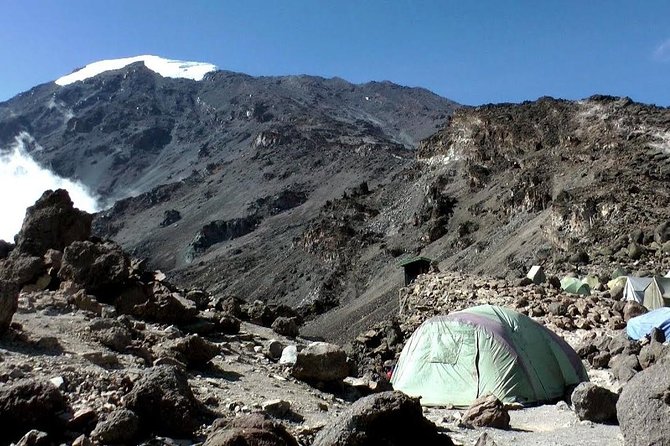
Shira Camp sits at about 3,840 meters. From here, you can look toward the Western Breach and its glaciers to the east. The setting is more exposed than the forest, and the temperature can drop below freezing at night.
Your tent should be ready before you arrive, and porters prepare drinking and washing water. A mess tent, mattress, cooking equipment, snacks, dinner, and breakfast are part of the support system. That matters after a cold day, but do not mistake a prepared camp for luxury. The high-altitude nights can still be uncomfortable, especially if your sleeping bag is not warm enough.
A sleeping bag is not included, though one is available to rent. This is one of the first practical questions I would settle before departure. The same applies to other climbing gear. Rental availability is stated, but you need to know what is offered and whether the fit suits you.
Day 3: Lava Tower, altitude, and Barranco
Day three is one of the most useful days on the route. You walk about 15 kilometers in roughly seven hours, leaving moorland for rocky semi-desert. After around five hours, you reach Lava Tower at approximately 4,630 meters.
This is where altitude may begin to make itself known. Headaches and shortness of breath are common signs that the air is thin. The plan is sensible: you spend time high, eat lunch high, then descend to Barranco Camp at about 3,950 meters. That high point followed by a lower sleeping camp is valuable preparation for the summit.
You can climb Lava Tower if weather allows, but it is not a prize worth forcing. If you feel unwell, tell your guide rather than trying to prove something. The summit depends more on steady decisions than on one dramatic push.
The descent from Lava Tower to Barranco is roughly 680 meters based on the listed elevations. The trail leads through a stark volcanic zone before reaching camp. This day can feel long because the climb to Lava Tower is followed by a substantial descent, but it is a key part of the seven-day plan.
Same trailhead, a different route:
- 4 Days Mount Meru Trekking
★ 5.0 · 55 reviews - 4 days Best experience Kilimanjaro Hike, Serengeti &Ngorongoro
★ 5.0 · 54 reviews - From Arusha/Moshi: Kilimanjaro Hike Marangu Route Day Trip
★ 4.5 · 54 reviews - Mount Kilimanjaro Day Hike Through Marangu Route to Mandara Hut
★ 5.0 · 37 reviews
Day 4: Barranco Wall and Karanga Valley
Day four is shorter, at about four to five hours and five kilometers. Its main feature is the Great Barranco Wall, which looks intimidating from below. The route is described as a Class 2 hike, so expect hands-on movement in places, but not a technical climbing route requiring ropes under the stated plan.
The wall is often more manageable than its appearance suggests. Still, take your time. A careful pace protects your balance and leaves energy for the trail beyond the wall. At the top, you may see Heim Glacier and clouds below you, a sharp change from the damp forest of day one.
After the wall, the trail rises and drops through Karanga Valley. That up-and-down pattern makes this a useful acclimatization day. It is not a rest day in the ordinary sense, but the shorter distance gives you time to eat, drink, organize your kit, and rest before the summit push.
Karanga Camp sits at approximately 3,959 meters. Use the afternoon wisely. Check gloves, headlamp, warm layers, water bottles, and snacks before dark. Barafu Camp, the next stop, is exposed and has no accessible water.
Day 5: Barafu Camp and the final preparation
The walk from Karanga Camp to Barafu takes about two to three hours over roughly four kilometers. The trail connects with the Mweka Route, which you use for the descent during the final two days.
After about an hour, you reach Barafu Hut. This is the last water stop for the porters. Barafu Camp itself sits around 4,550 meters on an exposed rocky ridge, and the Swahili word barafu means ice. Wind and bare rock are part of the setting.
The short walking time can fool you into thinking this is an easy day. It is not. You are high, the camp is exposed, and the main event begins late at night. An early dinner is served so you can rest before the summit attempt.
You should know the camp layout before darkness arrives. Arrange your headlamp and warm clothing where you can reach them. The support crew provides tents, meals, and water for washing and drinking, but the conditions remain basic. There is no accessible water at Barafu itself, so the supply chain matters.
Day 6: Stella Point, Uhuru Peak, and the long descent
Summit day begins around 11:30 p.m. with tea and biscuits. You then climb over stone scree toward Stella Point at about 5,685 meters. The ascent to the crater rim takes around six hours, though your actual time depends on pace, weather, and how your body handles the height.
This is usually the toughest mental section. Progress can feel slow, the ground is loose, and the darkness hides the scale of the climb. Follow the guide’s pace. Small steps and regular drinking are more useful than speed.
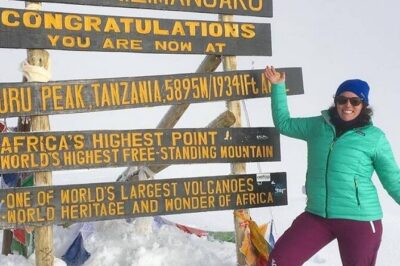
At Stella Point, you can watch the sunrise from the crater rim. From there, you continue for about two hours over a snow-covered trail toward Uhuru Peak, the summit at approximately 5,895 meters. If you reach Uhuru, you receive a gold completion certificate. Reaching Stella Point earns a green certificate.
Do not treat Stella Point as failure if you cannot continue. It is already a very high point, and the decision to stop can be the sensible one when symptoms worsen. Your guide should help assess your condition, but you also need to speak clearly about headaches, nausea, dizziness, or breathing trouble.
After the summit, you descend to Mweka Camp. The stated walking time is seven to eight hours from the summit area, after about eight hours to reach Uhuru Peak, so this is an exceptionally long day. The listed distances are about seven kilometers upward and 23 kilometers downward. Your knees may complain more on the descent than they did on the climb.
Day 7: Mweka Gate and the return to Arusha
After breakfast, the crew holds a celebration with dancing and singing. This is also the point where tips are presented to the guide, assistant guides, chef or chefs, and porters. Tips are not included, so budget for them separately and ask your operator for current guidance before departure.
The walk to Mweka Gate takes about three hours over roughly 15 kilometers through forest. At the gate, you sign your name to receive your completion certificate. The route then continues toward Mweka Village, listed as about one hour and three kilometers, before returning to the meeting point.
This final morning can be harder than expected. Your legs have just completed the summit day, and the descent keeps working the same muscles. Keep your pace controlled and save enough energy for the gate formalities and transfer.
What the $2,200.11 price covers
At $2,200.11 per person, the cost is not just payment for a guide walking beside you. It includes camping equipment such as a mess tent, mattress, and cooking equipment, plus porter support, rescue fees, parking fees, taxes and VAT, accommodation on the mountain, and three meals on most full days.
The food package includes seven lunches, six dinners, and six breakfasts. That matches a six-night mountain schedule, although the exact meal timing follows the daily movement and summit-night plan.
The value is strongest if you would otherwise need to arrange porters, camp gear, food, park payments, and rescue coverage separately. You still need to pay for international flights, personal items, travel insurance, visa fees, sleeping bag rental if needed, climbing gear rental, bath towels, tips, and accommodation before or after the climb.
Government tax or park-fee increases can also be added. The listed price therefore deserves a close check at booking, especially if your budget is tight. Airport pickup and hotel arrangements have been handled smoothly on some departures, but confirm exactly what your own package includes.
Guide support, private groups, and practical comfort
The strongest pattern in the available feedback is the crew’s care and professionalism. Guides named in past departures include Ombeni and Safaeli, as well as Oliver, Mathew, and Godlove. Erastus has also been involved in communication, pickup, and hotel arrangements.
That is useful because guide quality matters enormously on Kilimanjaro. Your guide sets the walking rhythm, watches for altitude problems, explains the route, and helps decide when to continue or turn back. Ask for the names and experience of your assigned guides rather than assuming the same team will lead every departure.
The private format means your group is the only group taking part. Most travelers can participate according to the supplied activity information, but that should not be confused with an easy level of fitness. The route involves long distances, steep climbing, cold camps, loose rock, and a night ascent near 5,900 meters.
Camping supplies are included, but sleeping bags and climbing gear are separate. Bath towels are not included. You should also plan for rain in the forest, freezing conditions at high camps, and a strong headlamp for the summit night.
Who should choose this climb
I would choose this route if you want a classic Kilimanjaro climb with a changing series of habitats and a seven-day acclimatization plan. It suits someone who accepts basic camping and wants the support of porters, cooks, and a dedicated guide.
It is also a good fit for a private family or friend group that wants to share the mountain without being placed with strangers. The price has real value when you use the included camp setup and crew support.
I would hesitate if you want a relaxed holiday, dislike cold nights, or need a flexible cancellation policy. This experience is non-refundable and cannot be changed for any reason, so insurance and careful planning are important. You also need to be comfortable with a very long summit day and the possibility that altitude may prevent you from reaching Uhuru Peak.
Should you book the Machame Route?
Book it if your priority is the full Kilimanjaro experience: rainforest at the start, high open country in the middle, a demanding summit night, and a celebratory descent with the crew. The seven-day length is a sensible middle ground, giving you more acclimatization time than the shortest versions without the cost of a much longer climb.
Before paying, confirm your guide team, rental equipment, sleeping bag arrangements, airport or hotel pickup, tip expectations, and any current park-fee changes. If those details suit you and you are ready for serious physical effort, this is a well-rounded route with strong support and good value for a private climb.
FAQ
Where does the Kilimanjaro trek start and finish?
The activity starts in Arusha, Tanzania, with pickup at about 4:00 a.m. It ends back at the meeting point after the descent from Mweka Village.
How long does the Machame Route trek last?
The trek lasts approximately seven days. The daily walking times range from about two to three hours on the Barafu approach day to the very long summit and descent day.
Is camping equipment included?
Yes. The package includes a mess tent, mattress, and cooking equipment, along with mountain accommodation, porterage, meals, and a professional guide.
Are sleeping bags and climbing gear included?
No. Climbing gear and sleeping bags are available to rent, but they are not included in the stated price.
What happens if I reach Stella Point but not Uhuru Peak?
You receive a green certificate for reaching Stella Point at about 5,685 meters. Reaching Uhuru Peak at about 5,895 meters earns a gold certificate.
Is the tour private?
Yes. This is a private activity, so only your own group takes part. Confirmation is provided at booking, and most travelers can participate according to the supplied activity information.
More 7-Day Experiences in Arusha
- KILIMANJARO MACHAME ROUTE, (Climb 7days)
★ 5.0 · 16 reviews - 7 Day Kilimanjaro Climb Lemosho Route & 2 Day Safari
★ 5.0 · 16 reviews - 7 days Kilimanjaro climb via Machame route (Whiskey route)
★ 5.0 · 16 reviews - 7 Days Kilimanjaro Climb Machame Route
★ 5.0 · 15 reviews
Just added around Arusha
- Mt. Kilimanjaro: Shira plateau to Cathedral point 3872m Day hike★ 5.0 · 7 reviews
- 5 days safari, hiking & culture (Serengeti & kilimanjaro)★ 5.0 · 27 reviews
- One Day Hike from Kilimanjaro to Mandara★ 5.0 · 2 reviews
- 3 Days Mount Meru trekking★ 4.5 · 7 reviews
- climb the KILIMANJARO via Lemosho route★ 5.0 · 4 reviews
- 6 Day: Hiking Kilimanjaro via Machame Route★ 5.0 · 2 reviews
- Private 8 day Northern Circuit Kilimanjaro Climb★ 5.0 · 8 reviews
- Kilimanjaro Waterfalls Hike & Moshi Hot Springs Day Trip Tour★ 5.0 · 4 reviews
Kilimanjaro Climbs, compared.
8-Day Small-group Lemosho Kilimanjaro Summit Trekking
Read our review →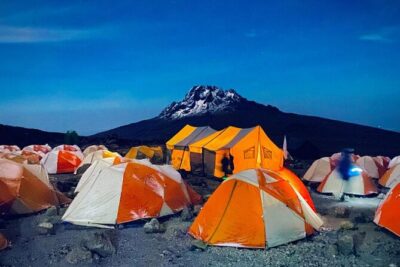
Climbing Kilimanjaro through 7 days Machame Route
Read our review →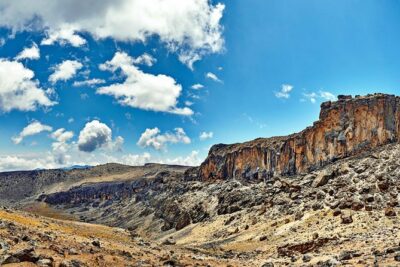
Browse the lists this trek appears in