
Review · ARUSHA
Small-group 7-day Lemosho Route Kilimanjaro Climb from Arusha
The Lemosho Route gives you Kilimanjaro in chapters: damp rainforest, open heath, the high Shira Plateau, volcanic ridges, glaciers, and a summit night that begins long before sunrise. It is a seven-day climb from Arusha or Moshi, with a maximum of six people and a full mountain crew.
I like the route’s slow height gain and its dramatic variety. I also like the small group size, since a six-person maximum makes it easier to hear your guide, keep a steady pace, and talk through problems before they become serious. The main catch is that Lemosho is harder than Marangu or Rongai, and summit day lasts about 12 hours.
Key points to know before booking
- Lemosho starts on Kilimanjaro’s western side, crossing rainforest before reaching the Shira Plateau.
- Day three is the acclimatization day, with a climb toward 4,650 meters at Lava Tower before descending to Barranco Camp.
- The Barranco Wall is the route’s most adventurous passage, requiring careful footwork on a steep ridge.
- Summit day takes about 12 hours, ending at Uhuru Peak and followed by a descent toward Mweka Camp.
- The group is limited to six climbers, supported by an English-speaking guide, cook, and porters.
- The $2,400 price includes major mountain costs, meals, camping gear, transfers, and hotel and tent accommodation, but not flights, visas, drinks, tips, or personal purchases.
Why Lemosho is worth the extra effort
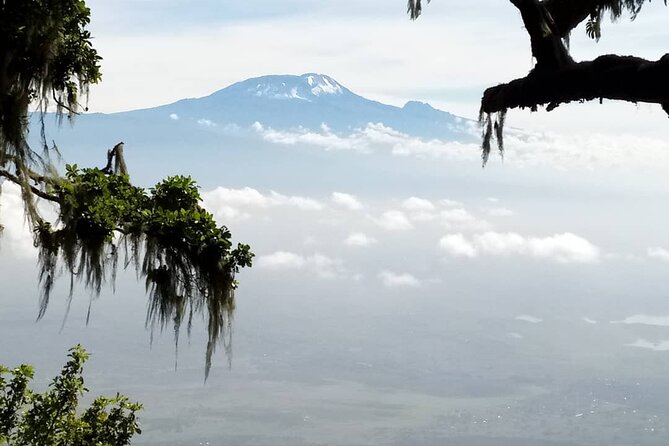
Kilimanjaro has several standard routes, but Lemosho earns its place on a serious climber’s shortlist because it gives you time to adjust to altitude while showing off more of the mountain’s changing scenery. The trail begins at 2,389 meters and reaches Uhuru Peak at 5,895 meters, so the route asks your body to handle a major change in air, temperature, and effort.
The first two days pass through thick rainforest. You will likely find mud, slippery roots, and narrow sections under the trees. It is not a glamorous start, but it feels like a proper mountain approach rather than a quick road to a high camp.
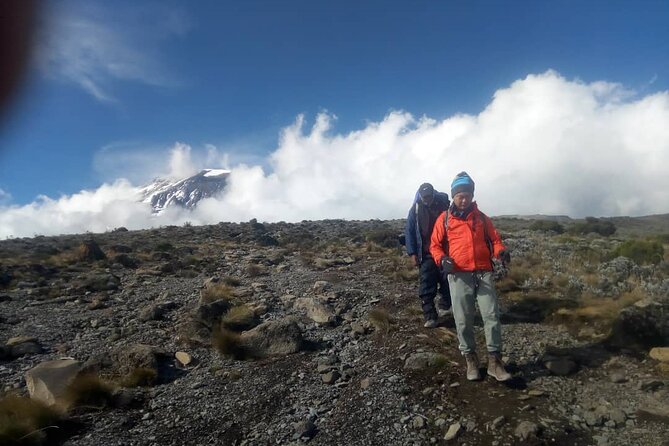
After the forest, the route opens into heath and moorland, with ferns and ericas around the path. The ground becomes more exposed, the air cooler, and the views wider. By the third day, Lemosho joins the Machame route, so the trail becomes more established and the upper mountain begins to feel close.
I especially like the way the route uses a high climb followed by a lower overnight stop on day three. You walk toward Lava Tower at about 4,650 meters, then descend to Barranco Camp at roughly 3,986 meters. That climb-high, sleep-lower pattern is one of the most useful parts of the schedule for altitude adjustment.
More Kilimanjaro Climbs in Arusha
- 8-Day Small-group Lemosho Kilimanjaro Summit Trekking
★ 5.0 · 186 reviews - 7-Day Machame Kilimanjaro Summit Tour from Arusha
★ 5.0 · 125 reviews - Mountain Kilimanjaro Day Hike
★ 5.0 · 102 reviews
Day one: rainforest from 2,389 to 2,785 meters
Your morning begins at about 8:30 a.m. A 45-minute drive from Moshi takes you through mountain villages to the Kilimanjaro National Park gate. The gate can be a busy place, since crews wait for permits and organize loads before heading uphill.
The first walking section lasts about four hours. At this height, the air is still relatively mild, but the trail can be wet and slick. Rainforest scenery, windy paths, and an introduction to the local plants and wildlife give the day a calm start, although muddy boots are almost guaranteed in poor conditions.
Pack gaiters and trekking poles. These are not decorative extras here. Gaiters help keep mud and wet vegetation out of your boots, while poles give you better balance on slippery ground.
The elevation gain is only 396 meters, so day one is not about speed. You are settling into the walking rhythm, learning how the crew manages meals and camp, and conserving energy for the much longer days ahead.
Day two: leaving the trees for Shira Plateau
Day two is a bigger test. You climb from 2,785 meters to about 3,895 meters, gaining 1,110 meters over roughly eight hours.
The rainforest gradually gives way to heath and moorland. The trail climbs steadily, and the broad views begin to replace the enclosed feeling of the forest. Temperatures drop as you gain height, so keep a warm layer accessible instead of buried in your duffel.
This is a long walking day, but the route is straightforward in its basic direction: up toward the rim of the Shira Plateau. Your pace matters more than your pride. A guide who keeps the group moving slowly can be more valuable than one who pushes hard early and leaves you struggling later.
The camp setting on the plateau also marks a clear change in the trip. You are no longer simply walking through forest. You are sleeping high on an enormous volcanic mountain, with less warmth and less oxygen than you had the previous night.
Day three: Lava Tower and the descent to Barranco
Day three is one of the smartest parts of this seven-day plan. You start around 3,895 meters and finish at approximately 3,986 meters, yet the route takes about seven hours because you climb much higher before descending.
The trail heads east along a ridge, passing the junction toward Kibo Peak before turning southeast toward Lava Tower, also called Shark’s Tooth. The tower reaches about 4,650 meters, or 15,250 feet. After this high point, you pass the junction leading toward Arrow Glacier and descend to Barranco Camp.
The total elevation gain shown for the overnight camps is only 91 meters, but that figure hides the real work of the day. You are testing how your body responds to high altitude, then giving it a lower place to sleep. You may feel a headache, reduced appetite, or unusual tiredness. Tell your guide early rather than trying to hide symptoms.
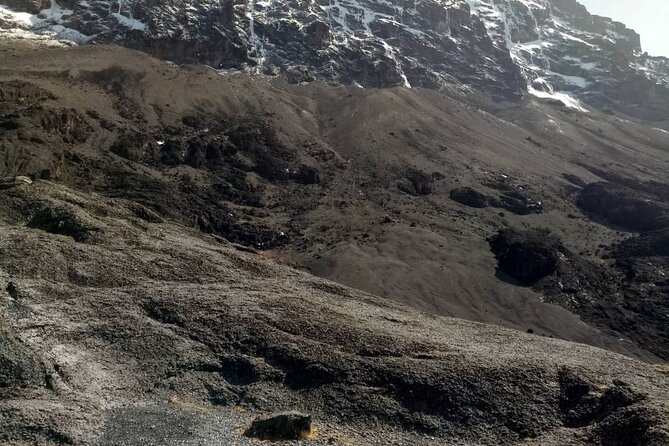
This is also a visually strong day. The vegetation becomes sparse, the volcanic forms more severe, and the high route gives you a sense of Kilimanjaro’s scale. You should not treat the day as an easy rest day, but it is less about reaching a new camp height than about preparing for what comes next.
Same trailhead, a different route:
- 4 Days Mount Meru Trekking
★ 5.0 · 55 reviews - 4 days Best experience Kilimanjaro Hike, Serengeti &Ngorongoro
★ 5.0 · 54 reviews - From Arusha/Moshi: Kilimanjaro Hike Marangu Route Day Trip
★ 4.5 · 54 reviews - Mount Kilimanjaro Day Hike Through Marangu Route to Mandara Hut
★ 5.0 · 37 reviews
Day four: the Barranco Wall and Karanga Camp
After breakfast, you face the Barranco Wall. The trail climbs a steep ridge before dropping and rising through the Karanga Valley, eventually reaching the junction with the Mweka Trail.
The walk takes about five hours, with an overnight elevation change from 3,986 to 4,034 meters. Again, the modest net gain does not tell the full story. The wall requires careful movement, and you may use your hands at times for balance. It is adventurous, but the short day gives you room to move at a controlled pace.
This is a good place to watch how the mountain crew works. Porters carry heavy loads and move over the route with remarkable efficiency. The crew’s strength is not simply a spectacle. It is part of what makes the climb possible, since your camp, meals, water, and sleeping equipment must all reach the next site.
The Barranco Wall can feel intimidating from below. Take it slowly, follow your guide’s directions, and do not rush to keep up with someone else. The route is challenging, but the day is not designed as a race.
Day five: Barafu Camp and the final rest
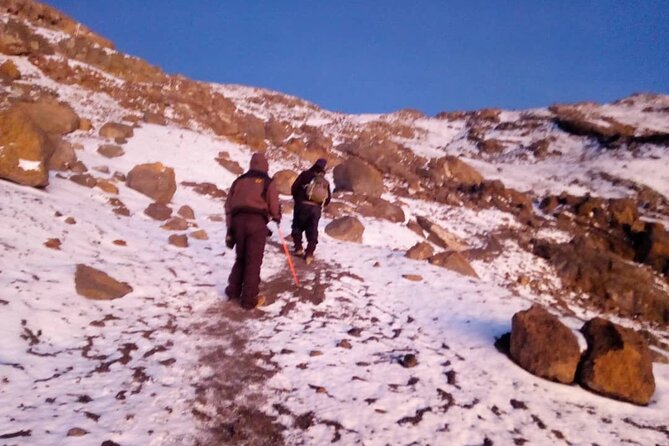
Day five takes you from Karanga Camp at 4,034 meters to Barafu Camp at about 4,662 meters. The climb lasts roughly five hours.
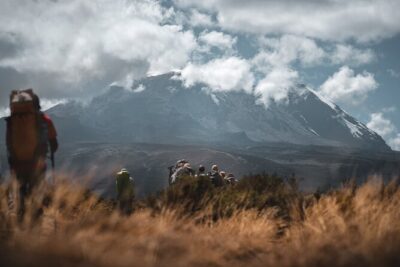
You complete what is called the South Circuit, a route section that gives views of the summit from several angles. The changing sight lines help you understand where you are on the mountain, even as the air gets thinner and the terrain becomes more severe.
Barafu is the launch point for summit night. You eat an early dinner, then rest. This can be the oddest part of the climb: you have made it high on the mountain, but the main effort still waits. Try to treat the afternoon as a practical recovery period, not a time to wander around camp or spend energy taking endless photos.
At this point, small comforts matter. A warm drink, dry socks, well-organized layers, and a sleeping mat can make the waiting easier. The package includes tents, sleeping mats, chairs, tables, meals, and coffee or tea, so you are not expected to carry your entire camp on your back.
Day six: Stella Point, Uhuru Peak, and the long descent
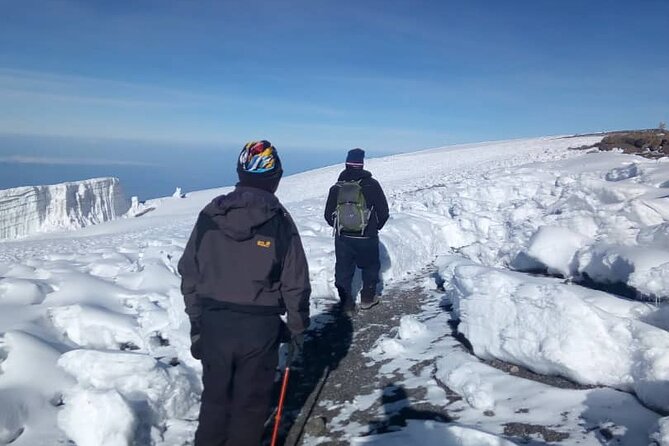
Summit day begins during the night. You climb between the Rebmann and Ratzel glaciers, using switchbacks through heavy scree toward Stella Point on the crater rim.
The route from Barafu to Stella Point is physically demanding. The cold, darkness, loose ground, and altitude can make each step feel slow. At Stella Point, you can pause for the sunrise, although faster climbers may see it from the summit.
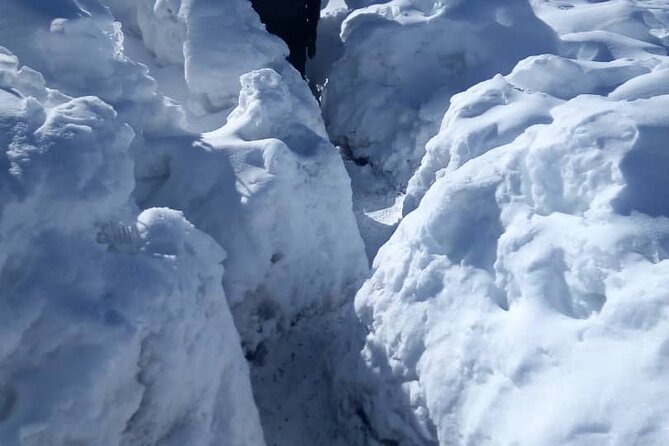
From Stella Point, the final hour leads to Uhuru Peak. Snow may appear along this upper section. Reaching the summit is the emotional high point of the trip, and you have time for photographs and a short celebration before starting down.
The listed duration for day six is about 12 hours. That includes the summit climb and the descent, so do not plan anything else for this day. The descent is often hard on knees and feet after the effort of going up. Keep drinking water, follow your guide’s pace, and use trekking poles if they help you control each step.
The itinerary description ends partway through the descent details, but the next morning begins at about 3,106 meters, indicating that you spend the night lower on the mountain before continuing to the park gate.
Day seven: Mweka descent and the return to Moshi
After breakfast, the crew holds a ceremony of appreciation and team bonding before you say goodbye. It is a fitting close to a climb that depends on many people, not only the person who reaches Uhuru Peak.
You descend to Mweka Park Gate, where you receive summit certificates. The trail is warmer, wet, muddy, and steep compared with the upper mountain. Gaiters and poles are useful again, not just on day one.
A vehicle meets you at Mweka village and drives you back to your Moshi hotel in about 30 minutes. The promise of a hot shower and a proper dinner is not a small detail after seven days outside. You will have earned both.
What the $2,400 price covers
At $2,400 per person, this is not a budget walk, but the value depends on what you would otherwise need to arrange separately. The price includes national park fees and taxes, an English-speaking professional guide, porters, a cook, mountain tents, sleeping mats, chairs, tables, meals, clean drinking water, bottled water, coffee or tea, and transfers.
It also includes overnight accommodation in hotels and mountain tents. That matters because you are not paying only for trail guidance. You are paying for a working camp system, food preparation, transport, permits, and a support crew.
The food receives particularly strong praise in the available feedback, along with the mountain crew and general accommodation. Safety equipment, including oxygen and pulse oximeters, has also been present and used appropriately on past departures. Ask your operator to confirm the current safety kit and the guide’s emergency procedures before you leave.
The price does not include international or domestic flights, visa fees, alcoholic drinks, soft drinks, tips, or personal spending money. Budget for those separately. Tips deserve special thought because the guide, cook, and porters all contribute to your summit attempt.
The small group and guide support
A maximum of six climbers is a sensible limit for this route. You get a better chance of moving as one group, and your guide can pay closer attention to pace, fatigue, and altitude symptoms than would be possible with a large party.
Past departures have been led by head guide Kenedy and second guide Julius. If they are assigned to your group, you will have two named guide contacts from the start. Confirm the current guide team at booking, since assignments can change.
The wider crew includes porters and a cook. That division of work is important on Kilimanjaro, where carrying camp equipment, preparing meals, and keeping the group moving are separate jobs. The positive feedback about the guides, porters, food, and safety setup suggests that the support operation is one of this company’s strongest features.
You should still arrive prepared. Good crew support cannot remove altitude sickness, steep climbs, cold nights, or fatigue. The Slovak-language feedback specifically urges serious preparation, and that is sound advice even if you are fit.
Who should choose this climb
Choose this route if you want more varied scenery than a short, direct approach and you are ready for a demanding mountain week. It suits people who can handle long walking days, basic tent camping, muddy trail sections, steep passages, and a 12-hour summit attempt.
It is less suitable if you want a relaxed holiday with short hikes and comfortable lodging each night. The route is described as harder than Marangu and Rongai, and the high camps and summit schedule require real preparation.
The tour is open to most people according to the supplied participation details, but that should not be confused with easy access. You need enough fitness for sustained uphill and downhill walking, plus the judgment to report altitude symptoms promptly.
Practical packing advice for this exact route
Bring gaiters and trekking poles. The lower rainforest and final Mweka descent can both be wet, muddy, and slippery, so these items help at two very different points in the climb.
Keep warm layers available on day two and above. Temperatures fall as you leave the forest, and the summit approach is cold enough that your clothing system needs to work while standing still and moving slowly.
Plan for basic camping, even though equipment is supplied. The tents, mats, chairs, and tables cover the camp setup, but you still need personal clothing, footwear, and items for staying comfortable in changing conditions.
Also bring patience. Permit processing at the gate, slow walking over steep ground, and the long summit day are part of the experience. The best result comes from keeping a steady pace instead of chasing an early sense of achievement.
Booking, pickup, and cancellation details
Pickup is offered, and transfers are included in the package. The meeting start time is 8:30 a.m., with nearby public transportation also noted. Confirmation is provided when you book.
Free cancellation is available if you cancel at least 24 hours before the experience start time. Changes or cancellations inside that period are not accepted for a refund. If poor weather forces the operator to cancel, you are offered another date or a full refund.
Should you book this Lemosho climb?
I would choose this trip if you want a small, well-supported Kilimanjaro climb with varied terrain and a sensible acclimatization pattern. The strongest reasons are the six-person limit, the Lava Tower high point followed by a lower camp, the full cook and porter team, and the included transfers and camping equipment.
I would not book it casually. The seven days include an eight-hour climb, a steep Barranco Wall, high camps, and a 12-hour summit day. Prepare seriously, confirm the current guide team and safety equipment, and budget for tips, visas, drinks, and flights beyond the $2,400 price.
FAQ
How long is the Lemosho Route climb?
The experience lasts approximately seven days. The itinerary includes six mountain days and a final descent and return to Moshi.
What is the maximum group size?
The group has a maximum of six climbers.
What is included in the $2,400 price?
The price includes fees and taxes, an English-speaking professional guide, porters, a cook, hotel and mountain-tent accommodation, camping equipment, meals, clean drinking water, bottled water, coffee or tea, and transfers mentioned in the itinerary.
Are flights and visa fees included?
No. Flights and visa fees are not included. Alcoholic drinks, soft drinks, tips, and personal spending money are also excluded.
Where does the experience start?
The listed start time is 8:30 a.m. Pickup is offered, and the climb begins after transport from Moshi to the Kilimanjaro National Park gate.
How difficult is the Lemosho Route?
The route is described as more challenging than the Marangu and Rongai routes. It includes steep passages, high camps, the Barranco Wall, and a summit day lasting about 12 hours.
Can I cancel for a full refund?
Yes, if you cancel at least 24 hours before the experience start time. Cancellations or changes made less than 24 hours before the start are not accepted for a refund. If poor weather causes the operator to cancel, you are offered another date or a full refund.
More 7-Day Experiences in Arusha
- KILIMANJARO MACHAME ROUTE, (Climb 7days)
★ 5.0 · 16 reviews - 7 Day Kilimanjaro Climb Lemosho Route & 2 Day Safari
★ 5.0 · 16 reviews - 7 days Kilimanjaro climb via Machame route (Whiskey route)
★ 5.0 · 16 reviews - 7 Days Kilimanjaro Climb Machame Route
★ 5.0 · 15 reviews
Just added around Arusha
- Mt. Kilimanjaro: Shira plateau to Cathedral point 3872m Day hike★ 5.0 · 7 reviews
- 5 days safari, hiking & culture (Serengeti & kilimanjaro)★ 5.0 · 27 reviews
- One Day Hike from Kilimanjaro to Mandara★ 5.0 · 2 reviews
- 3 Days Mount Meru trekking★ 4.5 · 7 reviews
- climb the KILIMANJARO via Lemosho route★ 5.0 · 4 reviews
- 6 Day: Hiking Kilimanjaro via Machame Route★ 5.0 · 2 reviews
- Private 8 day Northern Circuit Kilimanjaro Climb★ 5.0 · 8 reviews
- Kilimanjaro Waterfalls Hike & Moshi Hot Springs Day Trip Tour★ 5.0 · 4 reviews
Kilimanjaro Climbs, compared.
8-Day Small-group Lemosho Kilimanjaro Summit Trekking
Read our review →
Climbing Kilimanjaro through 7 days Machame Route
Read our review →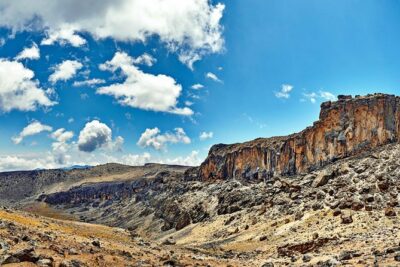
Browse the lists this trek appears in