
Review · ARUSHA
7 Days Kilimanjaro Trekking Machame Route with Professional Guide
Kilimanjaro’s Machame Route gives you the mountain in changing chapters: thick rainforest, giant heather, high volcanic scree, ice fields, and a sunrise push toward Uhuru Peak at 19,345 feet. The route takes seven days on the mountain, with lodge nights in Arusha before and after.
I like the gradual route design, especially the climb to Lava Tower followed by a descent into Barranco Valley. I also like that a private transfer, camping equipment, rescue fees, oxygen, meals, and guide support are included in the $2,400 price.
The main caution is the summit day. You may walk for 11 to 15 hours, beginning around 1 a.m., after sleeping at nearly 15,000 feet. This is a serious high-altitude trek, not a simple hiking holiday.
Key points before you book
- Seven mountain days plus two Arusha lodge nights: The full trip lasts about nine days, with the climb framed by airport transfers and overnight stays.
- Machame’s changing scenery: You move from rainforest to moorland, the Shira Plateau, Barranco Valley, scree, and the Southern Icefields.
- A demanding summit night: The final ascent begins by torchlight and reaches Stella Point before the optional push to Uhuru Peak.
- Strong guide support: Past departures have included guides named Frankie, Nestor, Emmanuel, Bryson, Augustine, and Clinton.
- Private-trip format: Only your own group participates, with private transportation and airport pickup included.
- Useful inclusions: Tents, meals, rescue fees, oxygen, first aid, gear, park fees, and taxes are covered, while tips are extra.
What the $2,400 price really covers
At $2,400 per person, this is not simply a guided walk up a mountain. Your price covers two nights at Arusha Safari Lodge, private airport transfers, mountain transport, park fees, camping, meals on the mountain, a professional guide, rescue fees, oxygen, first aid, and equipment.
That bundle matters because Kilimanjaro trips involve many moving parts. You need registration at the park gate, transfers between trailheads, tents, cooking and meal support, a trained guide team, and a plan for emergencies. Handling all of that yourself would be difficult.
I would still ask the operator to explain exactly what all gears includes before you arrive. The package says gear is included, but it does not provide a detailed equipment list. You should also confirm what personal items you must bring, particularly boots, warm layers, a sleeping bag, and a daypack.
Tips are not included. Set aside money for the mountain crew, but ask before departure how tipping is handled and whether the company uses a shared team system.
More Kilimanjaro Climbs in Arusha
- 8-Day Small-group Lemosho Kilimanjaro Summit Trekking
★ 5.0 · 186 reviews - 7-Day Machame Kilimanjaro Summit Tour from Arusha
★ 5.0 · 125 reviews - Mountain Kilimanjaro Day Hike
★ 5.0 · 102 reviews
Arusha begins and ends the journey
The trip starts at Arusha Safari Lodge, where you can arrive at any time on the first day. A pre-climb briefing takes place at about 4:30 p.m., followed by dinner at 6:30 p.m. The evening includes an equipment check and a confirmation that you have suitable medical coverage and travel insurance.
That first night is more important than it sounds. It gives you a chance to catch your breath, check your pack, and settle any questions before the trail begins. I would arrive with enough time to sleep well and deal with any missing equipment.
The itinerary also lists an 8:30 a.m. start time, while the first day allows arrival at any time. Ask Africa Joy Tours to confirm the exact meeting time for your departure.
On the final mountain day, you descend to Mweka village and return to the lodge in Arusha. The last day includes a private transfer to Kilimanjaro International Airport, unless you arrange a safari or another extension.
Day 2: rainforest from Machame Gate to Machame Camp
After registration at Machame National Park Gate, you enter Kilimanjaro’s southern rainforest. This is a cool, green beginning, with a steady uphill path and thick vegetation around you.
The walk takes about five to six hours, with a picnic lunch along the trail. You spend the night at Machame Camp, at roughly 9,800 feet.
This opening stage is manageable for anyone with moderate fitness, but you should not treat it as a warm-up that does not count. You are gaining altitude from the first day, and a slow pace is useful. The guides’ ability to adjust the speed is one of the most valuable parts of this kind of trip. Guide names associated with past departures include Frankie and Nestor, as well as Emmanuel, Bryson, and Augustine.
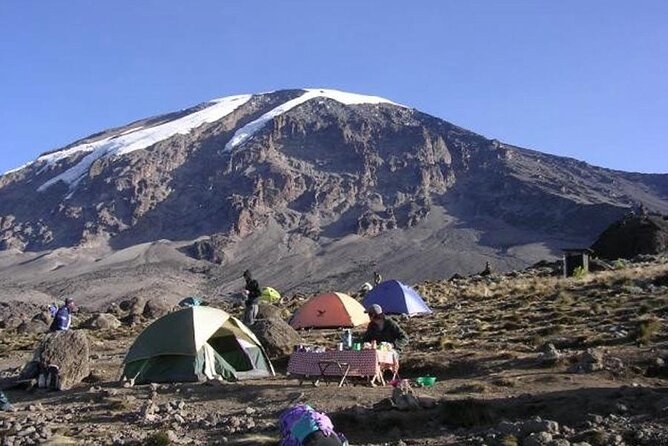
The camp setting gives you your first real sense of mountain routine. Walking, eating, resting, and preparing for the next day become the rhythm. Nights at altitude can feel colder and less comfortable than the distances suggest, so keep your sleeping and warm clothing easy to reach.
Day 3: giant heather and the Shira Plateau
The forest thins as you enter the moorland zone, where giant heather replaces the dense lower vegetation. The trail climbs over rocky ground toward the Shira Plateau, reaching about 11,000 feet before camp near Shira Hut at approximately 12,600 feet.
This is a shorter walking day, around four to five hours, but the altitude makes it meaningful. You gain height steadily, and the slower schedule gives your body more time to adjust.
One of the day’s rewards is the view toward Mount Meru, often appearing among the clouds. You also begin to see how quickly Kilimanjaro changes as you climb. The lower rainforest feels far away, and the open high-altitude surroundings make the route feel more exposed.
Do not judge the day only by mileage. At 12,600 feet, you may feel tired even after a short hike. Drink according to your guide’s advice, eat even if your appetite is low, and report symptoms early. The itinerary is designed around acclimatization, but no schedule can remove the effects of altitude completely.
Same trailhead, a different route:
- 4 Days Mount Meru Trekking
★ 5.0 · 55 reviews - 4 days Best experience Kilimanjaro Hike, Serengeti &Ngorongoro
★ 5.0 · 54 reviews - From Arusha/Moshi: Kilimanjaro Hike Marangu Route Day Trip
★ 4.5 · 54 reviews - Mount Kilimanjaro Day Hike Through Marangu Route to Mandara Hut
★ 5.0 · 37 reviews
Day 4: Lava Tower, Barranco Valley, and the big altitude test
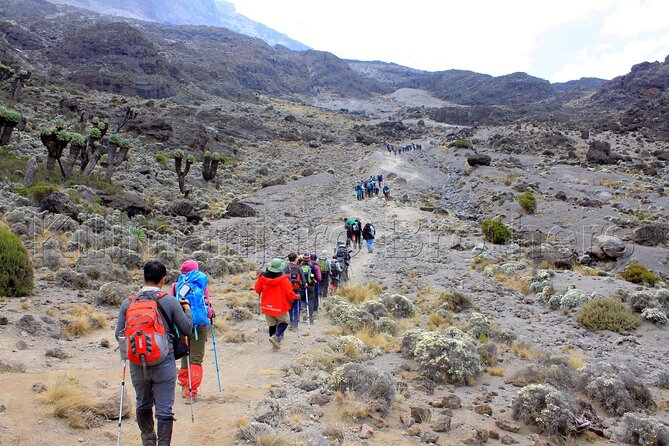
Day four is one of the most useful parts of the route. You climb to Lava Tower at about 14,900 feet, then descend to Barranco Camp at 12,800 feet. The walking time is approximately seven to nine hours.
This climb high, sleep lower pattern helps your body adjust. It is also a demanding day, since you reach a height above your sleeping altitude before descending again. You should expect a slower pace and a long day on your feet.
Lunch near Lava Tower breaks up the effort. After lunch, the route drops into Barranco Valley, where tall cliffs shelter the camp. The setting is one of the trip’s memorable points, with broad views back toward the plains.
I like this day because it combines practical altitude training with some of the route’s best scenery. The drawback is that you may feel tired before the descent begins. Keep your expectations realistic. The descent is not an easy finish, since the trail still requires careful footing and several hours of walking.
Day 5: the Barranco Wall and Karanga Camp
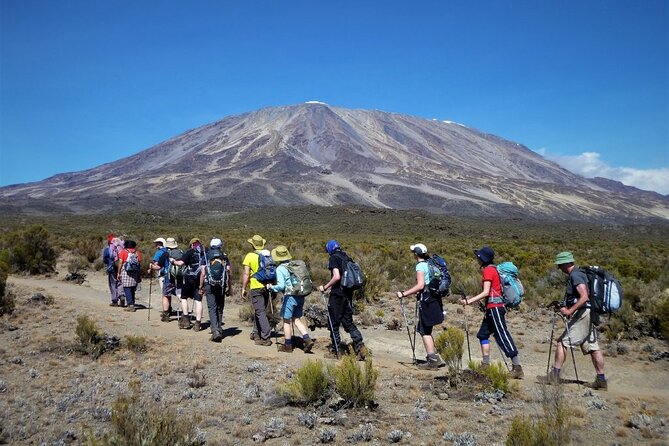
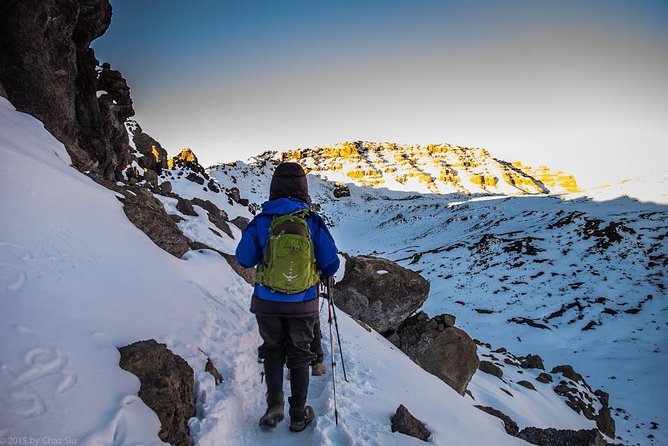
The morning starts with a steep climb up the Barranco Wall. The route then follows an uneven path along Kibo’s southeastern side, with views toward the Southern Icefields.
You walk for about five to seven hours and finish at Karanga Camp, at roughly 13,100 feet. This is the last water point on the approach to the summit, so your guide team handles an important part of the logistical planning here.
The Barranco Wall may sound intimidating, but the key issue is not speed. You need patience, balance, and room to move at a careful pace. Your guide can help you choose secure steps and manage the steeper sections.
After the wall, the route crosses scree with patches of plant life in sheltered hollows. The camp is relatively close compared with the previous day, but altitude remains the main challenge. I would use the afternoon for eating, drinking, checking clothing, and resting rather than trying to do anything ambitious.
Day 6: Barafu Camp and preparation for the summit
Day six follows a compacted scree path toward Barafu Hut at about 14,800 feet. The walk takes roughly three to five hours, and lunch is served at camp.
There is also a short acclimatization hike to a plateau at about 15,700 feet. After that, you rest and prepare for the summit attempt. This pause is essential because the next stage begins around 1 a.m.
Barafu is not a day for sightseeing at leisure. You are high, tired, and focused on the early start. Organize your clothing and headlamp before lying down. Keep snacks and water close by, since you may not feel like searching through your bags during the night.
The short acclimatization hike gives your body another chance to experience greater altitude before the summit. It also lets the guides assess how you are coping. Strong support matters here, and past groups have specifically praised the calm pacing and encouragement provided by guides such as Emmanuel, Bryson, and Augustine.
Day 7: Stella Point, Uhuru Peak, and a very long descent
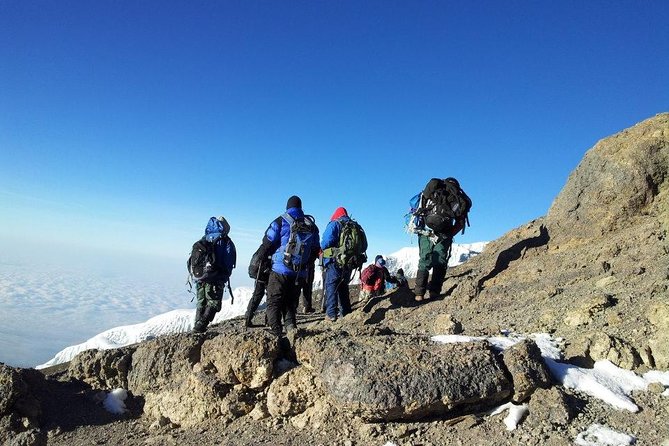
The summit attempt begins by torchlight at about 1 a.m. The route climbs over loose volcanic scree, using long zigzags and a slow, steady pace. Reaching Stella Point at 18,800 feet takes around five to six hours.
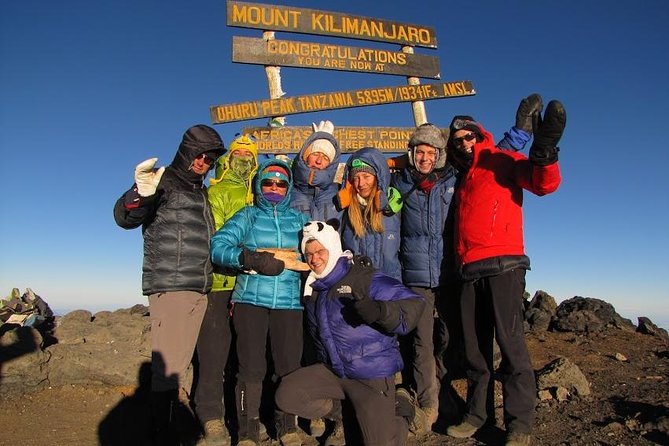
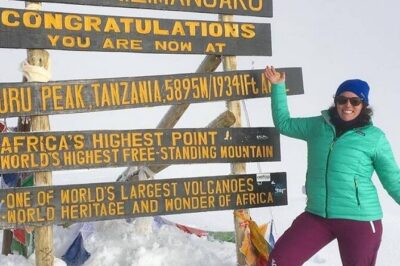
At Stella Point, you can rest and watch the sunrise over Mawenzi. This is already a major achievement. If you still feel strong, you can continue around the crater rim for the two-hour round trip to Uhuru Peak, the highest point on Kilimanjaro at 19,345 feet.
The route passes near glaciers and ice cliffs in the summit area. The cold, darkness, altitude, and fatigue can make this section feel much harder than the distance suggests. Your guide’s judgment is important, and you should be honest about how you feel rather than pushing to satisfy a photograph.
After the summit attempt, you descend to Barafu for refreshments, then continue to Millenium Camp at about 12,500 feet. The full day takes approximately 11 to 15 hours, with the itinerary estimating about 13 hours.
This is the tour’s hardest physical test. You need moderate fitness before arrival, but you also need patience and a willingness to accept a slower pace. Reaching Stella Point is significant even if you decide not to continue to Uhuru Peak.
Day 8: through the forest to Mweka village
The final mountain walk is a sustained descent on a well-constructed path. You return through tropical forest, with birdsong and thick undergrowth, before reaching the Kilimanjaro National Park gate at Mweka, around 5,400 feet.
The walk takes about four to six hours. From the gate, the route continues through coffee and banana farms to Mweka village, where you transfer back to Arusha.
Your knees may notice this day more than your lungs. Descending after the summit is satisfying, but tired legs can make even a good path feel demanding. Use trekking poles if you bring them, and keep your pace controlled.
Back at Arusha Safari Lodge, you have dinner and a bed rather than a tent. That simple change will feel welcome after a week on the mountain.
Guide support and the private-trip format
The private format means only your group participates. That can make the experience easier to manage because the guide team can respond to your group’s pace, condition, and questions.
Names connected with previous climbs include Frankie, Nestor, Emmanuel, Bryson, Augustine, and Clinton. The strongest praise has focused on organization, kindness, safety, and the ability to adjust the pace during difficult sections. One group also described a large support team handling food, personal gear, and tents.
That support is valuable, but you should clarify the size of your own guide and porter team before booking. The supplied information does not promise a particular guide or a fixed crew size for every departure.
Africa Joy Tours also lists rescue fees, oxygen, and first aid as included. These provisions do not make high altitude risk disappear, but they show that emergency planning is part of the package. You still need appropriate medical coverage and travel insurance.
Who this Machame trek suits best
This trek suits you if you have moderate physical fitness, enjoy multi-day camping, and can handle long days without expecting comfort at every stage. You do not need to be an elite mountaineer, but you do need to prepare for steep trails, cold nights, limited sleep before the summit, and a full day of walking.
It may also suit mixed-age groups if everyone understands the demands. A previous group included people aged 19, 40, 46, 48, and 69, with the support team carrying personal gear and managing camp tasks. Age alone does not determine success, but health, preparation, and altitude response matter greatly.
I would not choose this trip if you want a relaxed holiday with short walks and flexible mornings. The seven-day mountain schedule is active, and the summit day is especially demanding.
Cancellation, pickup, and practical booking notes
Pickup is offered, mobile tickets are available, and private transportation is included for airport transfers. The experience is listed as requiring good weather. If poor weather causes cancellation, you are offered another date or a full refund.
You can cancel for a full refund up to 24 hours before the start time. Changes or cancellations inside that window are not accepted, based on local time.
Before paying, confirm the exact start time, the full gear list, your airport transfer details, and what medical documentation is required. Those questions are practical, not fussy. They can prevent confusion on the first evening.
Should you book this Kilimanjaro trek?
I would book this Machame itinerary if you want a structured Kilimanjaro climb with private transport, two lodge nights, a full mountain support package, and a route that gives you time to adjust to altitude. The climb from forest to Shira, Lava Tower, Barranco, and the summit provides a strong variety of scenery and walking conditions.
I would pause if you are not ready for the 1 a.m. summit start or the possible 15-hour day. The $2,400 price is reasonable for the listed inclusions, but its value depends on confirming what personal gear is supplied and understanding that tips remain extra.
For a prepared hiker who wants close guide support and a clear nine-day framework, this is a sensible way to approach Kilimanjaro. Go for the route and the planning, not because the summit is guaranteed. Your best advantage is a steady pace, honest communication with the guides, and enough time to recover at every camp.
FAQ
How long does the entire experience last?
The full trip lasts approximately nine days. Seven days are spent trekking on Mount Kilimanjaro, with lodge nights in Arusha before and after the climb.
How many days are spent on the mountain?
The mountain itinerary lasts seven days, from Machame Gate to the descent through Mweka.
Where does the trip start?
The trip begins at Arusha Safari Lodge in Arusha, Tanzania. Airport pickup from Kilimanjaro International Airport is included.
What time does the summit attempt begin?
The final ascent begins by torchlight at approximately 1 a.m. on day seven.
How high is Uhuru Peak?
Uhuru Peak is listed at 19,345 feet.
How long is the summit day?
The summit day takes approximately 11 to 15 hours, including the ascent, descent to Barafu, and continuation to Millenium Camp.
Is the tour private?
Yes. Only your own group participates in this private tour or activity.
What meals are included?
Breakfast is included for nine meals, dinner for eight meals, and lunch for eight meals, according to the package details.
Are rescue fees and oxygen included?
Yes. Rescue fees, oxygen, first aid, tents, and listed equipment are included.
Are tips included in the price?
No. Tips are not included.
Can I cancel for a full refund?
Yes. You can cancel at least 24 hours before the experience start time for a full refund. If poor weather cancels the experience, you are offered another date or a full refund.
More 7-Day Experiences in Arusha
- KILIMANJARO MACHAME ROUTE, (Climb 7days)
★ 5.0 · 16 reviews - 7 Day Kilimanjaro Climb Lemosho Route & 2 Day Safari
★ 5.0 · 16 reviews - 7 days Kilimanjaro climb via Machame route (Whiskey route)
★ 5.0 · 16 reviews - 7 Days Kilimanjaro Climb Machame Route
★ 5.0 · 15 reviews
Just added around Arusha
- Mt. Kilimanjaro: Shira plateau to Cathedral point 3872m Day hike★ 5.0 · 7 reviews
- 5 days safari, hiking & culture (Serengeti & kilimanjaro)★ 5.0 · 27 reviews
- One Day Hike from Kilimanjaro to Mandara★ 5.0 · 2 reviews
- 3 Days Mount Meru trekking★ 4.5 · 7 reviews
- climb the KILIMANJARO via Lemosho route★ 5.0 · 4 reviews
- 6 Day: Hiking Kilimanjaro via Machame Route★ 5.0 · 2 reviews
- Private 8 day Northern Circuit Kilimanjaro Climb★ 5.0 · 8 reviews
- Kilimanjaro Waterfalls Hike & Moshi Hot Springs Day Trip Tour★ 5.0 · 4 reviews
Kilimanjaro Climbs, compared.
8-Day Small-group Lemosho Kilimanjaro Summit Trekking
Read our review →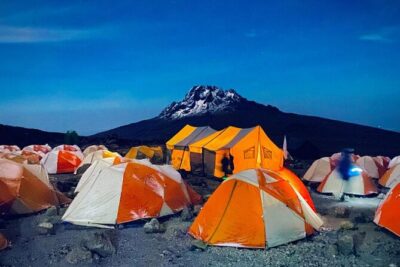
Climbing Kilimanjaro through 7 days Machame Route
Read our review →
Browse the lists this trek appears in