
Review · NEPAL
Annapurna Circuit Trek With Tilicho Lake :Best Trek in Nepal
Tilicho Lake and Thorong La Pass give this trek two serious prizes in one journey: a turquoise high-altitude lake at 4,919 meters and a 5,416-meter crossing above the Marsyangdi and Kali Gandaki valleys. You move from subtropical forest and terraced hills to dry, Tibetan-style country in less than two weeks. The scenery changes fast, and that is the magic.
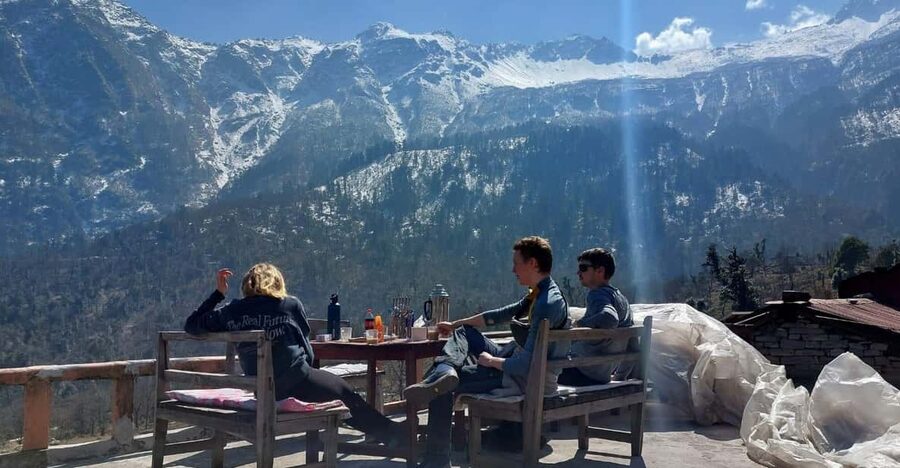
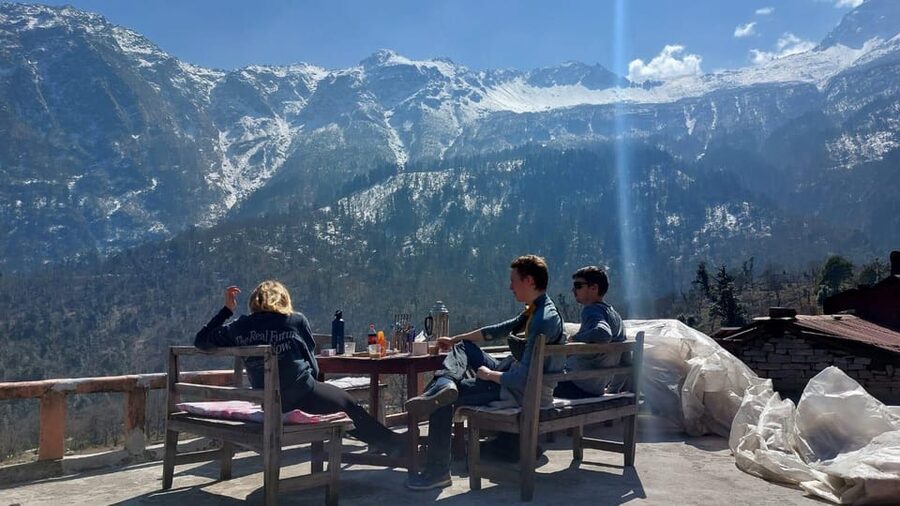
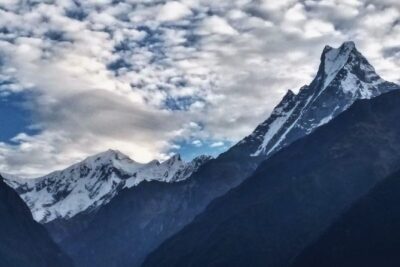
I like the way the trip combines big mountain views with ordinary village life. You see Annapurna I, Manaslu, Machhapuchhre, Dhaulagiri, and Thorong Peak, then share tea-house evenings and pass through places where Hindu and Buddhist traditions still shape daily life. I also like the small group limit of six, with guides such as Ganesh Devkota, Kumar, Jeewan, and Prakash praised for safety, pacing, local stories, and care.
The catch is the pace. This is a moderate to high fitness trek, not a gentle mountain holiday. The itinerary packs Tilicho Lake and Thorong La into 12 days, includes long vehicle rides, and reaches very high altitude quickly enough that you must take acclimatization seriously.
Key points to know before booking
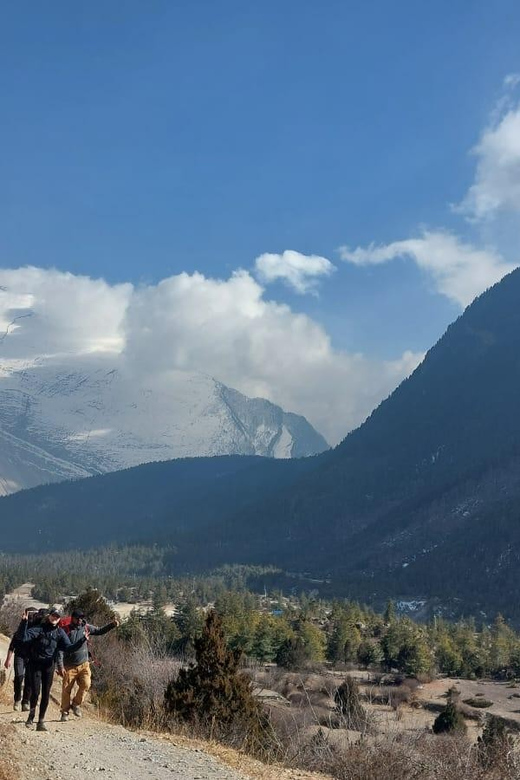
- Tilicho Lake reaches 4,919 meters: The side trip from Manang is demanding, but the turquoise water and surrounding peaks are the trip’s great visual reward.
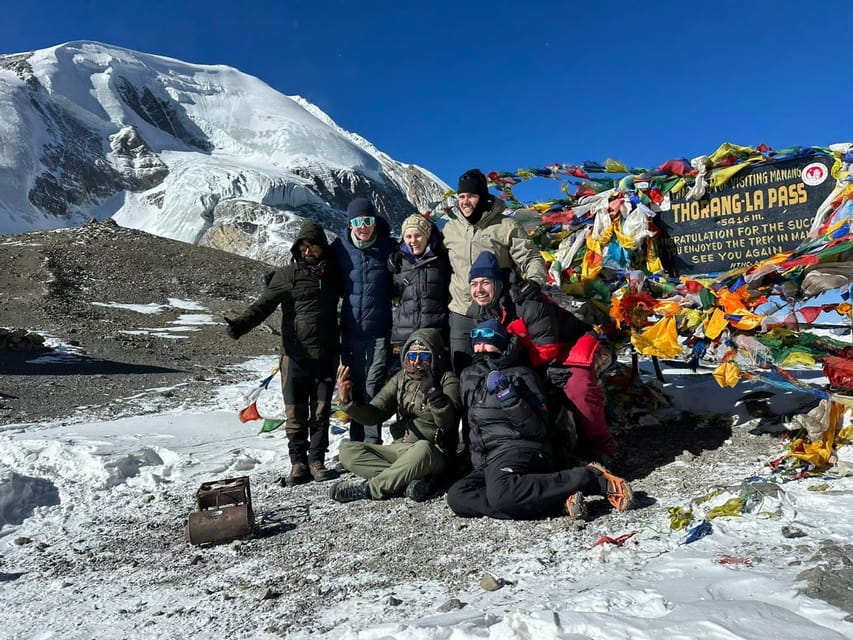
- Thorong La reaches 5,416 meters: You cross the pass after nights at Ledar and Thorong High Camp, then descend to the pilgrimage town of Muktinath.
- A small group keeps things personal: The maximum group size is six, useful when walking pace, altitude, and comfort needs differ.
- Tea houses are included: Accommodation is covered, but meals, drinks, trekking gear, insurance, and personal costs are extra.
- The route changes character every few days: Expect forest, river valleys, pine country, high dry terrain, and the Kali Gandaki region.
- The $604 price covers the framework: Transport, permits, guide services, tea-house lodging, first aid, and tax are included, but food can add about $5 to $7 per meal.
Why this route is more than a mountain-view trek
The Annapurna Circuit is rewarding because it gives you variety instead of one repeated view. The route follows the Marsyangdi River valley, passes through terraced farmland and traditional settlements, then climbs into a colder, drier zone influenced by Tibetan culture.
You get mountain views, but you also get a sense of how people live at altitude. Manang, Muktinath, and the villages along the route are not simply photo stops. They connect the trek to trade, religion, farming, and mountain transport.
The Tilicho Lake detour makes this version harder than a standard Annapurna Circuit itinerary. In return, you get one of the most memorable high-altitude settings in Nepal. The final crossing of Thorong La adds another major challenge, so you should choose this trip for the full experience, not just the famous names.
More Annapurna Treks in Nepal:
- Annapurna Circuit Trek with Tilicho Lake
★ 5.0 · 368 reviews - Annapurna base camp trek 5 Days
★ 5.0 · 252 reviews - 14-Day Private Annapurna Base Camp Trek
★ 5.0 · 180 reviews
Day 1: Kathmandu to Besisahar and Dharapani
The trip begins with pickup in Thamel and a bus journey of about seven hours to Besisahar. This is a long road day, and the bus portion may feel less glamorous than the trekking days that follow, but it gets you toward the trailhead without adding extra trekking time.
From Besisahar, you continue by jeep or SUV to Dharapani, with the transfer taking about five hours. The road journey is part of the modern Annapurna experience, and it means the trek begins higher up the valley than it once did. You can expect scenic views along the way, but also a tiring ride on mountain roads.
You stay overnight in Dharapani and take a short walk around the village. This first night gives you a chance to check your clothing, water supply, and sleeping arrangements before the longer walking days begin.
Day 2: Dharapani to Chame
The walk to Chame takes about seven hours. The route moves through forest and mountain villages, with the Marsyangdi River valley helping frame the day.
Chame is the administrative center of the Manang district and a useful stopping point before the route climbs farther into the high country. You will see the surroundings change as the valley becomes more alpine and the peaks feel closer.
This is your first proper test of the trekking rhythm. Keep your pace steady rather than trying to prove your fitness on day two. Your guide can help you manage breaks and check how you are handling the altitude.
Day 3: Chame to Pisang
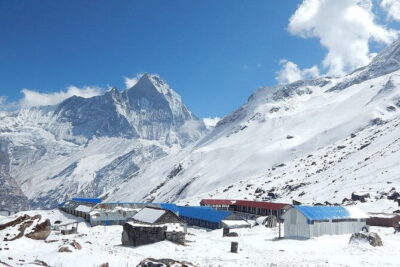
The seven-hour walk to Pisang brings larger Himalayan views and a greater feeling of open mountain country. Annapurna II and other peaks in the Annapurna range begin to dominate the horizon, while the path continues through forest, cliffs, and settlements.
Pisang is split into lower and upper areas, and the stop introduces the cultural shift that becomes clearer near Manang. The higher villages have a stronger Tibetan influence in architecture and religious life.
You will likely appreciate the contrast between the trail’s physical demands and the simple routine at the tea house. Accommodation is included, but food is not, so budget separately for breakfast, lunch, dinner, and drinks.
A few more treks around Nepal worth a look
- Everest Base Camp Trek – 14 Days
★ 5.0 · 1,499 reviews - Everest Base Camp Trek
★ 5.0 · 842 reviews - Everest Base Camp Helicopter Tour landing at Everest View Hotel
★ 5.0 · 668 reviews - Everest Base Camp Trekking
★ 5.0 · 485 reviews
Day 4: Pisang to Manang Valley
The walk to Manang takes about seven hours. The route follows the Marsyangdi Valley and offers some of the trek’s best early views of Annapurna, Manaslu, and nearby peaks.
Manang is not just a place to sleep. It is the main acclimatization point before the route heads toward Tilicho Lake and Thorong La. The village has a strong Tibetan cultural influence, and you can observe differences in buildings, clothing, prayer customs, and daily routines.
Altitude matters here. You may feel fine in the morning and slower by afternoon. Drink regularly, walk at a measured pace, and tell your guide about headaches, unusual tiredness, nausea, or trouble sleeping. A guide who checks your condition, as Jeewan did for one participant, is a real advantage on this route.
Day 5: Manang rest day and Gangapurna Lake
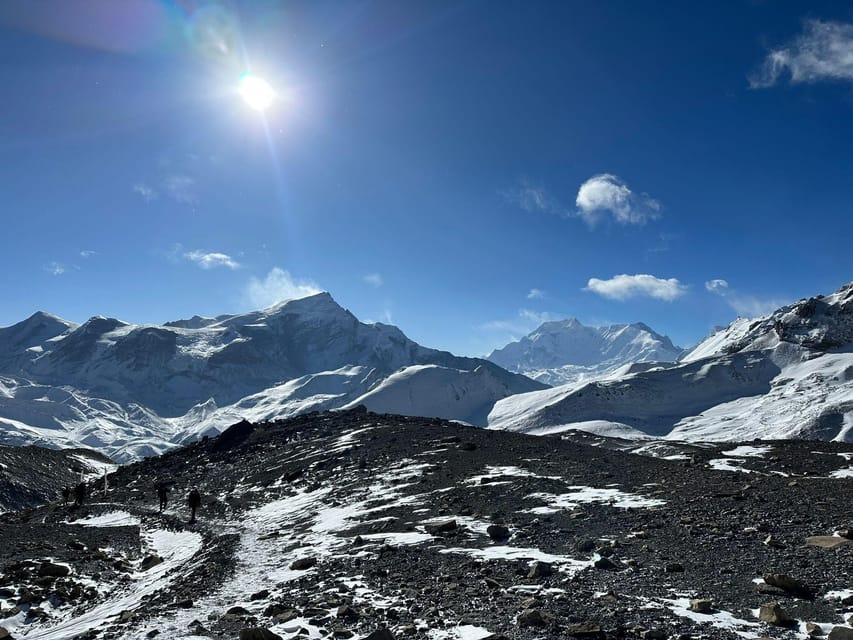
The rest day in Manang is an active one, with a visit to Gangapurna Lake and time to explore the valley. That is a good design choice. You do not spend the day doing nothing, but you also avoid gaining too much altitude too quickly.
Gangapurna Lake sits below dramatic mountain walls, and the short outing helps your body adjust before the higher sections. The day also lets you see Manang at a slower pace instead of passing through with only enough time for dinner.
This is one of the most important days in the schedule. Do not treat it as optional just because you feel strong. The next stages reach Tilicho Lake and Thorong La, where altitude and weather can affect even fit walkers.
Days 6 and 7: Manang to Tilicho Base Camp and the lake
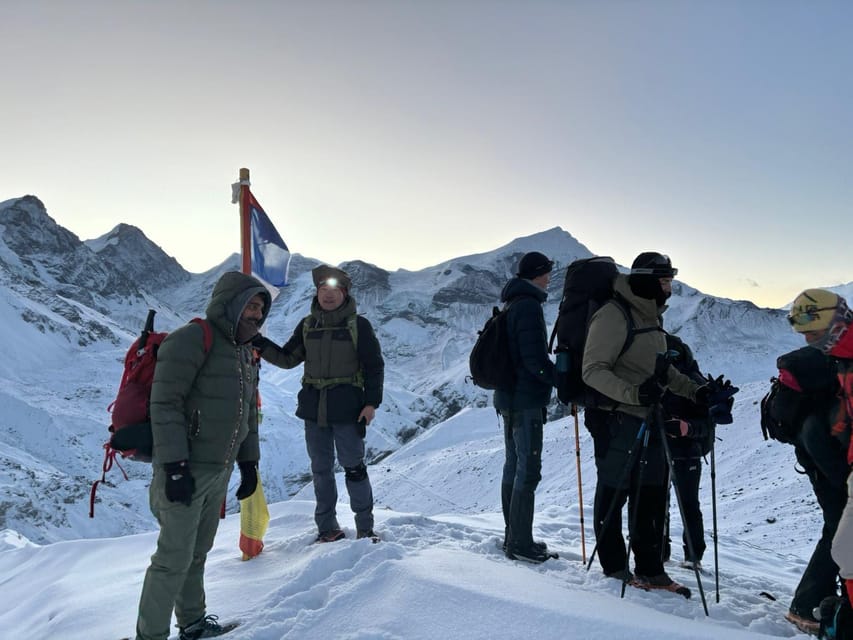
From Manang, you walk toward Tilicho Base Camp. The route passes through rugged high terrain and takes about seven hours according to the schedule. Shree Kharka appears as part of this section, with an overnight stay on the return or connecting portion of the route.
The trail to Tilicho is harder than the earlier valley walking. Paths can be rough, exposed, or snow-covered depending on conditions, and the weather can change quickly. You need warm layers, gloves, a waterproof bag, proper hiking shoes, and a sleeping bag.
The following day is dedicated to Tilicho Lake. The walk to the lake and back is listed at about four hours, but the altitude makes that distance feel much more demanding than a similar walk at home. At 4,919 meters, the lake is commonly described as the world’s highest lake, surrounded by high peaks and stark, dry slopes.
This is the trip’s great reward for many people. The water’s color, the silence, and the scale of the mountains create a scene very different from the forested approach to Chame. Take your time for photographs, but keep an eye on the weather and your energy. You return to Tilicho Base Camp for the night rather than trying to add another long stage.
Day 8: Shree Kharka and the route toward Ledar
The itinerary includes Shree Kharka as a guided walking and overnight section before Ledar. This portion connects the Tilicho side trip with the main Annapurna Circuit route.
The exact feel of the day depends on trail conditions and the group’s pace, but you should expect rough ground, mountain views, and little comfort beyond the tea-house basics. This is where the trip’s side excursion begins to show its cost in energy.
The benefit is that you see more than a simple out-and-back circuit. The drawback is that there is limited room for delays in a 12-day schedule. Weather, road conditions, or altitude symptoms may require changes, so stay flexible.
Day 9: Ledar to Thorong High Camp
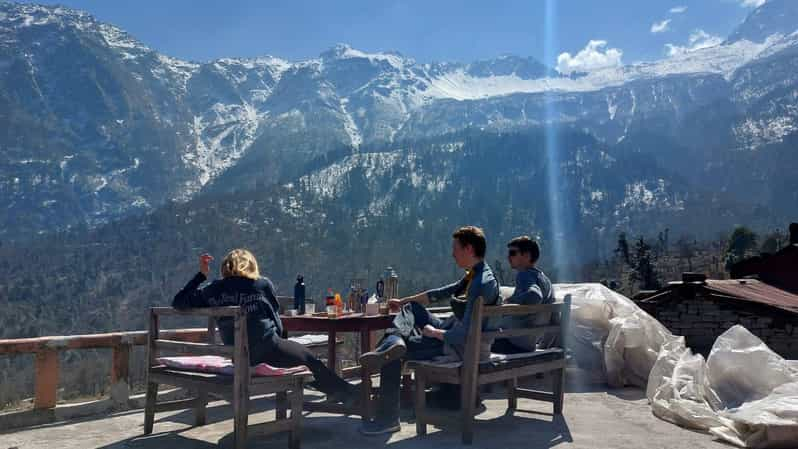
The walk from Ledar to Thorong High Camp takes about seven hours. You are now preparing for the highest point of the trek, and the environment becomes more exposed and severe.
Ledar is already high, and Thorong High Camp sits higher still. You may notice thinner air, colder temperatures, and slower walking. This is not a day for racing ahead or ignoring symptoms because the pass is close.
The overnight stay at high camp makes the next crossing possible, but it can also be the toughest night for sleep. Pack easy access to your warm clothing, water, sunscreen, and headwear rather than burying them in your bag.
Day 10: Thorong La Pass and Muktinath
The climb to Thorong La begins early and reaches 5,416 meters. The crossing is physically demanding, but the views across the surrounding Himalayan peaks make the effort worthwhile.
Thorong La is the high point of the Annapurna Circuit and the moment when the whole route comes together. You have moved from humid lower valleys to a dry, high-altitude world, then crossed one of Nepal’s best-known mountain passes.
The descent to Muktinath takes about four hours in the stated schedule, though tired legs and uneven ground can slow you down. Muktinath is a sacred place for both Hindus and Buddhists, and its religious importance gives the finish of the high section a special character.
You should take the descent seriously. Going downhill is easier for breathing than climbing, but knees and ankles take more impact. Walking poles can be useful, though trekking gear is not included in the price.
Day 11: Muktinath to Tatopani
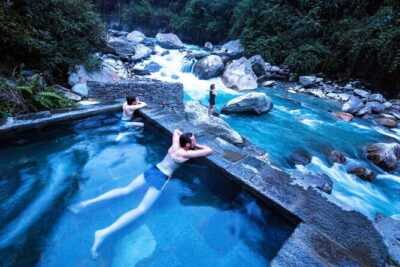
After Muktinath, the trip shifts from walking to transport. You drive for about eight hours toward Tatopani, where you stay overnight near the hot spring area.
The road follows the Kali Gandaki region, part of an ancient trade route and home to some of the world’s deepest gorge scenery. This is a long vehicle day, but it gives your legs a break after Thorong La.
Tatopani adds a welcome change of pace. The hot spring stop is a chance to wash, rest, and enjoy a more relaxed evening before the final journey. It is worth remembering that mountain roads can make vehicle travel slow and tiring, even when the map distance looks modest.
Day 12: Tatopani to Pokhara
The final bus journey takes you to Pokhara. This closes a route that began in the Marsyangdi valley and ends after the high country and Kali Gandaki region.
Pokhara is a practical finish because it is a major base for further time in Nepal. The supplied plan ends there rather than returning you to Kathmandu, so check your onward arrangements before you book.
What the $604 price really covers
At $604 per person, the cost is attractive for a guided high-altitude trek, especially because the package includes several major expenses:
- Transport from Kathmandu to Besisahar
- Jeep transfer from Besisahar to Dharapani
- Transport from Muktinath to Pokhara
- Annapurna Conservation Area permits and TIMS card
- A licensed English-speaking trekking guide
- The guide’s salary, food, accommodation, and insurance
- Tea-house accommodation during the trek
- First aid supplies
- Tax and VAT
You still need to budget for meals and drinks. Breakfast and dinner can be bought at tea houses, while the guide stops at cafés for lunch. Food is estimated at $5 to $7 per meal, so your daily spending will depend on what you order and how many drinks you buy.
Trekking gear is not included. Neither are travel insurance, personal expenses, or the cost of a sleeping bag. I would treat travel insurance as essential for a high-altitude trek, not as an optional extra.
Guides, group size, and the human side
The small group limit of six is one of the strongest practical features. A compact group can move more easily, and a guide can pay closer attention to walking pace, altitude symptoms, and general comfort.
Guide quality matters greatly here. Ganesh Devkota was praised for looking after the group from start to finish. Kumar was noted for keeping the route safe, explaining what was happening, and adding humor. Jeewan was particularly attentive to acclimatization, meal and accommodation choices, local tea stops, cultural details, and good photo locations.
Prakash was described as experienced and friendly, with strong knowledge of the mountains, villages, and local culture. These details matter because this route is not just a marked walk. You will get more from Manang, Muktinath, and the high valleys when someone can explain what you are seeing.
What to pack and how to prepare
Mountain weather can change quickly, so pack for several conditions rather than one forecast. You need warm clothing, a jacket, gloves, hiking pants, sunglasses, a sun hat, sunscreen, toiletries, and sturdy hiking shoes.
Bring a reusable water bottle and a waterproof bag. Waterproof shoes are also listed as useful, particularly if rain, snow, or wet ground appears on the higher sections. A sleeping bag is required, and you need to arrange your own trekking gear.
Carry enough Nepalese rupees for remote areas. Cash is preferred along the route, and card access should not be assumed. A local SIM card with data can be bought in Kathmandu if you want easier communication during the trip.
Who should book this trek?
You should book if you want a demanding Himalayan route with strong scenery, cultural contact, and two major high points in one itinerary. It suits fit walkers who are comfortable with long days, basic tea-house accommodation, changing weather, and limited control over road schedules.
You should think twice if you want a relaxed holiday, private rooms with predictable facilities, or a route with plenty of spare days. The trek is not suitable for wheelchair users, people with altitude sickness, babies under one year, or people over 70. The listed guidance also calls for a moderate to high level of fitness.
Cancellation is allowed up to 24 hours before departure for a full refund, and you can reserve now and pay later. Those policies help with planning, but they do not remove the need to prepare properly for altitude.
Should you book the Annapurna Circuit with Tilicho Lake?
I would choose this trip if Tilicho Lake is important to you and you want the support of an English-speaking guide in a small group. The combination of lake, pass, pilgrimage town, village culture, and changing terrain gives you a fuller experience than a short Himalayan viewpoint trek.
I would not choose it simply because the price looks low. Add food, insurance, gear, and personal expenses, then consider the physical cost of reaching 4,919 meters and crossing Thorong La at 5,416 meters.
Book it if you are ready for long walking days, basic lodging, and real altitude. Prepare well, listen to your guide, and you will have a strong chance of enjoying one of Nepal’s most varied mountain journeys.
FAQ
How long is the Annapurna Circuit with Tilicho Lake trek?
The planned trek lasts 12 days, beginning with transport from Kathmandu and ending in Pokhara after the route through Muktinath and Tatopani.
What is the highest point on the trek?
The highest point is Thorong La Pass at 5,416 meters. Tilicho Lake reaches about 4,919 meters.
Is food included in the price?
No. Food and beverages are extra. Meals are estimated at about $5 to $7 each, with breakfast and dinner available at tea houses and lunch stops arranged along the route.
Is accommodation included?
Yes. Tea-house accommodation during the trekking period is included. A sleeping bag and personal trekking gear are not included.
What transportation is included?
The package includes transport from Kathmandu to Besisahar, a jeep from Besisahar to Dharapani, and transport from Muktinath to Pokhara. The final route also includes a drive to Tatopani and onward travel to Pokhara.
Is the trek guided?
Yes. The trip includes a government-licensed English-speaking trekking guide. The group is limited to six participants, and the guide’s food, salary, accommodation, and insurance are included.
Just added around Nepal
- Everest Base Camp Trek★ 5.0 · 3 reviews
- Everest Base Camp Trek★ 5.0 · 7 reviews
- 15 Days Private Everest Base Camp Trek★ 5.0 · 30 reviews
- Everest Base Camp Trek★ 5.0 · 57 reviews
- 14 Days of Adventure Trekking to Everest Base Camp★ 5.0 · 2 reviews
- 14-Day Everest Base Camp Trek★ 5.0 · 20 reviews
- From Kathmandu: Private 14-Day Everest Base Camp Trek★ 5.0 · 20 reviews
- 14 Days Everest Base Camp Trek★ 5.0 · 4 reviews
Annapurna Base Camp Treks, compared.
Trekking in Annapurna/Langtang/Everest/Upper Mustang regions
Read our review →
Kathmandu to Annapurna Base Camp (ABC) 5-Day Trek
Read our review →Browse the lists this trek appears in