
Review · KATHMANDU
Annapurna Base Camp Trek
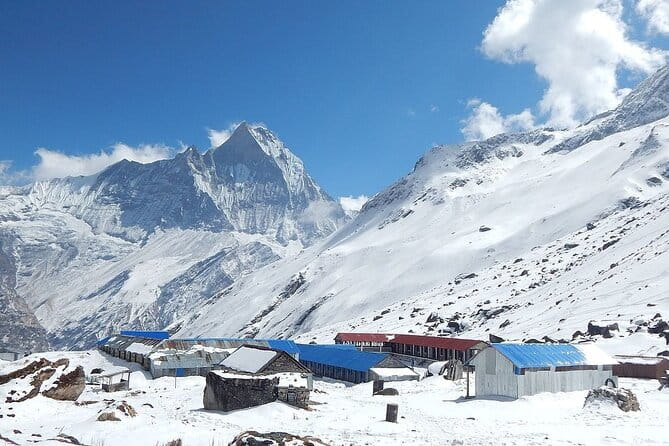
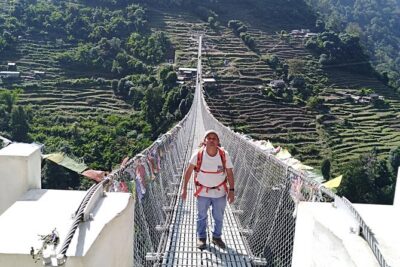
The big draw here is the walk into the Annapurna Sanctuary, a natural bowl ringed by Annapurna I, Machapuchare, and Hiunchuli. You start with city and road travel, then trade buses for stone paths, forests, terraced fields, mountain villages, and a high camp surrounded by giant peaks.
I like the strong mix of scenery and local life, especially Ghandruk’s Gurung village setting and the hot springs at Jhinu Danda. I also like the support package: permits, teahouse lodging, meals, a guide, a porter shared by two trekkers, and a sleeping bag are included. The main caution is the demanding altitude and the unclear insurance wording, so check exactly what the $50 advertised price covers before paying.
Key points to know before booking
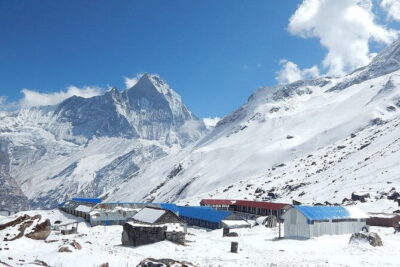
- Annapurna Base Camp at 4,130 meters: The route finishes in a high mountain bowl surrounded by major Himalayan peaks.
- Ghandruk adds culture early: Traditional houses, stone trails, and Gurung village life give the trek more depth than a simple mountain march.
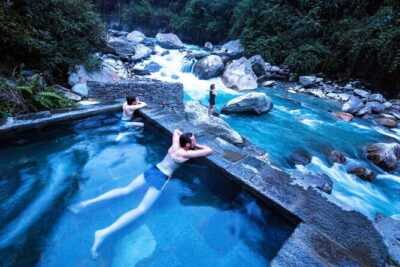
- Jhinu Danda offers hot springs: The soak comes after several hard walking days and is a welcome break.
- The road sections take time: The drives between Kathmandu and Pokhara last about seven to eight hours each way.
- Support is built in: Lodges, full-board trekking meals, permits, guide service, a sleeping bag, and one porter for two trekkers are listed.
- The route is private: You receive a private group format, with English or Spanish guide service available.
Why this trek works for first-time Himalayan trekkers
The Annapurna Base Camp route gives you a clear goal without asking you to spend every day in the wilderness. You move through inhabited valleys, stay in lodges, eat full-board meals, and have a guide to help with permits, pace, and safety.
The scenery changes quickly. Lower sections bring terraced fields and thick forest, while the upper route becomes rougher and more open. That variety helps keep the walk interesting, though it also means plenty of uphill and downhill work.
This is not a casual sightseeing outing. You need hiking shoes, warm clothing, sun protection, water, snacks, and suitable trekking gear. The route reaches high altitude, and the schedule includes several long walking days in a row.
The private group setup should appeal to you if you prefer personal support over a large fixed group. The guide and porter arrangement also keeps you from carrying every item yourself. One porter is assigned for two trekkers, so pack with that shared load in mind.
More Annapurna Treks in Kathmandu
- Annapurna Circuit Trek with Tilicho Lake
★ 5.0 · 368 reviews - Annapurna base camp trek 5 Days
★ 5.0 · 252 reviews - 14-Day Private Annapurna Base Camp Trek
★ 5.0 · 180 reviews
Kathmandu arrival and the pre-trek briefing
Your first day is mostly about getting settled. A representative meets you at Tribhuvan International Airport and takes you to your Kathmandu hotel. Later, your team leader holds a briefing before the walking begins.
This meeting matters more than it may sound. You can confirm the day-by-day plan, ask about the altitude, check your equipment, and make sure your flight and airport transfer details are recorded correctly. You are asked to provide your flight number and landing time in advance.
Kathmandu accommodation is listed as a three-star hotel with breakfast. Lunch and dinner in Kathmandu are not included, so budget separately for those meals. The same applies to Pokhara.
The long road to Pokhara
Day two uses a tourist bus for the scenic drive from Kathmandu to Pokhara. Allow around seven to eight hours. The road passes rural scenery, rivers, and terraced hillsides, but it is still a long ride.
I would treat this as a travel day rather than a sightseeing tour. You will not be walking yet, and traffic or road conditions can affect the schedule. The benefit is that the trip avoids a separate flight and brings you directly to Pokhara, the lake city used as the gateway for the trek.
Transport from Kathmandu to Pokhara and back is included in the package details. That adds useful value, especially if you do not want to arrange buses, hotel transfers, and trek connections yourself.
Ghandruk brings the trek to life
On day three, you drive from Pokhara to Nayapul, then begin walking toward Ghandruk. The drive is short compared with the Kathmandu to Pokhara journey, and Nayapul marks the change from road travel to foot travel.
The trail climbs on stone-paved paths toward Ghandruk, a Gurung village known for traditional houses and mountain views. This is one of the most appealing parts of the route because you get a cultural setting before the higher, more remote sections begin.
The first trekking day can feel tougher than expected. Your body is still adjusting to the pack, the uneven trail, and the repeated climbs. Use this stage to find a comfortable pace rather than racing ahead.
Accommodation during the walk is in lodges or teahouses. Full-board breakfast, lunch, and dinner are included during the trek. Bar bills, laundry, phone charges, and other personal expenses are not included, so carrying cash is important because ATMs may not be available in remote areas.
Same trailhead, a different route:
- Everest Base Camp Trek – 14 Days
★ 5.0 · 1,499 reviews - Everest Base Camp Trek
★ 5.0 · 842 reviews - Everest Base Camp Helicopter Tour landing at Everest View Hotel
★ 5.0 · 668 reviews - Everest Base Camp Trekking
★ 5.0 · 485 reviews
Forest trails from Sinuwa to Deurali
Day four leaves Ghandruk and descends to the Kimrong Khola before climbing again through rhododendron and oak forest. The route reaches Sinuwa, a small settlement surrounded by dense trees.
This is a good example of the route’s rhythm: down first, then up. A descent may sound easy, but steep downhill sections can tire your knees before the next climb begins. Trekking poles would be a sensible personal item, though they are not specifically listed among the included supplies.
From Sinuwa to Deurali on day five, the trail passes through bamboo forest and the small settlements of Dobhan and Himalaya. The route gradually climbs, and the surroundings grow more rugged as trees thin and glacial streams appear.
You should pay attention to hydration and sun protection here. The forest gives shade in places, but the climb still demands steady effort. Your guide is there to help you follow a safe pace and respond to signs of altitude sickness.
Reaching Annapurna Base Camp through Machapuchare Base Camp
Day six is the central challenge and reward. You leave Deurali and walk toward Machapuchare Base Camp, usually called MBC, before continuing to Annapurna Base Camp.
The route becomes more open and mountain-focused as you rise. From MBC, the path climbs gradually to ABC, where the surrounding peaks create the famous sanctuary setting. Annapurna I, Machapuchare, and Hiunchuli are the main names highlighted for this trip.
The appeal is not just reaching a sign or a viewpoint. You are walking into a natural amphitheater where the mountains close around the route. Weather can change quickly at this height, so keep warm clothing accessible rather than buried in your duffel.
The ascent is also the point where altitude deserves your full attention. The trip information advises proper acclimatization, hydration, and following your guide’s instructions. If you feel unwell, tell the guide promptly. Do not treat a worsening headache or unusual fatigue as something to hide in order to finish the day.
The return through Bamboo and Jhinu Danda
After a morning at ABC, day seven follows the route back down toward Bamboo. The descent is generally easier on your breathing because you are losing altitude, but the uneven trail can still be hard on your legs.
Bamboo is a small settlement surrounded by forest. It gives you a practical stopping point after the high camp, and the change from open mountain views to trees can feel dramatic.
Day eight continues from Bamboo to Jhinu Danda through forest, with occasional views toward the Annapurna range. Jhinu Danda is especially attractive because of its hot springs. After several days of uphill walking, soaking in warm water gives the day a clear reward.
The hot springs are an included highlight of the route, but the walk to and from any bathing area can still require effort. Bring suitable personal items for the soak and keep your expectations practical: this is a mountain stop, not a resort day.
The short exit and return to Pokhara
Day nine is designed as a shorter walking day. You descend to Siwa or Ghandruk Phedi, depending on your pace, and meet a vehicle for the drive back to Pokhara.
The exact ending point is not fixed in the details, so ask your guide how the day will work for your group. That flexibility may help if walking speed varies, but it also means you should not expect a single guaranteed finish point in advance.
Back in Pokhara, accommodation is again listed as a three-star hotel with breakfast. You will have a chance to rest after the trek, but lunch and dinner are your own responsibility. This is a good place to keep spending money available for meals and personal needs.
The second long bus ride to Kathmandu
Day ten repeats the seven to eight-hour road journey in reverse. The route passes rural scenery, rivers, and terraced hillsides before reaching Kathmandu.
This return drive can feel long after the physical effort of the trek. Still, including the tourist bus keeps the route simple and avoids arranging another transfer yourself. If you have an international flight soon after arrival, leave enough time for road delays rather than planning a tight connection.
Day eleven is for your final departure. Depending on your flight time, you may have some free time before an airport transfer. The airport transfer in Kathmandu is included.
What the $50 price really means
The advertised price of $50 per person looks unusually low for an 11-day Nepal trek that lists lodging, meals, transport, permits, guide service, porter support, and equipment. That makes it especially important to confirm the exact package before booking.
The details also describe a Guide + Permit Only option. That version includes a licensed English-speaking or local-language guide and the necessary permits, but it may not include the full hotel, transport, meal, porter, and equipment package described elsewhere.
Ask for a written breakdown of:
- The exact price for the full 11-day package
- Whether the $50 figure applies only to the guide and permits
- Which hotels and teahouses are included
- What porter weight limit applies
- Whether airport transfers and both bus journeys are included
- What the travel insurance actually covers
There is conflicting information about insurance. One section lists comprehensive travel insurance as included, while another says personal loss, injury, or illness insurance is not included. Do not assume you are covered for trekking until the provider explains this clearly. You should also carry your own insurance that specifically covers high-altitude trekking.
At full value, a package with transport, permits, lodging, meals, guide service, porter support, and a sleeping bag could be convenient. The value depends on which of those services are actually part of your chosen rate.
Who should choose this Annapurna Base Camp route
I would recommend this trek to an active adult who wants a guided Himalayan experience with a fixed plan and support on the ground. It suits you if you enjoy walking several days in a row, can handle steep trails, and want both mountain scenery and village contact.
It is less suitable if you want a relaxed holiday with short walks and easy transport. The package specifically lists children under 12, pregnant women, people with back or heart problems, people prone to seasickness, and people over 70 as unsuitable. Seasickness may seem an odd concern for a mountain trip, but it is part of the stated restrictions.
You also need to be comfortable with sudden weather changes, limited access to ATMs, and simple lodge accommodation. The package includes a sleeping bag and duffel bag for the trek, but you still need personal trekking equipment and warm clothing.
The guide support is a strong reason to choose this format. English and Spanish service are listed, and Shishir is named in the trip details as someone who provided personal support during one trek. Your assigned guide may be different, so confirm the guide’s name and language before departure.
Practical packing and preparation advice
Bring comfortable shoes and proper hiking shoes, warm layers, a hat, sunscreen, water, snacks, and trekking gear. Pack for both warm lower valleys and cold high sections, since the route moves through several climate zones.
Keep your important personal items and some cash with you. Remote sections may not have ATMs, and extra costs such as laundry, phone use, bar bills, and meals in Kathmandu and Pokhara are not included.
Alcohol and drugs are not allowed, and littering is prohibited. Respect local customs and traditions, especially in villages such as Ghandruk. A guide can help you understand local expectations, but basic courtesy remains your responsibility.
Cancellation is allowed up to 24 hours before the activity for a full refund, and reserve-now-pay-later booking is offered. The activity duration is shown as one to 11 days, but the itinerary described here is the full 11-day program. Confirm the dates and length of your selected option.
Should you book it?
Book this Annapurna Base Camp trek if you want a supported route with a strong mix of high mountain scenery, village life, and practical logistics. Ghandruk, the sanctuary, MBC, ABC, Bamboo, and Jhinu Danda give the trip enough variety to justify the long road transfers.
I would not book until the price and insurance details are explained in writing. The itinerary is appealing, and the service plan is generous, but the $50 figure and conflicting insurance notes need clarification.
If the full package really includes the listed transport, permits, lodging, meals, guide, porter, and trekking equipment, it offers a convenient way to tackle one of Nepal’s best-known routes. If the price is only for the guide and permits, compare the extra costs before deciding.
FAQ
How long is the Annapurna Base Camp trek?
The full itinerary lasts 11 days, including arrival and departure in Kathmandu, drives to and from Pokhara, and the trekking days.
What peaks can I see on the trek?
The route highlights views of Annapurna I, Machapuchare, and Hiunchuli. The final section enters the Annapurna Sanctuary and reaches Annapurna Base Camp.
Are meals included?
Breakfast is included with the three-star hotel stays in Kathmandu and Pokhara. Breakfast, lunch, and dinner are included during the trekking portion. Lunch and dinner in Kathmandu and Pokhara are not included.
Is transportation included?
Transportation to and from the trekking starting point is included. The package also lists tourist bus transport from Kathmandu to Pokhara and back, plus airport transfers in Kathmandu.
What is included for trekking equipment?
A duffel bag and sleeping bag are provided for the trek and must be returned afterward. Personal trekking equipment, warm clothing, hiking shoes, sunscreen, water, and other personal gear are your responsibility.
Can I cancel the booking?
You can cancel up to 24 hours in advance for a full refund. Reserve-now-pay-later booking is also available.
Just added around Kathmandu
- Everest Base Camp Trek★ 5.0 · 3 reviews
- Everest Base Camp Trek★ 5.0 · 7 reviews
- 15 Days Private Everest Base Camp Trek★ 5.0 · 30 reviews
- 14 Days of Adventure Trekking to Everest Base Camp★ 5.0 · 2 reviews
- 14-Day Everest Base Camp Trek★ 5.0 · 20 reviews
- Everest Base Camp Trek★ 5.0 · 57 reviews
- From Kathmandu: Private 14-Day Everest Base Camp Trek★ 5.0 · 20 reviews
- 14 Days Everest Base Camp Trek★ 5.0 · 4 reviews
Annapurna Base Camp Treks, compared.
Trekking in Annapurna/Langtang/Everest/Upper Mustang regions
Read our review →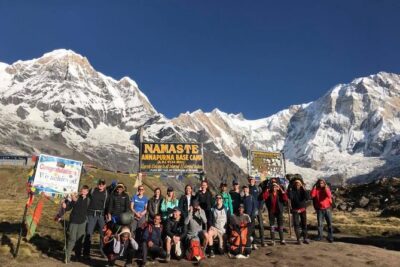
Kathmandu to Annapurna Base Camp (ABC) 5-Day Trek
Read our review →Browse the lists this trek appears in