
Review · ARUSHA
7 Days Mount Kilimanjaro Machame Route
The smartest feature of this 7-day Machame Route is its pacing. Instead of forcing the climb from Barranco to Barafu into one long push, the route gives you separate nights at Karanga and Barafu. That short Karanga day matters because summit day begins around midnight, when sleep is already in short supply.
I like the steady change in scenery, from wet rainforest to bare alpine desert and finally the icy high-altitude summit zone. I also like the South Circuit approach, which gives you views of Kibo and Mawenzi from several angles before the final climb.
The main drawback is simple: this is still a hard mountain trek. The summit day combines a 5 km ascent, a descent of about 12 km, and up to 14 hours of walking. A moderate fitness level is required, but you should prepare for a much more demanding effort at altitude.
Key points to know before booking
- Seven days gives you a useful rest buffer: The extra night at Karanga breaks up the long climb toward Barafu and helps you face summit night with more energy.
- The route crosses five distinct habitats: You move through rainforest, moorland, semi-desert, alpine desert, and Arctic terrain.
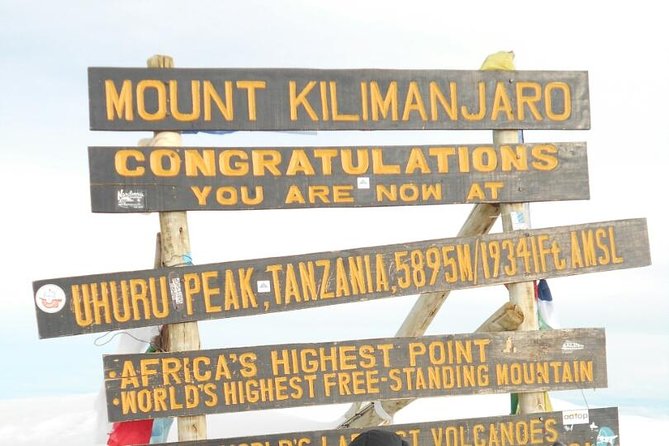
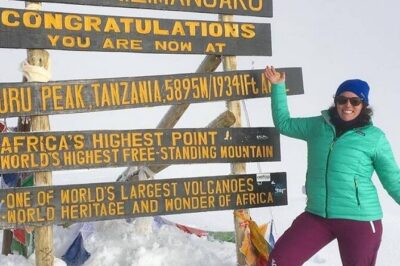
- Summit day starts around midnight: You climb toward Stella Point in darkness, then continue to Uhuru Peak at 19,345 feet.
- The Barranco to Barafu section is split in two: Karanga is a short acclimatization day, while Barafu is the final high camp.
- The group limit is 15 people: That is large enough for a social trek but small enough to keep the mountain team manageable.
- Named staff include Chris, Alfred, and Nasr: Nasr handles booking contact, while Chris and Alfred are identified with the guiding team.
Why the seven-day schedule makes sense
Kilimanjaro is not a technical climb in the usual mountaineering sense, but altitude makes the trip difficult. You can be fit and still feel rough above 15,000 feet. The body needs time to adjust, and this itinerary uses its seven days more wisely than a rushed schedule.
The key decision comes between Barranco and Barafu. On a shorter plan, that section can become an exhausting all-day march followed by a quick rest before the summit attempt. Here, you sleep at Karanga first, then make the shorter climb to Barafu the next day.
That means you still have a demanding summit day, but you are not arriving at the final camp after an unnecessarily long approach. I see this as the strongest reason to choose the seven-day version. It costs more time, but the extra day serves a clear purpose.
The route starts at about 5,400 feet and reaches 19,345 feet at Uhuru Peak. That change is enormous. The gradual movement through different habitats gives you a visible sense of altitude, but it also reminds you that the mountain becomes less forgiving as you rise.
More Kilimanjaro Climbs in Arusha
- 8-Day Small-group Lemosho Kilimanjaro Summit Trekking
★ 5.0 · 186 reviews - 7-Day Machame Kilimanjaro Summit Tour from Arusha
★ 5.0 · 125 reviews - Mountain Kilimanjaro Day Hike
★ 5.0 · 102 reviews
Day 1: Machame Gate to the rainforest
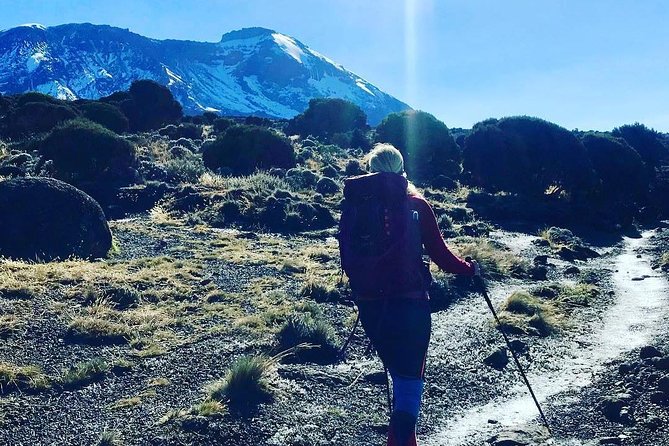
The first day begins with a drive from Arusha to Mount Kilimanjaro National Park. The road passes through Machame village on the lower slopes, then you enter the park and begin walking from roughly 5,400 feet.
The trail climbs through rainforest to Machame Camp at about 9,400 feet. The walking distance is 11 km, with an expected hiking time of five to seven hours. This is a full first day, but the pace is more about settling into the climb than racing uphill.
The lower trail can be muddy and slippery. I would treat gaiters and trekking poles as practical equipment, not optional extras. The rainforest is also likely to be the dampest part of the route, so keep rain gear easy to reach rather than buried at the bottom of your pack.
Machame Camp is the first overnight stop. The large altitude gain makes this a day to watch how your body responds. Do not use the relatively easy scenery as an excuse to push too hard. You still have six days ahead.
Day 2: Moorland and the Shira campsite
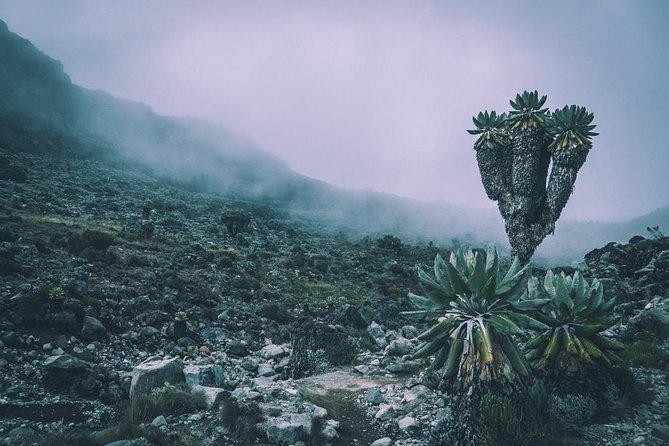
After breakfast, the route leaves the rainforest and enters moorland. The day covers only 5 km, but it still takes around four to six hours because the trail continues upward, reaching approximately 12,500 feet.
You cross a small valley and follow a steep, rocky ridge covered with heather. The route eventually turns west toward a river gorge before reaching Shira campsite. The shorter distance gives you time to rest, eat, and settle into the higher altitude.
This is one of the itinerary’s better pacing choices. You are gaining roughly 3,100 feet, so a short day gives your body a chance to adjust without wasting the entire day. The trail is no longer protected by thick forest, and the open setting can make the scale of Kilimanjaro feel more apparent.
Shira is also where the trip begins to feel less like a forest hike and more like a high mountain crossing. You should expect cooler conditions and more exposed walking, though exact weather can change quickly.
Day 3: Lava Tower, altitude practice, and Barranco
Day three is one of the most important days for acclimatization. From Shira, you climb east toward Lava Tower, also called the Shark’s Tooth, reaching roughly 13,000 feet before descending to Barranco Camp at the same general altitude.
The distance is 10 km, and walking time is listed at six to eight hours. The route passes a junction toward Kibo, then turns southeast toward Lava Tower. Another junction leads toward Arrow Glacier at about 16,000 feet, although the itinerary places the overnight stop at Barranco rather than the glacier.
You finish the day around 13,000 feet, close to where you began in altitude. That may sound like wasted effort, but it is the opposite. Climbing higher and then sleeping lower gives your body useful exposure to altitude without making you spend the night at the highest point reached that day.
This is likely to be a tiring day even before summit night enters your thoughts. The semi-desert terrain offers little shelter compared with the rainforest, and the route asks you to gain and lose altitude. I would keep your pace controlled and use the long rest period at Barranco well.
Same trailhead, a different route:
- 4 Days Mount Meru Trekking
★ 5.0 · 55 reviews - 4 days Best experience Kilimanjaro Hike, Serengeti &Ngorongoro
★ 5.0 · 54 reviews - From Arusha/Moshi: Kilimanjaro Hike Marangu Route Day Trip
★ 4.5 · 54 reviews - Mount Kilimanjaro Day Hike Through Marangu Route to Mandara Hut
★ 5.0 · 37 reviews
Day 4: The Barranco Wall and a short Karanga day
The fourth day covers just 5 km in about four to five hours. You leave Barranco, pass the Barranco Wall, and reach Karanga Valley campsite at approximately 13,100 feet.
Do not read the short distance as a sign that the day is effortless. The Barranco Wall is the route’s most distinct obstacle, and you will be walking on a steep ridge before reaching camp. The itinerary does not describe technical climbing, but the terrain is clearly more demanding than a level trail.
The value of this day is recovery and acclimatization. You gain only about 100 feet in overnight altitude, yet you make useful progress toward Barafu. I especially like this stop because it prevents the middle of the trek from becoming one long slog.
Karanga is also the night before the final high camp. Use the time to eat, drink, check your clothing, and organize anything you need for the midnight start. A short day can still be busy if you leave these tasks until late.
Day 5: Karanga to Barafu Hut
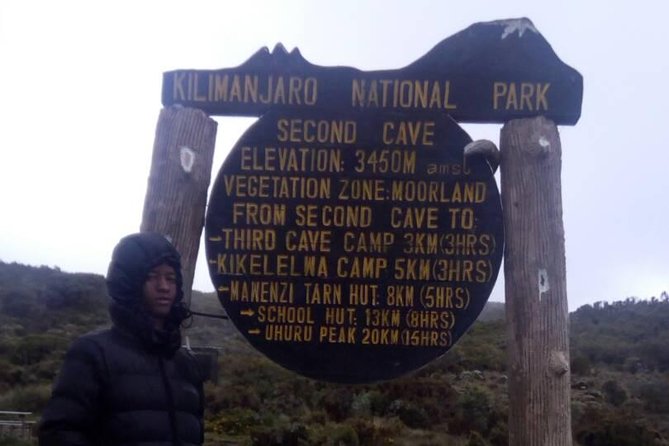
From Karanga, you climb 4 km to Barafu Hut, reaching about 15,300 feet. The walk takes around four to five hours, and the habitat is alpine desert.
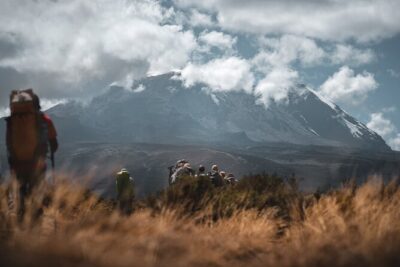
You pass the junction connecting with the Mweka Trail, then continue upward to Barafu. At this point, you have completed the South Circuit, which gives you changing views of the summit from several sides. Mawenzi and Kibo are visible from camp, a useful reminder that the summit is close but not yet easy.
Barafu is the staging point for the most difficult day. You arrive early enough to rest and prepare for the summit attempt, though the high altitude can make sleeping difficult. The plan calls for dinner and rest before starting around midnight to 2 a.m.
This is where the seven-day schedule earns its keep. You have not rushed from Barranco all the way to Barafu. The Karanga overnight has divided the approach into manageable pieces, leaving you a better chance of beginning summit day with some reserve.
Day 6: A midnight climb to Uhuru Peak
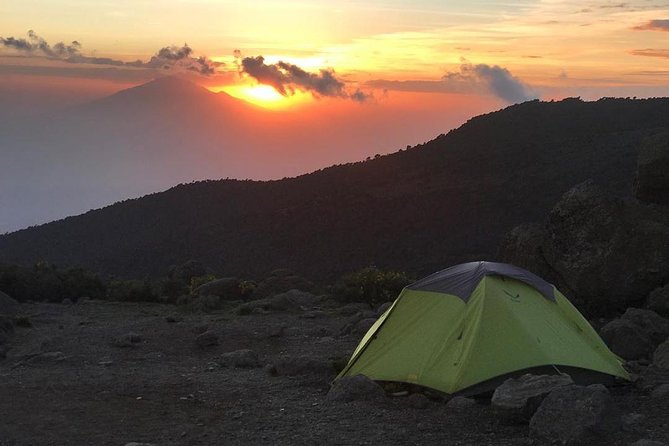
Summit day begins between midnight and 2 a.m. You climb from Barafu through heavy scree between the Rebmann and Ratzel glaciers, heading toward Stella Point on the crater rim at about 18,600 feet.
The ascent covers roughly 5 km and takes seven to eight hours. The route is steep, dark, and physically draining. The challenge is not just the distance. You are also walking at extreme altitude after very little sleep.
Stella Point is the first major summit goal. If the weather cooperates, sunrise here can be a remarkable reward after the night climb. From Stella Point, you continue around the crater rim toward Uhuru Peak, the highest point on Kilimanjaro at 19,345 feet.
The itinerary lists a descent of about 12 km, taking four to six hours, with the day ending around 10,000 feet. In practice, this makes summit day a long combined ascent and descent, with seven to eight hours up and another four to six hours down.
I would plan mentally for a day that feels less like a single hike and more like two separate tests. First comes the slow nighttime climb. Then, after reaching the summit, you still have a long descent when your legs are tired. Keep warm layers, rain gear, and water accessible throughout the day.
Day 7: Mweka descent and the return to Arusha
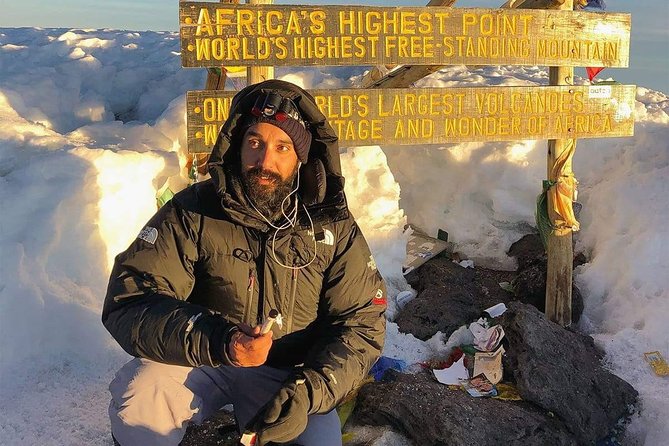
The final day starts at around 10,000 feet and descends 10 km through rainforest to the Mweka Park Gate at about 5,400 feet. The expected walking time is three to four hours.
The lower trail can be wet and muddy, so gaiters and trekking poles are useful again. Shorts and a T-shirt may be comfortable at the lower altitude, but keep rain gear and warmer clothing close because conditions can change during the descent.
At Mweka Gate, you receive your summit certificates. You then continue for about another hour to Mweka Village, where a vehicle takes you back to your hotel in Arusha.
This final transfer is an important practical detail. You do not finish at the park gate and arrange your own way back. The vehicle meets you at Mweka Village, bringing the seven-day route to an orderly close.
Guides, group size, and the human side of the climb
The trip is operated by Moorland Safari and Trekking, with groups limited to 15 people. That is not a private climb, but it keeps the party within a reasonable size for a long mountain route.
The named team members connected with this operation include Nasr, Chris, and Alfred. Nasr is the booking contact identified for arranging the Machame climb, while Chris is described as a team leader and Alfred as a guide. The strongest praise centers on organization, flexibility, and the support provided by the mountain crew.
Those details matter more on Kilimanjaro than they might on a short day tour. You need clear timing, good communication, and a team that can manage the change from ordinary hiking to a midnight summit attempt. Still, the information provided does not spell out every inclusion, such as meals, camping equipment, tips, or airport transfers, so I would confirm those points before paying.
Is the $2,520 price good value?
The listed price is $2,520 per person. That is a major trip expense, but the seven-day schedule gives the cost a clear purpose rather than simply adding an extra night.
You are paying for a guided national park climb, multiple overnight camps, transport back to Arusha, and a route designed with acclimatization in mind. The group limit of 15 also gives the operation a defined scale. The price may be reasonable for you if it includes the expected mountain services, but the supplied details do not itemize the package.
I would ask for a written list of inclusions before booking. Confirm what is covered at the park, what equipment is supplied, how meals are handled, and whether hotel pickup in Arusha is included or only offered as an optional service. Those questions can change the real value of the trip.
The seven-day format is worth comparing with shorter Machame schedules. A cheaper six-day plan may save money and one night, but the extra Karanga stop reduces the length of the approach to Barafu. For a first Kilimanjaro climb, I would place more weight on sensible pacing than on shaving a day from the itinerary.
Who should choose this Machame route?
I would recommend it to someone who wants a serious mountain challenge but prefers a measured schedule. You need moderate fitness, comfort with long walking days, and the ability to cope with a midnight start followed by a full descent.
It suits you especially well if you value changing scenery. Few routes pack rainforest, moorland, semi-desert, alpine desert, and Arctic terrain into one climb. The South Circuit also gives the ascent a sense of movement around the mountain rather than a simple up-and-down path.
I would be cautious about booking it if you are looking for a relaxed holiday or if you have not prepared for long uphill and downhill days. The summit section is physically and mentally demanding, and the altitude cannot be treated like ordinary hiking fatigue.
The free cancellation policy allows you to cancel up to 24 hours before the local start time for a full refund. Changes or cancellations made inside that 24-hour window are not accepted or refunded.
Should you book the seven-day Machame Route?
I would choose this version over a rushed Machame itinerary because the Karanga night has a practical purpose. It breaks up the climb to Barafu and gives you a shorter day before the hardest morning on the mountain.
Book it if you want a well-paced, guided Kilimanjaro attempt and can commit to the altitude, distance, and midnight summit schedule. Before booking, confirm the exact package inclusions and prepare seriously for the 19,345-foot summit. If you do that, the route offers a strong balance of scenery, acclimatization time, and logistical support.
FAQ
Where does the Kilimanjaro trek start?
The activity starts in Arusha, Tanzania. Transport takes you from Arusha toward Mount Kilimanjaro National Park and the Machame Gate area.
How long is the Machame Route experience?
The experience lasts approximately seven days.
What time does the activity start?
The listed start time is 6:30 a.m. The summit attempt itself begins much earlier, usually between midnight and 2 a.m. on day six.
How high is Uhuru Peak?
Uhuru Peak reaches 19,345 feet.
How far do you walk on summit day?
Summit day includes about 5 km of ascent and 12 km of descent. The ascent takes about seven to eight hours, and the descent takes about four to six hours.
What fitness level is required?
A moderate physical fitness level is required. The route includes long walking days, steep sections, high altitude, and a midnight summit start.
How many people can join the group?
The group has a maximum of 15 people.
Is pickup offered after the trek?
Yes. After descending to Mweka Village, a vehicle meets you and drives you back to your hotel in Arusha.
More 7-Day Experiences in Arusha
- KILIMANJARO MACHAME ROUTE, (Climb 7days)
★ 5.0 · 16 reviews - 7 Day Kilimanjaro Climb Lemosho Route & 2 Day Safari
★ 5.0 · 16 reviews - 7 days Kilimanjaro climb via Machame route (Whiskey route)
★ 5.0 · 16 reviews - 7 Days Kilimanjaro Climb Machame Route
★ 5.0 · 15 reviews
Just added around Arusha
- Mt. Kilimanjaro: Shira plateau to Cathedral point 3872m Day hike★ 5.0 · 7 reviews
- 5 days safari, hiking & culture (Serengeti & kilimanjaro)★ 5.0 · 27 reviews
- One Day Hike from Kilimanjaro to Mandara★ 5.0 · 2 reviews
- 3 Days Mount Meru trekking★ 4.5 · 7 reviews
- climb the KILIMANJARO via Lemosho route★ 5.0 · 4 reviews
- 6 Day: Hiking Kilimanjaro via Machame Route★ 5.0 · 2 reviews
- Private 8 day Northern Circuit Kilimanjaro Climb★ 5.0 · 8 reviews
- Kilimanjaro Waterfalls Hike & Moshi Hot Springs Day Trip Tour★ 5.0 · 4 reviews
Kilimanjaro Climbs, compared.
8-Day Small-group Lemosho Kilimanjaro Summit Trekking
Read our review →
Climbing Kilimanjaro through 7 days Machame Route
Read our review →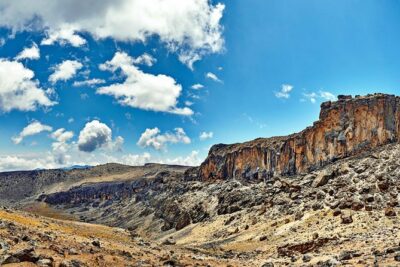
Browse the lists this trek appears in