
Review · ARUSHA
7 Days Machame Route Trek Mount Kilimanjaro
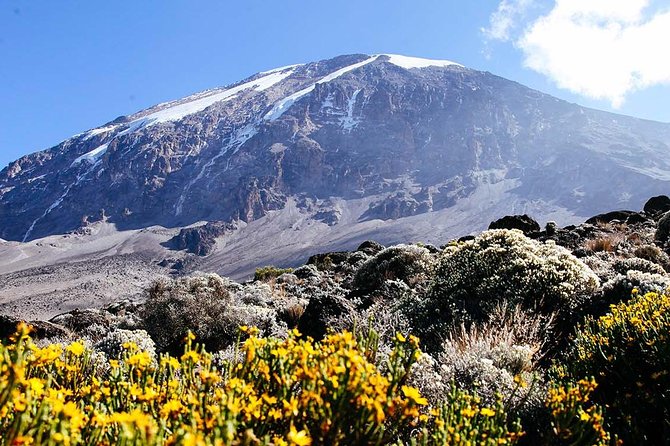
The best part of this seven-day Machame Route trek is the changing world beneath your boots. You start among giant rainforest trees and colobus monkeys, cross dry heath and alpine desert, then reach Kilimanjaro’s icy summit at 5,895 metres. It feels like several hikes stitched into one demanding week.
I like the route’s built-in acclimatisation: you climb high to Lava Tower, then sleep lower at Barranco Camp. I also like the small maximum group of four, which gives the guide room to watch your pace and encourage you when the trail gets rough. The catch is simple: this is a serious high-altitude trek, and summit night begins around midnight after only a short rest.
Key points before you book
- Five distinct climate zones: Rainforest, heath, moorland, alpine desert, and snowy summit scenery arrive in quick succession.
- High point at Uhuru Peak: The summit reaches 5,895 metres, with a pre-dawn ascent of 5 to 7 hours to Stella Point.
- Useful acclimatisation plan: You climb to 4,640 metres at Lava Tower, then sleep at Barranco Camp.
- A small operating group: The tour accepts a maximum of four people, with an expert guide accompanying the trek.
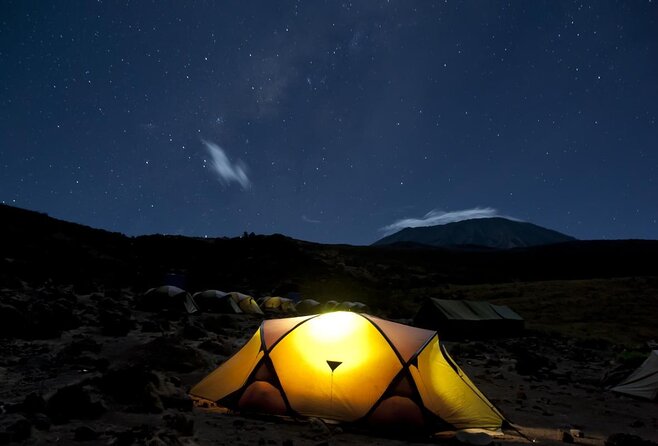
- Camping all the way up: Nights on the Machame Route are spent in tents, followed by a hotel night after the final descent.
- A demanding final push: Summit night includes tea and biscuits around midnight, a sunrise attempt, and a long descent back to Barafu Camp.
What the seven-day Machame trek really feels like
Kilimanjaro is not a technical climbing trip in the narrow sense. You do not need ropes or climbing experience for the Barranco Wall, and the route is walked rather than climbed with specialist equipment. Still, the mountain asks a lot of you.
The difficulty comes from altitude, long hours, cold, uneven ground, and the need to keep moving when your body would prefer a bed. The route reaches 5,895 metres, far above the height at which many people begin to feel altitude symptoms. Your guide’s job is not just to lead the way. It is to watch how you are coping and help manage the pace.
The seven-day schedule gives you a sensible rhythm. The route rises quickly during the day, then uses lower camps where possible to help your body adjust. That is especially clear on Day 3, when you go up to Lava Tower at 4,640 metres before dropping to Barranco Camp for the night.
You should still treat acclimatisation as a helpful plan, not a guarantee. Fitness matters, but stamina and patience matter just as much. One useful piece of advice from a past climber was to consider Diamox, though that is a medical decision you should discuss with a doctor before the trip.
More Kilimanjaro Climbs in Arusha
- 8-Day Small-group Lemosho Kilimanjaro Summit Trekking
★ 5.0 · 186 reviews - 7-Day Machame Kilimanjaro Summit Tour from Arusha
★ 5.0 · 125 reviews - Mountain Kilimanjaro Day Hike
★ 5.0 · 102 reviews
Day 1: Machame Gate to rainforest camp
Your pickup is scheduled after breakfast, with the listed meeting time at 8:30 am. You travel from your hotel to Kilimanjaro National Park’s gate, complete the required paperwork, and then begin the trek.
The first day takes about 5 to 6 hours and leads through thick rainforest. This is the greenest part of the route, with old trees, large ferns, and the endemic Impatiens Kilimanjari flower. Keep your eyes up into the branches. Black and white colobus monkeys may appear among the leaves, often just long enough for you to reach for your camera.
The forest makes a strong opening because it feels far removed from the dry summit slopes ahead. You are not simply walking toward a high mountain. You are passing through a sequence of habitats, each with its own look and feel.
Machame Camp is your first overnight stop. After reaching camp, you have time to stretch, rest, eat a hot meal, and settle into your tent. The first night may test your patience more than your legs. You are adjusting to camp life, the physical effort, and the knowledge that the steepest part is still ahead.
Day 2: Heath and moorland on the way to Shira
Day 2 begins early, even though the walking time is not especially long. The early start is meant to get you to Shira Camp by mid-afternoon, leaving time to settle in before the evening meal.
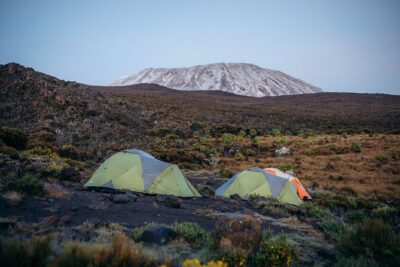
The change from forest to heath and moorland is one of the route’s great rewards. The trees thin out, the air feels more open, and the ground becomes drier. You gain broader views of the mountain range, with Kibo’s glaciers catching the late sunlight.
Shira Camp offers a strong first view of the mountain’s upper reaches. It is also the point where the hike begins to feel more exposed. The forest had offered shade and shelter. Here, you will notice the altitude and weather more directly.
The walking schedule leaves room for rest, which is important. You should resist the temptation to race ahead simply because the day is shorter. Eat well, drink regularly, and use the afternoon to check clothing and equipment. Small problems are easier to fix at camp than higher on the mountain.
Day 3: Lava Tower and Barranco Valley
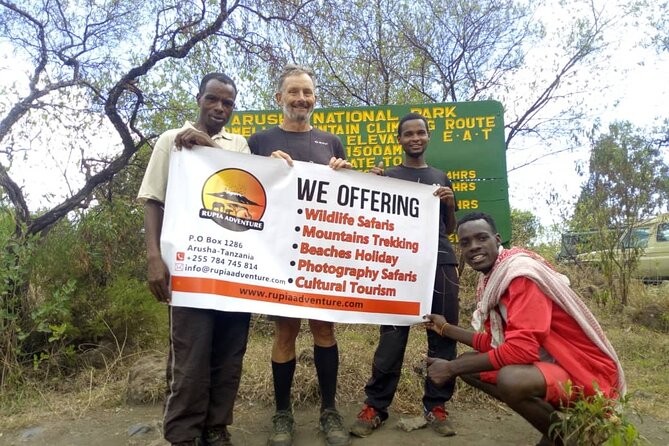
Day 3 is the clever part of the route. From Shira Plateau, you climb about 700 metres to Lava Tower, reaching roughly 4,640 metres. Then you descend to Barranco Camp, which sits not much higher than your previous night’s camp.
This high point during the day helps your body experience thinner air without forcing you to sleep at the same elevation. It is a classic acclimatisation pattern, and it gives this seven-day route more breathing room than a rushed itinerary.
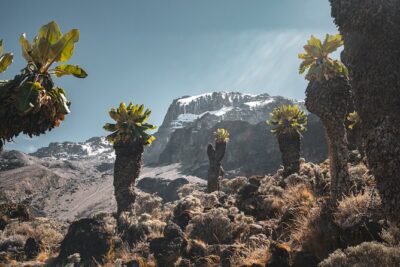
The full walk takes about 6 to 7 hours. Lava Tower is a stark place, surrounded by alpine desert scenery. After a rest there, you continue through the Barranco Valley, where small lobelia plants and giant senecios add life to the otherwise dry surroundings.
Barranco Camp is one of the most memorable overnight stops because the surroundings feel both harsh and strangely delicate. You are high above the forest now, but plants still cling to the slopes. Dinner and sleep come after a long day, and many people will appreciate a quiet evening more than extra sightseeing.
Same trailhead, a different route:
- 4 Days Mount Meru Trekking
★ 5.0 · 55 reviews - 4 days Best experience Kilimanjaro Hike, Serengeti &Ngorongoro
★ 5.0 · 54 reviews - From Arusha/Moshi: Kilimanjaro Hike Marangu Route Day Trip
★ 4.5 · 54 reviews - Mount Kilimanjaro Day Hike Through Marangu Route to Mandara Hut
★ 5.0 · 37 reviews
Day 4: The Barranco Wall and Karanga Camp
The Barranco Wall looks intimidating from below. In practice, this section requires careful footwork and, in places, using your hands for balance. It is not a technical climb, and the guide stays with you to help you choose the route.
This is the day when a calm pace matters. You may need to wait for space on narrower sections, and rushing only wastes energy. The wall gives you a physical challenge early in the day, followed by a series of ascents and descents that keep working your legs.
The route then reaches a mountain ridge, where the contrast between dry ground and scattered vegetation becomes especially clear. Karanga Camp is only about 3 to 4 hours from the start, so you have time to rest once you arrive.
The schedule even allows for something as ordinary as a game of rummy. That detail tells you something useful about the day: it is not easy, but it is shorter than the days around it. Use that spare time to eat, sleep, and prepare for the high camps. A relaxed afternoon is not wasted time on Kilimanjaro.
Day 5: The short walk to Barafu Camp
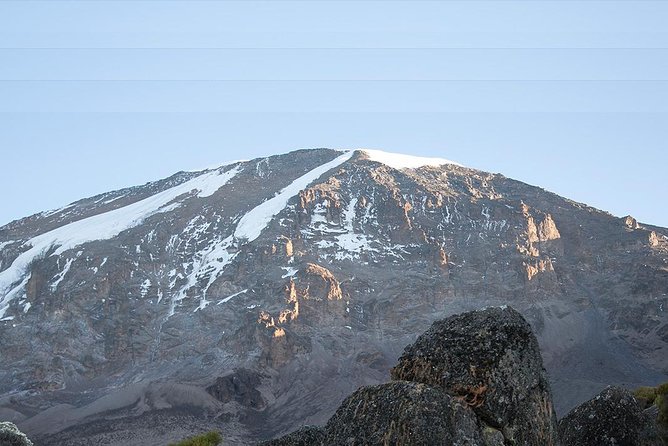
Day 5 begins with Kibo Summit in view. After breakfast, you walk through very dry, desert-like terrain toward Barafu Camp. Kibo remains on your left, a constant reminder that the summit attempt is now close.
The hike takes about 3 to 4 hours. That sounds manageable, but Barafu is high and exposed, and you may feel the altitude more than the distance. This is not the day to spend your energy proving how fast you can walk.
At Barafu Camp, you eat an early dinner and try to rest. The main challenge is psychological as much as physical. You arrive in the afternoon knowing that your alarm comes around midnight, so sleep may be broken or hard to find.
Lay out your warm clothing and summit gear before bed. The schedule gives you only a short window before the final ascent, and fumbling with equipment in the dark is no fun. A warm cup of tea and biscuits are provided when the guide wakes you, but you should not expect a full night’s sleep.
Day 6: Stella Point, Uhuru Peak, and the long return
Summit night begins at about midnight. You leave Barafu under the moon and your headlamps, walking slowly toward Stella Point. The ascent to the crater rim takes about 5 to 7 hours, depending on pace and conditions.
This is the hardest section of the trek. The air is thin, the ground is steep, and every step can feel deliberate. The right approach is steady rather than heroic. Your guide’s close attention matters here, especially in a small group where the pace can be adjusted to the people actually on the trail.
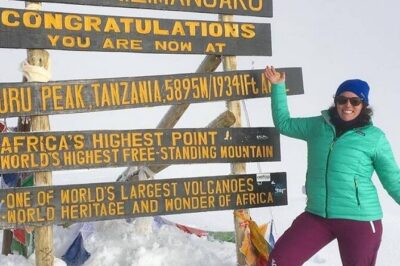
From Stella Point, you need another 1 to 2 hours to reach Uhuru Peak, the highest point in Africa at 5,895 metres. If you reach the summit around sunrise, the reward is a wide view over the African plains, with pink light on the snow and glaciers around Kibo.
Take your summit photographs, but keep the stop sensible. Cold and altitude do not improve with time. After Uhuru Peak, you descend along the same route to Barafu Camp, where the crew is waiting.
Many people focus only on getting up. The descent is also demanding. Your legs are tired, the trail can be loose, and the drop in elevation does not instantly remove fatigue. One past climber put it plainly: the way down can feel worse than the way up. Plan your mental energy for the whole day, not just the summit photograph.
Day 7: Mweka Gate and a proper shower
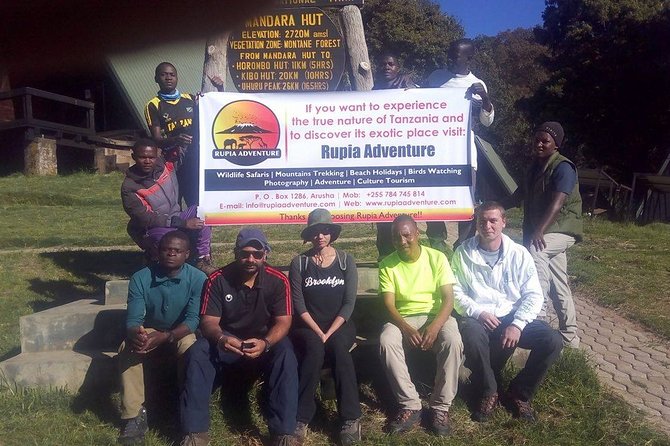
After breakfast, you take part in a farewell ceremony with the mountain crew before beginning the final descent. The trail returns to rainforest, bringing shade, thicker air, and another chance to spot colobus monkeys.
The walk to Mweka Gate takes about 2 to 3 hours. Compared with summit day, it is a straightforward finish, but your knees and feet may disagree. Trekking poles, careful footing, and a patient pace will help you finish without turning the last morning into a race.
At the gate, a transfer takes you back to the hotel. The scheduled reward is a long shower, a relaxed day by the pool, dinner, and a hotel overnight. That final night matters. You have spent six nights on the mountain, and a comfortable bed gives you time to recover before further plans in Tanzania.
Guides, group size, and the human side of the climb
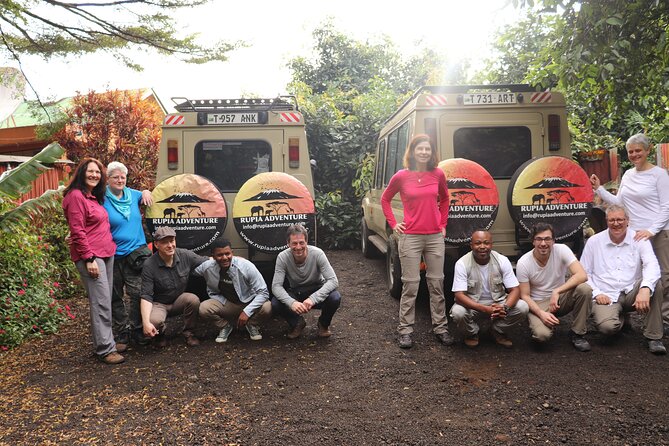
The experience is built around a guide and mountain crew rather than independent trekking. Names associated with successful climbs include Gideon, Laurent, Emanuel, Meshack, Frank, Julius, and Johnny. The exact guide assigned to your departure may differ, so confirm that before booking.
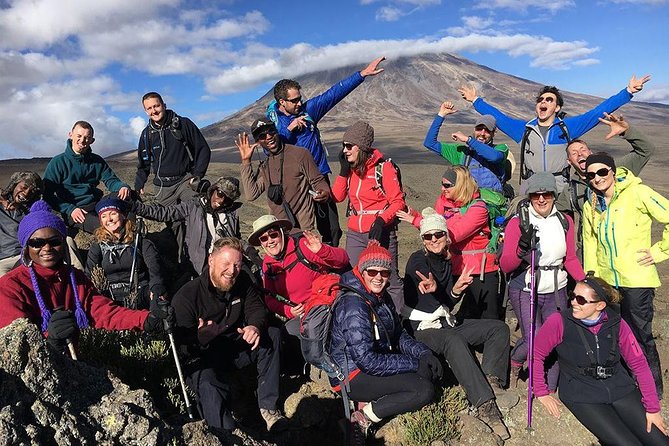
The small maximum of four participants is one of the strongest practical features. A guide can keep a closer eye on pace, mood, and altitude response than on a large group. It also makes the trek feel less anonymous.
The strongest praise has focused on the whole crew: guides, cooks, and porters. That matters because a week on Kilimanjaro depends on many ordinary tasks done well, from meals and camp setup to encouragement during the summit push.
Ask what is included in the $2,200 price before you pay. The supplied details confirm pickup, guiding, camping, meals described in the schedule, and a hotel return, but they do not spell out every inclusion. Clarify park fees, porter arrangements, gear, transfers, hotel nights, tips, and drinks. The price can be good value for a supported seven-day climb, but only if the package covers the costs you expect.
Who should book this Machame Route trek?
I would point this trip toward fit adults who want a real mountain challenge and are comfortable with tents, early starts, and basic camp routines. You should be able to walk for several hours on consecutive days and accept that the summit attempt will be cold, dark, and tiring.
The route suits you if scenery matters. The rainforest, heath, moorland, alpine desert, and summit snow create far more variety than a route that follows one type of ground. It also suits people who prefer a small group and direct contact with the guide.
I would hesitate if you want a relaxed holiday with a mountain view. The short days at Karanga and Barafu do not make the overall trip easy. The summit day alone can occupy most of a day and includes the descent back to Barafu.
Pickup is offered, the start time is 8:30 am, and confirmation comes at booking. Most people can take part, but the wording does not replace a proper medical check for high-altitude trekking. Free cancellation is available up to 24 hours before the start time. Poor weather or too few participants can also lead to a new date or full refund.
Should you book the seven-day Machame Route?
Book it if you want Kilimanjaro as a week-long physical challenge, not a quick sightseeing stop. The route has strong scenery, a useful acclimatisation day, a small group limit, and a guide-led structure that can make a major difference near the summit.
The main caution is the compact schedule. Seven days gives you a genuine chance to adjust, but it does not remove the risks or discomfort of high altitude. If you are prepared to walk slowly, rest when told, and treat summit night as the central test of the trip, the $2,200 price can represent solid value.
Before committing, confirm the full cost, guide assignment, equipment arrangements, and exactly what happens after the summit return to Barafu. If those details suit your needs, this is a strong choice for a first Kilimanjaro attempt with varied scenery and close guide support.
FAQ
How long does the Machame Route trek take?
The experience lasts approximately seven days, beginning with pickup after breakfast and ending with a hotel return after the descent from Mweka Gate.
What is the highest point of the trek?
The highest point is Uhuru Peak on Mount Kilimanjaro, at 5,895 metres.
Where do you sleep during the trek?
Overnight stays on the Machame Route use tents. After reaching Mweka Gate on Day 7, you return to a hotel for a shower, dinner, and overnight stay.
How many people can join the tour?
The maximum group size is four participants.
What time does the experience start?
The listed meeting time is 8:30 am. Pickup is offered from your hotel in Arusha.
Can I cancel for a full refund?
You can cancel up to 24 hours before the experience start time for a full refund. Cancellations or changes made less than 24 hours before the start are not refunded, and poor weather or too few participants may lead to a new date or full refund.
More 7-Day Experiences in Arusha
- KILIMANJARO MACHAME ROUTE, (Climb 7days)
★ 5.0 · 16 reviews - 7 Day Kilimanjaro Climb Lemosho Route & 2 Day Safari
★ 5.0 · 16 reviews - 7 days Kilimanjaro climb via Machame route (Whiskey route)
★ 5.0 · 16 reviews - 7 Days Kilimanjaro Climb Machame Route
★ 5.0 · 15 reviews
Just added around Arusha
- Mt. Kilimanjaro: Shira plateau to Cathedral point 3872m Day hike★ 5.0 · 7 reviews
- 5 days safari, hiking & culture (Serengeti & kilimanjaro)★ 5.0 · 27 reviews
- One Day Hike from Kilimanjaro to Mandara★ 5.0 · 2 reviews
- 3 Days Mount Meru trekking★ 4.5 · 7 reviews
- climb the KILIMANJARO via Lemosho route★ 5.0 · 4 reviews
- 6 Day: Hiking Kilimanjaro via Machame Route★ 5.0 · 2 reviews
- Private 8 day Northern Circuit Kilimanjaro Climb★ 5.0 · 8 reviews
- Kilimanjaro Waterfalls Hike & Moshi Hot Springs Day Trip Tour★ 5.0 · 4 reviews
Kilimanjaro Climbs, compared.
8-Day Small-group Lemosho Kilimanjaro Summit Trekking
Read our review →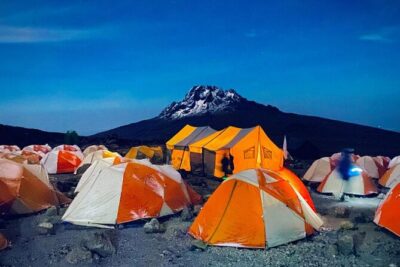
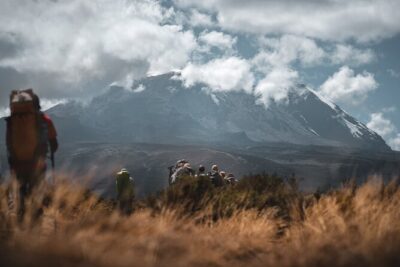
Climbing Kilimanjaro through 7 days Machame Route
Read our review →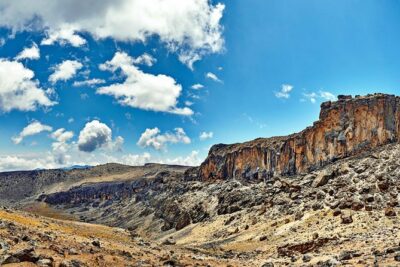
Browse the lists this trek appears in