
Review · ARUSHA
7-Day Mt. Kilimanjaro Hiking: Machame Route
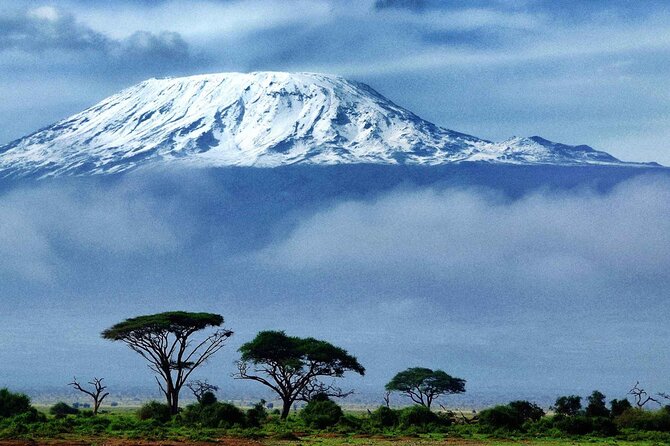
The Machame Route gives you Kilimanjaro’s best scenery in a compact seven-day climb. You move from wet rainforest to moorland, volcanic rock, alpine desert, and snow near Uhuru Peak. It is beautiful, but it is not a gentle walk. The steep sections and short schedule demand real stamina.
I like the route’s big variety, especially the change from muddy forest to the open Shira Plateau and the sunrise near Stella Point. I also like the strong staff support built into the trip, with named guides including Samuel, Justin, Edgar, and Abouh, plus cooks and porters. The main drawback is the pace: seven days gives you less time to adjust to altitude than longer Kilimanjaro routes.
Key points to know before booking
- Machame Gate to Mweka Gate: You ascend through the rainforest and descend through a different route, so the trek does not simply retrace its steps.
- Lava Tower acclimatization: Day three takes you up to 4,630 meters, then down to Barranco Camp, a useful altitude routine but a tiring one.
- Midnight summit attempt: You leave Barafu Camp around 11:30 p.m. for the long climb to Stella Point and Uhuru Peak.
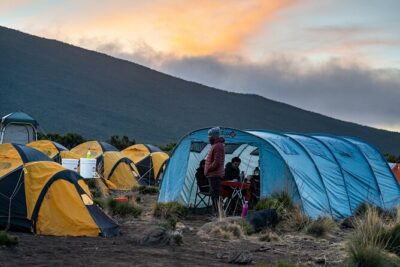
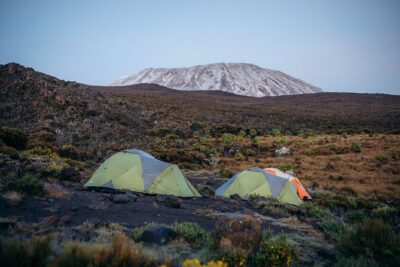
- Camping at high altitude: Shira, Barranco, Karanga, and Barafu camps are exposed, cold, and increasingly basic.
- Strong staff presence: The trip includes an English-speaking mountain guide, cooks, porters, meals, water, and camping equipment.
- Best for fit hikers: A moderate fitness level is required, but prior high-altitude, hiking, or backpacking experience is a real advantage.
What the seven-day Machame Route is really like
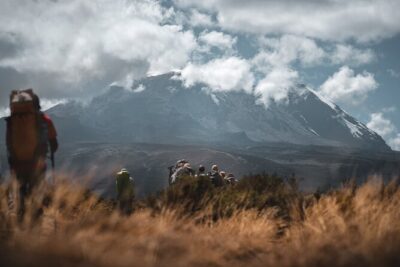
Machame is Kilimanjaro’s popular Whiskey Route, a nickname that hints at its tougher character compared with easier trekking options. Its appeal is clear: you see several climate zones, camp in striking places, climb the Barranco Wall, and approach the summit from the south.
The price is $2,500 per person. That covers park fees and taxes, camping equipment, portage, meals, bottled water, an English-speaking mountain guide, and a cook. For a seven-day Kilimanjaro trek, those inclusions matter because park access, staff, food, tents, and transport are not small extras.
You still need to budget for flights, a visa, mountain clothing and equipment, and tips. Tips are not included, and the final day includes a staff celebration where you present gratuities to the guide, assistant guides, cooks, and porters. Ask for current tipping guidance before you leave home so you can plan fairly.
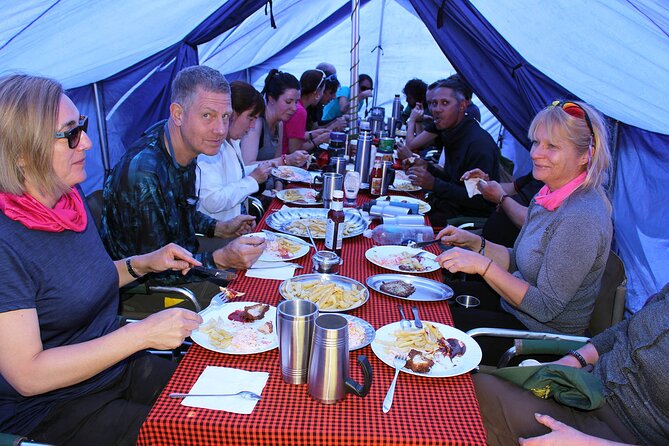
The group limit is 15 people. That is large enough to create a social trek, but small enough for the guide team to keep track of the group more easily than on a big commercial climb. Pickup is offered, with a listed meeting point at Arusha Airport at 7 a.m. The trip information also places the starting point in Arusha, at about 1,400 meters.
More Kilimanjaro Climbs in Arusha
- 8-Day Small-group Lemosho Kilimanjaro Summit Trekking
★ 5.0 · 186 reviews - 7-Day Machame Kilimanjaro Summit Tour from Arusha
★ 5.0 · 125 reviews - Mountain Kilimanjaro Day Hike
★ 5.0 · 102 reviews
Day one: muddy rainforest from Machame Gate
Your morning begins with an early breakfast at your hotel, followed by pickup from Arusha and a drive to Machame Village. This is where you can buy mineral water and collect a packed lunch.
Depending on road conditions, the vehicle may continue toward Machame Gate. If the road is too muddy, you walk the final three kilometers to the gate, which takes about an hour. That detail is worth taking seriously during wet conditions. Your trek can begin with a muddy road walk before you even reach the formal park entrance.
After registration, the trail enters the rainforest almost at once. The forest is lush and cool, but rain is common. Wet ground can turn the path into a slippery, soggy climb, so waterproof boots, rain protection, and a pack cover are important. The first day takes about eight hours and ends at Machame Camp.
This is not a sightseeing stroll. You gain height steadily, and the mud can slow the group. The welcome lunch stop halfway gives you a chance to eat and adjust your clothing before the later push to camp.
Day two: moorland and the Shira Plateau
Day two climbs out of the forest and into moorland. The route first rises for about an hour, then continues at a gentler angle for roughly two hours. After lunch and a rest, you follow a rocky ridge toward the Shira Plateau.
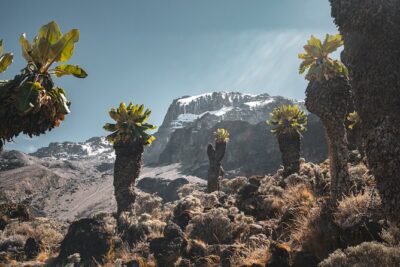
The day covers about nine kilometers and takes around six to seven hours. The scenery opens up as the trees fall away. You can look east toward the Western Breach and its glaciers, with Kibo, Kilimanjaro’s highest cone, ahead.
Shira Camp sits at about 3,840 meters. At this height, the cold becomes more noticeable, especially after sunset. The camp is exposed, and temperatures can drop well below freezing. The porters boil water for drinking and washing, then dinner is served.
I like this day because it gives you a major visual change after the closed-in forest. I also see a practical challenge here: the open camp offers less shelter from wind and cold. Keep warm layers accessible rather than buried at the bottom of your bag.
Day three: Lava Tower and the first real altitude test
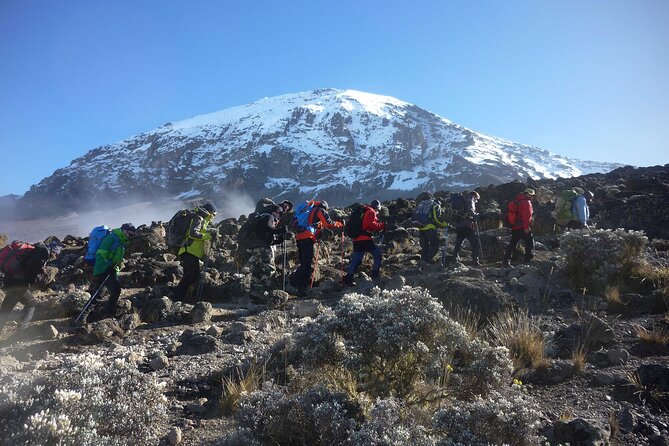
Day three is the trek’s major acclimatization day, though it may feel like the hardest one so far. You head east through semi-desert terrain toward Lava Tower, reaching about 4,630 meters after roughly five hours.
The climb is rocky, and altitude symptoms can begin here. Breathlessness, headaches, and irritability are possible. The important part of the plan is what happens next: after lunch near Lava Tower, you descend by about 680 meters to Barranco Camp.
This routine, climbing high and sleeping lower, helps your body adjust. It also tests how you respond to altitude before the summit attempt. You should tell your guide promptly if you feel unwell. The schedule is demanding, and trying to hide symptoms is a poor trade.
The descent to Barranco takes several hours. The day lasts about eight hours, and the total effort is substantial even though the final camp is lower than Lava Tower. By evening, you will likely be ready for food and sleep.
Same trailhead, a different route:
- 4 Days Mount Meru Trekking
★ 5.0 · 55 reviews - 4 days Best experience Kilimanjaro Hike, Serengeti &Ngorongoro
★ 5.0 · 54 reviews - From Arusha/Moshi: Kilimanjaro Hike Marangu Route Day Trip
★ 4.5 · 54 reviews - Mount Kilimanjaro Day Hike Through Marangu Route to Mandara Hut
★ 5.0 · 37 reviews
Day four: the Barranco Wall and Karanga Valley
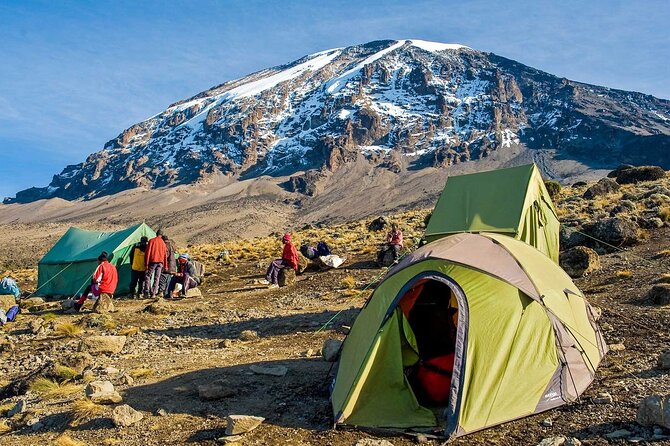
Day four begins with the Barranco Wall, one of the route’s most memorable sections. It can look intimidating from camp, but the climb is described as a Class 2 hike and is usually less difficult than its appearance suggests.
You climb to the top of the wall, where you may see Heim Glacier and look out above the clouds. The route then winds through the Karanga Valley, with repeated rises and drops before reaching Karanga Camp.
The walking time is about four to five hours over roughly five kilometers. That shorter day is useful after the long effort at Lava Tower. It also gives you another chance to judge how your body is handling altitude.
The wall is not a place for rushing. You need steady footing, patience, and room for the person ahead. Your guide team matters here. The named guides Samuel, Justin, and Edgar are associated with the trip, while Abouh is identified as head guide. Their role is not just to point out the path. They are expected to keep the group moving safely and provide encouragement when the route gets hard.
Day five: Karanga to exposed Barafu Camp
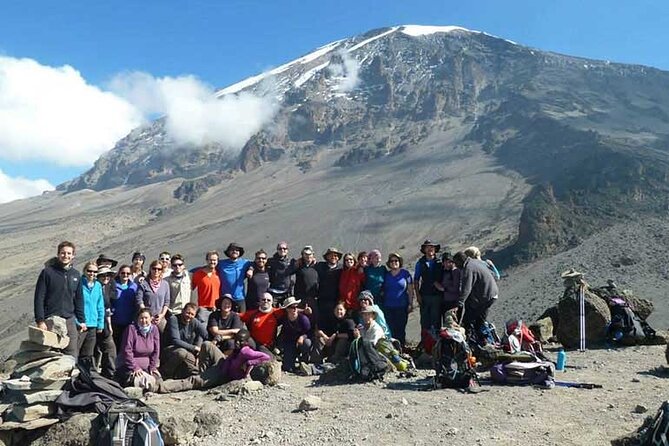
Day five is shorter on paper, but it sets up the summit attempt. From Karanga Camp at about 3,959 meters, you climb toward Barafu Hut and Camp at roughly 4,550 meters.
The route joins the Mweka descent trail. This means you can see part of the path used for the final descent, though the immediate goal is Barafu. The walk takes about two to three hours and covers around four kilometers.
Barafu means ice in Swahili. The camp sits on an exposed, rocky ridge with no accessible water for the porters. The final water stop comes before camp, so your staff must carry what is needed for drinking, cooking, and washing.
Tents may be exposed to wind and rocks, and you should familiarize yourself with the camp before dark. An early dinner is served, followed by a short rest. That rest is not optional in practical terms. You will wake around 11:30 p.m. for the summit push, so organize your clothing, headlamp, water, and snacks before lying down.
Day six: Stella Point, Uhuru Peak, and the long descent
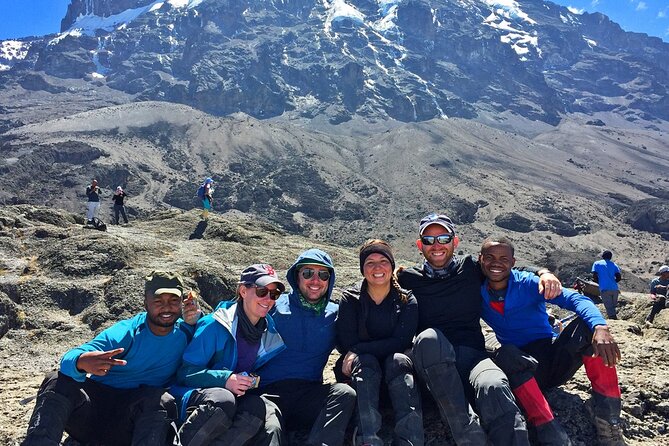
Summit day begins in the middle of the night with tea and biscuits. You leave around 11:30 p.m. and climb northwest over heavy scree toward Stella Point on the crater rim.
The route to Stella Point takes about six hours for many people. It is physically and mentally demanding, made harder by darkness, cold, steep ground, and thin air. The slow pace is part of the method. You will need patience more than speed.
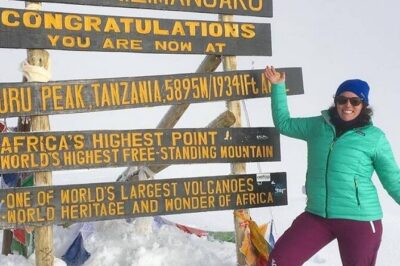
At Stella Point, about 5,685 meters, you can rest and watch sunrise if the weather allows. This is already a major achievement, and those who reach Stella Point receive green completion certificates.
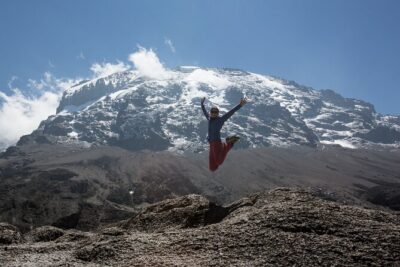
From there, you continue for about two hours toward Uhuru Peak at 5,895 meters. Snow is normally present on this section. Summit time depends on weather, and you should not linger if conditions are poor. Cold, altitude, and fatigue can change quickly near the top.
After the summit, you descend to Barafu Camp before continuing toward Mweka Camp. The provided schedule describes the summit day as about eight hours, though the full effort from the night departure through the descent is the most demanding part of the entire trek. Treat it as a very long day and conserve energy early.
Day seven: forest descent and the Mweka certificate
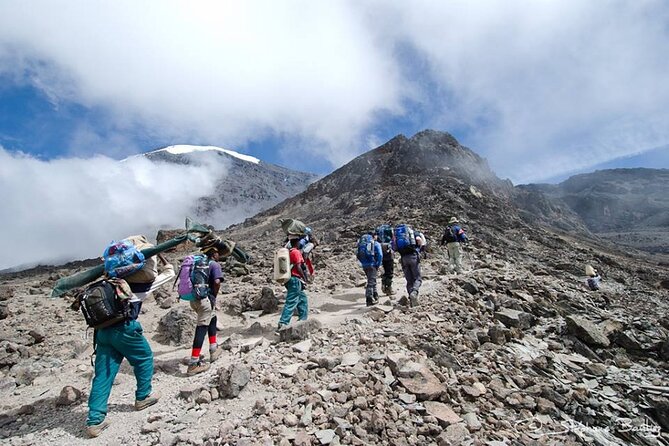
After breakfast, the staff holds a celebration with dancing and singing. This is also when you present tips to the guides, assistant guides, cooks, and porters.
You then descend for about three hours through the forest to Mweka Gate. The route covers roughly 15 kilometers. At the gate, you sign your name to receive a completion certificate.
A climber who reaches Stella Point receives a green certificate. Reaching Uhuru Peak earns a gold certificate. The distinction is useful because it recognizes the real effort involved in getting to the crater rim, even if altitude or weather prevents the final summit section.
After the gate, you descend another hour, or about three kilometers, to Mweka Village. The return from the mountain is not just paperwork. It marks the end of a trek that has passed through several climate zones and demanded sustained effort for a full week.
Food, water, porters, and camp life
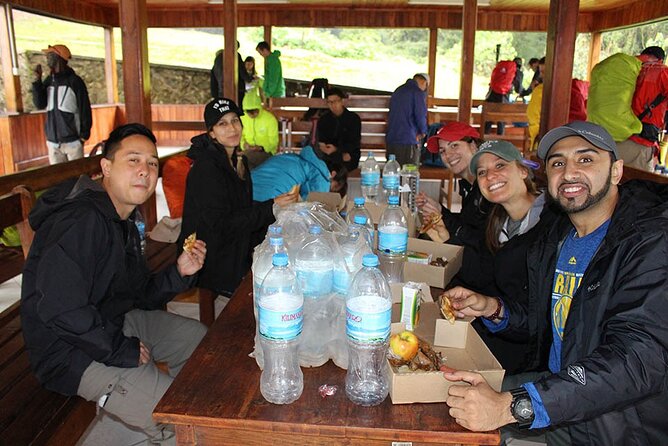
The package includes six lunches, six dinners, and five breakfasts, along with at least three liters of bottled water per day. Water is a major practical concern on Kilimanjaro, so this inclusion reduces the amount you need to arrange yourself.
The porters carry equipment and help keep camp functioning. Camping equipment is included, as is a cook. Meals are served at camp, and the porters boil drinking and washing water.
You should still expect basic mountain camping rather than comfort. Shira and Barafu are exposed, cold camps. At Barafu, water is not available nearby, and the tents sit on rocky ground. Good personal gear remains essential because the operator does not include mountain clothing or equipment.
The staff is one of the strongest parts of this trip. The guides are described as attentive, reassuring, cheerful, and supportive, with Samuel, Justin, Edgar, and Abouh named in connection with the guiding team. That kind of steady human support can matter greatly on the summit day, when motivation often falls before the sun comes up.
Who should choose this trek
I would recommend this route to a fit hiker who wants Kilimanjaro’s most varied scenery and accepts a tough schedule. Prior hiking, backpacking, or high-altitude experience will help, though the stated requirement is moderate physical fitness.
You should be comfortable with long walking days, steep climbs, cold nights, mud, rocky ground, and a midnight start. You also need to accept that reaching the top depends on your condition, weather, and altitude response.
This is not the best choice if you want a relaxed introduction to mountain trekking. The seven-day schedule is shorter than longer Kilimanjaro itineraries, leaving less time for altitude adjustment. If you are choosing between routes, Machame makes the most sense when scenery and a challenging climb matter more to you than the easiest possible pace.
Price, group size, and booking details
At $2,500 per person, the trip offers solid value if you want a package that handles the major mountain costs. Park fees and taxes, camping gear, portage, meals, water, a cook, and a professional English-speaking guide are included.
The extra costs are important. Flights, visas, mountain gear, and tips are separate. Your final price should include those items before you compare this trek with another operator.
Pickup is offered, with a 7 a.m. start listed at Arusha Airport. Confirmation is provided at booking, and free cancellation is available up to 24 hours before the experience begins. Changes or cancellations within 24 hours are not refundable.
Should you book the Machame Route?
Book this trek if you want a scenic, demanding Kilimanjaro climb with rainforest mud, glacier views, the Barranco Wall, and a true night summit attempt. The support from the guides, cooks, and porters is a major reason to consider it, especially with staff such as Abouh, Samuel, Justin, and Edgar connected to the trip.
Think twice if you have little hiking experience, dislike cold camping, or want a slower altitude schedule. The Machame Route rewards preparation and patience, but it does not hide the hard parts. For a fit and determined hiker, the $2,500 package offers a serious seven-day mountain experience with a strong mix of scenery, staff support, and practical inclusions.
FAQ
Where does the trek begin?
The listed meeting point is Arusha Airport in Arusha, Tanzania, with a start time of 7 a.m. Pickup is offered.
How long is the Machame Route experience?
The trek lasts approximately seven days.
How difficult is the Machame Route?
The route is considered difficult, steep, and challenging, especially because the seven-day schedule is relatively short. Moderate physical fitness is required, and hiking or high-altitude experience is useful.
What is the highest point reached?
Uhuru Peak is the highest point at 5,895 meters. Stella Point on the crater rim is at about 5,685 meters.
Is the summit climb done at night?
Yes. You leave Barafu Camp around 11:30 p.m. with tea and biscuits, then climb toward Stella Point for sunrise if weather permits.
What meals are included?
The package includes six lunches, six dinners, and five breakfasts. It also includes at least three liters of bottled water per day.
Are porters and camping equipment included?
Yes. Portage and camping equipment are included, along with a professional English-speaking mountain guide and cook.
Are tips included in the price?
No. Tips are separate. On the final day, you present tips to the guide, assistant guides, cooks, and porters.
What is the cancellation policy?
You can cancel up to 24 hours before the experience begins for a full refund. Cancellations or changes made less than 24 hours before the start time are not refunded or accepted.
More 7-Day Experiences in Arusha
- KILIMANJARO MACHAME ROUTE, (Climb 7days)
★ 5.0 · 16 reviews - 7 Day Kilimanjaro Climb Lemosho Route & 2 Day Safari
★ 5.0 · 16 reviews - 7 days Kilimanjaro climb via Machame route (Whiskey route)
★ 5.0 · 16 reviews - 7 Days Kilimanjaro Climb Machame Route
★ 5.0 · 15 reviews
Just added around Arusha
- Mt. Kilimanjaro: Shira plateau to Cathedral point 3872m Day hike★ 5.0 · 7 reviews
- 5 days safari, hiking & culture (Serengeti & kilimanjaro)★ 5.0 · 27 reviews
- One Day Hike from Kilimanjaro to Mandara★ 5.0 · 2 reviews
- 3 Days Mount Meru trekking★ 4.5 · 7 reviews
- climb the KILIMANJARO via Lemosho route★ 5.0 · 4 reviews
- 6 Day: Hiking Kilimanjaro via Machame Route★ 5.0 · 2 reviews
- Private 8 day Northern Circuit Kilimanjaro Climb★ 5.0 · 8 reviews
- Kilimanjaro Waterfalls Hike & Moshi Hot Springs Day Trip Tour★ 5.0 · 4 reviews
Kilimanjaro Climbs, compared.
8-Day Small-group Lemosho Kilimanjaro Summit Trekking
Read our review →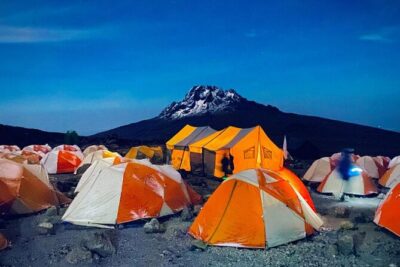
Climbing Kilimanjaro through 7 days Machame Route
Read our review →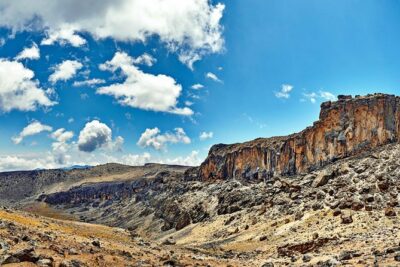
Browse the lists this trek appears in