
Review · KATHMANDU
18 days Tilicho Lake and Thorungla Pass trek in Annapurna Region
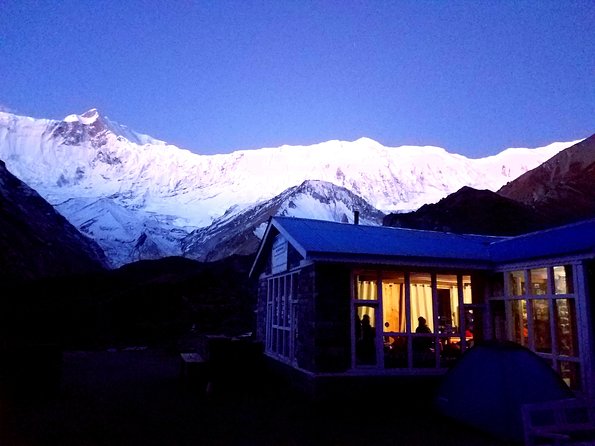
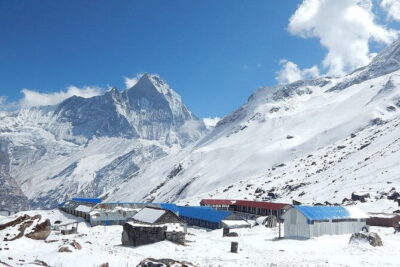
Tilicho Lake, high in the Annapurna range, is the star of this trek. At roughly 4,919 meters, its glacial water sits beneath enormous mountain walls, while Thorung La Pass reaches 5,416 meters, the highest point of the route. You get two major high-altitude goals instead of just one.
I like the built-in acclimatization day in Manang and the private format, which lets your group move with its own guide and porter team. I also like the practical finish: after the long descent to Muktinath, you fly from Jomsom to Pokhara instead of retracing the whole route by road.
The main caution is altitude and itinerary clarity. Several listed elevations and day descriptions do not line up perfectly, and the trek includes long days above 4,000 meters. You need solid fitness, patience, and a willingness to accept basic mountain accommodation.
Key points at a glance
- Two high-altitude highlights: Reach Tilicho Lake and cross 5,416-meter Thorung La Pass on the same journey.
- A real acclimatization pause: Spend a rest day in Manang before climbing higher.
- Private group format: Your own party takes part, rather than joining a large shared group.
- Porter support included: One strong porter is provided for every two trekkers.
- Useful mountain transport: The Jomsom to Pokhara flight saves a long return overland journey.
- Good value for a supported trek: The $2,028.67 price covers lodging, meals, guide services, porters, transport, permits-related handling charges, and the domestic flight, though the Annapurna Conservation and TIMS permit costs an extra $40.
Two famous high points in one Annapurna trek
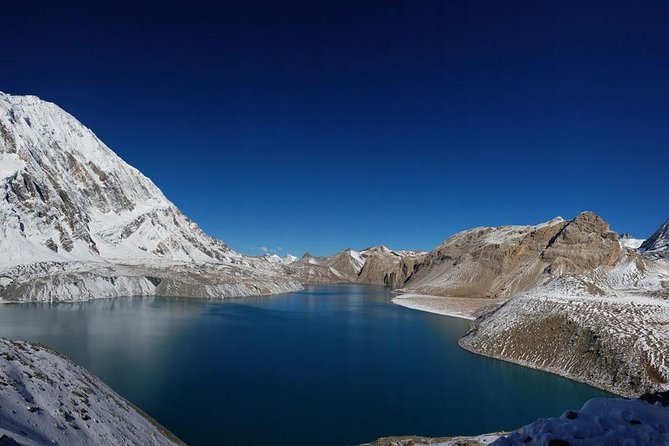
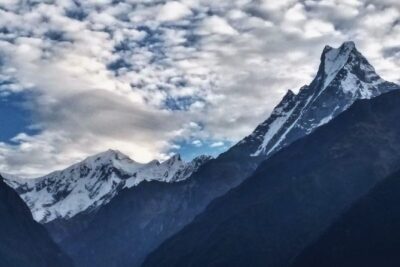
This route combines two demanding objectives that are often treated as separate reasons to visit the Annapurna region. Tilicho Lake gives you a high, quiet destination surrounded by ice and rock. Thorung La gives you the classic pass crossing, followed by a descent toward the pilgrimage town of Muktinath.
That combination is the real appeal. You are not simply walking from lodge to lodge. The route moves through river gorges, small mountain villages, changing elevations, and culturally distinct parts of Nepal. The days are active, but the itinerary also allows one clear rest day in Manang.
At $2,028.67 per person, this is not a budget backpacking trip. Still, the price covers the parts that quickly add up in Nepal: a local guide, porter support, private vehicle transfers, accommodation, 17 breakfasts, 14 lunches, 14 dinners, taxes and handling charges, and the Jomsom to Pokhara flight.
You still pay separately for the Annapurna Conservation and TIMS permit, listed at $40. Bottled water, alcoholic drinks, sleeping bags, and other trekking equipment are also outside the package. That makes the total cost higher than the headline price, so budget for those items before booking.
More Annapurna Treks in Kathmandu
- Annapurna Circuit Trek with Tilicho Lake
★ 5.0 · 368 reviews - Annapurna base camp trek 5 Days
★ 5.0 · 252 reviews - 14-Day Private Annapurna Base Camp Trek
★ 5.0 · 180 reviews
Days 1 and 2: Kathmandu to Jagat by road
The trip begins with airport pickup and a hotel night in Kathmandu. This is a useful soft landing after an international flight, especially because the following transfer is long.
After breakfast, you drive toward Jagat, a journey listed at about 200 kilometers and seven to eight hours. The road follows the Prithvi Highway through river gorges and villages before reaching the mountain route. The itinerary also gives a five-hour estimate, so do not treat the timing as exact. Road conditions and traffic can affect the day.
This transfer is not a sightseeing tour with a string of formal stops. Its value is getting you from the Kathmandu Valley into the trekking region. Bring water, snacks, and patience. Private transport means your group does not have to coordinate with a larger departure, but mountain roads can still be slow.
You spend the night in a guesthouse and receive lunch and dinner as part of the meal plan.
Days 3 to 5: Tal, Danaque, and Chame
The first walking days introduce the rhythm of the trek. The plan lists a trek to Tal on Day 3, a move to Danaque on Day 4, and Chame on Day 5. Walking times range from six to seven hours per day.
These are important conditioning days. You gain altitude steadily, but the schedule does not rush directly toward the highest points. The villages give you a sense of how the Annapurna route works in practice: basic guesthouse lodging, long walking days, and meals arranged along the way.
The itinerary labels Chame in more than one place, so exact overnight locations should be confirmed before departure. That is not a reason to reject the trip, but it is a reason to ask for a current day-by-day plan.
The route’s early appeal is variety. You begin among lower valleys and road-access villages, then move toward higher settlements where the air gets cooler and the walking becomes more demanding. The guide and porter team matter here because they handle route support while you focus on steady pacing.
Days 6 and 7: Pisang and Manang at 3,500 meters
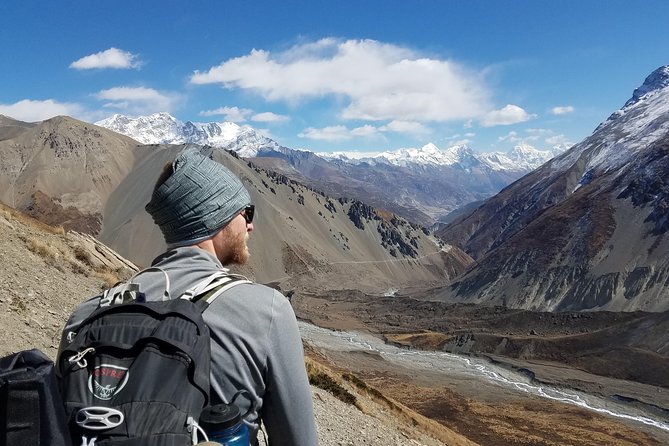
From the Chame area, the trek continues to Pisang at about 3,300 meters. The walking time is listed at five to six hours. The next day brings Manang, around 3,500 meters, in roughly four hours.
These are some of the most useful days for adjusting to altitude. Manang is not just another overnight stop. It is the base for a planned acclimatization day, and its position makes it a sensible place to slow down before Tilicho Lake and Thorung La.
The itinerary uses the name Manang for the Day 6 stop even though the description says Pisang, another detail worth checking with the operator. Clear communication is especially important on a high-altitude trek, where overnight locations affect how your body adjusts.
Same trailhead, a different route:
- Everest Base Camp Trek – 14 Days
★ 5.0 · 1,499 reviews - Everest Base Camp Trek
★ 5.0 · 842 reviews - Everest Base Camp Helicopter Tour landing at Everest View Hotel
★ 5.0 · 668 reviews - Everest Base Camp Trekking
★ 5.0 · 485 reviews
Day 8: A full acclimatization day in Manang
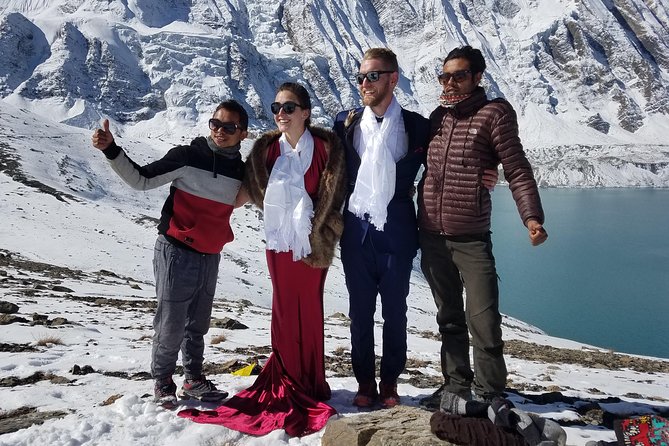
The rest day in Manang is one of the strongest features of the plan. You are not being asked to climb higher every day without pause. Instead, the schedule gives you time to adjust before the route heads toward 4,000 meters and beyond.
The published timing shows 10 hours, but this is described as a rest and acclimatization day. Treat it as a flexible day rather than a normal trekking stage. Follow the guide’s advice about activity, water, and pacing.
This pause can make the later sections more manageable. The trek reaches Tilicho Base Camp, then the lake, and soon after asks you to prepare for Thorung La. A spare day at Manang is valuable because altitude problems can force a slower schedule.
Days 9 to 11: Khangsar, Tilicho Base Camp, and the lake
Day 9 takes you to Khangsar Village at about 3,700 meters, with around five hours of walking. The village is the gateway to the Tilicho section and marks a shift away from the main route toward the lake.
The next day leads to Tilicho Base Camp at approximately 4,200 meters. The listed walking time is six hours. At this height, the same distance feels harder than it did earlier in the trek. Your porter support is particularly useful here, since carrying a full pack can make the climb much more tiring.
Day 11 is the lake excursion. The schedule lists three hours of walking and gives the lake’s elevation as 5,200 meters, while the overview describes Tilicho Lake at 4,919 meters. Those figures conflict, so ask the company to confirm the current route and elevation details.
The number matters less than the practical point: this is a very high day with cold, exposed conditions possible and limited room for rushing. Tilicho is the reason many people choose this route. The reward is a striking body of glacial water beneath the Annapurna range, but reaching it demands more than a casual day walk.
You return to the Tilicho area before continuing toward the Thorung La route. The schedule is ambitious, so your guide’s judgment and your own condition should guide the pace.
Days 12 and 13: Yak Kharka and Thorung Phedi
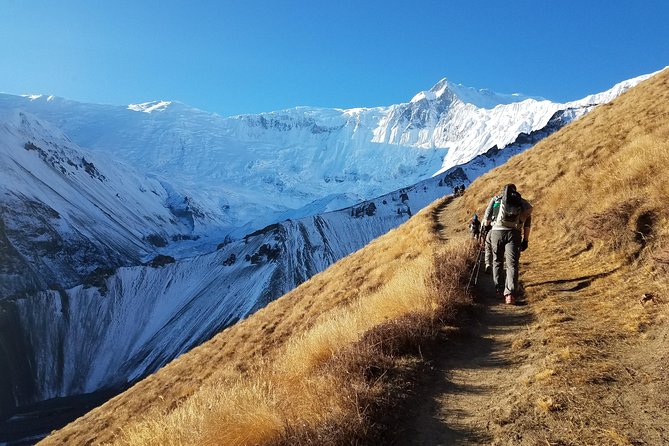
After Tilicho Lake, the itinerary moves to Yak Kharka at about 4,200 meters. The walking time is listed at six hours. This is another high overnight, and it leaves little room for ignoring symptoms of altitude sickness.
Day 13 brings you toward Thorung Phedi at 4,450 meters or High Camp at 4,600 meters. The listed walking time is six hours. The choice between these two overnight points affects the next day’s effort, so ask how the guide decides between them.
High Camp may shorten the climb to the pass, but it also means sleeping higher. Thorung Phedi is lower, though it can make summit day longer. The right choice depends on conditions, group health, and the guide’s assessment.
The plan’s inclusion of a local guide is important here. High-altitude trekking is not just a matter of following a line on a map. Weather, energy levels, and altitude symptoms can change the schedule.
Day 14: Crossing Thorung La at 5,416 meters
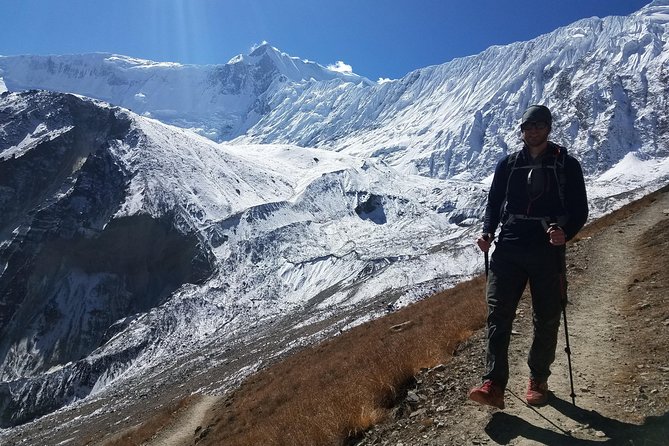
This is the hardest and most famous day. You cross Thorung La, listed at 5,416 meters, then descend to Muktinath at about 3,800 meters. The full day is estimated at eight hours.
The pass is the high point of the Annapurna circuit and the clearest physical test on this trip. The descent is not an easy finish. After the climb to the pass, your legs still have to handle a long drop toward Muktinath.
Muktinath adds cultural importance to the day. It is a well-known pilgrimage destination, and arriving there after the pass gives the route a strong sense of progression. The trek has moved from river valleys to high mountain terrain, then down into a different part of the Annapurna region.
You should expect basic accommodation and a demanding schedule rather than comfort on this section. Pack warm layers, keep your day bag light, and follow the guide’s pacing. Sleeping bags are not included, so arrange your own trekking equipment before departure.
Days 15 to 18: Muktinath, Jomsom, Pokhara, and Kathmandu
The route’s practical finish is one of its best design choices. From the Muktinath and Jomsom area, you take a roughly 20-minute flight to Pokhara. After crossing Thorung La, avoiding a long road return is a real benefit.
Domestic mountain flights can be affected by weather, and the package specifically notes that the overall experience requires good weather. Keep some flexibility in your plans after the trek, especially if you have an international flight soon after returning to Kathmandu.
The itinerary then lists a drive from Pokhara to Kathmandu of about 200 kilometers and six hours. It also repeats a similar Kathmandu drive on Day 17, so the final transport schedule needs clarification. The stated timing for Day 15 is two hours, while the flight itself is only 20 minutes, likely allowing for airport procedures and transfers.
Day 18 ends with airport transfer and departure. Hotel pickup and drop-off are included, which removes one more logistical task after a tiring trek.
Food, lodging, guides, and porters
Accommodation follows the itinerary and is described as hotel lodging in Kathmandu and guesthouse lodging during the trek. You should expect practical mountain accommodation, not resort comfort. The package includes 17 breakfasts, 14 lunches, and 14 dinners, though meal coverage does not appear on every listed day in the same way.
A local guide is included, along with one strong porter for every two trekkers. That ratio gives you meaningful help with heavy luggage without suggesting a fully supported luxury trek. You should still carry a day pack with essentials.
Bhairam is named as the person who organized one completed Annapurna journey, and the strongest praise attached to the company focuses on organization, trekking support, accommodation, food, and the care taken by the porter team. That is encouraging, but guide assignments can change. Ask who your actual guide will be and how much baggage the porter carries.
Who should book this trek?
I would recommend it to fit trekkers who want a serious Annapurna journey with two major targets, rather than a short scenic walk. The minimum age is 16, and the required fitness level is described as moderate, but the altitude makes this more demanding than that phrase might suggest.
You should be comfortable walking six to eight hours on several days, staying in simple guesthouses, and coping with changing weather. You also need to accept that the itinerary contains some unclear figures and repeated transport descriptions.
The private format suits a family group, a pair of friends, or a small party that wants direct contact with its guide. It may not suit someone looking for polished hotels, short walking days, or a fully itemized schedule with no changes.
Should you book it?
Book this trek if Tilicho Lake and Thorung La are your priorities and you want guide, porter, meals, lodging, private transfers, and the Jomsom flight arranged in one package. The combination offers strong value for a demanding 18-day route.
Before paying, confirm the exact overnight stops, Tilicho Lake elevation, the final Pokhara to Kathmandu schedule, permit charges, equipment needs, and the name of your guide. If those details are clear and you are prepared for high altitude, this is a powerful way to experience the Annapurna region.
FAQ
How long is the Tilicho Lake and Thorung La Pass trek?
The planned duration is 18 days, including airport transfers, road journeys, trekking days, the Jomsom to Pokhara flight, and departure.
Where does the trek start and finish?
It starts in Kathmandu, Nepal, with pickup assistance. The activity ends back at the Kathmandu meeting point before departure.
What is the highest point of the trek?
Thorung La Pass is listed at 5,416 meters above sea level.
How high is Tilicho Lake?
The overview gives Tilicho Lake’s elevation as 4,919 meters. One itinerary entry lists 5,200 meters, so you should confirm the current elevation and route details with the provider.
Is a guide included?
Yes. A local guide is included in the package.
Are porters included?
Yes. The package provides one strong porter for every two trekkers.
Are meals included?
Breakfast is included for 17 days, while lunch and dinner are included for 14 days each.
Is the Jomsom to Pokhara flight included?
Yes. The package includes the flight from Jomsom to Pokhara, listed as approximately 20 minutes.
What does the price not include?
Trekking equipment, including a sleeping bag, bottled water, alcoholic drinks, and the Annapurna Conservation and TIMS permit are not included. The permit is listed at $40.
Can I cancel for a full refund?
You can cancel at least 24 hours before the experience start time for a full refund. Weather or minimum-participant cancellations may result in a different date or a full refund.
Just added around Kathmandu
- Everest Base Camp Trek★ 5.0 · 3 reviews
- Everest Base Camp Trek★ 5.0 · 7 reviews
- 15 Days Private Everest Base Camp Trek★ 5.0 · 30 reviews
- Everest Base Camp Trek★ 5.0 · 57 reviews
- 14 Days of Adventure Trekking to Everest Base Camp★ 5.0 · 2 reviews
- 14-Day Everest Base Camp Trek★ 5.0 · 20 reviews
- From Kathmandu: Private 14-Day Everest Base Camp Trek★ 5.0 · 20 reviews
- 14 Days Everest Base Camp Trek★ 5.0 · 4 reviews
Annapurna Base Camp Treks, compared.
Trekking in Annapurna/Langtang/Everest/Upper Mustang regions
Read our review →
Kathmandu to Annapurna Base Camp (ABC) 5-Day Trek
Read our review →Browse the lists this trek appears in