
Review · KATHMANDU
14 Days Annapurna Base Camp Trekking | Best trek for visit Nepal 2020
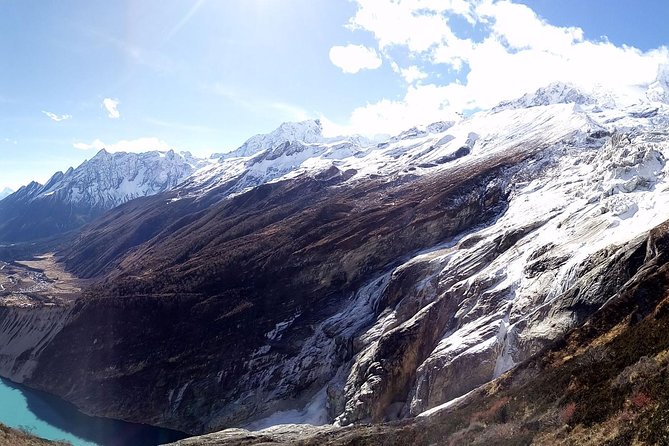
The best part of this Annapurna Base Camp trek is the way it builds from temples and busy Kathmandu to quiet mountain villages, rhododendron forests, icy peaks, and a hot spring soak. Poon Hill adds a superb sunrise before you reach the main prize, Annapurna Base Camp itself.
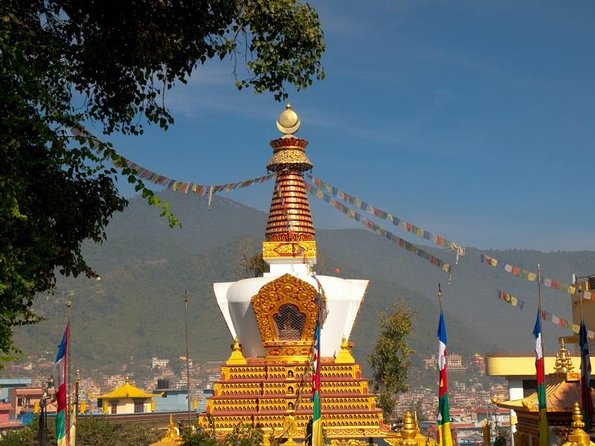
I like two things in particular. First, this is not only a mountain walk: you see Pashupatinath, Swayambhunath, and Boudhanath before heading north and west. Second, the route includes practical comforts, such as a guide, private transfers, sleeping bags, down jackets, and a stop at Jhinu Danda to ease tired legs.
The main consideration is the pace. You spend several days walking for four to seven hours, often on stone steps and steep downhill sections. The package also lists only three breakfasts and 11 lunches, so you should confirm the full meal and lodging arrangement before paying.
Key points at a glance
- Poon Hill sunrise: Start early from Ghorepani for broad views of the Annapurna range and Dhaulagiri.
- Annapurna Base Camp at high elevation: Walk beyond Machhapuchhre Base Camp into alpine terrain with fewer trees and more exposed mountain scenery.
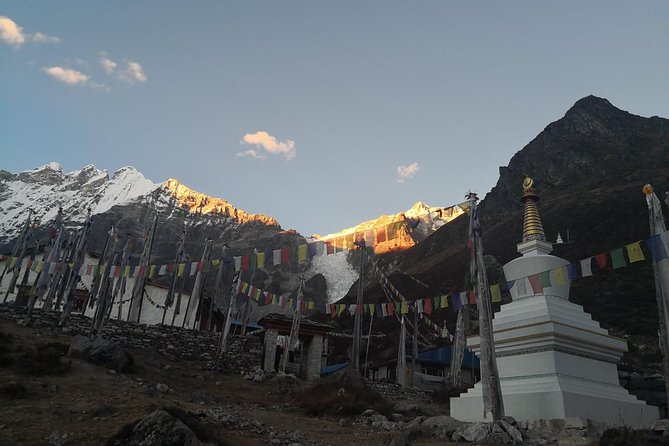
- Gurung and Magar culture: Stay in villages such as Ulleri, Ghorepani, Tadapani, and Chhomrong.
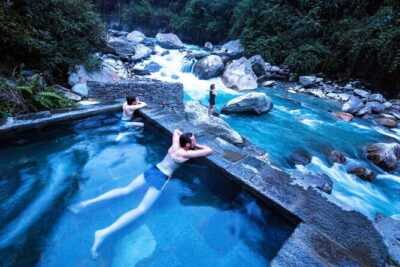
- Jhinu hot springs: Finish the mountain section with a warm soak beside the trail.
- Kathmandu and Pokhara included: The trip combines temples, lakes, hill roads, and trekking rather than focusing only on the trail.
- Private format: Only your group takes part, with an English-speaking guide and organized transport.
Why this 14-day Nepal trek is appealing
At $871 per person, this is a broad Nepal package rather than a simple point-to-point hike. You get airport pickup, Kathmandu sightseeing, road transport, a guide, trek equipment, and the full Annapurna route. That makes the price attractive if you want one booking to cover much of the trip.
The value depends on what is confirmed before departure. The published inclusions cover private transportation, fees and taxes, a first aid kit, sleeping bags, down jackets, guide expenses, three breakfasts, and 11 lunches. Travel insurance, the Nepal visa, tips, and porter and driver gratuities are extra. Dinner coverage and the exact number of hotel and teahouse nights should be checked directly.
The private setup is useful if you want to walk at your own pace or adjust small details. It is also a good fit for a family or group that would rather not be tied to strangers. The tradeoff is that a private trek does not automatically mean a slow trek. You still need to handle long days, repeated climbs, and a high point at Annapurna Base Camp.
More Annapurna Treks in Kathmandu
- Annapurna Circuit Trek with Tilicho Lake
★ 5.0 · 368 reviews - Annapurna base camp trek 5 Days
★ 5.0 · 252 reviews - 14-Day Private Annapurna Base Camp Trek
★ 5.0 · 180 reviews
Days 1 and 2: Kathmandu temples before the trail
Your trip begins at Tribhuvan International Airport, where a company representative meets you and transfers you to your hotel. If you arrive with energy, a short walk in Thamel helps you get oriented. A welcome dinner is planned for the evening.
The second day gives you useful cultural context before the walking begins. A private vehicle takes you to Pashupatinath, Swayambhunath, and Boudhanath, three major sites in the Kathmandu Valley. Pashupatinath is a major Hindu pilgrimage site, Swayambhunath gives you a hilltop view across the city, and Boudhanath is known for its large Buddhist stupa.
Lunch is planned at a Nepali restaurant, which gives you a better introduction to local food than relying only on hotel meals. The company also arranges trek permits and documents that day. Since the highlights also refer to Kathmandu Durbar Square, ask if that square is part of your actual sightseeing schedule, as the detailed day plan names the other three sites.
Day 3: The long road from Kathmandu to Pokhara
The drive to Pokhara takes about seven hours and covers roughly 200 kilometers along the Prithvi Highway. You pass green hills, rivers, and mountain scenery, though the road journey itself is a substantial part of the day.
Pokhara is a pleasant change from Kathmandu. Phewa Lake, Davis Falls, Mahendra Cave, and Bat Cave are listed as possible sights, but the detailed plan does not promise a full visit to each one. Treat this as a transfer day with time for a little Pokhara sightseeing, not as a full city tour.
The road is scenic, but it can also feel long. I would keep the evening simple, drink plenty of water, and avoid packing too much into your first hours in town.
Day 4: Nayapul, Birethanti, and the stone steps to Ulleri
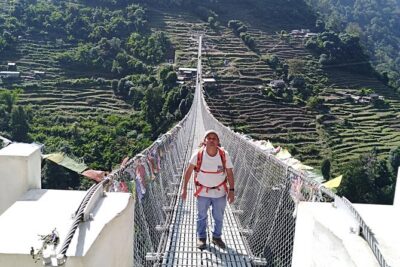
A private vehicle takes you from Pokhara toward Nayapul, the starting point for many Annapurna treks. From there, you walk through Birethanti and Tikhedhunga before crossing a suspension bridge and climbing a long run of stone steps to Ulleri.
The walking time is listed at about four hours, but the steps make this a serious first day. Ulleri is associated with the Magar people, and staying there gives you a first look at village life in the hills rather than simply passing through by road.
This is where good pacing matters. Let the guide set a steady rhythm, and do not spend all your energy trying to reach the village quickly. The trail is not technically described as difficult, but the stairs can be tiring with a full pack.
Same trailhead, a different route:
- Everest Base Camp Trek – 14 Days
★ 5.0 · 1,499 reviews - Everest Base Camp Trek
★ 5.0 · 842 reviews - Everest Base Camp Helicopter Tour landing at Everest View Hotel
★ 5.0 · 668 reviews - Everest Base Camp Trekking
★ 5.0 · 485 reviews
Day 5: Ulleri to Ghorepani through forest and villages
The route continues through Banthanti, where lunch is planned, and then climbs toward Ghorepani. The day takes about six hours. Ghorepani is another Magar village and one of the best-known stops on the Poon Hill and Annapurna routes.
The reward is the first strong mountain panorama. From Ghorepani, you can see parts of the Annapurna and Dhaulagiri ranges, assuming weather cooperates. The village is also the practical base for the next morning’s early climb.
This is a night when you should prepare before sleeping. Set out warm clothes and a headlamp, since the Poon Hill start comes before breakfast and the predawn trail can be cold.
Day 6: Poon Hill sunrise and the trail to Tadapani
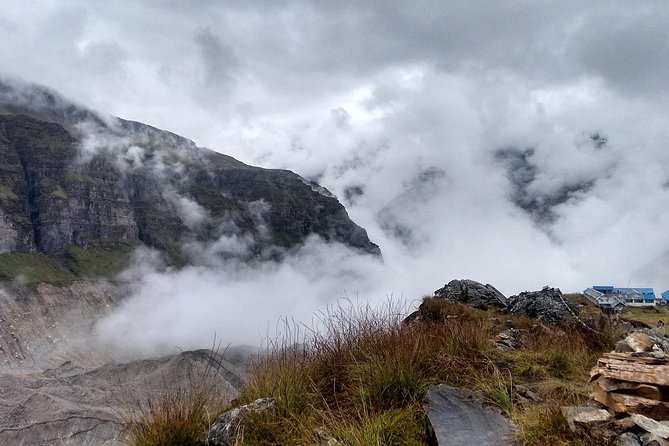
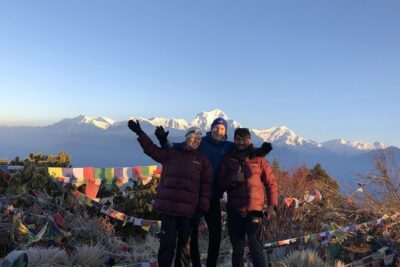
The early climb to Poon Hill is one of the trip’s signature moments. From the viewpoint, you watch sunlight reach the Himalayan peaks and look across the Annapurna mountains. The plan describes Poon Hill as one of the finest viewpoints in the region, and its appeal is simple: a short climb delivers a wide mountain view.
After returning to Ghorepani for breakfast, you continue to Tadapani. The full day combines the predawn viewpoint walk with several more hours on the trail, so it is more demanding than the viewpoint visit alone.
Tadapani is a Gurung village with views toward Annapurna South and Hiunchuli. The itinerary also mentions homestay opportunities for learning about Gurung culture, but it does not promise a specific homestay. Ask your operator what is arranged if that matters to you.
Day 7: Forest trails and the climb into Chhomrong
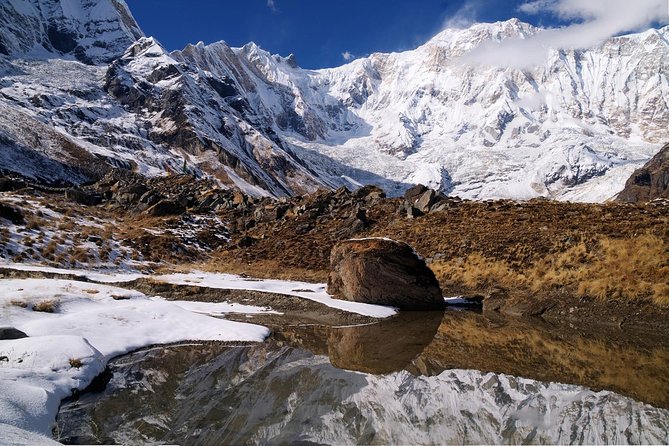
The trail drops to Kimrong Khola, then climbs through the forested Modi Valley. You pass Gurung settlements including Chulie and Gurjung, stop for lunch at Talung, and continue up the stairs to Chhomrong.
Chhomrong is one of the larger settlements on this route and is known for farming. It is an important overnight stop because it marks the transition from the lower villages into the narrower valley leading toward Base Camp.
The day involves both descent and ascent, a pattern that surprises many first-time trekkers. You may feel that you are walking downhill only to discover another staircase rising ahead. Good shoes and trekking poles can make this type of terrain more manageable.
Day 8: Sinuwa, Bamboo, and Himalaya
From Chhomrong, you cross the Chhomrong Khola and climb to Sinuwa. The trail then passes through rhododendron and oak forest before dropping to Bamboo. After lunch, you continue uphill toward Himalaya, a small cluster of teahouses and lodges.
The vegetation begins to change as you gain height. Forest still frames much of the route, but the trail becomes rougher, and snow may appear in places depending on conditions. Himalaya is described as the final lodging area before Annapurna Base Camp, so this night has a clear purpose: position you for the main ascent.
This is a good point to review your clothing and water. The package supplies down jackets and sleeping bags, but you still need suitable walking clothes, footwear, and personal layers.
Day 9: Machhapuchhre Base Camp and Annapurna Base Camp
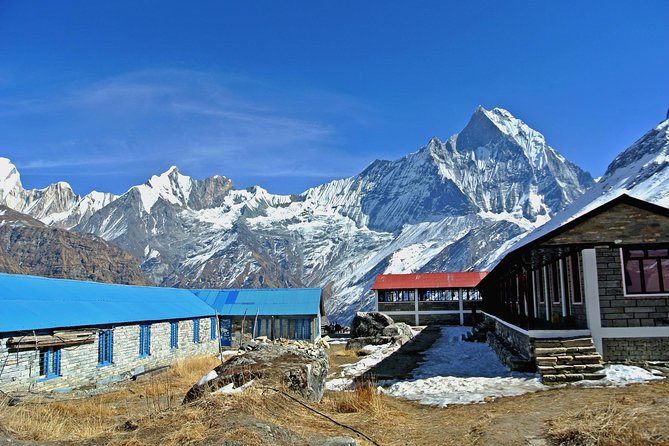
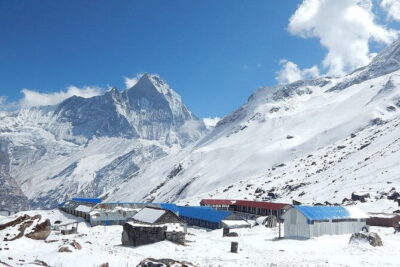
The approach to Annapurna Base Camp is the trip’s central event. Trees thin out as you climb, giving way to alpine scrub and open mountain terrain. Along the way, you pass Hinku Cave and continue toward Machhapuchhre Base Camp.
Machhapuchhre, also called Fishtail, rises to about 6,993 meters and is one of the defining peaks in this section of Nepal. From its base camp, Annapurna Base Camp is only a few hours away. The route then opens into a broad high mountain setting surrounded by the Annapurna, Dhaulagiri, and Manaslu ranges.
The overnight stay at Base Camp gives you time to appreciate the location instead of treating it as a quick photograph and retreat. Conditions at this height can be cold, and the day comes after a steady sequence of uphill walks. You should expect a demanding day, even though the listed activity duration is unusually brief at seven minutes, which appears to refer only to an individual ticket or stop rather than the hike itself.
Days 10 and 11: Descending to Bamboo and soaking at Jhinu
You leave Base Camp after enjoying the morning light on the peaks. The route descends to Bamboo, taking about six hours. Downhill walking may sound easy, but the trail includes plenty of steep steps and uneven sections, which can be hard on knees and toes.
The next day takes you from Bamboo toward Jhinu Danda. You climb to Khuldighar, pass an experimental sheep farm, drop through rhododendron country to Sinuwa, and then climb again to Jhinu. The listed walking time is about six hours.
Jhinu’s natural hot springs are the ideal finish to the mountain section. The water offers a chance to relax tired legs before the final return to the road. It is a small touch, but a valuable one after several days of climbing and descending.
Days 12 and 13: Back to Pokhara, then Kathmandu
Your last trekking day leads downhill and across the river to Birethanti. After lunch, you continue toward Nayapul, where a representative meets you and drives you back to Pokhara.
The next day includes Phewa Lake and the World Peace Pagoda before the six-hour drive back to Kathmandu. The road gives you another look at Nepal’s hill country, but it is still a long transfer. Keep your schedule light after arrival.
You have time in Kathmandu for rest or shopping in Thamel. This final city night is useful because it gives you a buffer before your flight and a chance to buy souvenirs without carrying them over the mountain trail.
Day 14: Airport transfer and practical arrangements
After breakfast, a company representative meets you for a short final session and transfers you to Tribhuvan International Airport. The listed meeting time is 7:45 a.m. at the airport for the start of the overall experience, while the final transfer time depends on your flight.
Confirmation is provided at booking, and the tour is described as suitable for people with moderate physical fitness. Public transportation is nearby in the city, but the trek itself relies on arranged road transfers and walking. Free cancellation is available when you cancel at least 24 hours before the local start time. After that point, refunds and changes are not accepted.
What the $871 price gives you
The price is good for a 14-day private package if the stated transport, guide support, trek equipment, sightseeing, and lodging arrangements are all included as you expect. Sleeping bags and down jackets are useful additions, since renting or carrying those items separately can complicate preparation.
The guide is a major part of the value. The company’s team has included coordinators and guides such as Saran and Lal, with Nilan, Tika, Sam, and porter Bheem also associated with recent trips. The strongest pattern in the feedback is personal care, flexibility when plans changed, and support from guides and porters during the walk.
Do not confuse that positive service record with a fully all-inclusive holiday. Insurance, visa costs, tips, and some meal details are outside the stated inclusions. You should also confirm porter arrangements, since the package includes the guide’s expenses but does not clearly list porter costs as included.
Who should book this Annapurna Base Camp trek?
I would choose this trip if you want one organized journey combining Kathmandu culture, Pokhara, Poon Hill, and Annapurna Base Camp. It suits someone who wants help with transport and permits but still wants a genuine village-to-village trek.
It is also a strong option for a private group. The operator can work with a custom group format, and the arrangement avoids being placed with people you do not know. The guide support is especially useful if this is your first Himalayan trek.
I would think twice if you want short walking days, luxury lodging, or a flexible schedule with many spare days. The route is active, the road transfers are long, and the descent can be as tiring as the ascent. Confirm food, porter support, lodging, and the exact sightseeing schedule before booking.
FAQ
How long is the Annapurna Base Camp tour?
The tour lasts 14 days, including arrival and departure in Kathmandu, sightseeing, road transfers, and the trek to Annapurna Base Camp.
Where does the experience begin?
It begins at Tribhuvan International Airport in Kathmandu, Nepal. The stated start time is 7:45 a.m.
Is airport pickup included?
Yes. A company representative meets you at the airport and transfers you to your hotel.
Does the trip include a guide?
Yes. An English-speaking guide and the guide’s expenses are included. The tour is private, so only your group takes part.
What meals are included?
The stated inclusions cover three breakfasts and 11 lunches. Dinner coverage is not listed, so confirm the meal plan before booking.
Are sleeping bags and down jackets provided?
Yes. Complimentary sleeping bags and down jackets are included.
Is travel insurance included?
No. Travel insurance is not included. Nepal visa fees and tips for guides, porters, and drivers are also excluded.
Should you book it?
Book this tour if you want a well-supported first Himalayan trek with strong variety: Kathmandu temples, a Pokhara stop, Magar and Gurung villages, Poon Hill, Annapurna Base Camp, and Jhinu’s hot springs. The cost is appealing for the amount covered, and the operator’s staff have earned particular praise for kindness, flexibility, and care on the trail.
Before committing, ask for a written breakdown of lodging, dinners, porter service, permits, and the exact sightseeing schedule. If those points match your expectations, this is a practical and memorable way to reach Annapurna Base Camp without having to arrange every road transfer and mountain detail yourself.
Just added around Kathmandu
- Everest Base Camp Trek★ 5.0 · 3 reviews
- Everest Base Camp Trek★ 5.0 · 7 reviews
- 15 Days Private Everest Base Camp Trek★ 5.0 · 30 reviews
- Everest Base Camp Trek★ 5.0 · 57 reviews
- 14 Days of Adventure Trekking to Everest Base Camp★ 5.0 · 2 reviews
- 14-Day Everest Base Camp Trek★ 5.0 · 20 reviews
- From Kathmandu: Private 14-Day Everest Base Camp Trek★ 5.0 · 20 reviews
- 14 Days Everest Base Camp Trek★ 5.0 · 4 reviews
Annapurna Base Camp Treks, compared.
Trekking in Annapurna/Langtang/Everest/Upper Mustang regions
Read our review →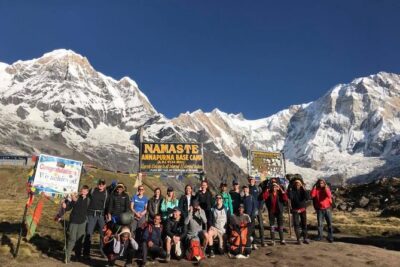
Kathmandu to Annapurna Base Camp (ABC) 5-Day Trek
Read our review →Browse the lists this trek appears in