
Review · KATHMANDU
13-Day Private Trekking Experience in Everest Base Camp
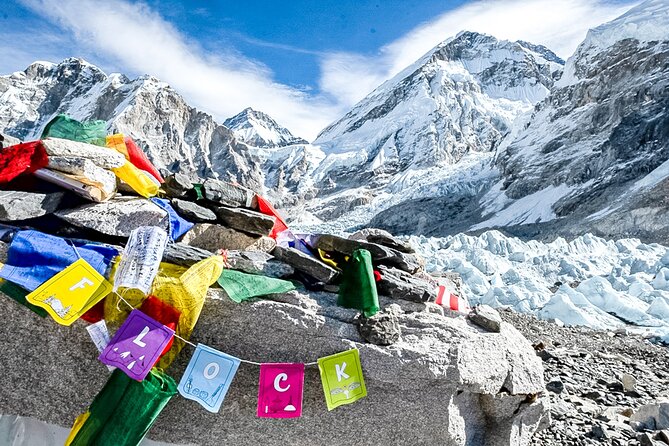
Everest Base Camp is the headline, but the real prize is the slow walk there. You cross suspension bridges, pass Buddhist prayer walls, enter Sherpa villages, and watch the peaks grow larger each day. The final goal sits at 5,380 meters, with Kala Patthar rising to about 5,545 meters for the best views.
I like the careful acclimatization plan, especially the extra nights in Namche Bazaar and Dingboche. I also like the practical inclusions: return flights to Lukla, meals, permits, a licensed guide, trekking poles, and a sleeping bag. The main concern is the pace. Several days run six to nine hours, and the route reaches very high altitude, so you need solid fitness and patience.
Key points before you book
- Kala Patthar is the visual high point: An early climb gives you broad views of Everest, Nuptse, Lhotse, Pumori, Ama Dablam, and other peaks.
- Two acclimatization stops matter: You spend two nights in both Namche Bazaar and Dingboche, with short hikes to higher ground.
- The package covers the costly basics: Lukla flights, permits, guide, tea-house stays, meals, airport transfers, poles, and sleeping bag are included.
- This is a private trip: Only your group participates, with a government-licensed guide assigned to you.
- The final walking days are demanding: The return to Namche takes about eight to nine hours, followed by another seven to eight hours to Lukla.
- Guide requests may be possible: Past trips have used guides named Kumar, Dorchi, Dorji, and Dan, but a specific guide is not guaranteed in the supplied details.
What the $1,350 price really covers
At $1,350 per person, this trek offers fair value if you want a guided Everest Base Camp trip with the main transport and food costs bundled together. The Lukla flights alone are an important part of the price, and the package also covers government fees, national park permits, a licensed guide, airport transfers, and 11 nights in tea houses.
You also receive two Kathmandu hotel nights with breakfast, all three daily meals during the mountain trek, a sleeping bag, trekking poles, a first-aid kit, and an Alpwander Adventures shirt. That removes several expenses you would otherwise need to arrange yourself.
The price does not cover bottled water, alcoholic drinks, charging devices, Wi-Fi, or hot showers during the trek. Those are normal extra costs on the Everest route, but you should budget for them. The supplied details also list 13 breakfasts, while the itinerary specifies breakfast at the Kathmandu hotel on Days 1 and 13 and meals during the trek, so confirm the exact meal schedule before departure.
This is not a luxury trek. Tea-house accommodation means simple mountain lodging, shared facilities in some places, and limited comfort as you rise higher. The value comes from route planning, a private guide, flights, meals, and support rather than polished hotels.
More Everest Base Camp Treks in Kathmandu:
- Everest Base Camp Trek – 14 Days
★ 5.0 · 1,499 reviews - Everest Base Camp Trek
★ 5.0 · 842 reviews - Everest Base Camp Helicopter Tour landing at Everest View Hotel
★ 5.0 · 668 reviews
Kathmandu begins with a soft landing
Day 1 starts with airport pickup and a transfer to a three-star hotel. That first night gives you time to settle in, meet the guide, check gear, and recover from the journey before heading into the mountains.
You also visit Thamel for about two hours. It is a useful place to see Kathmandu life, pick up last-minute supplies, and enjoy a meal. The walk is not included as a ticketed attraction, so think of it as an informal city visit rather than a guided sightseeing tour.
The return to Kathmandu on Day 13 includes another hotel stay, a shower, laundry, food, and time for last-minute shopping. That buffer is welcome after the trek, particularly if your clothes and boots have taken a beating.
The Lukla flight and the first walk to Phakding
The flight from Kathmandu to Lukla takes about 35 minutes and offers views of hills and snow-covered peaks. Lukla sits at roughly 2,800 meters, so the mountain portion begins at altitude almost at once.
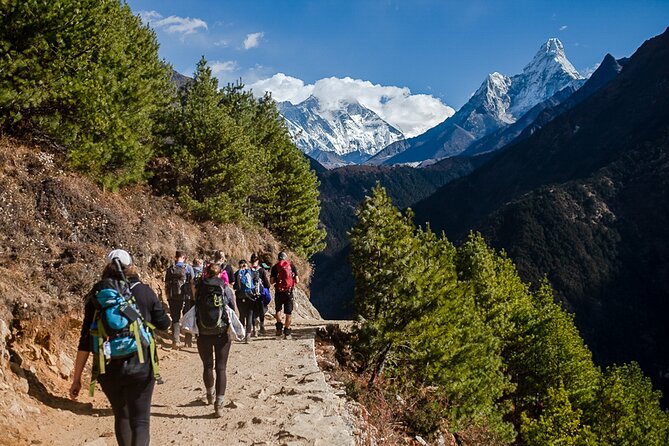
From Lukla, you walk about nine kilometers to Phakding. The three-hour route passes Tibetan Buddhist prayer walls, monasteries, and monuments. Phakding sits at about 2,610 meters and gives you a gentler first day on foot.
This stage is short compared with later days, but do not treat it as a race. The instructions emphasize hydration, with four to five liters of water daily. Bottled water is not included, so plan to pay for drinking water along the route or use the option available through your guide and lodge.
Namche Bazaar gives your body time to adjust
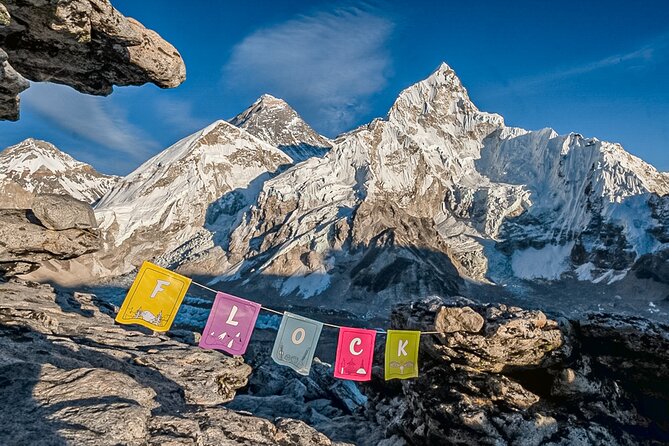
The walk from Phakding to Namche Bazaar is one of the first serious tests. You pass Toktok, Benkar, Monjo, and Jorsalle, cross several suspension bridges, and enter Sagarmatha National Park.
After following the river, the route reaches the final high bridge and begins the long climb to Namche. The ascent can take about two hours. Namche sits at around 3,340 meters, and the program wisely schedules two nights there.
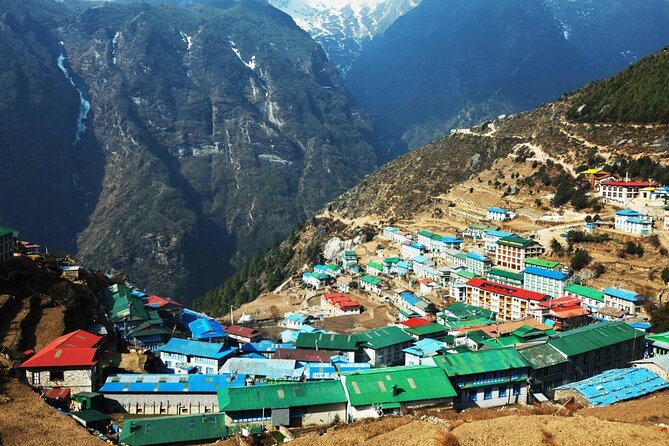
Namche is more than a sleeping stop. You can find lodges, restaurants, bakeries, bars, shops, groceries, cafés, and internet services. Conditions remain basic, but this is one of the better places on the route to restock and enjoy some comfort.
The acclimatization day includes an optional hike to the Everest View Hotel, with views of the peaks, plus the Sherpa villages of Khumjung and Khunde. You can also visit the Sherpa museum or stay in Namche. The key rule is simple: climb higher during the day, then sleep lower.
A few more treks around Kathmandu worth a look
- 14-Day Private Annapurna Base Camp Trek
★ 5.0 · 180 reviews - 14 Days Private Tour Everest Base Camp Trek
★ 5.0 · 105 reviews - 15 Days Private Everest Base Camp Trek
★ 5.0 · 30 reviews - 5 Day Private Guided Trekking in Annapurna Base Camp
★ 5.0 · 25 reviews
Tengboche combines a hard climb with a memorable monastery
The route from Namche to Tengboche takes about five to six hours and covers roughly 12 kilometers. The trail first passes through Kyanjuma, then drops toward the Dudh Kosi River before crossing at Phungitenga.
After lunch, you face a long uphill section of two to three hours. This is a gradual climb, but it comes after several days of walking, so the effort feels real.
Tengboche sits at about 3,870 meters and is known for its active Buddhist monastery. The route also includes water-driven prayer wheels and views of the surrounding peaks. This is one of the strongest cultural stops on the trek because the scenery and religious life meet in the same place.
The forest section includes rhododendron, birch, and blue pine. In spring, blooming rhododendrons can add strong color to the hills. Autumn usually brings more stable walking conditions, while spring offers flowers as a bonus.
Dingboche offers the second major acclimatization break
From Tengboche, you continue through forest toward Pangboche, cross a suspension bridge, and climb toward higher pastures. After lunch around Somare, the trail divides near Orsho, with one route heading toward Pheriche and the other continuing to Dingboche.
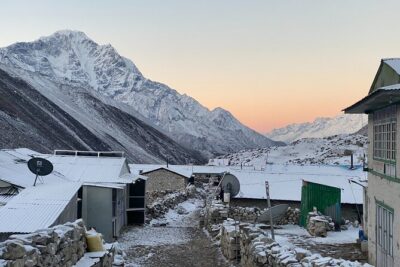
Dingboche is surrounded by views of Ama Dablam, Island Peak, Lhotse, Tawache, Tsolache, Lobuche, and other peaks. The village sits at a demanding altitude, so the second night here is essential rather than wasted time.
The acclimatization hike gains about 500 meters and takes roughly three hours. You rest at the high point for 30 to 45 minutes before returning for lunch and a quieter afternoon.
There is also an option to hike toward Nangkar Tshang, reaching about 5,616 meters. The supplied details describe this as physically demanding, with views toward Mount Makalu and nearby peaks. Treat it as an option, not an obligation. At this height, saving strength can be smarter than chasing every possible viewpoint.
Lobuche and the memorial ridge
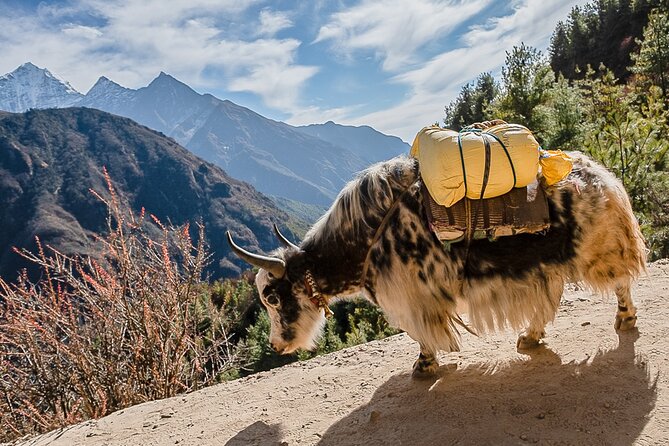
The walk from Dingboche to Lobuche takes about five to six hours and covers about 12 kilometers. The route climbs above the Khumbu Khola valley, passes a small chörten, and continues across grassy moraine toward Thukla.
You get glimpses of Pumori, Nuptse, Lobuche, Cholatse, Tawache, and Ama Dablam. After Thukla comes a steep climb to a ridge marked by cairns, stone memorials, and prayer flags honoring mountaineers who died while attempting Himalayan climbs.
This section can feel sobering. It places the Everest journey in proper context. The mountains are beautiful, but high-altitude climbing carries real danger, and the memorials make that clear without needing a lecture.
From the ridge, the route continues for about an hour to Lobuche. Accommodation becomes more basic as you approach Base Camp, and the cold and altitude can make even a short evening routine feel tiring.
Gorak Shep, Everest Base Camp, and the toughest day
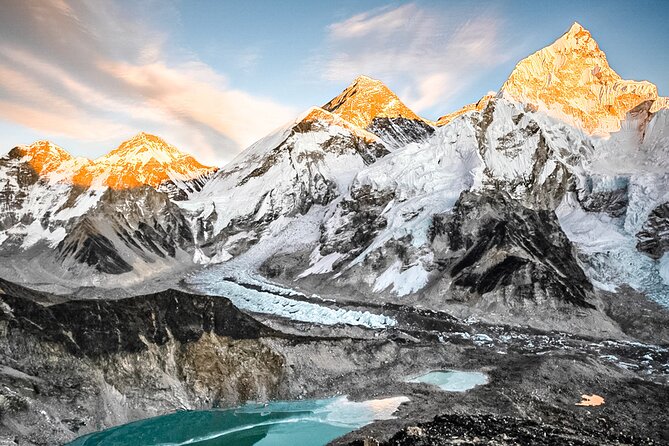
From Lobuche, you follow the left side of the Khumbu Glacier toward Gorak Shep. The route climbs toward Changri Glacier before dropping briefly to the settlement. The walk takes about two and a half hours, followed by lunch and a chance to leave extra gear at the lodge.
The trek to Everest Base Camp takes place from Gorak Shep. This is a challenging day for most people, not just because of the distance but because of the altitude and rough ground. Base Camp itself is a major goal, but the famous Everest summit view is not always best from there. Glacial terrain and surrounding ridges limit what you see.
The itinerary gives you a choice. You can walk to Base Camp on Day 9 and climb Kala Patthar early the next morning, or hike Kala Patthar for sunset and visit Base Camp the following day, depending on conditions and energy.
Kala Patthar delivers the big mountain view
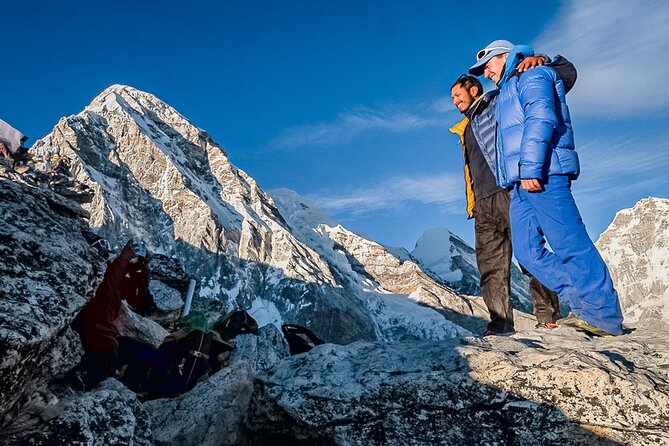
The early climb from Gorak Shep to Kala Patthar gains about 400 meters and can take up to two hours. The summit area reaches approximately 5,545 to 5,550 meters, making this the highest point of the route.
From here, you can see Everest, Nuptse, Lhotse, Khumbutse, Pumori, Lingtren, Ama Dablam, Thamserku, Lobuche Peak, and other peaks. The viewpoint also offers sunrise and sunset views, though cold, cloud, and fatigue may affect what you see.
I would treat Kala Patthar as the most important viewpoint of the trip. Base Camp gives you the satisfaction of reaching the famous destination, but Kala Patthar usually provides the more open mountain panorama.
After returning to Gorak Shep and eating breakfast, you descend through Lobuche and Thukla to Pheriche. That descent feels easier on the lungs, but your legs may be tired after the early start.
The long return to Namche and Lukla
The walk from Pheriche to Namche takes about eight to nine hours and covers roughly 22 kilometers. You lose altitude, which helps, but this is still a long day.
The route retraces familiar ground through Thukla and toward the lower villages. Back in Namche, you can stop at the Namche Bakery or Café Danfe, then rest before the final push to Lukla.
Day 12 takes another seven to eight hours and about 21 kilometers. You descend Namche Hill, pass Phakding, and then face the final uphill section into Lukla. That last climb can feel surprisingly hard after nearly two weeks on foot.
The overnight in Lukla is useful because it avoids trying to connect directly from a long walking day to a flight. It also provides some protection against the practical uncertainty of mountain travel, though the supplied plan does not list a spare weather day.
Guides, private groups, and the human side
This is a private activity, so only your group participates. That gives you more control over walking speed, rest breaks, and how long you spend at cultural sites than a large fixed group would.
The guide is a government-licensed trekking or expedition guide. Past departures have included guides named Kumar, Dorchi, Dorji, and Dan. The information does not promise a particular person, so ask about guide assignment if that matters to you.
The strongest service pattern is preparation and personal support. Alpwander staff have helped with packing lists, answered questions before departure, arranged warm coats on some trips, and managed flight details when conditions changed. One useful point is that trekking poles and sleeping bags are included, while warm clothing may need to be confirmed separately.
You should still take responsibility for your own health. A guide can watch your pace and symptoms, but no itinerary removes the risks of altitude, cold, fatigue, or weather.
Who should book this Everest trek?
This trip suits you if you want the classic Everest Base Camp route with a private guide and a clear support package. It is especially useful for first-time Himalayan trekkers who want flights, food, permits, lodging, and basic equipment arranged in advance.
It is also a good fit for solo participants who prefer private support instead of joining a fixed group. The trip can still feel social because the trail and tea houses bring you near other people, but your formal group remains private.
You should think twice if you dislike long walking days, simple lodging, shared mountain facilities, or cold conditions. A moderate fitness level is required, and the route includes repeated days of six to nine hours, plus walking above 5,000 meters.
Booking during March to May or September to November gives you the seasons identified as best for weather. Spring adds rhododendron blooms, while autumn is a popular period for clear mountain conditions. The cancellation terms are strict near departure: six or more full days before the start allows a full refund, two to six days allows 50 percent, and cancellation within two days receives no refund.
Should you book it?
I would book this trek if your priority is a classic, well-supported Everest Base Camp route at a price that includes the expensive essentials. The two acclimatization nights, private guide, meals, Lukla flights, permits, poles, and sleeping bag make the package easier to manage than arranging every part yourself.
I would not book it expecting comfort or an easy adventure. You need to prepare for basic tea houses, extra charges for water and Wi-Fi, long walking days, and serious altitude.
For the best decision, ask three questions before paying: Who will guide your group, what happens if the Lukla flight is delayed, and exactly which Kathmandu and trekking meals are included? If the answers are clear and you are ready for the physical demands, this is a strong route for reaching Everest Base Camp without giving up personal attention.
FAQ
How long is the Everest Base Camp trekking experience?
The experience lasts approximately 13 days, including airport pickup, Kathmandu stays, the trek from Lukla to Everest Base Camp, the return walk to Lukla, and the flight back to Kathmandu.
Is this a private tour?
Yes. Only your group participates in this private trekking activity.
What is included in the price?
The package includes government taxes, national park permits, a licensed guide, return Kathmandu to Lukla airfare, airport transfers, two Kathmandu hotel nights with breakfast, 11 tea-house nights, meals during the trek, trekking poles, a sleeping bag, and a first-aid kit.
Are bottled water and hot showers included?
No. Packed bottled water, alcoholic drinks, electronic charging, Wi-Fi, and hot showers during the trek are not included.
What level of fitness is required?
You should have a moderate level of physical fitness. The route includes several six to nine-hour walking days and reaches Kala Patthar at roughly 5,545 meters.
When can I cancel for a full refund?
You must cancel at least six full days before the experience start time for a full refund. Cancellation two to six full days before the start receives a 50 percent refund, and cancellation within two days is nonrefundable.
Just added around Kathmandu
- Everest Base Camp Trek★ 5.0 · 3 reviews
- Everest Base Camp Trek★ 5.0 · 7 reviews
- 15 Days Private Everest Base Camp Trek★ 5.0 · 30 reviews
- Everest Base Camp Trek★ 5.0 · 57 reviews
- 14 Days of Adventure Trekking to Everest Base Camp★ 5.0 · 2 reviews
- 14-Day Everest Base Camp Trek★ 5.0 · 20 reviews
- From Kathmandu: Private 14-Day Everest Base Camp Trek★ 5.0 · 20 reviews
- 14 Days Everest Base Camp Trek★ 5.0 · 4 reviews
Everest Base Camp Treks, compared.
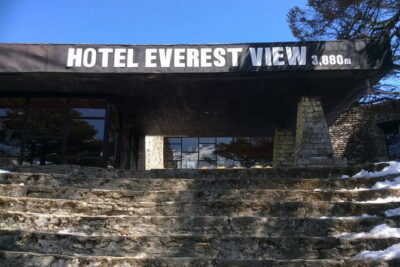
Everest Base Camp Helicopter Tour landing at Everest View Hotel
Read our review →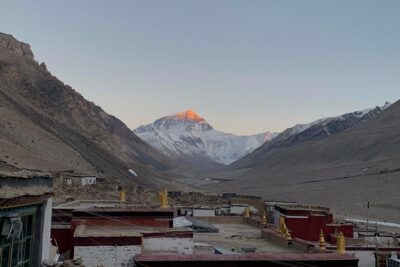
Tibet Tour 8 Days Lhasa to Everest Base Camp Small Group Tour
Read our review →
Dubai: Private Luxury Everest Yacht Cruise from Dubai Marina
Read our review →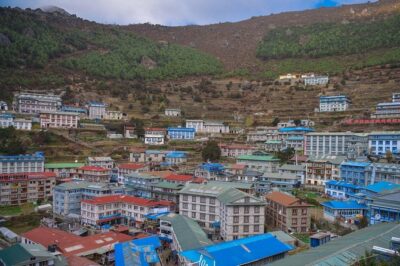
Browse the lists this trek appears in