
Review · KATHMANDU
12 Days Annapurna Circuit Trek from Kathmandu
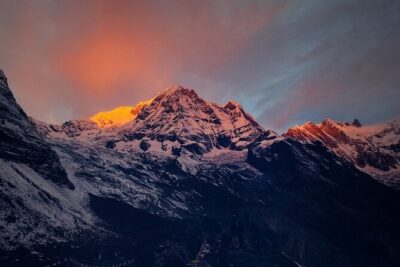
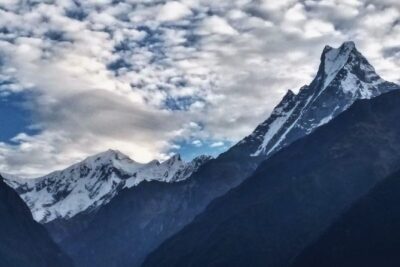
The big prize here is Thorong La Pass at 5,416 meters, reached after days of steady walking from the green Marshyangdi Valley into the dry high country of Manang and Mustang. You get snowy Annapurna, Dhaulagiri, and Manaslu views, old Buddhist sites, and villages shaped by both Himalayan and Tibetan culture.
I like the clear route progression, from river valleys and forests to juniper country, alpine pasture, and wind-cut mountain terrain. I also like the private format and the individual guides named in the trip details, including Biru, Milan, Amrit, and Krishna. The main concern is the pace: the pass day is long and demanding, and the plan gives you only one full acclimatization day in Manang.
Key points
- Thorong La crossing: The trek reaches the 5,416-meter high point on the route.
- A changing route: Walk from lush valleys near Chame to dry, Tibetan-influenced Manang and Mustang.
- One acclimatization day: Day 5 in Manang lets you stay active before gaining more height.
- Private group format: Only your own group participates, with an English-speaking guide.
- Road travel included: Shared bus transfers link Kathmandu, the trailhead, Jomsom, Pokhara, and Kathmandu.
- Strong value at $680: Permits, guides, accommodation, breakfast in Kathmandu and Pokhara, transfers, and a trekking pole are included.
From Kathmandu to the Marshyangdi Valley
This is a 12-day Annapurna Circuit plan priced at $680 per person. It starts and ends in Kathmandu, but the walking begins at Chame rather than on the lower section of the circuit. That choice saves time and makes this a compact version of a route that can otherwise take longer.
On arrival at Tribhuvan International Airport, a representative meets you and transfers you by private vehicle to your Kathmandu hotel. The first day is mostly about arrival, hotel check-in, and getting ready. The listed start time is 4:15 pm, so confirm the exact pickup details when you book.
Day 2 is a long road day of about nine hours. You travel toward Besisahar, crossing the Trishuli River and following the Marsyangdi River toward Chame. This is not a scenic hiking day, but it matters because it gets you quickly into the Annapurna region.
The tradeoff is comfort versus time. A road transfer is less tiring than adding several walking days at lower elevation, but a long bus ride can feel rough after an international flight. Keep your day bag close, and expect the road portion to be a real part of the trip rather than a minor transfer.
More Annapurna Treks in Kathmandu
- Annapurna Circuit Trek with Tilicho Lake
★ 5.0 · 368 reviews - Annapurna base camp trek 5 Days
★ 5.0 · 252 reviews - 14-Day Private Annapurna Base Camp Trek
★ 5.0 · 180 reviews
Chame to Upper Pisang, the first mountain views
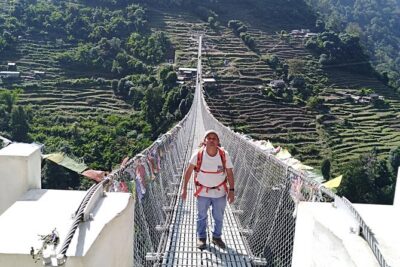
From Chame, the walking begins in earnest. Day 3 takes about six hours to Upper Pisang, passing Telekhu and crossing a suspension bridge. Along the way, you get views toward the Annapurna range and Mt. Pisang, listed at 6,091 meters.
Upper Pisang marks a clear change from the lower valley. The route feels more alpine, and the mountain walls become a bigger part of your day. The suspension bridge and uphill walking add interest, but you should not treat this as a casual village stroll. You need a solid fitness level from the start.
The accommodation during the trek is in guesthouses. That means the trip gives you a practical base for sleeping and eating, but it is not a hotel-based holiday. Your price includes the guesthouse accommodation, while food and drinks are extra.
Braga and Manang, where the culture shifts
Day 4 leads from Upper Pisang toward Braga and Manang, with around six hours of walking. Braga is especially notable for its Tibetan-style architecture, with houses built one above another on the slope. It is the kind of place where the shape of the village tells you something about the climate, terrain, and local way of life.
Manang is one of the key stops on the whole route. It is not only a place to sleep before the high pass. It gives you time to see Buddhist stupas, monasteries, and traditional villages connected to Manangi and Tibetan culture.
I like that the route gives culture equal billing with mountain scenery. You are not simply walking through empty high country. You pass communities shaped by trade, religion, farming, and life at altitude, and the guide is expected to explain those traditions along the way.
Day 5 in Manang, a useful pause before the high country
The fifth day stays in Manang for acclimatization. You still have about six hours listed for the day, so this is not a complete rest day. The aim is to stay active without making another major move upward.
This pause is one of the most important parts of the schedule. The route soon climbs to Yak Kharka, Thorong Phedi, and Thorong La. Spending time in Manang gives your body a better chance to adjust before the hardest section.
You should use the day sensibly. Walk at the pace set by your guide, drink regularly, and tell the guide quickly if you feel unwell. The trip information stresses strong physical fitness, and the altitude makes that warning worth taking seriously.
Same trailhead, a different route:
- Everest Base Camp Trek – 14 Days
★ 5.0 · 1,499 reviews - Everest Base Camp Trek
★ 5.0 · 842 reviews - Everest Base Camp Helicopter Tour landing at Everest View Hotel
★ 5.0 · 668 reviews - Everest Base Camp Trekking
★ 5.0 · 485 reviews
Yak Kharka and Thorong Phedi, the high-altitude approach
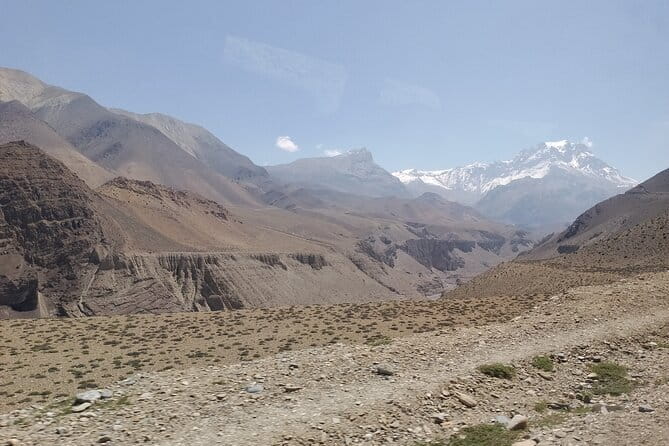
Day 6 covers about 10.4 kilometers uphill to Yak Kharka in roughly six hours. The path passes through juniper forest and alpine pasture, where you may see yaks grazing. You also pass the only teahouse at Thorong Khola mentioned in the route details.
Yak Kharka is a simple but important stop. By now, the route has moved far above the greener valleys, and the air and conditions feel more severe. The day is not the toughest, but the steady gain in height can make even moderate walking feel slow.
Day 7 continues to Thorong Phedi, with about six hours of walking. The trail follows the east bank of the Jarang Khola and passes steep bluffs before reaching Thorong Phedi, whose name means foot of the pass.
This is a preparation day for the crossing. The route description does not promise comfort, and the high setting means you should expect basic accommodation and a colder, more exposed feel. Your guide’s pacing matters here. The guide names associated with this experience include Biru, Milan, Amrit, and Krishna, and the trip is designed around direct support from an English-speaking trekking guide.
Thorong La to Muktinath, the hardest day
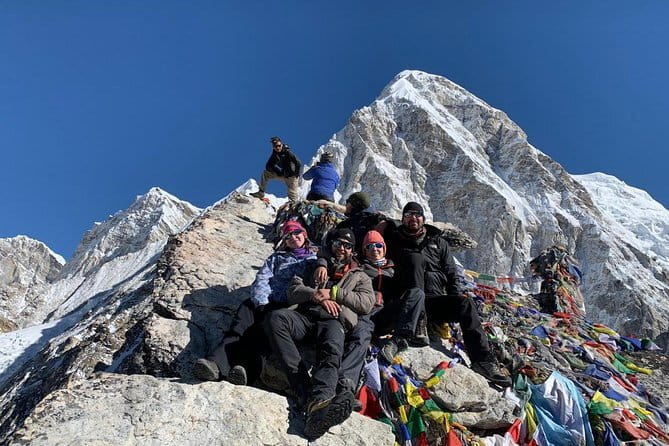
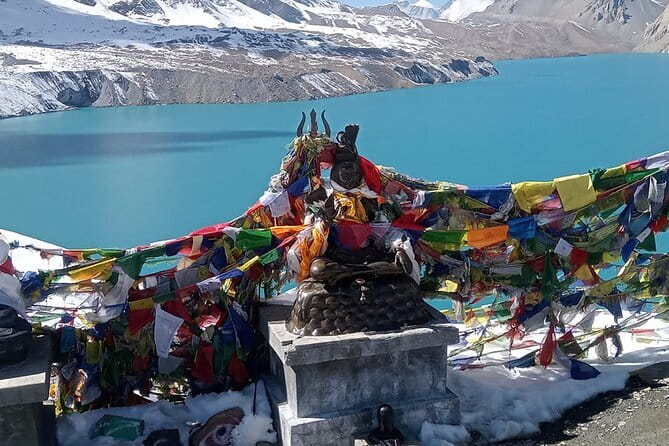
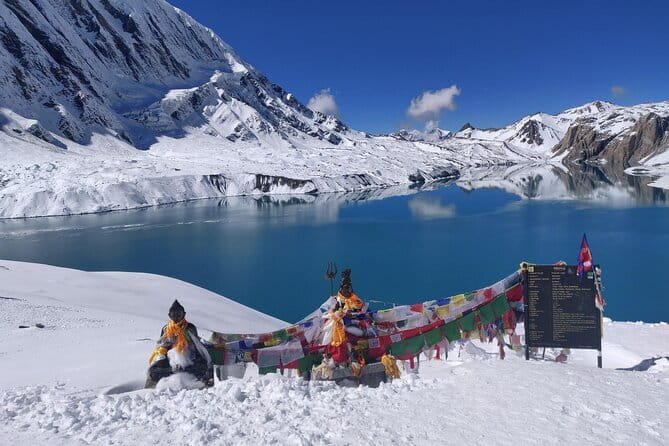
Day 8 is the physical centerpiece. The crossing to Muktinath takes about eight to nine hours, with the pass reaching 5,416 meters. High elevation, strong wind, and the length of the day combine to make this the section that demands the most from you.
The route information places Thorong La on the road to Muktinath, so this is the day to focus on the crossing rather than the stop name alone. You begin early enough for a long day, gain the pass, and then continue down toward Muktinath.
The reward is the scale of the high mountain setting, with wide views and a strong sense of having crossed from one side of the Annapurna region to another. The drawback is plain: this is not a suitable trek for someone who wants a gentle walking holiday. A strong fitness level is required, and the altitude may make the route much harder than the mileage suggests.
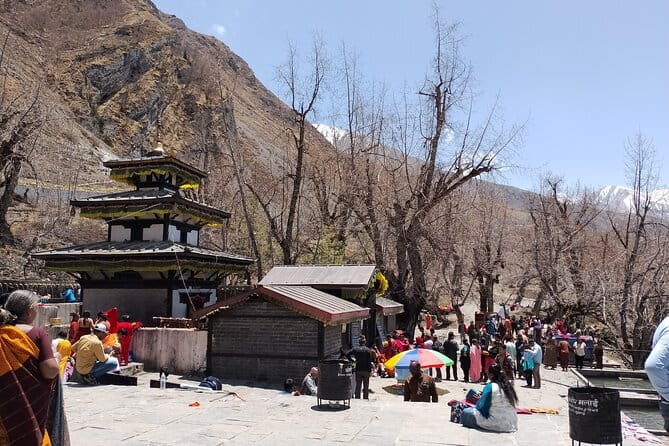
Muktinath also has religious importance, with Hindu and Buddhist significance noted in the route’s cultural focus. The combination of sacred sites, high mountain terrain, and local village life gives the stop more depth than a simple overnight halt.
Kagbeni and Jomsom, from dry country to orchards
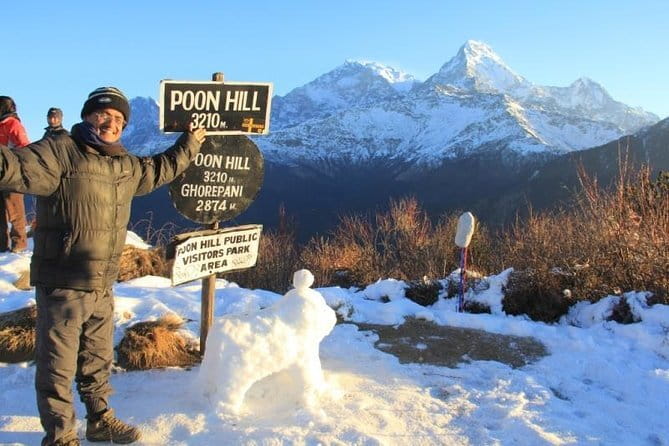
After the pass, Day 9 takes about six hours from Muktinath to Jomsom. The route passes meadows, orchards, streams, and Kagbeni before reaching Jomsom in the Kali Gandaki Valley.
Kagbeni is one of the more distinctive villages on this section. Its location and traditional character make it a good place to notice how quickly the scenery changes after the pass. The route moves from the stark upper terrain toward greener pockets of cultivation and water.
Jomsom is the final trekking-area stop in this plan. From here, the trip shifts from walking to road transport. That change can feel welcome after the high pass, but it also means the last part of the circuit is experienced by bus rather than on foot.
The road to Pokhara and the return to Kathmandu
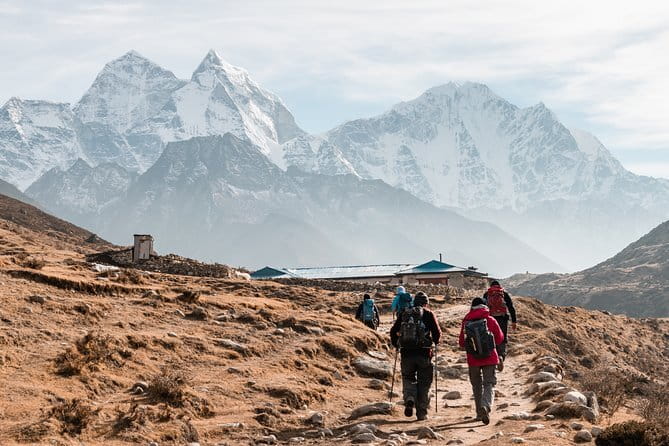
Day 10 takes you by local bus to Pokhara. The journey is described as seven to eight hours, passing through Tatopani and Beni Bazaar before reaching Pokhara. The route also lists about six hours for the stop, so allow flexibility rather than planning a tight evening schedule.
Pokhara is known for Phewa Lake, written in the trip details as Phew Tal. It gives you a softer change of pace after the mountains, with a lakeside setting and a chance to recover before the final drive.
Day 11 is another long transfer, around seven to eight hours back to Kathmandu. This is a practical end to a compressed circuit, but it is not a sightseeing day. You may be tired by this point, so treat the drive as part of the overall effort.
On Day 12, the operator transfers you to Tribhuvan International Airport at least three hours before your flight. The listed duration is about five hours, though your actual airport transfer will depend on your departure time and local traffic.
What the $680 price really covers
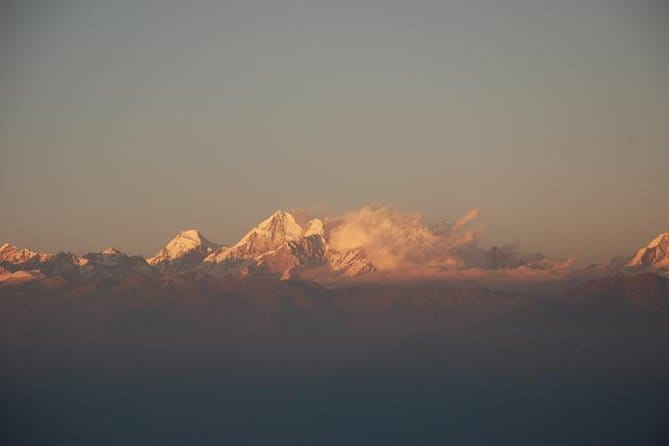
At $680 per person, this trip offers a strong amount of included support. The price covers round-trip hotel pickup and drop-off, an English-speaking trekking guide, trekking permits and official documents, guesthouse accommodation during the trek, and a trekking pole for each person.
It also includes two nights in Kathmandu and one night in Pokhara with breakfast. Shared bus transfers are included according to the route, even though the airport and hotel transfers are handled by private vehicle where specified.
Food and drinks are not included. The stated estimate is about $25 per day, so add roughly $300 for 12 days if you want a simple planning figure. Gratuities are optional and separate.
The private format improves the value if you want a trip shaped around your own group. You are not placed in a large mixed party, and the guide can adapt the walking pace to your group. One specific strength associated with this arrangement is guide flexibility. Krishna is described as adjusting the pace to suit the group, while Biru is described as caring closely for both clients and staff. Those details matter more on a high-altitude trek than polished sales language.
Guides, pace, and the human side of the trek
The experience depends heavily on the guide. The available guide names include Biru, Milan, Amrit, and Krishna, so ask who is assigned before departure if that matters to you.
Biru is noted for explaining mountain culture and taking care of the group. Milan is associated with help on the Thorong La crossing and the route near Tilicho Lake, although Tilicho Lake is not part of the stated 12-day itinerary. Amrit is described as providing strong support, while Krishna is noted for clear English and a willingness to adjust the pace.
Do not assume every booking will have the same guide. Instead, use these details as a useful question to ask before you go. You can also ask how the guide handles altitude concerns, daily pacing, and any change in road conditions.
The guide is not only there to point out the path. The trip promises explanations of local culture, mountain history, monasteries, stupas, and natural features. That adds value because the Annapurna route is as much about people and place as it is about reaching the pass.
Who should book this Annapurna Circuit plan?
I would recommend it to someone who wants a compact, guided Himalayan trek with a major high-pass crossing, rather than a relaxed walking tour. You should be comfortable with six-hour hiking days, one nine-hour approach day, and an eight to nine-hour pass day.
It suits you if you value:
- A private group rather than a large shared party
- A guide who can explain local culture as well as manage the route
- Guesthouse accommodation instead of upscale lodging
- Dramatic changes in terrain within a short trip
- A clearly organized package with permits and transport included
I would think twice if you dislike long bus rides, basic teahouse accommodation, or high-altitude exertion. The route includes two significant road days, and the Thorong La crossing is not a small add-on. The one acclimatization day helps, but it does not remove the physical demands.
Booking is flexible up to three full days before the start time for a full refund. Within three days, cancellations and changes are not accepted, so do not leave your decision until the last minute.
Should you book it?
Book this trek if you want the classic Annapurna contrasts in a short 12-day frame: river valleys, pine and juniper, Tibetan-style villages, dry high country, Buddhist sites, and the Thorong La crossing. The $680 price is appealing because it bundles permits, guiding, accommodation, breakfast in three city nights, transfers, and a trekking pole.
I would book only after checking the assigned guide, the exact pickup plan, and the road transfer schedule. If you are fit, realistic about altitude, and happy with basic lodging, this is a practical way to experience a famous Himalayan route without arranging every detail yourself.
FAQ
How long is the Annapurna Circuit trek from Kathmandu?
The experience lasts approximately 12 days, including arrival and departure transfers, road travel, trekking, and stays in Kathmandu and Pokhara.
What is the highest point on the trek?
The highest point is Thorong La Pass, at 5,416 meters.
Is this a private tour?
Yes. Only your own group participates in the private tour or activity.
What accommodation is included?
The package includes two nights in Kathmandu and one night in Pokhara with breakfast, plus guesthouse accommodation during the trek.
Are food and drinks included?
No. Food and drinks are available for purchase, with an estimated cost of about $25 per day.
Is a trekking guide included?
Yes. The package includes an experienced, English-speaking trekking guide. Guides named in the trip details include Biru, Milan, Amrit, and Krishna.
What is the cancellation policy?
You can receive a full refund if you cancel at least three full days before the experience start time. Cancellations or changes made within three days are not accepted and are not refunded.
Just added around Kathmandu
- Everest Base Camp Trek★ 5.0 · 3 reviews
- Everest Base Camp Trek★ 5.0 · 7 reviews
- 15 Days Private Everest Base Camp Trek★ 5.0 · 30 reviews
- 14-Day Everest Base Camp Trek★ 5.0 · 20 reviews
- Everest Base Camp Trek★ 5.0 · 57 reviews
- 14 Days of Adventure Trekking to Everest Base Camp★ 5.0 · 2 reviews
- From Kathmandu: Private 14-Day Everest Base Camp Trek★ 5.0 · 20 reviews
- 14 Days Everest Base Camp Trek★ 5.0 · 4 reviews
Annapurna Base Camp Treks, compared.
Trekking in Annapurna/Langtang/Everest/Upper Mustang regions
Read our review →
Kathmandu to Annapurna Base Camp (ABC) 5-Day Trek
Read our review →Browse the lists this trek appears in