
Review · KATHMANDU
11-Day Hike Tour to Annapurna Base Camp Bliss in Kathmandu
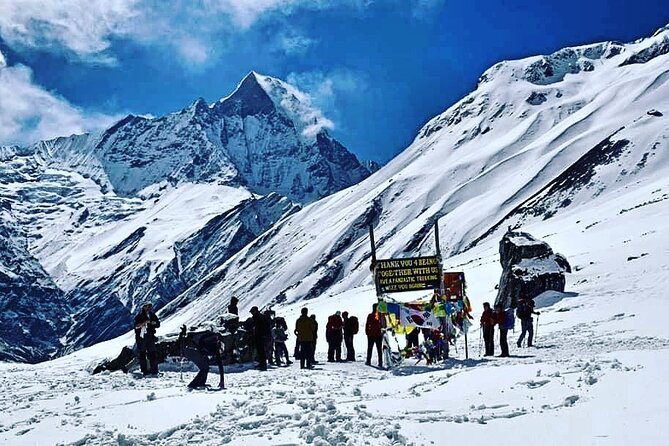
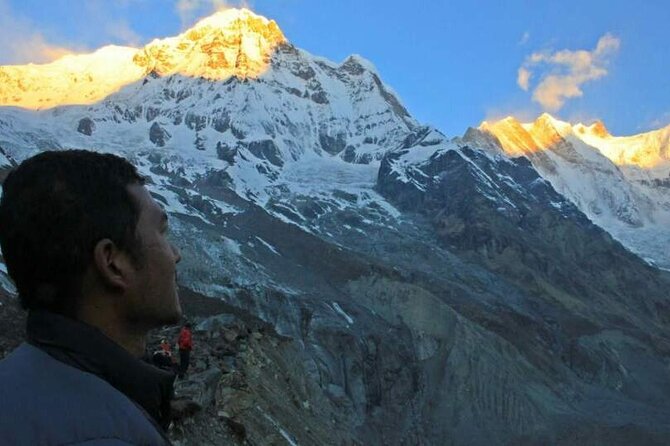
The big draw here is the Annapurna Base Camp viewpoint at 4,130 meters, where a ring of high peaks surrounds you, including Annapurna I, Annapurna III, Gangapurna, and the distinctive Machhapuchare. The route also gives you Poon Hill sunrise, Gurung villages, rhododendron forest, and a soak at Jhinu hot spring.
I like the private format, since your group can move at its own pace with a guide focused on your needs. I also like the practical mix of mountain walking and local life, from stone steps near Ulleri to tea houses and Gurung culture around Chhomrong. The main caution is the pace: several days are listed at 10 to 12 hours, and the climb to ABC requires solid fitness and careful attention to altitude.
Key points to know before booking
- Annapurna Base Camp at 4,130 meters: The trip reaches the heart of the mountain amphitheater, not just a lower viewpoint.
- Poon Hill adds a famous sunrise: You get a strong mountain panorama before the route turns toward ABC.
- Private guiding keeps the trip personal: Guides named Raju, Bishal, and Ramji have been associated with departures, alongside porters such as Sandesh and Ishor.
- Several long trekking days: Days 5 through 9 can run from 10 to 12 hours, so this is not a casual walking holiday.
- Meals are built into the price: Breakfast is included for 11 days, lunch for 11 days, and dinner for 10 days.
- Kathmandu and Pokhara flights save road time: The plan includes domestic flights between the two cities, airport transfers, and time around Pokhara’s lake and sights.
What the 11-day Annapurna route is really like
This is a mountain trek with a useful range of scenery packed into a short schedule. You begin in Kathmandu, fly to Pokhara, walk through lower Himalayan villages, climb toward the high valley of Annapurna Sanctuary, then return by a different route through Jhinu Danda before flying back to Kathmandu.
The route is appealing because it does not give you only one big mountain moment. Poon Hill offers a broad early view, Chhomrong brings Gurung village life, and ABC gives you the enclosed high mountain setting that most people come for. You also pass through forests, suspension bridges, stone stairways, alpine ground, and the river valley beside the Modi Khola.
The cost is $1,300 per person. For an 11-day private trip with airport pickup, domestic flights, accommodation arrangements, a guide, meals, and trekking support, that can be a fair package. The exact value depends on what lodging and porter services are assigned to your departure, so I would ask for a written list of those arrangements before paying.
More Annapurna Treks in Kathmandu
- Annapurna Circuit Trek with Tilicho Lake
★ 5.0 · 368 reviews - Annapurna base camp trek 5 Days
★ 5.0 · 252 reviews - 14-Day Private Annapurna Base Camp Trek
★ 5.0 · 180 reviews
Days 1 and 2: Kathmandu, Pokhara, and the trailhead
Your arrival day is deliberately simple. An airport representative meets you at Tribhuwan International Airport, then takes you by private vehicle to your Kathmandu hotel. That first transfer matters after a long flight, since you do not need to work out the city transport system while carrying trekking bags.
The stated meeting point is in Thamel, Kathmandu, and the activity returns there at the end. Thamel is a practical place to buy last-minute trekking items. A trekking pole is not required, but the operator notes that you can find one locally for roughly $3 to $20.
The next morning begins with a domestic flight from Kathmandu to Pokhara. The schedule allows breakfast either at the hotel or in Pokhara, depending on the flight time. Flying keeps this connection short and gives you more useful time in the region, though domestic mountain flights can be affected by weather.
The day then turns toward the walking route. The plan lists Pokhara, Nayapul, and Tikhedhunga, with several hours assigned to each portion. Nayapul is a common access point for Annapurna treks, while Tikhedhunga is a small village used on the approach toward Poon Hill.
This is a demanding first trekking day because transport and walking are packed together. You should not expect a slow afternoon in Pokhara before starting the trail. The schedule is best for someone who wants to make efficient use of limited holiday time.
Day 3: Ulleri’s 3,300 steps and Ghorepani
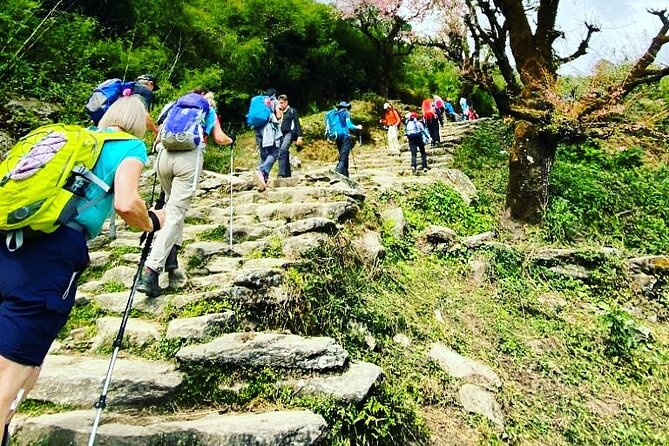
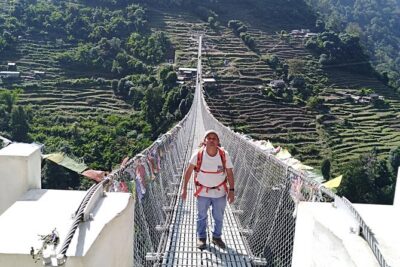
The walk from Tikhedhunga toward Ghorepani begins with a suspension bridge and then rises sharply toward Ulleri. The route includes about 3,300 stone steps, one of the clearest tests of your legs on the entire trip.
Ulleri is a Magar village at about 2,080 meters. The village setting gives the climb a human scale, with mountain homes and local life replacing the roads and city noise below. The stairs are not technically difficult, but the steady upward rhythm can be tiring, particularly if you are still adjusting to the first days of walking.
Ghorepani is the payoff for this effort. It is a well-known stop on the Poon Hill route and a natural base for the early morning viewpoint. Expect this day to feel more strenuous than the five-hour estimate suggests, since uphill steps affect people differently.
I would use this day to settle into a slow pace. The guiding team has been praised for encouraging a steady approach, including Ramji’s support for people worried about fitness or altitude. That kind of patient pacing is more useful here than trying to race other groups up the stairs.
Day 4: Poon Hill sunrise, then through rhododendron forest
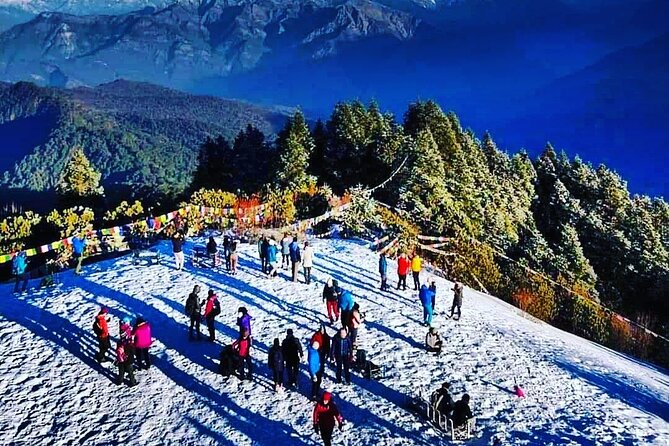
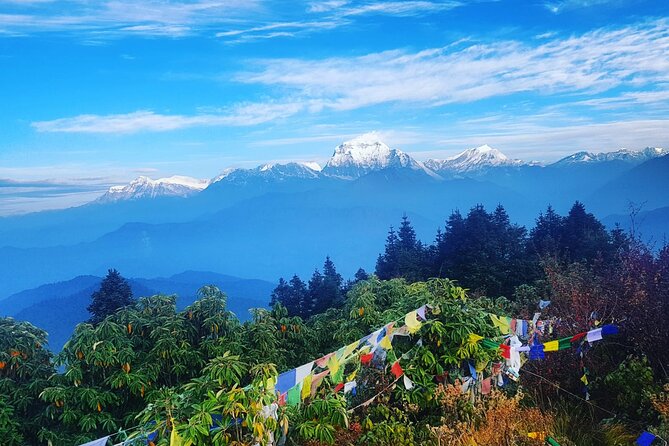
Poon Hill is the visual high point of the lower section. From the viewpoint, you can look toward Annapurna and Machhapuchare, particularly in the clear early morning light. The schedule calls for descending back to Ghorepani for breakfast before continuing to Tadapani.
The climb to Poon Hill is an early start, followed by a return walk, so you should expect a morning with little spare time. The reward is a wide mountain view before the trail becomes more enclosed.
From Ghorepani to Tadapani, the route passes through rhododendron forest and stretches of higher ground. Tadapani sits at about 2,590 meters and is an important stop before the trail turns toward Chhomrong and the main ABC route.
This day combines a famous lookout with a quieter walk through trees. I like that balance. Poon Hill gives you the big photograph, while the forest section gives you a better feel for how the route changes as you gain height.
Same trailhead, a different route:
- Everest Base Camp Trek – 14 Days
★ 5.0 · 1,499 reviews - Everest Base Camp Trek
★ 5.0 · 842 reviews - Everest Base Camp Helicopter Tour landing at Everest View Hotel
★ 5.0 · 668 reviews - Everest Base Camp Trekking
★ 5.0 · 485 reviews
Day 5: Tadapani, Chhomrong, and Sinuwa
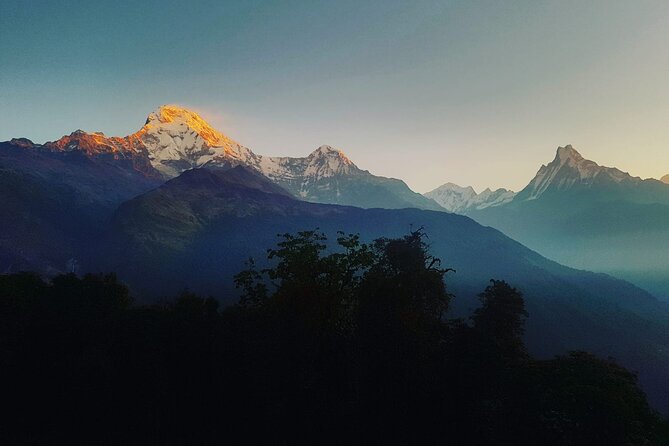
The fifth day is one of the longer ones, listed at up to 12 hours. You descend toward Kimrung Khola, pass through Chuile, and continue toward Chhomrong. Along the way, the views open toward Annapurna South and Hiunchuli.
Chhomrong is an important village on the route to ABC and a good place to notice the Gurung character of the region. The cultural element here is not a staged show. It comes through the village setting, local homes, and the ordinary rhythm of a settlement serving people on the mountain trail.
The schedule then continues toward Sinuwa. That makes this more than a simple village stop. You are gaining access to the upper Modi Khola valley while also handling a long day of descents and climbs.
This is a point where fitness matters. A moderate physical level is required, but the word moderate should not be mistaken for easy. The distance, uneven trail, and repeated elevation changes can make this day tiring even if the walking itself is not technical.
Day 6: Bamboo, the Modi Khola, and Deurali
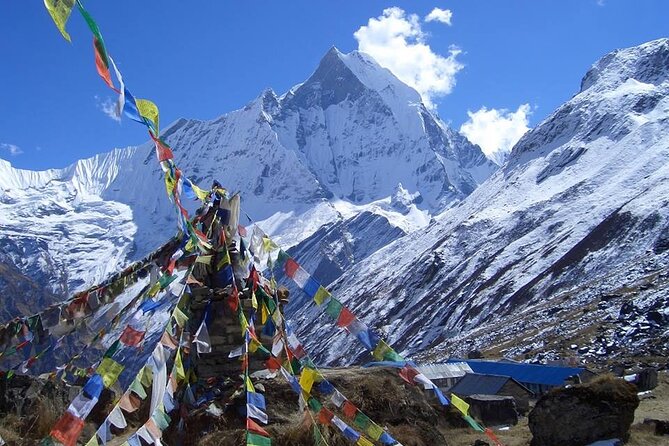
From Sinuwa, the trail climbs toward Deurali through dense rhododendron forest. The path follows the Modi Khola, and the river valley adds a steady natural sound to the walk.
The route also passes through Bamboo. This section feels more enclosed than the open views around Poon Hill, but that is part of the appeal. You are moving from settled lower valleys into a more remote mountain corridor.
The day is again listed at about 12 hours. That is a major consideration when comparing this tour with slower ABC schedules. A longer day can reduce the number of nights needed, but it leaves less room for lingering, weather delays, or an unplanned rest.
The benefit of a private trip is that your guide can keep an eye on how you are handling the pace. Bishal, Raju, and other guides connected with the operator have been praised for planning, answering questions, and keeping people supported during difficult conditions. Still, you should speak up early if you feel unwell. A private guide can adjust the day only if you explain what is happening.
Day 7: Machhapuchare Base Camp and Annapurna Base Camp
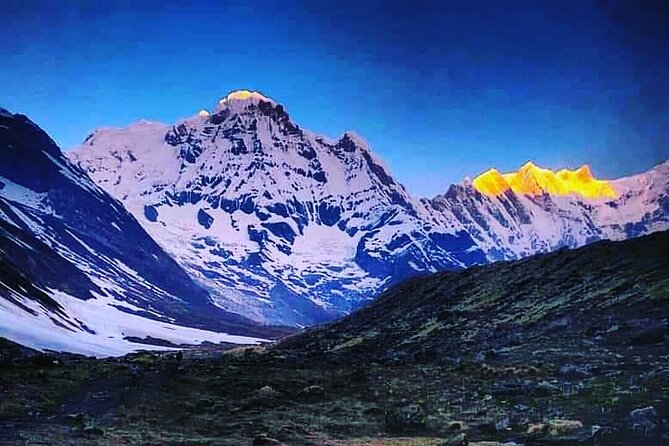
This is the main target. The trail reaches the upper Annapurna region, where the mountains become the immediate focus. The route includes views toward Machhapuchare, Annapurna III, Gangapurna, and Annapurna I.
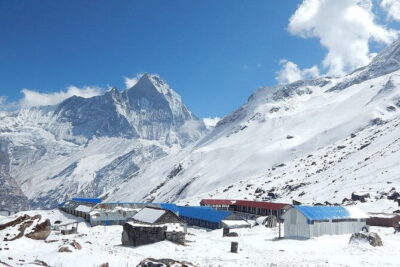
Annapurna Base Camp sits at 4,130 meters. The setting is different from Poon Hill. Poon Hill gives you distance and breadth, while ABC places you inside a high mountain amphitheater, with steep peaks rising around the valley.
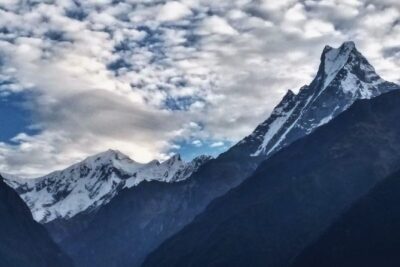
The plan also includes Machhapuchare Base Camp before continuing to ABC. The name is often translated as Fishtail, referring to the mountain’s distinctive double summit. Even if clouds block some peaks, the shape of the valley and the scale of the surrounding walls make this a serious mountain experience.
This is another long day, listed at up to 12 hours, with six hours specifically assigned to the ABC portion. Altitude can make a familiar walking speed feel much harder. The tour description says the trek suits people with moderate fitness, but you should still prepare for cold, thin air, and a physically demanding ascent.
At the base camp, your guide can add value beyond navigation. Guides such as Raju and Bishal have been associated with careful planning and clear answers about the route. You are not simply being led from one lodge to the next. You have someone who can explain the peaks, the valley, and the practical choices involved in getting through the day.
Day 8: Sunrise at ABC and the return to Sinuwa
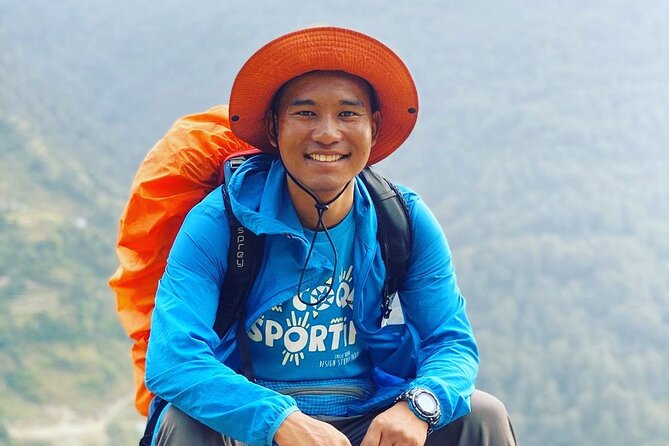
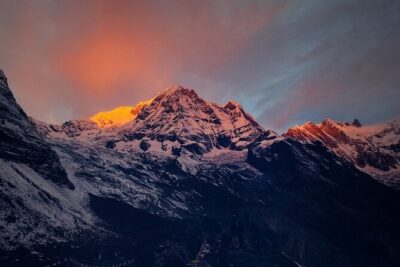
The morning begins with a walk around the base camp area for sunrise over Annapurna. This is a smart use of your time at ABC, since early light can change the appearance of the peaks and the valley.
After breakfast at the tea house, you retrace the route toward Sinuwa. The return is not an easy rest day. It is listed at about 12 hours, and descending can be hard on knees and ankles after several days of climbing.
The repeated route has one advantage: you recognize the terrain and can see sections from a different direction. It also means the day is less varied than the approach. If you prefer a leisurely mountain schedule, this is the biggest reason to consider a longer version of the trek.
Day 9: Chhomrong and Jhinu Danda hot spring
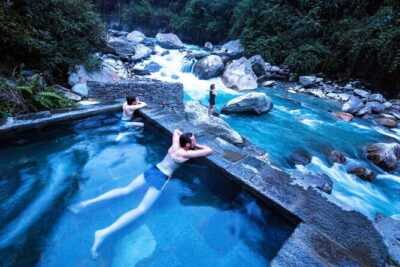
You follow the route toward Chhomrong, then descend steeply to Jhinu Danda. The descent is the key feature here. After the high-altitude section, the trail drops into warmer country and ends near a natural hot spring.
The hot spring is a welcome change from the cold upper valley. You can bathe in the natural pool, making this one of the trip’s most memorable recovery stops. Breakfast, lunch, and dinner are included for this day.
Jhinu also gives the return journey a distinct ending rather than simply sending you back over the same ground to the road. You still have a long day, listed at about 12 hours, so the hot spring may feel less like a leisurely spa and more like a well-earned soak.
Day 10: Siwai, Pokhara, and lakeside time
After breakfast, you walk a short distance and take a vehicle toward Pokhara. Siwai is used as a road access point for the ABC route, so this is where the trek connects with road transport.
Back in Pokhara, the schedule leaves room for sightseeing around Devi’s Fall, the Peace Stupa, and Phewa Lake. You can also go boating and spend time around the Lakeside area in the evening.
This is a welcome change after the trail. I like that the plan includes Pokhara rather than sending you straight back to Kathmandu. The city gives you space to wash up, eat in a wider range of places, and enjoy a slower evening before the final flight.
The schedule again lists about 12 hours, so the amount of free time will depend on the road transfer and your arrival. Treat the Pokhara sights as planned possibilities, not guaranteed long visits.
Day 11: Flight to Kathmandu and Thamel
The final morning includes a drive to Pokhara airport and a domestic flight back to Kathmandu. The description refers to a short flight of about 25 minutes, followed by time in the Ason market and Thamel.
That final city time is useful for shopping and last-minute gifts. It also gives you a chance to return to the same Kathmandu area where the trip began. The plan allows about three hours before the next travel commitment, but you should confirm your exact departure arrangements with the operator.
Meals, guides, and what the price covers
The package includes breakfast on all 11 days, lunch on all 11 days, and dinner on 10 days. That removes much of the daily food planning, which is useful when walking for long hours.
Airport pickup, private transport, domestic flights, and the private tour format add real value. You are not joining a large group, and only your party participates. That can make a difference when the pace becomes difficult or someone needs extra guidance.
Past departures have involved guides including Raju, Bishal, and Ramji, with porters such as Sandesh and Ishor. The strongest pattern in the feedback is attentive support: good planning, answers to questions, encouragement for beginners, and care during cold or harsh weather. Those are exactly the qualities I would want on an 11-day high-altitude trip.
The package does not list a trekking stick as included. You can buy one in Thamel for about $3 to $20. Ask before departure about lodging, permits, insurance, porter arrangements, and any costs not shown in the meal and transport details.
Who should book this private ABC trek?
I would recommend it to you if you want the major Annapurna sights in a fixed 11-day plan and prefer private guiding over a large group. It suits first-time trekkers who are reasonably fit and want steady support, as well as experienced walkers who value a direct route.
I would hesitate if you want short walking days, a slow acclimatization schedule, or lots of unplanned time in villages. The 10 to 12-hour days are the central drawback, not a small footnote.
The tour has a five out of five rating from 52 reviews, with 100 percent recommended, and the praise centers on guide care, preparation, and encouragement. That is useful evidence about the human side of the trip, but it does not remove the physical challenge. You still need to arrive ready for long climbs, steep descents, and 4,130-meter altitude.
Should you book it?
Book this tour if ABC is your main goal, you want Poon Hill included, and you value a private guide who can help manage a tight schedule. The combination of mountain views, Gurung villages, forest trails, hot springs, meals, and domestic flights gives you a lot for $1,300.
Before booking, ask for the exact day-by-day walking hours, accommodation details, porter coverage, permits, and altitude safety plan. If the operator confirms those points clearly, this is a strong choice for a fit trekker who wants a well-supported Annapurna experience without building every transfer and meal plan alone.
FAQ
Where does the tour start?
The meeting point is in Thamel, Kathmandu, Nepal.
Where does the activity end?
The activity ends back at the meeting point in Thamel, Kathmandu.
How long does the tour last?
The tour lasts approximately 11 days.
How high is Annapurna Base Camp?
Annapurna Base Camp is at an altitude of 4,130 meters.
Is airport pickup included?
Yes. The team meets you at Tribhuwan International Airport and transfers you to the hotel by private vehicle.
Are flights between Kathmandu and Pokhara included?
The itinerary includes a domestic flight from Kathmandu to Pokhara and a return flight from Pokhara to Kathmandu.
Are meals included?
Yes. Breakfast is included for 11 days, lunch for 11 days, and dinner for 10 days.
Is this a private tour?
Yes. Only your group participates in the activity.
What fitness level is required?
A moderate physical fitness level is required. Several trekking days are listed at 10 to 12 hours, including the approach to Annapurna Base Camp.
Can I cancel for a full refund?
You can cancel at least 24 hours before the experience start time for a full refund. If poor weather causes cancellation, you are offered another date or a full refund.
Just added around Kathmandu
- Everest Base Camp Trek★ 5.0 · 3 reviews
- Everest Base Camp Trek★ 5.0 · 7 reviews
- 15 Days Private Everest Base Camp Trek★ 5.0 · 30 reviews
- Everest Base Camp Trek★ 5.0 · 57 reviews
- 14 Days of Adventure Trekking to Everest Base Camp★ 5.0 · 2 reviews
- 14-Day Everest Base Camp Trek★ 5.0 · 20 reviews
- From Kathmandu: Private 14-Day Everest Base Camp Trek★ 5.0 · 20 reviews
- 14 Days Everest Base Camp Trek★ 5.0 · 4 reviews
Annapurna Base Camp Treks, compared.
Trekking in Annapurna/Langtang/Everest/Upper Mustang regions
Read our review →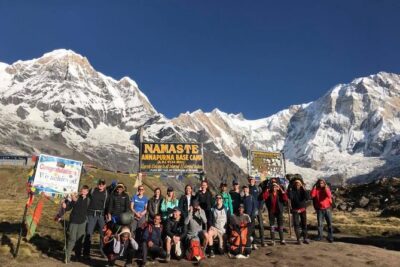
Kathmandu to Annapurna Base Camp (ABC) 5-Day Trek
Read our review →Browse the lists this trek appears in