
Review · NEPAL
Mount Everest Panorama View Trek: Closest MT. Everest Hiking
The Everest Panorama View Trek gives you a close look at the world’s highest mountain without committing to the long Everest Base Camp route. In six days, you walk from Lukla through Phakding, Namche Bazaar, and Tyangboche, with the best mountain views arriving around Namche and the Everest View Hotel.
I like the short, moderate schedule and the chance to meet Sherpa communities in villages such as Khumjung and Kunde. I also like that the package includes meals, permits, a guide, trekking gear, a duffle bag, and private airport transfers. The main catch is important: the $430 price excludes flights between Kathmandu and Lukla, as well as porter service.
Key points at a glance
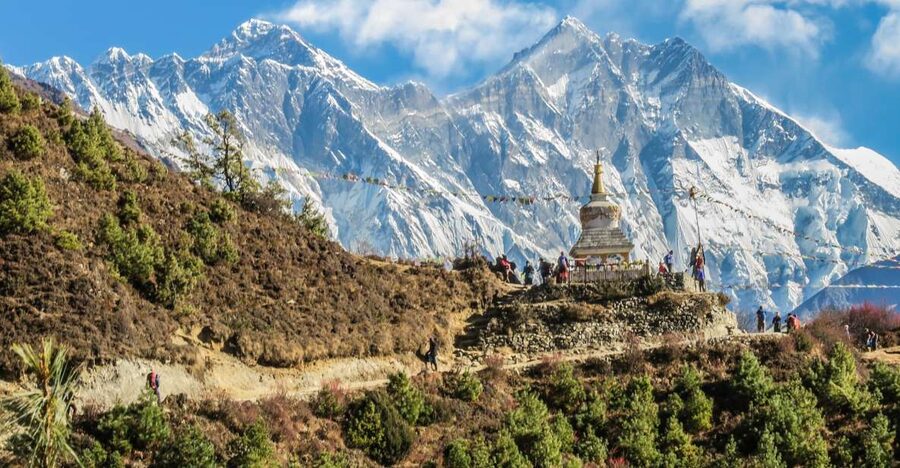
- Everest views without the full Base Camp commitment: The route reaches Tyangboche at 3,870 meters, not Everest Base Camp itself.
- A practical choice for beginners: Expect roughly four to five hours of walking each day on a moderate route.
- Sherpa culture is part of the trek: Namche Bazaar, Khumjung, Kunde, and Tengboche add local life and spiritual depth.
- The package includes useful essentials: Meals, permits, an English-speaking guide, private transfers, a sleeping bag, a down jacket, and a duffle bag are included.
- The budget needs one important adjustment: Kathmandu to Lukla flights and porters are extra.
- Optional helicopter trips add flexibility: Some arrangements can include a helicopter flight toward Everest Base Camp or a return to Kathmandu, but this is not part of the standard $430 package.
Why this short Everest trek works
Many people want to see Everest but do not want two weeks of high-altitude walking, basic logistics, and a long return route. This trek trims the journey to six days while keeping the main visual rewards: high peaks, Sherpa villages, mountain lodges, and Tengboche Monastery.
The route is often called the Everest View Trek or Everest Experience Trek. Those names are useful because they set the right expectation. This is an Everest viewing trek, not the full walk to Everest Base Camp. You will see Everest from viewpoints around Namche, Khumjung, and the Everest View Hotel, then continue to Tyangboche for the highest point of the standard route.
That distinction matters. The advertised highlights also refer to Everest Base Camp and the Khumbu Icefall, but the six-day walking plan does not go there. Those sights belong to an optional helicopter arrangement or to a much longer trek. I would confirm exactly which version you are booking before paying.
The route is a good match for families with older children, first-time trekkers, and people with limited vacation time. Children under nine and people over 95 are not accepted for this activity. You should also be comfortable walking four to five hours per day, often on uneven mountain paths.
More Everest Base Camp Treks in Nepal:
- Everest Base Camp Trek – 14 Days
★ 5.0 · 1,499 reviews - Everest Base Camp Trek
★ 5.0 · 842 reviews - Everest Base Camp Helicopter Tour landing at Everest View Hotel
★ 5.0 · 668 reviews
Day 1: Lukla to Phakding begins the mountain journey
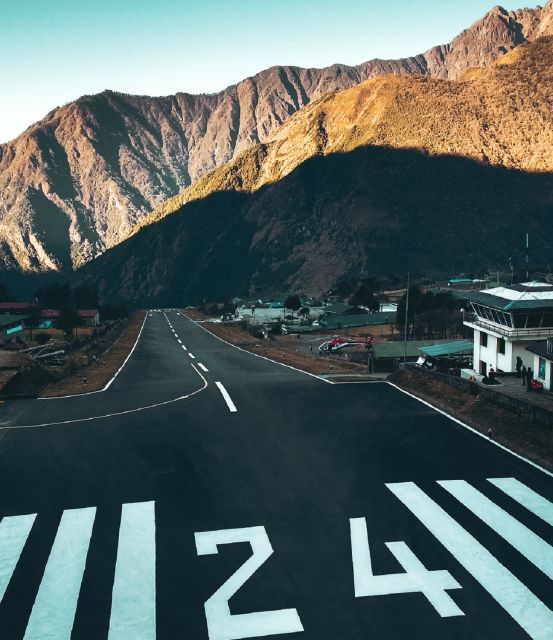
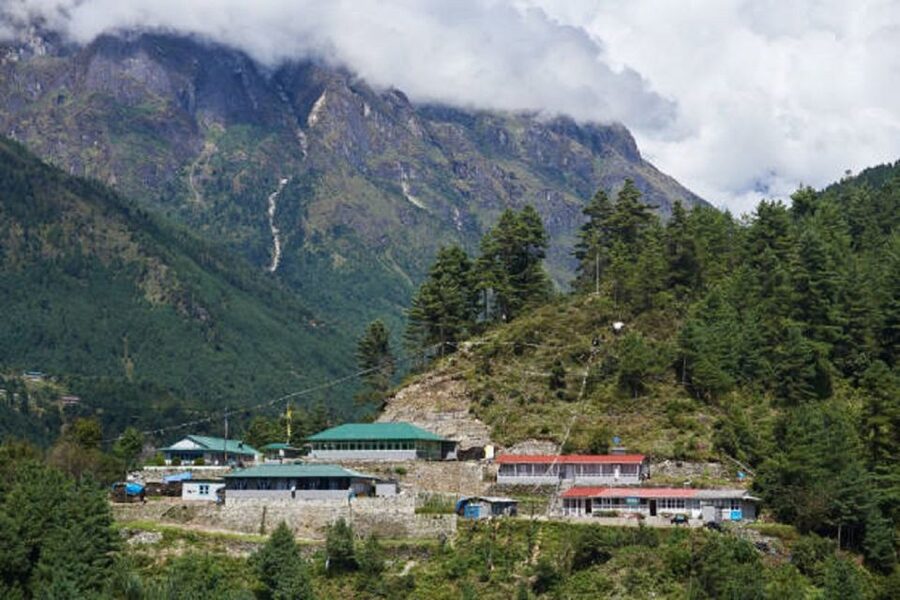
Your day starts with pickup from a hotel within six kilometers of Thamel in Kathmandu. A private vehicle takes you to the domestic airport for the flight to Lukla. The flight is not included in the $430 price, so treat it as a separate part of your budget.
Lukla is the trailhead for this section of the Khumbu region. From there, the walking route leads to Phakding. The first day is short compared with the following stages, which makes it a sensible introduction to the rhythm of mountain trekking.
Phakding is a stopping point rather than the main prize of the trek. Its value is practical. You get your first night in a mountain lodge, begin eating the meals provided by the tour, and settle into walking at a higher elevation than Kathmandu. Breakfast, lunch, dinner, and tea or coffee are included during the trek.
The package includes a licensed guide for groups of up to six people. That small group limit can make a difference on a narrow trail, especially when the pace varies. If your group has more than five people, one assistant guide is included.
Day 2: The trail rises toward Namche Bazaar
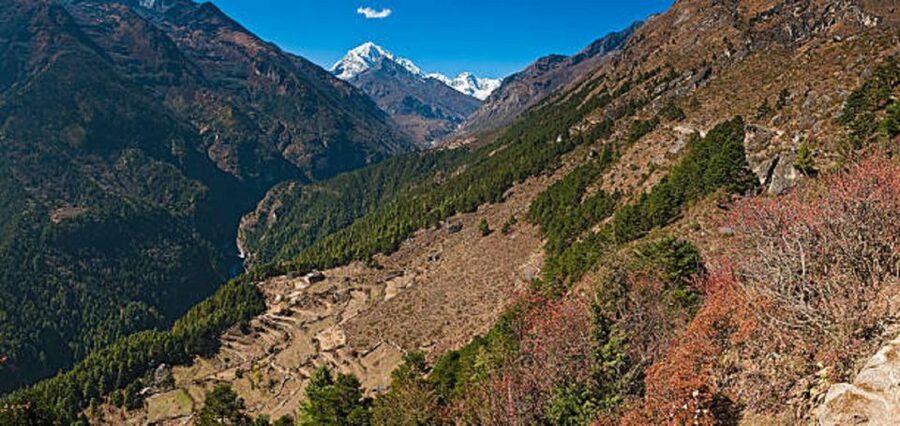
The walk to Namche Bazaar is the route’s first major test. It is also the day when the journey begins to feel like a real Himalayan trek rather than a scenic walk near Lukla.
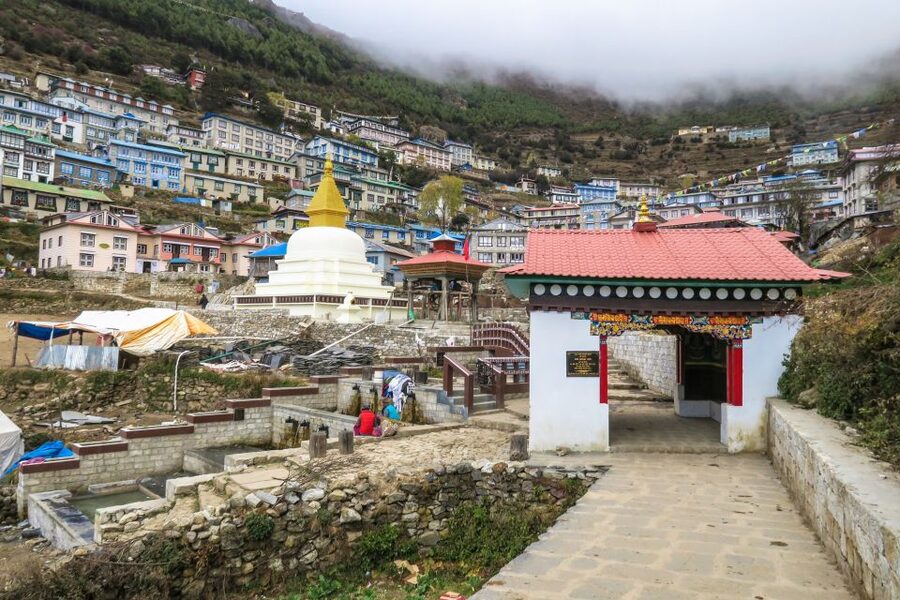
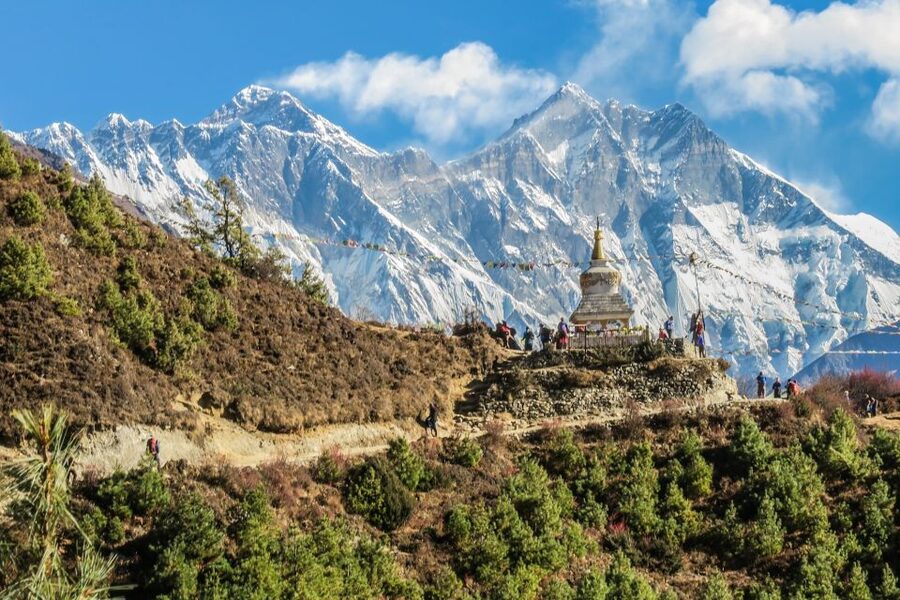
Namche is the best-known trading town in the Khumbu region and one of the most useful stops on the route. You will find lodges, tea houses, and places to rest, but the town’s real appeal is its location on a steep mountainside. The Namche ridge provides views toward Everest, Lhotse, Nuptse, Ama Dablam, and Thamserku.
I like Namche because it combines mountain scenery with everyday Sherpa life. You are not simply looking at peaks from a distant road. You are walking through a community that serves as a main gateway to the higher Khumbu.
The walking day lasts around four to five hours, though your exact pace will affect the timing. The trail is described as moderate, but moderate does not mean effortless. You need good walking shoes, water, and patience on uphill sections. A porter is not included, so pack light or arrange porter service separately.
Day 3: Tyangboche brings the best spiritual setting
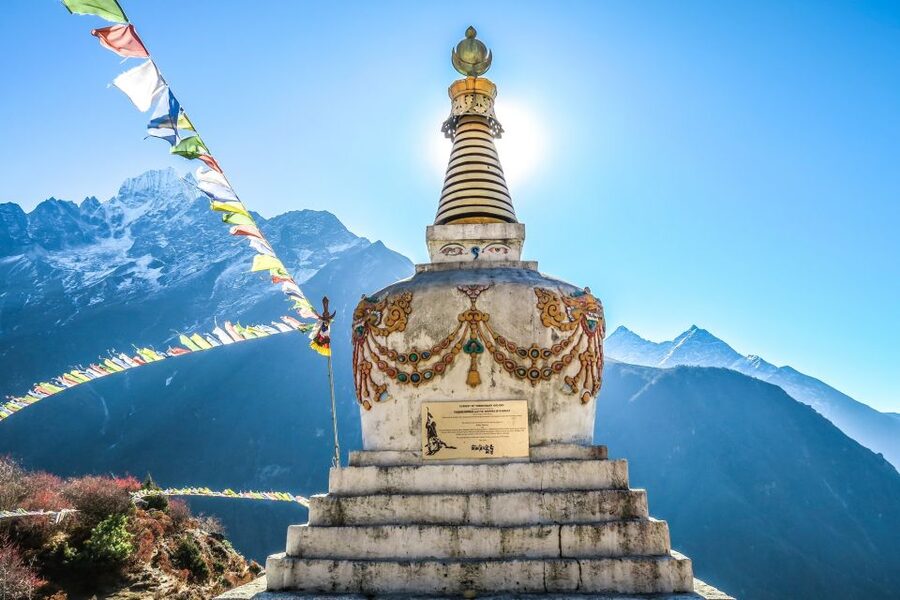
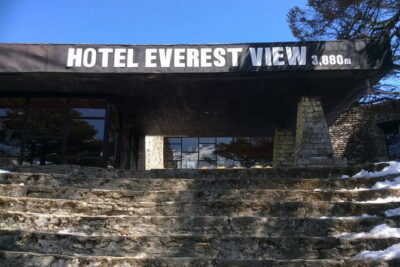
The route then continues to Tyangboche, also written as Tengboche. At about 3,870 meters, this is the highest point in the standard six-day itinerary. The Everest View Hotel is nearby at roughly 3,880 meters and may be visited depending on the precise plan.
Tengboche Monastery is the cultural centerpiece of the trek. Its setting, with major Himalayan peaks behind it, gives the stop a strong spiritual and visual quality. You get time to see an important Buddhist site while also enjoying some of the clearest mountain views on the route.
The advertised program presents Tyangboche as accessible without a separate acclimatization day. That keeps the trek short, but you should not treat altitude casually. The highest overnight or walking point is still close to 4,000 meters, and your guide should know if you feel unwell. A short itinerary leaves less room to adjust the schedule if your body needs extra time.
The views here are the main reason to choose this trek instead of stopping at Namche. Everest is part of a much larger group of peaks, and Ama Dablam is especially prominent in the listed mountain views. Lhotse, Nuptse, and Thamserku add scale and make the walk feel bigger than the price and duration might suggest.
A few more treks around Nepal worth a look
- Everest Base Camp Trekking
★ 5.0 · 485 reviews - Annapurna Circuit Trek with Tilicho Lake
★ 5.0 · 368 reviews - Everest Base Camp Trekking – 13 Day
★ 5.0 · 365 reviews - Everest Base Camp Trek
★ 5.0 · 350 reviews
Days 4 and 5: Returning through Namche to Lukla
Day 4 retraces the route to Namche Bazaar, and Day 5 continues to Lukla. Walking back is not simply a repeat. Downhill sections use different muscles, and uneven paths can be tiring after several days on foot.
Namche gives you another chance to enjoy the town before leaving the higher part of the route. If weather or cloud limited your views earlier, this is also a useful opportunity for photographs. Sunrise and sunset are specifically promoted as good times for mountain views, so have your camera ready and keep your expectations flexible. Himalayan weather can change the scene quickly.
The return to Lukla is practical rather than luxurious. This is where a private transfer is useful at the beginning and end, but it does not remove the need for a full walking day. The package provides accommodation, meals, guide services, and insurance for the guide. You should confirm the exact lodging standard before departure, since tea houses and lodges can vary.
Day 6: Flying back to Kathmandu
The final day is the return flight from Lukla to Kathmandu. The itinerary lists this flight but does not include it in the $430 price. That is the largest budgeting point in the entire trip.
Flight schedules in mountain regions can affect the day, so leave some flexibility in your wider Nepal plans. The tour includes airport pickup and drop-off within the stated Thamel service area, with the pickup time confirmed according to your hotel and flight schedule.
The return marks the end of the standard walking itinerary. If you are considering the optional helicopter arrangement, ask for a separate price and a clear route description. The supplied information refers to helicopter flights for a closer view of Everest Base Camp, or a flight involving Kathmandu and the Khumbu region, but it does not give a fixed cost or guarantee that option within the standard package.
What the $430 package actually covers
At first glance, $430 for six days in the Everest region looks reasonable. The value improves because the package covers several costs that can quickly add up:
- Private ground transportation, including airport pickup and drop-off
- Meals during the trek, including breakfast, lunch, dinner, and tea or coffee
- Everest National Park entry and local rural municipality permits
- TIMS, or Trekkers Information Management System, card
- An English-speaking licensed trekking guide
- Guide salary, accommodation, meals, and insurance
- A sleeping bag and down jacket if needed
- Duffle bag for the trek
- T-shirt and completion certificate
- First-aid supplies
- Cultural show and farewell dinner
- Government taxes and official expenses
For a small group, these inclusions reduce the need to arrange separate permits, meals, equipment, and transport. The guide limit is six trekkers, and a second guide is added when the group has more than five people.
The exclusions deserve equal attention. Kathmandu to Lukla flights are not included. Porter service is also extra, and the package does not cover dessert, Wi-Fi, or bar bills. The lack of a porter is not a flaw, but it changes how you pack. A sleeping bag and down jacket are available to borrow, yet you still carry your own main bag unless you hire help.
Food, lodging, and the pace of the walk
Meals are included, which makes daily budgeting easier. The plan promises local Nepali and Sherpa food in tea houses and lodges, along with tea or coffee. You should think of this as hearty trekking food rather than a restaurant-focused trip.
Accommodation is described as a mix of tea houses and lodges, with diverse options available. The exact hotel names and room standards are not supplied, so ask before booking if private rooms, bathrooms, or a particular comfort level matter to you. The word comfortable can mean different things in the Khumbu.
The walking schedule is the right length for someone who wants regular exercise without a long expedition. Still, four to five hours per day can feel demanding at altitude. Break in good walking shoes before arrival, bring a passport or ID card, and pack layers for changing conditions. The provided information lists only a passport or ID card as a required item, but sensible trekking clothing remains important.
Guide support and the personal side of the trip
The strongest praise in the available feedback focused on coordination and flexibility. One person who was not physically fit expected the trek to be difficult but completed the bucket-list goal of seeing Everest with support from the company team. That tells me the service is especially valuable for people who are nervous about their fitness or unfamiliar with Himalayan trekking.
Do not read that as a promise that the walk is easy. It means the company can help organize the moving parts from pickup through the trek and return. The English-speaking guide is there throughout the walking program, and the package includes guide insurance and expenses.
No individual guide names are provided, so I would not expect to select a named guide in advance. Ask who will lead your group, how large the group will be, and how the company handles a slow pace or altitude trouble. Those questions matter more than a polished itinerary.
Who should book this trek?
I would recommend it to you if you want:
- A first taste of the Everest region
- Strong mountain views in four to six days
- A moderate route rather than a full Base Camp trek
- Sherpa villages and Buddhist culture alongside scenery
- Meals, permits, guide support, and equipment bundled into one price
- An option to add a helicopter flight if your budget permits
I would look elsewhere if your main goal is to stand at Everest Base Camp on foot. This six-day route does not provide that. The same applies if you dislike walking four to five hours daily, want a fully luxury hotel program, or need a porter included in the advertised price.
The trek is also not ideal for anyone who assumes low altitude means no preparation. Tyangboche is high, and the schedule has limited spare time. A little fitness work before Nepal will make the route more enjoyable.
Should you book the Everest Panorama View Trek?
Book it if your priority is seeing Everest and experiencing the Khumbu region in a compact format. The combination of Namche Bazaar, Sherpa villages, Tengboche Monastery, and mountain viewpoints gives you more than a quick photo stop.
The $430 cost offers fair value because meals, permits, guide services, private ground transfers, basic gear, and cultural activities are included. Just add the Lukla flights, consider the cost of a porter, and confirm what the optional helicopter plan includes.
This is best understood as a carefully supported Everest viewpoint trek, not a Base Camp expedition. If that matches your goal, it is a sensible way to get close to Everest without giving up your entire Nepal trip.
FAQ
Does the six-day trek reach Everest Base Camp?
No. The standard walking route goes from Lukla to Phakding, Namche Bazaar, Tyangboche, then returns through Namche to Lukla. A helicopter option may offer a closer view of Everest Base Camp, but it is separate from the standard walking itinerary.
Are flights from Kathmandu to Lukla included?
No. The Kathmandu to Lukla and Lukla to Kathmandu flights are excluded from the $430 price.
How many hours do I walk each day?
You should expect to walk about four to five hours each day.
Is a porter included?
No. Porter service is not included, so you must carry your own main luggage unless you arrange a porter separately.
What does the $430 price include?
It includes private ground transportation, trekking meals, permits, a licensed English-speaking guide, guide expenses and insurance, a sleeping bag and down jacket if needed, a duffle bag, first-aid supplies, a cultural show, a farewell dinner, taxes, and official expenses.
Can I cancel or pay later?
Yes. You can cancel up to 24 hours in advance for a full refund, and you can reserve now and pay later.
Just added around Nepal
- Everest Base Camp Trek With Local Expert Sherpa Guide★ 5.0 · 15 reviews
- Everest Base Camp Trek with Helicopter Return – 10 Days★ 5.0 · 9 reviews
- Everest Base Camp Trek Via Salleri★ 5.0 · 9 reviews
- Everest Base Camp Trek★ 5.0 · 33 reviews
- Everest Base Camp Trek Via Gokyo Lake and Cho La Pass★ 5.0 · 8 reviews
- Everest Base Camp Trek – 16 Days★ 5.0 · 16 reviews
- Everest Base Camp Trek -17 Days★ 5.0 · 9 reviews
- 14 days Everest Base Camp Trek★ 5.0 · 18 reviews
Everest Base Camp Treks, compared.
Everest Base Camp Helicopter Tour landing at Everest View Hotel
Read our review →
Tibet Tour 8 Days Lhasa to Everest Base Camp Small Group Tour
Read our review →
Dubai: Private Luxury Everest Yacht Cruise from Dubai Marina
Read our review →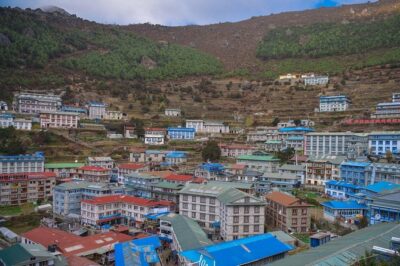
Browse the lists this trek appears in