
Review · KATHMANDU
Everest Gokyo Lake Trek
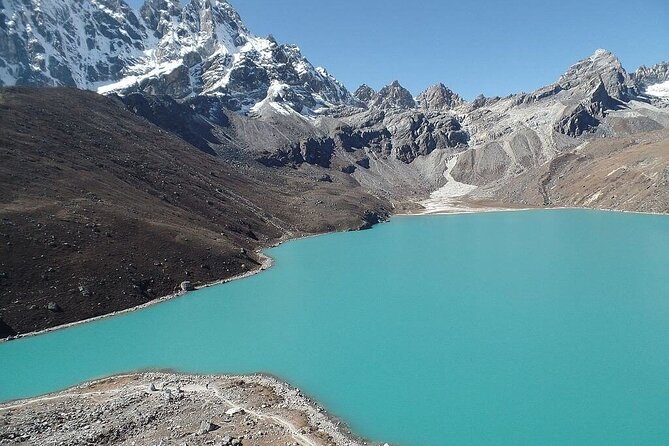
The finest part of this trek is not simply reaching the Gokyo Lakes. It is the payoff from Gokyo Ri, where Everest, Cho Oyu, Lhotse, Makalu, and the huge Ngozumpa Glacier come together in one sweeping Himalayan view. The turquoise lakes add a flash of color to an otherwise stark world of rock, ice, and snow.
I like the route because it is shorter than the classic Everest Base Camp trek, yet it gives you a strong mix of mountain views, Sherpa villages, forests, glaciers, and high-altitude walking. I also like the practical setup: Lukla flights, a guide, porter support, permits, sleeping bag, down jacket, and Kathmandu transfers are included. The main caution is altitude. Reaching Gokyo at roughly 4,700 meters and climbing Gokyo Ri requires steady pacing and sensible acclimatization.
Key points to know before booking
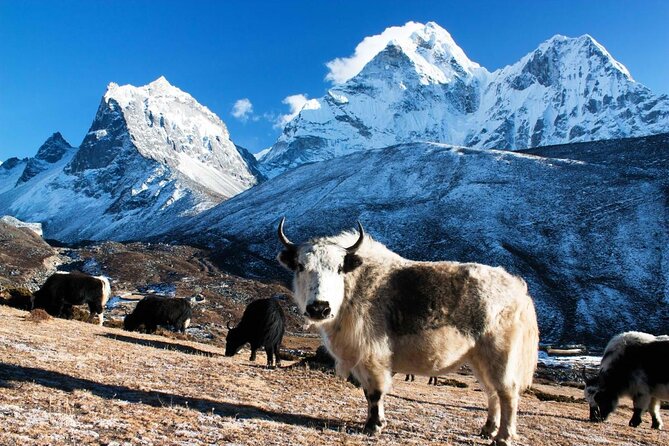
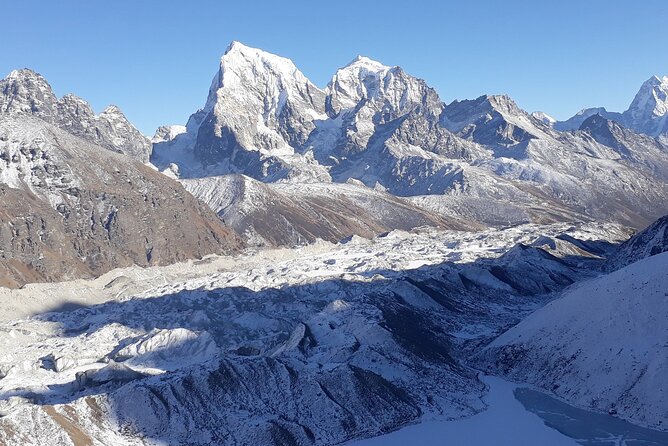
- Gokyo Ri is the visual high point: The climb takes about two hours and opens views toward Everest, Cho Oyu, Lhotse, Makalu, Cholatse, Tawache, and Ngozumpa Glacier.
- You explore several glacial lakes: The route includes the third lake, Dudh Pokhari, plus Thonak Tsho, Ngozumpa Tsho, and smaller lakes in the valley.
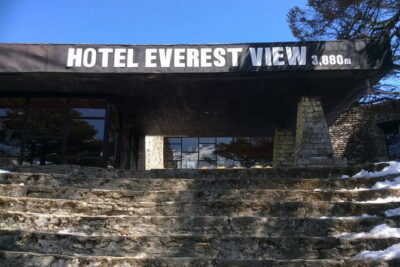
- Two nights in Namche help with acclimatization: You hike to the Everest View Hotel and visit the Sherpa Culture Museum before going higher.
- The price covers major trek costs: At $1,290 per person, the package includes domestic flights, lodging, permits, guide services, porter support, gear, and airport transfers.
- Food is not fully included: You pay separately for breakfast, lunch, and dinner during the trek, along with tea and coffee.
- The group can reach 20 people: That keeps the price competitive, though private trekking may suit you better if you want a quieter pace.
Why the Gokyo route earns a place beside Everest Base Camp
The Gokyo Valley gives you one of the best panoramic views in the Everest region without taking you all the way to Everest Base Camp. The route is about 92 kilometers according to the supplied trip details, compared with about 103 kilometers for the Everest Base Camp route.
That shorter distance does not make it easy. You still climb steadily from Lukla to the high valley, and the thin air becomes a serious factor after Namche. But the reward is varied. You walk beside the Dudh Koshi River, pass pine and rhododendron forests, cross suspension bridges, enter yak-grazing pastures, skirt the Ngozumpa Glacier, and reach a chain of bright glacial lakes.
I especially like the fact that Everest is not the only star here. From Gokyo Ri, the view includes several major Himalayan peaks. Cho Oyu, at 8,201 meters, rises toward the north, while Everest, Lhotse, Makalu, and other peaks fill the wider range. If you want a mountain trip with more than one famous summit in the frame, this route makes good sense.
The package costs $1,290 per person. That is useful value if you need a complete arrangement, since the fee includes airport transfers, two nights in a three-star Kathmandu hotel with breakfast, domestic flights, trekking permits, a guide, porter service, teahouse lodging, a down jacket, sleeping bag, duffle bag, map, and staff insurance.
The value is less straightforward once you notice that daily trekking meals are not included. You must budget separately for breakfast, lunch, dinner, tea, and coffee during the mountain portion. Tips, phone use, internet, fuel surcharges, GST, and some transport charges are also outside the listed price. Ask for the current total before paying so there are no surprises.
More Everest Base Camp Treks in Kathmandu:
- Everest Base Camp Trek – 14 Days
★ 5.0 · 1,499 reviews - Everest Base Camp Trek
★ 5.0 · 842 reviews - Everest Base Camp Helicopter Tour landing at Everest View Hotel
★ 5.0 · 668 reviews
Day 1: A simple Kathmandu arrival
Your airport representative meets you at Tribhuvan International Airport with an Accessible Adventure sign and transfers you to your hotel in a private vehicle. The listed transfer time is about three hours, though the actual ride may depend on traffic and your arrival schedule.
This first day is mainly about getting settled. You receive the benefit of organized airport pickup, which is helpful after a long flight and removes the need to negotiate transport on arrival. The package provides two nights at a three-star hotel in Kathmandu with breakfast.
Do not treat this as a sightseeing day. The itinerary leaves little room for major city visits before the mountain flight, so use the time to rest, check your equipment, and confirm the next morning’s departure arrangements.
Day 2: The Lukla flight and the walk to Phakding
The morning flight from Kathmandu to Lukla is part of the adventure. Lukla’s airfield sits at high elevation, and the two ends of the runway differ by about 60 meters. The description presents the flight as a memorable part of the journey, and it certainly sets the tone for what follows.
From Lukla, you walk for about four hours to Phakding. The trail passes through green country with views of Kusum Kangraru. This is a gentler introduction than the higher sections, but do not race it. Your body has just arrived at altitude, and an easy pace gives you a better start.
You sleep in a lodge, with a private bathroom specifically included in Phakding. During the trek, lodging is in the best available twin-sharing teahouse accommodation. That means comfort and facilities can vary, so pack with simple mountain lodging in mind.
Day 3: The climb to Namche Bazaar
The route follows the Dudh Koshi through pine and cedar forest before climbing toward Namche Bazaar. The walking time is listed at about five hours, but the uphill sections and altitude make this feel more demanding than the distance suggests.
Namche is more than a stop for the night. It is a historic trading center where Nepali and Tibetan traders have exchanged goods such as salt, dried meat, and textiles. Today, it is also the main service center for the Khumbu trekking area, with shops, lodges, and a market where you can look for traditional crafts and trekking supplies.
The first glimpses of Everest and neighboring peaks begin around this section. You also get two nights in Namche, which is one of the most important features of the route. Good acclimatization is not wasted time. It gives you a better chance of enjoying Gokyo rather than struggling through it.
A few more treks around Kathmandu worth a look
- Everest Base Camp Trekking
★ 5.0 · 485 reviews - Annapurna Circuit Trek with Tilicho Lake
★ 5.0 · 368 reviews - Everest Base Camp Trekking – 13 Day
★ 5.0 · 365 reviews - Everest Base Camp Trek
★ 5.0 · 350 reviews
Day 4: Acclimatization at the Everest View Hotel
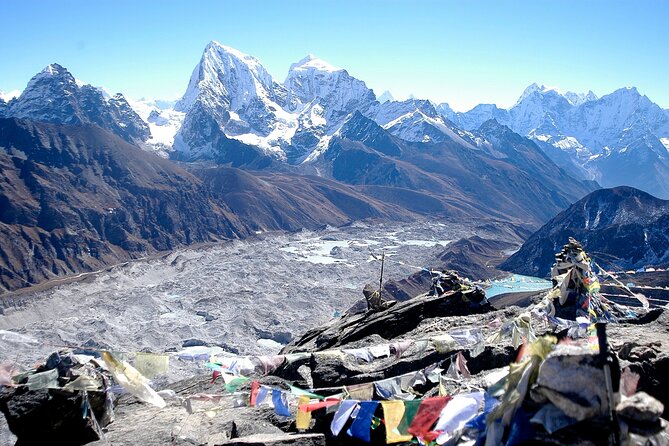
This is a short but valuable day. You hike to Syangboche Airport at about 3,700 meters, described as one of the highest airports in the world, then continue to the Everest View Hotel.
The goal is not to cover distance. You climb higher during the day and return to sleep at a lower elevation, giving your body useful time to adjust. From the hotel, you can see Everest, Lhotse, Ama Dablam, and Tawache when conditions are clear.
The day also includes the Sherpa Culture Museum and Everest Photo Gallery. These stops add context to the scenery. You are not only walking through a spectacular mountain region, you are learning about the people and climbing culture connected to it.
The itinerary lists admission as included here. You should still expect a moderate uphill walk, and you may feel the altitude even on this shorter day. Keep your pace slow and drink regularly.
Day 5: Forests, yak pastures, and Dole
The trail starts easily toward Kyangjuma, then climbs more sharply through rhododendron forest. At higher ground, rhododendrons give way to juniper and larger conifers. Spring is especially attractive here, when the rhododendrons bloom.
You pass kharkas, seasonal settlements used when Sherpa families bring yaks to graze in high pastures. The route also passes Tongba at about 3,950 meters and Gyele at about 3,960 meters before reaching Dole, where several hotels provide overnight lodging.
The day takes about five hours and offers views of Khumbila and Tawache. It is a good example of why this trek is more than a search for Everest. The mountain scenery changes as quickly as the vegetation, and the route gives you a look at how high-altitude communities use the valley.
The climb out of the valley is the main physical challenge of the day. You should expect the terrain to feel harder than the time estimate suggests, especially after Namche.
Day 6: Reaching the Gokyo Lakes
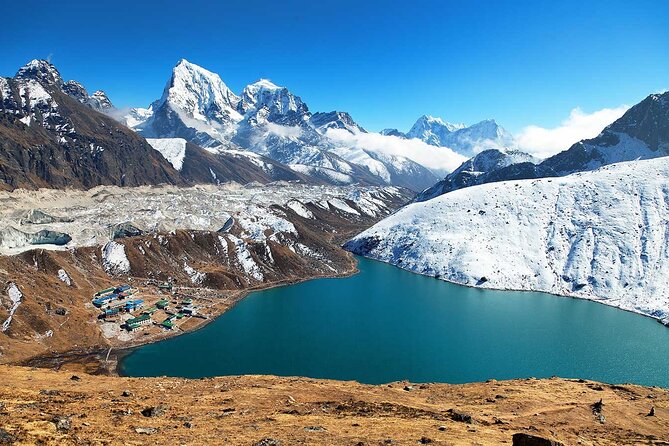
From Dole, you climb a ridge with views down toward Kantega and up toward Cho Oyu. The valley widens as you pass Pangka at about 4,390 meters, then descend toward the river before climbing again onto the terminal moraine of the Ngozumpa Glacier.
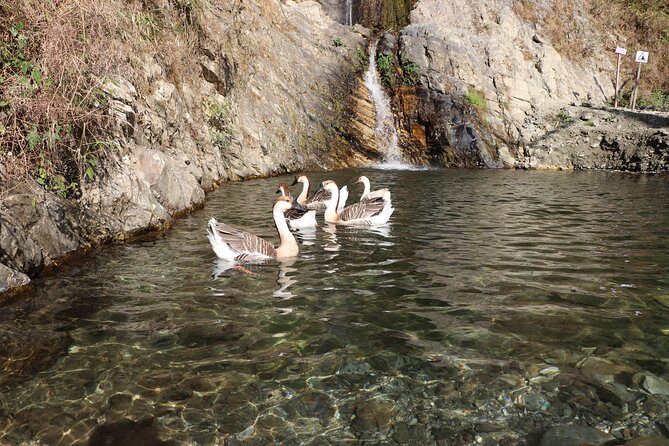
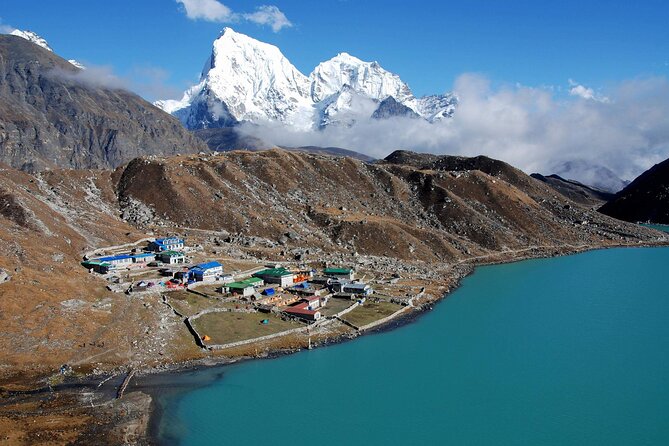
The moraine section is steep and follows switchbacks beside a stream. Eventually, you reach the first small lake at about 4,650 meters, where the itinerary notes a family of green-bronze ducks. The walk is listed at about four hours, but high altitude and rough ground can slow you down.
This is where the route changes character. Trees fall away, the air feels thinner, and the glacier and lakes become the main features around you. The third lake, Dudh Pokhari, is the central attraction near Gokyo. You also have the chance to see the fourth lake, Thonak Tsho, and the fifth lake, Ngozumpa Tsho, depending on the exact walking plan and conditions.
This day may be short on paper, but it should not be treated as an easy stroll. The steep moraine and altitude require patience. Your guide’s pace matters here.
Day 7: The climb to Gokyo Ri
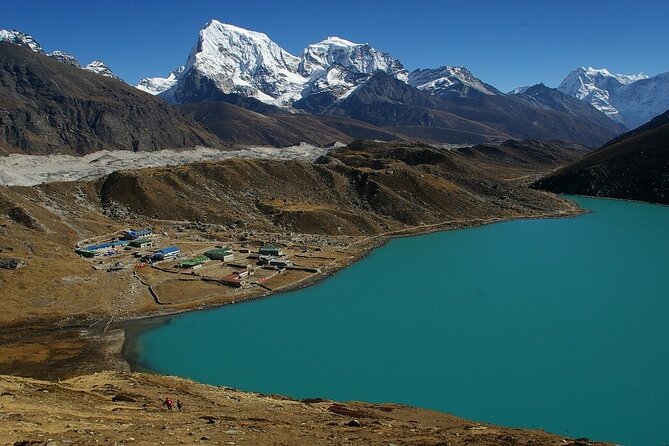
You start early for the climb to Gokyo Ri. The ascent takes about two hours to the top, followed by a total day of roughly six hours. The early start is useful because mountain views can change with weather, and the summit is the main photographic and scenic reward of the trek.
From Gokyo Ri, you can look toward Cho Oyu, Gyachung Kang, Everest, Lhotse, Makalu, Cholatse, and Tawache. Below, the Ngozumpa Glacier spreads through the valley. The view is broad rather than narrow, giving you a strong sense of the scale of the Himalayan range.
The climb is not a technical mountaineering ascent, but it is a serious high-altitude walk. You should expect slow progress and frequent pauses. If you have been feeling unwell, tell your guide rather than forcing the summit. Gokyo Ri is a highlight, but safe descent matters more.
After returning toward Gokyo, you have time to look around the lakes and hear local stories about the Bigfoot Yeti. That part adds a little folklore to an otherwise very physical day.
Day 8: Down through Mongla and back to Namche
The return route follows the valley downhill, with views back toward Cho Oyu. You pass waterfalls and move again among Himalayan plants and rhododendron trees. In spring, the flowering trees add color to the descent.
From Mongla, the route can offer views toward Ama Dablam, Tawache, Thamserku, and Tengboche. You continue toward Sansa, where the trail connects with the main Everest route, then reach Namche Bazaar. The listed walking time is about six hours.
This is a satisfying change after the high, exposed terrain around Gokyo. Descending generally feels easier on the lungs, though it can be hard on knees and legs. Take care on uneven ground, especially if fatigue has built up over the previous days.
Returning to Namche also gives you another chance to buy souvenirs or trekking supplies. The itinerary notes a larger marketplace on Saturdays, with trekking and climbing goods traded among sellers and buyers. If your schedule matches, it may be worth keeping some cash for the market.
Day 9: The long return to Lukla
You retrace the route through the Dudh Koshi valley, crossing suspension bridges and passing through Jorsale. As you lose altitude, the air becomes easier to breathe and the vegetation grows thicker.
The walking time is about seven hours, making this one of the longer days. The scenery changes steadily from high mountain terrain to greener lower country, but do not underestimate the distance. Your legs may be tired, and the repeated descent can be demanding.
The same trail that felt exciting on the way up can seem long on the way down. Your guide and porter are especially useful here, since you can focus on walking without carrying the full load.
Lukla provides another lodge night before the flight. Private bathrooms are specifically included in Lukla, Phakding, and Namche, which is a useful comfort after several days on the trail.
Day 10: Flight back to Kathmandu
The morning flight from Lukla returns you to Kathmandu. Flights are usually scheduled early because the weather is often clearer in the morning, according to the trip details.
Once back in the city, you are transferred to your hotel and invited to a farewell dinner at a cultural restaurant near Thamel. Breakfast and the farewell dinner are included on this day.
The flight is an important practical point. Your return depends on the domestic connection, so avoid booking an international flight for the same day. The itinerary gives you a hotel night in Kathmandu, which provides a buffer before your departure.
Day 11: Airport transfer and departure
Your final morning includes breakfast and a transfer to Tribhuvan International Airport. The representative is scheduled to help you leave for your onward flight about three hours before departure.
The activity ends back at the airport meeting point. You should confirm the exact pickup time with the operator after your international flight is set.
Guides, porters, and group size
The package includes one experienced guide and one porter for every two people. Porter support is a major advantage on a route with long uphill sections and high altitude, although you should still carry a daypack with water, warm layers, medication, and personal items.
The group size can reach 20 people. That is reasonable for the price, but a larger group may move at different speeds. Ask in advance about the expected group size and guide assignment.
Several staff members received specific praise in the supplied feedback, including Shiva, Shobit, Himal, Hari, and Ishwor. Since the exact guide is not named in the trip details, you should not assume one of these people will lead your departure. It is worth asking who your guide will be and how the group pace is managed.
What the $1,290 price really covers
The package includes:
- Round-trip Kathmandu to Lukla flights, including departure taxes
- Airport transfers and other listed private ground transport
- Two Kathmandu hotel nights with breakfast
- Twin-sharing teahouse lodging during the trek
- Guide, porter support, staff accommodation, salary, equipment, and accident insurance
- Sagarmatha National Park permit and TIMS fee
- Down jacket, sleeping bag, trekking map, duffle bag, and first-aid kit
- Trekking achievement certificate and government charges listed by the operator
The biggest missing daily cost is food. Breakfast, lunch, dinner, tea, and coffee during the trek are excluded, so plan for those separately. Tips and gratuities are also not included, as are internet, phone calls, fuel surcharge, GST, and any private transportation not already covered.
You need two passport-size photos for the TIMS permit. You also need a moderate level of fitness. This is not a casual sightseeing tour, even though the walking hours on some days look short.
Who should book this trek?
You should book it if you want the Everest region without committing to the full Everest Base Camp route. It suits you if turquoise glacial lakes, wide mountain views, Sherpa villages, and a high viewpoint appeal more than reaching Everest Base Camp itself.
It also works well if you prefer an organized package. The operator handles permits, flights, airport transfers, lodging, guide services, porter arrangements, and basic cold-weather equipment. That can save a great deal of planning.
You may want another option if you dislike shared teahouse rooms, want private trekking, or need every meal included in the headline price. You should also think carefully about the altitude. A moderate fitness level is required, and the Gokyo Ri climb is not something to rush.
The free cancellation policy allows a full refund if you cancel at least 24 hours before the start time. Changes or cancellations inside that window are not accepted for a refund.
Should you book the Everest Gokyo Lake Trek?
Book this trek if your ideal Himalayan trip includes Gokyo Ri views, several glacial lakes, a shorter route than Everest Base Camp, and organized support from Kathmandu to Lukla and back. The strongest part of the experience is the combination of scenery: Everest is only one piece of a much wider mountain panorama.
Before paying, confirm the exact meal budget, guide name, group size, flight arrangements, and any current surcharges. If those details suit you, the $1,290 package offers a practical way to reach one of Nepal’s most striking high valleys without arranging every permit, lodge, porter, and domestic flight yourself.
FAQ
How long is the Everest Gokyo Lake Trek?
The trip lasts approximately 11 days, including arrival and departure in Kathmandu, the trek between Lukla and Gokyo, and the return flight from Lukla.
Where does the trek start?
The experience starts at Tribhuvan International Airport in Kathmandu. An airport representative meets you and transfers you to the Kathmandu hotel.
What is the highest point on the route?
The itinerary includes a climb to Gokyo Ri. The Gokyo Lakes are reached at roughly 4,650 meters and higher, while the exact elevation of the Gokyo Ri summit is not stated in the supplied details.
Is Gokyo Ri included?
Yes. Day 7 includes an early climb to Gokyo Ri, which takes about two hours to reach and provides views of Everest, Cho Oyu, Lhotse, Makalu, Cholatse, Tawache, and Ngozumpa Glacier.
Are meals included during the trek?
Three daily meals, along with tea and coffee, are not included during the trekking portion. Two breakfasts in Kathmandu are listed as included, and breakfast plus the farewell dinner are included on Day 10.
Are domestic flights included?
Yes. Round-trip flights between Kathmandu and Lukla, including departure taxes, are included.
What accommodation is provided?
You receive two nights in a three-star Kathmandu hotel with breakfast. During the trek, accommodation is in the best available twin-sharing lodges. Private bathrooms are included in Phakding, Namche, and Lukla.
How large can the group be?
The maximum group size is 20 people. The package includes one guide and one porter for every two people.
Just added around Kathmandu
- Everest Base Camp Trek★ 5.0 · 3 reviews
- Everest Base Camp Trek★ 5.0 · 7 reviews
- 15 Days Private Everest Base Camp Trek★ 5.0 · 30 reviews
- Everest Base Camp Trek★ 5.0 · 57 reviews
- 14 Days of Adventure Trekking to Everest Base Camp★ 5.0 · 2 reviews
- 14-Day Everest Base Camp Trek★ 5.0 · 20 reviews
- From Kathmandu: Private 14-Day Everest Base Camp Trek★ 5.0 · 20 reviews
- 14 Days Everest Base Camp Trek★ 5.0 · 4 reviews
Everest Base Camp Treks, compared.
Everest Base Camp Helicopter Tour landing at Everest View Hotel
Read our review →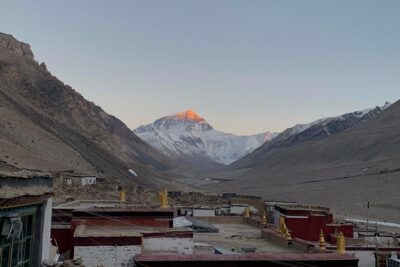
Tibet Tour 8 Days Lhasa to Everest Base Camp Small Group Tour
Read our review →
Dubai: Private Luxury Everest Yacht Cruise from Dubai Marina
Read our review →
Browse the lists this trek appears in