
Review · KATHMANDU
Everest Base Camp Trekking – 2025/2026
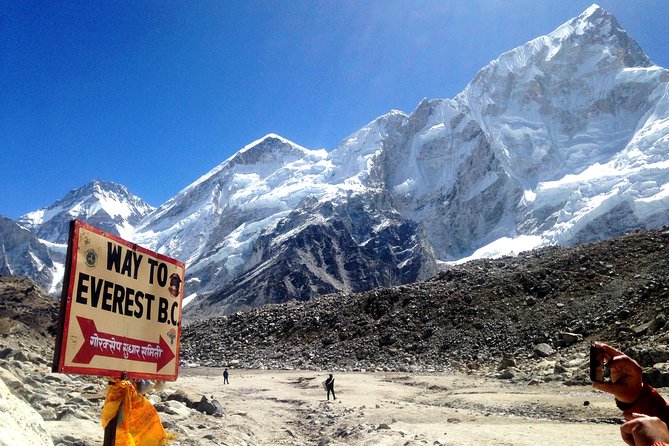
Everest Base Camp is not a sightseeing stop you reach by bus. It is a slow, demanding walk through Sherpa villages, Buddhist monasteries, suspension bridges, and thin mountain air, ending at the foot of the world’s highest peak. This private trek gives you a guide, porter support, lodges, meals, permits, and the important flights between Kathmandu and Lukla.
I like the private format, since you can walk at your own pace instead of being tied to a large group. I also like the practical setup: a licensed English-speaking guide, one porter for two trekkers, water-purification tablets, and warm jackets and sleeping bags available from the company if needed.
The main caution is the itinerary itself. The advertised duration is about 14 days, but the supplied day-by-day outline skips Day 8 and compresses the trek into fewer stated days. Ask Alpine Ramble Treks to confirm the exact schedule, acclimatization plan, and whether flights use Kathmandu or Manthali before paying.
Key points to know before booking
- Lukla flights are included: Domestic flights from Kathmandu or Manthali to Lukla and back are part of the package, but poor weather can cause delays.
- The trek reaches serious altitude: Everest Base Camp sits in a high, cold region, and the route includes rugged ground and long walking days.
- Private guiding gives you flexibility: Your guide and porter support your group rather than placing you into a large fixed party.
- Mountain lodging is basic: Expect clean trekking lodges, blankets, pillows, and mattresses, but shared bathrooms are possible at higher elevations.
- Meals cover the trek, not everything: Breakfast, lunch, dinner, and main-course hot drinks are included during the trek. Kathmandu meals, snacks, bottled water, showers, Wi-Fi, and alcohol cost extra.
- The $1,339.20 price can be good value: Flights, permits, accommodation, meals, guide, porter support, and transport are bundled, but insurance and international travel are not.
From Kathmandu to the Khumbu mountains
Your first day begins in Kathmandu, where an airport representative meets you and takes you to the hotel. The evening includes an introduction to the trip and, presumably, a briefing with the team. Since the exact hotel category can vary, confirm what is included before arrival. Higher-standard four- or five-star hotels are available at extra cost.
The real mountain journey starts with the flight to Lukla. The route is short, but the trip depends on mountain weather and flight operations. The package includes the flight, yet it does not remove the possibility of waiting or rescheduling. Build spare time into your wider Nepal plans, especially if you have an international flight soon after returning.
From Lukla, you walk to Phakding at about 2,652 meters. The stated walking time is around three hours, though the itinerary also lists four hours in one place. Treat this as an easy opening day rather than a precise appointment. You get your first feel for the trail, the pace, and the basic lodge routine without starting at the highest altitudes.
More Everest Base Camp Treks in Kathmandu:
- Everest Base Camp Trek – 14 Days
★ 5.0 · 1,499 reviews - Everest Base Camp Trek
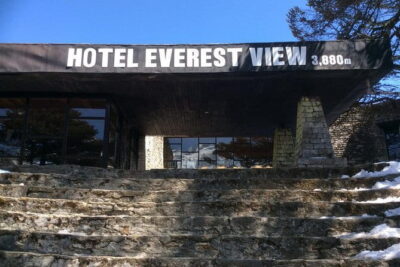
★ 5.0 · 842 reviews - Everest Base Camp Helicopter Tour landing at Everest View Hotel
★ 5.0 · 668 reviews
Namche Bazaar, the first major test
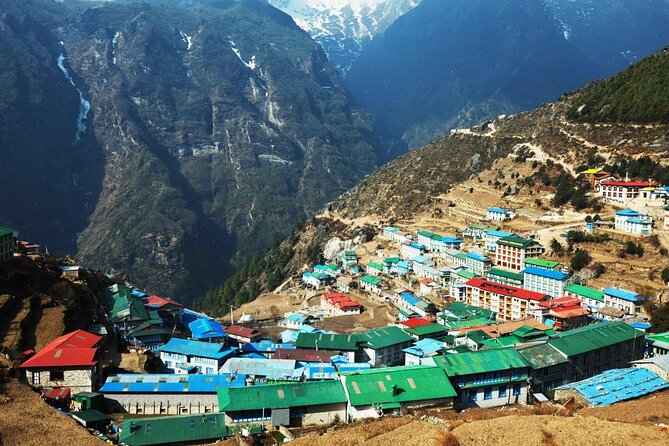
The walk from Phakding to Namche Bazaar covers about 10 to 12 kilometers and takes roughly five hours. Namche is the main trading center of the Khumbu region, and reaching it is a clear step up in effort. The route rises through mountain villages and wooded sections before the trail becomes more demanding.
This is where pacing begins to matter. The company describes a normal day as a series of 45-minute to one-hour walking periods, followed by short rests. That approach makes sense at altitude. You should not try to win the first afternoon by walking too fast, since the route keeps getting higher.
Namche is also where you start to appreciate the value of a local guide. A guide can explain Sherpa customs, point out monasteries and settlements, and help you handle the rhythm of lodge life. The company has assigned guides named in its wider trekking operation, including Sujal, Samir, Krishna, Hairy, and Prabin Tamang, but you should confirm your own guide’s name and experience before departure.
Pangboche and the quieter side of the route
The next stated stop is Pangboche, reached from Namche in about five hours. Pangboche gives you a more direct look at village life in the high Khumbu. You walk through settlements, pass Buddhist religious sites, and begin to see the architecture and daily routines shaped by cold weather, altitude, and limited road access.
The route is not technical. You do not need climbing skills, ropes, crampons, or oxygen equipment for the standard trek. That does not make it easy. You still need to walk for several hours a day on uneven ground, manage cold nights, and keep eating and drinking when your appetite may fade.
Pangboche is one of the points where a private trip can feel more comfortable than a rigid group schedule. If your pace is slower, you are not holding up a large party. If you feel strong, your guide can still keep the day controlled rather than letting you race ahead.
Lobuche and Gorak Shep: cold, high, and serious
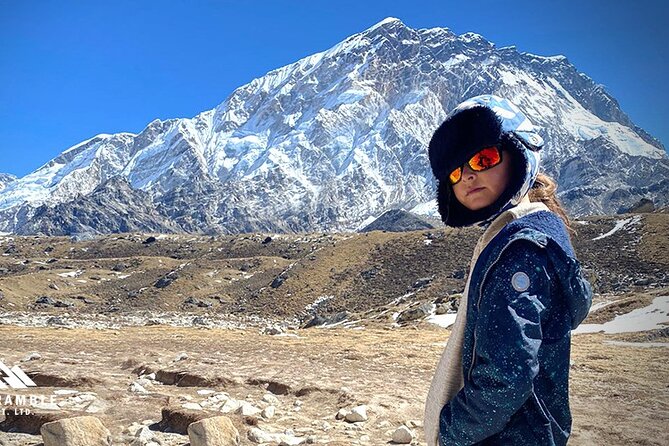
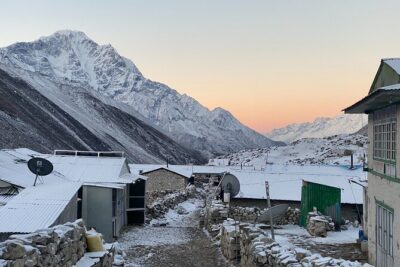
From Pangboche, the route continues to Lobuche, spelled Labuche in parts of the supplied schedule. The stated walking time is about five hours. At this stage, the air is colder and thinner, and the trail feels less forgiving. You should expect the scenery to become more open and exposed, with fewer comforts at the lodges.
The following day takes you from Lobuche to Gorak Shep and then toward Everest Base Camp before returning to Gorak Shep. The schedule gives about five hours, though the total effort can feel longer because of the altitude and the out-and-back section. This is the day when a moderate fitness level matters most.
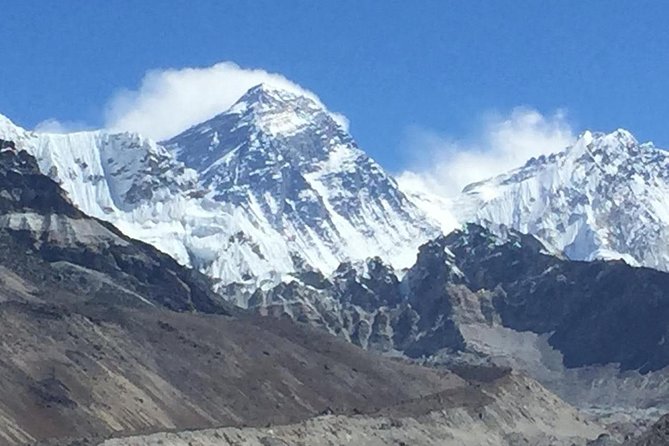
Everest Base Camp itself is a major goal, but it is not a permanent climbing village. Depending on the season, you may see the route used by mountaineering teams, but this package is a trekking experience rather than a technical expedition. You reach the base camp area, take in the surrounding peaks, and return to the lodge at Gorak Shep.
That return matters. You are not simply walking to a viewpoint and ending the day. You must still get back, eat, drink, and sleep at high altitude. Follow your guide’s advice, and do not treat a strong first half of the day as proof that you can ignore symptoms or skip rest.
A few more treks around Kathmandu worth a look
- Everest Base Camp Trekking
★ 5.0 · 485 reviews - Annapurna Circuit Trek with Tilicho Lake
★ 5.0 · 368 reviews - Everest Base Camp Trekking – 13 Day
★ 5.0 · 365 reviews - Everest Base Camp Trek
★ 5.0 · 350 reviews
The return through Pangboche, Namche, and Lukla
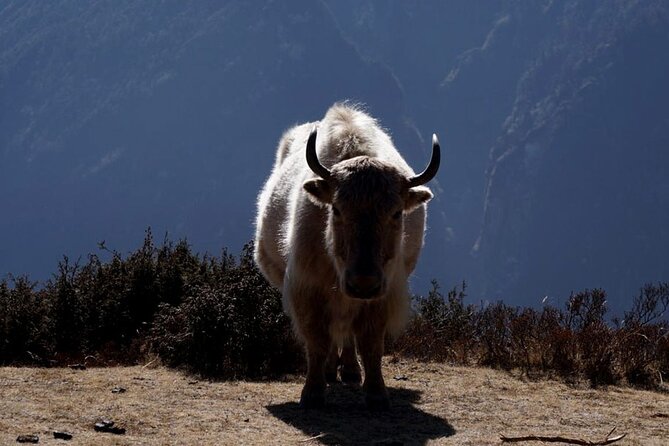
The stated route returns to Pangboche after the Gorak Shep section, then continues to Namche Bazaar and Lukla. The outline lists four hours from Pangboche to Namche and five hours from Namche to Lukla. These are useful planning figures, but ask for the full day-by-day route because the published sequence has a missing Day 8 and repeats Day 9 for different parts of the journey.
The return is not just a repeat in reverse. You see familiar villages from another angle, and downhill walking uses your legs differently from the ascent. Some people find the descent easier; others notice sore knees and tired feet. Trekking poles can help if you already use them.
After reaching Lukla, you fly back to Kathmandu. The flight is listed as about 35 minutes. The package then includes transfer to your hotel. Again, leave room in your plans for weather-related changes. The high mountain air that makes the views possible can also stop flights.
What the private arrangement really includes
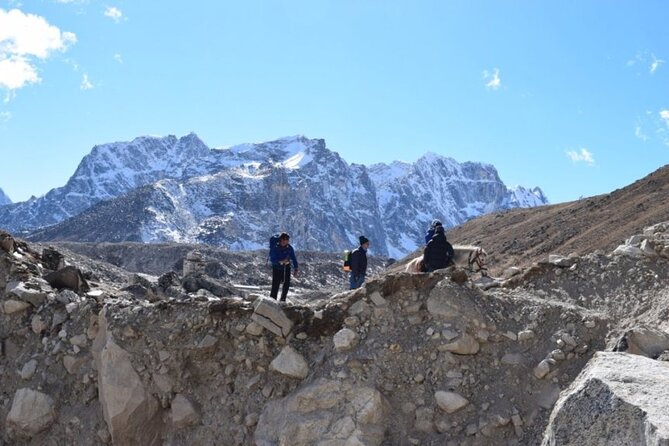
At $1,339.20 per person, the package covers several expenses that can quickly add up on a self-arranged trek. You receive private transportation, an English-speaking government-licensed guide, trekking lodge accommodation, national park fees, a TIMS card, domestic flights, and full-board meals during the trekking portion.
A porter is provided at a ratio of one for every two trekkers, with a recommended luggage limit of about 18 kilograms. That is a useful arrangement, but you should pack lightly and respect the limit. The company says extra porters can be arranged if required.
Water-purification tablets are included. Tap water can be used after treatment, while bottled water costs extra, generally around two to three dollars per liter according to the supplied information. Carry a proper bottle that can handle hot water. At altitude, warm drinks are useful, and cold water can be unpleasant.
The package does not include international flights, Nepal visa costs, travel insurance, extra Kathmandu accommodation and meals, snacks, showers, Wi-Fi, hot and cold drinks outside the meal plan, alcohol, or shopping. Those exclusions are normal for a trek of this sort, but they affect your real budget.
Lodge rooms, food, and daily mountain routine
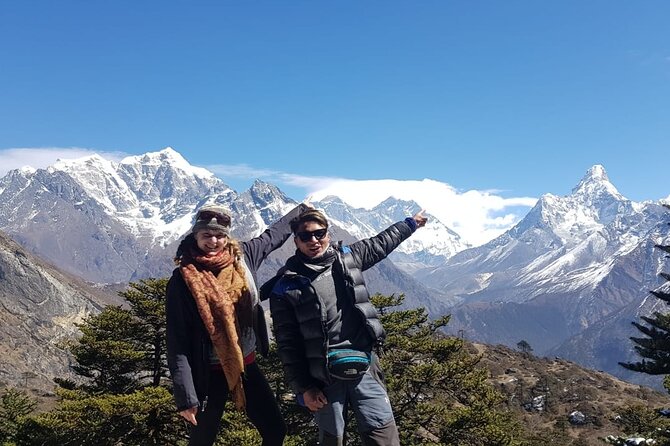
Accommodation is on a twin-sharing basis, with a single supplement for solo use. Mountain lodges generally provide a clean room, blankets, pillows, and a mattress. Conditions are pleasant enough for a trekking base, but they are not comparable to a city hotel.
Attached bathrooms may be available in some places if arranged early. At higher altitudes, shared bathrooms are likely because private facilities are not available in every lodge. Hot showers, when available, cost extra. Pack toiletries, wipes, and hand sanitizer so you can manage basic hygiene without relying on hotel-style facilities.
A typical day starts with wake-up tea around 6 a.m. You pack, eat breakfast around 7, stretch briefly, and begin walking. The morning usually includes two or three hours of walking before lunch, followed by another two or three hours after lunch. Dinner is normally served at a time agreed with the guide, and the next day’s plan is discussed afterward.
The menu is wider than you might expect in a remote region. You can choose from dal bhat, soups, Sherpa stew, rice, vegetables, noodles, pasta, pizza, bread, eggs, potatoes, and apple pie. Tea, coffee, hot chocolate, ginger tea, and lemon tea are also available.
I would favor dal bhat, vegetable dishes, garlic soup, potato soup, and onion soup. The company advises avoiding meat in the Everest region because storage and hygiene can be uncertain. Take snacks from Kathmandu if you have favorites, since personal snacks are allowed even though outside meals are not part of the lodge arrangement.
Fitness, equipment, and altitude
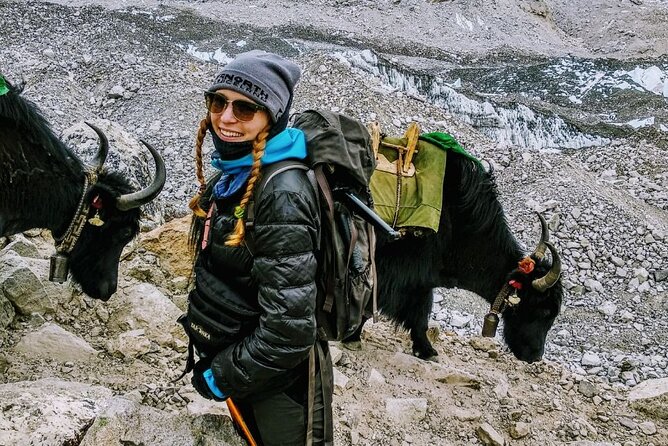
The company describes this as a moderate trek for people able to walk three to five hours a day. That is a fair starting point, but the high altitude makes the route harder than the walking time suggests. Training with stairs, walking, jogging, cycling, swimming, or gym work can make the two-week effort more manageable.
You do not need technical climbing experience. You do need good boots, warm layers, rain protection, sun protection, gloves, a warm hat, sunglasses, sunscreen, a headlamp, and a daypack of at least 30 liters. Bring extra socks and a thermal bottle.
A down or fiber-filled jacket, sleeping bag, and warm clothing are especially important. The company says warm jackets and sleeping bags can be provided on rental, so confirm the condition, size, and cost before relying on that option.
Travel insurance is required but not included. It should be suitable for a high-altitude trek. The supplied medical list includes items such as oral rehydration salts, bandages, pain relief, anti-nausea medication, and Diamox, but medication decisions belong with your doctor. Do not start altitude medication without medical advice.
The guide team and the human side of the trek
The strongest part of this arrangement is the local support. The guide is expected to handle route-finding, meals, permits, cultural explanations, and daily briefings. Porters carry the main luggage, leaving you with a manageable daypack.
The company places clear emphasis on respect for local people, customs, laws, and the environment. You are asked to request permission before taking part in community activities, keep rubbish under control, and support local communities in a responsible way. Those are simple rules, but they matter on a route used by many trekkers.
The company has earned a 5.0 rating from 199 posted ratings, and the named staff receive repeated praise for care, communication, and support. Dil, identified as the owner, is described as quick to answer questions. Guides and porters named in the feedback include Samir, Manish, Sujal, Krishna, Hairy, and Prabin Tamang. Treat this as evidence of a strong team culture, not a guarantee that one particular person will lead your trip.
Best seasons and who should book
The recommended trekking periods are autumn, from mid-September into November, and spring, from March to May. These seasons are described as offering clearer mountain views and more favorable temperatures, although nights can fall below freezing.
I would choose this trip if you want the classic Everest Base Camp route with private support and a bundled price. It suits an active person who can train beforehand, accept basic rooms, and cope with changing flight plans.
I would hesitate if you want luxury, a fixed timetable, private bathrooms every night, or no risk of weather delays. I would also ask for a written acclimatization schedule because the supplied itinerary does not clearly show every day.
Should you book this Everest Base Camp trek?
Book it if the confirmed itinerary includes sensible altitude management and you value having flights, permits, meals, lodges, guide support, and porter service arranged together. At $1,339.20, that package offers solid value for a private trek, provided you budget separately for insurance, Nepal entry formalities, Kathmandu expenses, drinks, showers, and possible delays.
Before booking, ask Alpine Ramble Treks for the exact 14-day schedule, the hotel name in Kathmandu, your guide’s name, the luggage allowance, the plan for flight delays, and the altitude profile. If those answers are clear, this is a practical way to reach Everest Base Camp without handling every detail yourself.
FAQ
How long is the Everest Base Camp trek?
The experience is advertised as approximately 14 days. The supplied day-by-day schedule does not list every day clearly, so confirm the final itinerary and the number of acclimatization days before booking.
Are flights to Lukla included?
Yes. Domestic flights from Kathmandu or Manthali to Lukla and the return flight are included.
Can flights to Lukla be delayed?
Yes. The trip requires suitable weather, and mountain flights can be affected by poor conditions. Ask the provider how flight changes are handled and leave spare time in your wider Nepal schedule.
Are meals included?
Breakfast, lunch, and dinner are included on a full-board basis during the trek. Meals before and after the trek in Kathmandu are not included.
Is accommodation included?
Yes. Trekking lodge accommodation is included, generally on a twin-sharing basis. A single supplement is available for a solo participant.
Will I have a private bathroom?
Not every lodge has an attached bathroom. Private bathrooms may be arranged in some locations, but shared facilities are possible at higher elevations.
Do I need climbing experience?
No technical climbing skills are required for this trek. The route is described as non-technical, but you need moderate fitness for several hours of walking each day at high altitude.
Is porter support included?
Yes. One porter is included for every two trekkers, with luggage recommended not to exceed about 18 kilograms. Additional porter support may be arranged if needed.
Is travel insurance included?
No. Travel insurance is not included, and the supplied information specifically lists personal travel insurance as the participant’s responsibility.
Just added around Kathmandu
- Everest Base Camp Trek★ 5.0 · 3 reviews
- Everest Base Camp Trek★ 5.0 · 7 reviews
- 15 Days Private Everest Base Camp Trek★ 5.0 · 30 reviews
- Everest Base Camp Trek★ 5.0 · 57 reviews
- 14 Days of Adventure Trekking to Everest Base Camp★ 5.0 · 2 reviews
- 14-Day Everest Base Camp Trek★ 5.0 · 20 reviews
- From Kathmandu: Private 14-Day Everest Base Camp Trek★ 5.0 · 20 reviews
- 14 Days Everest Base Camp Trek★ 5.0 · 4 reviews
Everest Base Camp Treks, compared.
Everest Base Camp Helicopter Tour landing at Everest View Hotel
Read our review →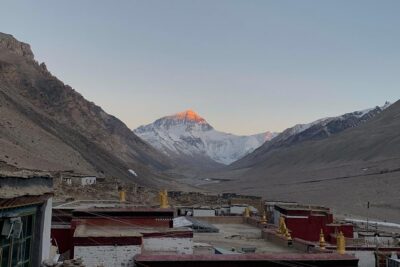
Tibet Tour 8 Days Lhasa to Everest Base Camp Small Group Tour
Read our review →
Dubai: Private Luxury Everest Yacht Cruise from Dubai Marina
Read our review →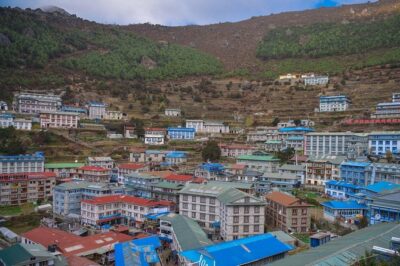
Browse the lists this trek appears in