
Review · NEPAL
Everest Base Camp Trekking 12 Days
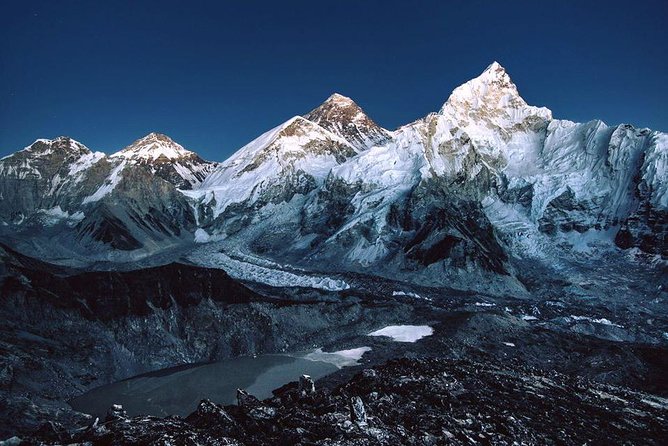
Everest Base Camp is the main event, but the walk there is what makes this trip worthwhile. You pass through Sherpa villages, pine and rhododendron forests, high mountain valleys, and Tengboche Monastery before reaching the famous base camp and the viewpoint at Kala Patthar.
I like that the $1,254 price includes the costly essentials: flights between Kathmandu and Lukla, permits, meals, lodging, a guide, porter support, and loaner gear. I also like the practical care built into the trip, including acclimatization days in Namche and Dingboche, plus guides such as Dilli and Pasang who have been praised for pacing, meal planning, and keeping bags moving.
The drawback is that this is a serious high-altitude trek, not a sightseeing holiday. The route reaches 5,554 meters, walking days can last up to eight hours, and Kathmandu hotels, personal expenses, insurance, and emergency helicopter or charter flights are not included.
Key points to know before booking
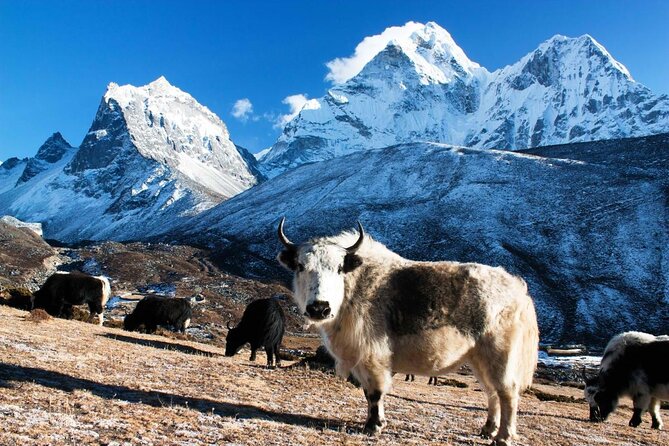
- Reach 5,554 meters: The route includes Everest Base Camp and Kala Patthar, the high point of the program.
- Sleep in Sherpa villages: Namche Bazaar, Tengboche, Dingboche, Lobuche, and Pheriche give the trek its human side.
- Tengboche is a major cultural stop: Visit the region’s biggest and oldest monastery during the walk toward Everest.
- Flights are built into the price: Kathmandu to Lukla and the return flight are included, along with airport transfers.
- Acclimatization is planned: You spend extra time in Namche and Dingboche rather than climbing higher every day.
- Useful kit is supplied: A down jacket, sleeping bag, duffel bag, and trekking map are available if you need them.
Why the walk to Everest Base Camp matters
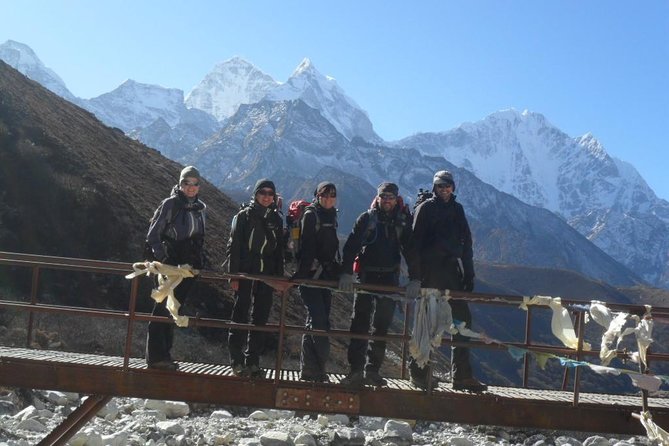
The appeal of this trek is not simply standing near Mount Everest. The route gives you a gradual introduction to the Khumbu region, where the villages, monasteries, mountain trails, and changing altitude all shape the experience.
You begin with a flight toward Lukla, then continue on foot through the Solukhumbu District. The route covers about 130 kilometers and moves from forested lower valleys to spare, high-altitude terrain. That change is a big part of the reward, but it also explains why the trip needs careful pacing.
I like that the program does not treat the base camp as a quick photo stop. You spend time in Namche for acclimatization, then again in Dingboche. Those pauses make practical sense because your body needs time to adjust as the trail rises.
The itinerary reaches a maximum height of 5,554 meters. That figure is important. You need reasonable fitness, patience, and a willingness to walk slowly. People with respiratory issues or a history of altitude sickness should not treat this as a casual holiday, and the activity is not suitable for wheelchair users.
More Everest Base Camp Treks in Nepal:
- Everest Base Camp Trek – 14 Days
★ 5.0 · 1,499 reviews - Everest Base Camp Trek
★ 5.0 · 842 reviews - Everest Base Camp Helicopter Tour landing at Everest View Hotel
★ 5.0 · 668 reviews
Kathmandu to Lukla: the start of the mountain route
The trip begins with pickup in Kathmandu, with Thamel listed as the main pickup area. Airport pickup or drop-off is provided in the company’s own vehicle, which removes one early transport task from your list.
The flight to Lukla is included in the package. From there, the mountain route begins with walking, scenic views, and the first overnight stay. The Lukla day is listed with meals and about one hour of activity, although you should confirm the exact flight and walking schedule before departure.
Lukla is more than a transport point. It marks the change from city travel to a foot journey through the Khumbu. You should arrive ready to carry only a day bag, with your larger duffel handled as part of the trekking support.
Flights in and out of Lukla are a practical consideration. The package includes them, which is valuable, but the published information also makes clear that emergency charter flights or helicopters are extra. Your travel and medical insurance should cover high-altitude trekking and emergency evacuation before you leave home.
Namche Bazaar and the first acclimatization day
The route continues to Namche Bazaar, with a listed walking time of about six hours. You can expect breakfast, lunch, dinner, an overnight stay, and mountain views along the way.
Namche is one of the key villages on the trek. It is also the first major point where the itinerary slows down. The following day is set aside for a guided walk and local sightseeing, with about five hours of activity.
This rest day is not wasted time. You are still walking, but the purpose is to let your body adjust before the route rises further. I would use the day to keep your pace easy, follow the guide’s advice, and avoid treating the stop as a chance to push for extra distance.
The village experience is one of the strongest parts of this trek. The route passes through Sherpa communities rather than keeping you in a remote mountain corridor. Namche, Khumjung, and Khunde are all highlighted as part of the cultural side of the journey, so you get more than a sequence of trail markers and sleeping lodges.
Tengboche Monastery and the route higher into Khumbu
The next major stop is Tengboche, reached after about six hours of walking. The itinerary includes a guided visit, meals, an overnight stay, and a sunrise element.
Tengboche is the biggest and oldest monastery in the region, making it one of the most meaningful stops for visitors who want cultural context alongside mountain scenery. The monastery gives the trek a spiritual dimension without requiring a separate sightseeing day.
You should allow time to appreciate the setting and the quiet of the site. The appeal here is not only the building itself, but also its place on the route between the lower Sherpa villages and the higher valleys.
After Tengboche, the trail continues to Dingboche, another walking day of about six hours. The surroundings become more exposed as you gain height, and the trip begins to feel less like a village walk and more like a high mountain journey.
A few more treks around Nepal worth a look
- Everest Base Camp Trekking
★ 5.0 · 485 reviews - Annapurna Circuit Trek with Tilicho Lake
★ 5.0 · 368 reviews - Everest Base Camp Trekking – 13 Day
★ 5.0 · 365 reviews - Everest Base Camp Trek
★ 5.0 · 350 reviews
Dingboche: the second pause that earns its place
Dingboche has its own acclimatization day. The schedule allows a shorter four-hour day with free time, sightseeing, a visit, walking, and an overnight stay.
This is another smart part of the plan. The trek is not simply counting down the kilometers to Base Camp. It is giving you two points where you can adjust before reaching the highest sections of the route.
You may appreciate the free time more than you expect. At this altitude, an easy day can be more useful than another long push. You can keep your energy for Lobuche, Base Camp, and Kala Patthar instead of arriving exhausted.
The walking days are not extreme by expedition standards, but they are demanding for ordinary hikers. The listed days range from about four to eight hours, and altitude can make a familiar distance feel much harder. Follow the guide’s pace rather than trying to prove anything to the group.
Lobuche and the approach to Base Camp
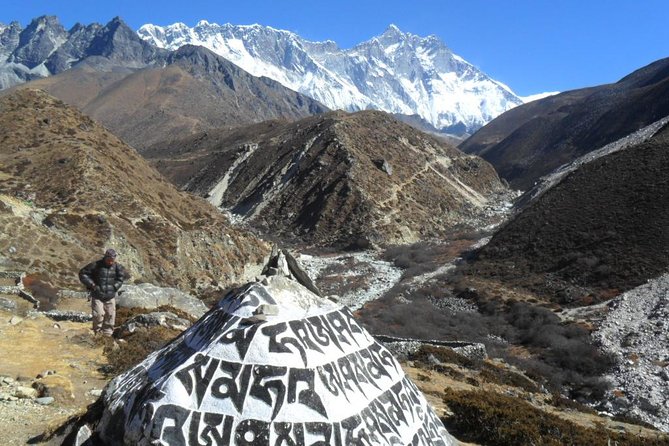
From Dingboche, the route continues to Lobuche after about six hours of walking. Lobuche is listed in Solukhumbu District and serves as the overnight point before the high point of the trek.
This section is where the trip usually feels most focused. You are no longer walking toward a vague goal in the distance. Base Camp and Kala Patthar are close on the schedule, but the altitude makes every hour count.
Meals are included throughout the trek, with breakfast, lunch, dinner, and a cup of tea or coffee each day. Lodging is described as family-style accommodation, which points to a simple, practical stay rather than a hotel experience.
The package covers food and accommodation along the mountain route, but you should budget separately for personal items such as hot showers, laundry, phone use, snacks, bar bills, and shopping. Those small costs can add up over nearly two weeks.
Kala Patthar and Everest Base Camp
The next stage reaches the area of Kala Patthar, with about six hours of walking and an overnight stay. The schedule includes regional food, which gives this part of the trip a local touch after several days of trekking fare.
Kala Patthar is the viewpoint to watch. The attraction is the broad Himalayan view and the chance to see Mount Everest within the larger mountain chain. The itinerary also includes sunrise, so prepare for an early start and cold conditions.
The listed maximum altitude is 5,554 meters. That height makes Kala Patthar one of the hardest parts of the route, even if the walking time looks manageable on paper. You may need to move slowly, take regular breaks, and rely on the guide’s judgment.
Everest Base Camp is the other headline goal. Reaching it is less about standing at the foot of the summit than completing a long route through the Khumbu. The trail, villages, monastery, acclimatization days, and high passes all lead to that final point.
The program appears to place the Base Camp visit in this high section before the descent to Pheriche. Because the published schedule labels the day as Kala Patthar rather than giving a separate Base Camp line, ask the operator to confirm the exact order and overnight location before booking.
The descent through Pheriche and Namche
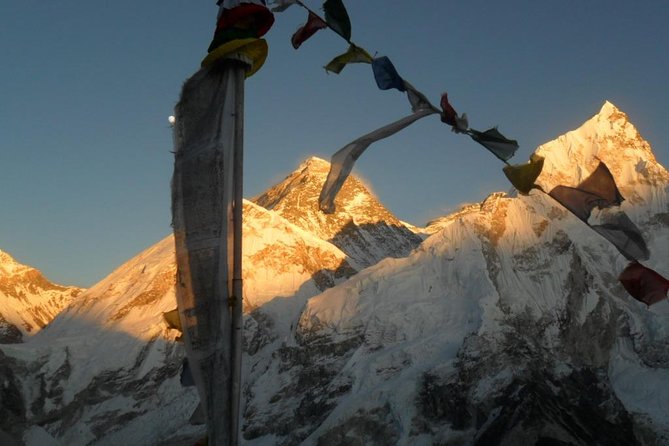
After the high point, the route turns back toward Pheriche. This is listed as an eight-hour day with a visit, meals, and an overnight stay, making it the longest walking day in the schedule.
Descending does not mean effortless. Your legs may be tired, and uneven ground can be hard after several long days. Still, returning to lower altitude usually changes the feel of the trek, and Pheriche gives you a useful stop before the route continues to Namche.
The return to Namche is listed at about seven hours and includes another visit, meals, and an overnight stay. You will recognize parts of the route from the outward journey, but the direction changes the views and gives you a chance to notice details that were easy to miss while climbing.
The itinerary then continues to Lukla with about six hours of walking. This final walking day brings you back to the flight point and closes the mountain section of the trip.
What the $1,254 price really covers
At $1,254 per person, this is a useful package for anyone who wants the main logistics handled in advance. Flights between Kathmandu and Lukla are included, as are airport transfers, trekking permits, required paperwork, meals, mountain accommodation, and a licensed English-speaking guide.
You also receive guide support, guide insurance, food, and accommodation for the guide. Porter support is reflected in the trip arrangements, and previous departures included porters who delivered bags safely to each overnight stop.
The loan equipment improves the value. You can use a down jacket, all-season sleeping bag, duffel bag, and trekking map if you do not have your own. The jacket, sleeping bag, and duffel must be returned after the trek, so bring your personal clothing and gear with that in mind.
The price does not cover international flights, Nepal visa charges, Kathmandu hotels, Kathmandu meals, personal insurance, or personal spending. Emergency costs, including chartered flights or helicopter services, are also excluded.
I would compare this price with the cost of arranging flights, permits, a guide, meals, sleeping equipment, and mountain lodging yourself. The package is particularly useful if you want one company to manage the main moving parts. It is less complete than it first appears if you need Kathmandu accommodation or extensive personal services.
Guide support and the human side of the trek
The activity includes one licensed guide who speaks English, Chinese, Korean, or Hindi, along with Nepali. The published activity details specify English for this experience.
Two guides named in past departures were Dilli and Pasang. Dilli was praised for helping with pacing, acclimatization, and morale, while Pasang handled meal arrangements and helped keep bags moving from one stop to the next.
You should not assume that either person will lead every departure. Ask who your guide will be, how many people are in the group, and how porter support is organized. Still, the available feedback points to the human support as one of the package’s strongest features.
That matters in the Everest region. A guide is not only someone who points out the route. You need someone who watches the group’s pace, understands when altitude is becoming a problem, and helps with the ordinary details of food, lodging, and bags.
Who should book this trek?
I would recommend this trip to a fit walker who wants Everest Base Camp without arranging every permit, flight, meal, and overnight stay independently. It also suits you if you value cultural stops such as Tengboche and Sherpa villages as much as the final mountain viewpoint.
The trek is not suitable for wheelchair users, people with respiratory issues, people with altitude sickness, babies under one year, or people over 95. Those limits are stated clearly, but anyone with a medical concern should still seek professional advice before committing.
You need travel and medical insurance, and the policy should match the risks of a high-altitude trek. The operator provides a first-aid medical kit carried by the guide, but that is not a replacement for your own insurance or medical preparation.
Cancellation is flexible, with a full refund available when you cancel at least 24 hours in advance. You can also reserve now and pay later, which helps if you are still coordinating flights or time off.
Should you book the Everest Base Camp Trek?
Book it if you want a structured 12-day Everest Base Camp program with flights, meals, permits, guides, porter support, and basic loan gear included. The price is fair for the amount of core logistics covered, and the planned acclimatization stops are a real advantage.
Before paying, confirm the exact calendar, group size, guide assignment, Base Camp and Kala Patthar order, Kathmandu hotel arrangements, and emergency procedures. If you are ready for long walking days and high altitude, this trip offers a strong mix of mountain scenery, Sherpa culture, monastery visits, and a clear sense of progress toward Everest.
FAQ
How long is the Everest Base Camp trek?
The activity is sold as a 12-day trek. The detailed schedule also includes pickup, return flight, and drop-off arrangements, so confirm how the operator counts the travel days when you book.
What is the highest altitude on the route?
The maximum height is listed as 5,554 meters. Kala Patthar is the main high viewpoint, and the route also includes Everest Base Camp.
Are flights between Kathmandu and Lukla included?
Yes. Transportation from Kathmandu to Lukla and back to Kathmandu by flight is included, along with airport pickup or drop-off in the company’s vehicle.
What meals are included?
Breakfast, lunch, dinner, and one cup of coffee or tea are included throughout the trek. Food in Kathmandu is not included.
Is accommodation included?
Yes. Accommodation during the mountain trek is included in family-style hotels or lodgings. Hotel expenses in Kathmandu are not included.
Is a guide provided?
Yes. The package includes one licensed guide. The activity specifies English, and the guide also has Nepali language ability. Guides named on past departures include Dilli and Pasang.
What trekking equipment is supplied?
If you need it, the company supplies a down jacket, all-season sleeping bag, duffel bag, and trekking map. The down jacket, sleeping bag, and duffel bag must be returned after the trip.
What is not included in the price?
International airfare, visa charges, Kathmandu accommodation and meals, personal spending, travel and medical insurance, unlisted services, and emergency expenses such as chartered flights or helicopters are not included.
Just added around Nepal
- Everest Base Camp Trek★ 5.0 · 3 reviews
- Everest Base Camp Trek★ 5.0 · 7 reviews
- 15 Days Private Everest Base Camp Trek★ 5.0 · 30 reviews
- Everest Base Camp Trek★ 5.0 · 57 reviews
- 14 Days of Adventure Trekking to Everest Base Camp★ 5.0 · 2 reviews
- 14-Day Everest Base Camp Trek★ 5.0 · 20 reviews
- From Kathmandu: Private 14-Day Everest Base Camp Trek★ 5.0 · 20 reviews
- 14 Days Everest Base Camp Trek★ 5.0 · 4 reviews
Everest Base Camp Treks, compared.
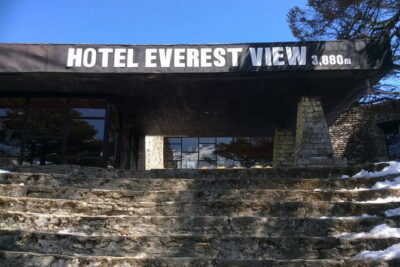
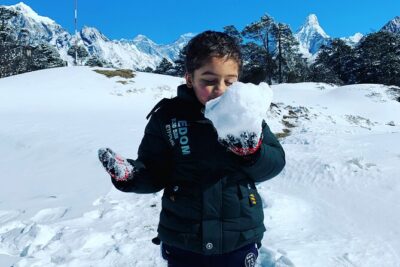
Everest Base Camp Helicopter Tour landing at Everest View Hotel
Read our review →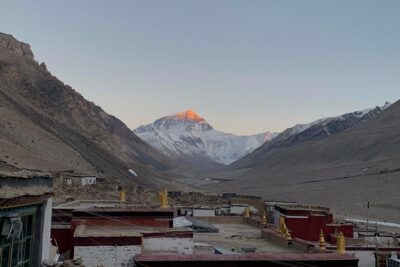
Tibet Tour 8 Days Lhasa to Everest Base Camp Small Group Tour
Read our review →
Dubai: Private Luxury Everest Yacht Cruise from Dubai Marina
Read our review →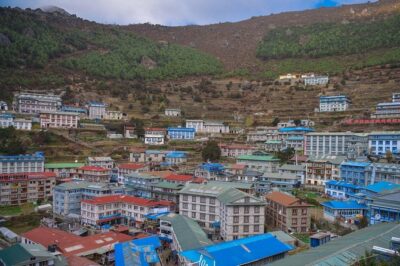
Browse the lists this trek appears in