
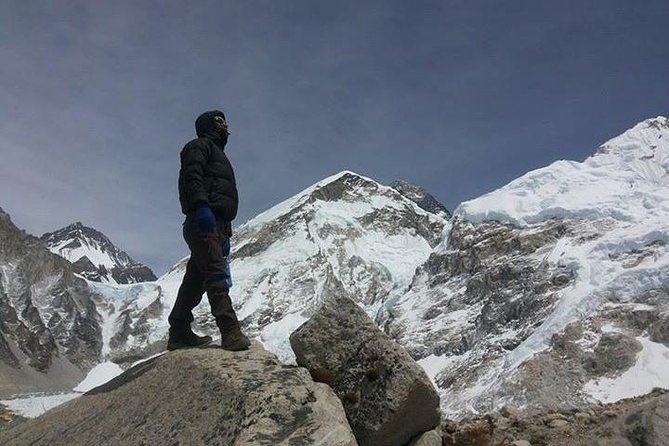
Review · KATHMANDU
Everest Base Camp Trek – Hiking to Mt Everest
Everest Base Camp is not a quick photo stop. It is an 11-day mountain journey from Lukla, with steep climbs, thin air, stone villages, prayer flags, glaciers, and nights in simple tea houses. The route reaches 5,363 meters at Base Camp, then climbs higher to Kala Patthar at 5,545 meters for one of the finest viewpoints in the Khumbu.
I like the private format, which gives your own group a guide and porter rather than placing you in a large mixed party. I also like the built-in acclimatization days at Namche Bazaar and Dingboche. The main caution is the altitude and physical strain. This is a serious trek, not a sightseeing walk, and flights to Lukla can be delayed.
Key points at a glance
- A full Everest Base Camp route: Walk from Lukla to Base Camp and return on foot, with a flight back to Kathmandu.
- Two acclimatization days: Spend extra time at Namche Bazaar and Dingboche to adjust before climbing higher.
- Tea-house nights: Sleep in family-run mountain lodges and eat breakfast, lunch, and dinner during the trek.
- Private guiding: Only your group takes part, with a guide and porter supporting the walk.
- Strong trip coordination: Jiban, Tony, Tika, Dharma, and Durga Kadel have all been associated with guiding or organizing trips through this company.
- A useful all-in price: The $1,500 rate includes flights, lodging, meals on trek, transfers, permits and taxes, but not insurance, drinks, visas, or tips.
What the 15-day Everest trek is really like
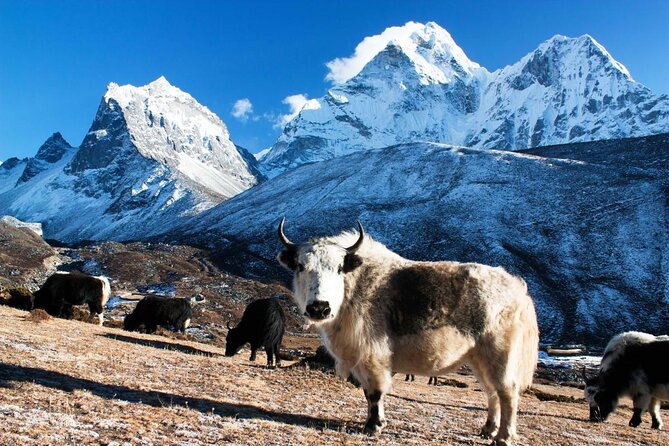
This trip links Kathmandu with the classic Everest Base Camp route. You begin with city time and preparation, fly to Lukla, walk through the Khumbu Valley, spend two nights adjusting to altitude, reach Base Camp, climb Kala Patthar, and return to Lukla.
The route is carefully paced on paper. You do not rush straight from low altitude to the upper valley. Still, no itinerary can remove the difficulty. The trail gains height steadily, and the day from Lobuche to Base Camp is long and demanding. You will need a moderate level of fitness and the patience to walk slowly.
I see the private setup as a real advantage here. If someone in your group needs a slower pace or a change of plan, the guide can focus on your party rather than balancing the needs of a large group. Past trips have included guides named Tony, Toni, Tika, Dharma Subedi, and Durga Kadel, while Jiban has handled much of the planning and communication.
More Everest Base Camp Treks in Kathmandu:
- Everest Base Camp Trek – 14 Days
★ 5.0 · 1,499 reviews - Everest Base Camp Trek
★ 5.0 · 842 reviews - Everest Base Camp Helicopter Tour landing at Everest View Hotel
★ 5.0 · 668 reviews
Kathmandu preparation before the mountains
Your first day is for arrival in Kathmandu, with airport pickup included. You receive three nights of star-category accommodation in the city with breakfast, though the exact hotel is not specified in the tour details.
Day two combines a Kathmandu Valley visit with trek preparation. This matters more than it may sound. You have time to sort equipment, ask questions, and get ready for a route where small problems become harder to fix once you leave the capital.
The preparation session before and after arrival is a useful inclusion. It gives you a chance to understand the walking plan and meet the local team. You should use this time to confirm what the guide and porter will carry, what you need to keep in your own daypack, and how the team handles weather or flight delays.
Kathmandu also gives you a last chance to buy personal items, though personal shopping is not included in the price. The package includes a medical kit, but you still need your own travel insurance and any personal medication.
The Lukla flight and the walk to Phakding
On day three, you fly from Kathmandu to Lukla, at about 2,840 meters. The flight is short, scenic, and weather-dependent. It is also one of the least predictable parts of the schedule. Several past trips required changes after delayed planes, including an alternative drive arranged by the team.
That flexibility is worth noting. A delayed Lukla flight can affect the first walking day and the return flight, so you should not treat every time on the itinerary as fixed. The team has handled last-minute bookings and changed plans when needed, but weather remains outside anyone’s control.
From Lukla, you walk to Phakding at 2,640 meters. This is a gentler opening day, giving your legs time to adjust before the harder climb to Namche Bazaar. You sleep in a tea house, with breakfast, lunch, and dinner included during the mountain portion.
Tea houses are practical rather than fancy. They offer a place to sleep, eat, warm up, and meet people along the route. Family-run lodging also gives you a closer look at how mountain communities support the trekking economy.
Namche Bazaar and the first acclimatization day
Day four takes you from Phakding to Namche Bazaar at 3,440 meters. This is one of the major climbs of the trek. Namche is a high-altitude trading town and an important stopping point for anyone heading deeper into the Khumbu.
The town is not just a place to spend the night. It is where the route begins to feel properly alpine, and where the effects of altitude can become more noticeable. You may find yourself walking more slowly, breathing harder, and needing more rest than expected.
Day five is set aside for acclimatization. That extra day is one of the strongest features of the itinerary. You are not simply losing a day of sightseeing. You are giving your body time to adjust before the trail climbs above 4,000 meters.
Your guide can also use this pause to check how the group is coping. The practical lesson is simple: do not spend the acclimatization day trying to prove how fit you are. Slow walks and proper rest are more useful than charging uphill.
A few more treks around Kathmandu worth a look
- Everest Base Camp Trekking
★ 5.0 · 485 reviews - Annapurna Circuit Trek with Tilicho Lake
★ 5.0 · 368 reviews - Everest Base Camp Trekking – 13 Day
★ 5.0 · 365 reviews - Everest Base Camp Trek
★ 5.0 · 350 reviews
Tengboche and Dingboche at higher altitude
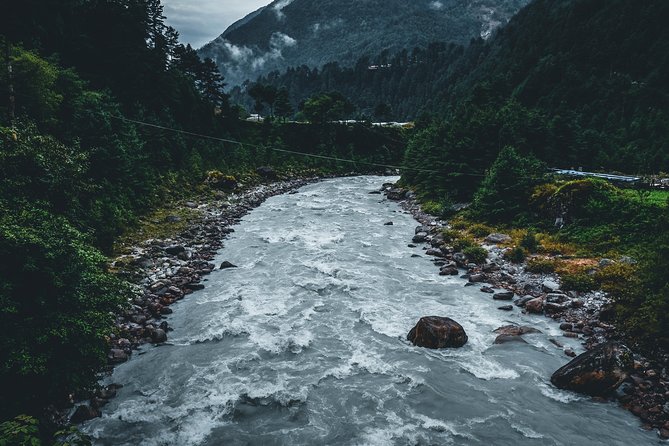
On day six, you walk from Namche to Tengboche at 3,867 meters. Tengboche is known for its monastery and broad mountain views. The monastery gives the route a strong cultural dimension, especially after several days of walking through Sherpa villages.
This is one of the places where a local guide adds real value. A guide can explain the role of monasteries, prayer flags, and village life in a way that a fast walk-through cannot. The experience is not only about reaching Base Camp. It is also about seeing how people live in a high valley shaped by trade, religion, weather, and trekking.
Day seven takes you to Dingboche at 4,350 meters. The air is thinner here, and the walking becomes more demanding. The scenery changes as the route moves higher, with fewer trees and a more exposed mountain setting.
Day eight is another acclimatization day. This second pause is essential because the next nights are spent close to 5,000 meters. The schedule gives you a sensible chance to adjust before Lobuche and Gorak Shep.
Lobuche, Gorak Shep, and Everest Base Camp
Day nine takes you from Dingboche to Lobuche at 4,931 meters. This is a high, stark part of the route, and you should expect a shorter stride and a slower pace. Cold, wind, and altitude can all affect how the day feels.
On day ten, you walk from Lobuche through Gorak Shep at 5,170 meters to Everest Base Camp at 5,363 meters. This is the day most people have imagined, but it is not an easy victory lap. The altitude is severe, and the distance can feel longer than the map suggests.
Gorak Shep is the final overnight stop before Base Camp and Kala Patthar. The walking day to Base Camp and back requires energy, so you will want to follow the guide’s pace rather than spend too long pushing ahead for photographs.
Base Camp itself is a major goal, but the views depend on the season and exact conditions. You reach the foot of the Everest climbing route, surrounded by high peaks and glacier country. You do not climb Mount Everest on this trip, and Base Camp is not necessarily the place with the clearest view of the summit.
Kala Patthar at 5,545 meters
Day eleven begins with the climb to Kala Patthar, listed at 5,545 meters, before descending to Pheriche at 4,210 meters. This is arguably the visual high point of the trip.
Kala Patthar is valued for its panoramic view toward Everest and the surrounding peaks. You gain height above the Base Camp area, so the mountain outlook is often more rewarding than the view from Base Camp itself.
The climb is short in distance compared with some trekking days, but altitude makes it hard. You should expect a slow ascent and cold conditions, especially if the day begins early. The reward is a wide mountain panorama and the feeling of having reached the highest point on the route.
The descent to Pheriche is welcome, but it is still a long day. The drop in altitude usually feels easier than the climb, though tired knees can make downhill walking unpleasant. This is a day when good footwear and trekking poles, if you use them, matter.
Returning to Namche and Lukla
Day twelve takes you from Pheriche to Namche Bazaar. You are retracing part of the route, but the return often feels different because you now understand the scale of the valley and have less pressure to gain height.
Day thirteen continues from Namche to Lukla. This is your final walking day. It may feel easier because you are descending overall, but it remains a full day on foot, and tiredness accumulates after two weeks in the mountains.
The return to Lukla also brings back the uncertainty of mountain flights. Day fourteen calls for an early morning flight to Kathmandu, followed by free time in the Kathmandu Valley. If weather disrupts the flight, that city day may be shortened or moved. The company has previously arranged alternative transport and handled changed bookings, but you should keep your plans flexible.
Day fifteen is departure. Airport drop-off is included, which makes the final morning simpler.
What the $1,500 price includes
At $1,500 per person, this is a solid package if you want the major logistics handled in advance. The price includes airport pickup and drop-off, three Kathmandu nights with breakfast, 11 tea-house nights during the trek, Kathmandu to Lukla flights in both directions, a guide, a porter, trekking meals, taxes, a medical kit, certificates, and preparation sessions.
Meals during the trek include breakfast, lunch, and dinner. Drinks and beverages are extra, as are tips, shopping, visa costs, international airfare, insurance, and personal expenses. Those exclusions matter. The headline price is not your complete Nepal budget.
The included Lukla flights are particularly important because they can be costly and difficult to arrange at short notice. Lodging and meals on the trail also remove much of the daily planning. You are paying for a working support system, not only for a bed and a flight.
Group discounts may be available, and the trip is private, so the value improves if you are traveling with family or friends. Ask for the exact group rate before booking. Also confirm the current accommodation standard, since the description gives the number of nights but not the names of the hotels or tea houses.
The guiding and support system
The strongest praise connected with this trip centers on organization, care, and the ability to adjust plans. Jiban is associated with trip coordination, and guides including Tony, Toni, Tika, Dharma Subedi, and Durga Kadel have been involved in different departures.
That does not mean you should assume a particular guide will lead your trip. Ask who is assigned, how many people the guide and porter will support, and what happens if a member of your group needs to stop or descend.
The company provides a comprehensive medical kit, but that is not a replacement for insurance. The tour specifically excludes insurance costs, and high-altitude trekking calls for cover that deals with the activity and possible evacuation. You should check the policy before you leave home.
The support can also be useful when flights are delayed. One group faced several days of delayed planes and received an alternative road plan, while other trips involved changed flight or helicopter arrangements. Helicopter returns are mentioned in connection with some departures, but they are not part of the standard itinerary or included price described here.
Who should book this trek
I would look at this trek if you want the classic Everest Base Camp route with a private group, organized meals, tea-house lodging, flights, and local support. It suits people who prefer having a guide and porter arranged rather than building the trip piece by piece.
You should be comfortable with long days of walking and high altitude. The description asks for moderate physical fitness, but the route still includes steep climbs and several nights above 4,000 meters. You need to accept that the schedule may change because of weather, especially around Lukla.
This is also a good match for a group that values personal attention. The private format can help if your pace, age, or experience differs from that of other group members. One older participant described the trek as physically draining but possible with steady support and patience from the guide.
It is less suitable if you want luxury lodging, a fixed timetable, or a short mountain visit. The tea houses are part of the experience, but they are basic. The route is demanding, and a delayed flight can affect your plans.
Should you book the Everest Base Camp Trek?
I would book this trip if you want a well-supported, private route to Everest Base Camp and you value practical help over luxury. The price covers the expensive and awkward pieces, especially flights, mountain lodging, meals, guides, and porters.
Before paying, confirm the assigned guide, the exact hotel in Kathmandu, the current flight arrangements, the group discount, and what happens if weather interrupts the Lukla schedule. Buy suitable insurance, budget for drinks and tips, and keep extra flexibility around your return flight.
The best reason to choose this trek is its combination of classic scenery and personal support. The main reason to hesitate is not the operator. It is the mountain itself. If you are ready for thin air, simple lodging, long walking days, and changing plans, this gives you a practical path to one of Nepal’s great trekking goals.
FAQ
How long is the Everest Base Camp Trek?
The trip lasts approximately 15 days. It begins and ends in Kathmandu, with trekking from Lukla to Everest Base Camp and back to Lukla.
What is the highest point reached on the itinerary?
The route reaches Everest Base Camp at 5,363 meters. It also includes Kala Patthar at 5,545 meters, which is higher than Base Camp.
Are flights between Kathmandu and Lukla included?
Yes. The package includes Kathmandu to Lukla flights in both directions. Flights can be affected by weather, so timing may change.
Are meals included during the trek?
Yes. Breakfast, lunch, and dinner are included during the trekking days. Drinks and beverages are not included.
Is this a private tour?
Yes. Only your group participates in the private activity. A guide and porter are included.
What is the cancellation policy?
You can cancel at least 24 hours before the experience start time for a full refund. Cancellations or changes made less than 24 hours before the start time are not accepted for a refund.
Just added around Kathmandu
- Everest Base Camp Trek★ 5.0 · 3 reviews
- Everest Base Camp Trek★ 5.0 · 7 reviews
- 15 Days Private Everest Base Camp Trek★ 5.0 · 30 reviews
- Everest Base Camp Trek★ 5.0 · 57 reviews
- 14 Days of Adventure Trekking to Everest Base Camp★ 5.0 · 2 reviews
- 14-Day Everest Base Camp Trek★ 5.0 · 20 reviews
- From Kathmandu: Private 14-Day Everest Base Camp Trek★ 5.0 · 20 reviews
- 14 Days Everest Base Camp Trek★ 5.0 · 4 reviews
Everest Base Camp Treks, compared.
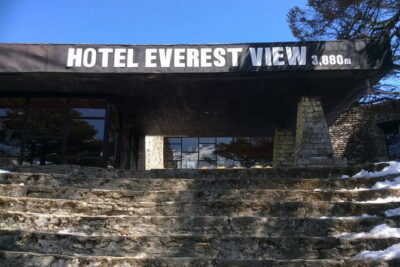
Everest Base Camp Helicopter Tour landing at Everest View Hotel
Read our review →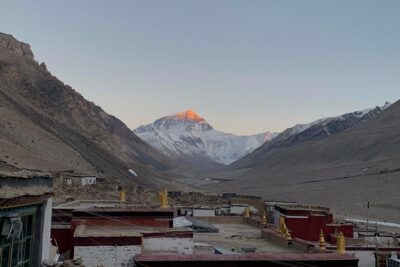
Tibet Tour 8 Days Lhasa to Everest Base Camp Small Group Tour
Read our review →
Dubai: Private Luxury Everest Yacht Cruise from Dubai Marina
Read our review →
Browse the lists this trek appears in