
Review · KATHMANDU
Everest Base Camp Trek from Salleri (Overland)
The best feature of this Everest Base Camp trek is the overland start from Salleri. Instead of flying straight from Kathmandu to Lukla, you spend a full day reaching the trailhead by road, then walk through a quieter section of the Everest region before joining the main route at Phakding. I like the slower build-up: hills, rivers, forests, and village life arrive before the famous high mountains.
I also like that the price covers the big practical pieces, including meals, tea house lodging, a licensed guide, porters, staff costs, and the Lukla to Kathmandu flight. The tradeoff is the long 8 to 9-hour drive to Salleri and the demanding altitude schedule later on. You need reasonable fitness, patience, and a willingness to sleep simply.
Key points at a glance
- Salleri by private vehicle: Begin with an 8 to 9-hour road journey instead of taking a flight from Kathmandu to Lukla.
- A quieter opening route: Walk through Nunthala and Puiyan before reaching the better-known Everest trail at Phakding.
- High-altitude acclimatization: Spend a rest day in Namche and another in Dingboche, including a hike to Nagarjun Hill at 5,080 meters.
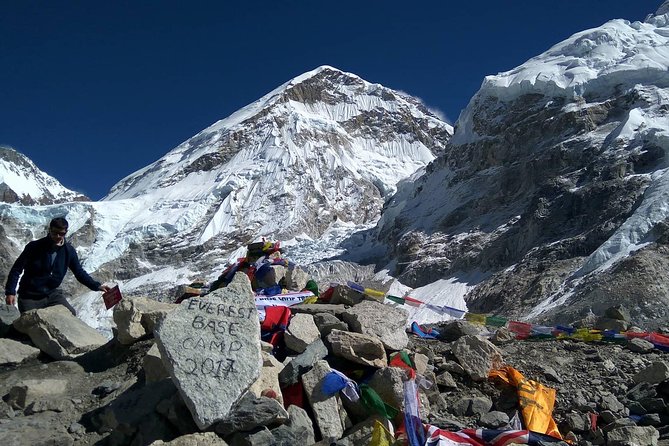
- The main mountain goal: Reach Everest Base Camp at 5,364 meters, then climb Kala Patthar to 5,545 meters for the trek’s highest point.
- Helpful inclusions: Meals, tea houses, guide, porter service, government taxes, airport transfers, and the Lukla to Kathmandu flight are included.
- Personal guiding: This is a private trip for your own group, with a minimum booking of two people and room for up to 15.
Why start the Everest trek in Salleri?
Most visitors reach the Everest region by flying to Lukla. This trip takes a different route. You drive from Kathmandu to Salleri, at about 2,309 meters, then walk toward Nunthala, Puiyan, and Phakding.
That road journey takes 8 to 9 hours, so it is not a small add-on. Roads in the Himalayan foothills can make for a tiring day, and you should not expect the quick, scenic simplicity of a short domestic flight. Still, the overland route gives the trek a gradual beginning. You see more of the countryside before the trail turns toward the high valleys.
I like this option for people who want the journey to feel like a complete crossing, not simply a flight followed by a famous walk. The first trekking days also cover a less touristed section of the Everest region. You still reach the classic places, but the experience begins with hillside paths, river crossings, forest, and local settlements.
The route eventually reaches Lukla near the end. From there, you fly to Kathmandu in about 35 minutes. That is a practical compromise: avoid the flight into Lukla, but use the flight out to save time after the long return walk.
More Everest Base Camp Treks in Kathmandu:
- Everest Base Camp Trek – 14 Days
★ 5.0 · 1,499 reviews - Everest Base Camp Trek
★ 5.0 · 842 reviews - Everest Base Camp Helicopter Tour landing at Everest View Hotel
★ 5.0 · 668 reviews
What the 17-day route feels like
Days 1 and 2: Kathmandu to Salleri by road
Your first day is arrival day at Tribhuvan International Airport. A private vehicle takes you to the hotel you have booked. The package includes airport pickup, but the listed hotel arrangement is a three-star Kathmandu stay with breakfast, so confirm exactly which nights and room arrangements are included when booking.
Day two is the road transfer to Salleri. The drive lasts roughly 8 to 9 hours. This is the least glamorous part of the trip, but it is important to understand it clearly before you commit. You will spend most of the day sitting in a vehicle, and the schedule can feel long after an international flight and a first night in Kathmandu.
The reward is a trailhead reached without flying. Salleri sits at 2,309 meters, so the route begins higher than Kathmandu but well below the most demanding sections ahead.
Days 3 to 5: Nunthala, Puiyan, and Phakding
The first walking day takes you from Salleri to Nunthala, at about 2,190 meters, in 5 to 6 hours. This is a useful introduction to the rhythm of the trek. You are walking through the lower part of the region, where the scenery is shaped by hills, river valleys, and forest rather than bare high-altitude terrain.
On day four, you walk 6 to 7 hours to Puiyan, at 2,300 meters. The route continues to feel like a gradual approach rather than an immediate assault on the mountains. If you enjoy seeing how the trail communities change as you gain height, these days add real value.
Day five brings a 6 to 7-hour walk to Phakding, at 2,652 meters. This is where the route connects with the familiar Everest Base Camp corridor. From here onward, you follow the path toward Namche and the high valleys used by many Everest trekkers.
The lower-route section is also where the itinerary may feel less predictable in comfort. Tea houses provide basic lodging, and personal extras such as hot showers, Wi-Fi, battery charging, bottled or boiled water, and laundry cost extra.
A few more treks around Kathmandu worth a look
- Everest Base Camp Trekking
★ 5.0 · 485 reviews - Annapurna Circuit Trek with Tilicho Lake
★ 5.0 · 368 reviews - Everest Base Camp Trekking – 13 Day
★ 5.0 · 365 reviews - Everest Base Camp Trek
★ 5.0 · 350 reviews
Days 6 and 7: Namche Bazaar and acclimatization
The walk from Phakding to Namche Bazaar takes about 6 to 7 hours and reaches 3,440 meters. Namche is one of the key stops on the entire route, both for mountain culture and for altitude planning.
The next day is a day hike around Namche rather than a full onward transfer. That matters. The rest day gives you time to adjust before the route rises sharply toward Tengboche and Dingboche. It also lets you see more of the town instead of passing through in a rush.
You should treat this day as part of the trek, not as optional downtime. The itinerary includes significant altitude gains later, and the schedule has been built with pauses at Namche and Dingboche. Your guide carries a medical kit, but the package does not include travel or rescue insurance. You need to arrange that yourself.
Days 8 to 10: Tengboche, Dingboche, and Nagarjun Hill
The walk to Tengboche takes 4 to 5 hours and reaches about 3,880 meters. This is a shorter day on paper, which helps after the Namche section. Tengboche is known for its mountain setting and monastery, though the supplied itinerary does not promise a specific monastery visit or tour, so confirm what your guide plans to include.
Day nine continues to Dingboche, at 4,410 meters, in about 6 to 7 hours. The air becomes thinner here, and the character of the route changes. You are now well into the high mountain section, so your walking pace needs to be steady rather than ambitious.
Day ten is another acclimatization day. The planned hike goes to Nagarjun Hill at approximately 5,080 meters and lasts 4 to 5 hours. This is a demanding rest day, not a day off. You gain height during the hike and return to Dingboche to sleep lower, a pattern used to help your body adjust.
I appreciate that the route includes two separate acclimatization points. Still, the schedule remains strenuous. You should have a moderate fitness level at minimum, and the itinerary is not recommended for children aged 10 and under.
Days 11 and 12: Lobuche and Everest Base Camp
From Dingboche, you walk 4 to 5 hours to Lobuche, at roughly 4,930 meters. This is a short distance in hours compared with some earlier days, but the altitude makes every uphill stretch more serious.
Day twelve is one of the trek’s biggest efforts. You walk to Everest Base Camp at 5,364 meters and then return to Gorak Shep, at 5,180 meters. The full day takes about 7 to 8 hours.
The base camp visit is the central goal, but it is worth keeping expectations realistic. The trip takes you to Everest Base Camp, not to the summit of Everest. At this height, the experience is about the scale of the mountains, the glacial surroundings, and the achievement of reaching the point that climbers use before attempting the peak.
You should expect basic tea house conditions at Gorak Shep and very cold, high-altitude walking. Personal comforts are limited, and extras such as showers, internet access, charging, and drinks are not included in the package price.
Day 13: Kala Patthar and Pheriche
The next morning begins early with a climb to Kala Patthar, at 5,545 meters. This is the highest point on the itinerary and an important detail for anyone comparing routes. You then descend to Pheriche, at about 4,200 meters, with a total walking time of 7 to 8 hours.
The early start is tied to the mountain views and the need to complete a long day, but the schedule can be tough after the Base Camp outing. You should be prepared for cold conditions and a slow pace.
For many people, Kala Patthar is as important as Base Camp because it gives the trek its highest viewpoint. The supplied plan does not promise a particular weather condition or a guaranteed clear view. The trip operates in all weather, so bring clothing suited to changing conditions.
Days 14 to 16: Return to Namche, Lukla, and Kathmandu
Day fourteen takes you from Pheriche back to Namche, a 6 to 7-hour walk. The route is downhill in broad terms, but long descents can be hard on tired knees.
Day fifteen continues from Namche to Lukla, taking another 6 to 7 hours. This is a substantial walking day near the end of the trip. If you prefer finishing with a shorter final trek, this schedule may feel demanding, but it keeps the overall journey moving toward the flight.
On day sixteen, you fly from Lukla to Kathmandu. The listed flight time is about 35 minutes. Domestic mountain flights can be affected by weather, and the package specifically allows for extra Kathmandu accommodation to be your responsibility if an early return, late departure, or other change alters the planned schedule.
The final day is departure day, with transfer to Tribhuvan International Airport. Airport pickup and drop-off are included in a private vehicle.
What the $1,500 group price really covers
At $1,500 per group for up to 15 people, the price needs to be read as a group rate, not a per-person rate. For a pair, that works out differently than for a larger group, so ask for the exact total and group conditions before paying.
The included services are substantial:
- Private airport transfers and ground transport listed in the itinerary
- Three-star Kathmandu accommodation with breakfast
- Tea house lodging during the trek
- Breakfast, lunch, and dinner during the trekking section
- A farewell dinner
- The Lukla to Kathmandu domestic flight
- An experienced English-speaking, government-licensed trek leader
- Porter service at a ratio of one porter for every two trekkers
- Staff salaries, insurance, equipment, food, and accommodation
- A medical kit carried by the trek leader
- Government and local taxes
That package can offer solid value because food, lodging, staff support, porters, and the return flight are not minor costs on a 17-day Himalayan journey. The porter arrangement is especially useful if you want to carry only a daypack, though you should confirm luggage limits and what your porter will carry.
You still need to budget for a Nepalese visa, international airfare, excess baggage, Kathmandu lunches and dinners, personal drinks, Wi-Fi, phone calls, laundry, showers, charging, and tips. Travel and rescue insurance are not included, and I would treat that coverage as essential for a high-altitude trek.
Guide support and the private-trip format
The experience is private, so only your own group participates. That gives you more control than a large shared departure, although the daily route and altitude schedule remain fairly fixed.
The guide is described as an English-speaking, government-licensed trek leader. Several names are associated with positive service on past Mount Mania trips, including Rupak, Binod, and Ballaram. If a particular guide matters to you, ask for the assigned guide before departure rather than assuming one of those names will lead your trek.
The strongest service theme connected with the company is personal care. One account describes Rupak treating the group like family and even welcoming visitors into his home for Bada Dasain. Another gives special credit to Binod and Ballaram for kindness and support. Those details suggest a warm local approach, but guide assignment and personal experience can vary.
The private format suits friends, couples, and families with older teenagers who want to move together. It also gives you a direct point of contact for questions about pace, meals, and daily conditions.
Who should book this route?
You should consider it if you:
- Want Everest Base Camp without flying into Lukla
- Like a longer overland approach through the lower hills
- Can manage repeated 6 to 8-hour walking days
- Are comfortable with basic tea house accommodation
- Want meals, porters, staff support, and the return flight bundled together
- Prefer a private group rather than joining strangers
- Have time for a 17-day schedule and some flexibility for mountain weather
Think twice if you dislike long road journeys, need hotel-level comfort every night, or want a short and gentle introduction to trekking. The drive to Salleri is long, and the altitude days from Dingboche onward are not casual walks.
The minimum booking is two people, and the group can include up to 15. The experience is not recommended for children aged 10 and under. A current passport is required on the day of travel, and the trip operates in all weather, so proper clothing is not optional.
For cancellation, you can receive a full refund if you cancel at least 24 hours before the local start time. Changes or cancellations inside that window are not accepted for a refund.
Should you book the Salleri Everest Base Camp trek?
I would choose this trip if avoiding the Kathmandu to Lukla flight is important and you like the idea of earning the famous route step by step. The lower trail through Salleri, Nunthala, and Puiyan adds time, but it also gives the journey a broader sense of place.
The price is strongest for a group that can share the cost, especially with meals, porters, tea houses, staff expenses, taxes, and the return flight included. Just budget separately for insurance, personal expenses, tips, visas, and possible extra nights in Kathmandu.
Book it if you want a serious Himalayan trek with a private guide, a gradual overland approach, and the full Base Camp plus Kala Patthar combination. Skip it if the 8 to 9-hour road transfer or the high-altitude schedule sounds like too much. This is a demanding trek with a thoughtful structure, not a soft adventure holiday.
FAQ
How long is the Everest Base Camp trek from Salleri?
The planned duration is 17 days, including arrival in Kathmandu, the drive to Salleri, the trek to Everest Base Camp, the return walk to Lukla, the flight to Kathmandu, and final departure.
Does the trip fly from Kathmandu to Lukla?
No. You travel by private vehicle from Kathmandu to Salleri on day two. You fly from Lukla to Kathmandu at the end of the trek, and that domestic flight is included.
How high does the trek go?
Everest Base Camp is listed at 5,364 meters. The itinerary then takes you to Kala Patthar at 5,545 meters. The acclimatization hike to Nagarjun Hill reaches about 5,080 meters.
Are meals and accommodation included?
Tea house accommodation during the trek, breakfast, lunch, and dinner during the trekking section, and three-star Kathmandu accommodation with breakfast are included. Lunch and dinner in Kathmandu are not included.
Is this a private tour?
Yes. Only your own group participates. A minimum of two people is required, and the group can include up to 15 people.
What is not included in the price?
The price does not include a Nepalese visa, international airfare, excess baggage, travel and rescue insurance, personal expenses, tips, Kathmandu lunches and dinners, or extra Kathmandu accommodation caused by an early arrival, late departure, or early return.
Just added around Kathmandu
- Everest Base Camp Trek★ 5.0 · 3 reviews
- Everest Base Camp Trek★ 5.0 · 7 reviews
- 15 Days Private Everest Base Camp Trek★ 5.0 · 30 reviews
- Everest Base Camp Trek★ 5.0 · 57 reviews
- 14 Days of Adventure Trekking to Everest Base Camp★ 5.0 · 2 reviews
- 14-Day Everest Base Camp Trek★ 5.0 · 20 reviews
- From Kathmandu: Private 14-Day Everest Base Camp Trek★ 5.0 · 20 reviews
- 14 Days Everest Base Camp Trek★ 5.0 · 4 reviews
Everest Base Camp Treks, compared.
Everest Base Camp Helicopter Tour landing at Everest View Hotel
Read our review →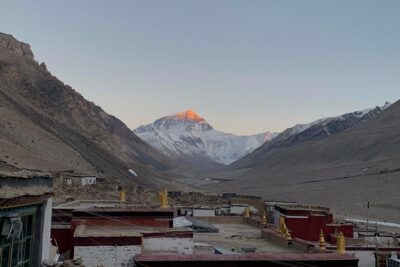
Tibet Tour 8 Days Lhasa to Everest Base Camp Small Group Tour
Read our review →
Dubai: Private Luxury Everest Yacht Cruise from Dubai Marina
Read our review →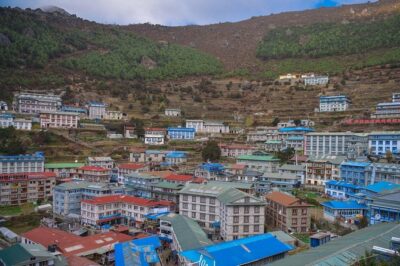
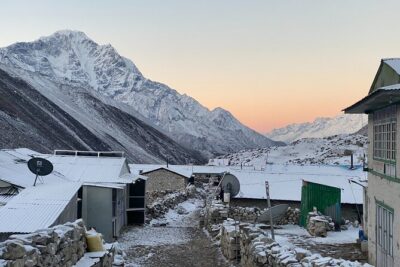
Browse the lists this trek appears in