
Review · NEPAL
Everest Base Camp Trek from Lukla
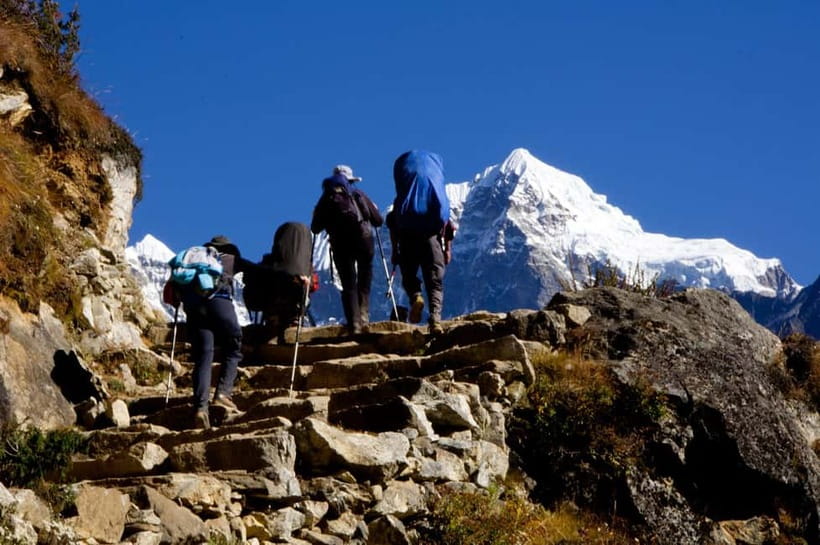
The most powerful part of this trek is the steady change in the Khumbu Valley. You begin beside the Dudh Koshi River and finish at Everest Base Camp, 5,364 meters high, after passing Sherpa villages, pine and rhododendron forests, glacial valleys, and high mountain settlements. I especially like the two planned acclimatization days, plus the early hike to Kala Patthar for the clearest view of Everest.
I also like the practical support: an English-speaking guide, porters, tea house lodging, permits, and a first aid kit are included. Guide Tirtha is specifically praised for keeping a trip running smoothly, while the team also helped some groups arrange Lukla flights, meals, extra porter help, and itinerary changes. The main drawback is the cost gap between the advertised price and the extras you still need to pay for, especially flights, meals, insurance, drinks, and personal expenses.
Key points to know before booking
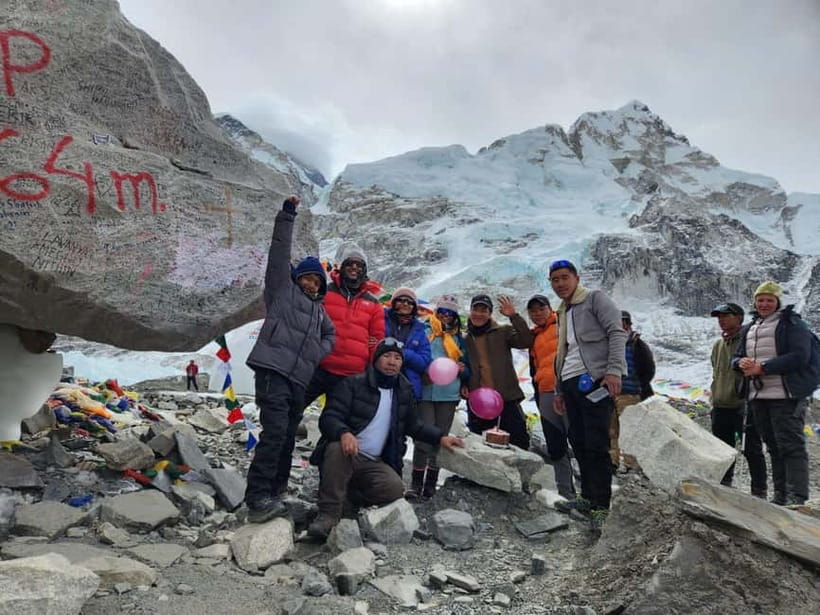
- Kala Patthar is the big viewpoint: At 5,545 meters, it gives you the classic sunrise view of Everest and the surrounding peaks.
- The trek begins at Lukla: Flights are not included, and you must provide your flight details so the guide can meet you at the airport.
- Two acclimatization days are built in: You pause in Namche and Dingboche instead of rushing straight uphill.
- Tea houses keep the trip simple: Accommodation is basic but practical, with meals available during the trek.
- Porter service is included: This reduces the load you carry, but you still need warm clothing, good shoes, water, snacks, and sun protection.
- The group is small: The maximum is 10 participants, with an English-speaking guide.
Why this Lukla to Everest Base Camp route works
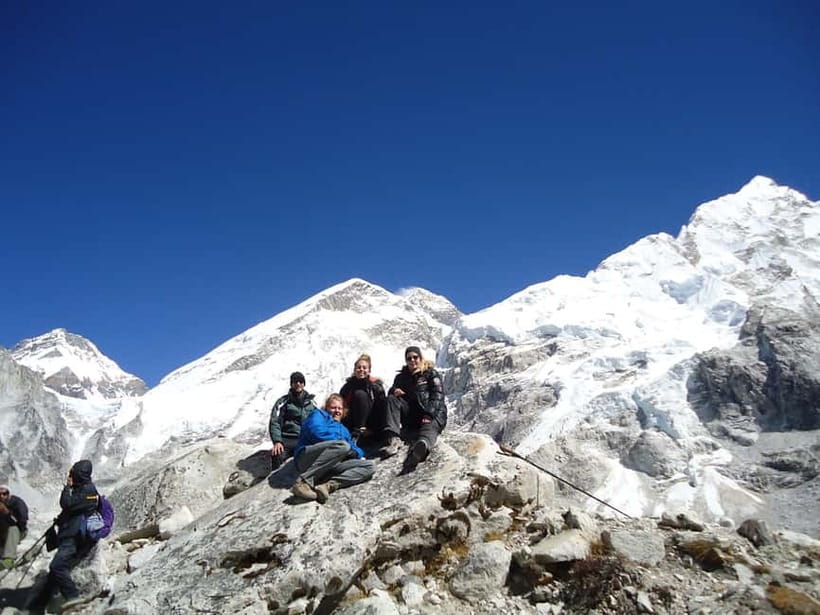
This is the classic approach to Everest Base Camp, but the 12-day schedule keeps the route focused. You are not spending extra days on side trips, yet the plan still allows time to adjust to altitude in Namche and Dingboche.
You should expect five to seven hours of walking on most trekking days. The hours listed for several stages reach eight, so this is not a casual mountain walk. The route is physically demanding because of the altitude, not just because of distance. Some sections are steep, and your pace needs to be controlled.
I like the way the trek builds gradually. Lukla sits far below the high settlements, while Dingboche, Lobuche, Gorakshep, Base Camp, and Kala Patthar take you into thinner air. That gradual rise gives your body a better chance to adjust, though no itinerary can remove the risk of altitude sickness.
The group limit of 10 is useful here. A small group is easier to manage on narrow trails and makes it simpler for the guide to watch the pace and check how everyone is coping. You should still be honest about headaches, nausea, unusual tiredness, or breathing trouble. This is a high-altitude trek, and pushing through symptoms is not brave or wise.
More Everest Base Camp Treks in Nepal:
- Everest Base Camp Trek – 14 Days
★ 5.0 · 1,499 reviews - Everest Base Camp Trek
★ 5.0 · 842 reviews - Everest Base Camp Helicopter Tour landing at Everest View Hotel
★ 5.0 · 668 reviews
Lukla and the first walk to Phakding
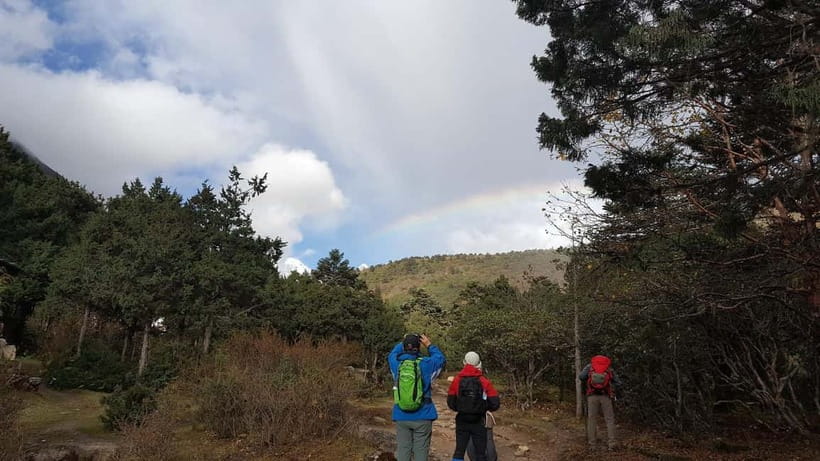
Your trip begins at Tenzing-Hillary Airport in Lukla. The guide meets you after you share your flight details, then the walking starts almost at once. The first day leads to Phakding, a small village along the Dudh Koshi River.
This opening stage gives you a gentle introduction to the Khumbu Valley. The route passes through forest and crosses suspension bridges, so you get an immediate taste of the terrain without beginning at the highest elevations. The river, wooded paths, and mountain villages make this a pleasant first day.
The flight is a major practical issue. It is not included in the $466 package, and the flight schedule can affect the start of your walk. Peregrine Treks can assist with flight arrangements, but you should treat the airfare as a separate cost and confirm the plan before you arrive in Nepal.
Your first night is in a tea house. Expect basic accommodation rather than hotel comfort. The included tea house stay is valuable because it places you directly along the route, but you should bring warm clothing and accept that facilities become more modest as you climb.
Namche Bazaar and the first acclimatization day
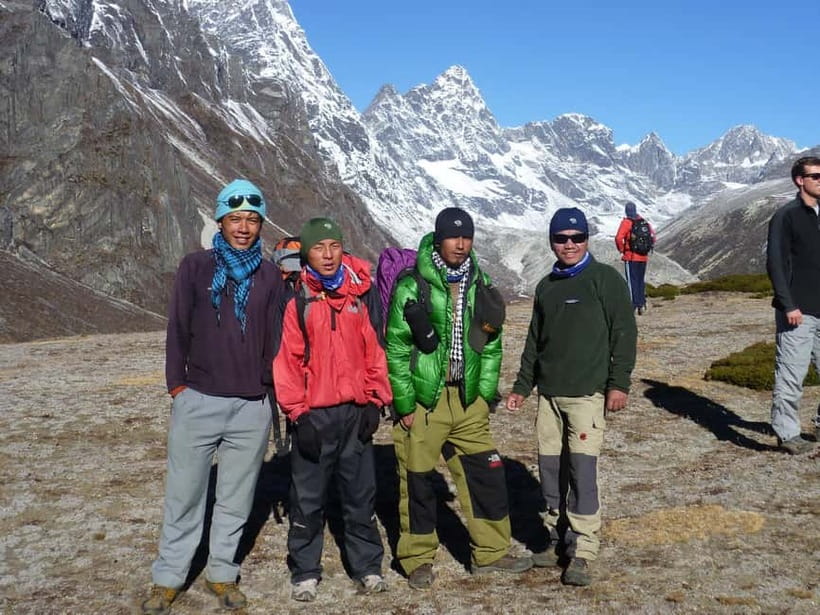
From Phakding, the route climbs toward Namche Bazaar. This is one of the hardest early sections because the path gains height and includes suspension bridges and uphill stretches. The stated walking time is about eight hours, although your actual pace will depend on the group and trail conditions.
Namche is the Sherpa capital of the region and an important stop for both practical and cultural reasons. You can explore the markets, look across to Thamserku and Kongde Ri, and get a sense of how mountain communities serve people heading deeper into the Khumbu.
The first acclimatization day is not wasted time. You remain in Namche so your body can adjust before the route rises higher. The plan includes time to explore local markets and take in the mountain views, but you should think of the day as a controlled rest day rather than a full day off.
This is also where local currency becomes important. ATMs are scarce beyond Namche Bazaar, so carry enough Nepalese currency for drinks, snacks, internet access, laundry, and other personal costs. Those items are not included in the package.
Tengboche Monastery among the high forests
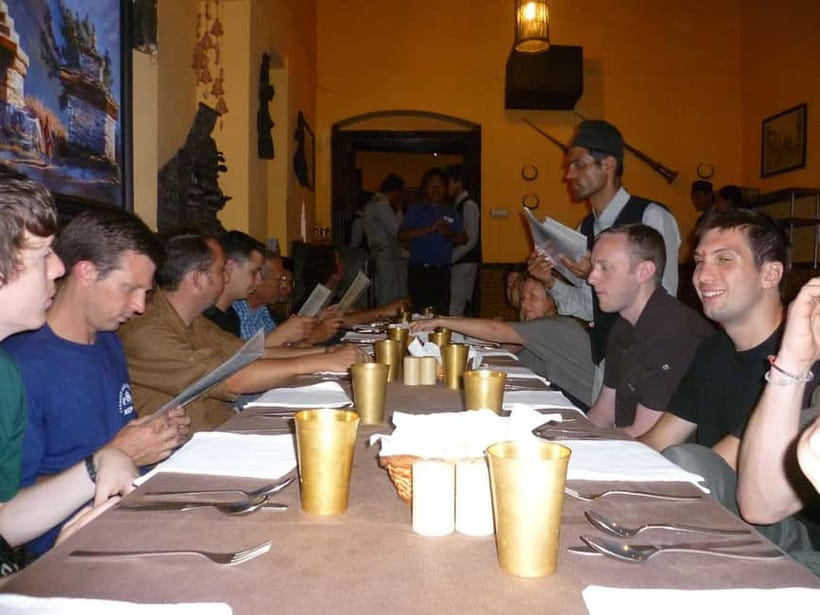
The route continues through rhododendron and pine forests toward Tengboche. The monastery is one of the region’s most important spiritual centers, and its position gives you a wide view toward Ama Dablam, Everest, and Lhotse.
Tengboche is one of the most memorable stops because the setting changes the mood of the trek. The forest trail and mountain views give way to a place where monks, prayer, and Sherpa culture remain central. You should dress respectfully when visiting the monastery and follow any instructions about where you may enter or take photographs.
The walk to Tengboche is still a serious day in the mountains. The route rises, and the thin air begins to affect your pace. Take short, regular breaks rather than waiting until you are exhausted. The guide’s value becomes clearer here, since a steady pace matters more than arriving first.
A few more treks around Nepal worth a look
- Everest Base Camp Trekking
★ 5.0 · 485 reviews - Annapurna Circuit Trek with Tilicho Lake
★ 5.0 · 368 reviews - Everest Base Camp Trekking – 13 Day
★ 5.0 · 365 reviews - Everest Base Camp Trek
★ 5.0 · 350 reviews
Dingboche at 4,410 meters
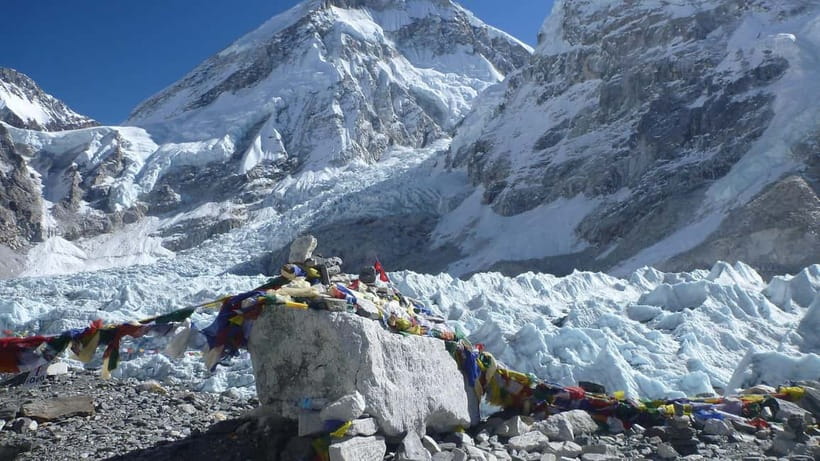
From Tengboche, you continue to Dingboche, a high village at 4,410 meters. The surroundings become more open and exposed, and the trees gradually thin as you move above the forest zone.
Dingboche is another important acclimatization point. The schedule gives you a full day here, and you can take a short hike to help your body adjust. The purpose is not to conquer another summit. It is to move gently, return to the village, drink water, eat, and rest.
The altitude is a real consideration. You may find the same walking distance feels much harder than it did near Lukla. Warm clothing matters, and so do snacks and water. The provided advice to prepare for rapidly changing weather should be taken seriously. Conditions can shift quickly at these elevations.
Some groups have chosen to add an extra night at Gorakshep or alter the timing of Kala Patthar and Base Camp. Those changes can be arranged for an additional cost, but they are not part of the basic package. If you want more flexibility, ask about it before departure.
Lobuche and the approach to Everest Base Camp
The walk to Lobuche takes you farther into a high, bare mountain setting. The forests are mostly behind you now, and the settlement feels remote, surrounded by major peaks. This is where the trek begins to feel less like a village walk and more like an expedition route.
Lobuche is also a useful reminder that the trek is not only about the final destination. The gradual change in air, vegetation, and terrain gives the route its meaning. You can see how much ground you have covered since Lukla, but you also feel the physical price of the climb.
The next stage leads to Gorakshep and then to Everest Base Camp. Gorakshep is the final resting point before Base Camp, and the full day can be demanding because of altitude and the out-and-back walking pattern.
At Everest Base Camp, you reach 5,364 meters. The view toward the Khumbu Icefall is the main reward, although Base Camp itself is not a permanent town or a polished attraction. It is a high mountain staging area, and the experience depends heavily on weather, season, and conditions on the trail.
You should keep your expectations realistic. You do not stand on the summit of Everest, and the mountain may not always be fully visible. Still, standing at Base Camp after walking from Lukla is a major achievement, especially because you have crossed the entire route on foot.
Kala Patthar at sunrise
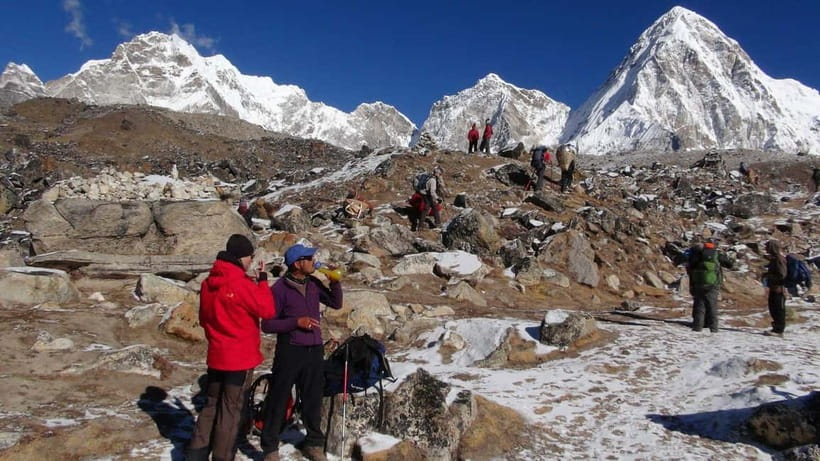
The early climb to Kala Patthar is the visual high point of the trip. At 5,545 meters, it is higher than Everest Base Camp and offers a better direct view of Mount Everest. The sunrise can light the peaks in warm colors, with Everest, Lhotse, and Ama Dablam forming the mountain backdrop.
This morning is cold and strenuous. You start early, climb in thin air, and then descend to rejoin the route. Bring your warmest layers, hat, gloves, water, and camera. The cold can be sharp before sunrise, even if the lower valley feels comfortable later in the day.
Kala Patthar is one reason I consider this itinerary stronger than a plan that visits Base Camp only. Base Camp gives you the achievement and the Khumbu Icefall. Kala Patthar gives you the classic mountain view. The two stops serve different purposes, and both are worth keeping.
The stated plan takes you back to Pheriche after Kala Patthar. That descent is welcome, but it remains a long day. You should not schedule an important connection immediately after the trek without allowing some flexibility.
The return through Pheriche, Namche, and Lukla
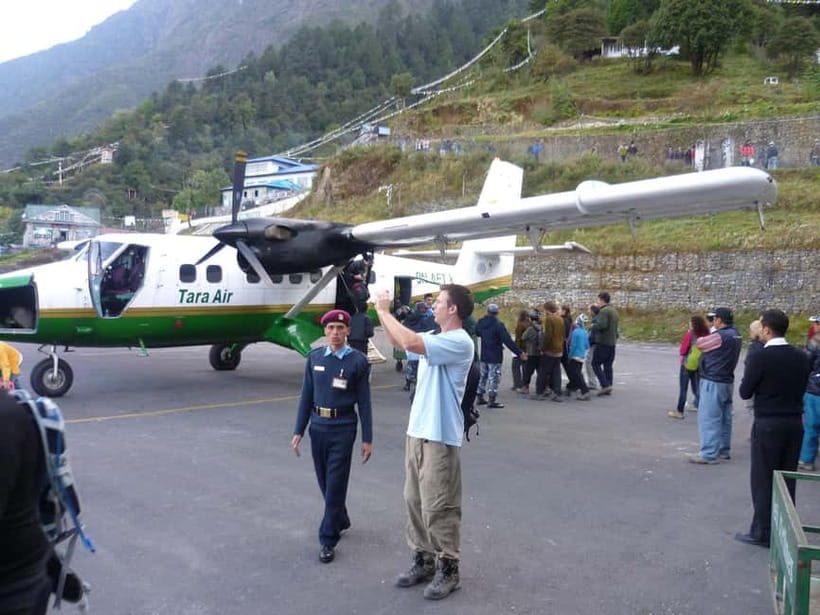
After Pheriche, you retrace the route toward Namche Bazaar and then Lukla. The return walk is not simply an afterthought. Descending gives your lungs a break, and you see the villages and bridges from a different angle.
The route back to Namche is still tiring, particularly after the high-altitude section. Once in Namche, the return to Lukla takes another full walking day. The final stage brings you back to the airport, where the guide helps complete the trek before your onward flight.
The schedule lists arrival back at Tenzing-Hillary Airport after the Lukla return. Since flights and weather can be unpredictable in the Himalayas, keep your wider Nepal itinerary flexible. Flight costs are separate, and the package does not promise transport beyond the trek itself.
What the $466 price really covers
At $466 per person, the package offers useful core support: an English-speaking guide, tea house accommodation, permits and entrance fees, porter service, a first aid kit, and applicable taxes. For a route this demanding, those inclusions can represent good value, especially if you want help with navigation, lodging, and carrying gear.
The low headline price does not cover everything. You must budget separately for:
- Flights to and from Lukla
- Travel insurance for high-altitude trekking
- Meals and drinks
- Laundry and internet
- Personal expenses
- Visa fees
The wording around meals matters. Meals can be arranged, and some groups added them after booking, sometimes with a discount, but they are not included in the basic price. Ask for the current meal cost before you commit.
Porter service is included, which is a strong practical benefit. Even so, pack sensibly and keep essentials in your day bag. You should carry water, snacks, sunscreen, a camera, warm clothing, and any personal medication yourself.
What the support team adds
The strongest praise centers on organization, guides, and porters. The team has helped with Lukla flight tickets, airport details, meal arrangements, extra porter service, and changes such as an additional night at Gorakshep.
Guide Tirtha is specifically named for keeping one trip running well. Pradip is also mentioned as a key contact who helped organize arrangements. This suggests the company can be useful beyond simply leading you along the trail, but you should confirm exactly what is included before paying for extras.
The porters are an important part of the experience. Their work reduces the weight on your back and lets you focus on walking and altitude. Treat that support with care by keeping your own bag light and asking about luggage limits before the trek.
The tea houses are basic, but that is normal for this route. You get a bed and a place to eat, not a full-service lodge. Dal bhat and other available meals provide the fuel you need, while drinks, internet, laundry, and other purchases cost extra.
Who should book this trek
This trip suits you if you want a direct, supported route to Everest Base Camp and are comfortable walking five to seven hours a day at high altitude. It also works well if you want a small group rather than a large tour and prefer tea houses to camping.
You should be in suitable physical condition and prepared for cold, changing weather. The trek is not suitable for pregnant women, people with mobility impairments, people with heart problems, or people prone to seasickness, according to the supplied safety guidance.
Travel insurance is not optional in practical terms. Your policy should cover high-altitude trekking, since ordinary holiday insurance may not provide the protection you need. Check the altitude limit before you travel.
The activity offers free cancellation up to 24 hours before departure and allows you to reserve now and pay later. Those policies make planning easier, but they do not remove the need to confirm flights, insurance, meals, and other costs.
Should you book the Everest Base Camp Trek from Lukla?
I would choose this trek if you want the classic Khumbu route with a guide, porters, tea houses, two acclimatization days, Tengboche Monastery, Base Camp, and Kala Patthar. The strongest features are the steady itinerary, small group size, and practical help from the Peregrine Treks team.
I would pause before booking if you want luxury lodging, included meals, or a fully bundled Nepal package. The $466 price is attractive, but you must add flights, insurance, food, visa costs, and personal spending.
Before you pay, confirm the Lukla flight plan, meal arrangements, baggage details, and who will be your guide. If those points are clear, this is a solid choice for a supported high-altitude trek with a clear goal and memorable mountain views.
FAQ
How long is the Everest Base Camp trek from Lukla?
The activity is planned as a 12-day trek, beginning at Lukla and returning to Lukla. The itinerary includes the arrival and departure at Tenzing-Hillary Airport.
Is the flight to Lukla included?
No. Flights are not included in the price. You need to share your flight details so the guide can meet you at the airport, and Peregrine Treks can assist with flight arrangements.
What accommodation is included?
Accommodation is provided in tea houses along the route. The lodging is basic, and meals are not included in the listed package price.
Are meals included in the trek?
No. Meals, beverages, snacks, laundry, internet, and other personal expenses are excluded. Meal arrangements can be requested separately.
What is the highest point on the route?
Kala Patthar is the highest point listed, at 5,545 meters. Everest Base Camp is at 5,364 meters.
Is the trek suitable for everyone?
No. It is not suitable for pregnant women, people with mobility impairments, people with heart problems, or people prone to seasickness. You should also have travel insurance that covers high-altitude trekking.
Just added around Nepal
- Everest Base Camp Trek★ 5.0 · 3 reviews
- Everest Base Camp Trek★ 5.0 · 7 reviews
- 15 Days Private Everest Base Camp Trek★ 5.0 · 30 reviews
- Everest Base Camp Trek★ 5.0 · 57 reviews
- 14 Days of Adventure Trekking to Everest Base Camp★ 5.0 · 2 reviews
- 14-Day Everest Base Camp Trek★ 5.0 · 20 reviews
- From Kathmandu: Private 14-Day Everest Base Camp Trek★ 5.0 · 20 reviews
- 14 Days Everest Base Camp Trek★ 5.0 · 4 reviews
Everest Base Camp Treks, compared.
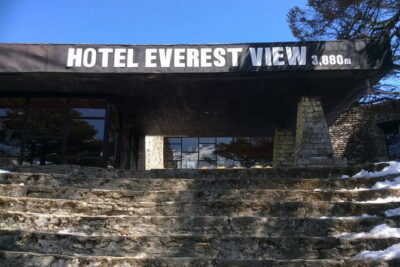
Everest Base Camp Helicopter Tour landing at Everest View Hotel
Read our review →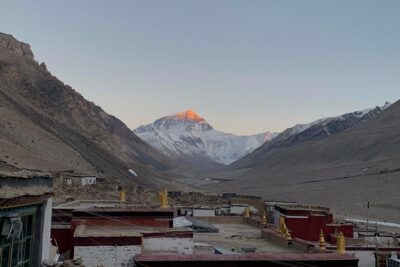
Tibet Tour 8 Days Lhasa to Everest Base Camp Small Group Tour
Read our review →
Dubai: Private Luxury Everest Yacht Cruise from Dubai Marina
Read our review →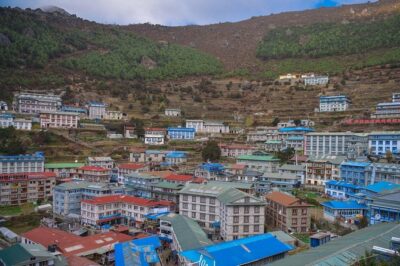
Browse the lists this trek appears in