
Review · KATHMANDU
Everest Base Camp Trek
The most thrilling moment may come before the long walk begins: the short flight into Lukla, a mountain airstrip famous for its dramatic approach. From there, you follow the classic Everest route through Sherpa villages, pine forests, river crossings, glaciers, and high viewpoints.
I like two things right away. Your guide and porters take care of the heavy work, and the schedule builds in two acclimatization days instead of treating altitude as an afterthought. I also like the practical backup of a spare day in Kathmandu, since Lukla flights can be delayed by weather. The drawback is clear: this is a demanding high-altitude trek, not a sightseeing stroll, and flights may be disrupted.
Key details before you book
- Lukla flight included: The domestic flights between Kathmandu and Lukla are covered, including the guide’s ticket.
- Two acclimatization days: Hikes near Khumjung, Khunde, the Everest View Hotel, Thame, or Nagarkhang help you adjust to altitude.
- Porters carry the main load: A duffle bag, sleeping bag, and down jacket are provided for the trek and returned afterward.
- Private small-group format: Your group walks together rather than joining a large fixed departure.
- Experienced guide team: Guides named in past bookings include Lok, Khila, Lal, Hari, Namraj, Ossman, and others.
- Price includes the essentials: At $1,408 per person, the package covers permits, meals, lodging, domestic flights, staff, transfers, and several pieces of trekking gear.
What $1,408 buys on the Everest route
At $1,408 per person, this is not simply a walking tour. The price bundles airport transfers, Kathmandu arrangements, flights to Lukla and back, the Everest National Park entry permit, TIMS registration, guide and porter services, meals, accommodation, and key cold-weather gear.
That matters in Nepal. You are not just paying for a guide to point toward Everest. You are paying for someone to handle route planning, local paperwork, porter arrangements, food stops, and the day-to-day decisions that become more important as the air gets thinner.
The package includes breakfast for 14 days, lunch for 11 days, and dinner for 12 days. Personal expenses remain yours, including drinks, hot showers, laundry, phone use, snacks, and bar bills. International flights, a Nepal visa, travel insurance, medical insurance, and emergency evacuation are also outside the price.
The value is strongest if you want a supported trek rather than a do-it-yourself expedition. The listed gear is useful, too: a four-season sleeping bag, down jacket, and duffle bag are supplied. You return the borrowed gear after the trip, which saves you from buying bulky equipment for one Himalayan journey.
More Everest Base Camp Treks in Kathmandu:
- Everest Base Camp Trek – 14 Days
★ 5.0 · 1,499 reviews - Everest Base Camp Trek
★ 5.0 · 842 reviews - Everest Base Camp Helicopter Tour landing at Everest View Hotel
★ 5.0 · 668 reviews
Days 1 and 2: Kathmandu to Phakding by way of Lukla
Your first day begins with a private airport pickup. A representative meets you with a name card, then takes you to your Kathmandu hotel. The transfer is short, listed at about 30 minutes, and gives you time to settle in before the mountain section begins.
Day 2 brings the famous flight to Lukla. It takes about 30 minutes, but the setting makes it feel like a much bigger event. You fly toward the Himalayas, land at Lukla, and begin walking toward Phakding.
The flight is one of the less predictable parts of the trip. Weather can affect departures, and the itinerary wisely keeps an extra day in Kathmandu near the end for delays or cancellations. You should still treat the schedule as flexible. Mountain aviation does not follow the clock with city precision.
The walk to Phakding starts the physical rhythm of the trek. You will have a guide organizing the route, porters carrying the main luggage, and a small group moving at a shared pace. Your day is listed at roughly four hours, which makes this a useful first stage rather than an immediate test of endurance.
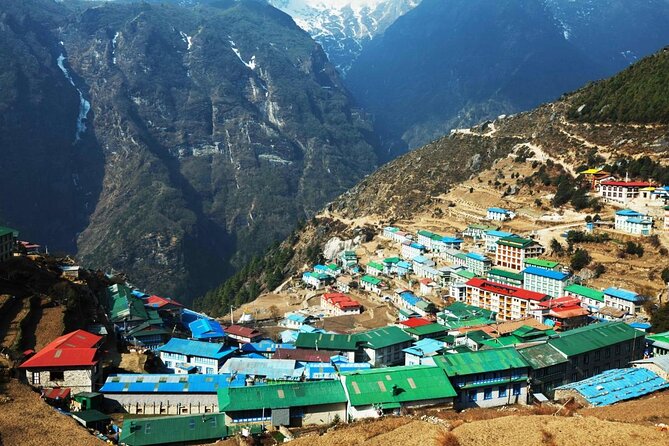
Days 3 and 4: Pine forests, suspension bridges, and Namche-area acclimatization
The next section follows the river through pine forests and toward Monjo. Lunch is planned at Jorsalle, followed by the crossing of the Hillary Bridge. After the bridge, the trail becomes steeper as you move toward the main Sherpa settlements of the Khumbu.
This is where the route begins to feel properly Himalayan. The river, forest, bridges, and rising walls of rock give you a clear sense that you are heading deeper into the national park. Your guide controls the pace, but you still need to watch your breathing and avoid rushing.
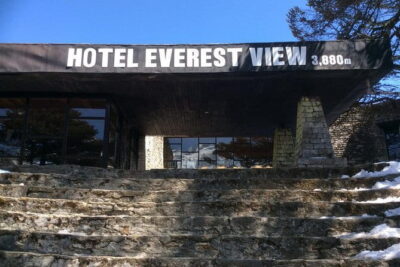
The fourth day is reserved for acclimatization. That is one of the best features of this plan. You may be offered a hike toward Khumjung and Khunde, the Everest View Hotel, Thame, or nearby national park sites. The exact choice comes from your group and leader.
The purpose is not to collect another village as quickly as possible. It is to climb higher during the day, return to sleep lower, and give your body time to adjust. At altitude, a slower schedule is not wasted time. It is part of reaching Base Camp safely.
The guide names associated with this trek include Lok and Khila, both repeatedly selected by people booking the route, along with Lal and Hari. The useful quality to look for in a guide is not a fast stride. It is attention to pace, safety, and how each person is handling the altitude.
Days 5 and 6: From Kyanjuma to Pangboche
After acclimatization, the trail heads toward the national park headquarters and Kyanjuma. You may stop for tea before descending to Phungi Thanga for lunch. From there, the route crosses the Dudh Koshi River and climbs again.
This up-and-down pattern is a central feature of Himalayan trekking. A short descent can be just as tiring as a climb because you are constantly adjusting your footing and conserving energy. Your guide handles the route, but you should expect a full day of steady walking rather than one simple uphill push.
Day 6 follows the Imja Khola toward Pangboche at about 3,930 meters. Pangboche is known as a home of accomplished Everest climbers and strong Sherpa communities. Here, the cultural side of the trek becomes more than decoration. Villages along the route are working mountain communities, and the Sherpa connection to Everest is part of the place itself.
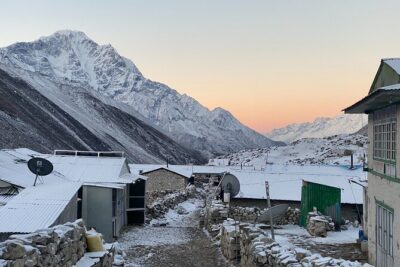
You will see mountain views throughout this section, but the experience is not just about looking up at peaks. It is also about the rhythm of village life, local lodges, porters on the trail, river valleys, and the practical work needed to support a high-altitude route.
A few more treks around Kathmandu worth a look
- Everest Base Camp Trekking
★ 5.0 · 485 reviews - Annapurna Circuit Trek with Tilicho Lake
★ 5.0 · 368 reviews - Everest Base Camp Trekking – 13 Day
★ 5.0 · 365 reviews - Everest Base Camp Trek
★ 5.0 · 350 reviews
Day 7: Nagarkhang Peak and another high-altitude test
The second acclimatization day includes a hike to Nagarkhang Peak, approximately 5,000 meters high. From the top, the route offers wide views of Himalayan peaks.
This day may be one of the hardest before Base Camp, even though you return to the same lodging afterward. The altitude is serious, and the climb is optional in the sense that the leader offers route choices and manages the group according to conditions. You should not treat the summit as a contest.
I like this design because the itinerary gives your body another adjustment day before the highest section. It also gives you a mountain view without forcing you to carry your overnight gear to an even higher sleeping point.
Days 8 and 9: Dughla Pass, Lobuche, and glacier walking
On Day 8, you follow the ridge above Pheriche toward Dughla. Lunch comes at Dughla before the steep climb to Dughla Pass. The trail then continues toward the higher settlements on the Base Camp route.
This is a major transition. The villages become more spare, the air thinner, and the walking more demanding. You should expect the climb after lunch to feel slow. Your guide’s role becomes especially important here, since steady pacing matters more than covering ground quickly.
Day 9 takes you across glacier terrain. The early section is described as easier, but the route becomes harder once you begin ascending over the glacier because of uneven ground and low oxygen. You get a close look at the frozen world around the Khumbu, but the scenery does not make the walking effortless.
The package includes a first-aid medical kit carried by the guide. That is useful support, but it is not a replacement for travel and medical insurance. Emergency evacuation is specifically excluded, so insurance planning is an essential part of preparing for this trek.
Day 10: Everest Base Camp and the Kalapatthar viewpoint
The itinerary places the Base Camp section before the early-morning climb of Kalapatthar. The walk toward Everest Base Camp brings you across the high mountain route and glacier terrain, with Everest-region peaks and ice formations around you.
Base Camp itself is the emotional target for many people, but the route does not end there. Kalapatthar is widely prized for its views of the Khumbu peaks, and the plan starts the climb before sunrise. The ascent is difficult, especially after several days at altitude, but the early light is the reason for the timing.
You are advised to sit on the right side of the airplane for mountain views on the return flight, but the same practical spirit applies to the trek: listen to the guide, keep your pace controlled, and conserve energy for the places that matter most.
Kalapatthar is a viewpoint, not a casual morning walk. If your body is struggling, you should discuss the climb with your guide. The itinerary gives you a major reward, but reaching the top should never matter more than your health.
Days 11 and 12: Returning through Tengboche and Phakding
The return journey passes through Debuche and Tengboche before a steep descent to Phungi Thanga. After lunch, you climb toward Kyanjuma, then continue toward Jorsalle and Phakding the following day.
The return walk is not simply a repeat. Downhill sections can be hard on tired knees, and familiar villages look different when you are moving in the opposite direction. You also begin to notice how much energy the ascent required.
Tengboche adds another cultural stop to the route, while the river valleys and bridges give the final walking days a different feel from the stark high-altitude section. The itinerary describes the walking portion as ending when you reach Lukla, after roughly 11 nights and 12 days on the trail.
The porters remain part of the support system throughout. Their work is a major reason you can focus on the walking, but you should still pack thoughtfully and keep your personal day bag light.
Days 13 to 15: Lukla flight, Kathmandu buffer, and departure
On Day 13, you return to the Lukla airport for the flight to Kathmandu. The flight can again be breathtaking and weather-sensitive. A delay is possible, which is why Day 14 is kept open in Kathmandu.
That spare day is practical, not filler. If the Lukla flight runs late, you have some protection before your international departure. If all goes to plan, you can use the day for shopping or free time in the capital.
Day 15 includes a private airport transfer planned for about three hours before your flight. Kathmandu airport has one terminal, according to the tour information, and the transfer service is included.
What the guide and porter support really mean
The guide organizes the daily route and carries the first-aid kit. Porters carry the main gear and receive accommodation, meals, salary, and insurance through the package. Groups of more than six people receive an assistant guide, also with meals, lodging, salary, and insurance covered.
Several guides are associated with especially strong feedback about this experience. Lok is singled out for keeping a relaxed walking pace and handling details. Khila is praised for attention to safety and personal care. Lal is described as reassuring and adaptable, while Hari is noted for kindness throughout the trek. Ossman and Namraj are also named in connection with other successful trips.
Names are useful, but the larger point is the guide structure. You are buying organized support, not merely a map and a permit. The best fit is someone who wants help with logistics and pacing while still having a private small-group experience.
Who should book this trek?
This trip suits you if you have a moderate level of physical fitness, can manage repeated days of walking, and are comfortable with basic high-altitude trekking conditions. It is a good match for someone who wants Everest Base Camp without arranging every permit, flight, porter, meal, and overnight stop alone.
It is less suitable if you need a fixed schedule with no weather risk, dislike steep trails and glacier terrain, or expect hotel-style comfort throughout. The itinerary includes accommodation and meals, but personal extras such as hot showers, drinks, laundry, phone use, and snacks cost more.
You should also be prepared for an active trip where the guide may adjust the pace or acclimatization plan. The private format gives your group more room to move at its own speed, but it does not remove the physical demands of altitude.
Should you book the Everest Base Camp Trek?
I would book this trip if you want a supported, private small-group route with strong attention to acclimatization and a useful weather buffer in Kathmandu. The included flights, permits, porter services, meals, sleeping bag, down jacket, and duffle bag make $1,408 a solid package price for the amount of organization involved.
I would pause before booking if you are not ready for a demanding trek or if you need certainty around flight times. Read the exclusions carefully, buy suitable travel and medical insurance, and keep several days of flexibility around your international plans.
For the best experience, contact the operator about your expected group size and guide assignment before booking. If you value a careful pace and practical support more than speed, this is a strong way to approach the Everest Base Camp route.
FAQ
How long does the Everest Base Camp Trek last?
The complete program lasts approximately 15 days. It includes arrival and departure transfers, the trek, domestic flights, a free day in Kathmandu, and time for possible Lukla flight delays.
What is the price per person?
The listed price is $1,408 per person.
Are the Kathmandu to Lukla flights included?
Yes. The package includes domestic airline tickets between Kathmandu and Lukla, including the guide’s ticket.
What meals are included?
The package includes breakfast for 14 days, lunch for 11 days, and dinner for 12 days.
Is this a private tour?
Yes. This is a private activity for your group. An assistant guide is included for groups larger than six people.
What trekking equipment is provided?
A down jacket, four-season sleeping bag, and duffle bag are provided for the trek. The duffle bag and other supplied gear must be returned after the trip.
What happens if bad weather cancels a flight or the trek?
The experience requires good weather. If it is canceled because of poor weather, you can choose another date or receive a full refund. For ordinary cancellations, a full refund requires cancellation at least six full days before the start time.
Just added around Kathmandu
- Everest Base Camp Trek★ 5.0 · 3 reviews
- Everest Base Camp Trek★ 5.0 · 7 reviews
- 15 Days Private Everest Base Camp Trek★ 5.0 · 30 reviews
- Everest Base Camp Trek★ 5.0 · 57 reviews
- 14 Days of Adventure Trekking to Everest Base Camp★ 5.0 · 2 reviews
- 14-Day Everest Base Camp Trek★ 5.0 · 20 reviews
- From Kathmandu: Private 14-Day Everest Base Camp Trek★ 5.0 · 20 reviews
- 14 Days Everest Base Camp Trek★ 5.0 · 4 reviews
Everest Base Camp Treks, compared.
Everest Base Camp Helicopter Tour landing at Everest View Hotel
Read our review →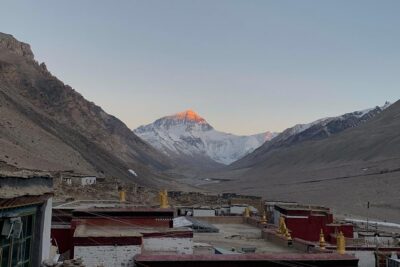
Tibet Tour 8 Days Lhasa to Everest Base Camp Small Group Tour
Read our review →
Dubai: Private Luxury Everest Yacht Cruise from Dubai Marina
Read our review →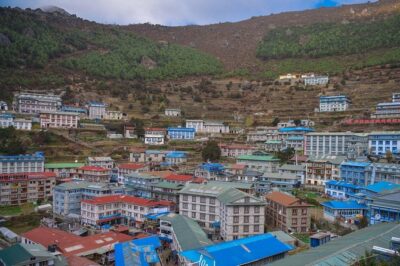
Browse the lists this trek appears in