
Review · KATHMANDU
Everest Base Camp Trek
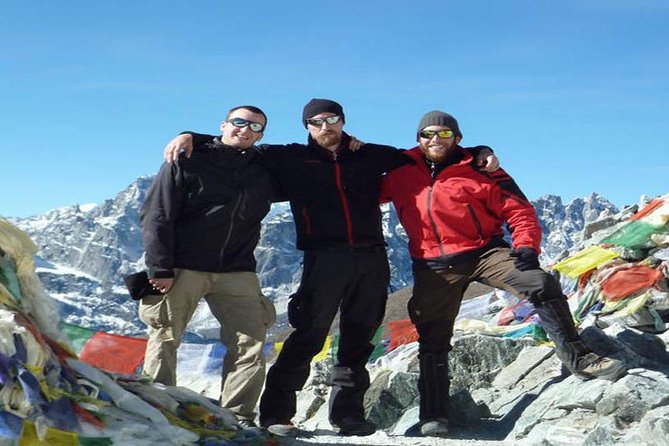
The big prize here is not just reaching Everest Base Camp. It is the slow approach through Sherpa villages, prayer walls, rhododendron forests, high valleys, and monasteries, followed by the sunrise climb to Kala Patthar at 5,550 meters. From that rocky summit, you get the clearest planned view of Mount Everest, Lhotse, Nuptse, Ama Dablam, Pumori, and other Himalayan peaks.
I like two things in particular. First, the itinerary builds in acclimatization days at Namche Bazaar and Dingboche instead of racing uphill. Second, the package takes care of the large logistical pieces: Lukla flights, permits, accommodation, meals, a guide, and porters. That matters in a remote region where small arrangements can become expensive or awkward.
The main caution is the altitude and the schedule. You need moderate physical fitness, patience, and flexibility for mountain weather. The 14-day plan is efficient, but some walking days are long, the air gets thin quickly, and Lukla flights can be delayed.
Key points to know before booking
- Kala Patthar is the visual high point: The summit gives a broader Everest view than Base Camp itself.
- Namche and Dingboche are built-in rest stops: These acclimatization days make the route more sensible than a nonstop climb.
- The price covers the major essentials: At $1,650 per person, you receive flights to and from Lukla, accommodation, meals listed in the plan, permits, transfers, guide service, and porter support.
- You travel with a private group: This is not a large shared departure. Only your own party participates.
- The human side is as important as the mountain: Sherpa villages, mani walls, monasteries, yaks, and highland trade routes give the walk its character.
- Weather can change the plan: The Lukla flights are subject to favorable conditions, with an alternative date offered if poor weather causes cancellation.
What the $1,650 price really covers
At $1,650, this is not simply a guided walk to a famous signpost. The price includes 14 nights of accommodation, local taxes, Sagarmatha National Park fees, meals listed in the itinerary, a professional guide, hotel pickup and drop-off, private vehicle transport, porter service, and round-trip flights between Kathmandu and Lukla.
The porter arrangement is listed as one porter for every two trekkers. That is useful because you can carry a lighter day pack while the porter handles the larger load. Do remember that personal spending remains yours. Drinks, laundry, battery charging, hot showers, excess luggage, and costs not listed in the inclusions are extra.
The package also includes airport transfers and a private trip format. That is good value if you want the practical work handled for you rather than arranging permits, flights, accommodation, porters, and local transport separately. The value is less clear if you already have strong Nepal trekking experience and prefer to organize every part yourself.
The phrase all-inclusive needs a sensible reading. It covers the main trek services, not every purchase you might make along the trail. Carry some local currency for drinks and personal needs, and ask the company exactly what meals are covered on each day before departure.
More Everest Base Camp Treks in Kathmandu:
- Everest Base Camp Trek – 14 Days
★ 5.0 · 1,499 reviews - Everest Base Camp Trek
★ 5.0 · 842 reviews - Everest Base Camp Helicopter Tour landing at Everest View Hotel
★ 5.0 · 668 reviews
Day 1: Kathmandu arrival and a useful briefing
You are met at Tribhuvan International Airport and taken to your hotel by an airport representative. The day is intentionally quiet. Rest matters because the next morning begins early, and the trek starts with a flight rather than a gentle city walk.
A pre-trek meeting introduces your guide and gives you time to discuss the route. Use this meeting well. Check your equipment, ask how the porter system will work, confirm the early airport transfer, and raise any medical or dietary concerns. Vegetarian meals are available if requested at booking.
The meeting point is Tribhuvan Airport, with a stated start time of 5:15 am for the early departure arrangements. That is an important detail, not a minor footnote. You will want your bags ready the night before.
Day 2: The Lukla flight and the first walk to Phakding
The flight to Lukla takes about 40 minutes and is one of the memorable parts of the trip. From the air, you see river valleys, terraced farmland, and mountain country change below you. The flight is also the first place where weather can affect your plan.
From Lukla, you walk for three to four hours to Phakding. This first stage introduces the route without sending you straight into the highest country. Look for mani stone walls made from carved tablets and painted boulders. These are not random trail decorations. They are part of the Buddhist landscape, and you should pass them on the left, following local custom.
The route offers views of Mt. Nupla, Kusum Kanguru, and the Kwangde range. Phakding is a gentle start, though the excitement of arriving in the Khumbu can make the day feel faster than expected.
Day 3: The long approach to Namche Bazaar
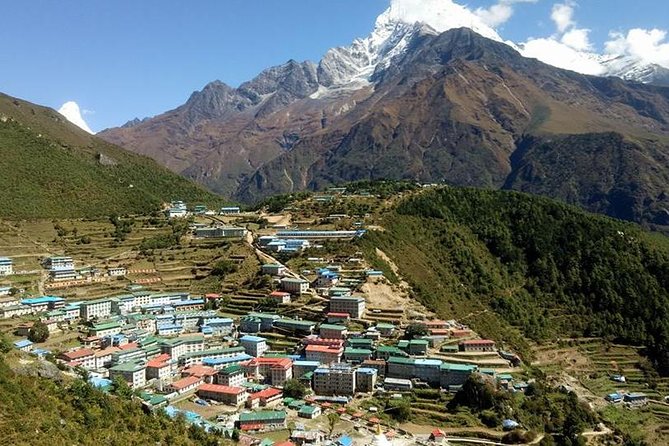
The walk to Namche takes about six hours through Sherpa villages and forest along the Dudh Koshi Valley. You cross the river and gradually gain height, with views of Kusum Kanguru and Thamserku along the way.
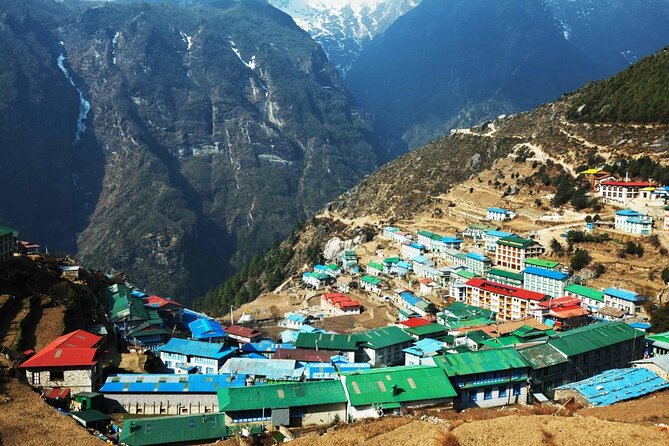
Namche Bazaar is more than a stopping point. It is the Sherpa capital of the Khumbu and an important local trading center. Its curved hillside setting makes it feel like a mountain town rather than an isolated camp. This is where you begin to understand how supplies, food, trekking services, and village life meet in the high country.
The day is demanding because the altitude begins to matter. Walk slowly and do not treat the six-hour estimate as a race. Namche is where a sensible pace starts paying off.
A few more treks around Kathmandu worth a look
- Everest Base Camp Trekking
★ 5.0 · 485 reviews - Annapurna Circuit Trek with Tilicho Lake
★ 5.0 · 368 reviews - Everest Base Camp Trekking – 13 Day
★ 5.0 · 365 reviews - Everest Base Camp Trek
★ 5.0 · 350 reviews
Day 4: Khumjung and acclimatization above Namche
The schedule gives you a free day in Namche with a short hike to Khumjung. This is one of the most valuable parts of the plan. You gain height during the day, then return to sleep at Namche, helping your body adjust without adding another major overnight climb.
Khumjung gives you a closer look at Sherpa village life. You can also enjoy views of Everest, Ama Dablam, Thamserku, Nuptse, Lhotse, and Kwangde. Namche itself offers time to visit the market and rest before the route becomes much more remote.
The itinerary describes this as a short hike, but the day still involves walking at altitude. Keep your expectations realistic. The aim is adjustment, not a strenuous side expedition.
Day 5: Tengboche Monastery and the spiritual Khumbu
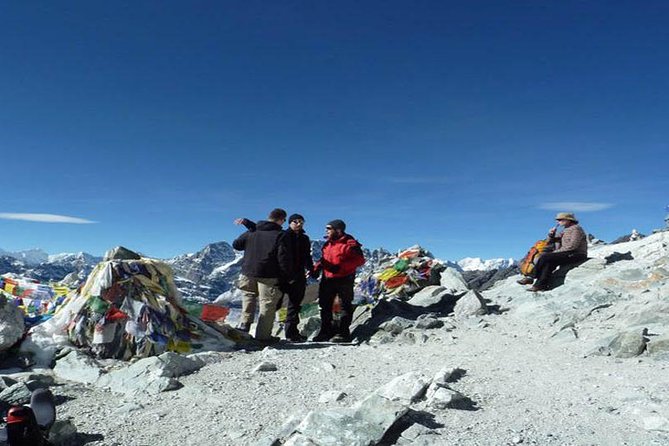
The schedule identifies Tengboche Gompa as the day’s stop, although part of the supplied day description repeats the previous Namche wording. Since Day 6 continues toward Dingboche, the practical reading is that this is the move from Namche to Tengboche.
Tengboche Monastery is one of the route’s great pauses. It sits high above the valley and is surrounded by a wide mountain panorama. Everest, Lhotse, Nuptse, and Ama Dablam give the setting its scale, while the monastery adds a quiet spiritual focus.
This is also one of the best places to remember that the Everest route is not only a physical challenge. The prayer stones, monastery visits, and Buddhist traditions are part of the living culture of the region. Be respectful during visits, follow your guide’s instructions, and avoid treating religious spaces as simple photo stops.
Day 6: The high valley at Dingboche
The trail follows the Imja Valley through rhododendron forest before reaching Dingboche, often called the summer valley. The walking is described as relatively mild in gradient, but altitude changes the effort. You may find a moderate climb surprisingly tiring here.
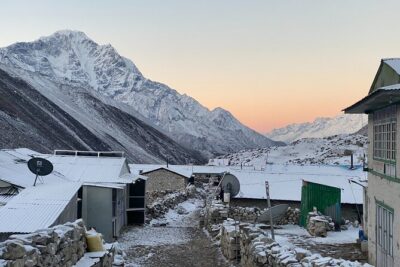
Dingboche sits in a sheltered valley surrounded by snow-covered peaks. Ama Dablam and Lhotse dominate the views, and the setting feels more exposed and severe than lower villages. The route gives you time to adjust before the final push toward Lobuche and Gorakshep.
The accommodation is described as a hotel, but high-altitude mountain accommodation should not be confused with a city hotel. Keep your expectations practical, especially regarding hot water, charging, and drinks, which are listed as personal expenses.
Day 7: A second acclimatization day in Dingboche
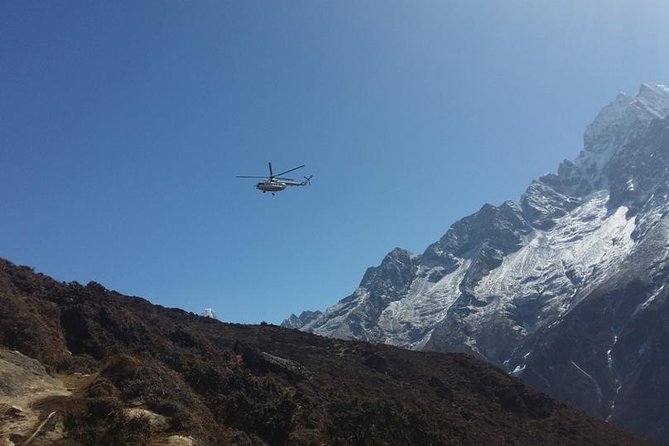
The second rest day is another good design choice. You can enjoy views of Ama Dablam and Lhotse, walk toward the huts at Chukhung, visit the monastery in Dingboche, and explore the Imja Khola area.
The plan mentions a monastery known for its unusual yeti scalp and hand. Treat this as a cultural story attached to the area, not as a guaranteed wildlife encounter. The value of the day is giving your body time to adjust while keeping your legs moving.
You may be tempted to spend the whole day resting indoors. A short, easy walk is generally the more useful approach described by the itinerary, but your guide should help you judge the pace.
Day 8: Khumbu Glacier country and Lobuche
After breakfast, the route climbs toward a yak farm, with Tawache and Cholatse visible on the left. The trail then follows the Duglha area toward the Khumbu Glacier before reaching Lobuche.
This is where the surroundings become stark and high. You see the glacier, Pumori, and smaller peaks from the ridge. The five-hour walking estimate is manageable on paper, but the combination of altitude, cold, and uneven ground can make it feel substantial.
Lobuche is not a place to hurry through. Eat, drink, and rest as directed by your guide. You are now close to the goal, but the hardest section is still ahead.
Day 9: Gorakshep and Everest Base Camp
The morning route continues to Gorakshep beside the northern rim of the Khumbu Glacier, with views toward Khumbutse and Pumori. Gorakshep is the staging point for the walk to Base Camp.
From there, the trail rises and falls over several short hills before reaching Everest Base Camp. The itinerary describes Base Camp as a broad tented area used by climbing expeditions from around the world. It is important to understand the distinction: this is the base camp area for mountaineering expeditions, not the summit of Everest.
The day can take its toll. You return to Gorakshep after the Base Camp visit, and the thin air makes every rise feel longer. Still, reaching the foot of the Khumbu Icefall region is a powerful moment, even when the mountain summit itself is not fully visible from this point.
Day 10: Kala Patthar, then the descent to Pheriche
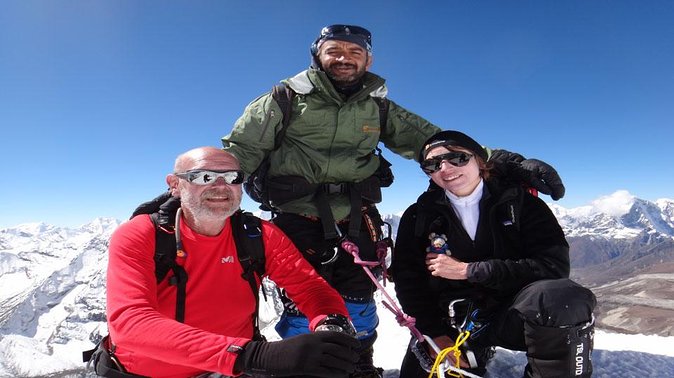
The early climb to Kala Patthar is the trip’s photographic high point. The ascent takes about two hours and follows a windy, rocky route to 5,550 meters. From the top, you get an open view of Everest, Khumbutse, Lhotse, Nuptse, Ama Dablam, Cholatse, Tawache, and Pumori.
The timing matters. A morning ascent is planned for the best light and clearer mountain views, though weather can always interfere. Bring warm layers and protect your hands and face. The summit is exposed, and the wind can be sharp.
After breakfast at Gorakshep, you descend through Lobuche and Duglha to Pheriche. The route passes chortens and stupas and may include slow-moving lines of yaks and zopkyos. This is a long day, listed at about six hours, and the descent does not feel easy after the morning climb.
Day 11: Pangboche, Tengboche, and back to Namche
The trail drops to Pangboche, where you can see one of the oldest monasteries in the region. The site is associated with a scalp and bones said to belong to a yeti. Again, the interest is cultural and local, not a promise of proof.
From Pangboche, the trail crosses a bridge, passes through pine and juniper forest, and climbs toward Tengboche. It then drops sharply to the Dudh Koshi River before rising again toward Namche Bazaar.
This day shows how deceptive Himalayan distances can be. You are descending overall, but the route still includes climbs. The return feels different from the outward journey because you now recognize the villages and have a better sense of how much altitude you have gained and lost.
Day 12: The final walk to Lukla
The last trekking day follows the Dudh Koshi River down toward Lukla. It is a satisfying finish, but do not assume it is effortless. Descending over uneven trail can work your knees, and you still need to arrive in good shape for the return flight.
The evening is reserved for the last mountain sunset of the trek. That simple pause is worthwhile. After days of walking toward a single goal, Lukla gives you a chance to look back at the entire route.
Day 13 and Day 14: Returning to Kathmandu
The flight from Lukla to Kathmandu takes about 35 minutes. A guide meets you at the Kathmandu airfield and transfers you to the hotel by private vehicle.
An evening cultural dinner is planned to mark the completed trek. Day 14 is departure day, with the airport team taking you to Tribhuvan International Airport for your onward flight.
The return flight is also weather-dependent. Keep this in mind when arranging an international connection. The tour provides an alternative date if poor weather cancels a flight, but you should still avoid booking an impossibly tight onward schedule.
Guides, porters, and the human side of the trip
The company’s past trekking teams have included guides named Shambhu, Raj, Hupa Raj, Hupi, and Deepak. The information does not identify which guide will lead your particular departure, so ask for the name and experience of your assigned guide before you travel.
That question matters most on a high-altitude route. You want clear advice about pacing, rest, weather, and any change to the walking plan. Past trips have included families, older groups requesting shorter days, and trekkers combining Base Camp with the Gokyo Lakes route. This suggests some willingness to adjust arrangements, but do not assume a custom itinerary is included in this standard price. Ask directly.
The porter ratio of two trekkers to one porter is helpful, but pack thoughtfully and respect the weight limits agreed with the company. Porters are carrying your gear at altitude. A lighter bag is better for everyone.
Who should book this Everest trek?
This trip suits an adult with moderate physical fitness who wants a structured route and support with the complicated parts. It is a good fit if you value a private group, local guides, porter help, included flights, and built-in acclimatization days.
It is less suitable if you dislike basic mountain accommodation, cannot handle long walking days, or need a fixed timetable with no weather allowance. The minimum age is listed as 18, even though past company trips have included younger family members, so follow the stated booking rule unless the operator confirms an exception.
Cancellation terms are fairly strict close to departure. A full refund requires cancellation at least six full days before the start time. Cancellation two to six full days ahead receives 50 percent, while cancellation less than two full days ahead is nonrefundable.
Should you book it?
I would consider this a strong-value Everest Base Camp package for someone who wants the classic route without arranging every permit, flight, bed, meal, and porter independently. The best features are the acclimatization days, Kala Patthar viewpoint, private-group format, and broad range of inclusions.
Book it if you understand that the mountain controls the timetable. Before paying, confirm your assigned guide, porter baggage allowance, meal details, accommodation standards, and the plan for weather delays. If those answers suit you, this trek offers a practical way to reach Everest Base Camp while still giving proper time to the villages, monasteries, and people of the Khumbu.
FAQ
How long is the Everest Base Camp trek?
The experience lasts approximately 14 days, from arrival in Kathmandu through departure. The trekking portion runs from Lukla to Base Camp and Kala Patthar, followed by the return to Lukla and flight back to Kathmandu.
What is included in the $1,650 price?
The price includes 14 nights of accommodation, local taxes, national park fees, meals listed in the itinerary, a professional guide, hotel pickup and drop-off, private vehicle transport, porter service, and round-trip flights to Lukla.
Are flights to Lukla included?
Yes. The package includes a round-trip flight ticket to Lukla. The flight schedule depends on favorable weather conditions.
Is this a private tour?
Yes. Only your own group participates in the activity. Group discounts are also offered.
Is a vegetarian meal option available?
Yes. Vegetarian food is available, but you should advise the company when booking.
What happens if bad weather cancels a flight?
The experience is subject to favorable weather. If poor weather causes cancellation, you are offered an alternative date. Personal expenses caused by delays are not listed among the included services, so ask the operator about your own arrangements before departure.
Just added around Kathmandu
- Everest Base Camp Trek★ 5.0 · 3 reviews
- Everest Base Camp Trek★ 5.0 · 7 reviews
- 15 Days Private Everest Base Camp Trek★ 5.0 · 30 reviews
- Everest Base Camp Trek★ 5.0 · 57 reviews
- 14 Days of Adventure Trekking to Everest Base Camp★ 5.0 · 2 reviews
- 14-Day Everest Base Camp Trek★ 5.0 · 20 reviews
- From Kathmandu: Private 14-Day Everest Base Camp Trek★ 5.0 · 20 reviews
- 14 Days Everest Base Camp Trek★ 5.0 · 4 reviews
Everest Base Camp Treks, compared.
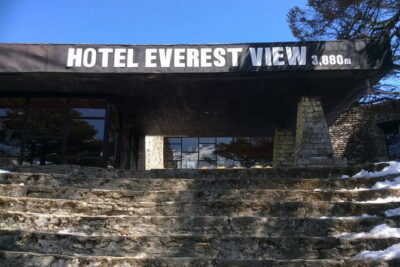
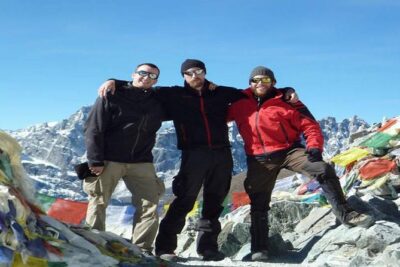
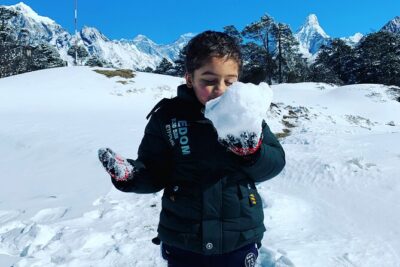
Everest Base Camp Helicopter Tour landing at Everest View Hotel
Read our review →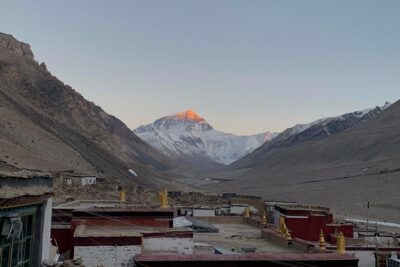
Tibet Tour 8 Days Lhasa to Everest Base Camp Small Group Tour
Read our review →
Dubai: Private Luxury Everest Yacht Cruise from Dubai Marina
Read our review →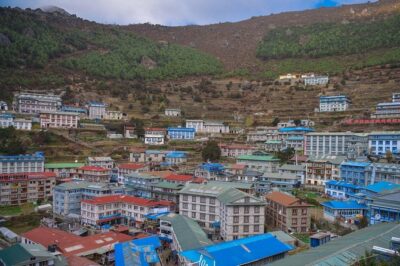
Browse the lists this trek appears in